29 Shiplap Ceiling Ideas That Add Instant Charm to Any Room
29 Shiplap Ceiling Ideas That Add Instant Charm to Any Room
A ceiling is the most overlooked surface in a home, and shiplap is the fastest way to make it unforgettable. Those clean, overlapping boards add texture, warmth, and character overhead without a full renovation, and they work in almost any style — from classic farmhouse and coastal cottages to modern minimalist lofts. Paint them bright white for an airy lift, leave the wood natural for rustic warmth, or go bold with black for a moody, dramatic statement. Shiplap also hides flaws, covers old popcorn texture, and makes low ceilings feel taller or tall ceilings feel cozier. Below are 29 shiplap ceiling ideas for every room, budget, and skill level, from simple weekend DIY installs to vaulted showpieces with beams and skylights. Each one includes practical tips on materials, finishes, and styling so you can pick the look that fits your home.
1. Start With a Classic White Shiplap Ceiling
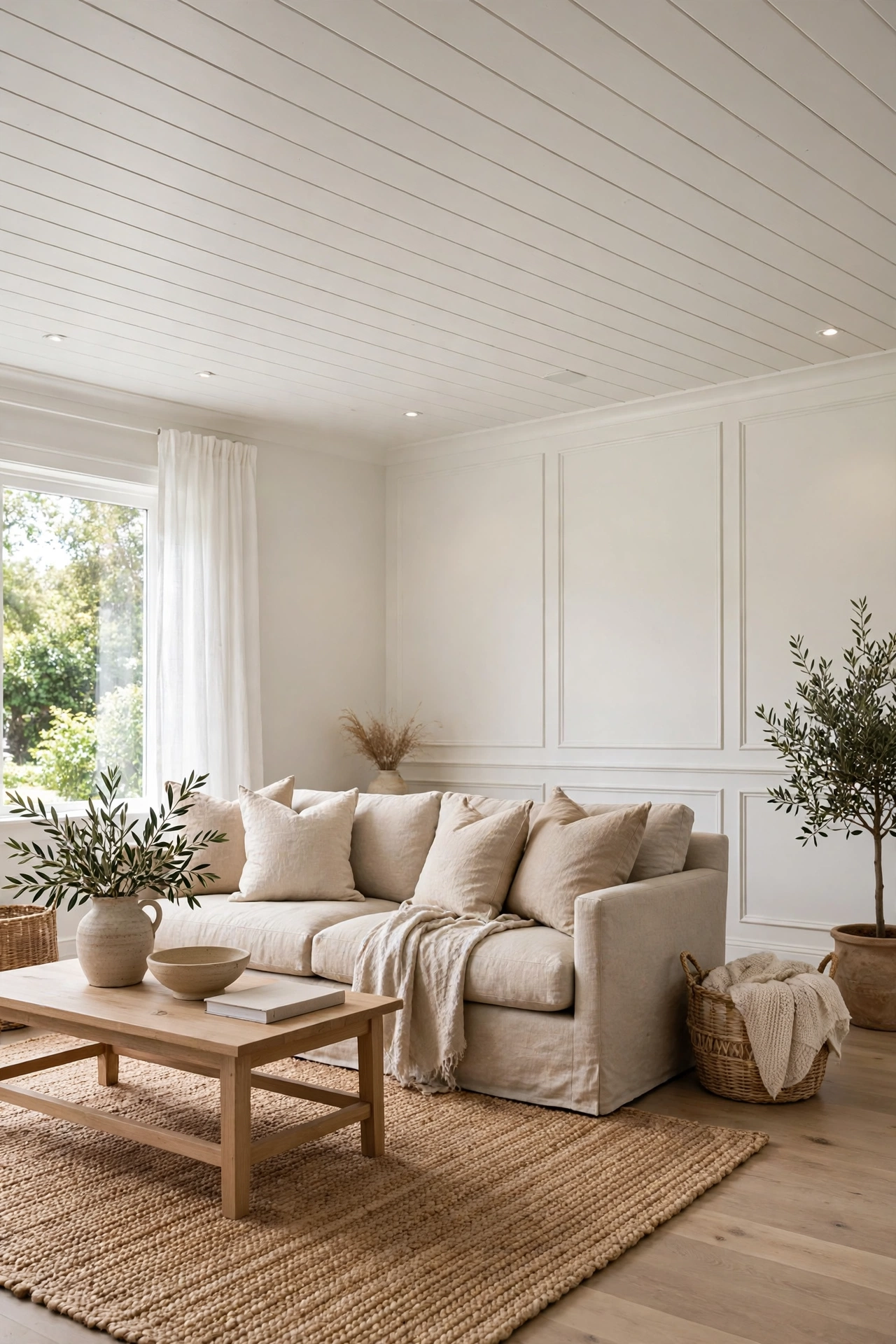
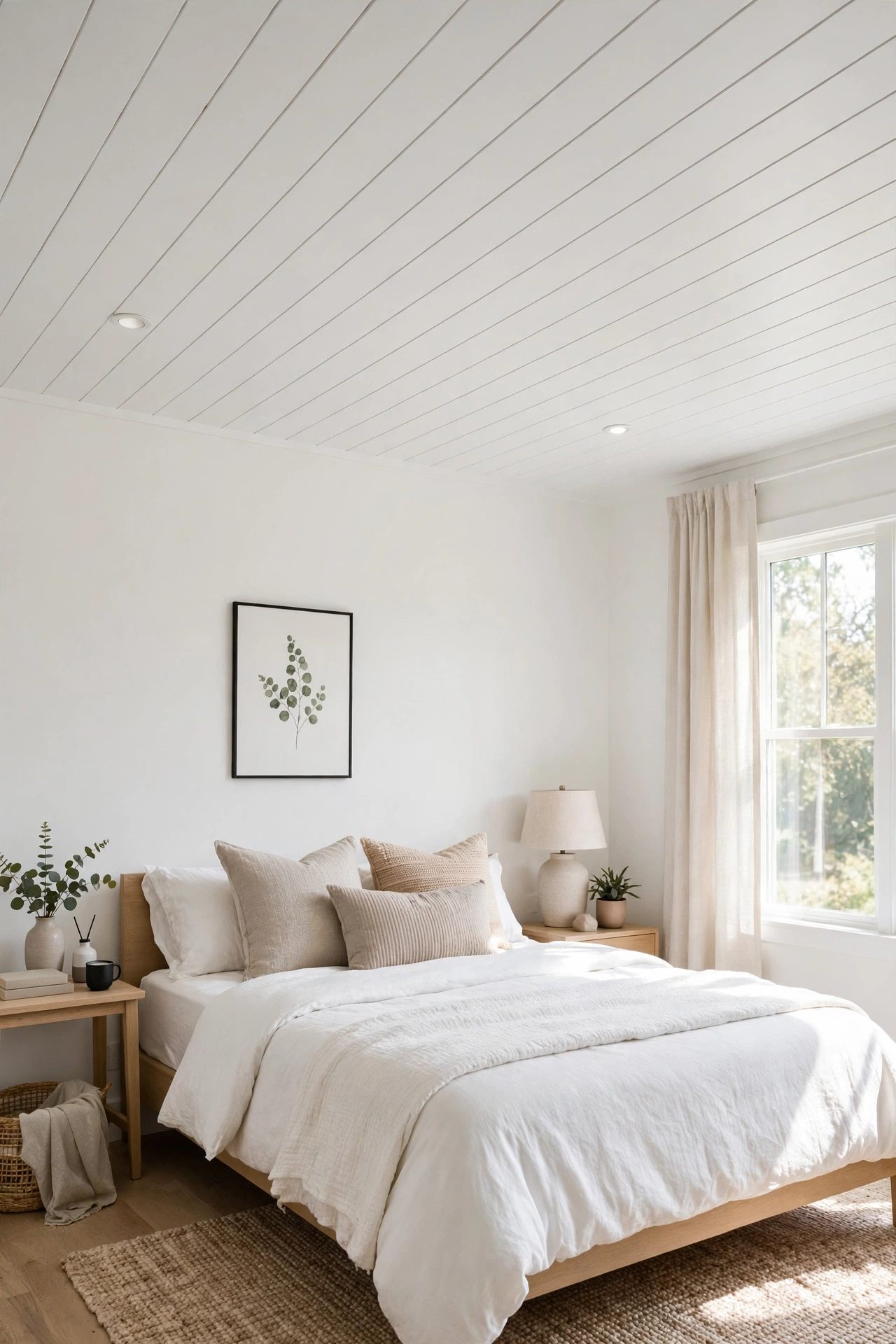
White shiplap is the look that made shiplap famous, and it is still the safest place to start. Painted boards in a soft white brighten the whole room, reflect light, and make ceilings feel higher — a real gift in rooms with low or flat ceilings. The look suits farmhouse, coastal, cottage, and transitional homes equally well, and it pairs with almost any wall color, from warm neutrals to deep navy. For the cleanest result, use smooth pine boards with a satin or semi-gloss finish so the surface wipes clean, and paint the boards before installation so the grooves stay crisp. Keep the furniture simple and let the ceiling do the talking: a white shiplap ceiling over a linen sofa, a jute rug, and black metal accents reads timeless rather than trendy. If you want one idea that never dates, this is it.
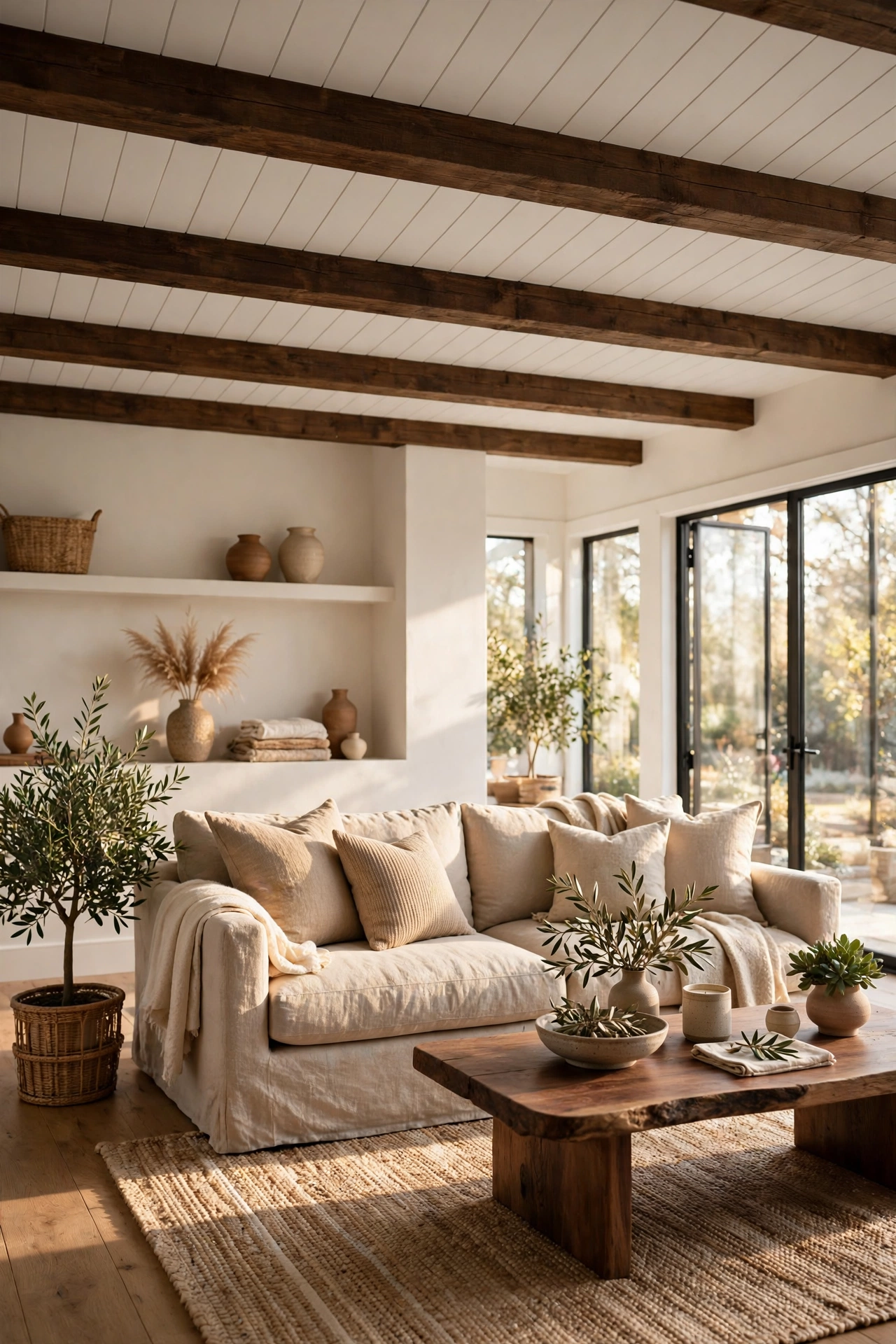
2. Pair Shiplap With Exposed Wood Beams
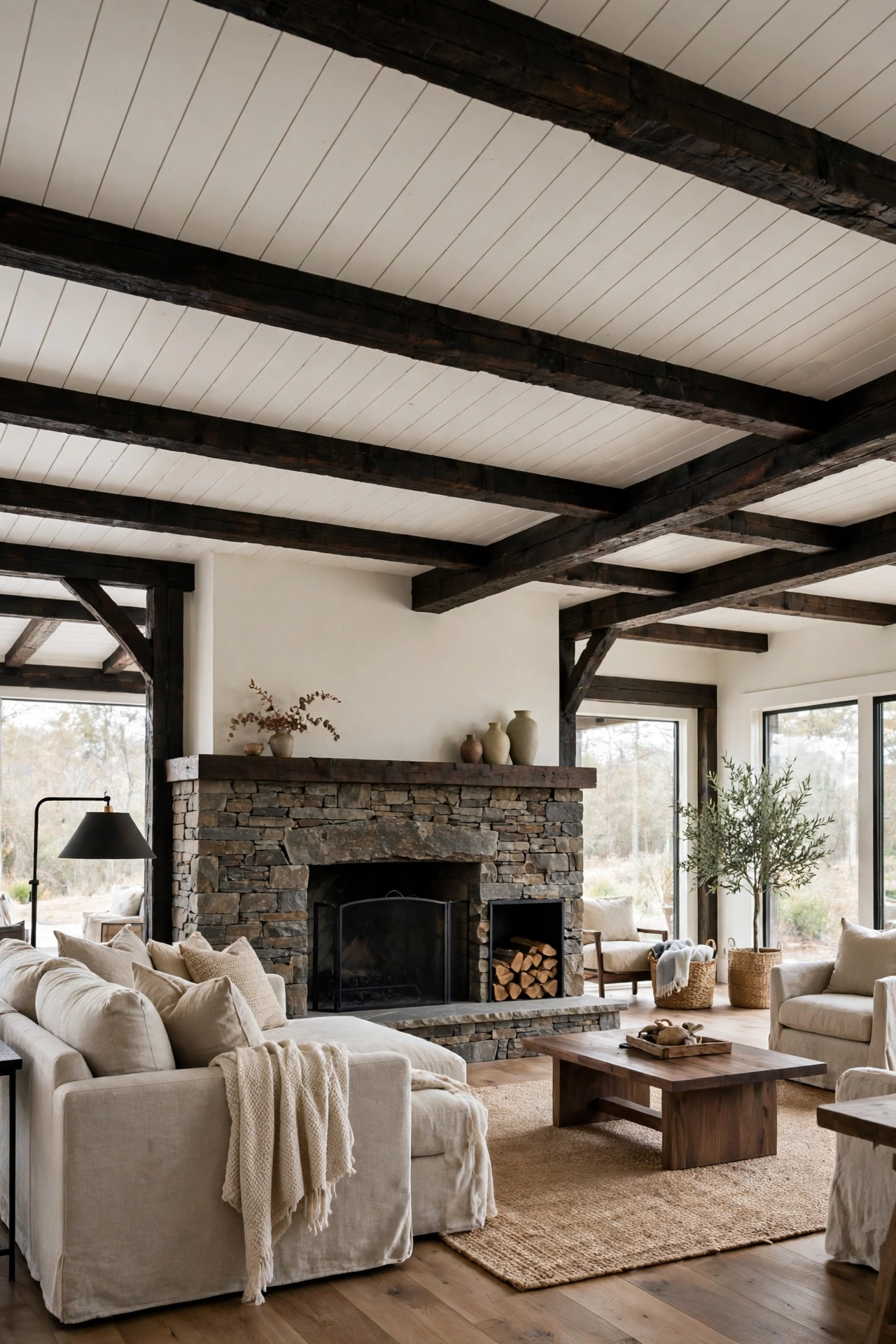
Shiplap and exposed beams are a match made in design heaven. The flat, linear boards give the ceiling texture, while the beams add depth, structure, and a sense of craftsmanship that a plain ceiling can never offer. The most popular pairing is white shiplap with dark-stained wood beams, which works in farmhouse, rustic, and modern-rustic homes alike. In a living room or great room, run the beams across the shorter span of the room and let the shiplap boards run the long way for a balanced grid. Faux beams made from hollow wood boxes deliver the same look at a fraction of the weight and cost, and they are a realistic weekend install. Add a simple chandelier or a row of pendant lights between the beams, and the ceiling becomes the focal point of the entire room.
3. Warm Up a Bedroom With Natural Wood Stain
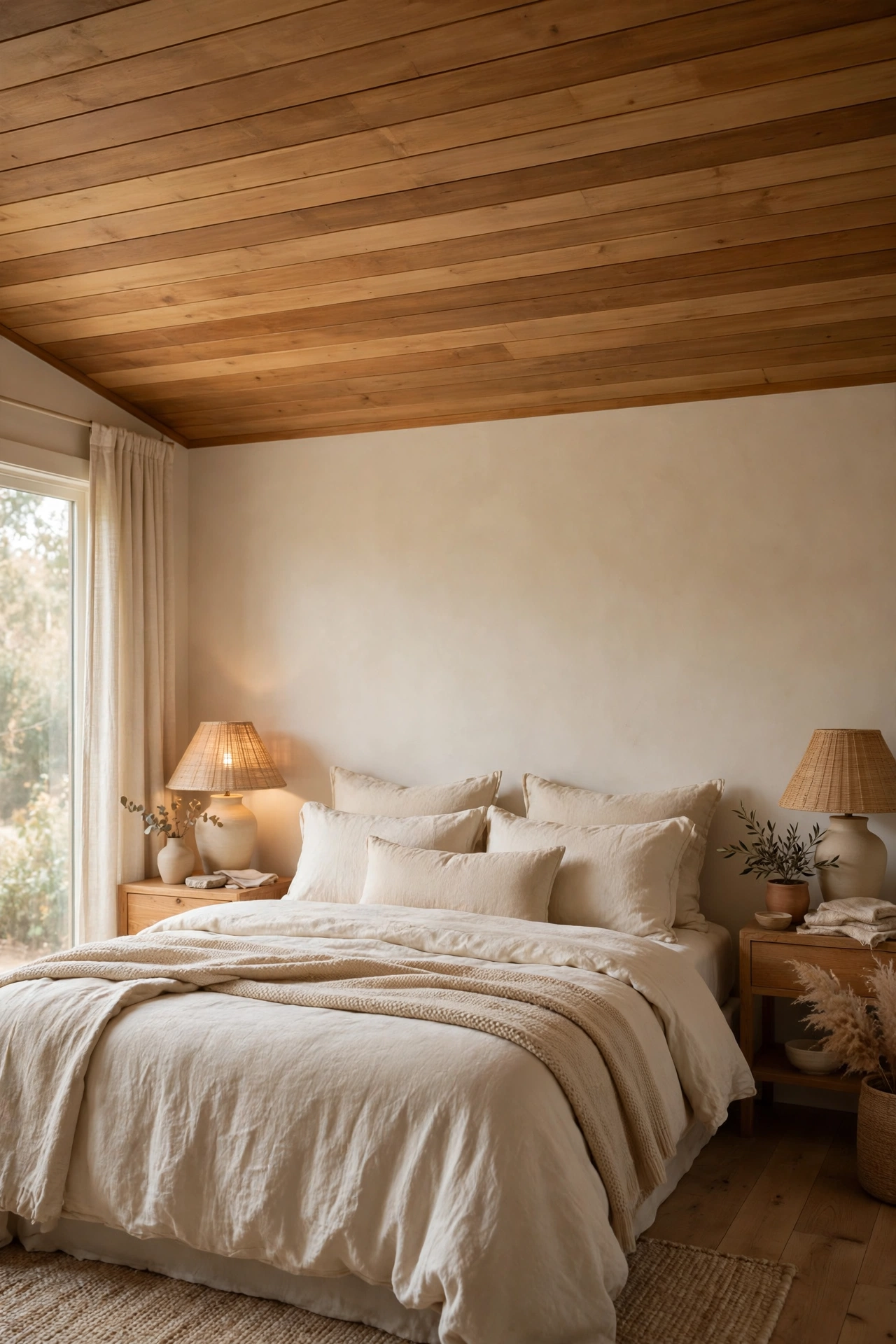
Leave the wood unpainted and a shiplap ceiling turns a bedroom into a warm, cocoon-like retreat. Natural pine or cedar boards in a honey, walnut, or light oak stain add the kind of warmth that paint simply cannot, and the wood grain gives the ceiling a soft, organic pattern. This look shines in primary bedrooms, guest rooms, and cabins, especially when the bedding is layered in cream linen and the walls stay pale so the ceiling can be the star. Seal the boards with a matte or satin clear coat to protect them and keep the grain visible. For a calmer feel, choose a lighter stain; for drama, go darker and pair it with black iron light fixtures. Either way, you will notice the ceiling every time you wake up — in the best way.
4. Go Big With a Vaulted Shiplap Ceiling
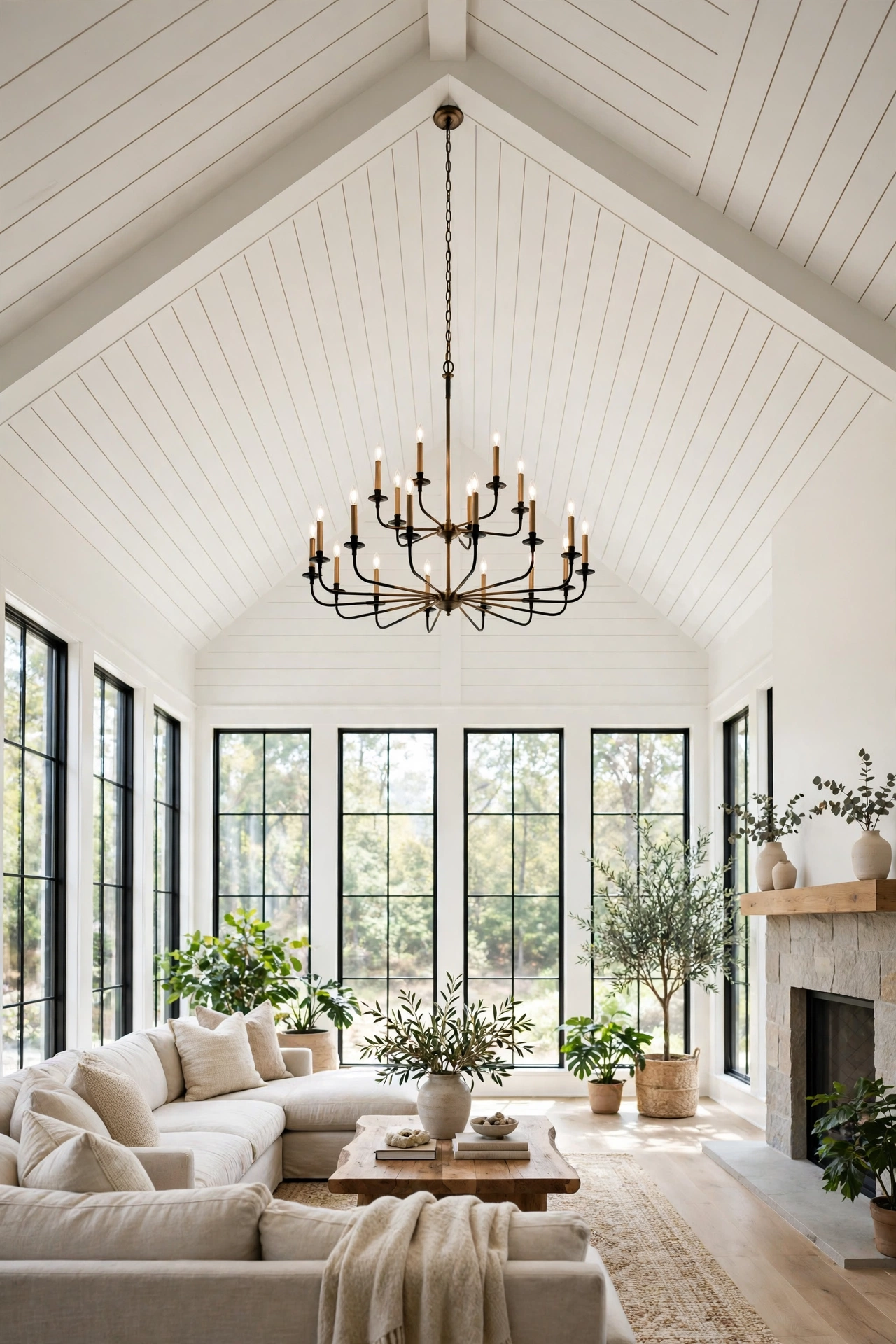
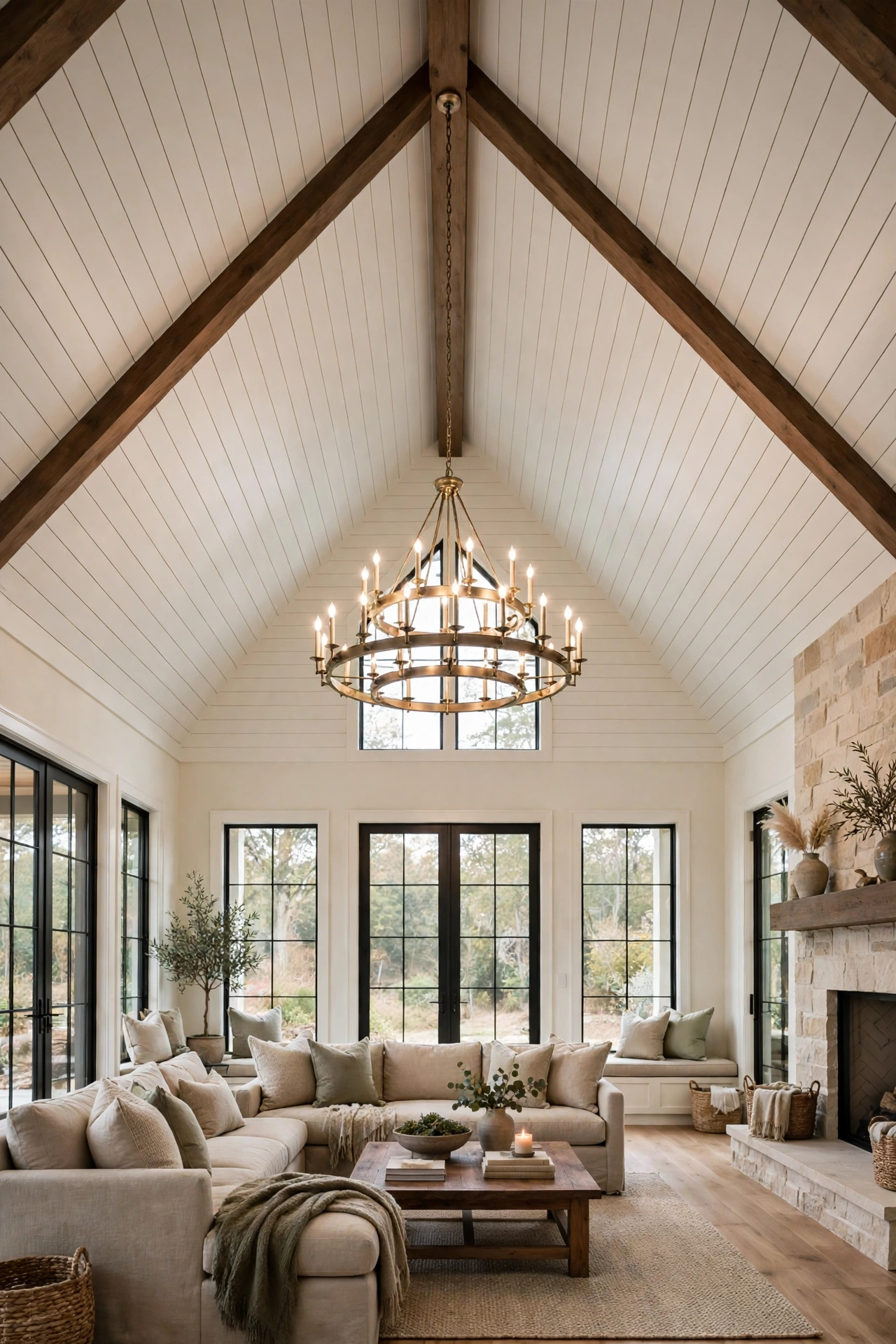
A vaulted ceiling is already dramatic, and shiplap makes it spectacular. Running boards up the slope draws the eye upward and emphasizes the height, while the linear pattern keeps the huge surface from feeling blank or echoey. White shiplap keeps a vaulted great room bright and airy, while natural wood stain makes the same space feel like a lodge. If the vault is very tall, add a beam at the ridge line and one or two collar ties to break up the expanse and give the room structure. A statement chandelier or a large fan hung from the peak anchors the design, and the shiplap gives it something beautiful to hang from. This is the idea to choose when you want guests to look up and say something the moment they walk in.
5. Brighten the Kitchen With Whitewashed Shiplap
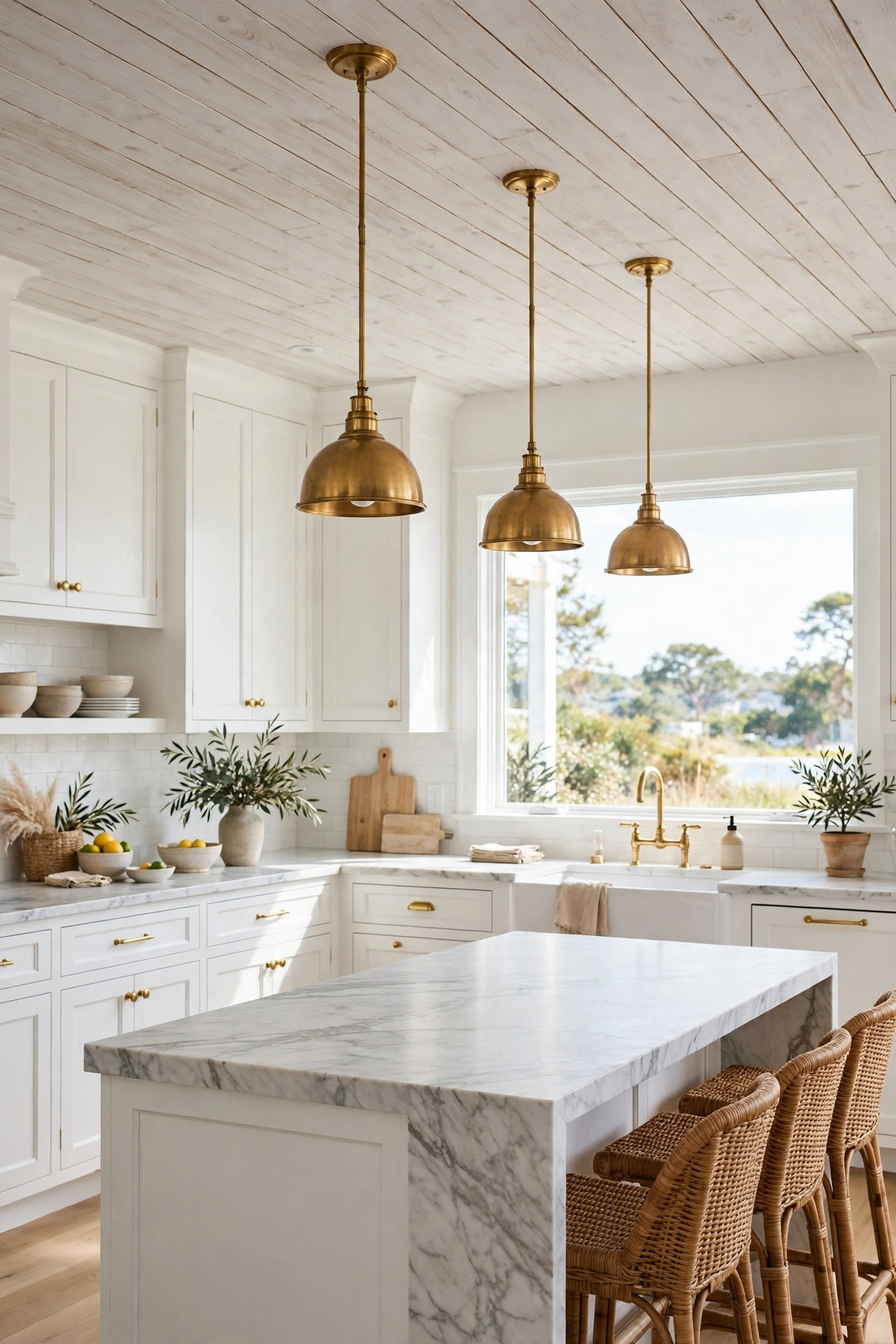
Kitchens need light, and a whitewashed shiplap ceiling delivers it with coastal charm. The thin wash of white over the wood grain keeps the texture visible while reflecting daylight deep into the room, which matters in kitchens with small windows or dark cabinets. Whitewashed boards pair beautifully with white or pale cabinets, brass hardware, and open shelving, and they make a small kitchen feel larger. Because kitchens deal with steam and cooking grease, seal the boards with a scrubbable satin finish and choose a moisture-resistant wood like pine with a proper primer. Run the boards in the same direction as the longest wall to stretch the room visually, and add recessed lights or a row of pendants over the island for a ceiling that works as hard as it looks good.
6. Make the Bathroom Feel Like a Spa
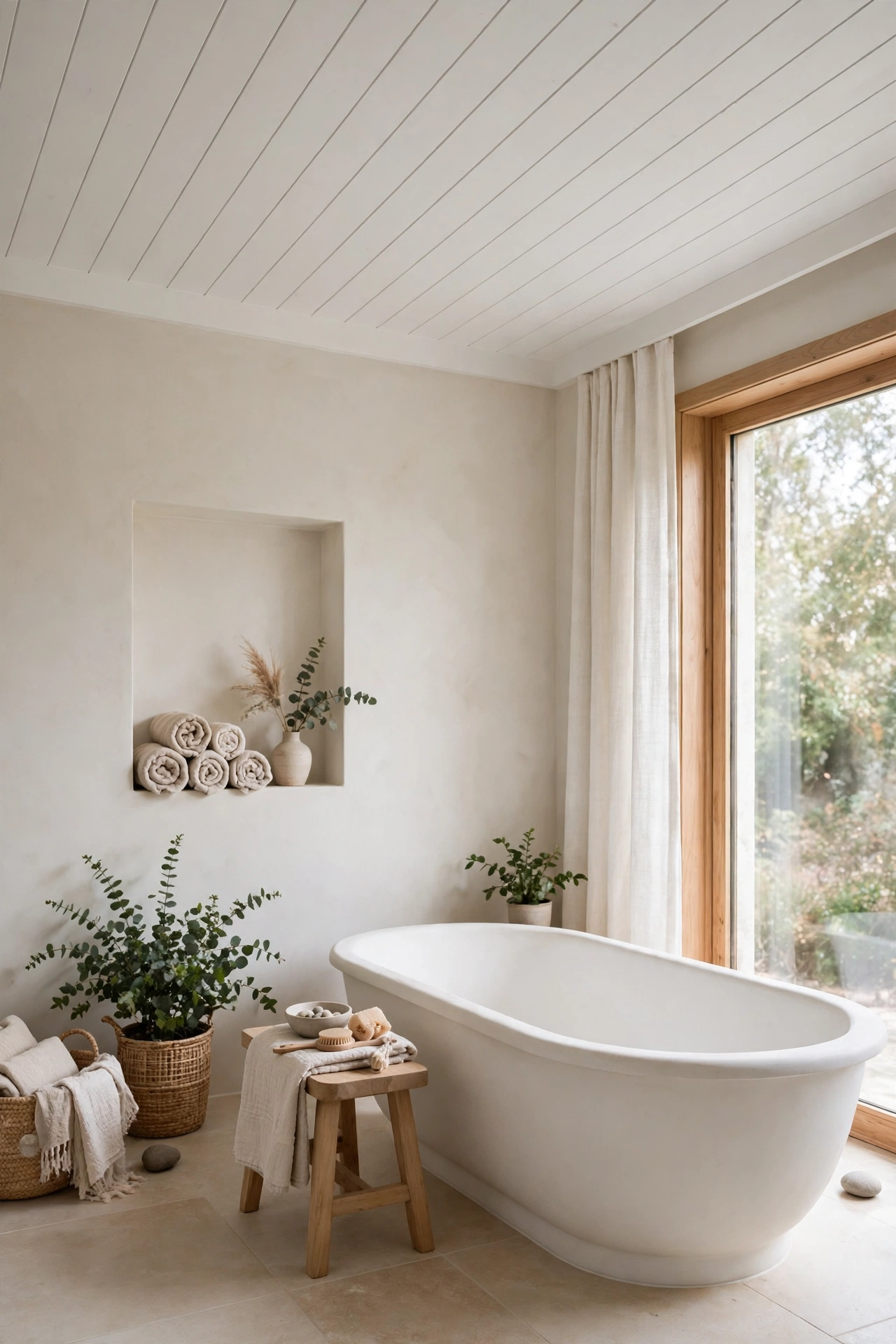
A shiplap ceiling turns an ordinary bathroom into a spa-like retreat, and the trick is choosing the right materials. Use moisture-resistant boards — PVC shiplap or properly sealed pine — and ventilate the room well, and the ceiling will hold up beautifully in steam. Painted white shiplap over a freestanding tub feels fresh and coastal, while a soft sage or pale blue adds a calm, spa-like color without overwhelming the small space. Keep the boards running the long way to stretch the room, and pair them with matte black or brushed brass fixtures for contrast. Recessed lights set into the shiplap give an even, flattering glow, and a small skylight above the shower makes the whole room feel open. It is a small ceiling with a big payoff.
7. Create Drama With a Dark Stained Ceiling
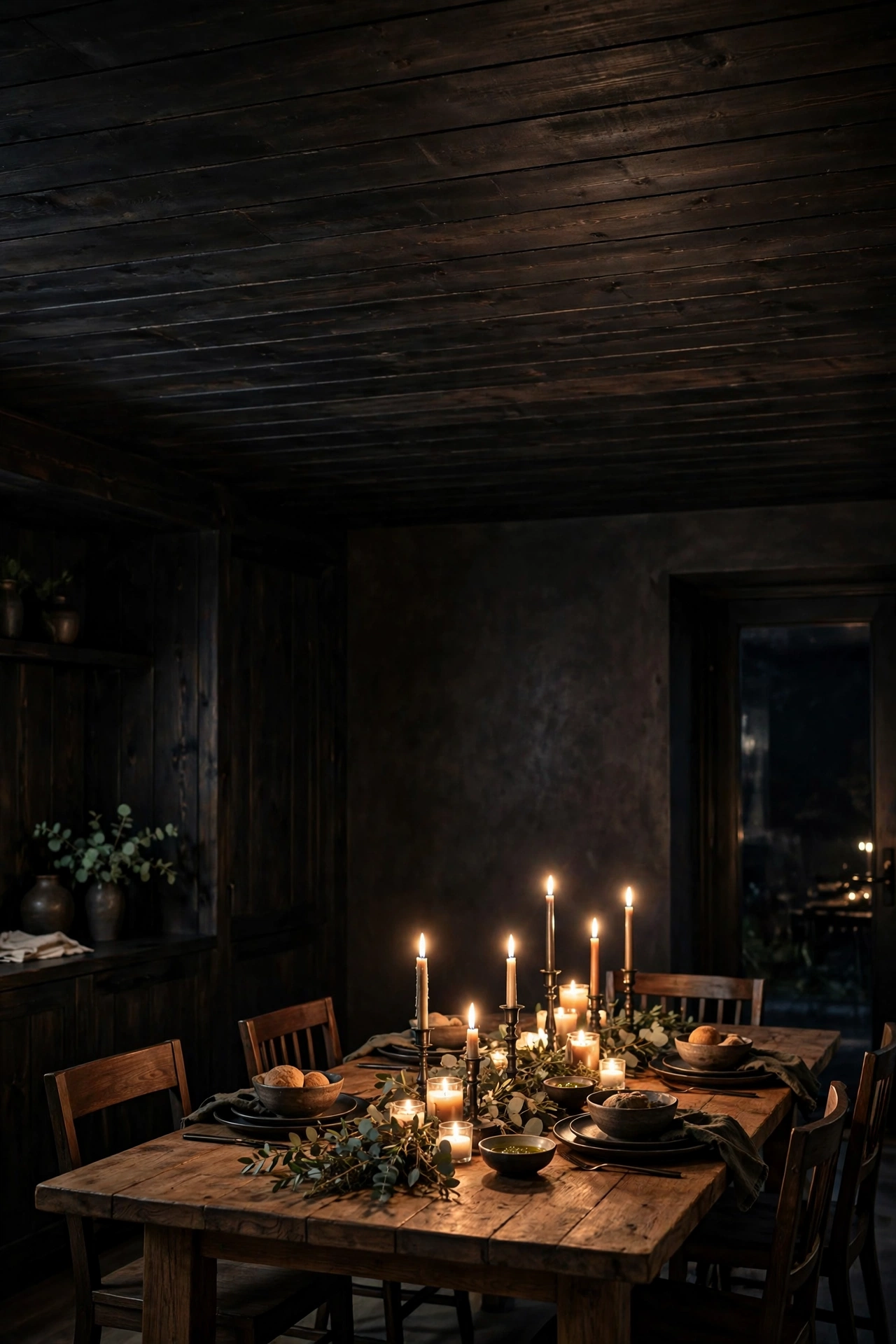
Not every shiplap ceiling needs to be white. A dark stain — espresso, walnut, or charcoal — turns the ceiling into a rich, moody canopy that makes a dining room or bedroom feel intimate and intentional. The key is balance: keep the walls light, add plenty of warm lighting, and let the dark ceiling be the one bold move in the room. Dark shiplap works especially well in dining rooms, where candlelight and pendant lights bounce softly off the wood and make evening meals feel special. Use a stain rather than paint so the grain shows through, and seal it well so the color stays even. If a fully dark ceiling feels like too much, try it in a smaller room first, like a reading nook or a powder room, where the drama is contained and delightful.
8. Make a Statement With Black Shiplap
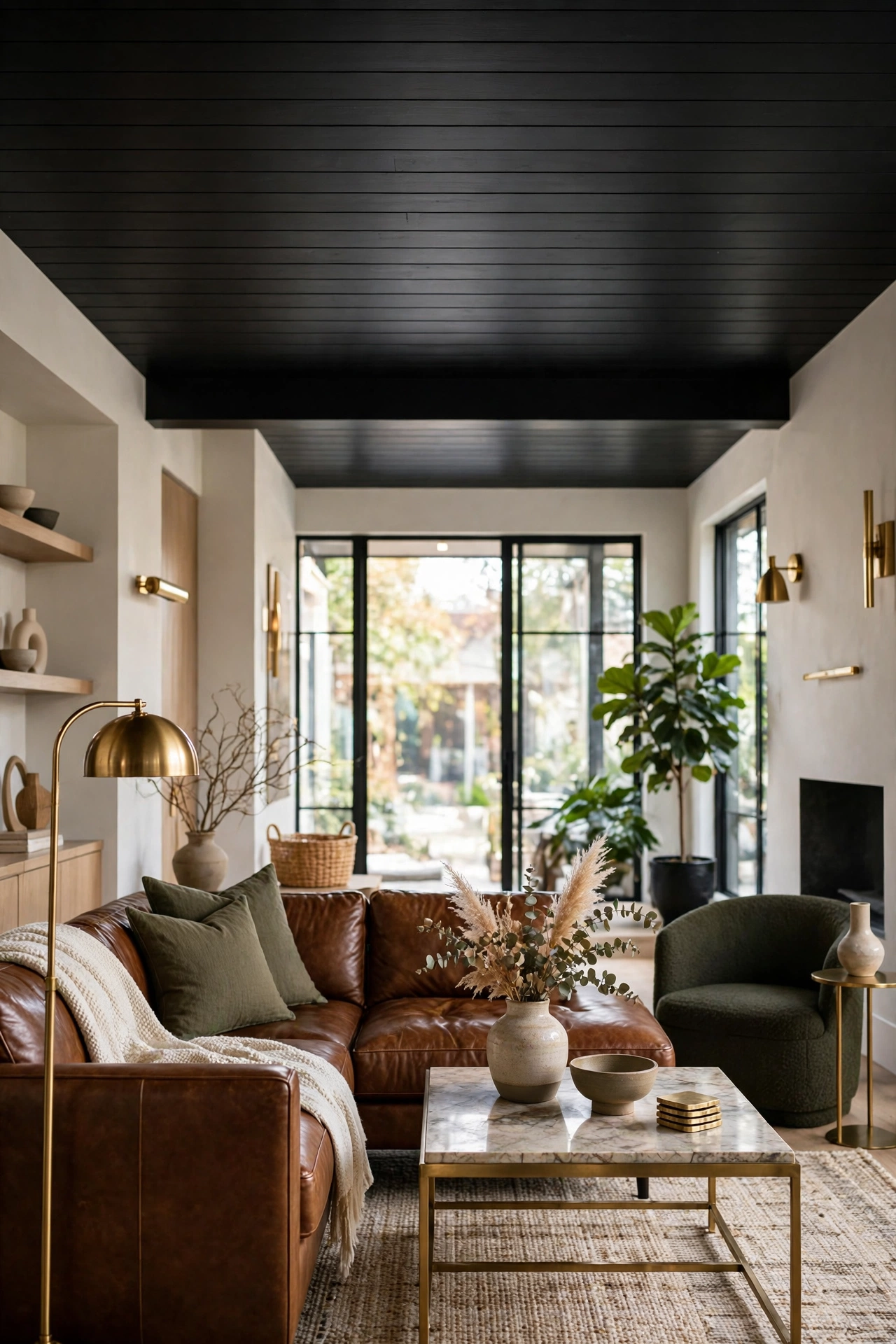
Black shiplap is the boldest move on this list, and in the right room it is unforgettable. A matte or satin black ceiling adds instant drama to a modern living room, a home office, or a bedroom, especially when the walls are white and the furniture is simple. The contrast makes the ceiling feel like a deliberate design choice rather than an accident, and the linear boards keep the dark surface from feeling flat. Black shiplap pairs beautifully with brass, leather, and warm wood tones, which soften the look and keep it from feeling cold. Add dimmable recessed lights or a sculptural pendant so you can control the mood, and keep the rest of the room uncluttered so the ceiling can hold the spotlight. It is not for every home, but when it works, nothing else comes close.
9. Soften the Look With Gray Shiplap
Gray shiplap is the middle ground between crisp white and dramatic black, and it suits homes that want texture without a strong color statement. A soft warm gray or a pale greige keeps the ceiling light while adding just enough depth to make the boards visible, and it pairs beautifully with white walls, natural wood floors, and black or brass fixtures. Gray works especially well in modern farmhouse and transitional rooms, where it reads calm and sophisticated rather than rustic. Paint the boards in a matte or eggshell finish so the color stays soft, and consider a slightly darker gray on the beams if you have them for a layered, two-tone effect. It is the ceiling equivalent of a perfectly tailored gray suit: understated, versatile, and hard to get wrong.
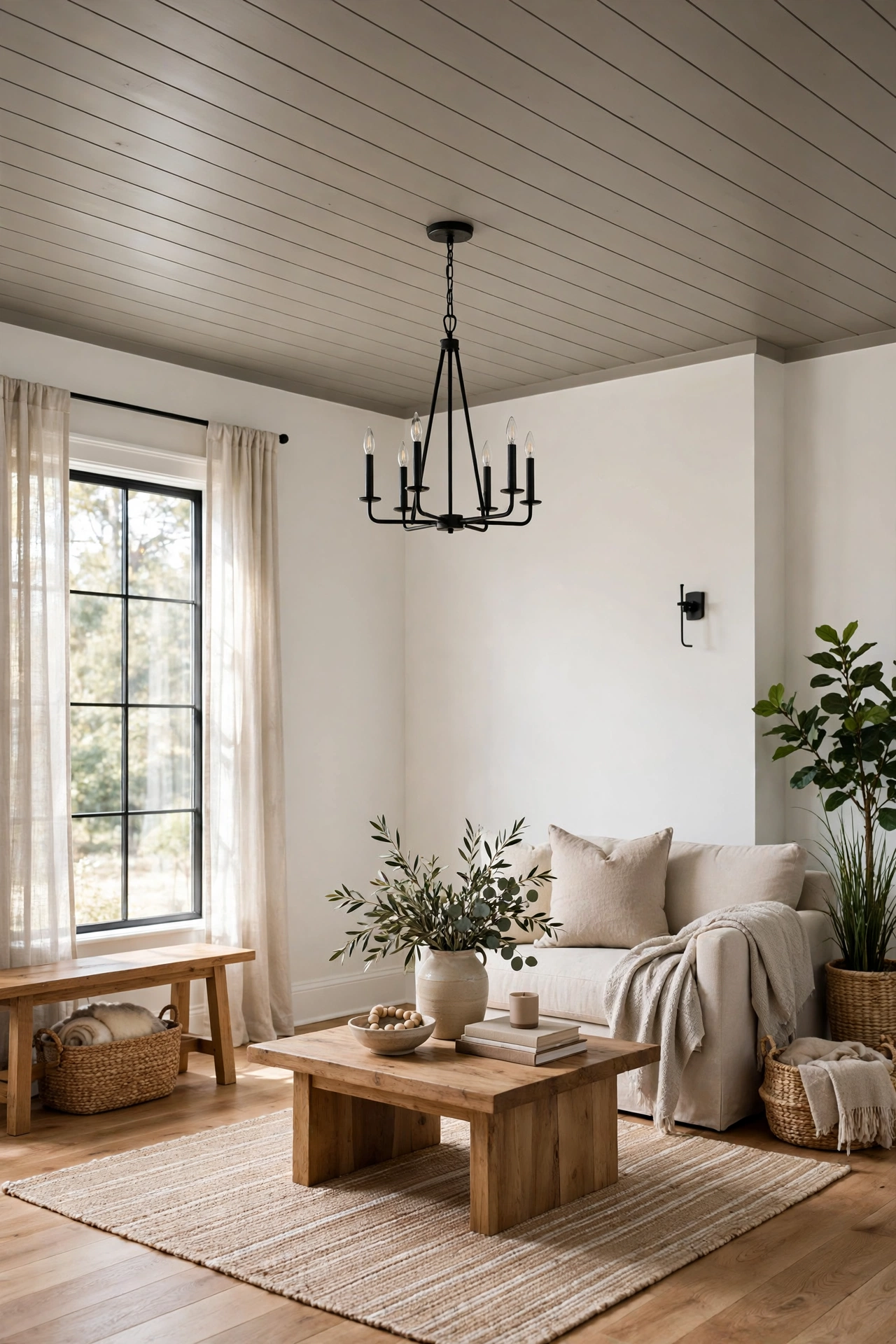
10. Try a Two-Tone Ceiling With Contrasting Beams
A two-tone shiplap ceiling uses contrast to create a custom, layered look. The classic version pairs white shiplap boards with beams stained in a warm wood tone, but you can also flip it — natural wood boards with white-painted beams — or use two paint colors, like pale gray boards with white beams. The contrast defines the ceiling’s geometry and makes the beams feel intentional rather than structural. This approach works in almost any room, but it shines in dining rooms and living rooms where the ceiling is visible from every seat. Keep the two tones in the same family — warm with warm, cool with cool — so the contrast feels designed rather than accidental. If you are painting, paint the boards and beams separately before installation for the sharpest lines, and touch up the joints after the boards are up.
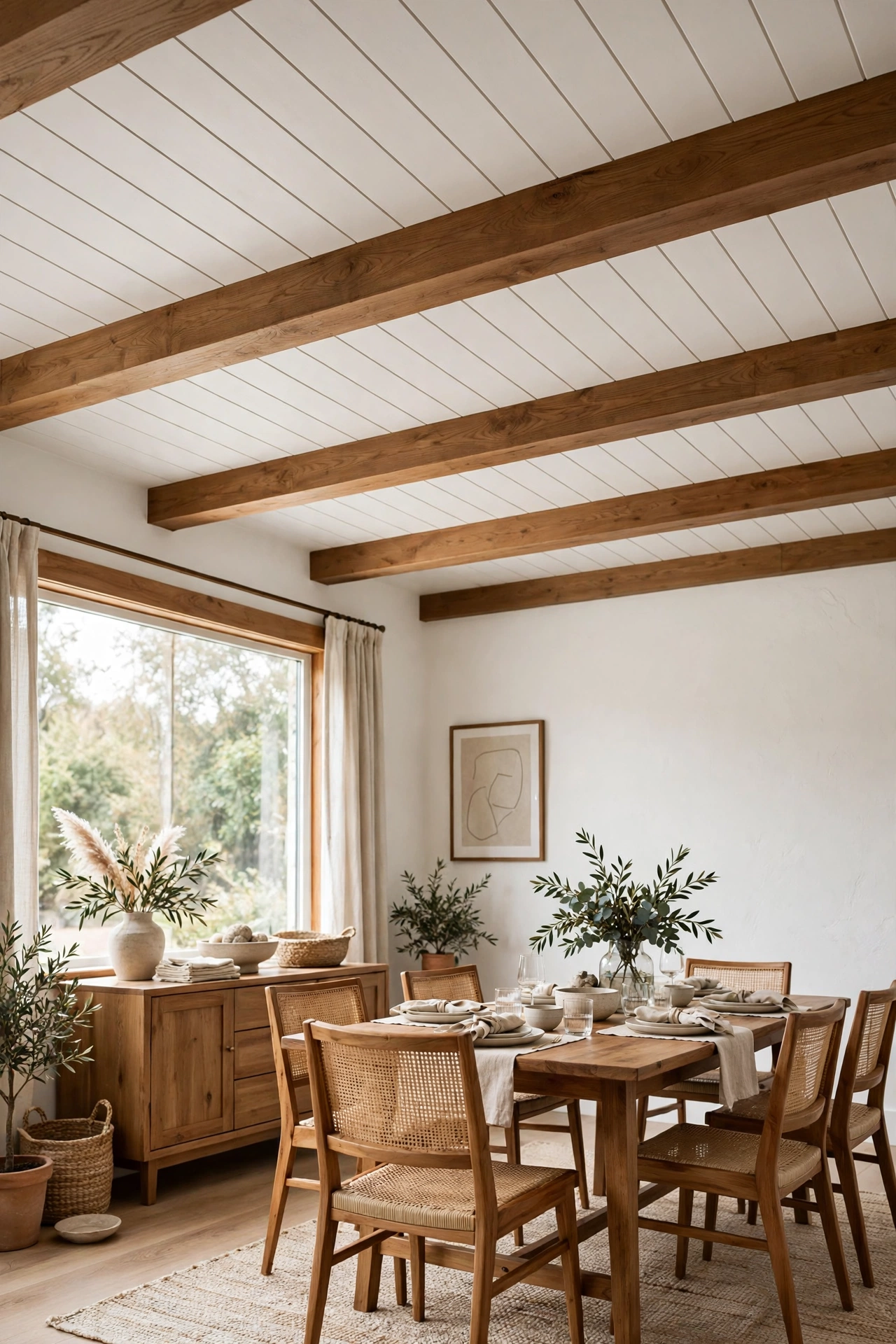
11. Add Pattern With Chevron or Herringbone Shiplap
Most shiplap runs in straight parallel lines, but chevron and herringbone layouts turn the ceiling into a piece of geometric art. In a chevron pattern the boards meet at sharp V-shaped points, while herringbone staggers rectangular boards at right angles for a woven effect. Both patterns add movement and visual energy, and they work best as a feature ceiling in one room — a dining room, an entry, or a bedroom — rather than throughout the whole house. The install is more complex than straight boards, since every cut is angled, so this is a good project to plan carefully or hand to a carpenter. Painted white, a patterned ceiling reads subtle and elegant; in natural wood, it becomes a bold, crafted statement. Either way, it is the ceiling guests will photograph.
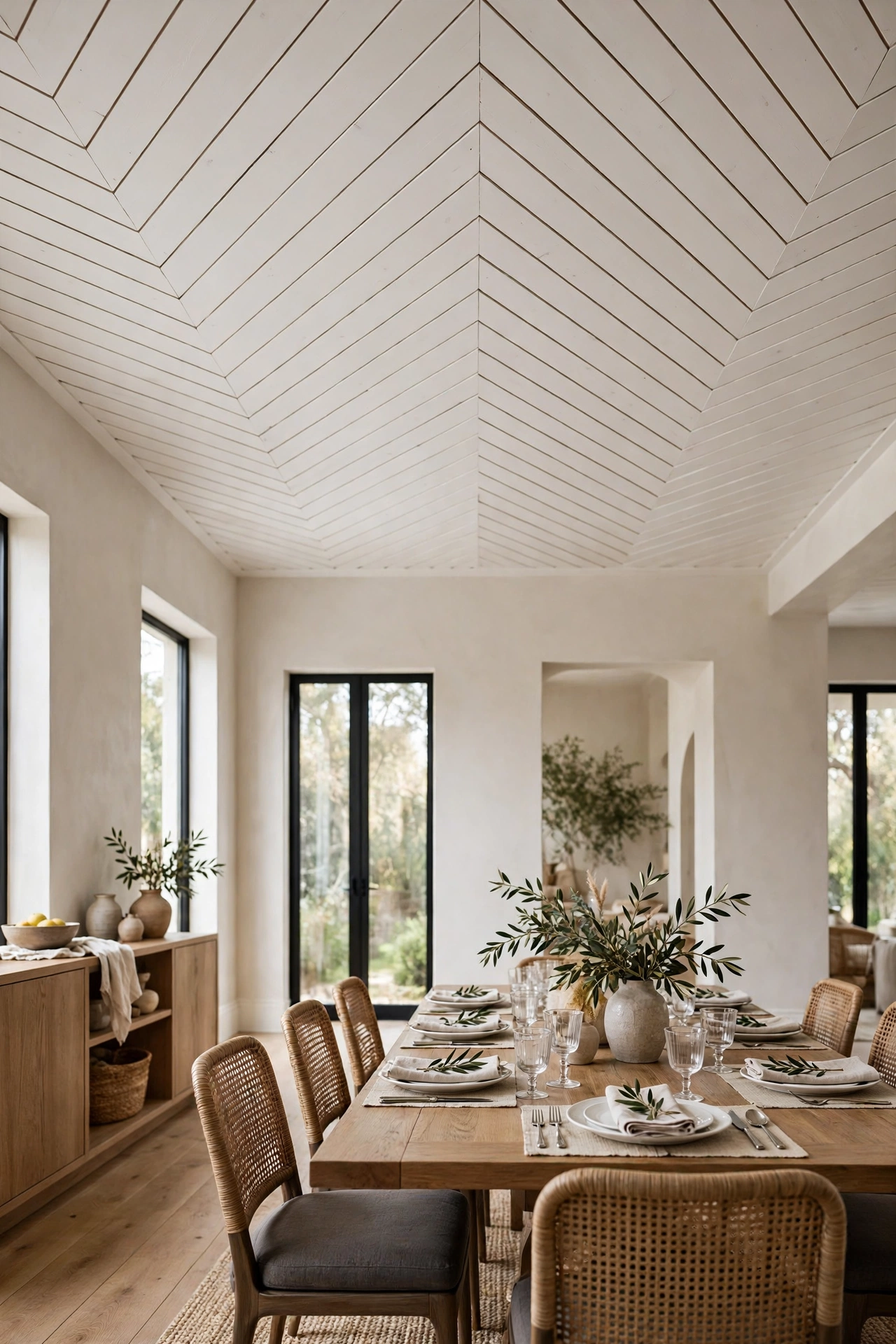
12. Run the Boards Diagonally for Movement
Diagonal shiplap is a simple twist with a big visual payoff. Instead of running the boards parallel to the walls, install them at a 45-degree angle, and the ceiling suddenly feels dynamic and intentional. Diagonal boards work especially well in square rooms, where straight boards can feel static, and in hallways, where the angle draws the eye forward and makes the space feel longer. The look suits modern farmhouse and contemporary homes, and it pairs well with simple, uncluttered furniture so the ceiling can carry the pattern. Installation takes a little more measuring and cutting than a straight run, but the boards themselves are the same, so the material cost barely changes. It is an easy way to make a standard shiplap install feel custom.
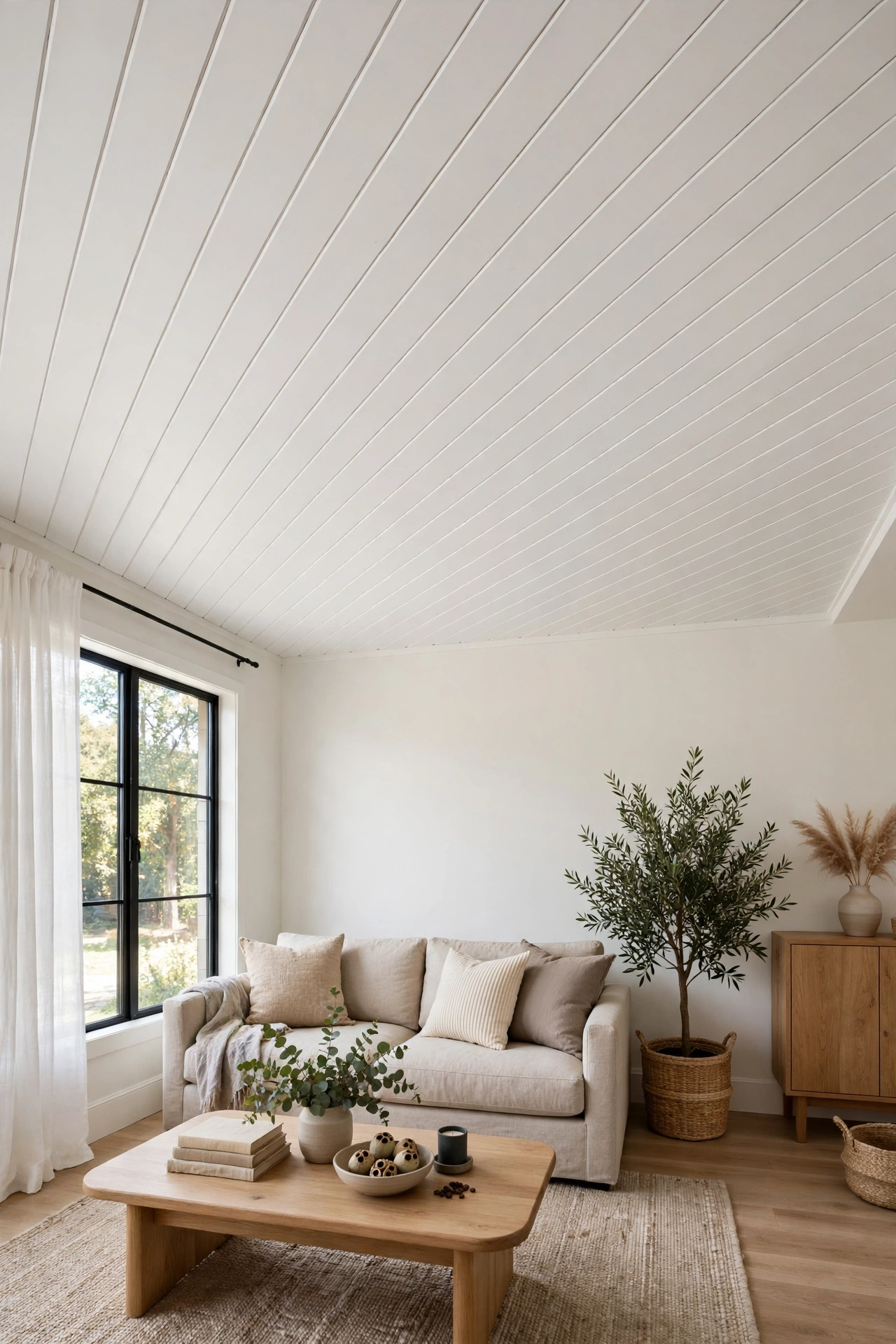
13. Make Low Ceilings Feel Taller With Vertical Boards
In a room with a low ceiling, the direction of the boards matters more than the color. Running shiplap boards vertically — from the front of the room to the back — pulls the eye along the length of the space and makes the ceiling feel higher than it is. This trick works beautifully in basements, small bedrooms, and hallways, where every inch of perceived height counts. Paint the boards white or a very pale color to maximize the lift, and keep the light fixtures low-profile so nothing hangs down into the room. If your home has a basement with a low ceiling, a vertical shiplap install is one of the most effective ways to make it feel like a real living space rather than a converted storage area. For more basement ceiling inspiration, see our brilliant basement ceiling ideas.
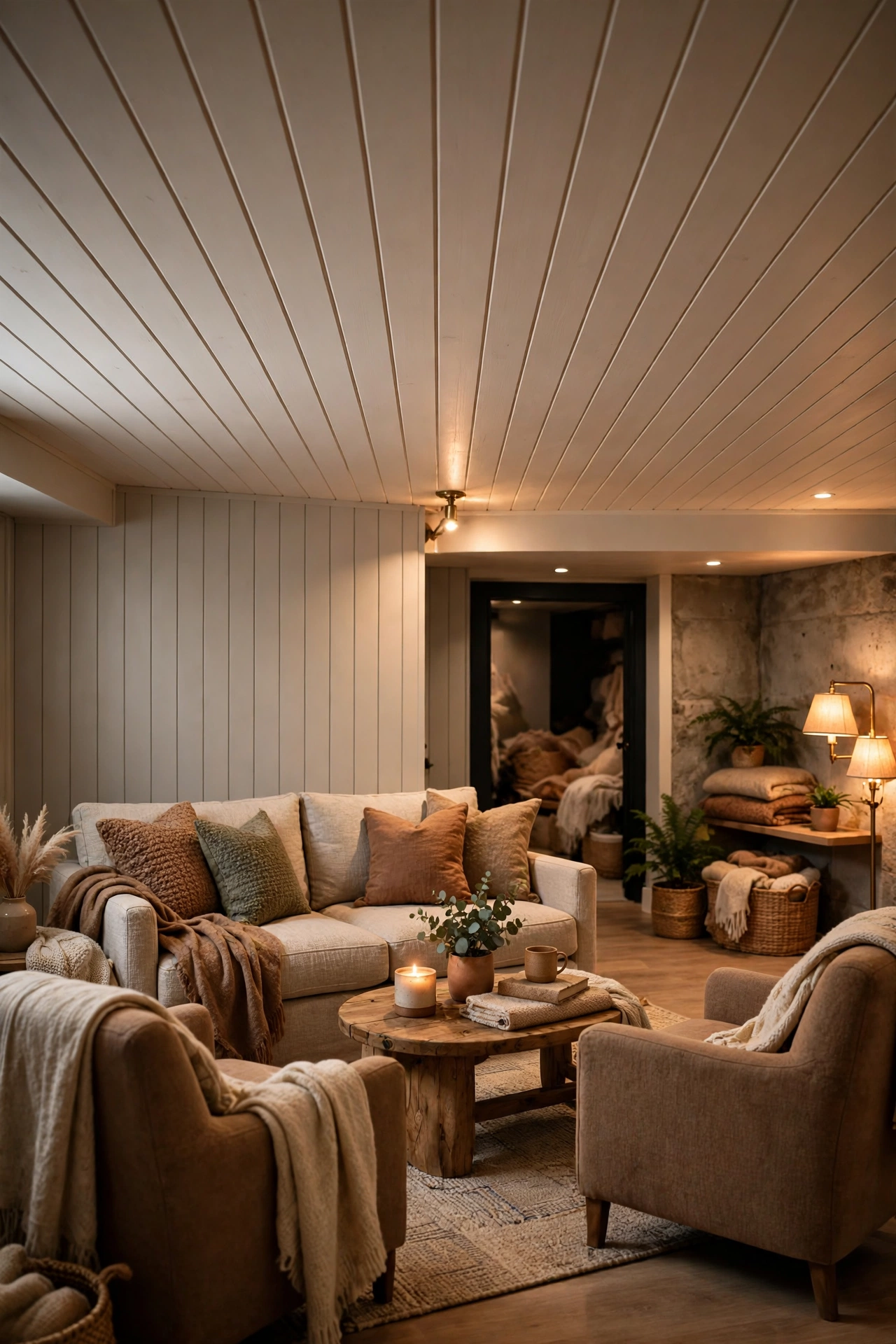
14. Choose Narrow Boards for a Modern Feel
Board width changes the whole personality of a shiplap ceiling. Narrow boards — around three to four inches wide — create a fine, tailored texture that suits modern and contemporary homes, where the ceiling should feel crisp rather than rustic. The tight lines read almost like paneling, and they pair well with clean-lined furniture, black window frames, and minimal decor. Narrow boards also work well in small rooms, where wide planks can feel heavy and oversized. For the sharpest look, use boards with a small, consistent gap and paint them in a matte white or a soft neutral. Add recessed lighting rather than a bulky fixture, and the ceiling will feel like a quiet, polished backdrop that makes everything else in the room look better.
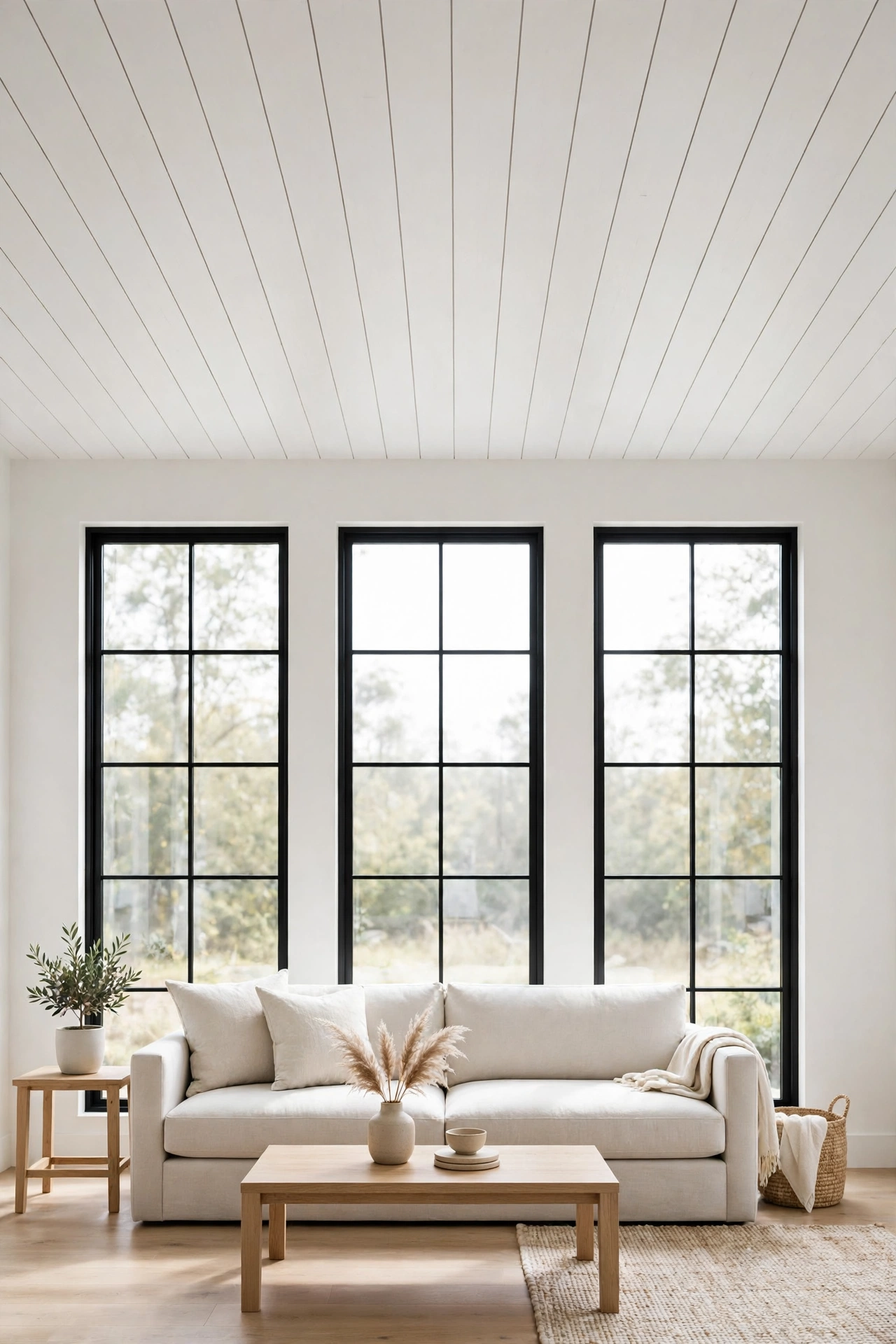
15. Go Wide-Plank for Farmhouse Character
Wide planks — eight inches or more — give a shiplap ceiling a relaxed, farmhouse character that narrow boards cannot match. The broad boards show off more wood grain, create fewer lines overhead, and make a room feel grounded and generous, especially in larger living rooms and great rooms. Wide-plank shiplap in a natural or whitewashed finish is the classic farmhouse look, and it pairs beautifully with exposed beams, a stone fireplace, and linen upholstery. Because wide boards expand and contract more with humidity changes, leave a small, even gap between them and install them in a climate-controlled room. The result is a ceiling that feels handcrafted and warm, like the best old farmhouses — without the creaks.
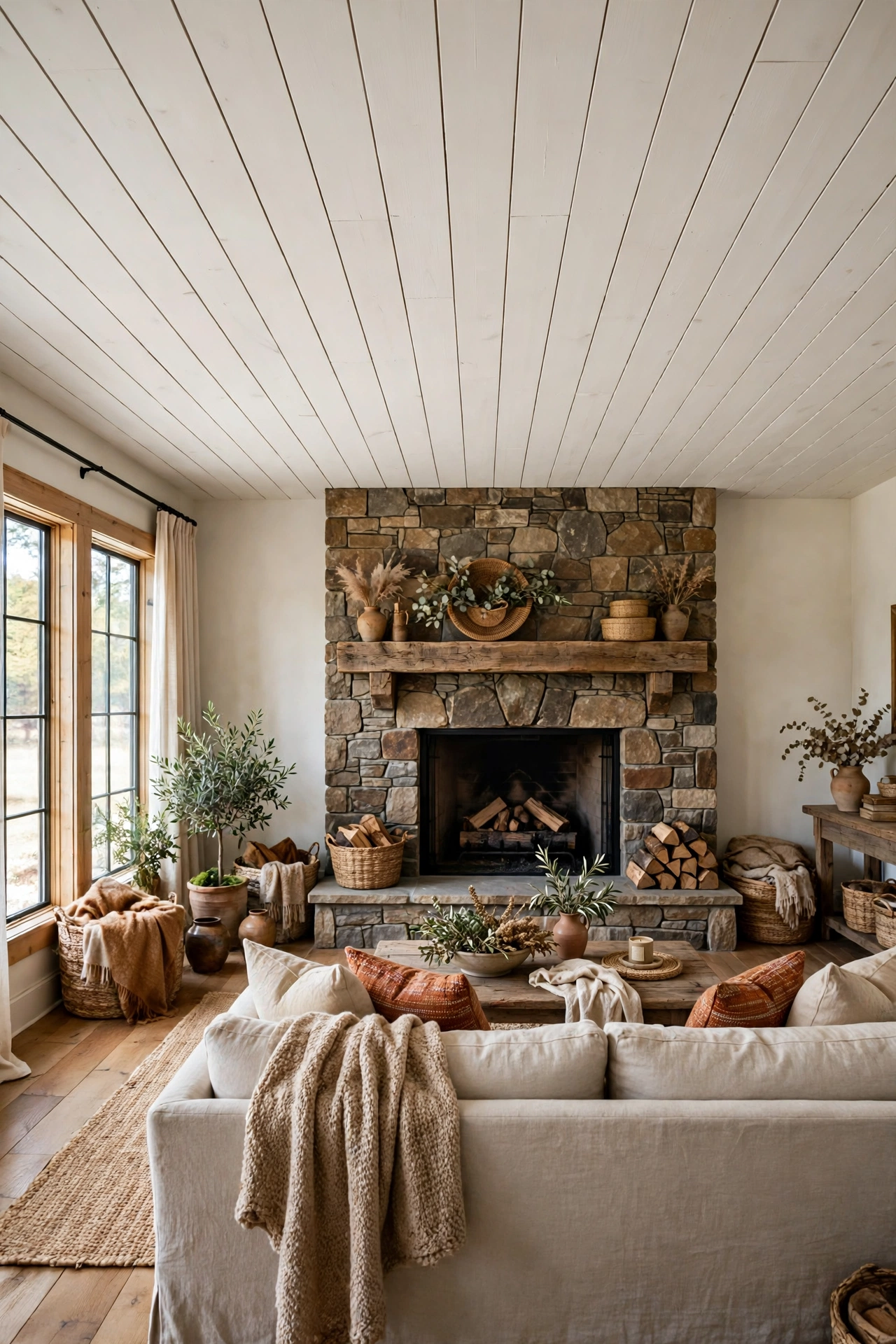
16. Set Recessed Lights Into the Shiplap
Recessed lighting and shiplap are a natural pair. The lights sit flush with the boards, so the ceiling stays clean and uncluttered, while the even glow shows off the texture of the wood without harsh shadows. Plan the layout before the boards go up: space the lights evenly, keep them a few feet from the walls, and add a dimmer so you can shift from bright task lighting to a soft evening glow. Recessed lights work in every room, but they are especially useful in kitchens, bathrooms, and hallways, where a hanging fixture would get in the way. If you are installing shiplap over an existing ceiling, the boards give you a perfect surface to hide the wiring, and the finished result looks like the lights were always meant to be there.
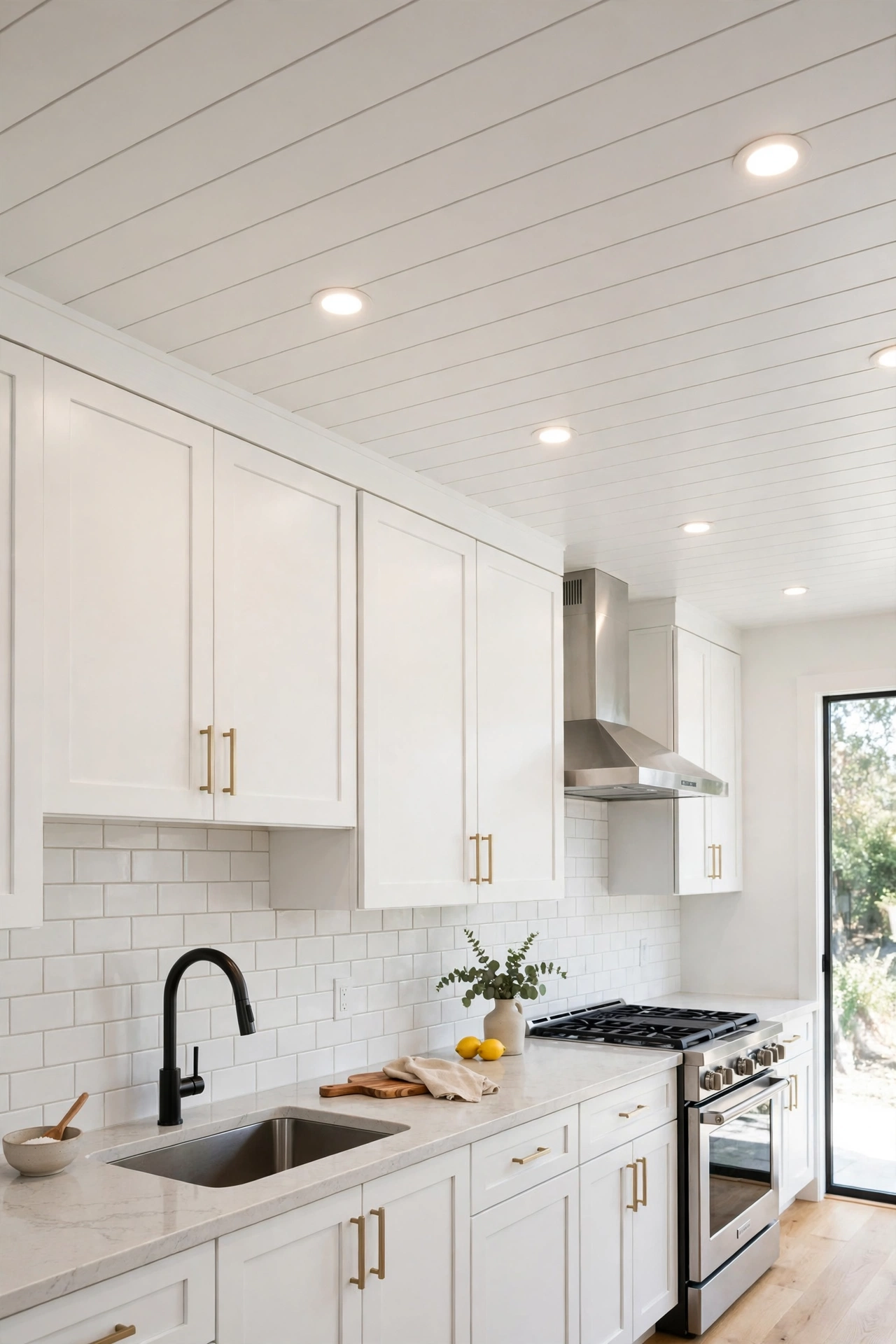
17. Add Warmth With LED Strip Lighting
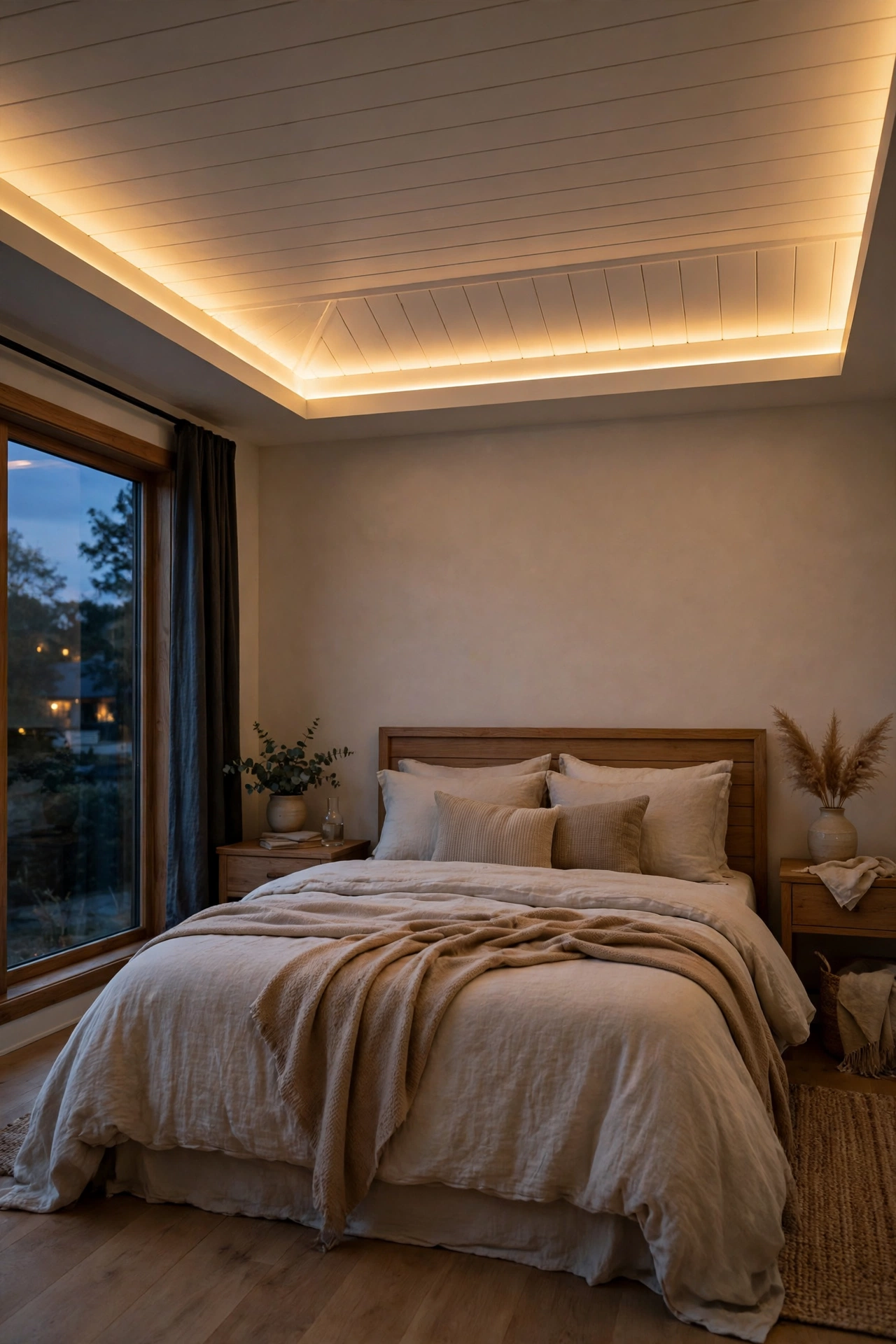
LED strip lighting tucked behind a beam, along a tray edge, or in a cove above the shiplap adds a warm, indirect glow that makes the whole ceiling feel like it is floating. The light washes across the boards and highlights their texture in a way that overhead fixtures never do, and a warm white temperature keeps the room cozy rather than clinical. This is a great trick for tray ceilings, bedrooms, and media rooms, where you want atmosphere more than brightness. The strips themselves are inexpensive and easy to install, and a dimmer or a smart controller lets you change the mood at the touch of a button. Keep the strips hidden — behind a beam or a small lip — so you see the glow, not the source, and the ceiling will look professionally lit.
18. Frame a Skylight With Shiplap
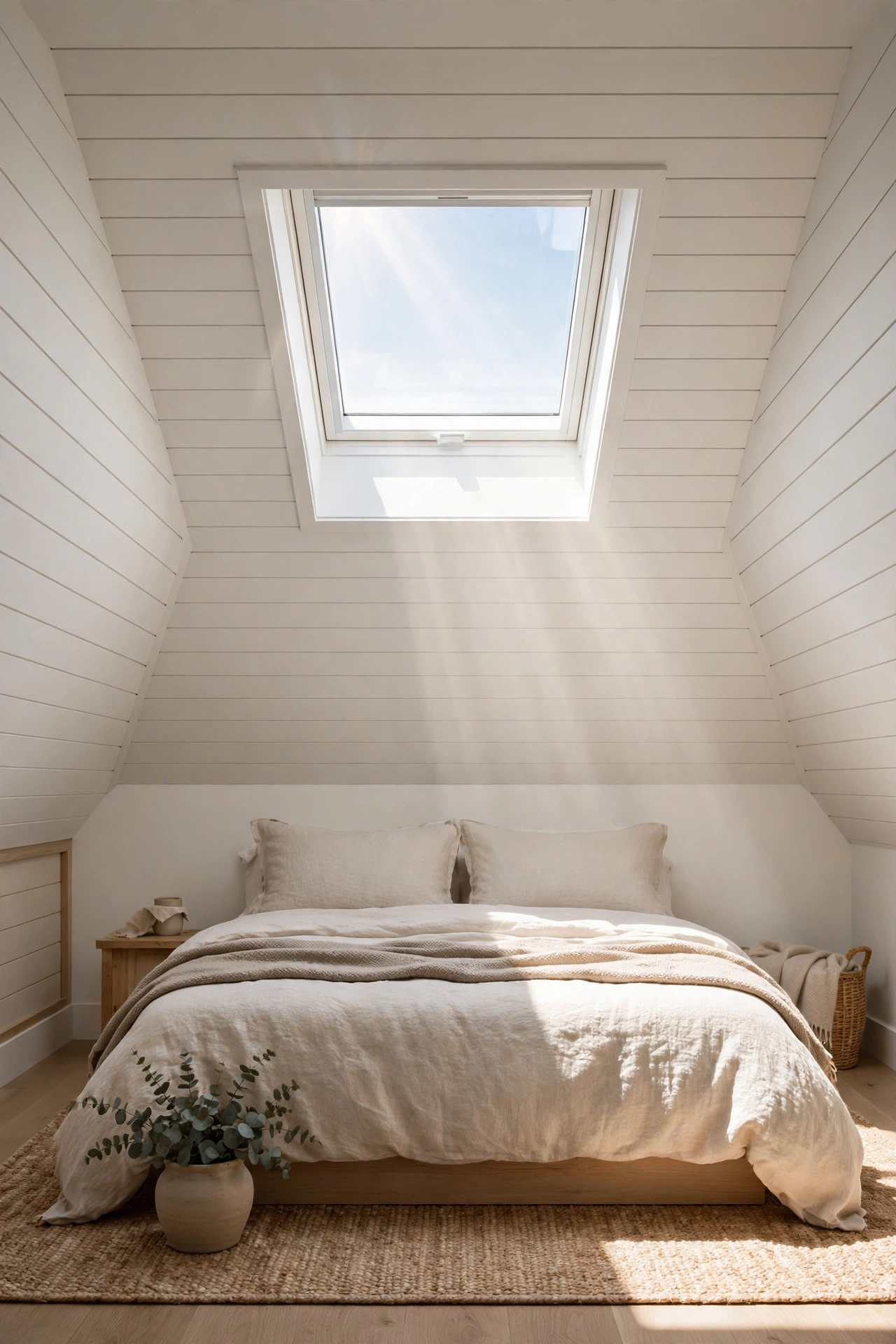
A skylight and a shiplap ceiling are a perfect combination: the skylight brings in daylight, and the shiplap gives that light a beautiful surface to fall on. Frame the skylight opening with the same boards as the ceiling, mitering the corners neatly, and the whole ceiling will read as one continuous, crafted surface. The effect is strongest in kitchens, bathrooms, and attic bedrooms, where a skylight turns a dark, closed room into a bright, open one. If you are adding a skylight to an existing shiplap ceiling, plan the opening carefully and seal it well — a skylight is only as good as its flashing. On a sunny day, the boards around the skylight glow, and on a rainy one, the sound of rain on the glass makes the room feel like a retreat.
19. Hang Pendant Lights From a Shiplap Ceiling
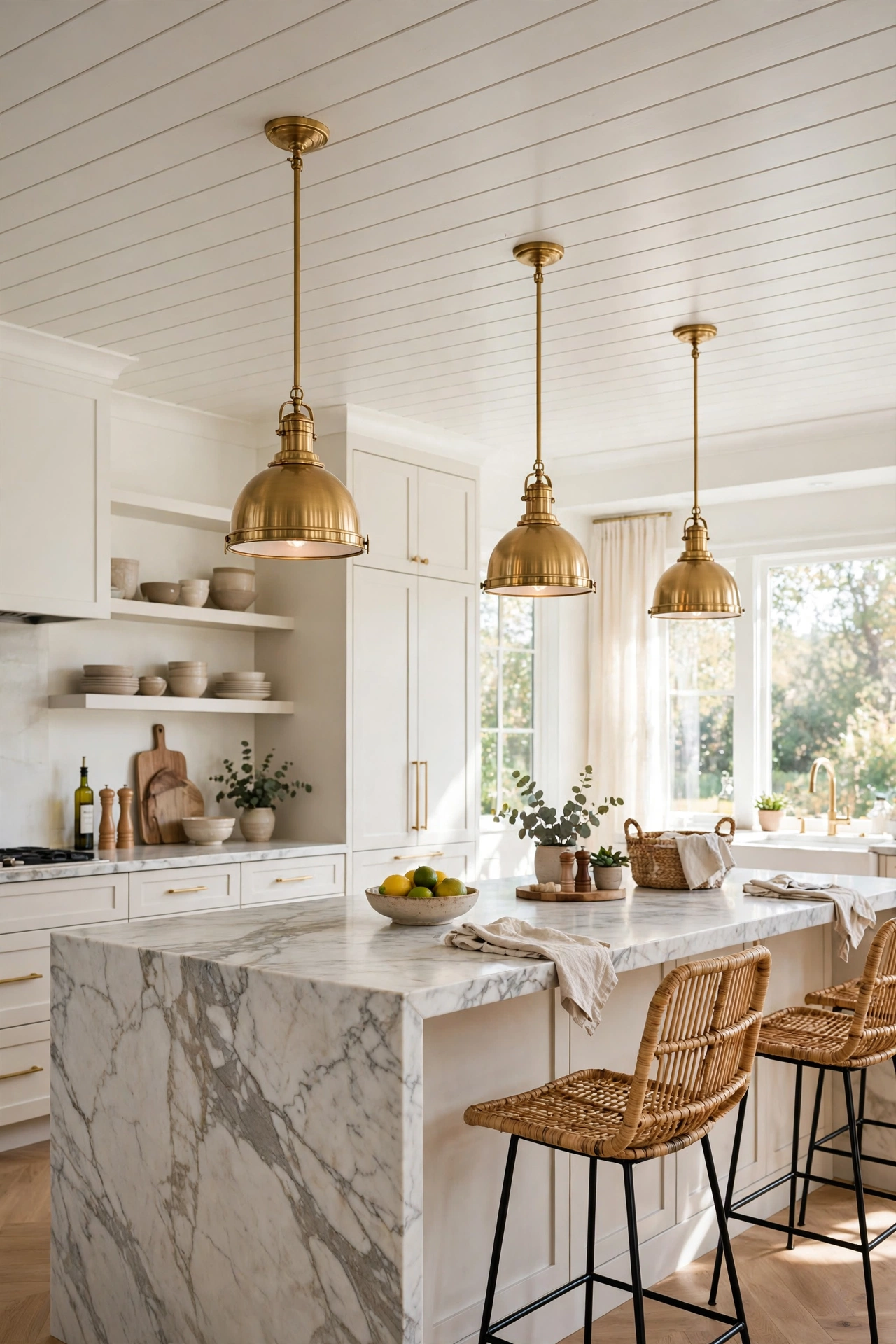
Pendant lights hung from a shiplap ceiling get a beautiful backdrop that makes them look even better. The linear boards give the eye a rhythm to follow, and the pendants break up the pattern with sculptural shapes and warm light. Over a kitchen island, hang two or three matching pendants in brass, black, or glass; over a dining table, one large pendant or a linear fixture centered on the table; in a bedroom, a pair of small pendants flanking the bed instead of table lamps. Mount the pendants on a reinforced board or a small ceiling medallion so the weight is supported, and keep the cord or rod length consistent so the lights hang level. The shiplap does the quiet work of texture, and the pendants do the talking.
20. Build a Coffered Shiplap Ceiling
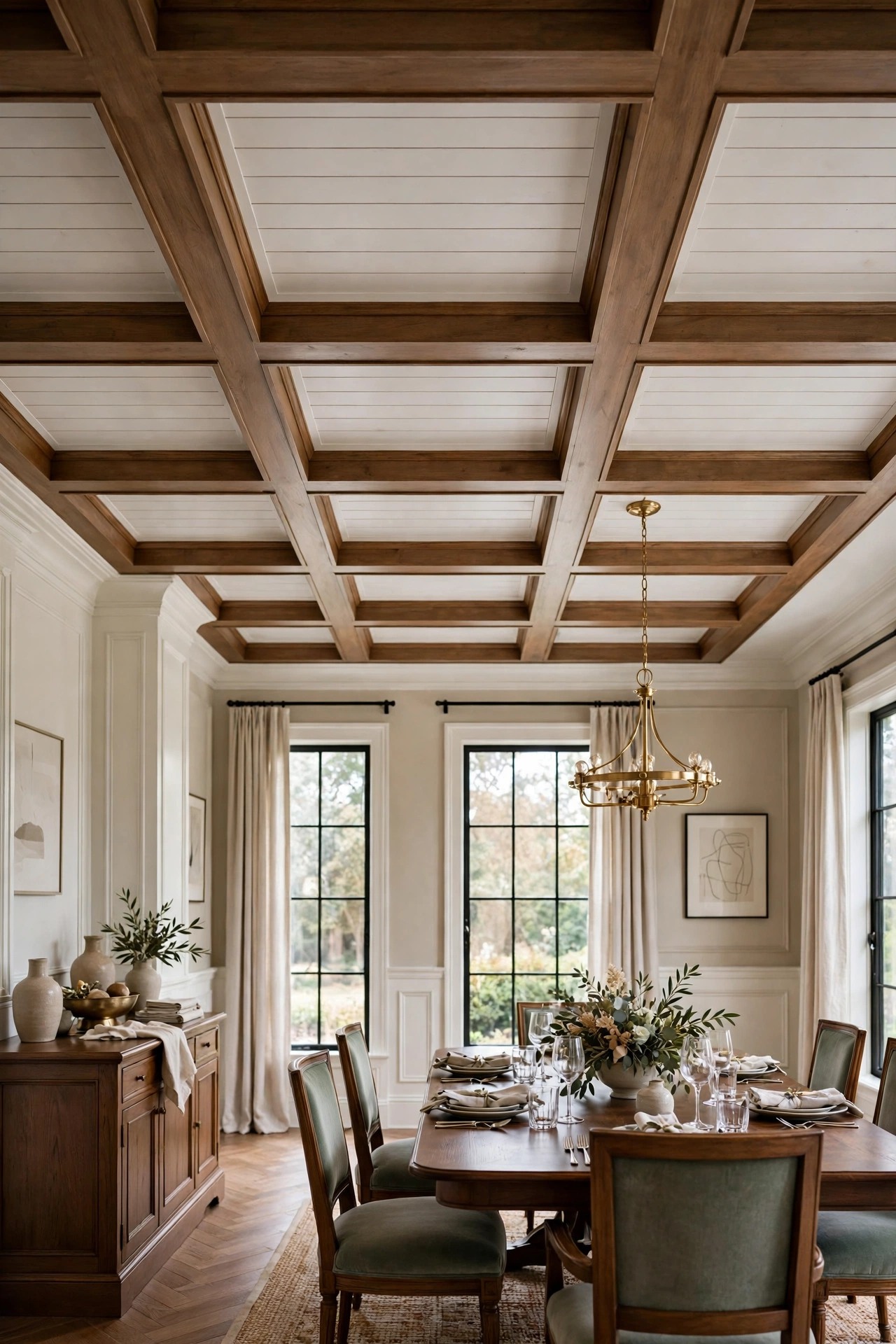
A coffered ceiling — a grid of recessed panels framed by beams — is one of the most elegant ceiling treatments there is, and shiplap makes it warmer and more approachable. Line each recessed panel with shiplap boards and frame the grid with painted or stained beams, and you get a ceiling with depth, shadow, and craftsmanship in every square. Coffered shiplap suits formal dining rooms, libraries, and traditional living rooms, where it adds a sense of permanence and quality. The grid can be square or rectangular, and the panels can be painted white for a classic look or stained for warmth. It is a bigger project than a flat shiplap install, but the result is a ceiling that looks like it belongs in a historic home — and it will be the first thing guests notice.
21. Elevate a Tray Ceiling With Shiplap
A tray ceiling — a raised central panel with a step down around the edges — is already an architectural feature, and shiplap makes it the centerpiece of the room. Line the raised center with shiplap boards and paint the step in a contrasting color, or stain the center panel in natural wood while the rest of the ceiling stays white. The step creates a natural place for LED strip lighting, which washes the shiplap with a soft glow and makes the tray feel like it is floating. Tray ceilings with shiplap work beautifully in primary bedrooms and dining rooms, where the ceiling is visible from the bed or the table. Keep the furniture and the walls simple so the ceiling can be the star, and the room will feel designed from the top down.
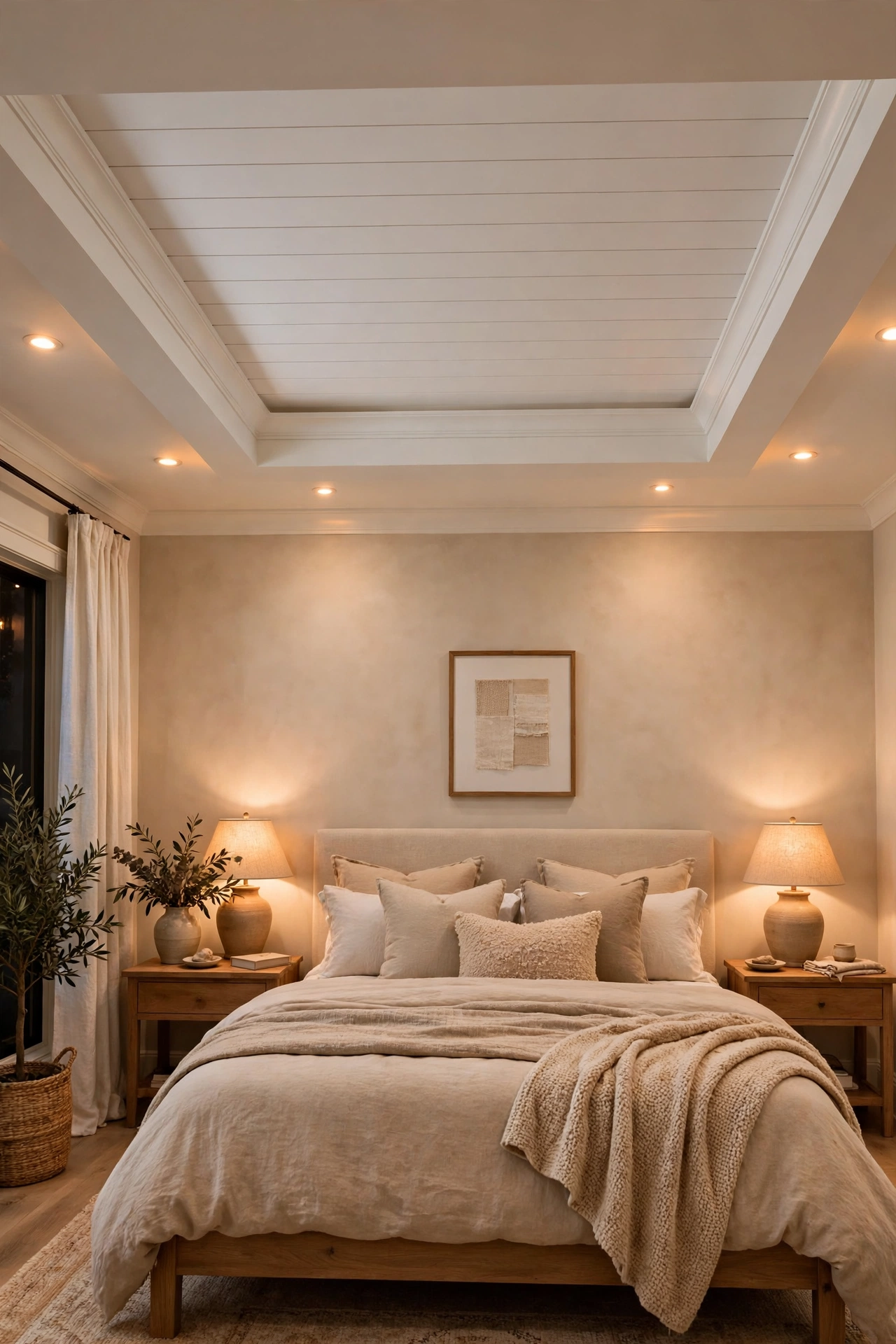
22. Crown a Cathedral Ceiling With a Chandelier
A cathedral ceiling rises to a peak, and shiplap boards running up to that peak create a sense of grandeur that few other finishes can match. The boards draw the eye up the slope and make the height feel intentional rather than empty, and a large chandelier hung from the peak anchors the whole space. In a great room or a bedroom with a cathedral ceiling, choose white shiplap to keep the volume bright, or natural wood to make the room feel like a lodge. A beam at the ridge and a few collar ties break up the expanse and give the chandelier something to hang from. The combination of height, wood, and light is the most dramatic ceiling on this list, and it turns an ordinary room into a place that feels like a destination.
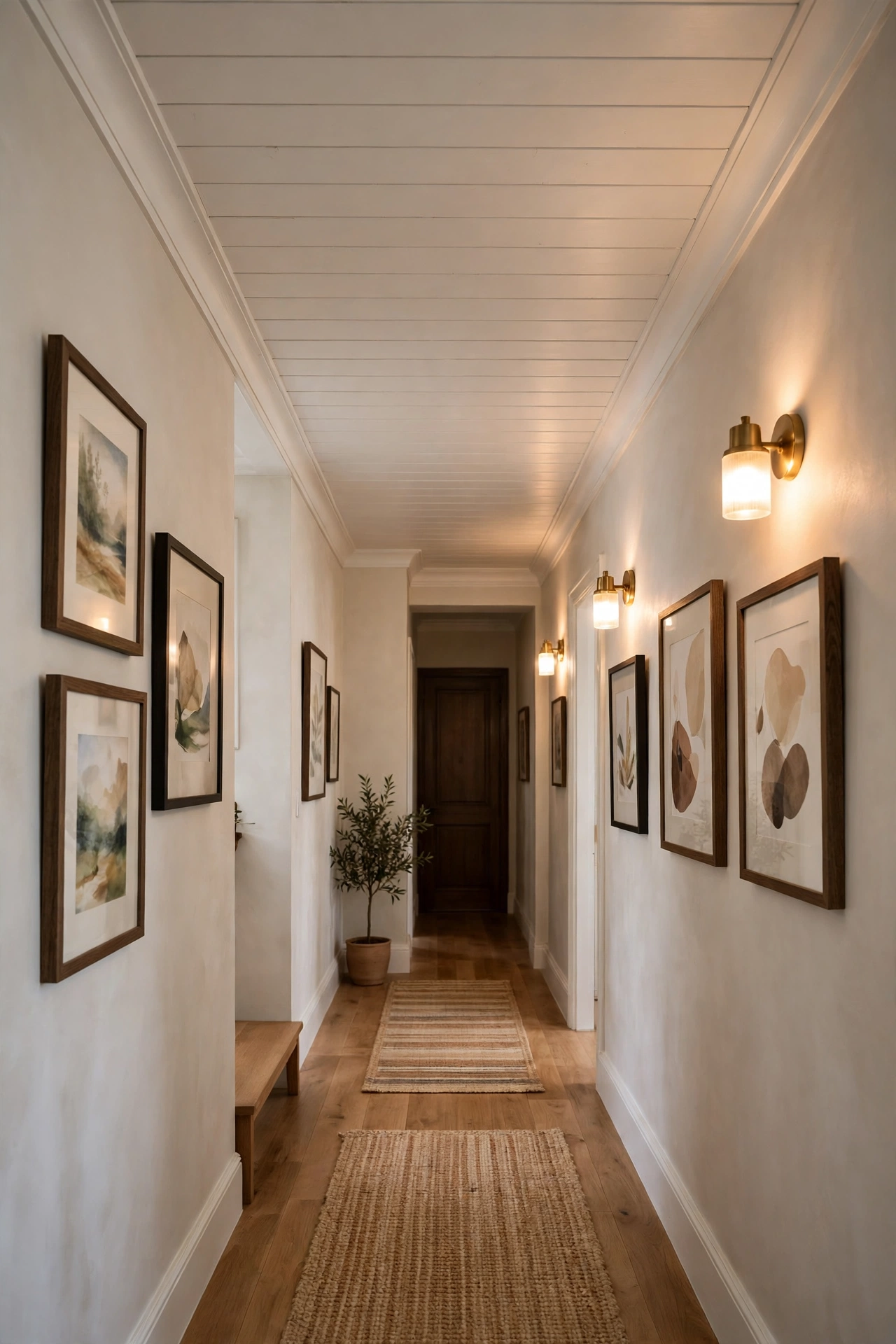
23. Dress Up a Hallway or Small Space
Small spaces deserve great ceilings too, and shiplap is one of the best ways to give a hallway, entry, or powder room a finished, intentional feel. In a narrow hallway, run the boards along the length of the space to stretch it visually, and paint them white so the corridor feels bright rather than tunnel-like. A small space is also the perfect place to try a bolder move — a dark stain, a chevron pattern, or a painted accent color — because the commitment is small and the payoff is immediate. Add a simple flush-mount light or a row of small recessed lights, and the hallway stops being a passage and becomes a part of the home’s design. If you have been putting off a shiplap project, a hallway is the ideal place to start: it is quick, affordable, and it proves the look before you commit to a whole room.
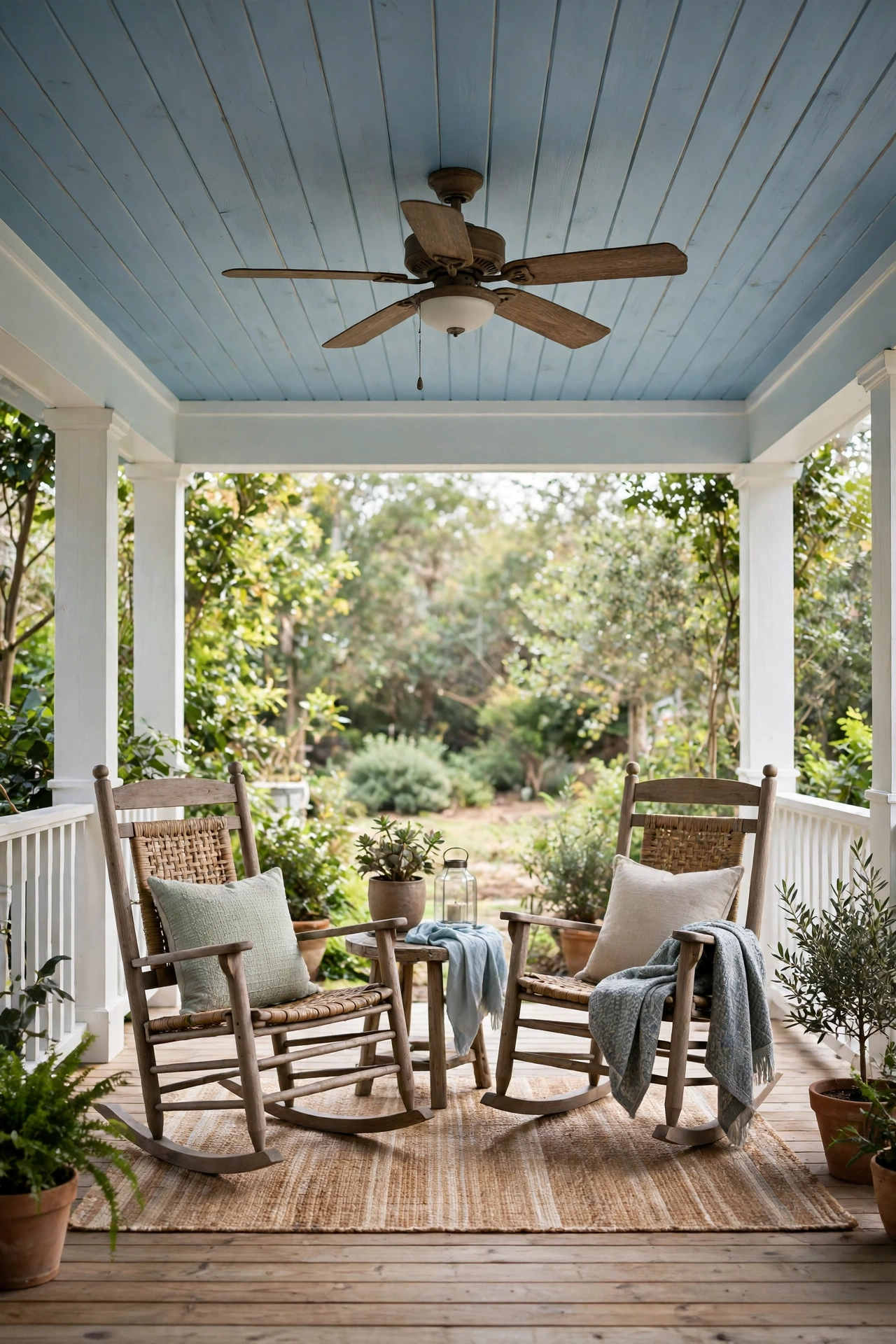
24. Take Shiplap Outside to the Porch
A covered porch with a shiplap ceiling feels like an outdoor room rather than an afterthought. The boards add warmth and texture overhead, and they make the porch feel finished and inviting, especially when the ceiling is painted a soft haint blue — a traditional Southern porch color said to keep insects away and to mimic the sky. Use exterior-grade or PVC shiplap boards that can handle humidity and temperature swings, and seal them well. A porch shiplap ceiling pairs beautifully with a ceiling fan, string lights, or a pair of lanterns, and it makes the space usable from spring through fall. For more outdoor ideas, see our backyard ideas for turning the whole yard into a retreat.
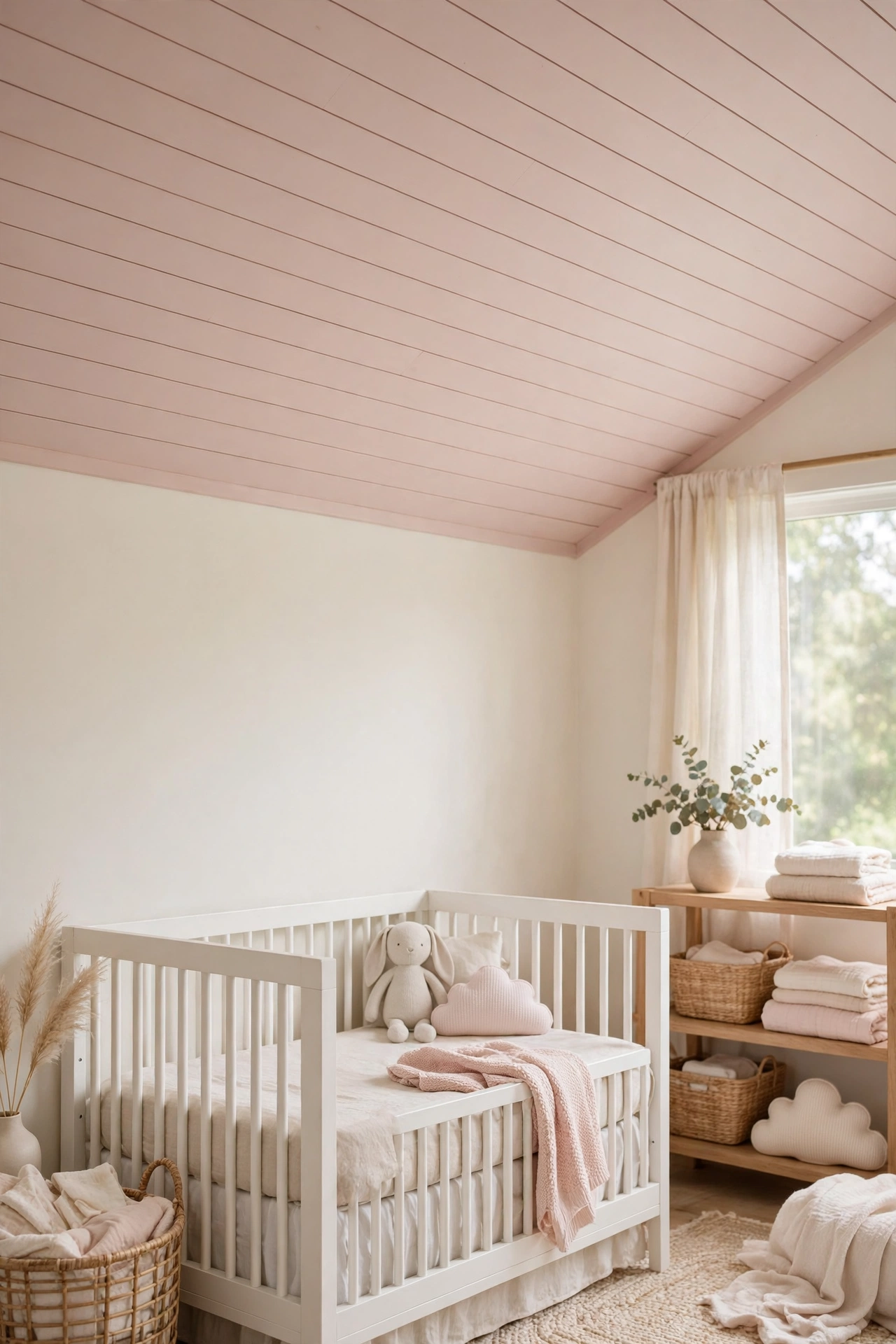
25. Soften a Nursery or Kids Room With Pastel Shiplap
A shiplap ceiling in a soft pastel — pale blush, powder blue, mint, or butter yellow — adds gentle color overhead without overwhelming a nursery or kids room. The boards give the ceiling texture and interest, while the pastel keeps the room calm and dreamy, which is exactly what a child’s room should feel like. Pair the pastel ceiling with white walls, natural wood furniture, and simple, washable textiles, and the room will grow with the child — the ceiling reads sweet for a nursery and stylish for a big-kid room. Use a scrubbable paint finish so the ceiling can handle the occasional crayon incident, and add a dimmable light so the room can shift from playtime bright to bedtime soft. It is a small dose of color with a big dose of charm.
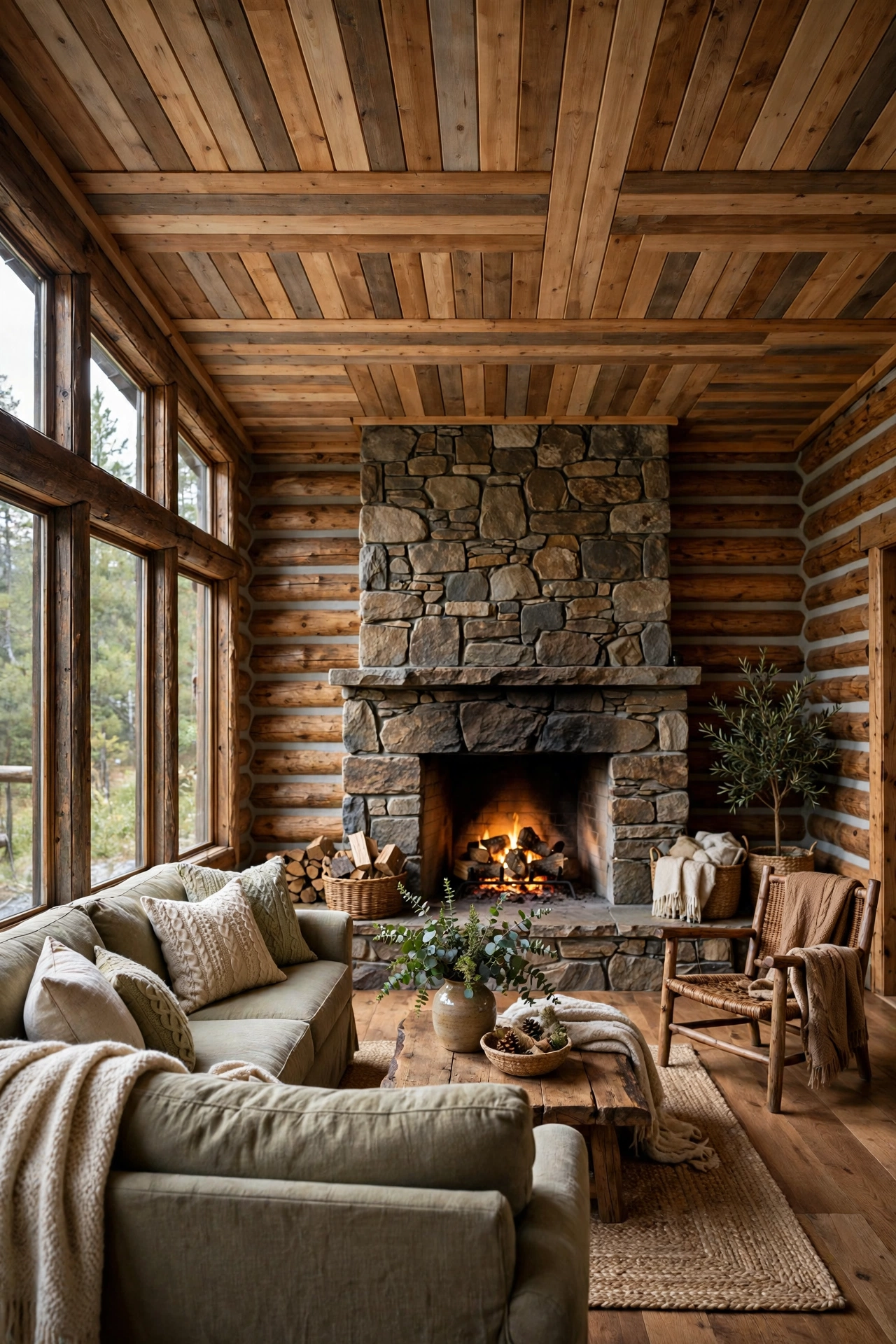
26. Lean Into Lodge Style in a Cabin
In a cabin or lodge, a shiplap ceiling in natural wood is not a design choice — it is the soul of the room. Wide pine or cedar boards in a warm honey or medium stain, paired with log or timber beams and a stone fireplace, create a space that feels grounded, cozy, and timeless. The wood grain does the decorating, so keep the rest of the room simple: wool throws, leather chairs, and warm lighting. In a cabin bedroom or great room, run the boards across the ceiling in the same direction as the floorboards for a cohesive feel, and seal them with a matte finish so the wood stays natural. This is shiplap at its most honest — no paint, no tricks, just beautiful wood overhead — and it is the look that makes a cabin feel like a cabin.
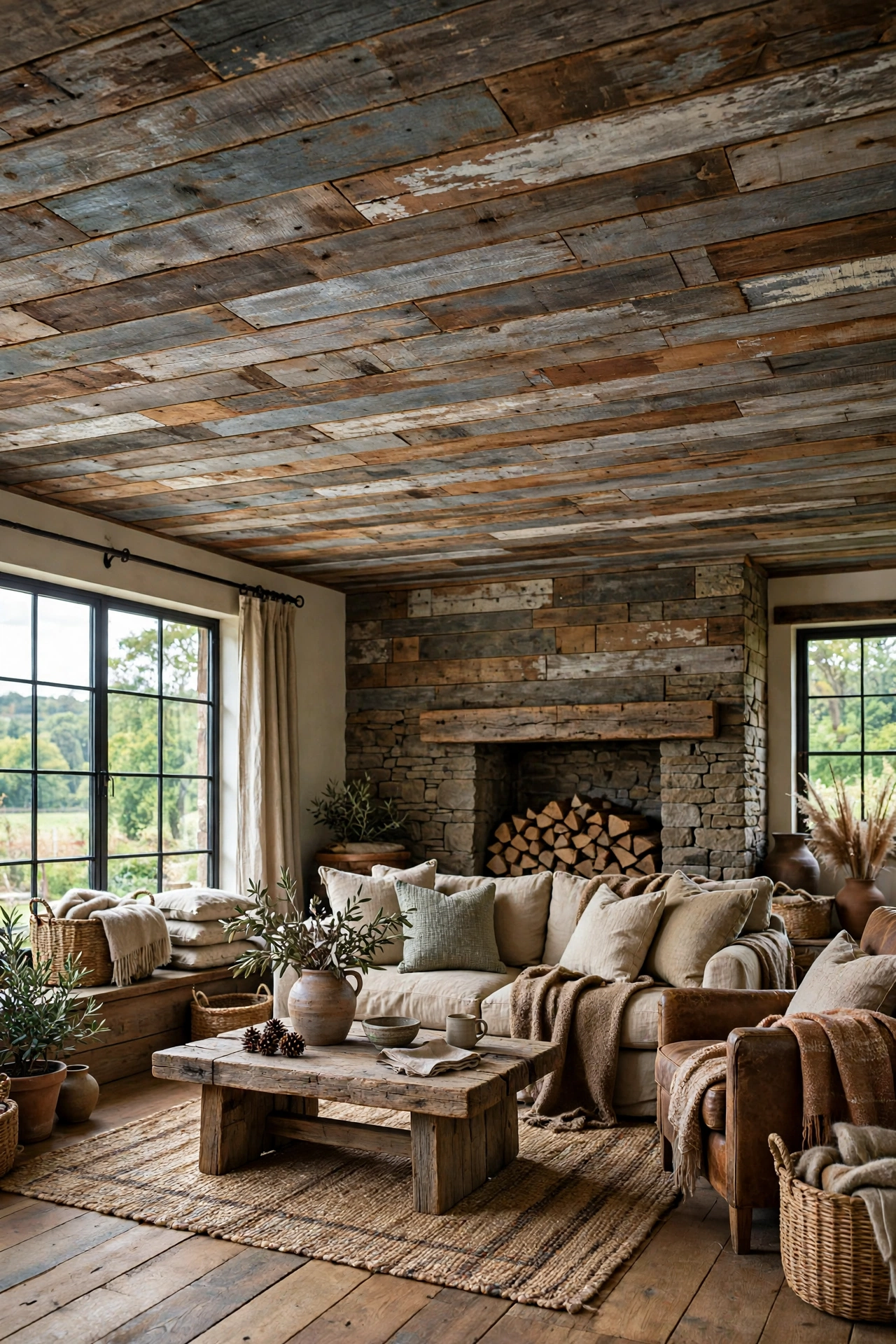
27. Reuse Character With Reclaimed Barn Wood
Reclaimed barn wood shiplap brings history to a ceiling in a way that new boards never can. Each plank carries its own patina — weathered gray, sun-bleached silver, or warm brown — and the variation from board to board creates a ceiling that looks collected rather than installed. Reclaimed shiplap suits rustic, industrial, and modern farmhouse homes, and it works best as a feature ceiling in one room, like a living room or a bedroom, where the character can shine. Source the boards from a reputable reclamation yard, check them for nails and pests, and seal them before installation. Because reclaimed boards vary in thickness, expect a more hands-on install, but the result is a one-of-a-kind ceiling with a story in every plank.
28. Cover Popcorn Texture With Budget MDF Shiplap
If your ceiling is covered in dated popcorn texture, shiplap is one of the cleanest ways to hide it without the mess of scraping it off. Thin MDF shiplap boards install directly over the old ceiling, and the crisp lines replace the bumpy texture with a smooth, modern surface. MDF is the budget-friendly choice: it costs less than solid pine, paints beautifully, and comes in lightweight planks that are easy for a DIYer to handle. Prime and paint the boards before installation for the cleanest finish, and choose a satin paint so the ceiling wipes clean. A weekend, a few boxes of planks, and basic tools are all it takes to turn the most dated ceiling in the house into the best-looking one. For more on dealing with popcorn ceilings, see our popcorn ceiling ideas — and if you want the cheapest wood options overall, our cheap wood ceiling ideas round up the best budget plank looks.
29. Go Bold With a Painted Accent Color
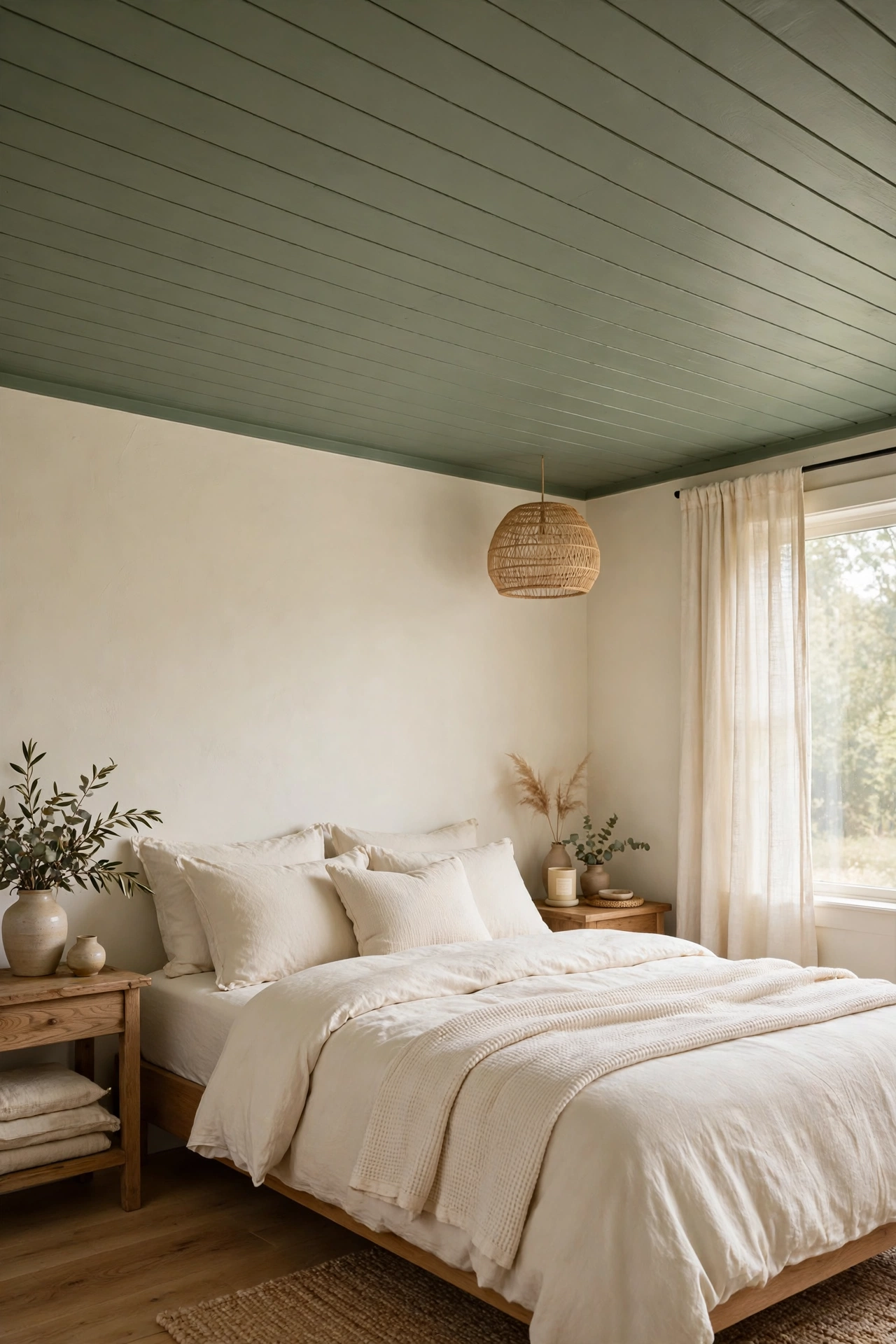
For the bravest version of this list, paint the shiplap ceiling a real color — deep teal, sage green, dusty blue, or terracotta — and let the ceiling be the room’s artwork. A colored shiplap ceiling works when the rest of the room stays calm: white or pale walls, neutral furniture, and simple decor that lets the ceiling carry the color. Sage green over a bedroom with cream bedding feels serene and fresh, while dusty blue in a dining room feels coastal and collected. Use the 60-30-10 rule as a guide: let the ceiling be the 10 percent accent, not the whole palette. Paint the boards before installation so the color stays even in the grooves, and choose a matte or eggshell finish so the color reads soft rather than shiny. It is a confident move, and in the right room it is the one guests remember. For a bedroom color pairing that works with a painted ceiling, see our sage green and pink bedroom ideas.
How to Choose the Right Shiplap Ceiling for Your Home
Start with the room. White or pale shiplap suits almost every space, natural wood warms up bedrooms and cabins, and dark or bold colors belong in rooms where you want drama — dining rooms, reading nooks, and primary bedrooms. Then think about the ceiling itself: low ceilings benefit from vertical boards and pale colors, while tall or vaulted ceilings can handle wide planks, beams, and darker stains. Finally, be honest about your budget and your skills. Peel-and-stick shiplap and MDF planks are the easiest DIY entry points, while chevron, coffered, and vaulted installs are best left to a carpenter. Whatever you choose, order a few extra boards, paint or stain before you install, and live with a sample in the room for a day before committing — ceilings are hard to change, and the right one is worth the extra thought.
Frequently Asked Questions
What is a shiplap ceiling?
A shiplap ceiling is made from overlapping wooden boards with a rabbeted edge — a small groove cut along the top and bottom of each board — that lets each board lock into the next in a tight, clean line. The result is a ceiling with subtle horizontal or vertical lines that add texture, warmth, and character. Boards are usually pine, cedar, MDF, or PVC, and they can be painted, stained, or left natural.
How much does a shiplap ceiling cost?
Cost varies widely with the material, the room size, and whether you hire help. MDF and peel-and-stick planks are the most budget-friendly options, while solid pine, cedar, and reclaimed barn wood cost more. A DIY install saves on labor, which is often the largest part of the bill, and a small room can be a weekend project. Get quotes for your room size and material choice before you start, and budget a little extra for trim, paint, and a few spare boards.
Can you put shiplap on a popcorn ceiling?
Yes — shiplap is one of the best ways to cover a popcorn ceiling without scraping it off. Thin MDF or pine boards can be installed directly over the old texture, hiding it completely and giving you a clean, modern ceiling. Make sure the old ceiling is sound and dry first, and use boards light enough for the existing structure. If the popcorn was installed before the 1980s, have it tested for asbestos before you disturb or cover it.
Is shiplap good for bathroom ceilings?
Yes, with the right materials. Use moisture-resistant boards such as PVC shiplap or properly sealed pine, and make sure the bathroom has good ventilation — an extractor fan that actually gets used. Painted shiplap with a scrubbable satin finish holds up well in steam, and it turns an ordinary bathroom into a spa-like space. Avoid untreated wood in a bathroom, and reseal the boards if the finish starts to wear.
Does a shiplap ceiling make a room look smaller?
It depends on the color and the direction of the boards. White or pale shiplap usually makes a room feel larger, because it reflects light and adds subtle texture without visual weight. Dark stains and black shiplap can make a ceiling feel lower and a room cozier, which is wonderful in a large room but can feel heavy in a small one. In low rooms, run the boards vertically and keep them pale to make the ceiling feel taller.
Can I install a shiplap ceiling myself?
Yes — a straight-run shiplap ceiling is a realistic DIY project for a confident beginner with basic tools: a saw, a nail gun or brad nailer, a level, and a stud finder. Start in a small room, measure carefully, and paint or stain the boards before installation. Patterns like chevron and herringbone, vaulted ceilings, and coffered designs are more complex and are usually best left to a carpenter. Whatever your skill level, always locate the ceiling joists and fasten the boards securely.
Conclusion
A shiplap ceiling is one of the highest-impact upgrades you can make to a room — it adds texture, warmth, and character overhead, it hides flaws and dated textures, and it works in every style from farmhouse to modern. Whether you choose classic white boards, warm natural wood, a bold painted color, or a budget-friendly MDF install over popcorn texture, the ceiling stops being an afterthought and becomes a feature. Pick the idea that fits your room, your budget, and your skill level, order a few extra boards, and enjoy the moment you look up and realize the ceiling is the best part of the room.