41 Cubicle Decor Ideas That Turn a Gray Box Into a Workspace You Love
41 Cubicle Decor Ideas That Turn a Gray Box Into a Workspace You Love
A cubicle is a blank canvas with bad lighting and worse carpet — but it does not have to feel like one. With a few thoughtful touches, the same gray box can become a workspace that actually feels like yours: calmer, more organized, and a lot easier to sit in for eight hours. The trick is choosing decor that works with office rules instead of against them. Everything below is renter-friendly and office-friendly — no drilling, no permanent changes, nothing that blocks a walkway or annoys the person in the next cube.
Before you buy anything, check your office policy on lights, scents, and wall attachments, and pick one color palette to tie it all together. Then work through these 41 cubicle decor ideas one at a time. You do not need all of them — even five or six, done well, will change how the space feels.
1. Add a Warm Desk Lamp

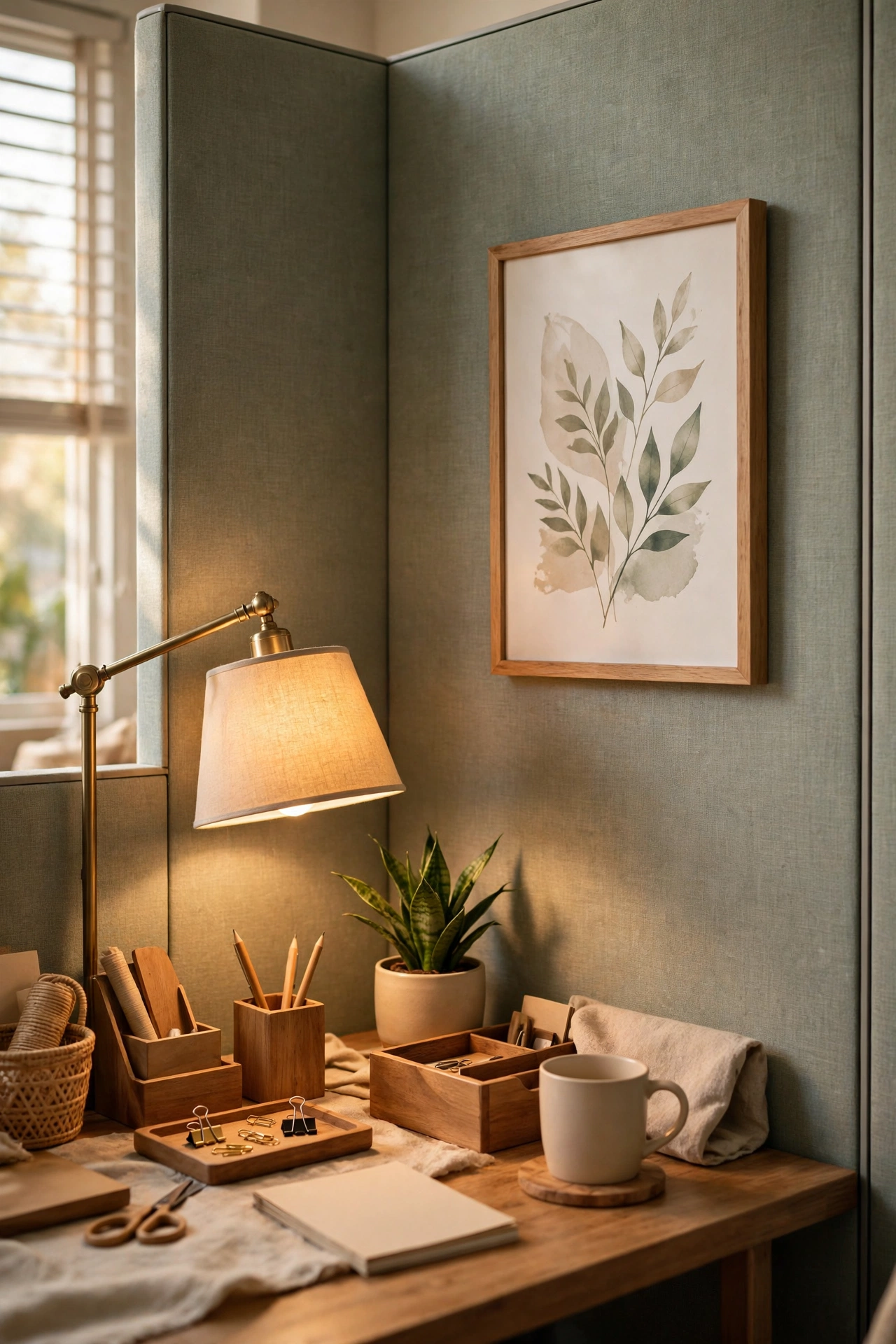
Overhead fluorescents are the single biggest reason cubicles feel draining, and a small desk lamp is the fastest fix. Choose one with a warm bulb (2700K–3000K) and an adjustable arm so you can aim light at your work instead of your screen. A matte black, brass, or wood lamp adds a finished look, while a clip-on lamp saves desk space entirely. Keep the footprint small — a base no wider than a coffee mug — and run the cord along the back of the desk with a clip so it never dangles. If your office bans plug-in lamps, a rechargeable LED lamp gives the same glow without the cord. The change is instant: the warm pool of light makes the whole cube feel smaller, quieter, and more intentional.
2. Keep a Low-Light Desk Plant
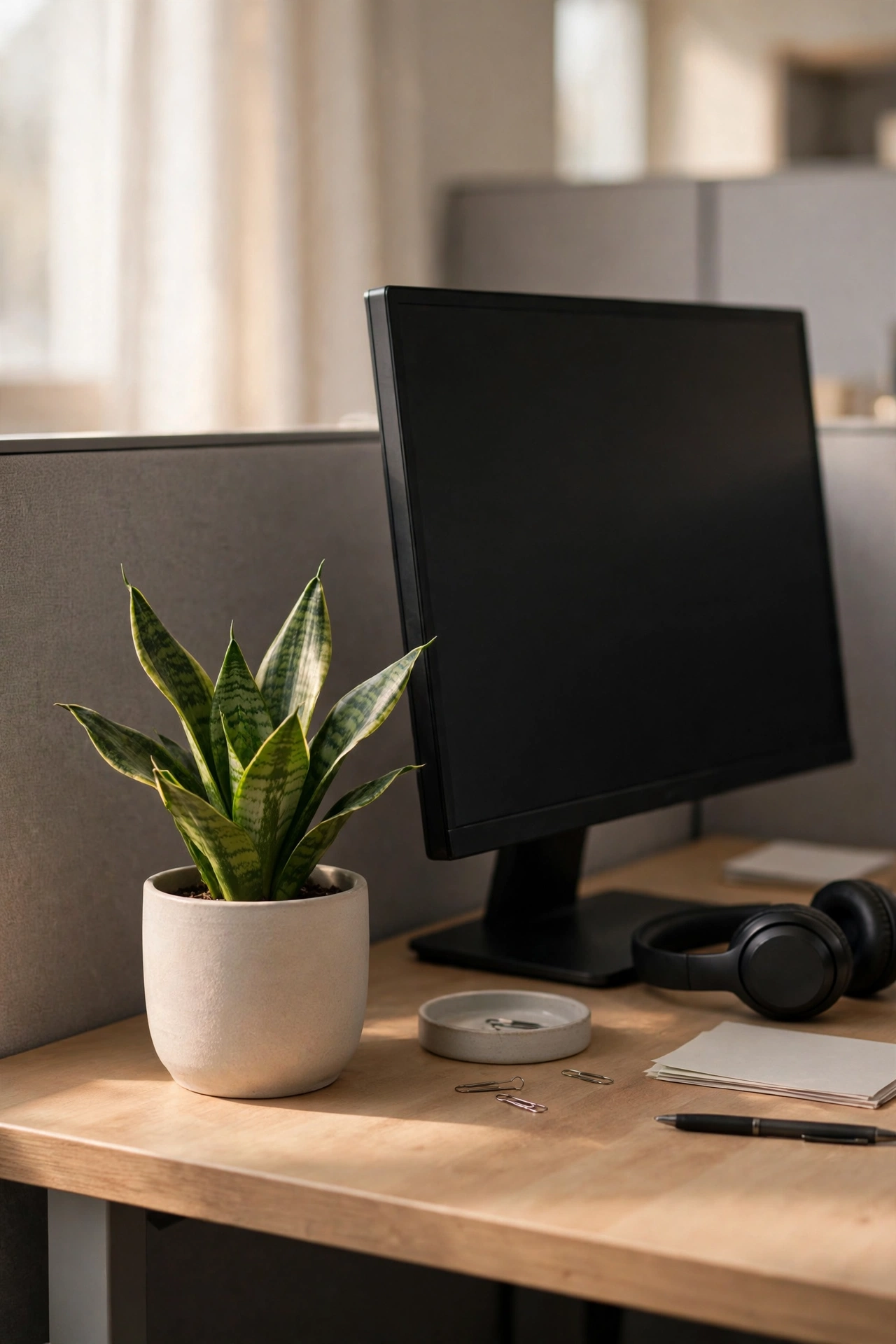
One small plant does more for a cubicle than almost any other single item. It adds living color to a space made of fabric and laminate, and it gives your eyes somewhere soft to rest between tasks. Snake plants and pothos are the safest bets — both tolerate low light and irregular watering, and a pothos can trail gently from a shelf without taking over. Pick a pot that matches your color palette, keep it to one plant on the desk itself, and water on a schedule (a phone reminder on Mondays works). If your office gets almost no natural light, a faux plant in a real ceramic pot still delivers the visual warmth with zero upkeep. Just keep it small enough that it never crowds your keyboard or your monitor.
3. Build a Mini Gallery Wall
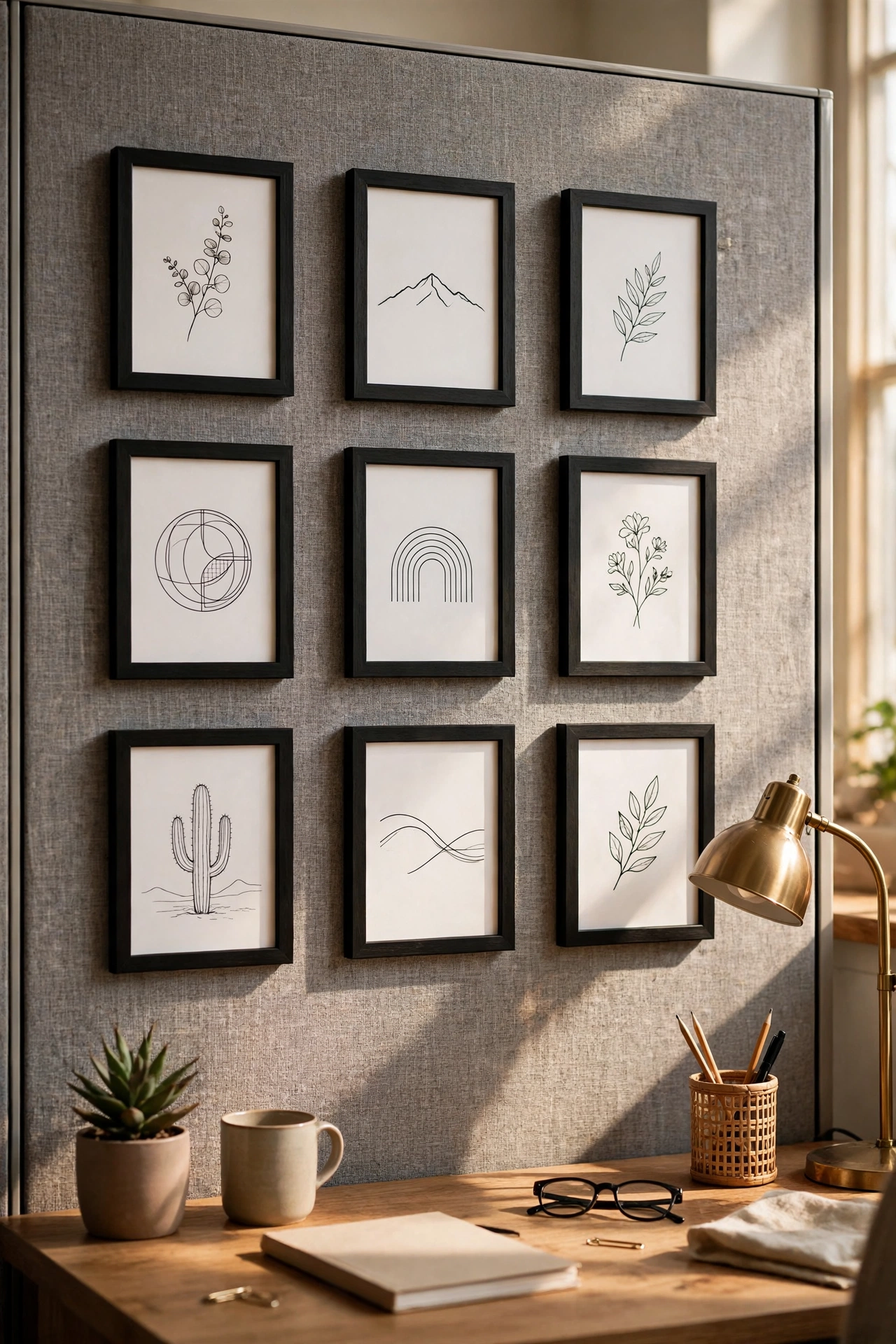
A gallery wall turns the biggest blank surface in your cubicle — the fabric panel behind your monitor — into the best-looking part of it. Use three to five small frames in one finish (all black, all oak, all white) so the group reads as one intentional arrangement instead of clutter. Mix one piece of art you love, one photo, and one simple print with a short quote, and hang them with cubicle-safe hooks or pins that grip the panel without damaging it. Keep every frame below eye level when seated so nothing competes with your screen. The key is restraint: a tight grid of small frames looks curated, while a scattered sprawl looks like a bulletin board that got away from you.
4. Use a Magnetic Board on the Panel
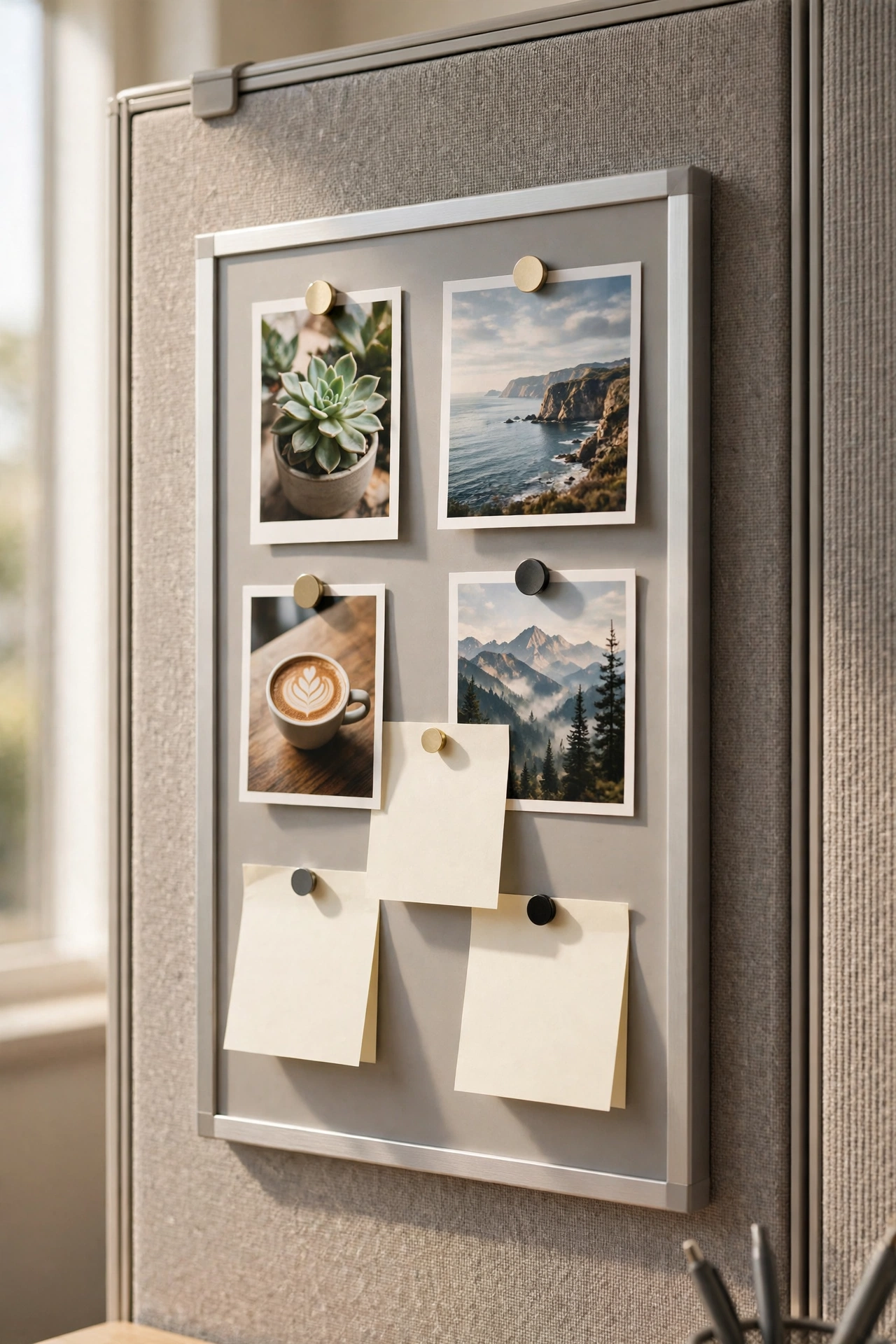
Many cubicle panels hide a steel frame under the fabric, which means magnets can hold more than you would expect. A slim magnetic board — or a few strong magnetic strips — gives you a damage-free place for photos, notes, and small art that you can rearrange in seconds. Test one magnet first: if it grips firmly, you are in business. Use the board for the things you actually look at — a weekly priority list, a photo that makes you smile, a ticket stub from a good weekend — and keep it to one tidy zone so it reads as decor rather than a notice board. When your office rearranges the floor plan, the whole display moves with a single pull.
5. Try Peel-and-Stick Wallpaper on One Panel
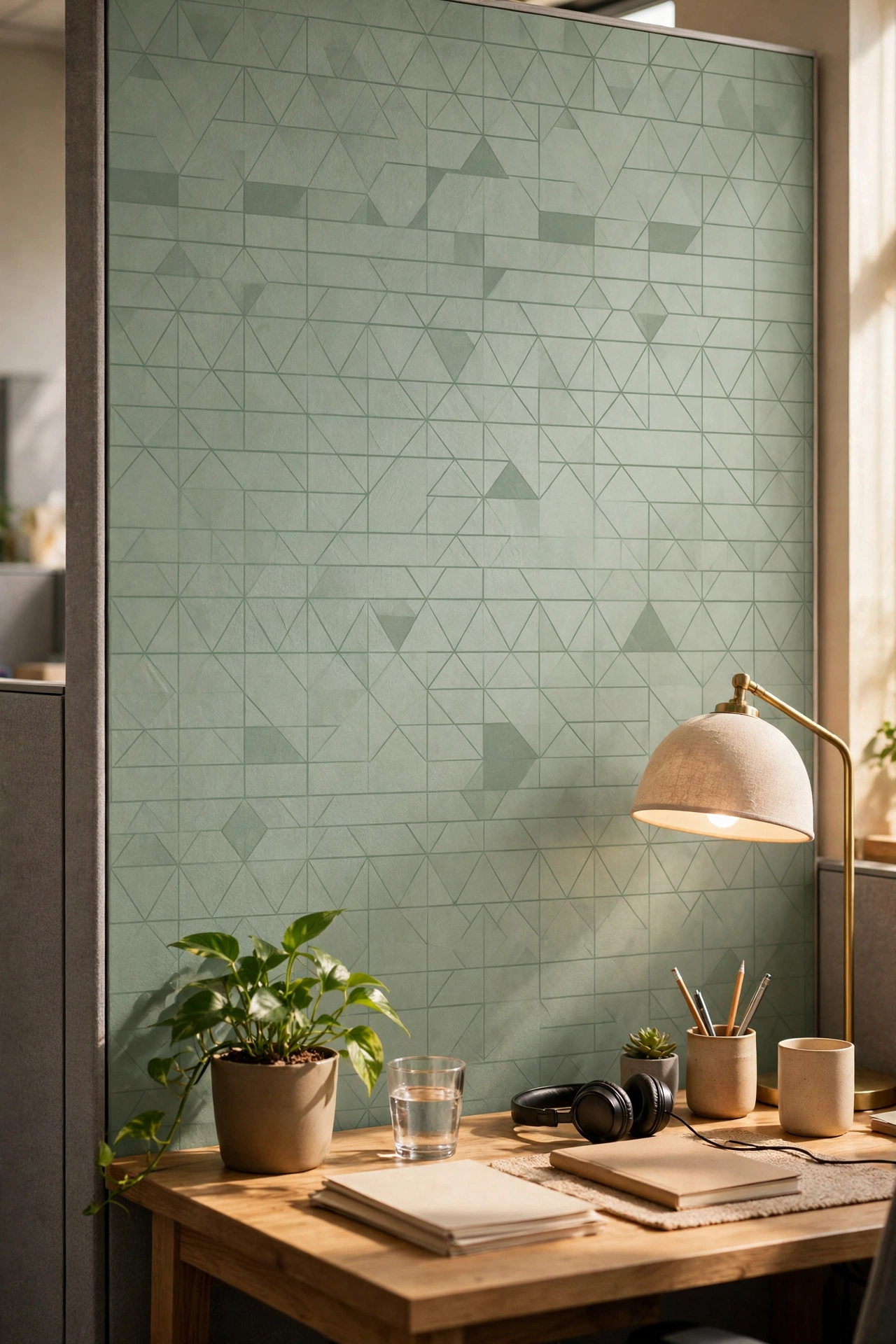
Peel-and-stick wallpaper is the closest thing to a cubicle renovation that does not require permission from facilities. Cover a single panel — usually the one behind your monitor — with a subtle pattern like a soft geometric, a linen texture, or a muted botanical, and leave the other panels plain so the effect stays calm. Measure the panel, cut the paper slightly oversized, and smooth it from the center outward to avoid bubbles. Because it removes cleanly, it is safe for most offices, but confirm with your manager first if your panels are fabric-covered. One patterned wall changes the whole mood of the cube, and it photographs beautifully if you ever want to show it off. Our guide to peel-and-stick backsplash ideas shows how the same material transforms other small spaces.
6. Hang a Fabric-Covered Pinboard
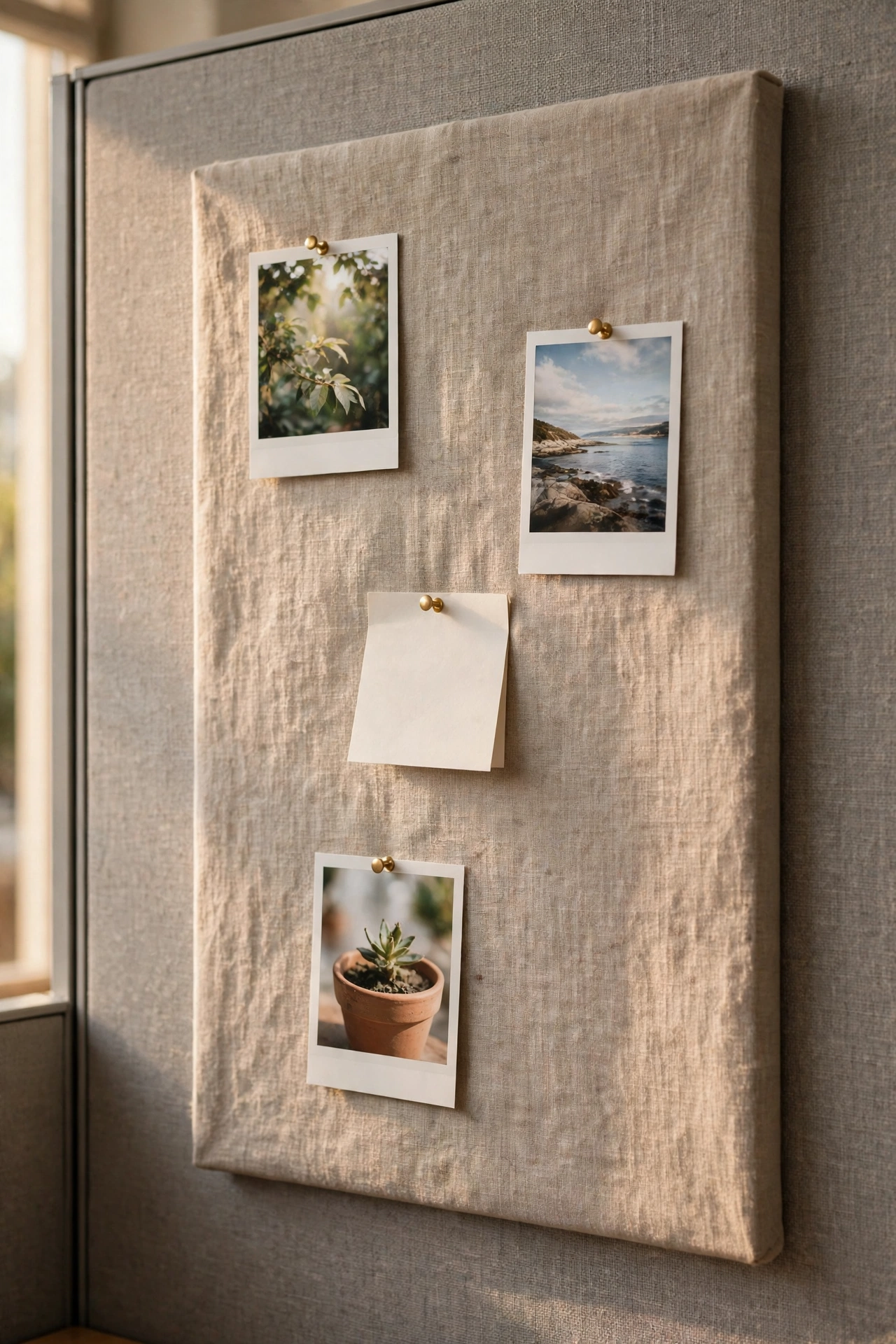
A fabric-covered pinboard softens a cubicle wall while giving you a working surface for notes, reminders, and inspiration. Wrap a cork board or foam board in linen or cotton in your palette color, secure the fabric at the back, and hang it with cubicle hooks. Use matching push pins and keep the board edited — current project notes, one or two photos, and a single quote — rather than letting it become an archive of every memo since January. The fabric texture also absorbs a little sound, which is a genuine bonus in an open office. When the board starts looking crowded, that is your signal to clear it and start fresh.
7. Commit to a Two- or Three-Color Palette
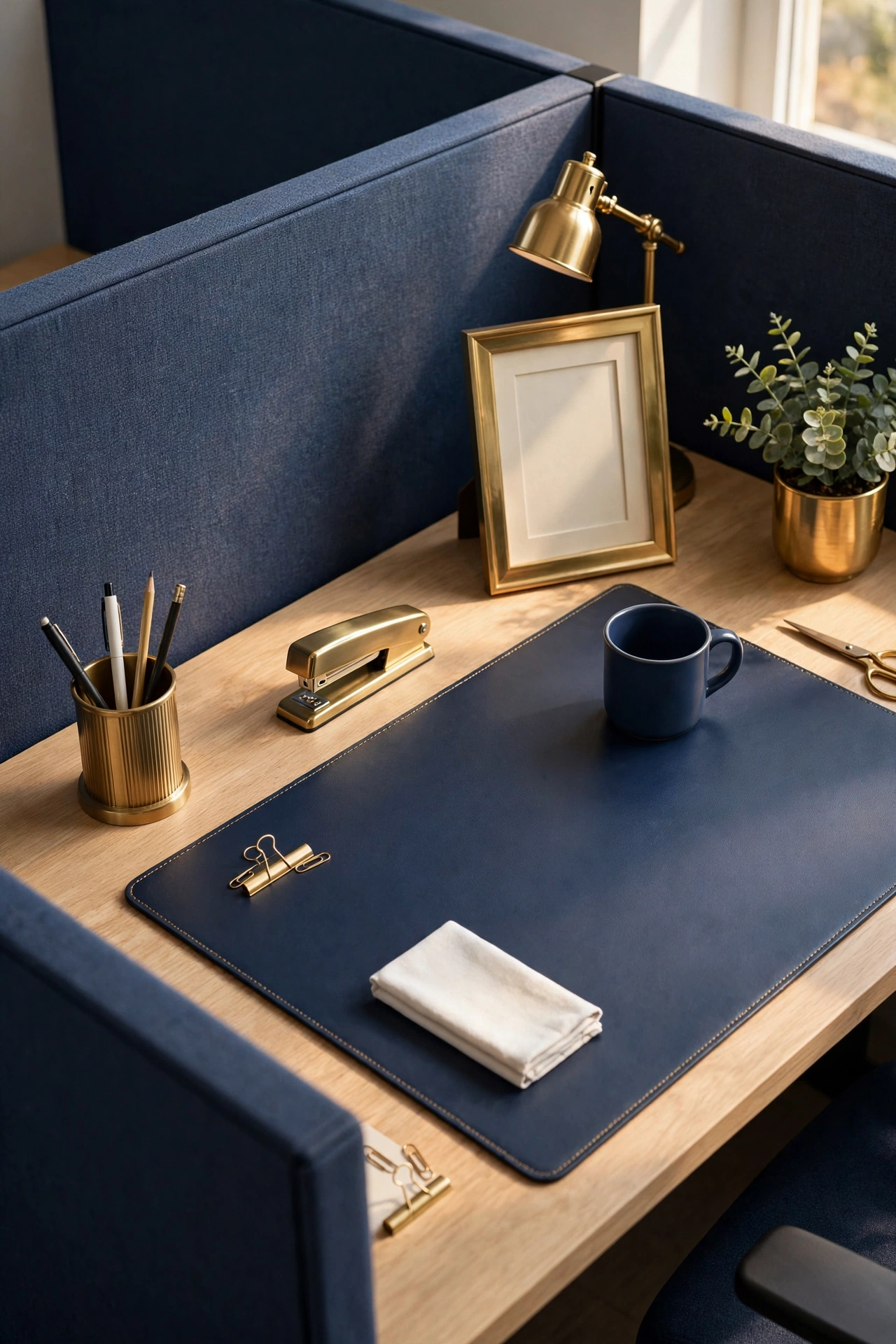
The difference between a decorated cubicle and a cluttered one is almost always a color palette. Pick two or three colors — for example navy, white, and brass, or sage, cream, and wood — and let every new item earn its place by fitting the scheme. A matching desk mat, pen holder, and picture frame in the same palette will look more expensive than a random collection of cute things in six different colors. This rule also makes shopping easier: if it does not match the palette, it does not come home. Your cubicle is small, so visual consistency reads as calm, and calm is exactly what you want in a workspace.
8. Raise Your Monitor on a Desk Shelf
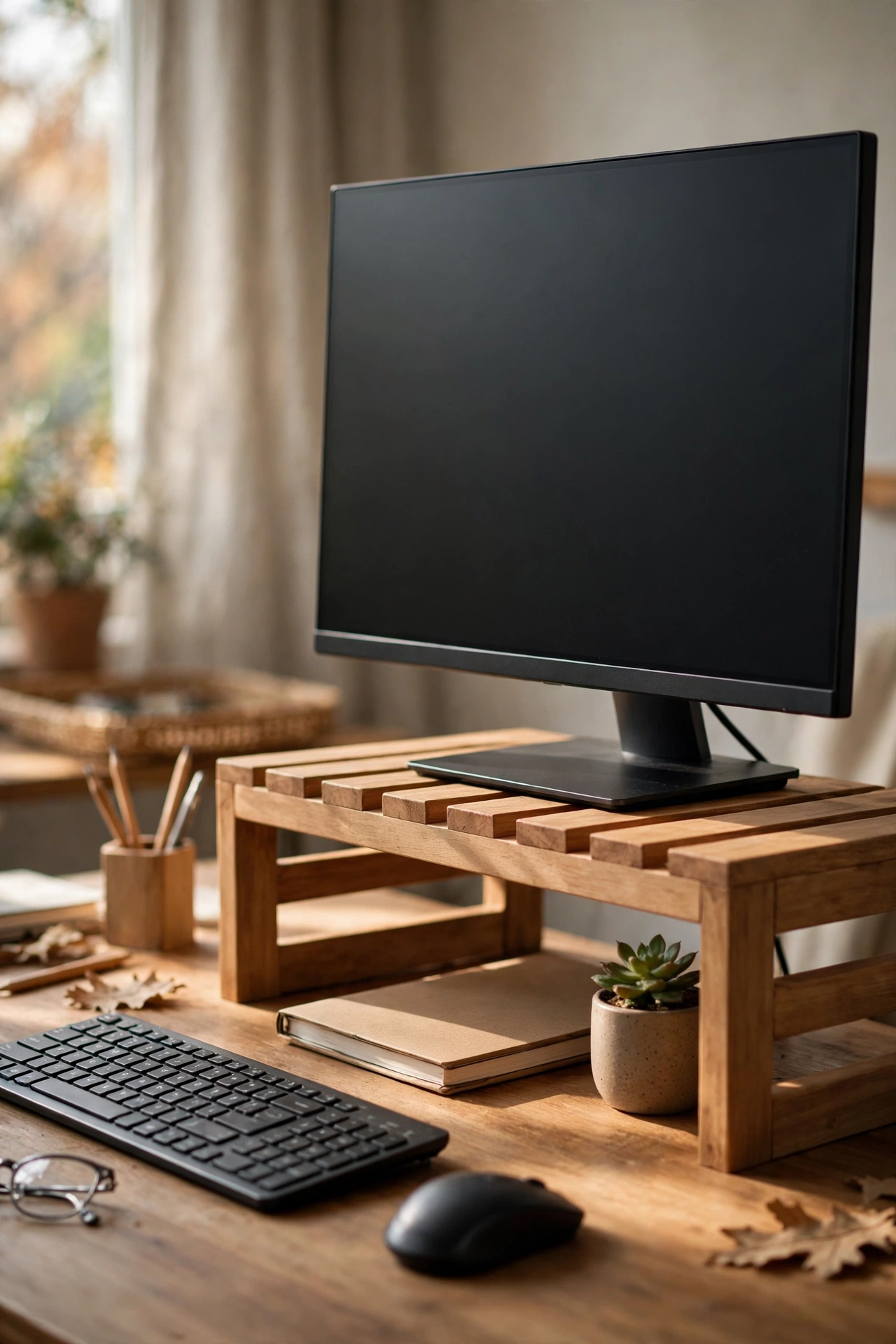
A monitor riser lifts your screen to eye level, which is better for your neck, and it creates a shelf of usable space underneath for a notebook, a phone, or a small tray. Choose a bamboo or matte-black riser that matches your palette, and keep the space under it tidy — it should hold one or two flat items, not become a junk drawer in disguise. Some risers include a small drawer for pens and cables, which is worth the extra few dollars. If you use a laptop, a simple laptop stand does the same job and folds away when you need the desk for paperwork. Ergonomics and decor are the same project here: the riser makes the desk look organized because it actually is organized.
9. Hide the Cables
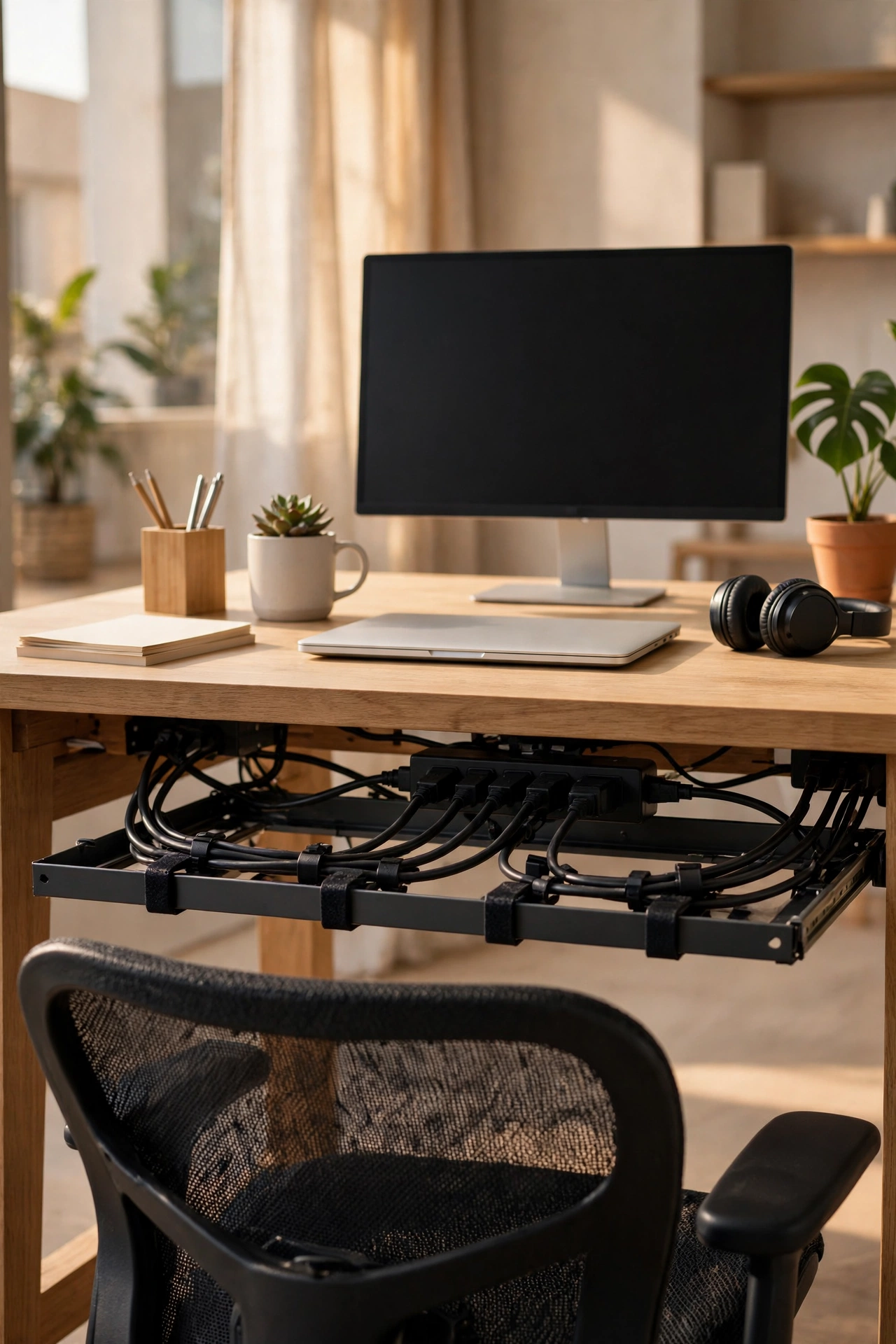
Nothing ruins a decorated cubicle faster than a tangle of black cables hanging off the back of the desk. A slim cable tray mounted under the desk, a few adhesive cable clips, and one short power strip solve most of it in ten minutes. Route the monitor, lamp, and charger cables through the tray, clip the runs along the desk edge, and leave only the last few inches visible where they plug in. Use a cable sleeve in a neutral color if several cords travel together. This is not glamorous work, but it is the highest-return decor move on this list: a clean desk edge makes every other decoration look intentional instead of accidental.
10. Corral the Small Stuff in a Desk Tray
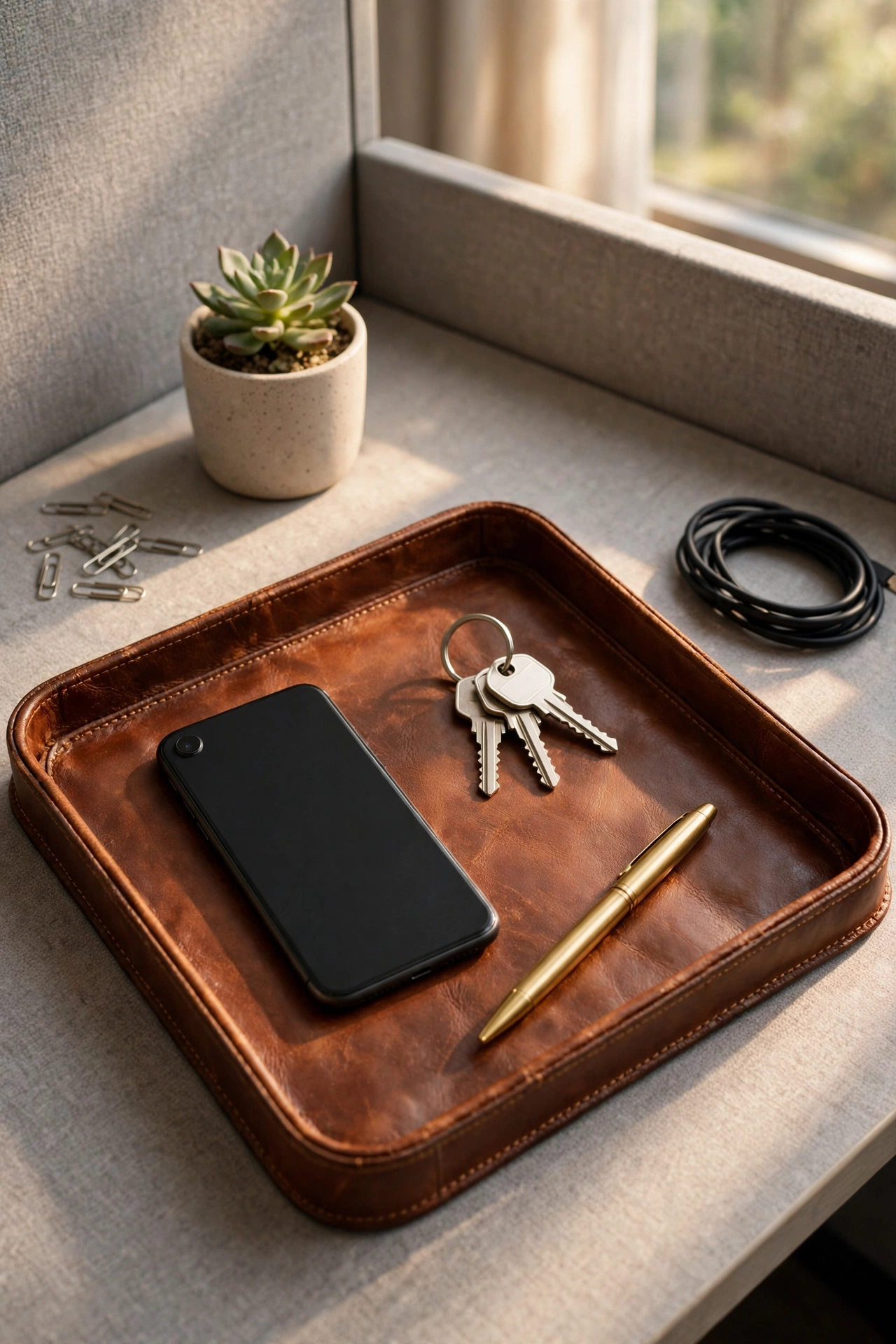
A desk tray is a boundary, and boundaries are what keep a small desk from looking chaotic. Choose a leather, wood, or acrylic tray just large enough for your phone, keys, badge, and a pen, and put it in the same spot every day. Everything that belongs to your arrival and departure ritual lives in the tray; everything else lives somewhere else. The tray also protects the desk surface and gives you one tidy surface to wipe down at the end of the day. Match it to your palette and it doubles as decor. If your desk is especially small, a narrow tray along the back edge works just as well as a square one in the corner.
11. Lay Down a Small Rug or Chair Mat
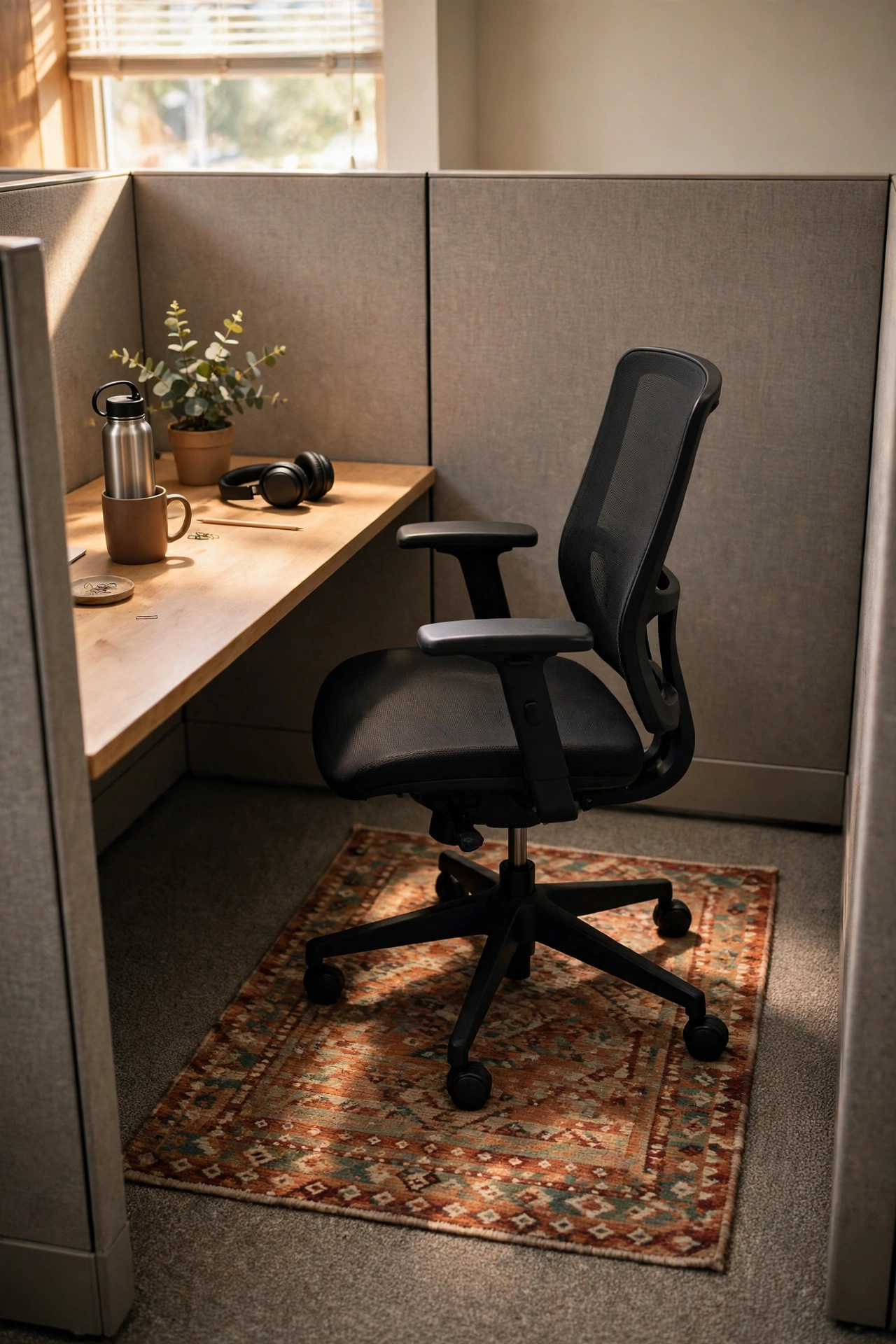
Cubicle carpet is usually the grayest, flattest surface in the building, and a small rug is the fastest way to warm it up. A low-pile rug in your palette color, sized to fit under your chair without bunching, softens the floor and defines your space as yours. If your chair rolls, choose a thin rug with a non-slip backing, or use a clear chair mat over the rug so the wheels still move freely. Keep the pattern simple — a solid color or a quiet geometric — because the rug sits under everything else and should support the look, not compete with it. Shake it out weekly; office rugs collect dust fast.
12. String Up Battery Fairy Lights
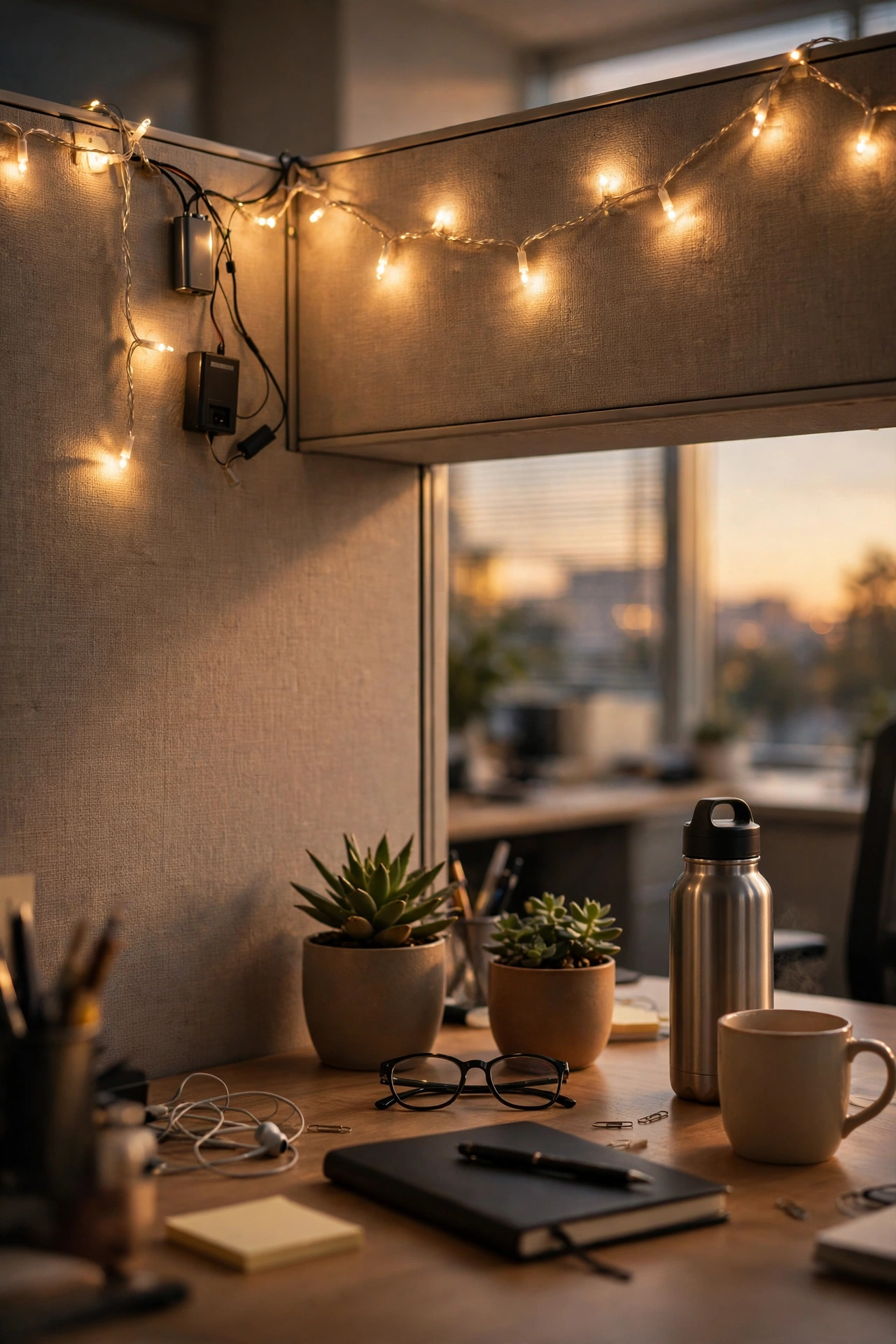
A short strand of warm-white fairy lights along the top edge of a cubicle panel adds a glow that overhead fluorescents never will. Battery-powered strands with a timer are the office-safe choice: no outlet needed, no cord to trip over, and they switch themselves off after six hours. Drape one strand in a gentle swag across the panel behind you or along the top of your monitor shelf, and keep the rest of the lighting warm and low so the effect stays cozy rather than festive. Check your office fire policy first — most allow battery lights, but some do not — and skip them entirely if your workspace faces clients. Used sparingly, they make late-afternoon work feel noticeably less gray.
13. Clip Photos to a Wire Photo Line
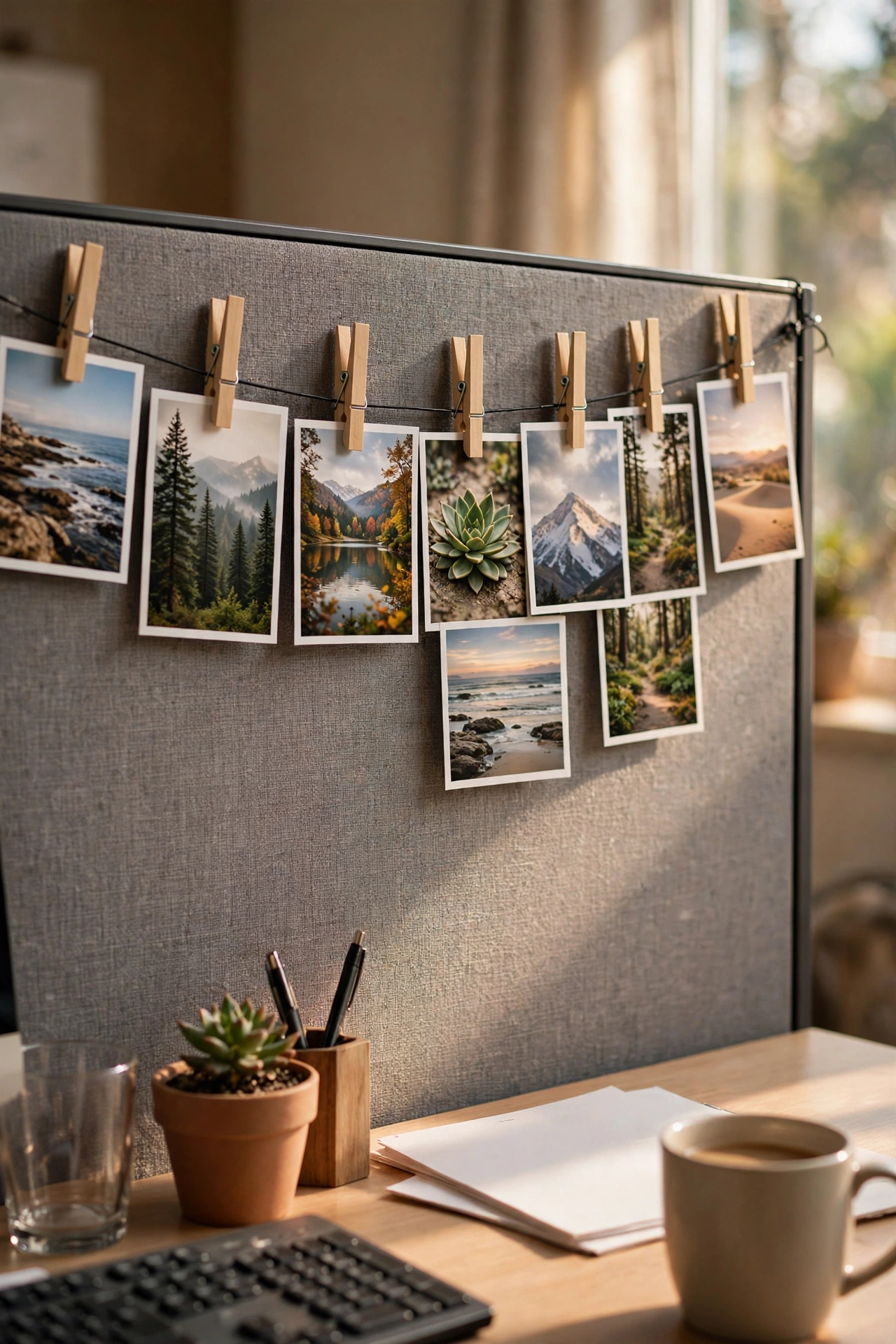
A wire photo line is a lighter, more flexible alternative to framed photos. Stretch a thin wire or twine across the top of a panel with two cubicle hooks, then clip on a handful of small prints with wooden clothespins or brass clips. The line holds family photos, travel snapshots, or postcards, and swapping one out takes seconds — no holes, no frames, no commitment. Keep the prints small (4×6 or smaller) and the line short so it reads as a deliberate display rather than a clothesline. Because the photos hang above eye level, they stay visible without competing with your work, and the row of images gives the cubicle a personal, lived-in feel.
14. Make a Small Vision Board
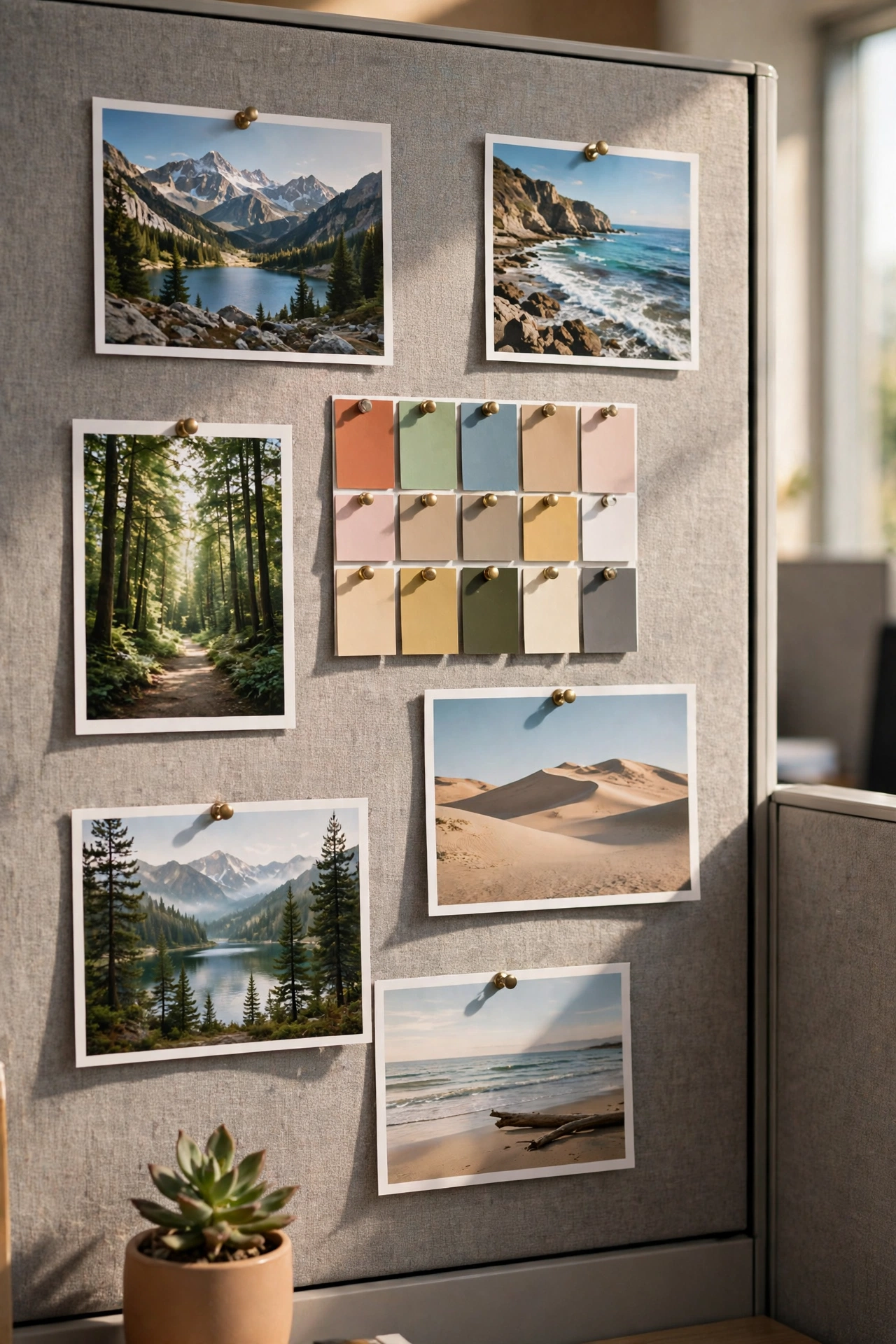
A vision board gives your cubicle a focal point that is personal and forward-looking instead of purely decorative. Use a small board — no bigger than a sheet of paper — and pin images and words that represent what you are working toward: a trip, a skill, a home project, a goal for the year. Keep it to five or six items so it stays readable at a glance, and place it where you see it when you look up from your screen. Unlike a cluttered pinboard, a vision board has a job: it reminds you why the work matters. Refresh it once a quarter so it never goes stale, and keep anything deeply personal at home if your cubicle is visible to visitors.
15. Add a Lumbar Cushion to Your Chair
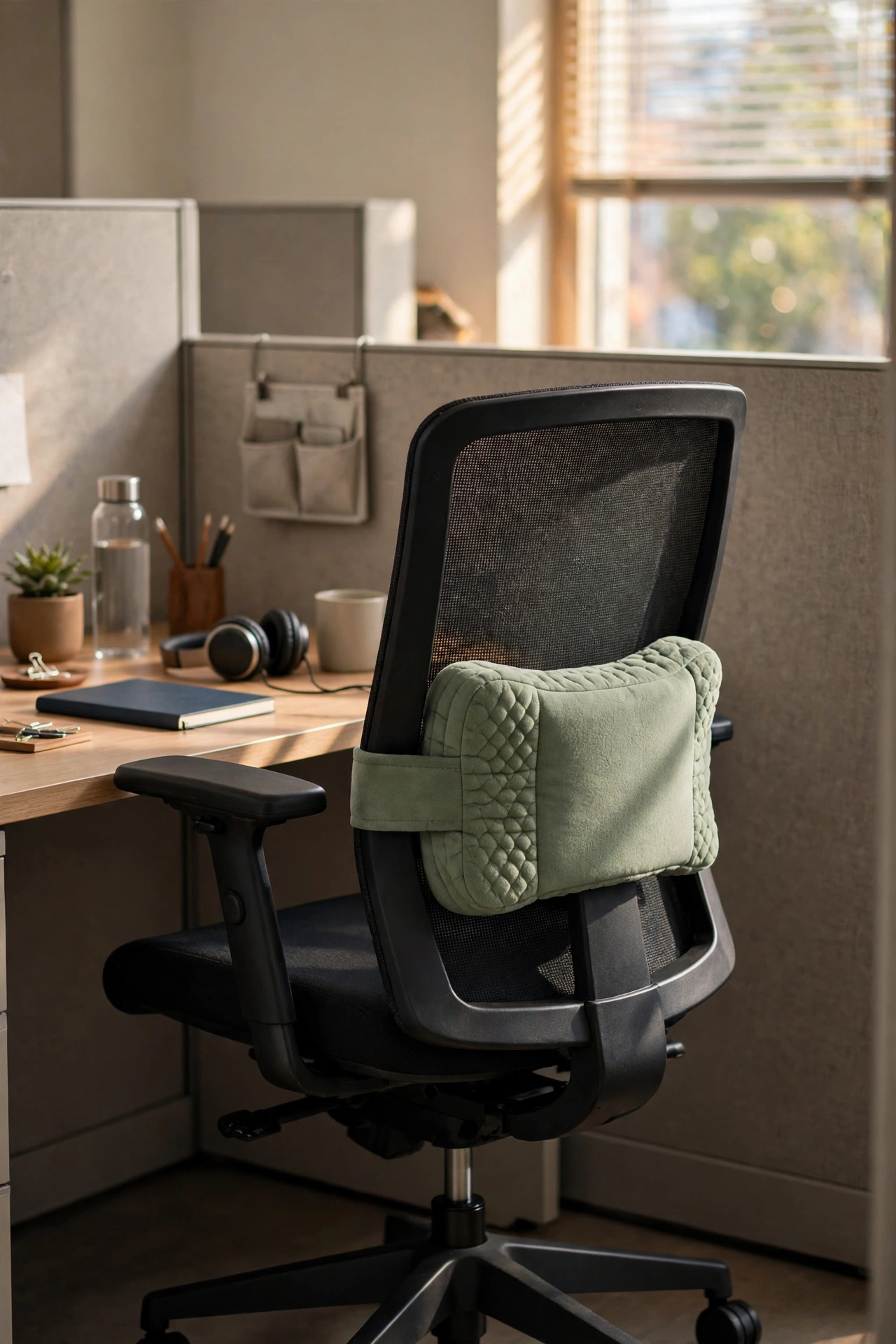
Office chairs are built for an average body that nobody actually has, and a lumbar cushion is the cheapest ergonomic upgrade you can make. Choose one in your palette — a solid color, a subtle texture, no loud patterns — and it becomes both support and decor. Memory foam holds its shape through the day, while a simple roll cushion works if you prefer something firmer. Pair it with a seat cushion in the same fabric family if your chair seat is thin, and keep both clean by choosing removable, washable covers. Your back will notice the difference by Friday, and the chair will look finished instead of institutional.
16. Dress the Chair With a Throw Pillow
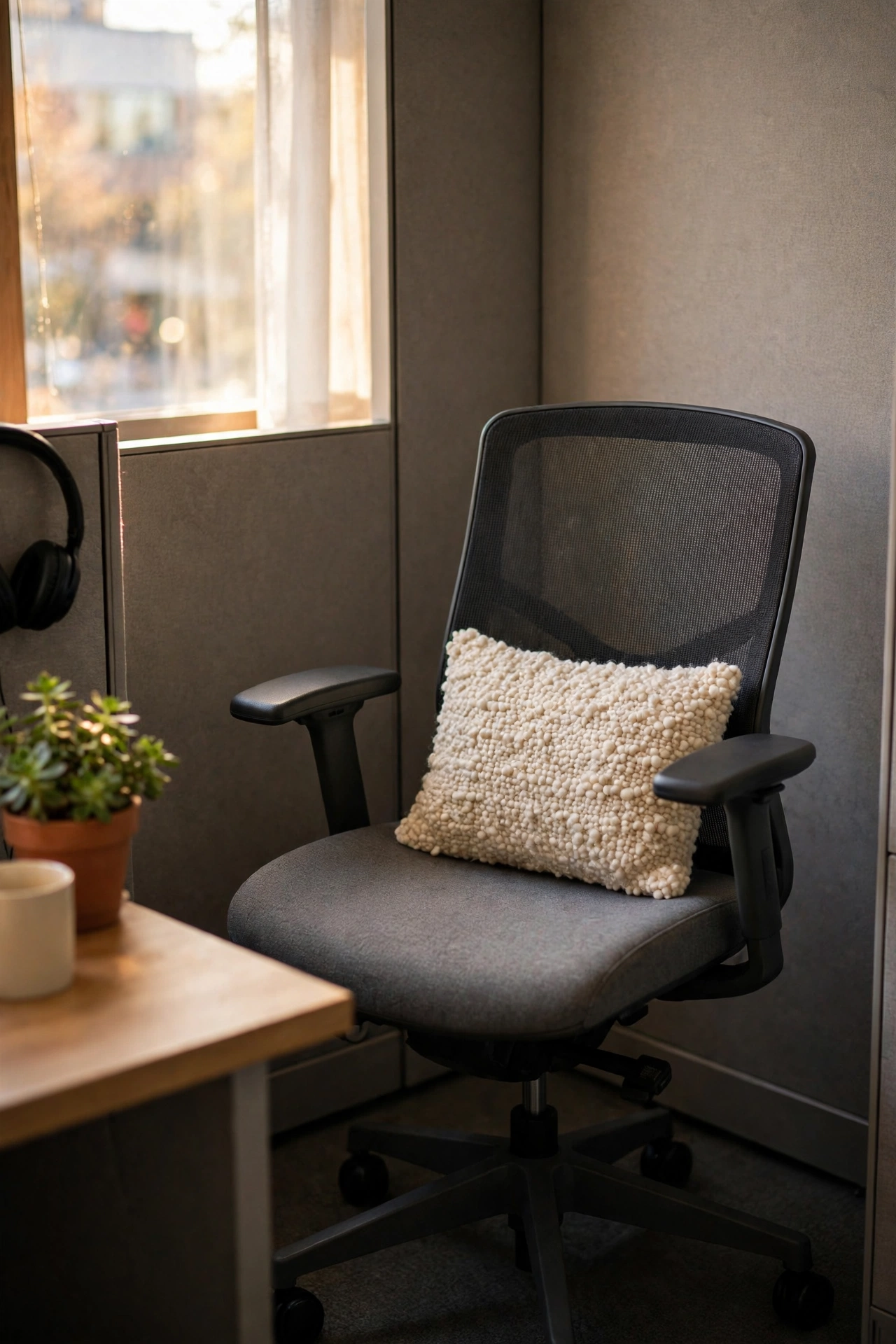
A single throw pillow on an office chair sounds frivolous until you try it — it softens the hardest-looking object in the cubicle and adds a hit of color exactly where your eye lands. Pick a small lumbar-style pillow (about 12×20 inches) in a textured fabric like bouclé, velvet, or woven cotton, in one of your palette colors. It doubles as lower-back support during long calls. Avoid anything oversized or overly plush, which reads as a living room, and skip strong scents from fabric sprays. One pillow is the right number; two starts to look like you moved in, and facilities will notice.
17. Install a Cubicle Shelf
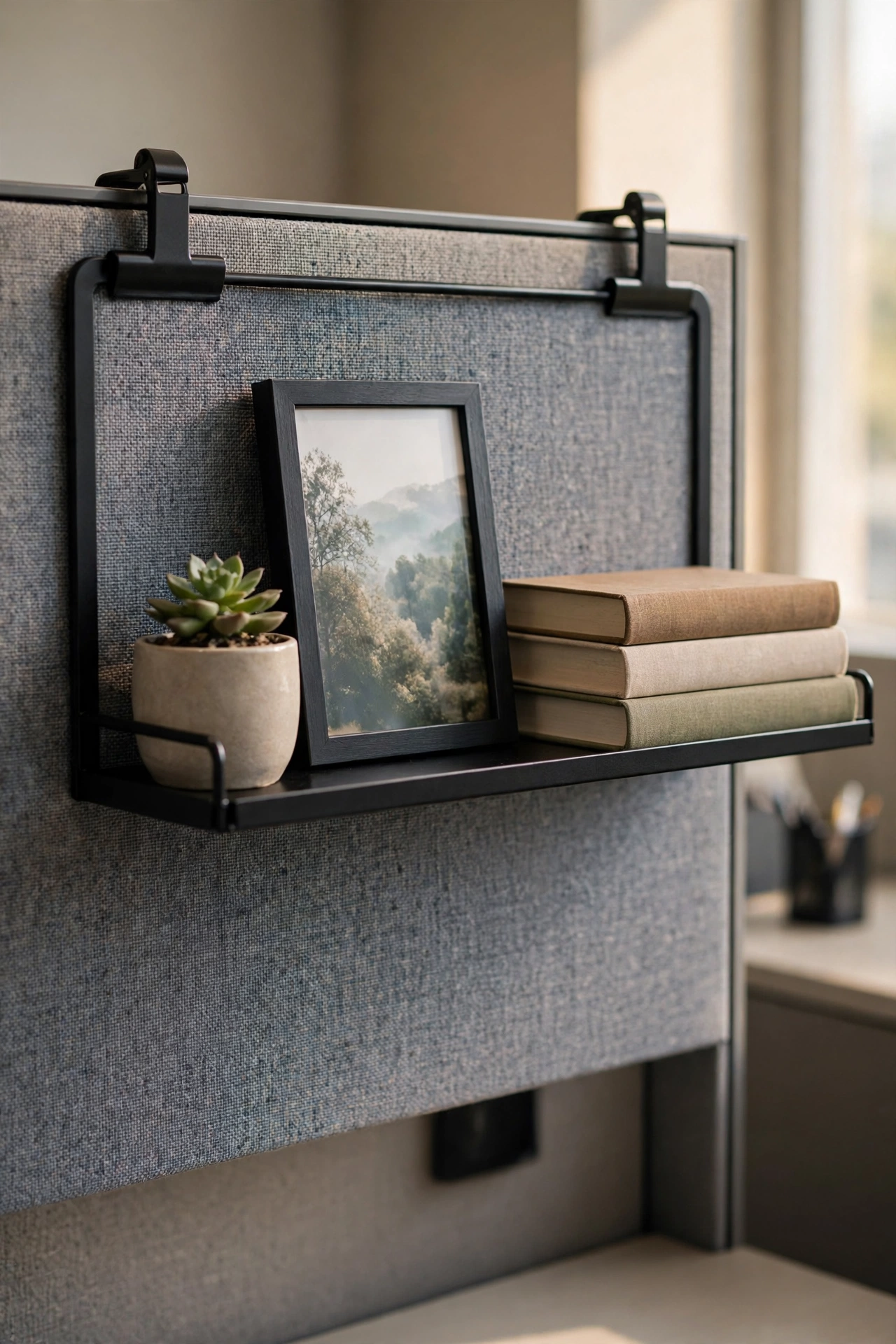
Vertical space is the most underused asset in a cubicle. A clip-on cubicle shelf — one that hooks over the top of the panel or grips it with brackets — gives you a display ledge for a plant, a framed photo, and a small stack of books without touching your desk surface at all. Keep the shelf shallow (four to six inches deep) and the load light, and arrange it like a shelf at home: one tall item, one low item, and a little breathing room. Check the weight rating before you buy, and never hang a shelf on a panel that wobbles. For more storage-first thinking, our craft room storage ideas show the same vertical-storage logic applied to another small space.
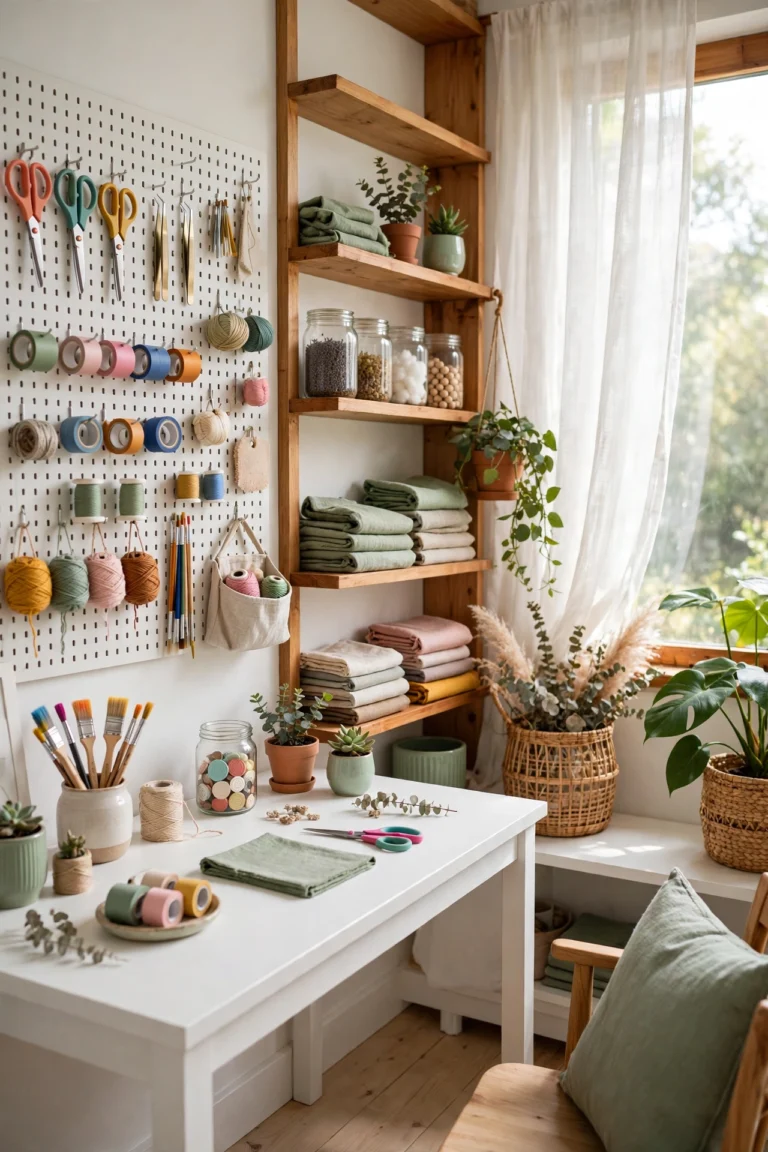
18. Mount a Pegboard for Tools and Decor
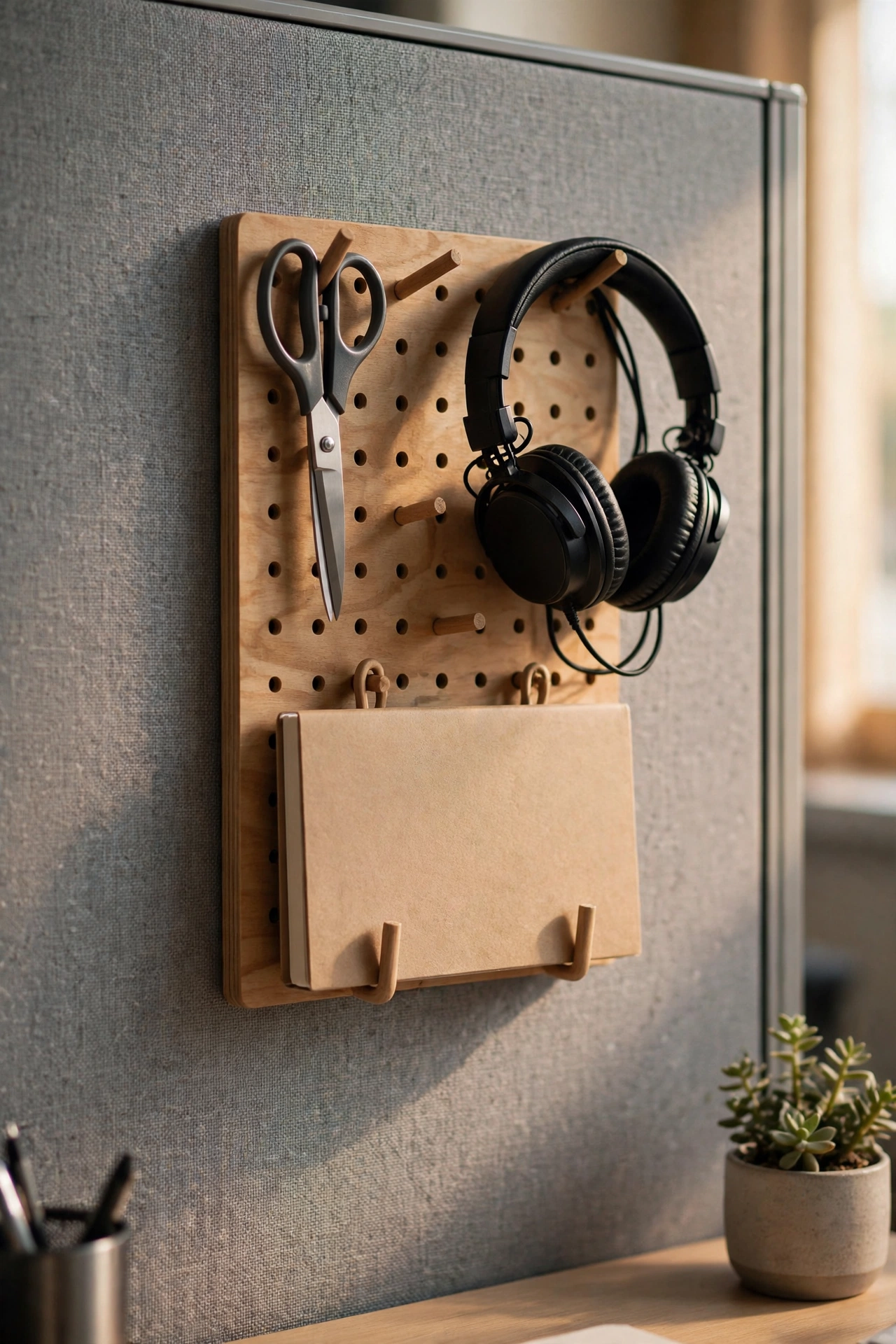
A small pegboard turns a blank panel into a working wall. Hang it with cubicle hooks, add a few pegs, hooks, and a tiny shelf, and you have a home for scissors, headphones, a notebook, and one decorative item — all off the desk and visible at a glance. Paint the pegboard your palette color or leave it natural wood for a warmer look, and keep the arrangement loose enough that you can move things around as projects change. The beauty of pegboard is that it is both storage and decor: a tidy row of useful tools in matching colors looks deliberate, and it frees up the entire desk surface underneath.
19. Hang a Wall Planter or Two
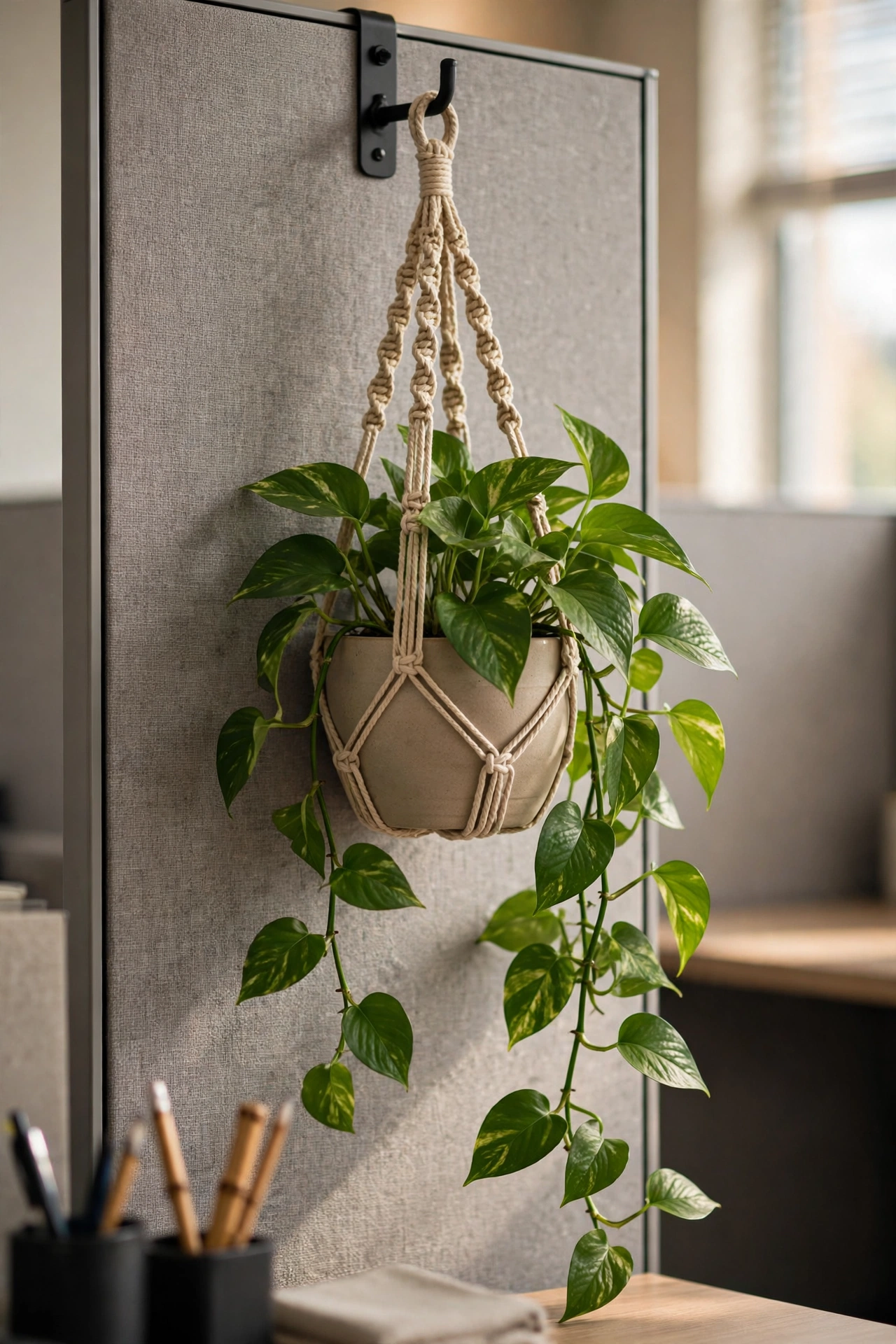
If your desk is too small for a plant, put the plant on the wall. A hanging planter or a wall-mounted pocket planter holds a trailing pothos or a small fern at eye level, where it adds color without taking a single inch of desk space. Choose a lightweight planter with a secure hook — fabric pocket planters are the safest on cubicle panels — and pick a plant that tolerates low light and occasional neglect. Water over a sink, not over your keyboard, and keep a small tray or liner inside the planter so drips never reach the carpet. One or two wall planters is plenty; a whole vertical garden will block light and invite questions from facilities.
20. Keep a Subtle Reed Diffuser (If Allowed)
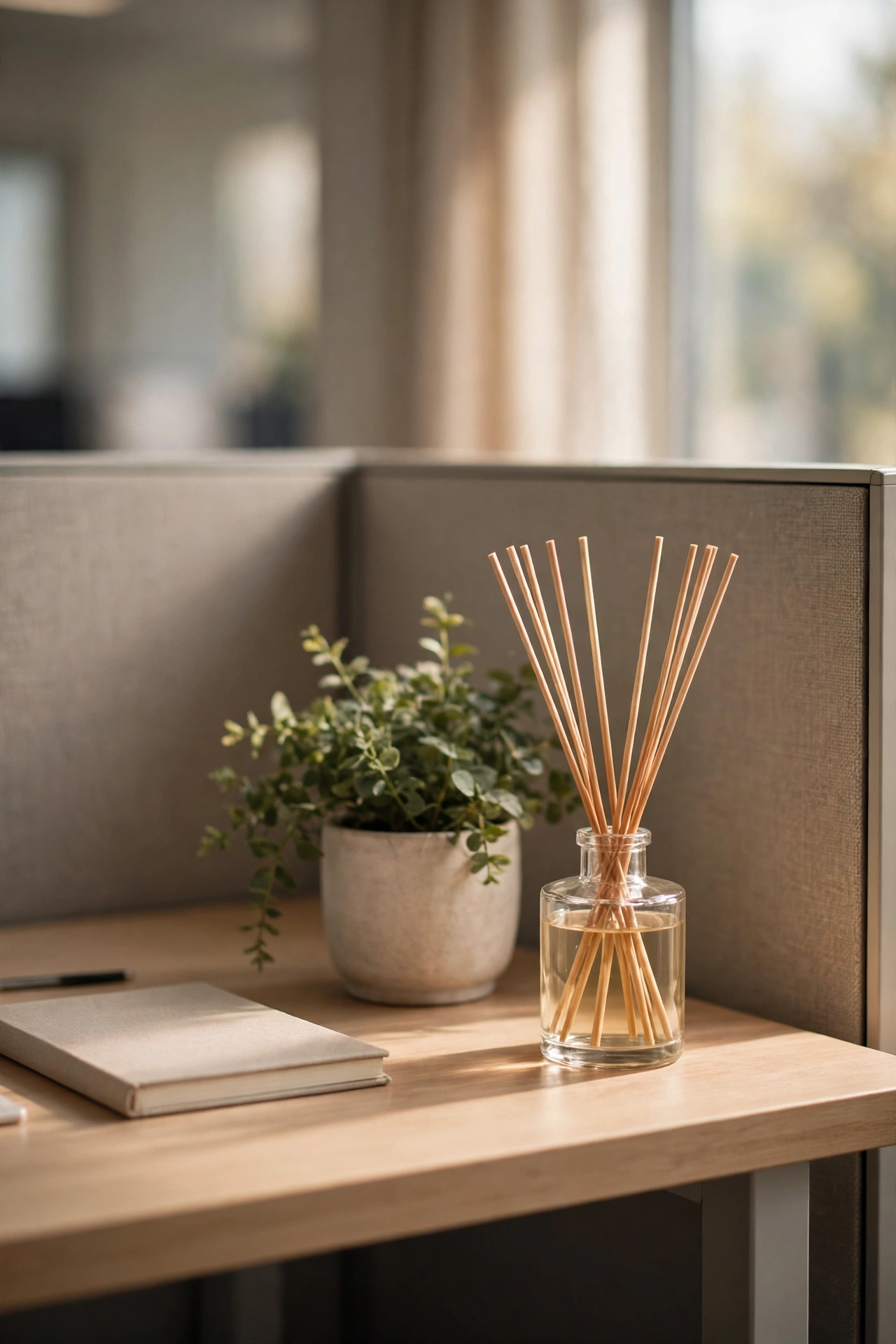
Offices are shared air, so scent has to be handled with care — but a small reed diffuser with a light, clean fragrance like cedar, linen, or green tea can make your cube smell like a place you chose rather than a place you were assigned. Reed diffusers are safer than candles (no flame, no plug) and subtler than plug-in fresheners. Place one small bottle at the back of the desk, use only three or four reeds, and skip scent entirely if anyone nearby has allergies or if your office bans fragrances. The rule is simple: you should barely notice it yourself, and nobody three feet away should notice it at all.
21. Choose a Mug and Coaster Worth Looking At
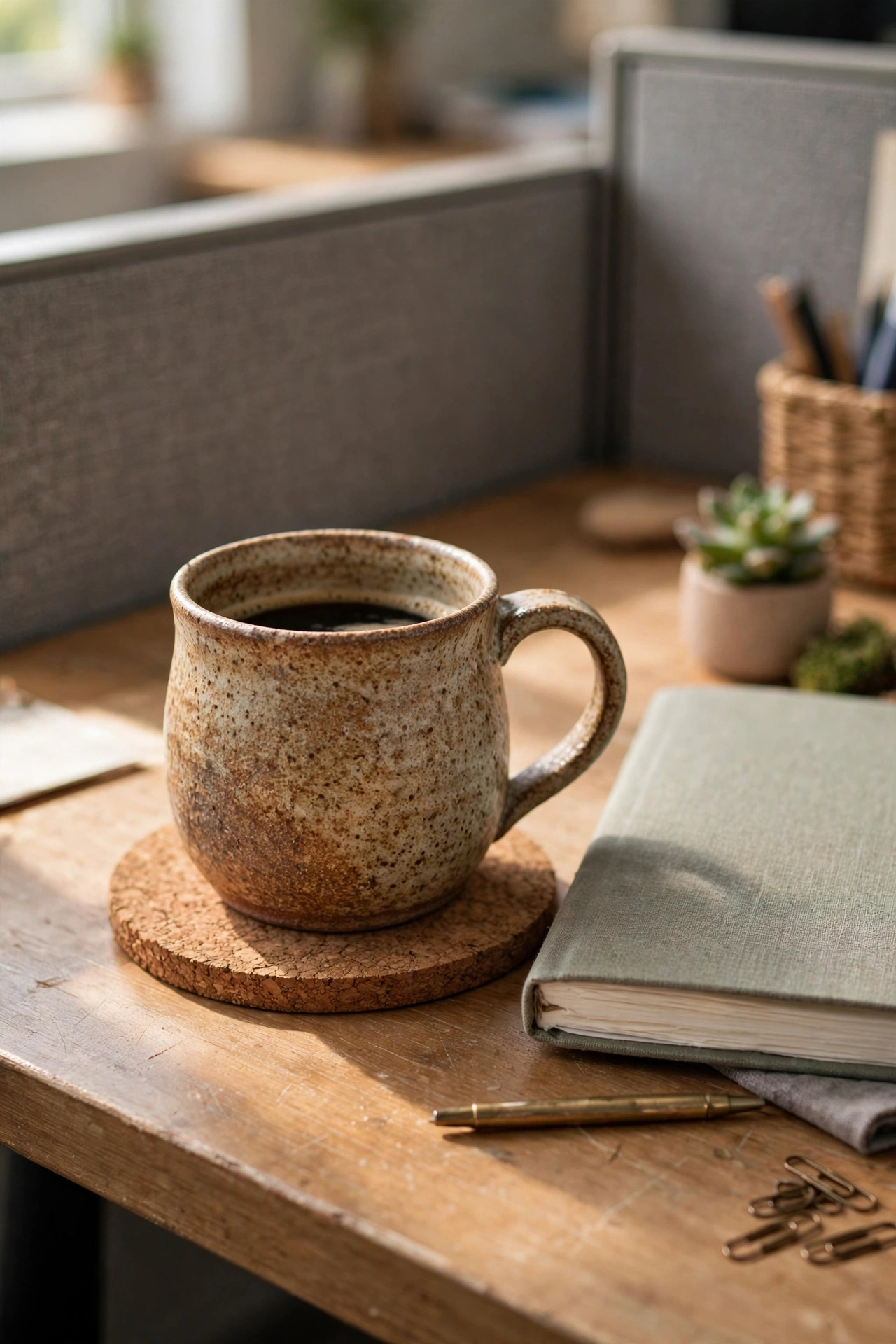
Your mug sits on your desk all day, every day, so it might as well be something you like looking at. A handmade ceramic mug in your palette color, paired with a simple cork or stone coaster, turns a basic necessity into a small piece of decor. Keep one mug at your desk and one in the kitchen if you rotate, and choose a coaster that actually protects the desk — cork absorbs condensation, stone looks sharp, and leather ages well. This is a tiny idea with an outsized effect: the mug is in your hand a dozen times a day, and a good one makes the whole desk feel more considered.
22. Make a DIY Photo Desk Calendar
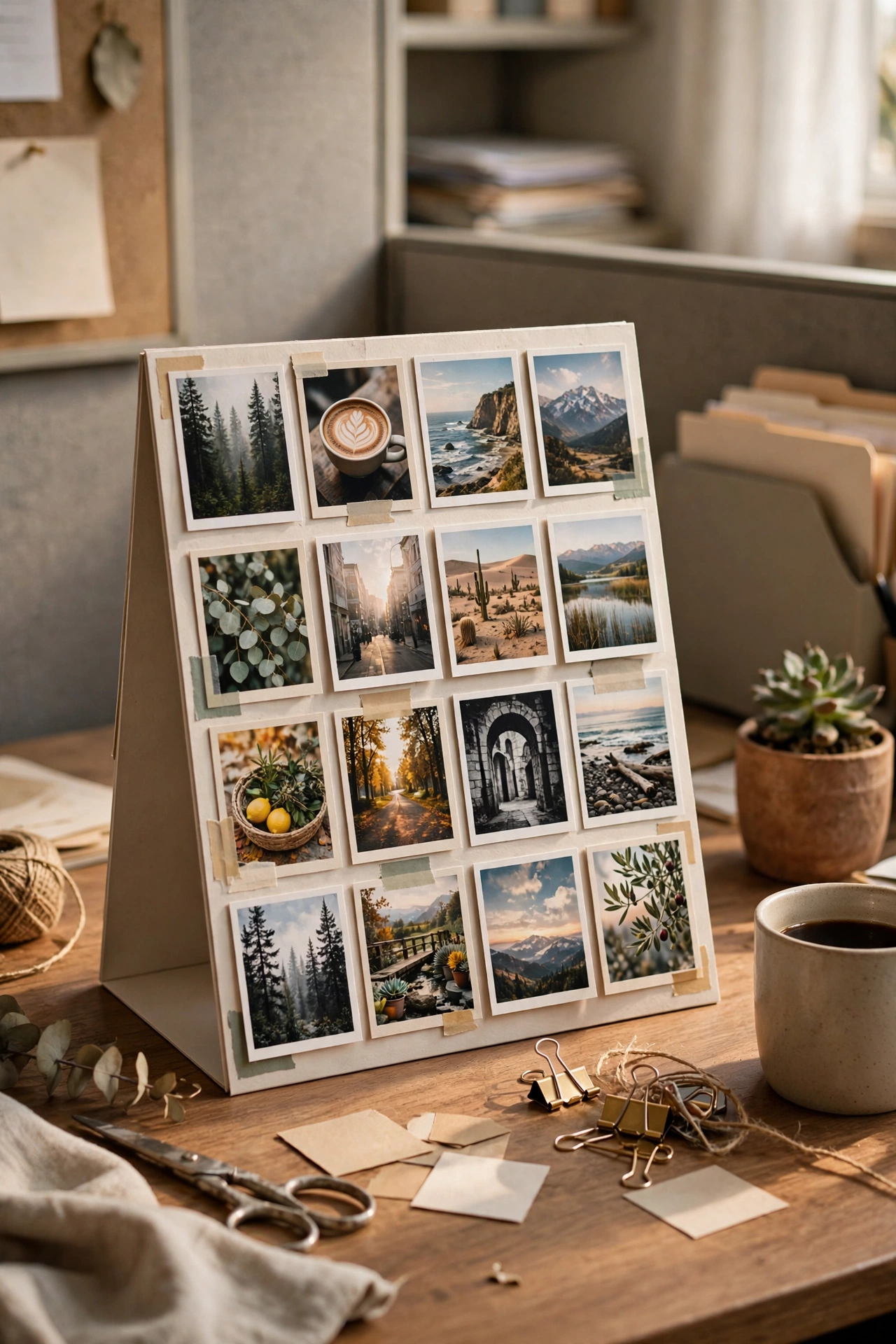
A desk calendar you made yourself beats a free one from a vendor in every way that matters. Print twelve small photos — one for each month — and mount them on cardstock with a simple date grid, or buy a blank wooden block calendar and add your own photo cards. The photos give you something pleasant to look at when you check a date, and the project takes an hour on a Sunday. Keep the design consistent with your palette so the calendar reads as part of the decor, not a craft project that escaped. Swap the photo card on the first of each month and the calendar stays fresh all year.
23. Trim Edges With Washi Tape
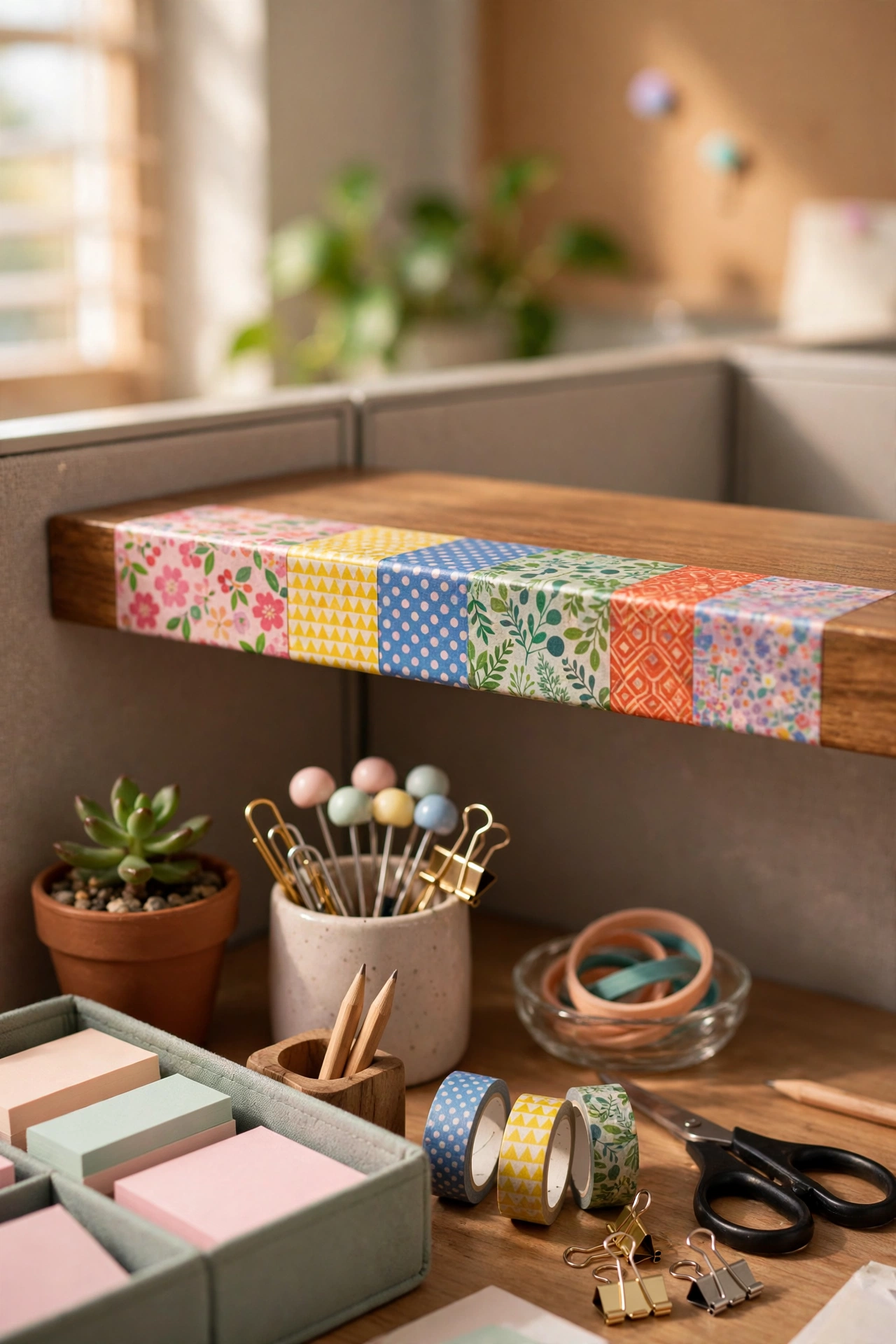
Washi tape is the lowest-commitment decor tool there is: it sticks, it peels off cleanly, and it comes in every color and pattern. Use it to trim the edge of a shelf, outline a drawer front, frame a small photo, or mark the border of your pinboard. One or two accents in your palette color are enough — a thin line of tape along a shelf edge looks sharp, while tape on every surface looks like a craft explosion. It is also genuinely useful: color-code tape on cable ends or notebook spines so you can find things faster. When you tire of a color, peel it off and start over in thirty seconds.
24. Switch to Matching Acrylic Accessories
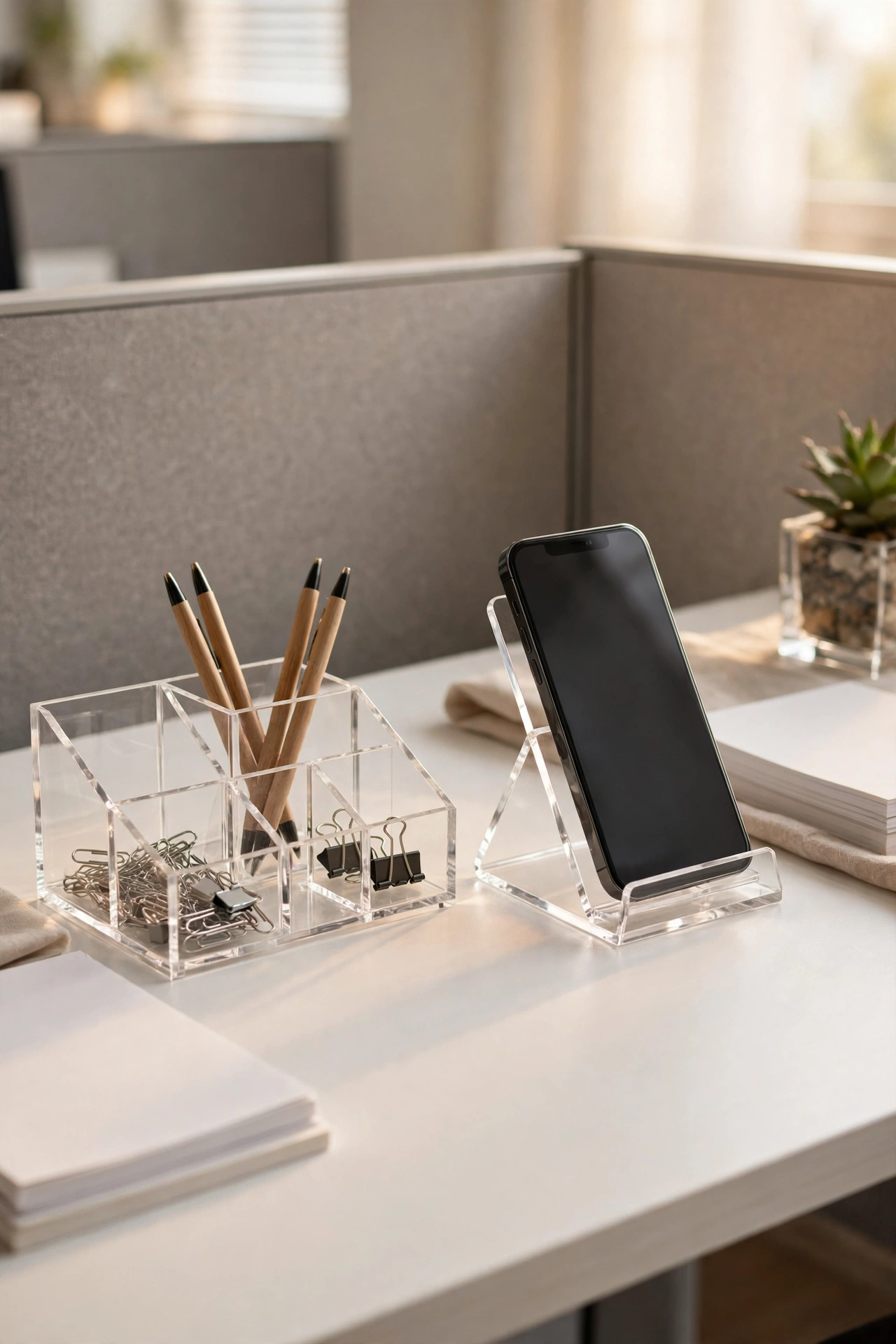
A matching set of acrylic desk accessories — pen holder, tray, and phone stand — makes a desk look organized even on a messy day. Clear acrylic disappears visually, which keeps a small desk from feeling crowded, and the matching set reads as one decision rather than three random purchases. Keep the set to three pieces maximum and resist filling every holder: a pen cup with four good pens looks better than one stuffed with twenty. If acrylic feels too modern for your taste, the same idea works in bamboo, matte ceramic, or brushed metal. The point is the match, not the material.
25. Add a Mini Whiteboard for the Week
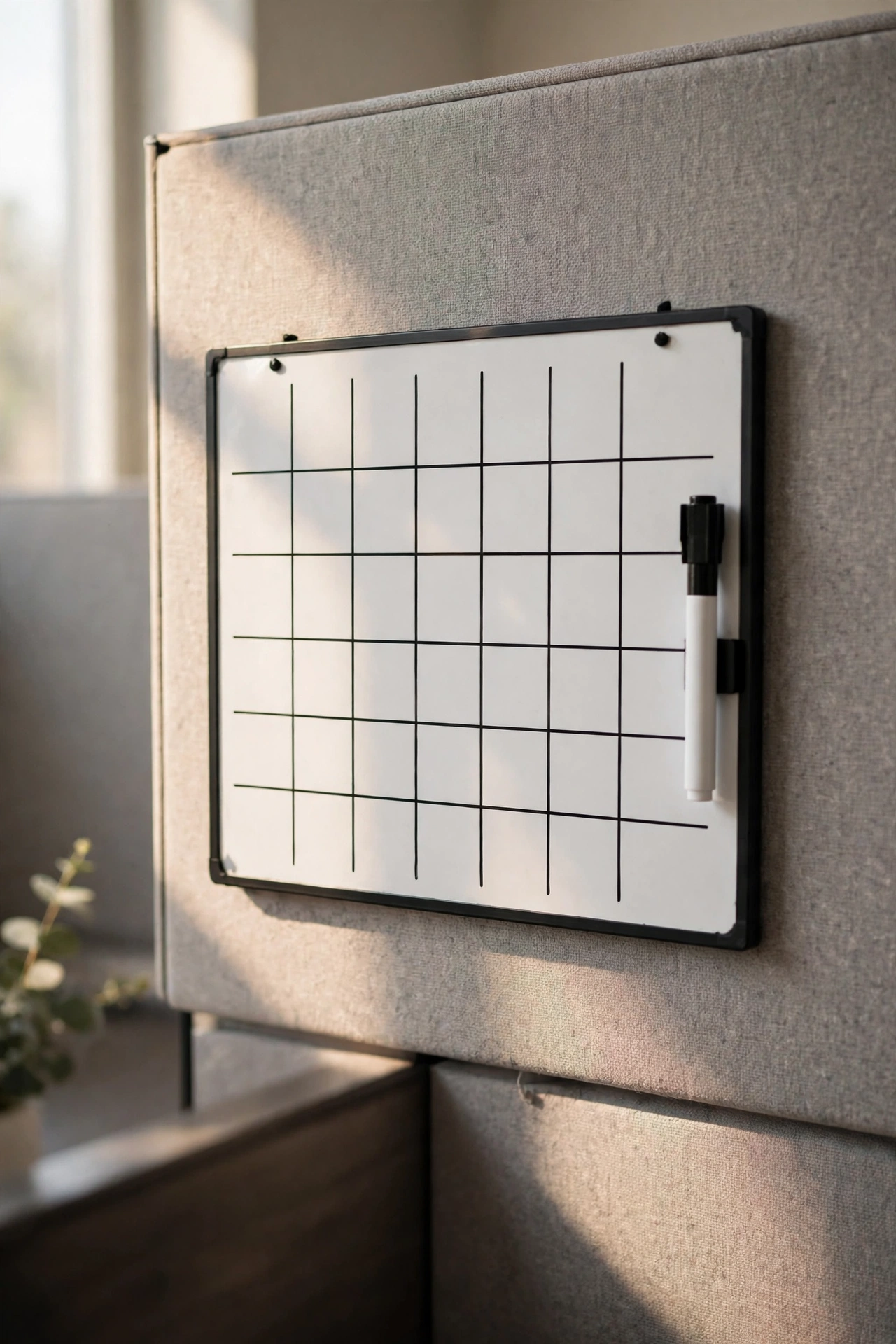
A mini whiteboard hung at eye level keeps your week visible without turning your wall into a sticky-note archive. Use it for three things only: today’s top priority, this week’s deadlines, and one reminder that would otherwise live in your head. A small board — about the size of a sheet of paper — fits on any panel with a cubicle hook, and a quick wipe on Friday resets it for Monday. Choose a board with a slim frame in your palette color, and keep a single marker in a matching holder. The board earns its place because it reduces mental clutter, and a clear plan is its own kind of decor.
26. Lay Down a Felt Desk Pad
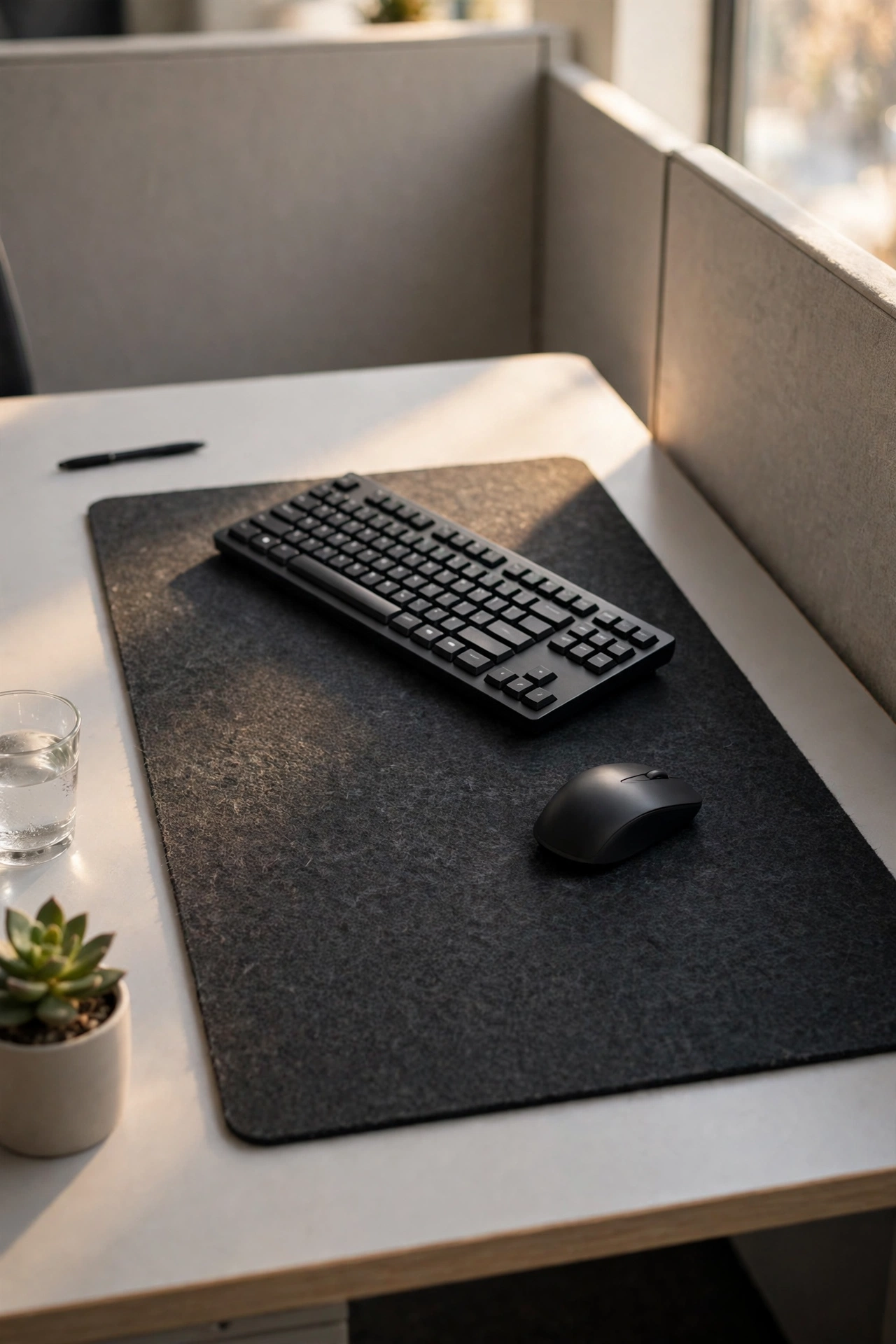
A felt desk pad does three quiet jobs at once: it protects the desk surface, softens the sound of typing, and defines your work zone with a band of color. Choose a pad large enough for your keyboard and mouse, in a muted tone from your palette — charcoal, sage, or warm gray — and keep it clean with a quick lint-roll once a week. Felt also dampens the small vibrations that make a cubicle feel busy, which is a real comfort during long typing sessions. If felt is not your style, a leather or cork pad does the same job with a different texture. Either way, the pad makes the desk look finished the moment you sit down.
27. Display Decorative Bookends
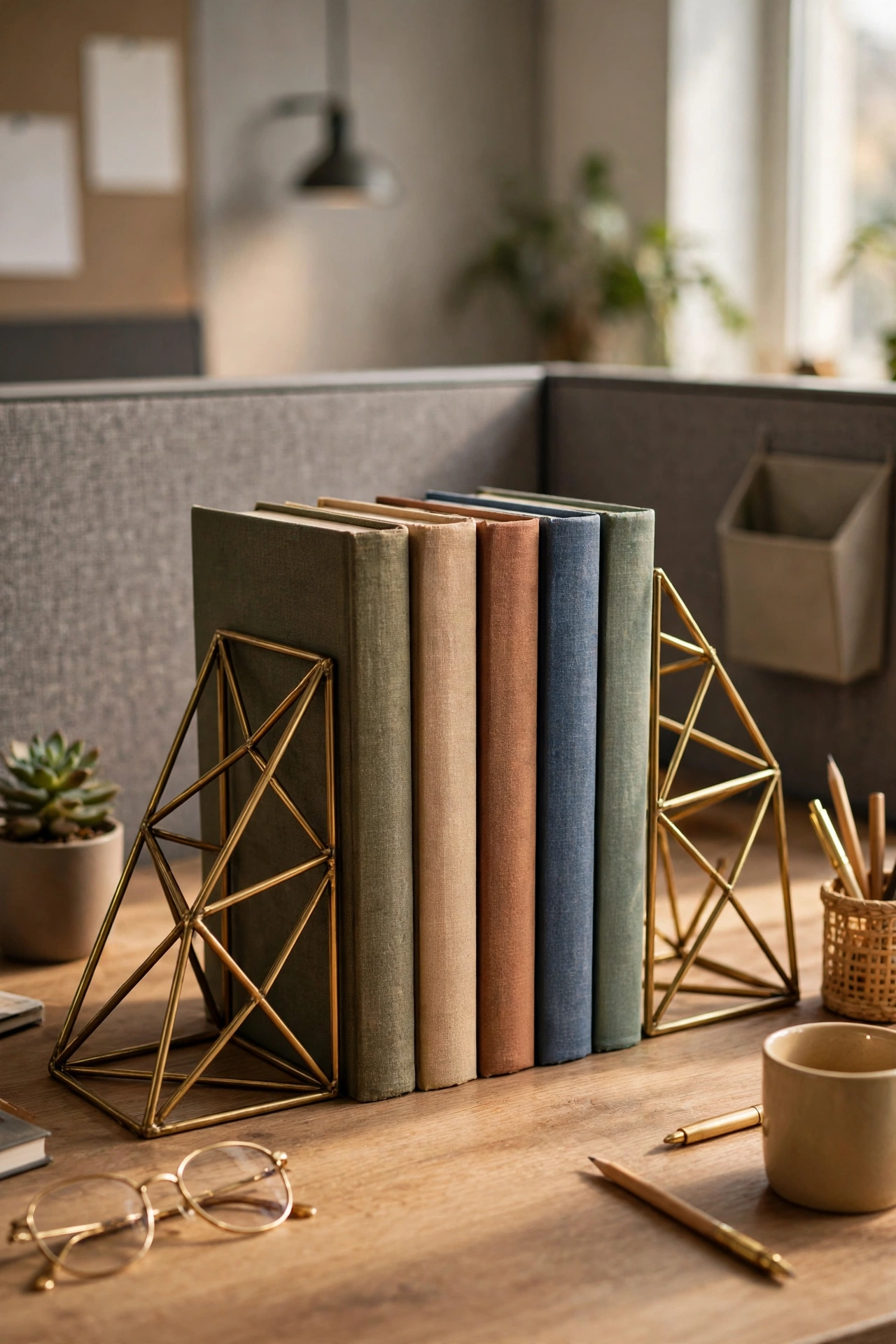
A pair of decorative bookends turns a stack of reference books into a styled moment. Choose bookends that say something about you — brass geometric shapes, a small animal, a pair of stones — and use them to hold the three or four books you actually reach for, not a library you never open. Place them on a shelf or at the back of the desk where they frame the books without blocking your work. Bookends also solve a practical problem: they stop the slow slide of books across a desk that gets bumped a dozen times a day. Keep the pair matched and the books upright, and the corner of your desk will look like a shelf you chose, not a pile you inherited.
28. Put a Small Analog Clock on the Desk
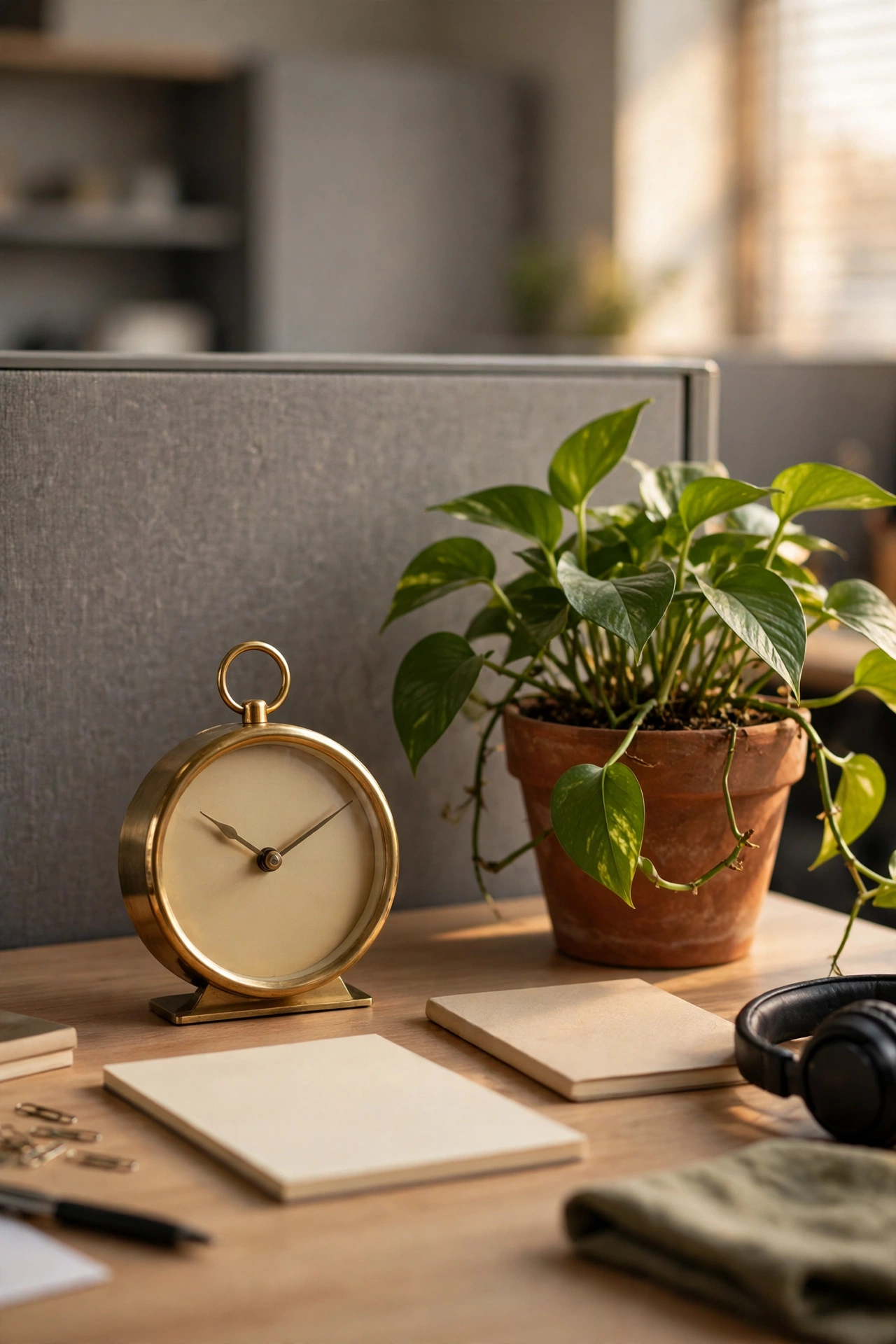
A small analog clock is decor that also saves you from checking your phone every ten minutes. Choose one with a clean face and a frame that matches your palette — brass, wood, or matte black — and set it where you can read it with a glance, not a head turn. A silent sweep movement matters in an office; nobody wants to hear ticking all day. The clock also anchors a corner of the desk the way a lamp anchors the other side, giving the surface a balanced, finished look. It is a small object with a real job, which is exactly the kind of thing that belongs in a cubicle.
29. Add a Small Stylish Desk Fan
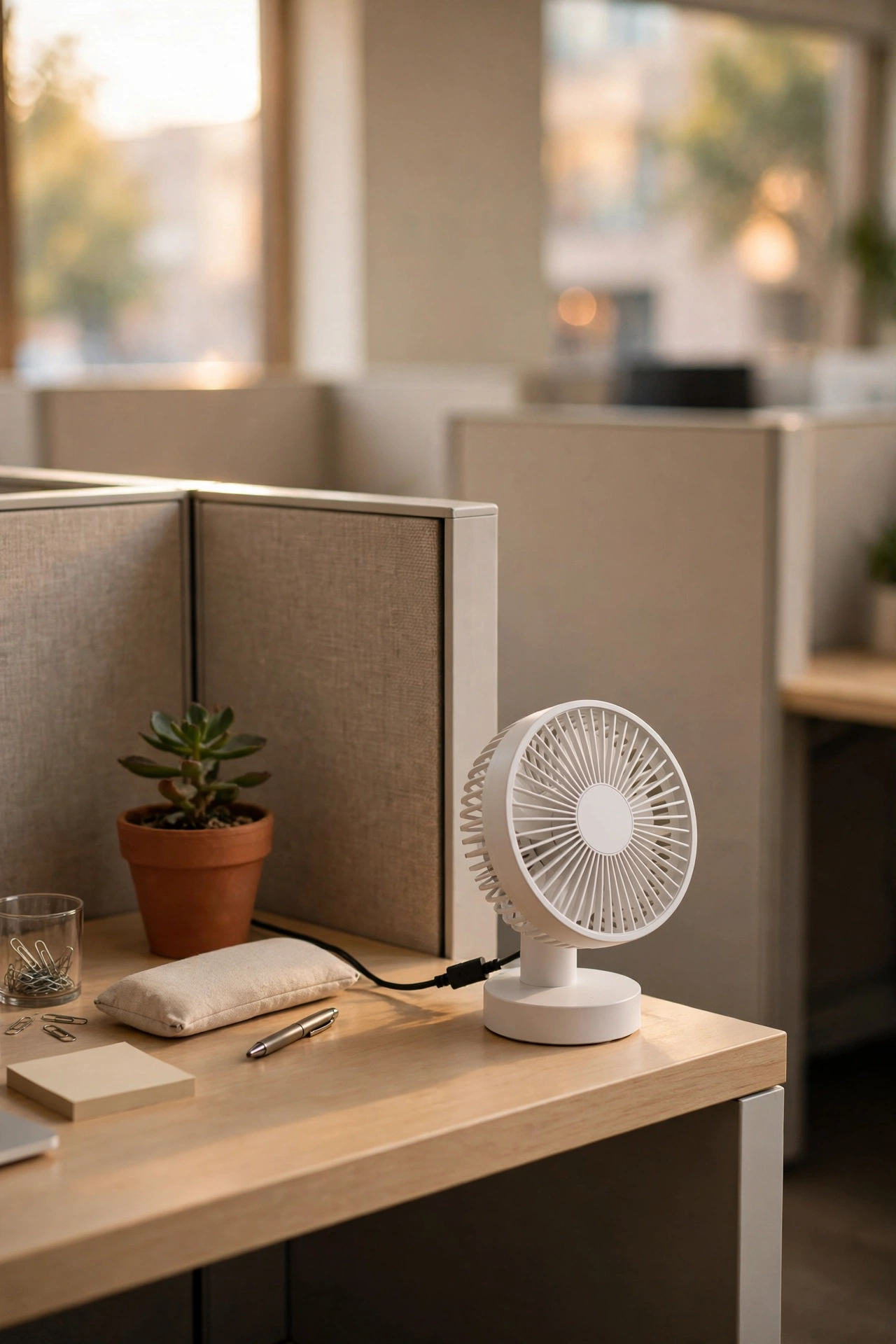
Cubicle air is famously still, and a small desk fan fixes that while adding a sculptural object to the desk. Modern USB fans come in quiet, low-profile designs — matte white, brushed metal, or soft sage — that look like decor rather than appliances. Choose one with at least two speeds and a head that tilts, and run it off your monitor’s USB port so it adds no extra cables. Keep it small enough to sit at the back corner of the desk, aimed at you rather than at your neighbor’s papers. On warm afternoons it is the difference between a stuffy cube and a comfortable one, and it earns its footprint every day it runs.
30. Frame One Piece of Quote Art
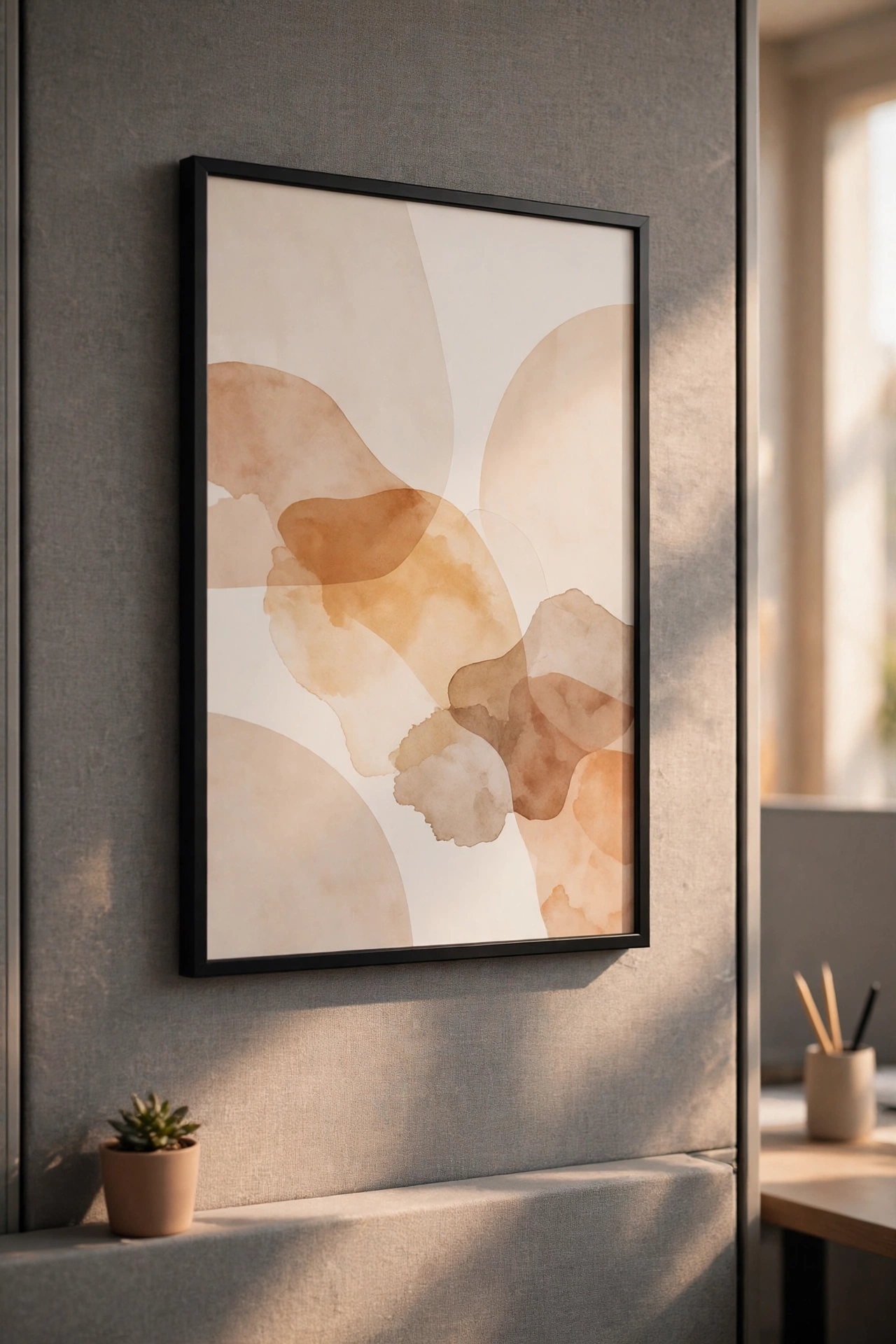
One framed quote, chosen well, says more than a wall of motivational posters. Pick a line that actually means something to you — a sentence from a book you love, a short piece of advice, a few words that steady you on hard days — and print it in a clean typeface on plain paper in your palette color. Frame it simply, hang it where you see it when you look up, and leave it alone: one quote is a statement, five quotes is a gift shop. Avoid anything cynical or passive-aggressive, no matter how funny it seems on a Monday; your cubicle is also your professional reputation. The right quote, in the right frame, is the most personal object in the room.
31. Rotate One Seasonal Touch
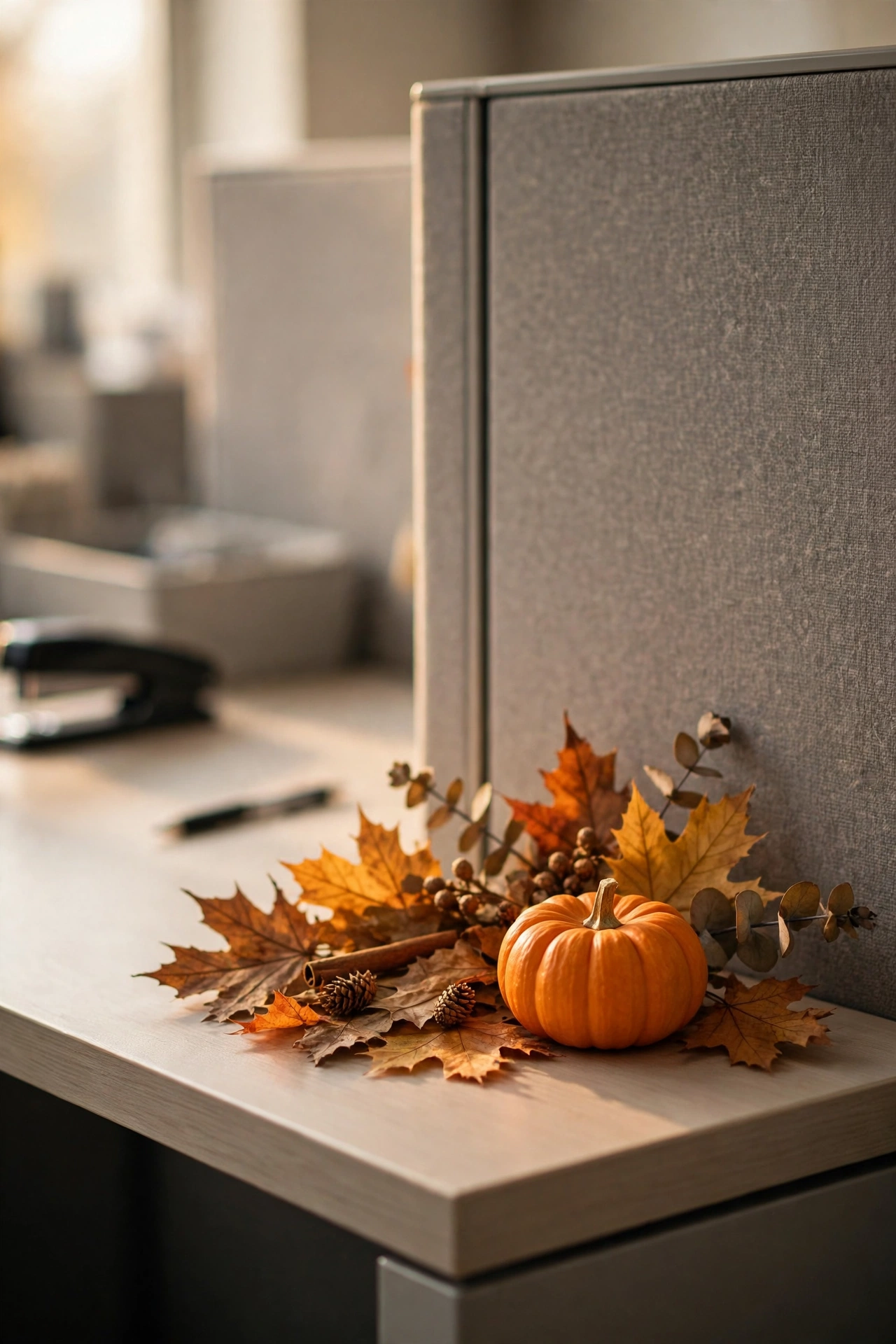
A cubicle that never changes starts to feel invisible, and a single seasonal touch keeps it feeling alive. Rotate one small item with the seasons: a tiny pumpkin in October, a sprig of evergreen in December, a small vase of spring flowers in March, a bright postcard in July. One item is the whole idea — it marks the time of year without turning your desk into a holiday display. Keep the seasonal piece small, office-appropriate, and easy to remove, and swap it on the first Monday of the new season. The ritual itself is the point: it gives you a reason to look at your space with fresh eyes four times a year, and to clear out anything that has quietly become clutter.
32. Add an Under-Shelf LED Strip
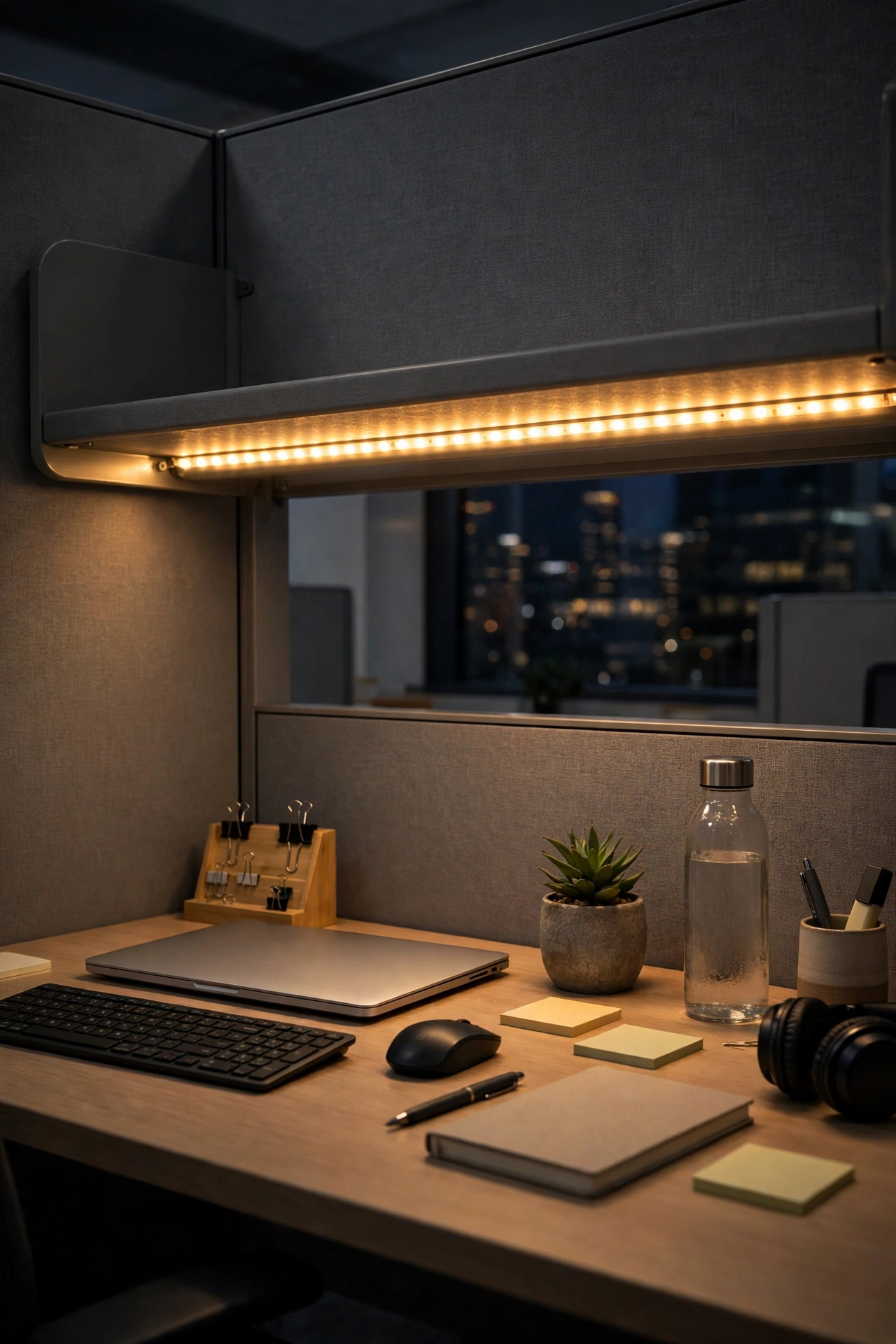
If your cubicle has a shelf or an overhead bin, a slim LED strip mounted underneath it washes your desk in soft, even light that no desk lamp can match. Battery-powered strips with adhesive backing install in minutes and remove cleanly, and a warm-white strip at low brightness is enough to lift the whole work surface out of the fluorescent gloom. Keep the strip hidden behind the shelf lip so you see the light, not the hardware, and choose a dimmable model so you can match the brightness to the time of day. This is the lighting upgrade most people notice only after it is gone — the desk simply feels easier to work at.
33. Hang a Cubicle Curtain for Privacy
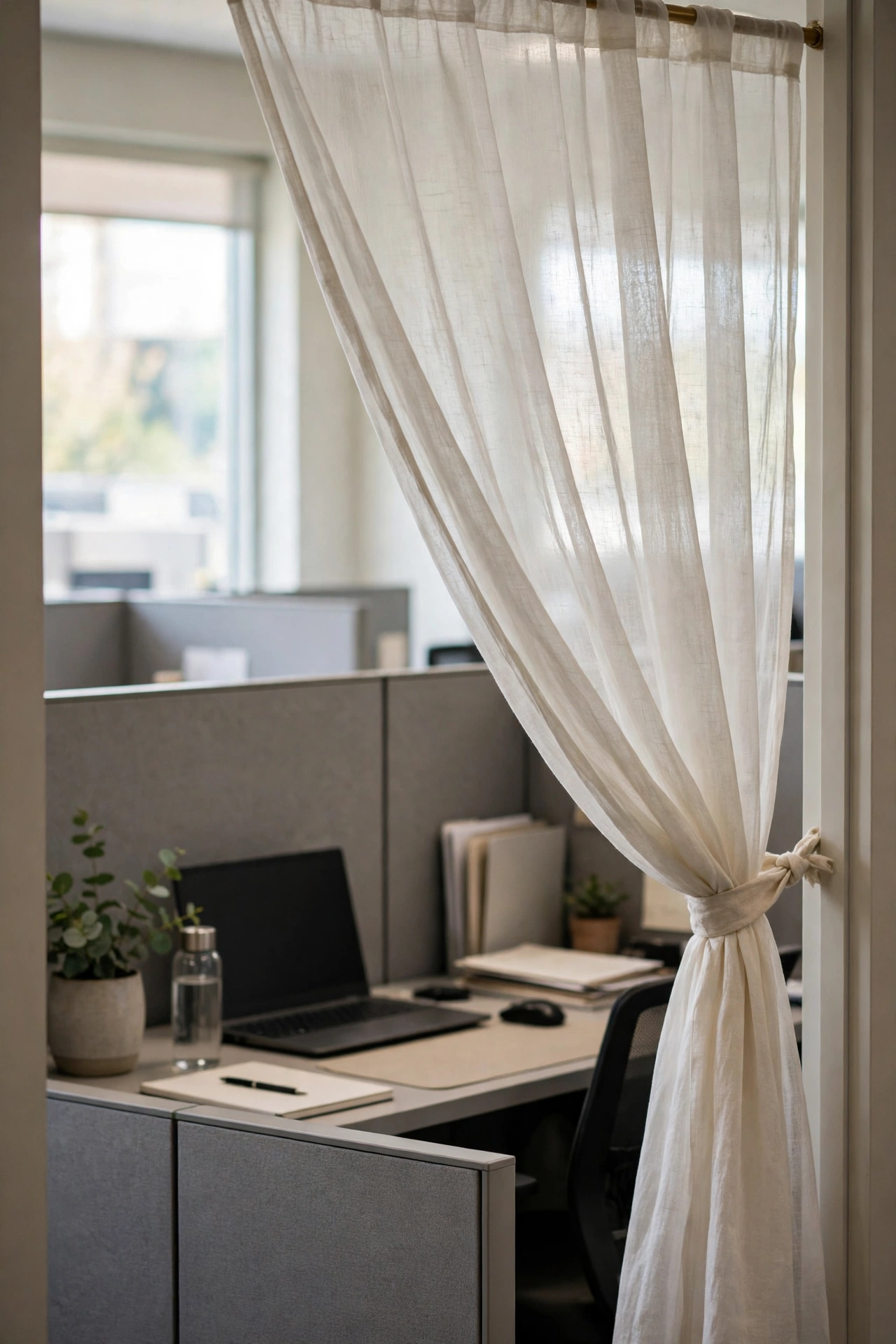
A lightweight curtain across the cubicle entrance gives you privacy on demand without building a wall. Choose a sheer or semi-sheer fabric in a neutral tone, hang it from a tension rod or a pair of cubicle hooks, and keep it tied back most of the time so the space still feels open. Pull it closed for focused work, video calls, or a quick lunch break, then open it again. The fabric softens the hard edges of the cube and adds a layer of texture that panels alone never provide. Check your office policy first — some workplaces restrict entrance coverings — and keep the curtain short enough that it never drags on the floor or blocks a walkway.
34. Pot a Plant in a Macramé Hanger
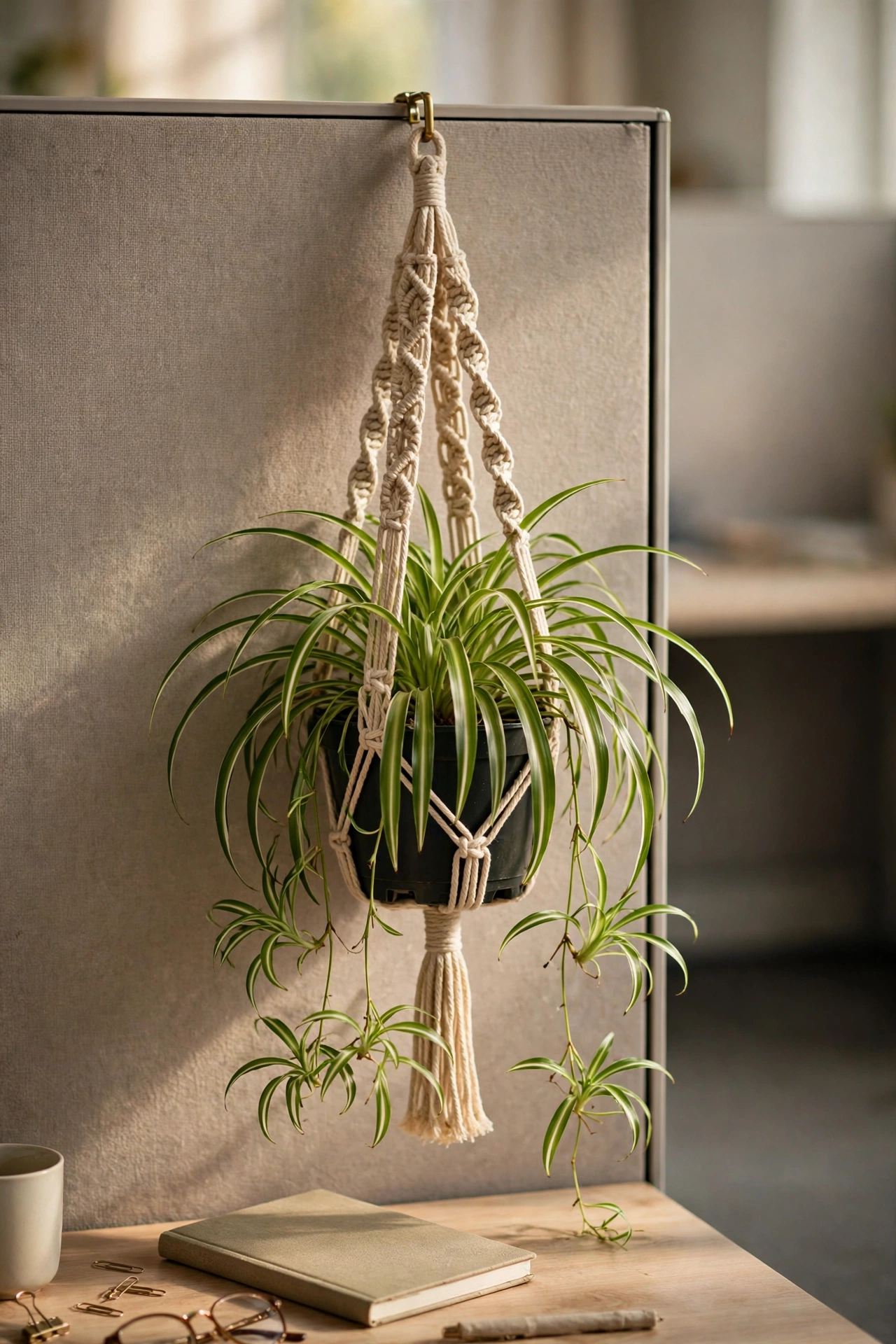
A macramé plant hanger adds texture and a handmade feel that a plain pot never will. Hang it from a cubicle hook near the top of a panel, with a trailing pothos or spider plant spilling gently downward, and it becomes the softest thing in the room. The hanger keeps the plant off the desk entirely, which matters in a small cube, and the knotted cotton adds warmth to a space full of metal and laminate. Choose a hanger sized for a small pot — four to six inches — and keep the plant trimmed so it never trails onto your keyboard. One hanger is enough; a cluster of them turns a workspace into a greenhouse.
35. Make a Sticky-Note Color Block
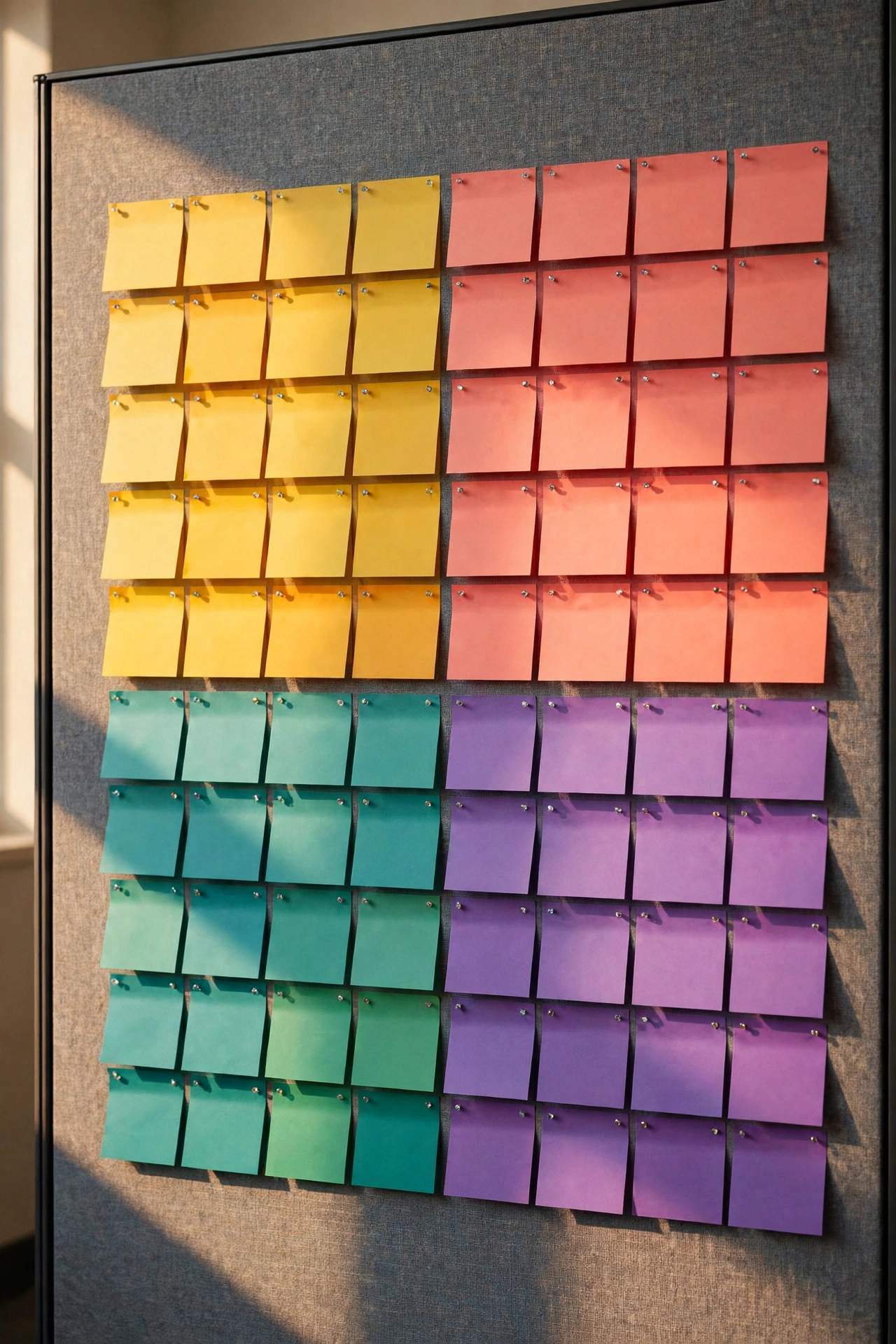
Sticky notes are usually visual noise, but arranged deliberately they become a small piece of art. Pick three colors from your palette and build a simple geometric block — a gradient, a set of stripes, or a small grid — on one panel, using the notes themselves as the medium. Write one useful thing on each note — a deadline, a name, a reminder — so the display earns its wall space, and replace notes as tasks finish so the block evolves instead of fading. Keep the block compact, no bigger than a sheet of paper, and refresh the notes monthly before the adhesive gives up. It is the rare decor idea that is also a productivity tool, and it costs almost nothing.
36. Use Matching Decorative Storage Boxes
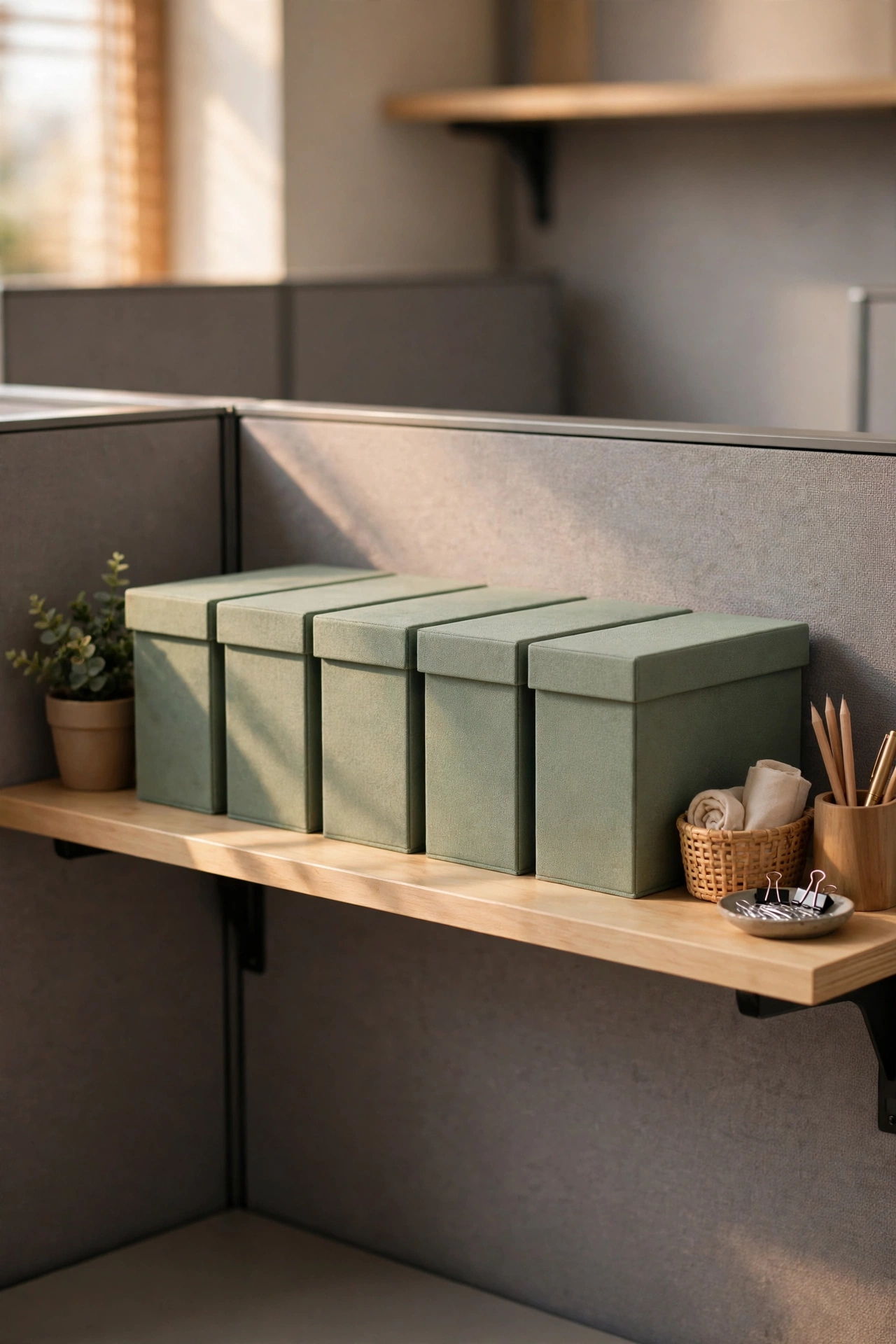
Every cubicle accumulates things that need a home — spare cables, snacks, stationery, personal items — and matching storage boxes give them one without looking like storage. Choose two or three boxes in the same material and color, sized to fit on a shelf or under the desk, and label them discreetly if it helps. Fabric boxes with lids are the most forgiving on panels and shelves, while rigid boxes stack better. The matching set matters: three boxes in one color read as a system, while three random boxes read as moving day. Keep one box for personal items and one for work supplies, and the desk stays clear because everything has a place to go. For more small-space storage thinking, our small apartment ideas use the same hide-it-in-plain-sight approach.
37. Display Headphones on a Stand
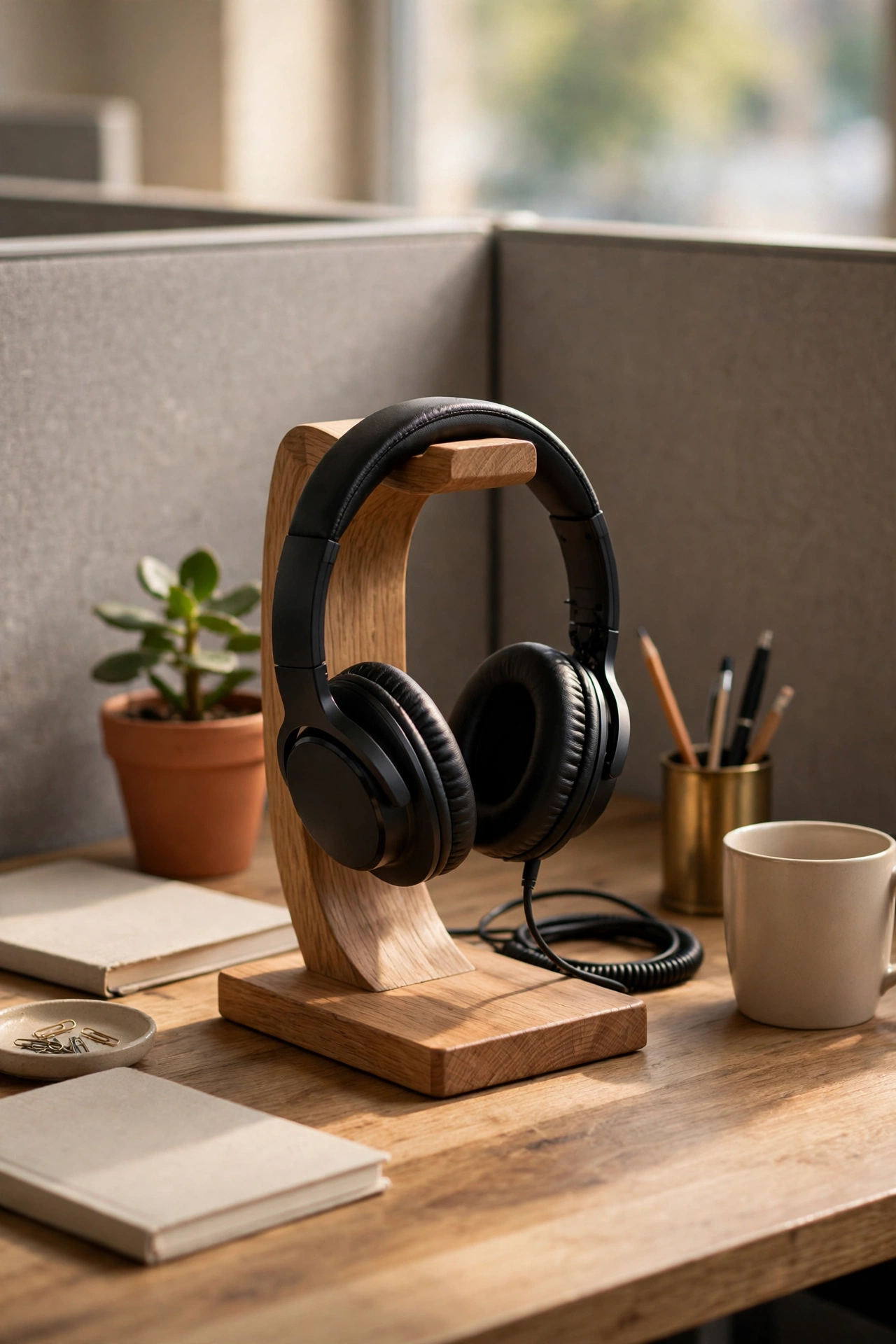
Headphones spend most of the day on the desk, tangled or tossed aside, when a simple stand would turn them into a deliberate object. A wooden or matte-black headphone stand keeps the band shaped, the cable tidy, and the desk clear — and it looks like you meant it. Choose a stand with a weighted base so it never tips, and place it at the back corner of the desk where it frames the workspace instead of crowding it. If you use earbuds instead, a small tray or a wall hook does the same job. Either way, the point is the same: the things you use every day deserve a home, and a home makes them look like decor.
38. Set Up a Mini Zen Garden
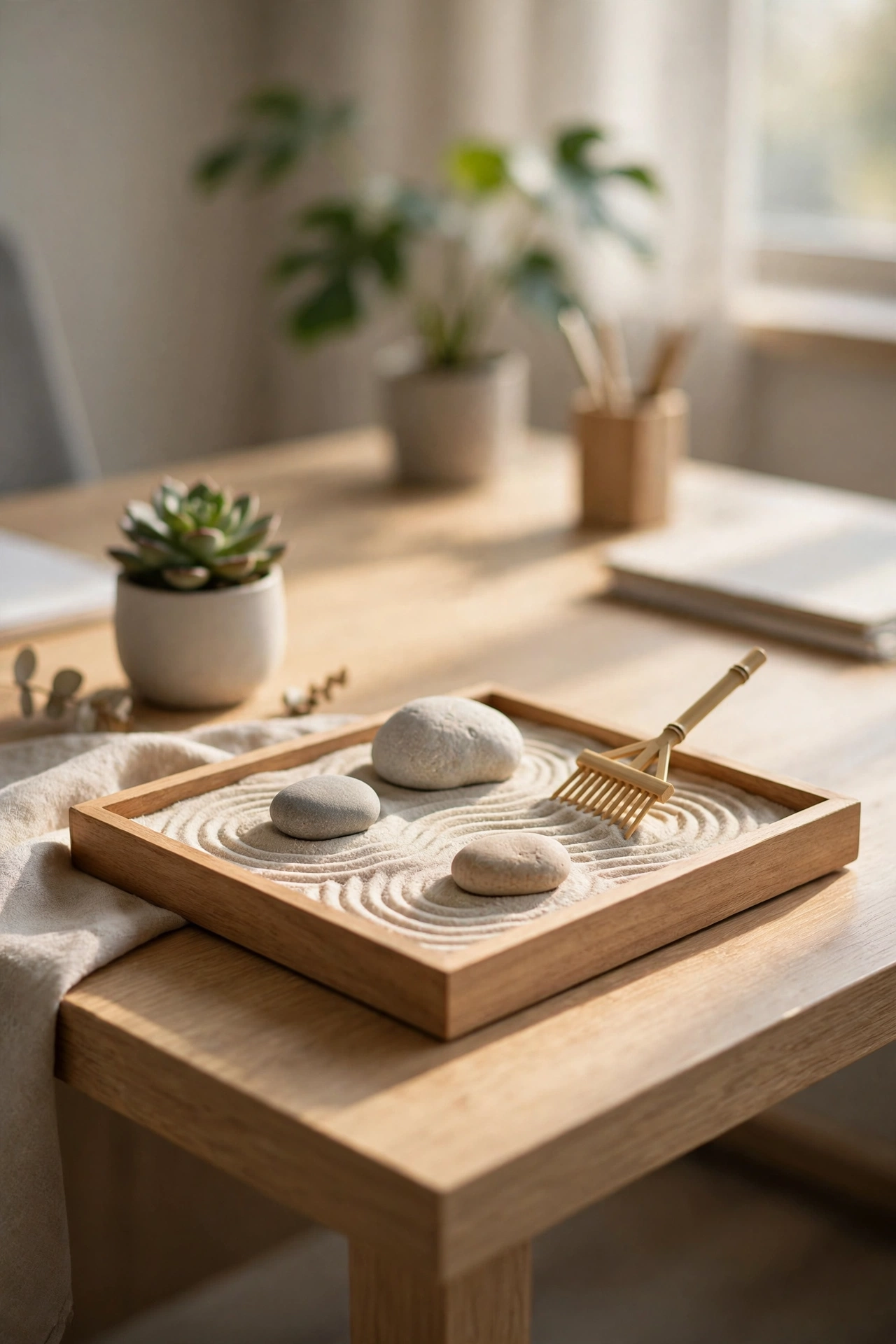
A mini zen garden — a shallow tray of fine sand, a few smooth stones, and a tiny rake — is the smallest possible ritual for a stressful workday. It sits quietly on the corner of the desk, takes up less space than a notebook, and gives your hands something calm to do during a thinking pause or a long call. Choose a tray in wood or stone that fits your palette, keep the sand level and the stones to three or five, and rake it when you need a minute to reset. It is not for everyone — if you dislike fussy objects, skip it — but for people who like a tactile pause, it is the most personal item on this list. Keep it away from the keyboard edge so sand never migrates into your work.
39. Place a Small Desk Mirror
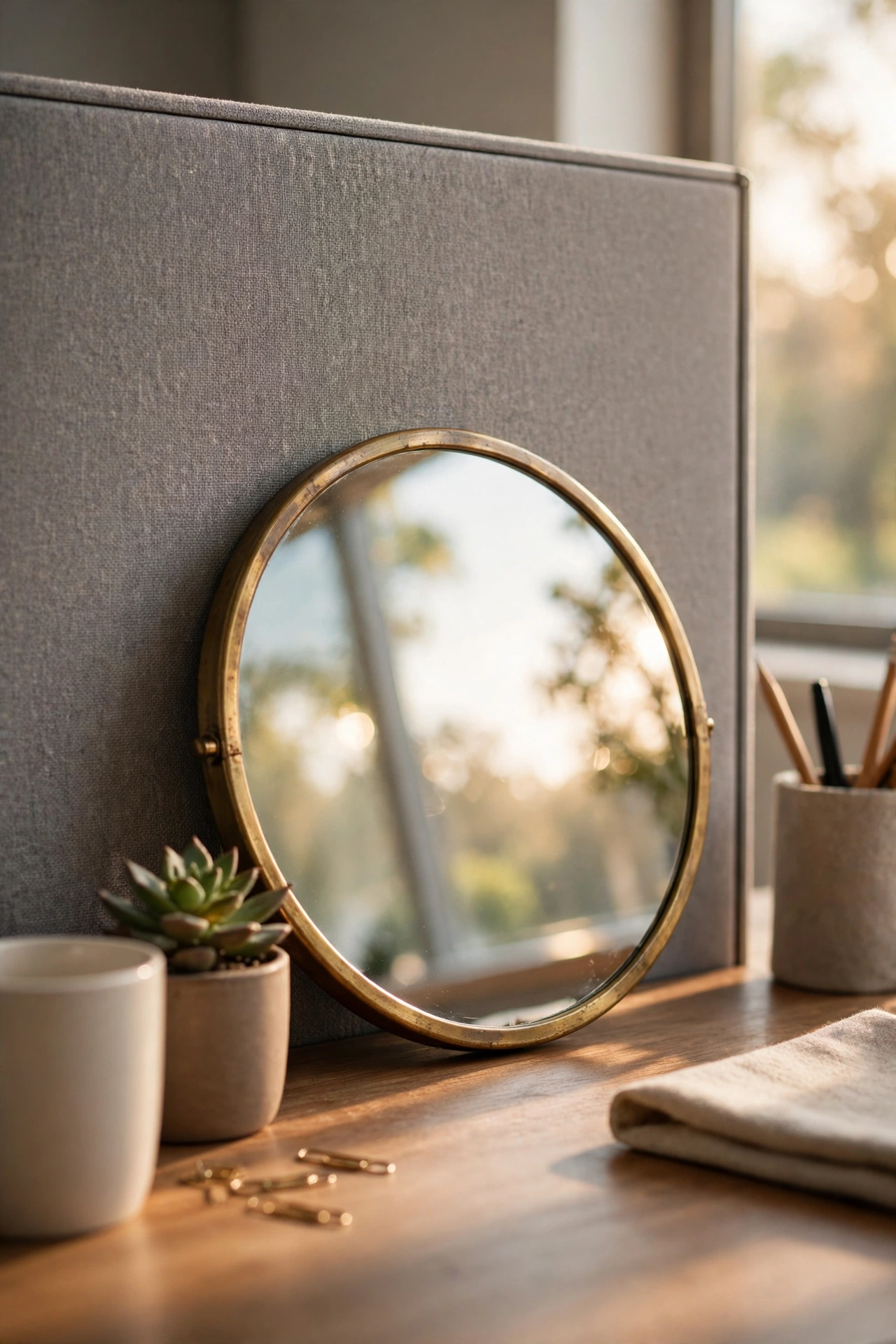
A small mirror on a cubicle desk bounces light into corners that fluorescents never reach, and it makes the space feel larger than it is. Choose a simple round or arched mirror, six to eight inches across, in a brass or wood frame that matches your palette, and lean it against the panel at the back of the desk. It doubles as a quick check before a meeting, and the reflected light softens the whole cube. Keep it angled so it reflects the room, not your monitor, and avoid placing it where it catches a window and throws glare at a neighbor. One mirror is the right number — two starts to feel like a dressing table.
40. Add a Personalized Nameplate or Desk Sign
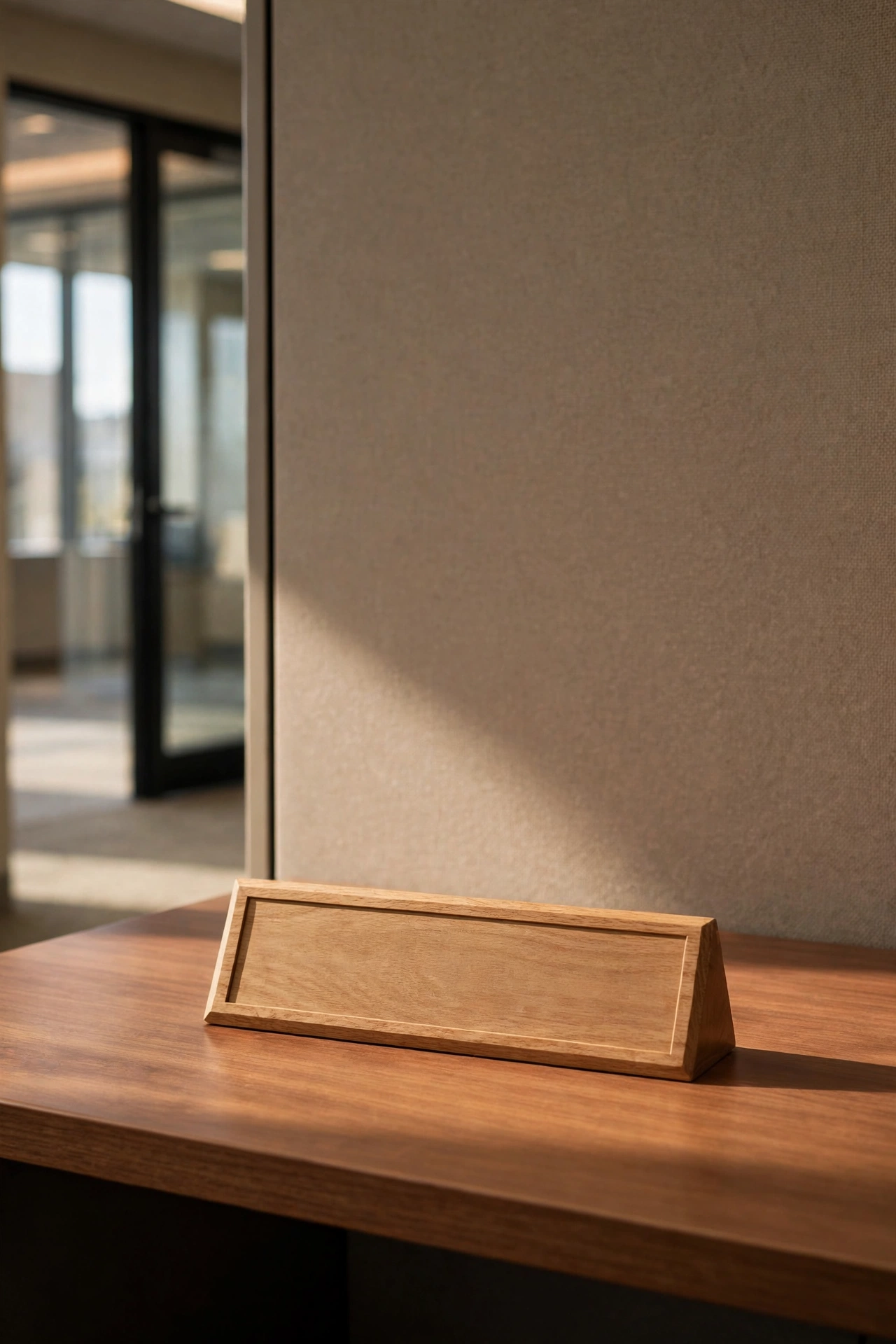
A nameplate is the oldest cubicle decor there is, and it still works — because it marks the space as yours. Skip the generic office-supply version and choose something with a little personality: a wooden nameplate, a small acrylic sign with your name and role, or a hand-lettered card in a slim frame. Keep it small, professional, and easy to read from the entrance of the cube, and place it where visitors see it first. A good nameplate does two jobs: it tells people who you are, and it tells you, every morning, that this desk belongs to someone with a name. That is a surprisingly grounding thing in a sea of identical cubes.
41. Keep a Tiny Shelf of Favorite Books
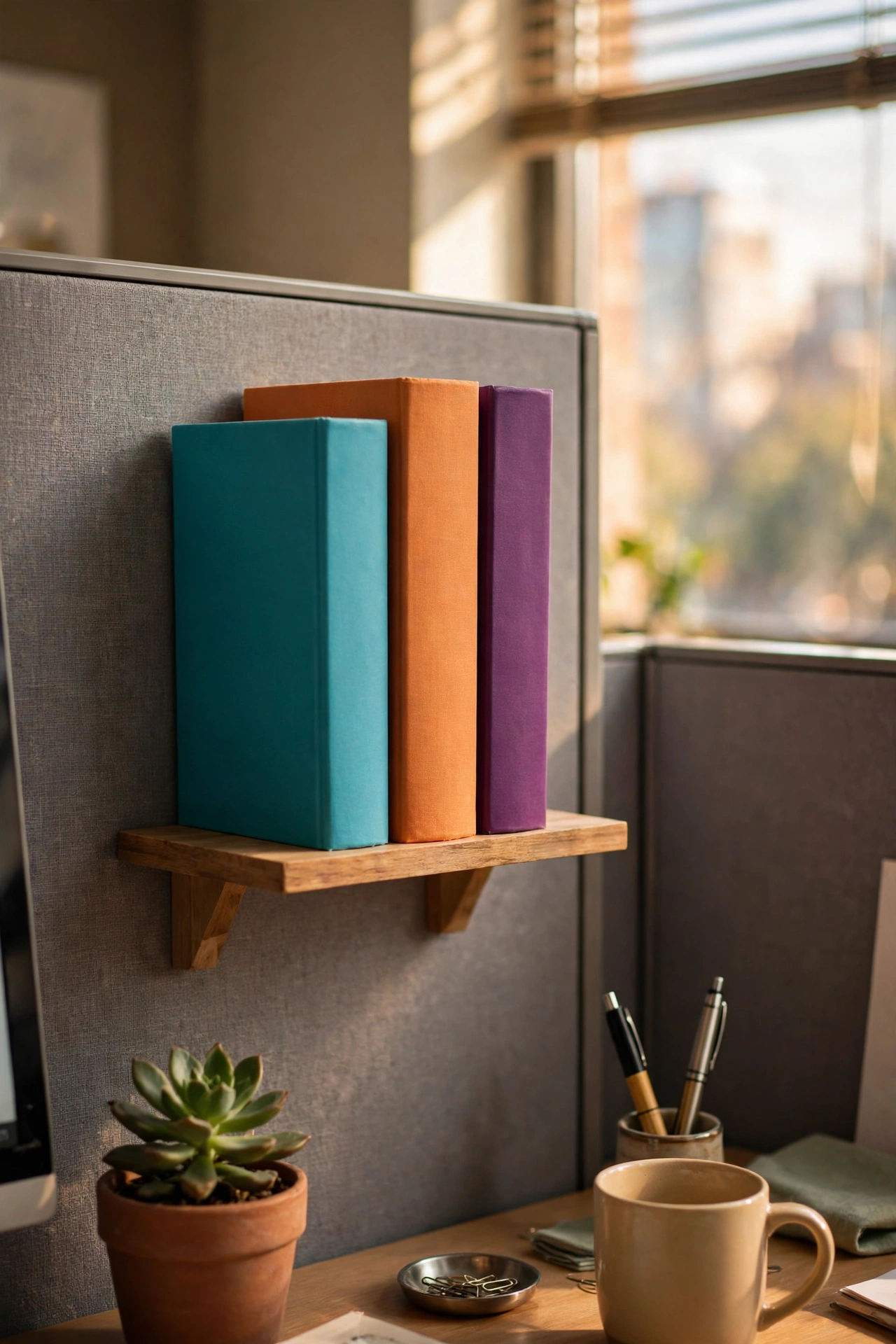
Three or four favorite books on a small shelf — or standing upright between bookends on the desk — add color, personality, and a conversation starter to any cubicle. Choose books you actually love, not books that impress: a novel you reread, a design book with a beautiful spine, a field guide, a poetry collection. The spines bring a band of color to the shelf, and the books themselves say more about you than any poster could. Keep the shelf to one row and the count low, so it reads as a curated shelf rather than a storage problem. If you need more shelf inspiration for a tight space, our hobby room design ideas show how to style small shelves without overcrowding them.
Frequently Asked Questions
How do I decorate a cubicle without breaking office rules?
Start by reading your office policy on wall attachments, lights, scents, and electrical items. Stick to removable, damage-free methods — magnets, cubicle hooks, peel-and-stick products, and freestanding items — and keep walkways, exit signs, and shared sightlines clear. When in doubt, ask your manager before you hang anything permanent.
What is the best color scheme for a cubicle?
Two or three colors work best in a small space: one neutral base (white, gray, or wood), one main accent (navy, sage, or terracotta), and one metallic or warm tone (brass or black). A limited palette makes even a small collection of items look intentional and calm, which is exactly what you want in a workspace.
How can I make a small cubicle feel bigger?
Use vertical space, keep the desk surface mostly clear, and add light: a desk lamp, an under-shelf LED strip, and a small mirror all make the cube feel larger. Light colors on the walls and desk accessories help too, while dark, heavy items and clutter make the space feel smaller.
What plants survive in a cubicle with no windows?
Snake plants, pothos, and ZZ plants tolerate low light and irregular watering better than almost anything else. If your cubicle gets no natural light at all, a high-quality faux plant in a real pot gives you the same look with no upkeep, and nobody will notice the difference from three feet away.
How do I keep my cubicle organized after decorating it?
Give everything a home — a tray for daily items, boxes for supplies, a board for notes — and do a two-minute reset at the end of each day. The reset matters more than the storage: a decorated cubicle stays beautiful only if it stays tidy, and two minutes a day is enough to keep it that way.
Can I hang things on cubicle walls without damaging them?
Yes. Cubicle hooks that grip the top of the panel, magnetic strips on steel-framed panels, and peel-and-stick products all attach without holes or residue. Avoid push pins in fabric panels unless your office allows them, and never use nails, screws, or strong adhesives on panels you do not own.
Conclusion
A cubicle will never be a living room, and it should not try to be one. But it can be a workspace that feels like yours — calm, organized, and pleasant to sit in — with a handful of thoughtful choices. Start with light, add one plant, pick a color palette, and give everything a home. Then add the personal touches one at a time, and stop when the space feels finished rather than full. The best cubicle decor is the kind you stop noticing because it simply works — and the kind your coworkers notice because it makes the whole floor look a little better. Pick five ideas from this list, try them this week, and see how different Monday morning feels.
Looking for more small-space inspiration? See our vintage craft room ideas and small sewing room ideas for more ways to make a compact space feel personal, and our IKEA mudroom ideas for storage that stays tidy under pressure.