26 Hobby Room Design Ideas That Turn Any Spare Room Into Your Creative Escape
26 Hobby Room Design Ideas That Turn Any Spare Room Into Your Creative Escape
A hobby room is the one room in the house that exists purely for joy. It is where the sewing machine lives without being packed away after every project, where half-finished paintings can dry in peace, and where a guitar, a model kit, or a stack of yarn is always within reach. The best hobby rooms are not the biggest or the most expensive — they are the ones designed around how you actually work: good light where your hands are, storage you can see into, and a layout that lets you start in five minutes and stop without a twenty-minute cleanup. Whether you have a whole spare bedroom or a single closet to claim, these 26 hobby room design ideas will help you build a space that invites you in every day. For storage systems that work in any craft space, see our 23 craft room storage ideas.
1. Draw a Zone Map Before You Buy Anything
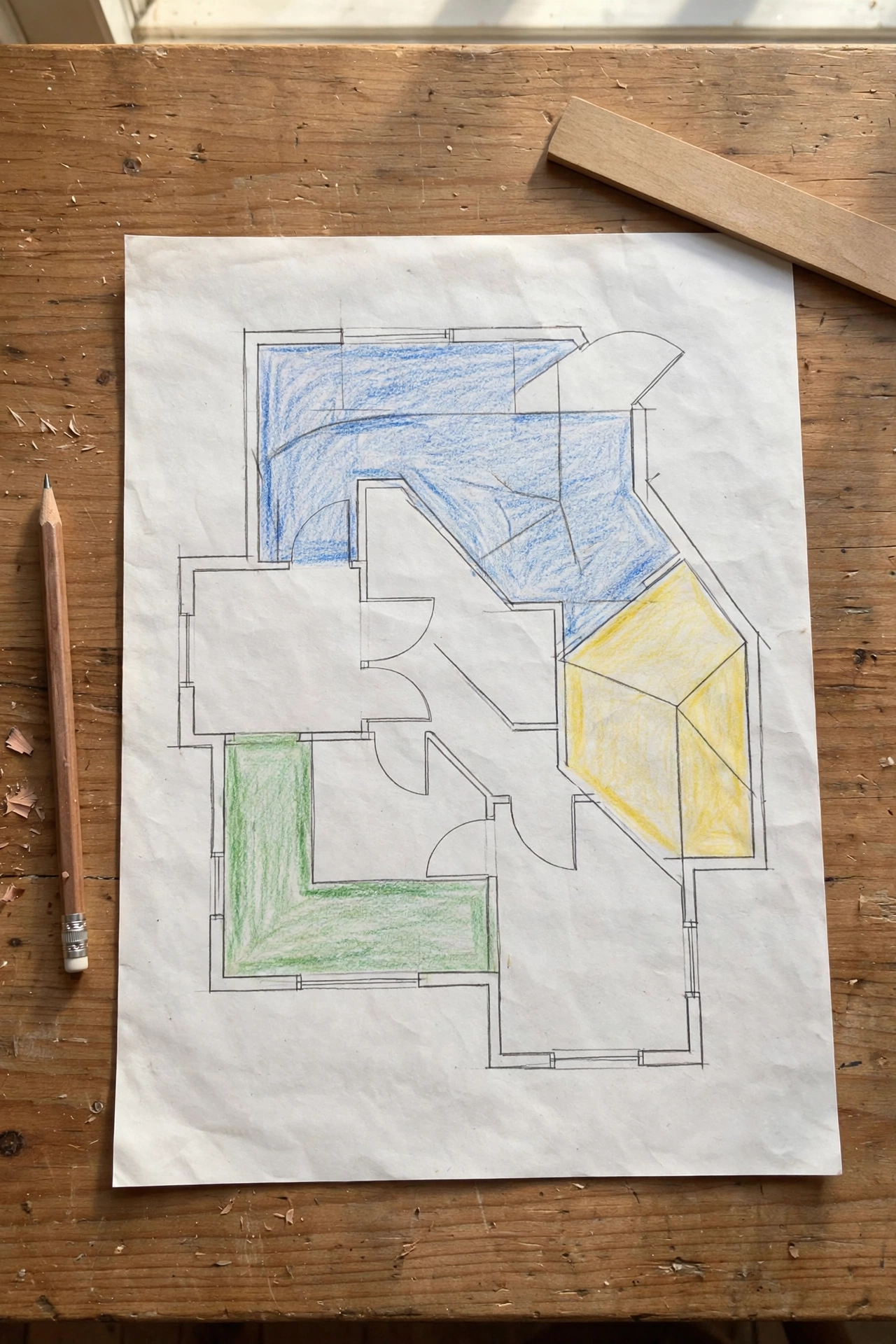
Every good hobby room starts on paper, not in a furniture store. Sketch the room and divide it into zones before you buy a single shelf: a work zone where the making happens, a storage zone for supplies, a display zone for finished pieces, and a small rest zone with a chair for thinking, reading patterns, or waiting for glue to dry. Mark the windows, outlets, and the door swing, because a desk that blocks the only outlet is a desk you will regret. The map stops the most common hobby-room mistake — buying storage first and discovering nothing fits the way you work. Spend an evening on the sketch, live with it for a day, and only then start shopping. A room planned around your habits will feel right on the first try.
2. Build the Room Around an L-Shaped Corner Desk
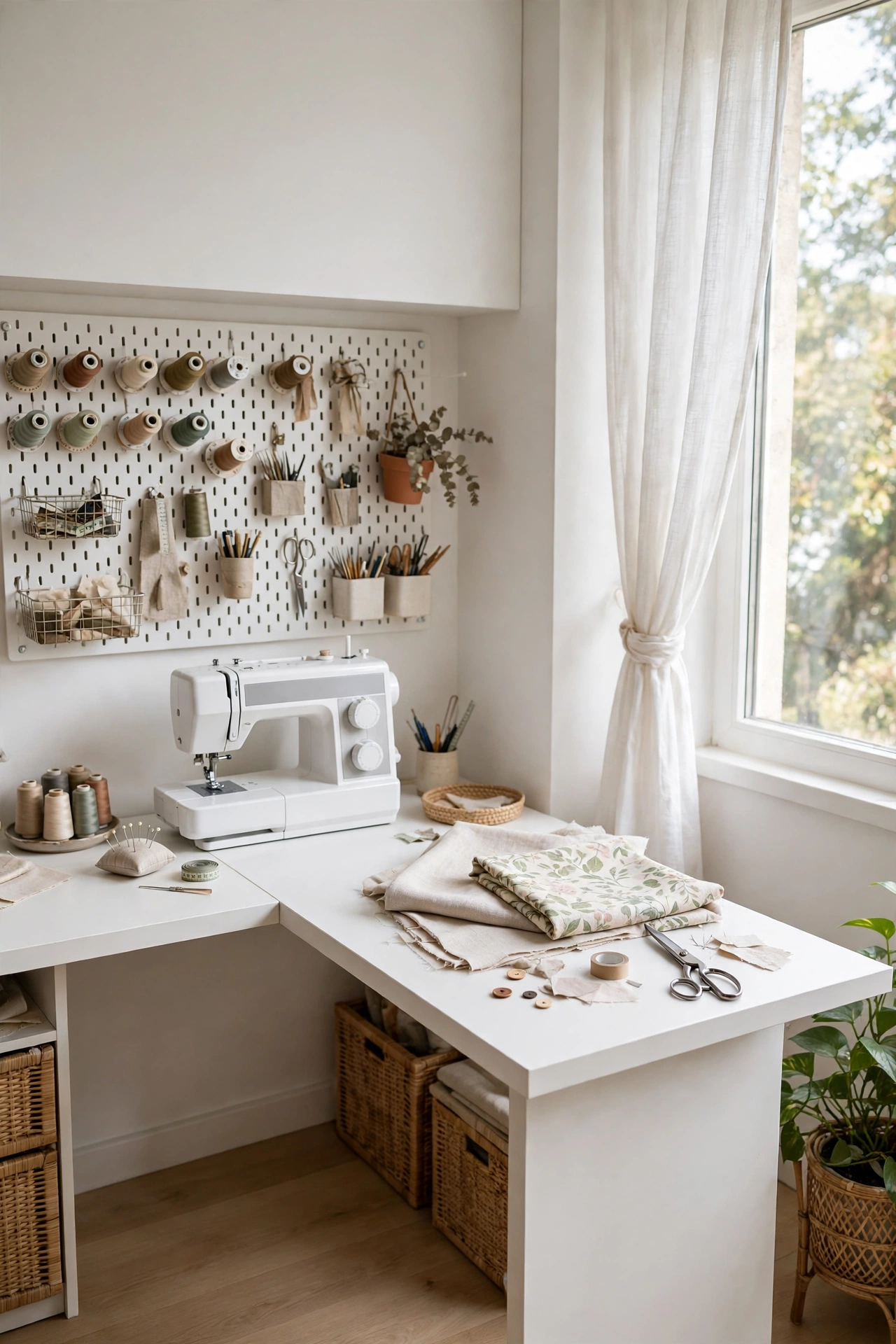
If you can only buy one piece of furniture, make it an L-shaped corner desk. Two arms of workspace mean one side can hold the machine — sewing machine, 3D printer, or laptop — while the other stays clear for cutting, assembling, or spreading out a project. The corner itself becomes the natural home for the tools you reach for constantly: scissors, rulers, brushes, and chargers. Choose a desk at least 24 inches deep so a cutting mat and a project can share the surface, and pick a height that matches your work — standard desk height for sitting, counter height if you like to stand while you craft. An L-desk also hugs the walls, leaving the middle of the room free for a drying rack, an easel, or a second chair.
3. Hang a Pegboard Wall for Tools in Plain Sight
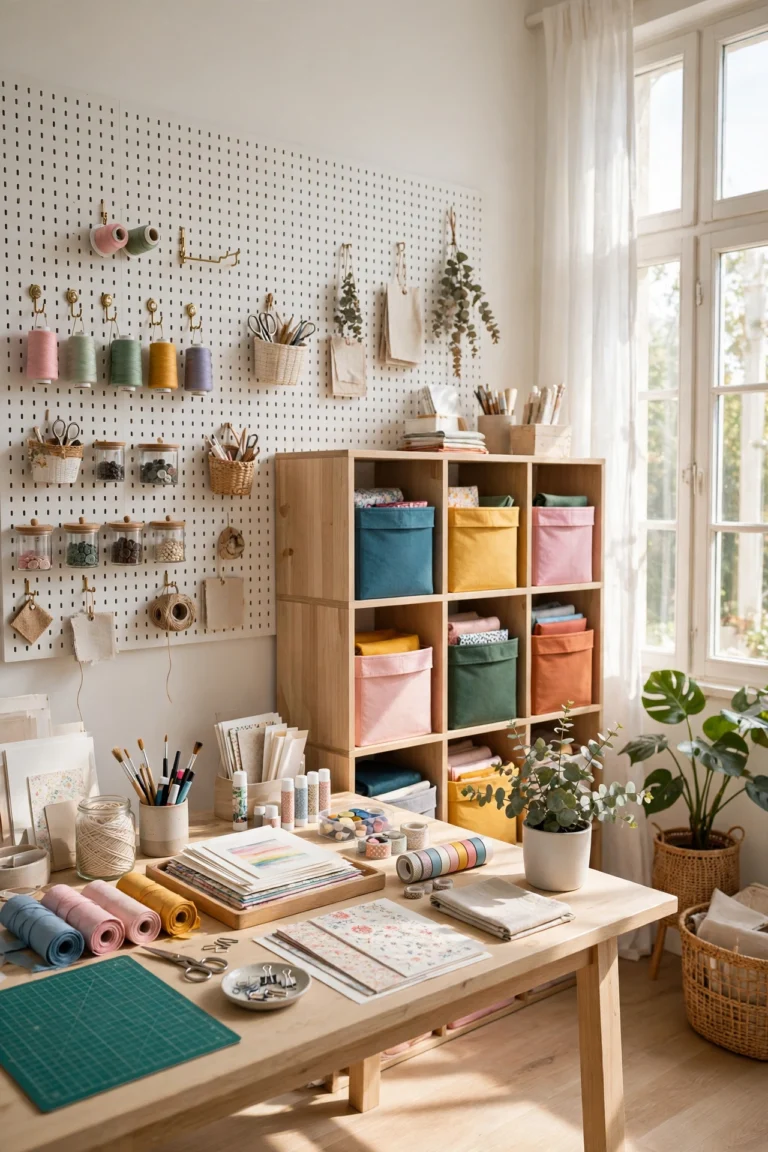
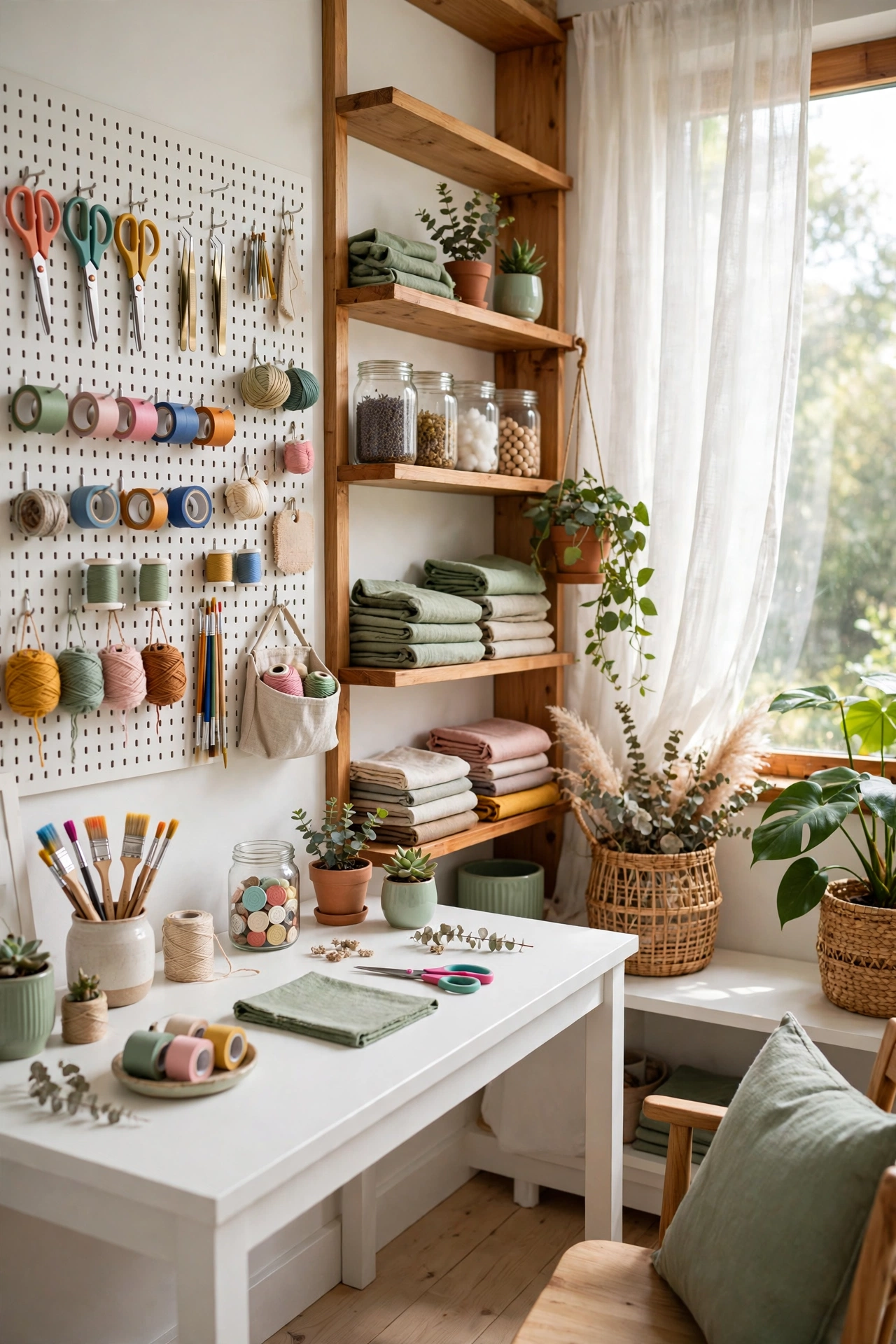
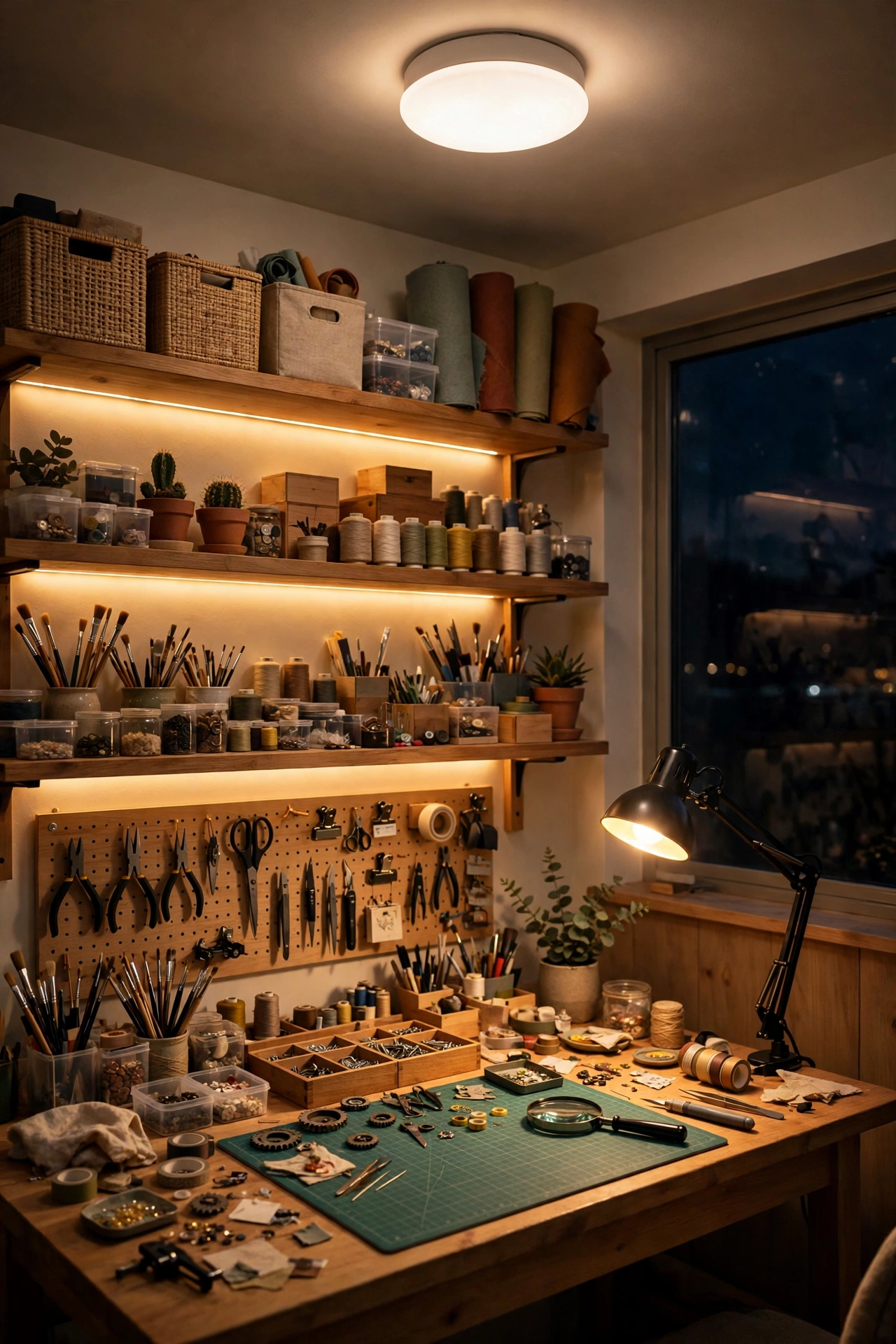
A pegboard wall is the single best storage idea in any hobby room because it turns your tools into wall decor you can actually use. Hang it behind the desk at eye level and load it with hooks, small baskets, and dowel rods: scissors and rotary cutters in one row, brushes and pens in jars, thread spools on pegs, ribbons on rods. The rule is simple — if you use it every session, it lives on the pegboard; if you use it once a month, it goes in a drawer. Paint the pegboard the same color as the wall for a calm look, or a soft sage green for a gentle pop of color. Unlike a drawer, a pegboard never hides a tool from you, which means you stop buying duplicates of things you already own.
4. Use Open Shelving for Supplies You Reach For Daily
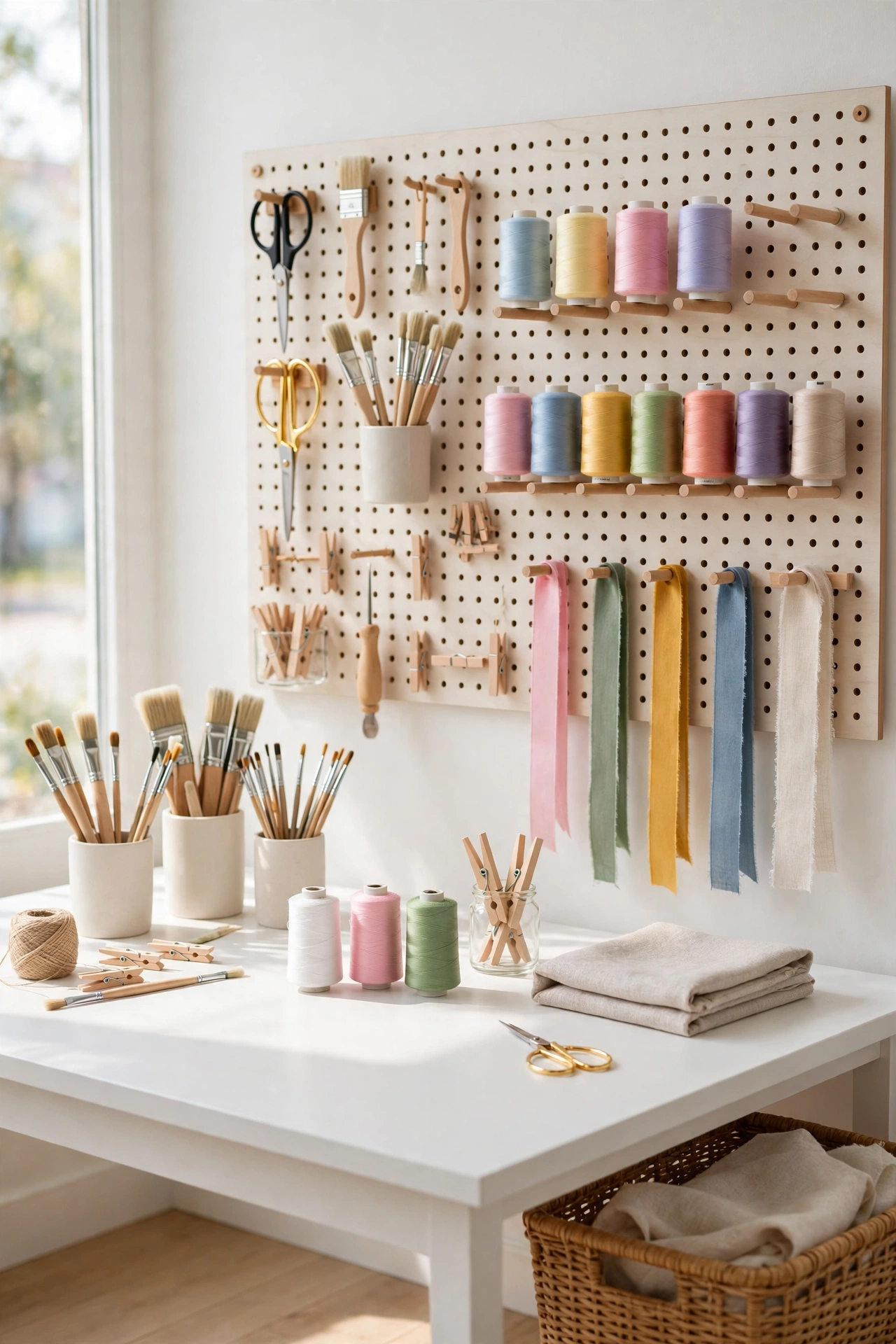
Closed cabinets are for the things you store; open shelves are for the things you use. Put the everyday supplies — paint jars, fabric stacks, yarn, paper pads, beads — on open shelves at arm’s height so you can see everything at a glance and grab without opening a door. Group by color or by project, and keep the heaviest items on the lowest shelf so nothing topples onto your work. Clear jars and matching bins keep the shelves looking tidy instead of chaotic, and labels on the front of each bin mean you never have to pull five boxes out to find one thing. For shelving that looks built-in rather than bolted-on, see our 25 staggered floating shelves ideas.

5. Keep a Rolling Cart That Follows the Project
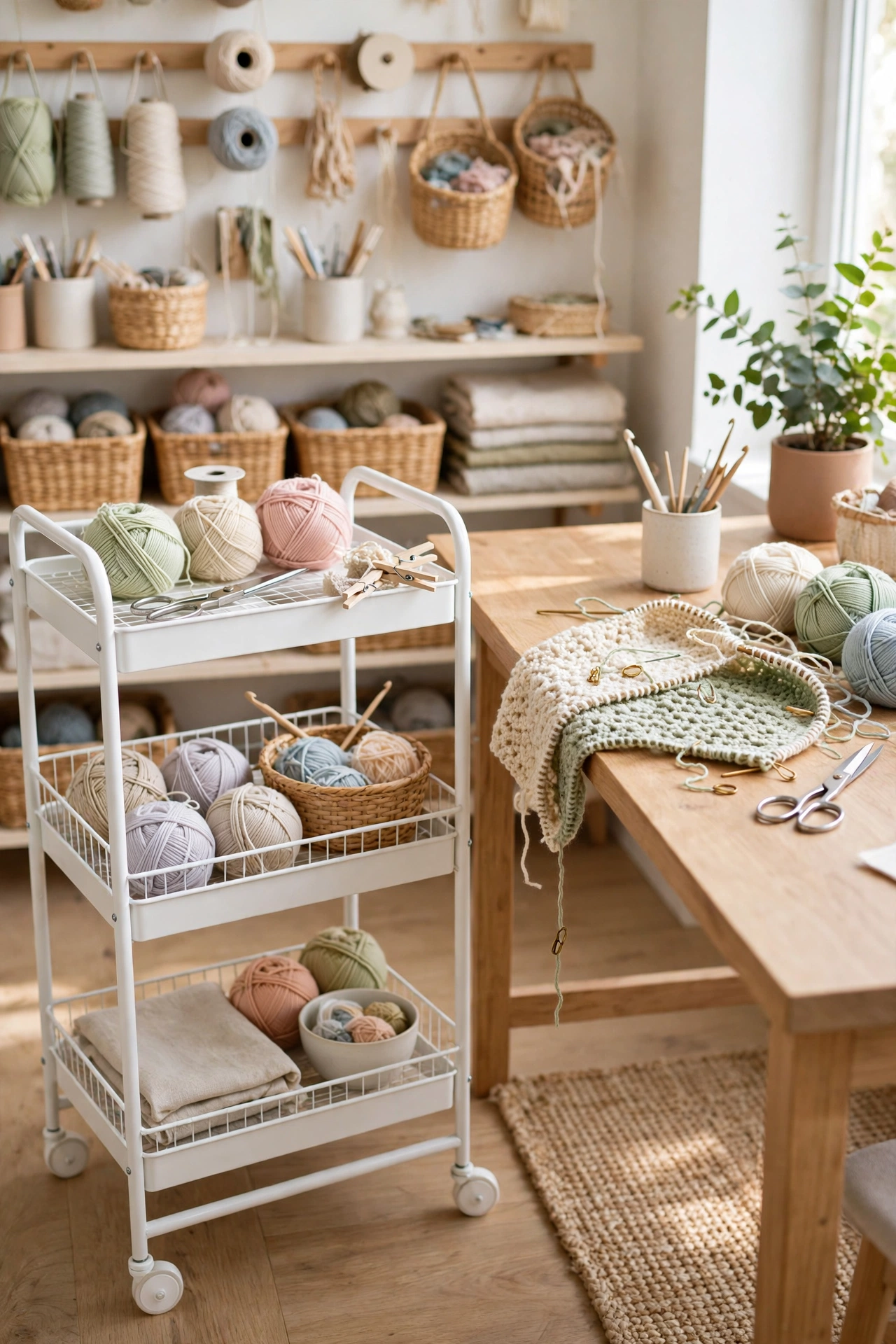
A three-tier rolling cart is the hardest-working small piece in a hobby room. Load the top tier with the tools for your current project, the middle tier with the materials, and the bottom tier with the half-finished pieces you will come back to. Roll it to the desk while you work, roll it to the sofa when you want to stitch in front of a show, and roll it into a corner when guests arrive. The cart is also the perfect overflow valve: when the desk gets crowded, the cart takes the extras instead of the floor. Choose one with a handle and locking wheels, and keep one cart per active project if you juggle more than one hobby — the five-minute setup is what turns “someday” into “tonight.”
6. Put the Worktable by the Window for Natural Light
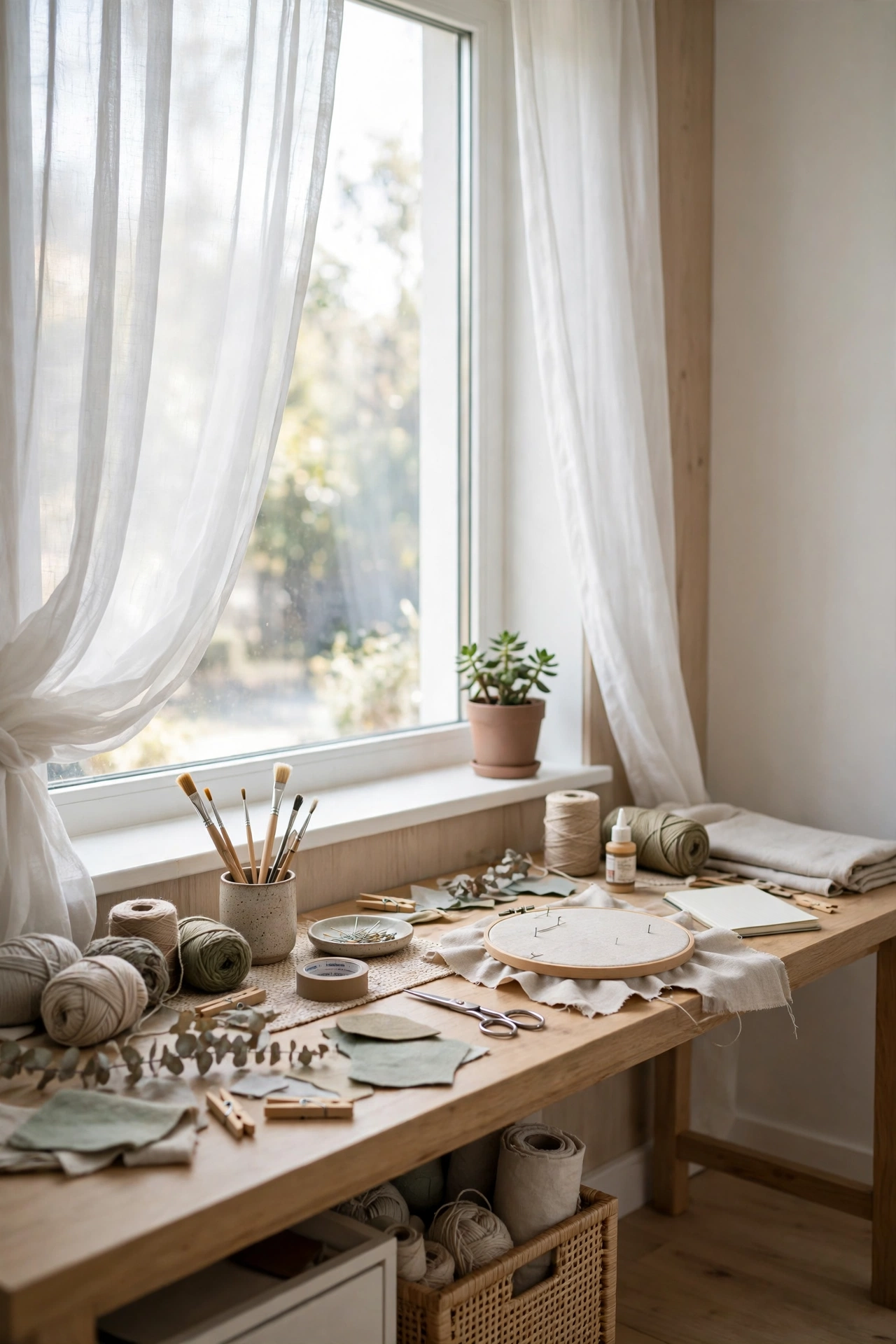
Natural light is free, flattering, and far kinder to your eyes than any bulb, so give your worktable the best window in the room. Set the desk perpendicular to the window rather than facing it — that way the light falls across your hands from the side instead of glaring into your eyes or casting your own shadow over the work. A north-facing window is the gold standard for painters because the light stays soft and even all day, but any window beats a dark corner. Add a sheer curtain to soften harsh afternoon sun, and keep the windowsill clear for the one thing every hobby room needs: a small plant that reminds you to look up from the work once in a while.
7. Layer the Lighting: Overhead, Task, and Accent
One ceiling light is never enough for a hobby room — you need three layers. Start with bright, even overhead light so the whole room is usable after dark. Add task lighting exactly where your hands work: an adjustable desk lamp with a daylight bulb over the sewing machine or the painting easel, and a clip-on light on the bookshelf where you read patterns. Finish with a warm accent layer — a small lamp on a shelf or a strip of LED lights under the cabinets — so the room feels inviting instead of clinical when you are not working. Put the task lights on separate switches or smart plugs so you can light only the zone you are using. Good lighting is the difference between a room you use for an hour and a room you lose an evening in.
8. Set Up a Sewing Station With a Fold-Down Cutting Table
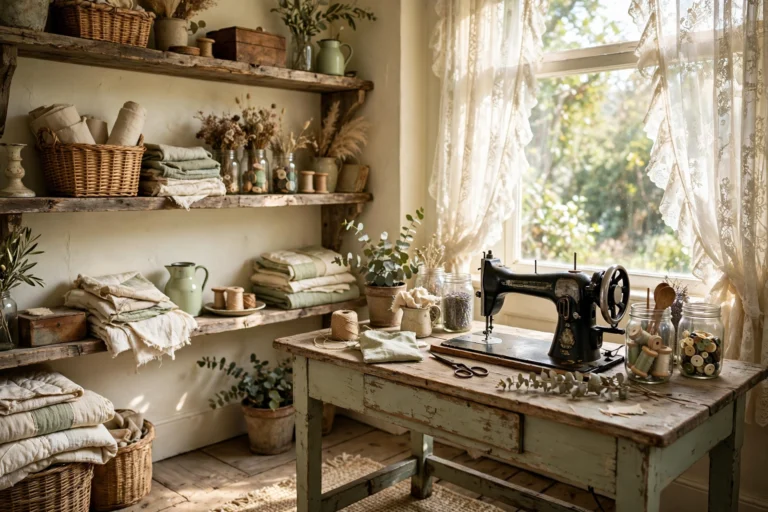
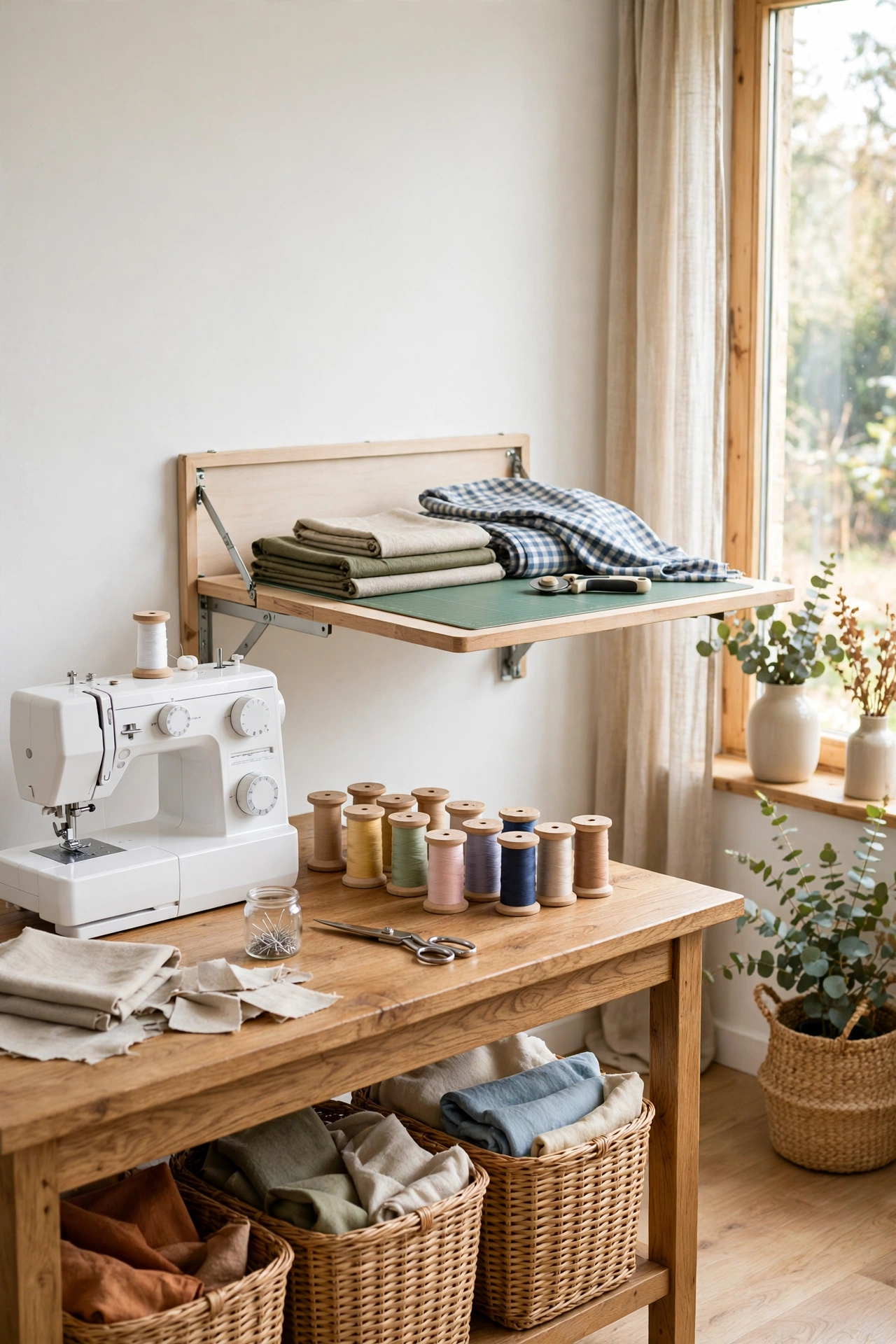
Sewing needs two surfaces: a machine table and a cutting table, and most rooms only have space for one. The fix is a fold-down cutting table mounted on the wall behind or beside the machine — it folds up to a full cutting surface when you need it and drops flat against the wall when you do not. Keep the sewing machine on a sturdy table at the right height (your elbows should rest at about 90 degrees), with the ironing board within two steps and the fabric stash in clear bins nearby. A magnetic strip on the wall holds pins and needles where they cannot roll onto the floor, and a small trash bin under the table catches every thread snip. For a full sewing-focused setup, see our 21 small sewing room ideas.
9. Give Painting Its Own Corner With a Washable Floor and Drying Rack
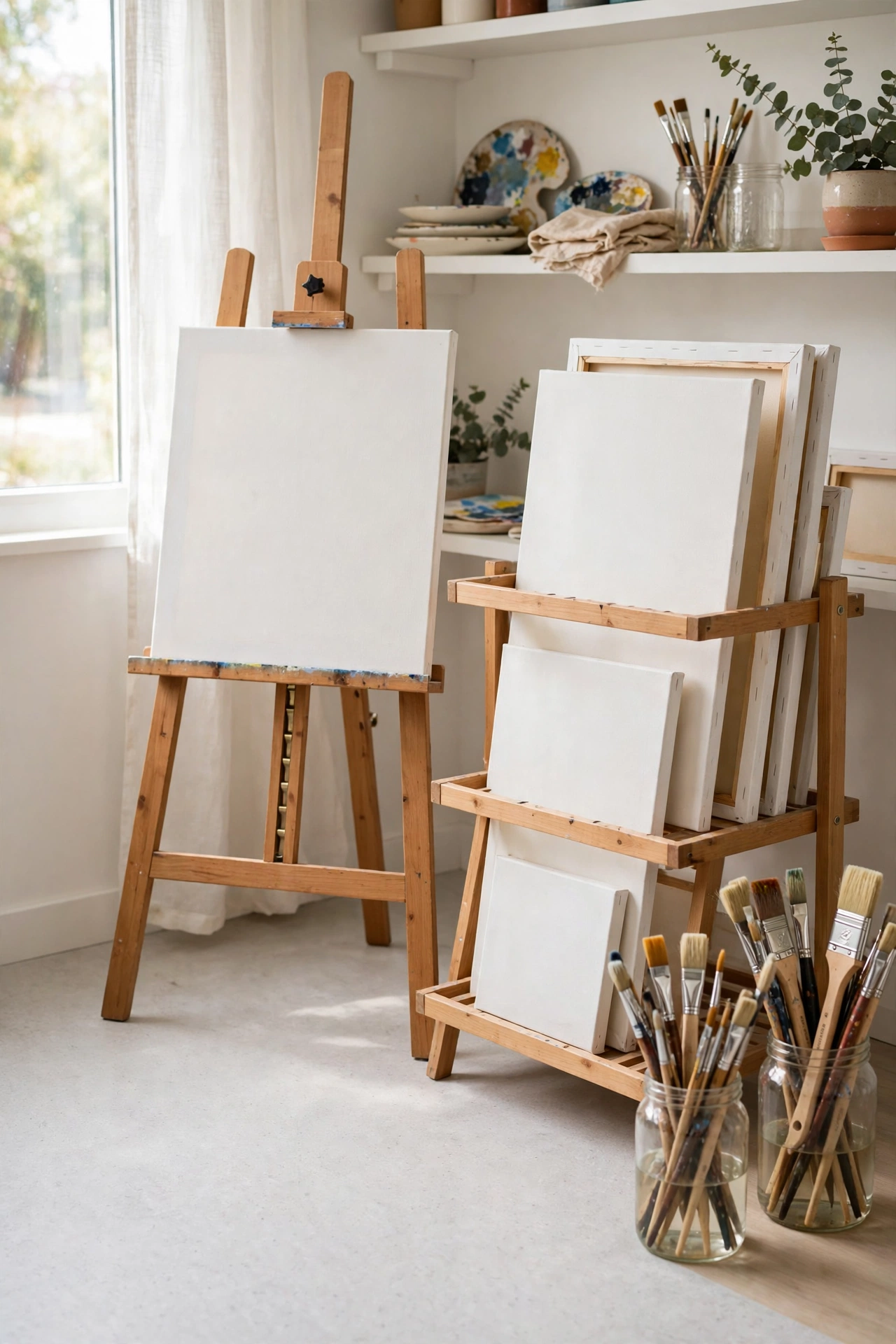
Paint is the one hobby that punishes a pretty room, so give it a corner designed to get messy. Lay a washable surface under the easel — a vinyl floor remnant, a canvas drop cloth, or peel-and-stick floor tiles you can mop — and keep the walls in that corner in a wipeable paint finish. A tiered drying rack against the wall holds wet canvases upright without taking floor space, and a small sink or even a bucket station nearby saves a hundred trips to the bathroom. Store brushes upright in jars sorted by size, and keep a dedicated “wet” tray for palettes so paint never migrates to the clean desk. When the mess has a home, you paint more often — and you stop apologizing for the room.
10. Carve Out a Music Nook With Soft, Sound-Absorbing Panels
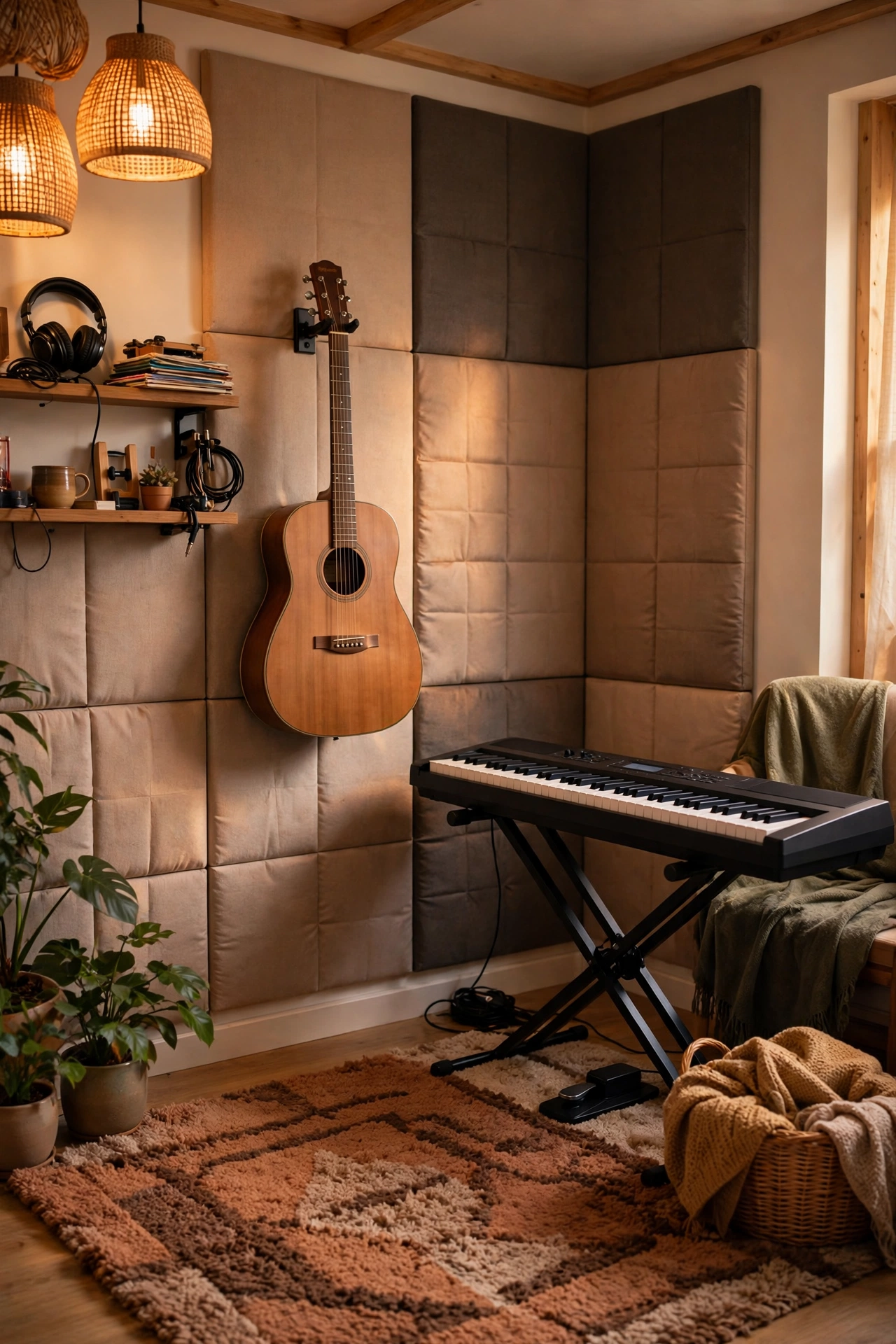
A music hobby does not need a studio — it needs a corner that sounds good and looks inviting. Start with soft surfaces: a thick rug, heavy curtains, and a few fabric-wrapped acoustic panels on the wall behind the instrument, which tame the echo that makes a small room sound harsh. A wall-mounted guitar hanger or a keyboard stand keeps the instrument visible and ready, which matters more than it sounds — an instrument in a case is an instrument you do not play. Add a small shelf for sheet music and a comfortable chair with no arms so you can hold the instrument freely. Keep the nook near a window if you can; practicing in daylight is a small pleasure that adds up over years.
11. Add a Reading Corner With a Deep Chair and a Good Lamp
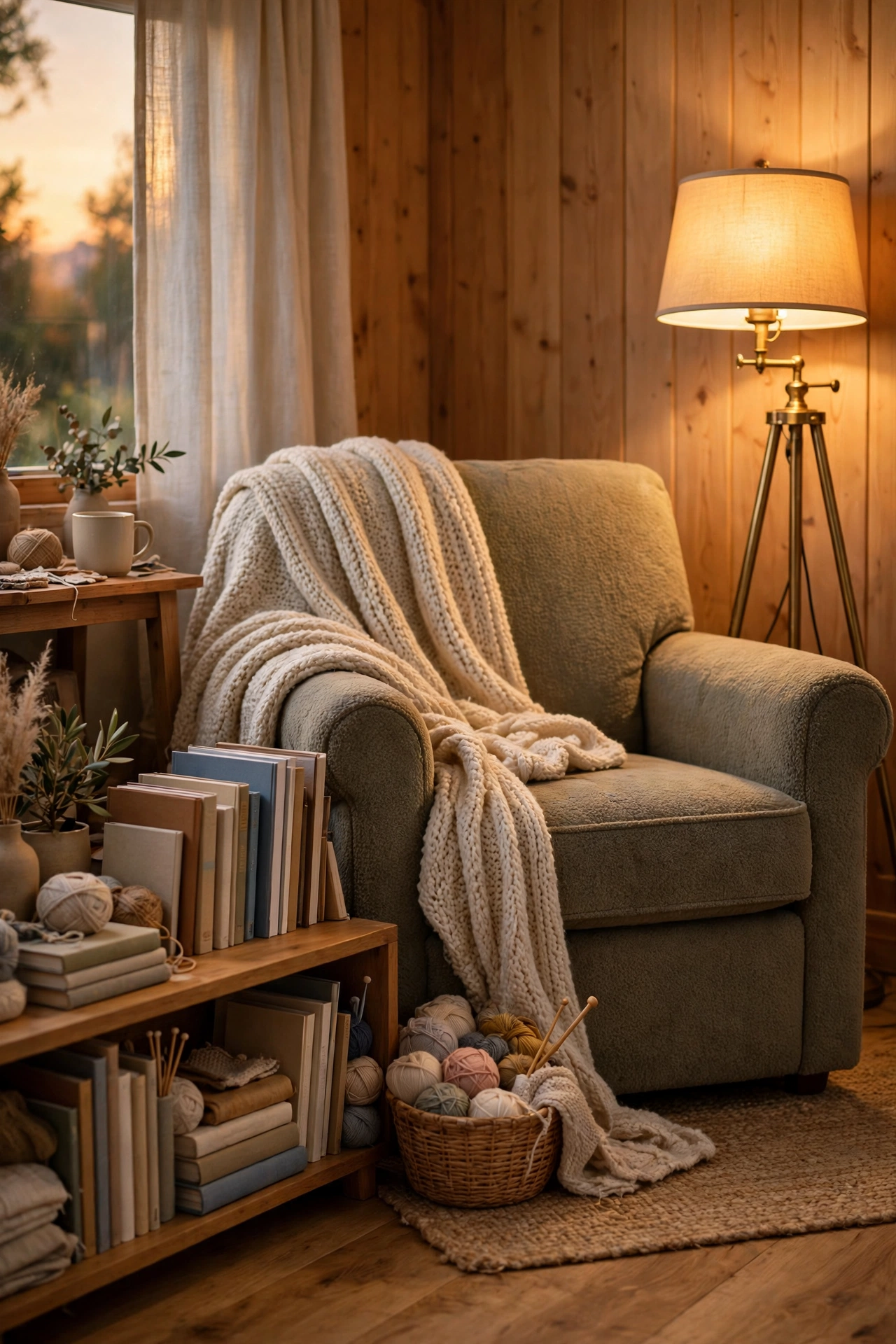
Every hobby room needs one spot where nothing gets made — a reading corner for patterns, magazines, and the books that feed the hobby. Choose a deep, comfortable chair you can curl up in, a floor lamp with warm light that falls over your shoulder, and a small side table for tea and a notebook. A low bookshelf beside the chair holds the reference books and pattern binders, and a soft throw over the arm makes the corner inviting even in winter. This corner earns its space twice over: it is where you plan the next project and where you rest between sessions, and a room with a place to sit and think is a room you will actually spend time in.
12. Build a Model-Making Bench With a Magnifier Lamp
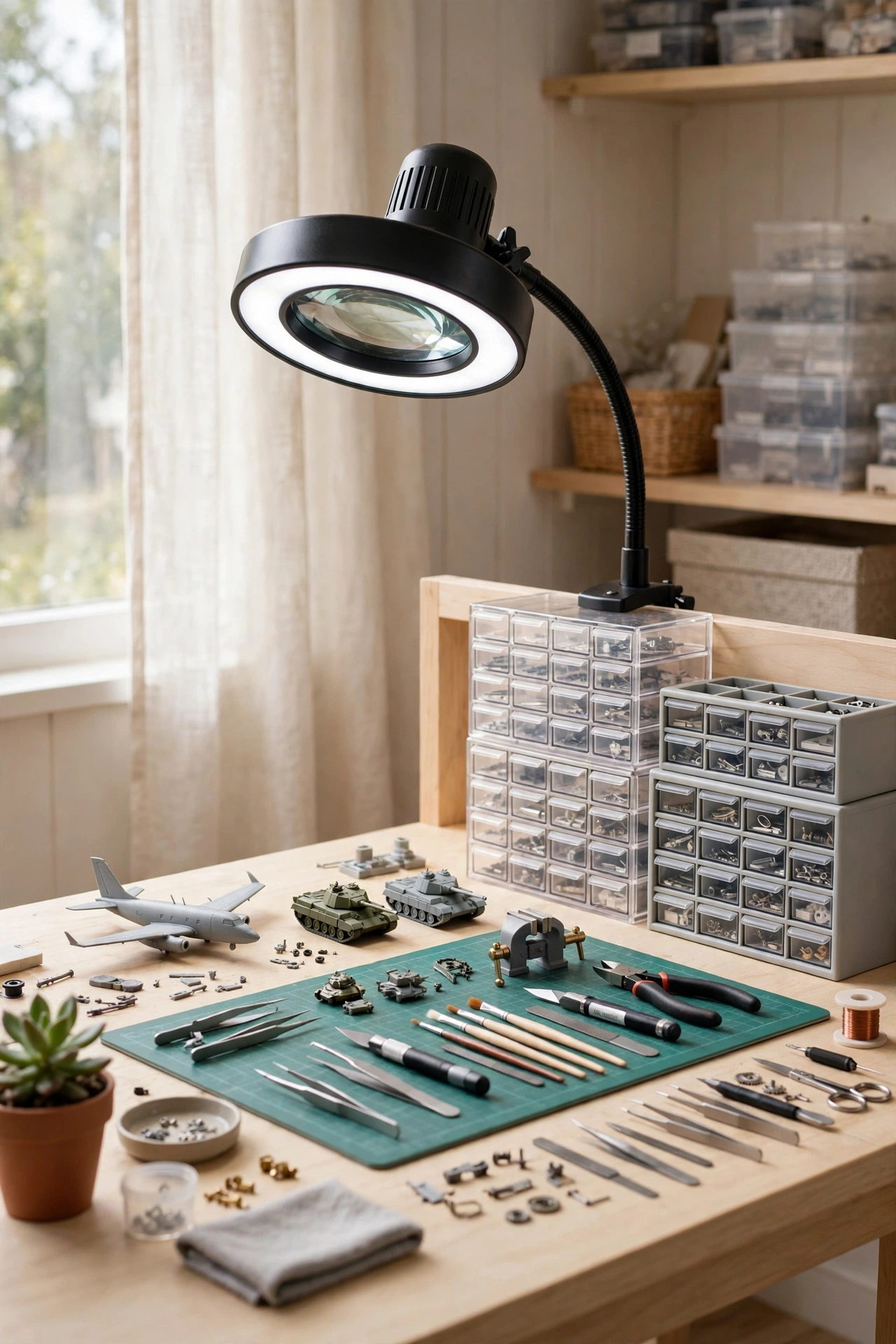
Model building, miniatures, and jewelry work all share one need: tiny parts, steady light, and a surface that forgives a dropped screw. A dedicated bench with a raised magnifier lamp changes everything — the lamp brings the work close without hunching your back, and its ring light kills the shadows that hide small details. Cover the bench with a cutting mat or a silicone mat so parts do not roll away, and keep small-parts organizers with clear drawers right at hand, labeled by size or type. A white or light-colored bench top helps you spot a dropped pin instantly. Give the bench its own zone away from the dusty hobbies, and it becomes the quietest, most focused corner of the room.
13. Create a Photo Corner With a Backdrop and One Softbox
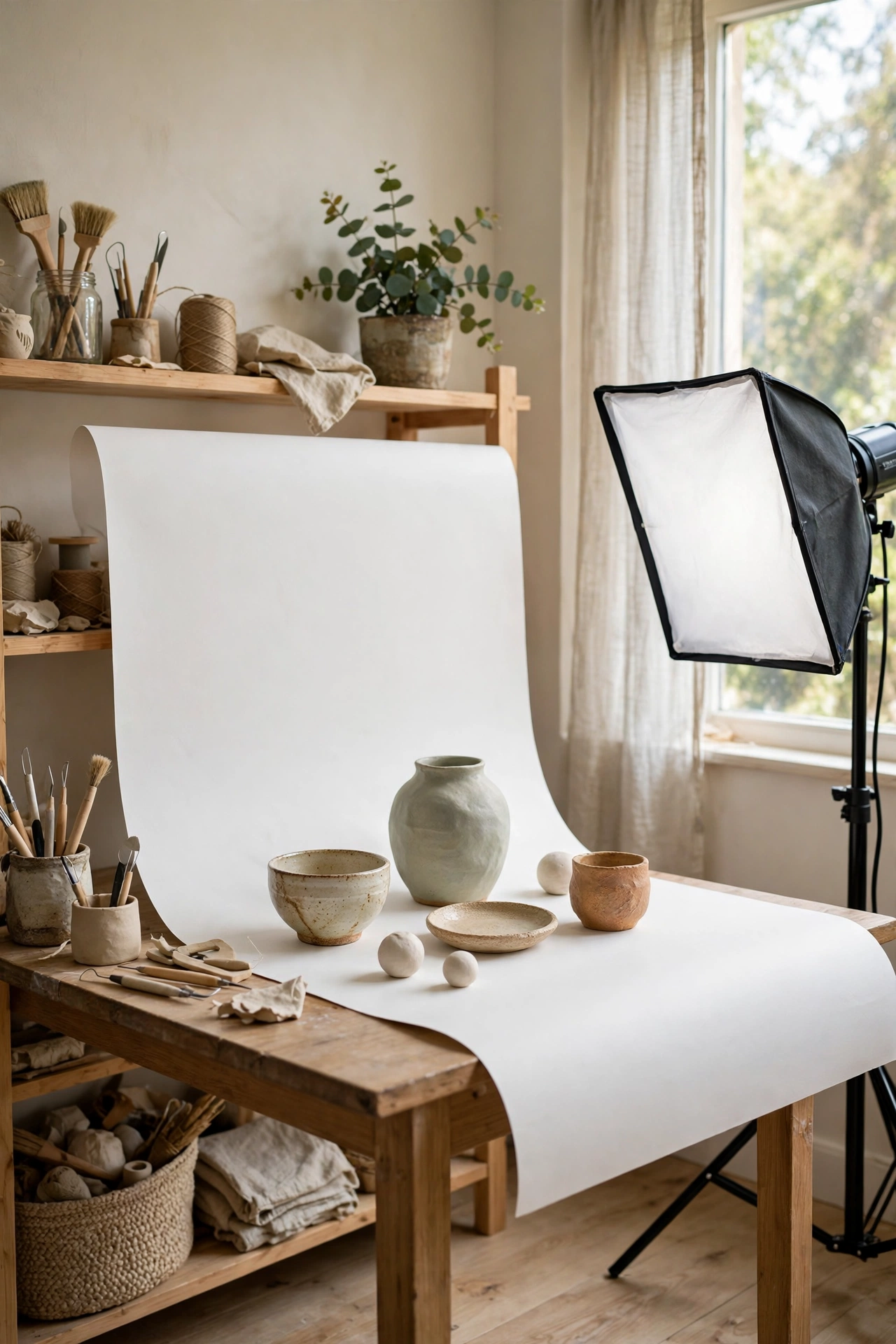
If you sell your work or just like photographing it, a tiny photo corner pays for itself in an afternoon. You need only three things: a roll of seamless paper or a foldable backdrop in white and one neutral color, one softbox light on a stand, and a small table at waist height. Tape the backdrop to the wall so it curves down onto the table — the curve removes the horizon line and makes the photo look professional. Shoot near the window when you can, and use the softbox to fill the shadows. The corner doubles as a display shelf for finished pieces, so your best work is always on show and always ready for its photo.
14. Store Yarn and Fiber on Dowel Rods So You Can See Every Color
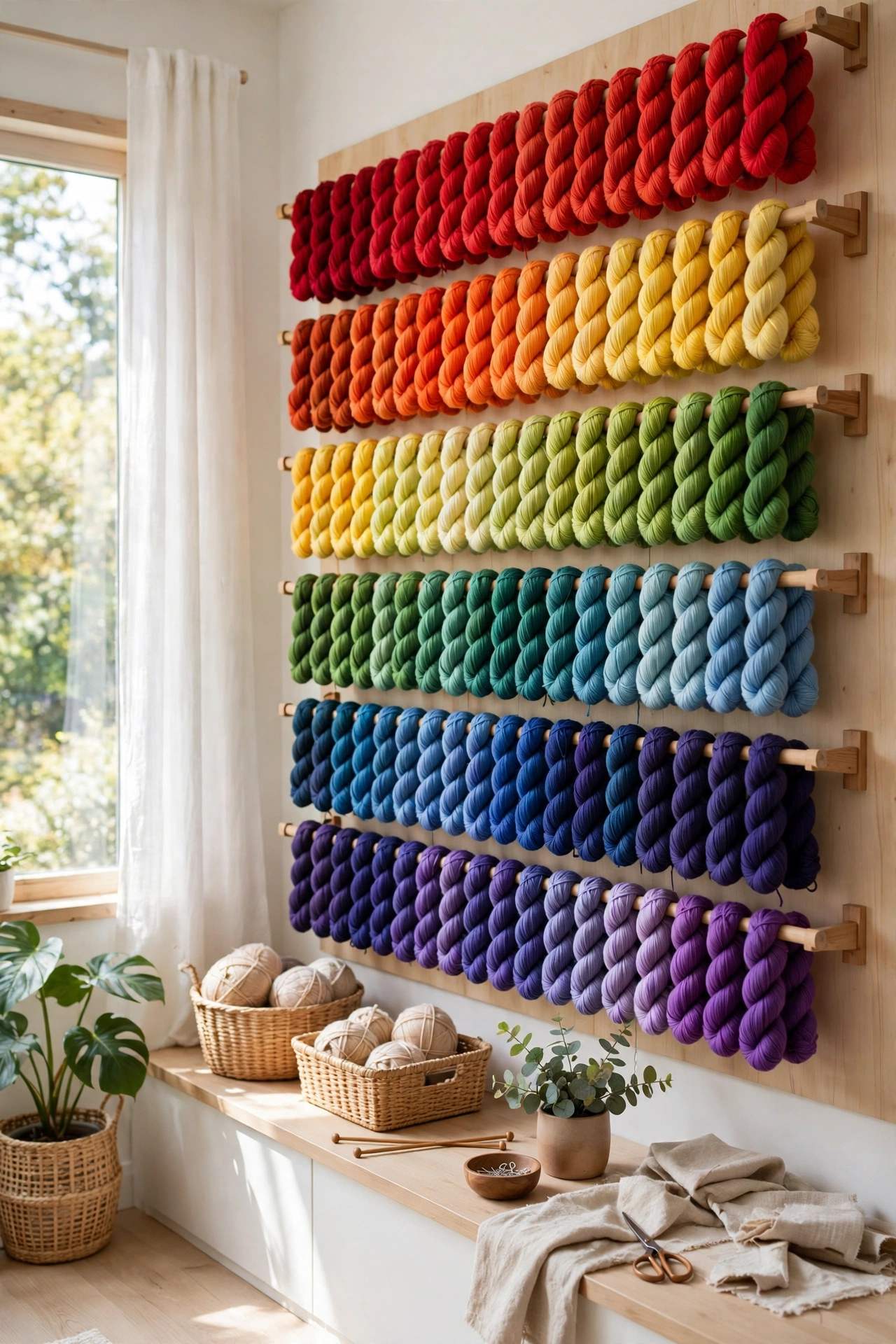
Yarn hidden in a bin is yarn forgotten, so store it where you can see it. Mount wooden dowel rods horizontally on the wall or inside a shallow frame, and slide the skeins onto the rods like a shop display — the whole color range is visible at a glance, and pulling one skein out does not disturb the rest. A pegboard with dowels works the same way for ribbon, thread, and embroidery floss. Keep the fiber out of direct sun so colors stay true, and store the overflow in clear bins labeled by weight or fiber type. A wall of yarn is both storage and decoration, and it makes choosing the next project feel like browsing a shop you already own.
15. Turn a Closet Into a Hobby Nook
No spare room? Take the closet. Remove the doors, paint the inside a light color, and you have a hobby nook about four feet wide — enough for a small desk, a pegboard, and shelves stacked to the ceiling. A fold-down desk inside the closet gives you a work surface that disappears when guests arrive, and a curtain or a pair of sliding doors hides the whole setup in seconds. Add a battery-powered LED strip and a small fan, since closets are dark and stuffy by nature. This is the renter-friendly version too: everything mounts with removable hooks and freestanding shelves, so the closet goes back to normal when you move. Small-space thinking from our 31 small apartment ideas works here as well — every inch earns its place.
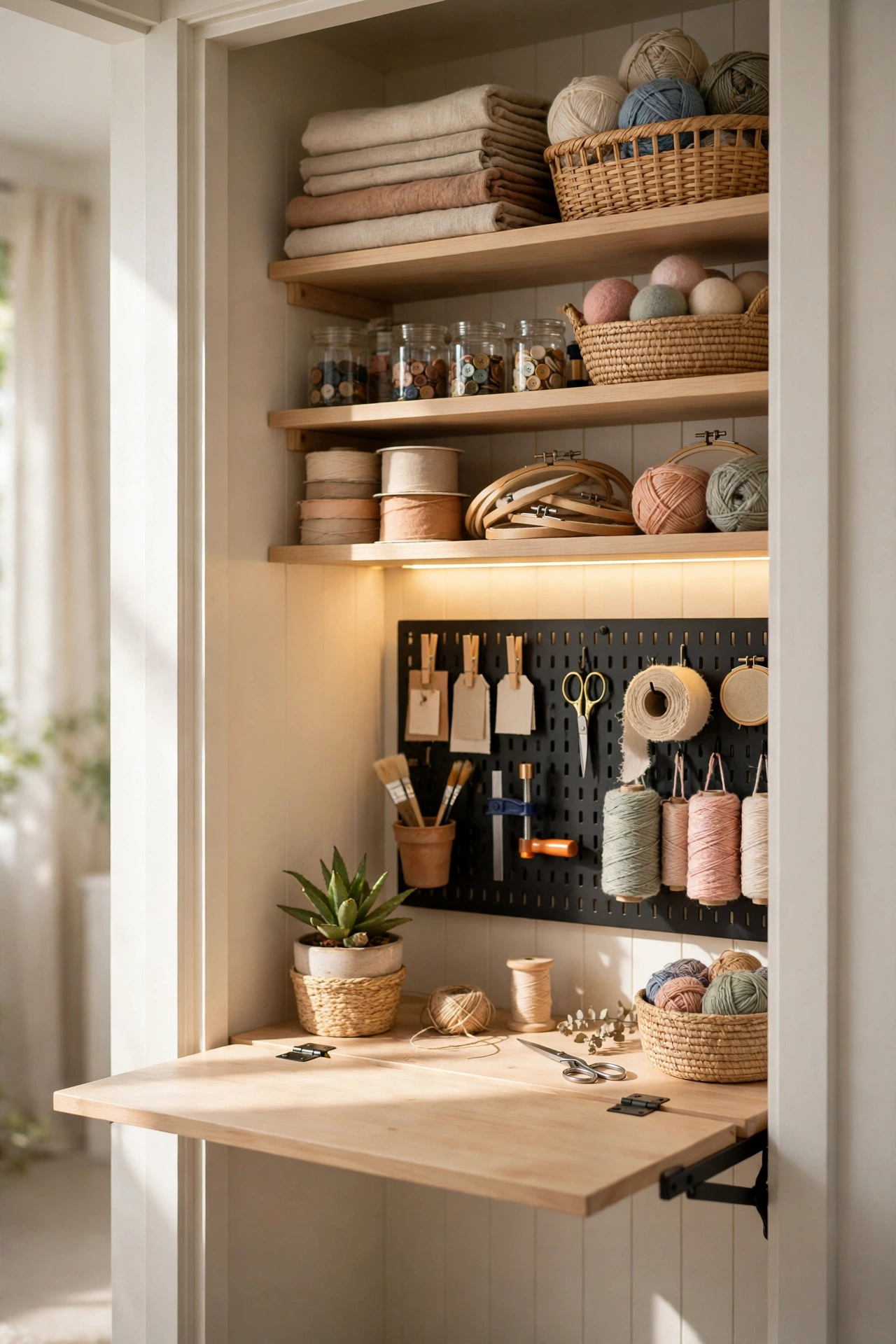
16. Convert the Spare Bedroom With a Daybed for Guests
The spare bedroom is the most common hobby room in the world, and the daybed is what makes the double life work. A daybed against one wall sleeps a guest and doubles as a sofa for reading patterns or trying on a finished garment, while the rest of the room stays a full-time hobby space. Keep the bed dressed in neutral linen so the room reads as a studio first and a guest room second, and store the guest bedding in the daybed’s drawers or a trunk that doubles as a side table. Put the worktable on the opposite wall so a guest never has to climb over your project, and agree on one rule with yourself: the daybed is for sitting, never for storing fabric.
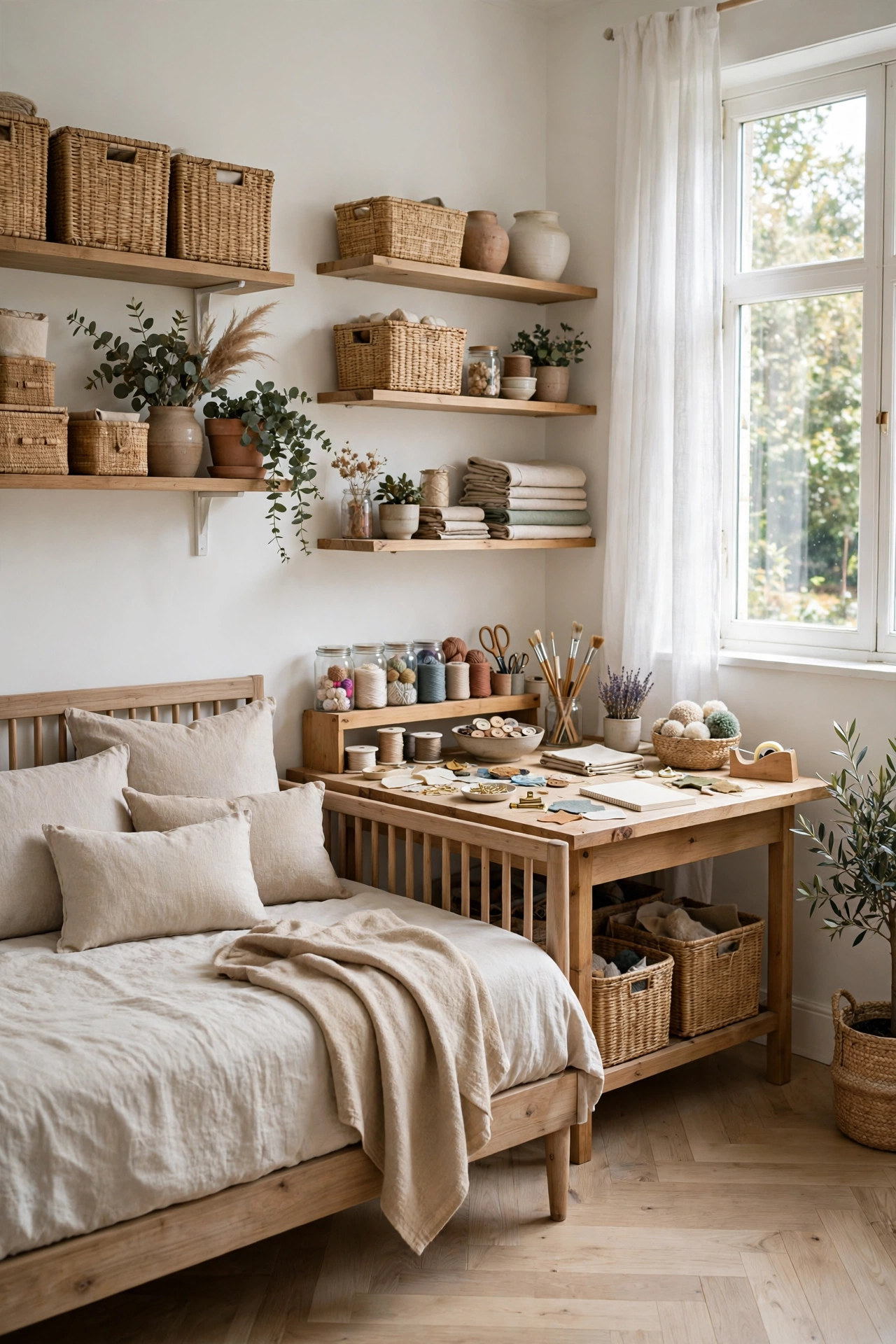
17. Claim a Garage Corner With a Sturdy Workbench
For woodworking, pottery, resin, and anything dusty or loud, the garage is the honest answer. Claim one corner with a heavy workbench bolted to the wall, a pegboard above it, and a rolling tool cabinet underneath — and keep the car on the other side of a clear line you do not cross with sawdust. Insulate the corner with a rug or rubber floor mats so your feet stay warm, and add a portable heater or fan depending on the season. Good task lighting matters even more here, since garages are usually dim. For the rest of the garage, see our 23 garage makeover ideas — a tidy garage makes the hobby corner feel like a workshop, not a storage unit.
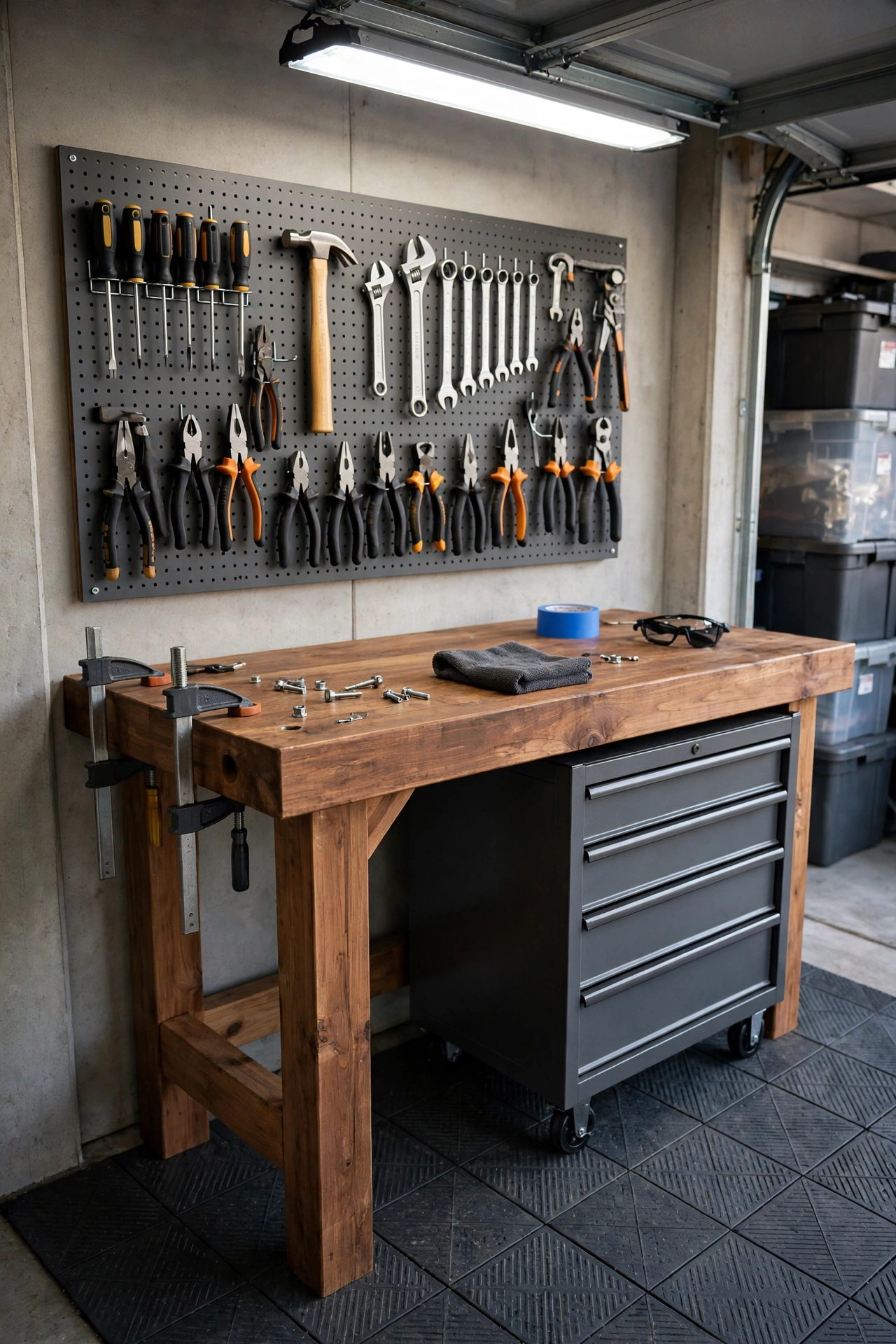
18. Brighten a Basement Hobby Room With Light Paint and Rugs
Basements have the space hobby rooms crave and the light they fear, so the design job is mostly about brightness. Paint the walls and ceiling a warm white, lay light-colored rugs over the concrete or vinyl floor, and add more light than you think you need — ceiling fixtures plus task lamps at every workstation. A dehumidifier is not optional in most basements: it protects paper, fabric, and wood from damp, and it keeps the room smelling fresh. Use open shelving rather than tall closed cabinets so the low ceiling does not feel lower, and add a few plants that tolerate low light. With the damp and the dark handled, a basement becomes the biggest, quietest hobby room in the house.
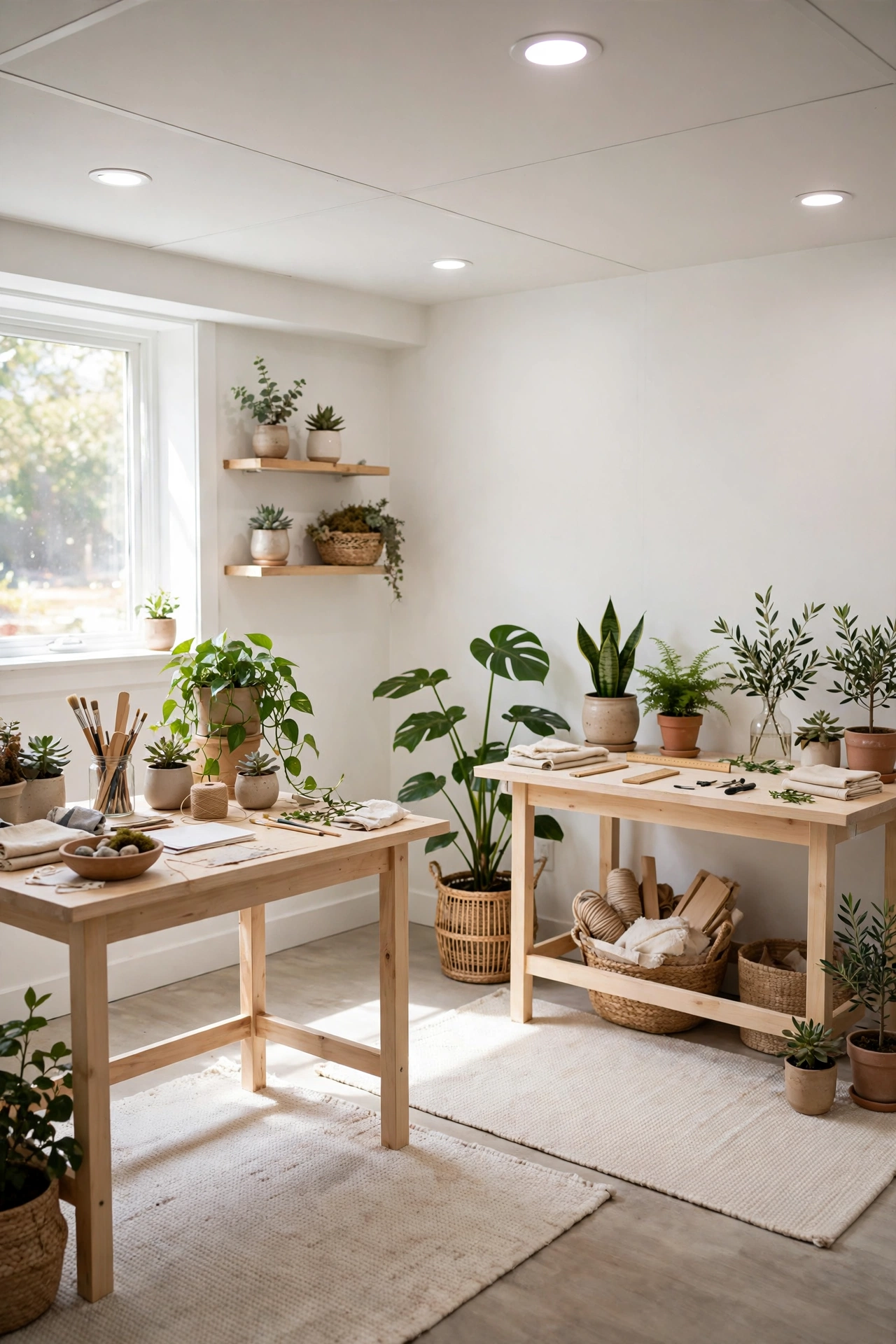
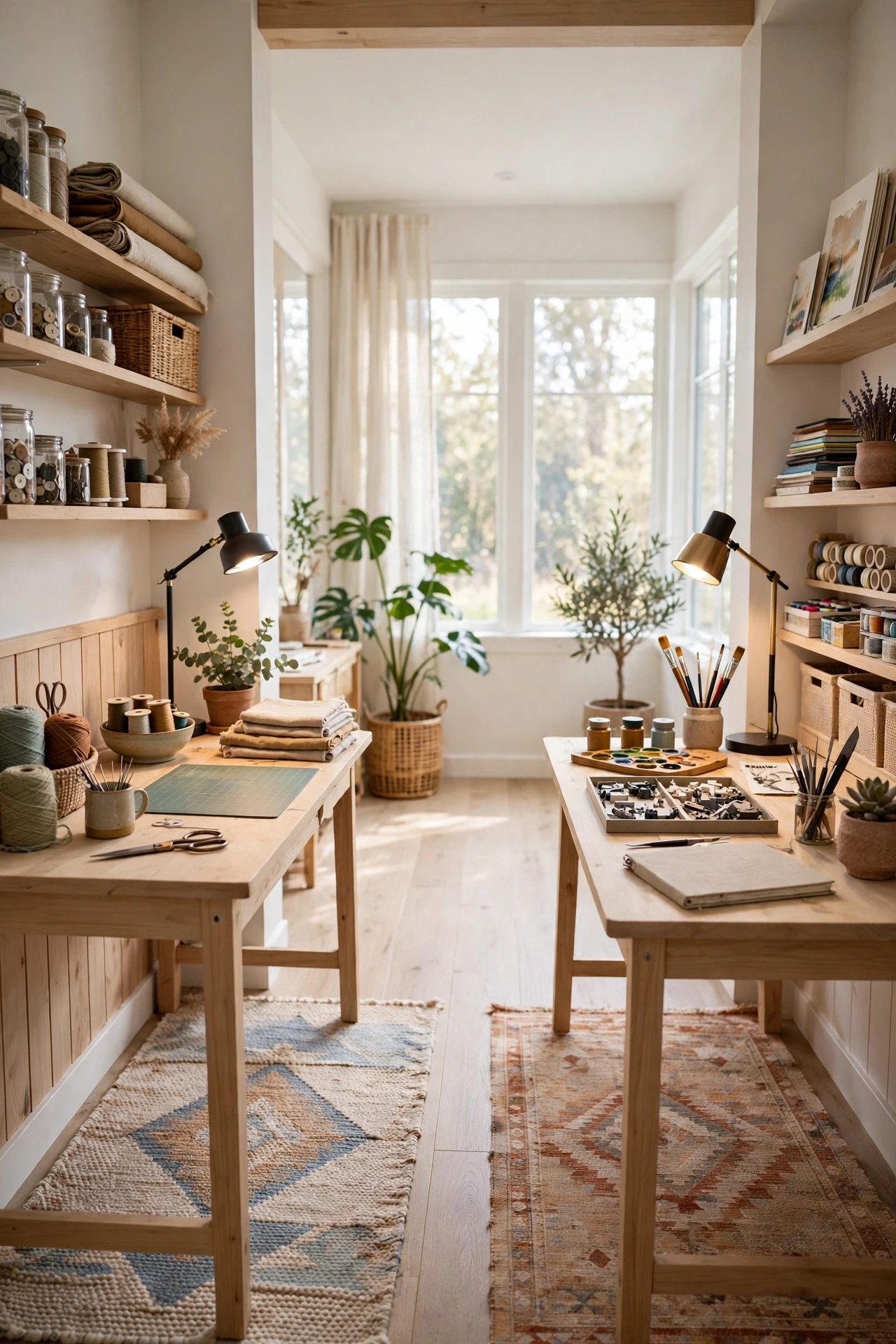
19. Design a His-and-Hers Hobby Room With Two Zones
Two people, two hobbies, one room — it works if the room is designed as two zones instead of one shared table. Give each person a work zone on opposite walls with their own desk, their own task light, and their own storage, then share the middle of the room for the things you both use: the cutting table, the ironing board, the display wall. A rug under each desk marks the territory without a wall, and matching desk chairs keep the room looking intentional instead of divided. The shared room is also the shared habit: an hour together in the evening, each working on your own thing, is one of the quietest pleasures a house can hold.
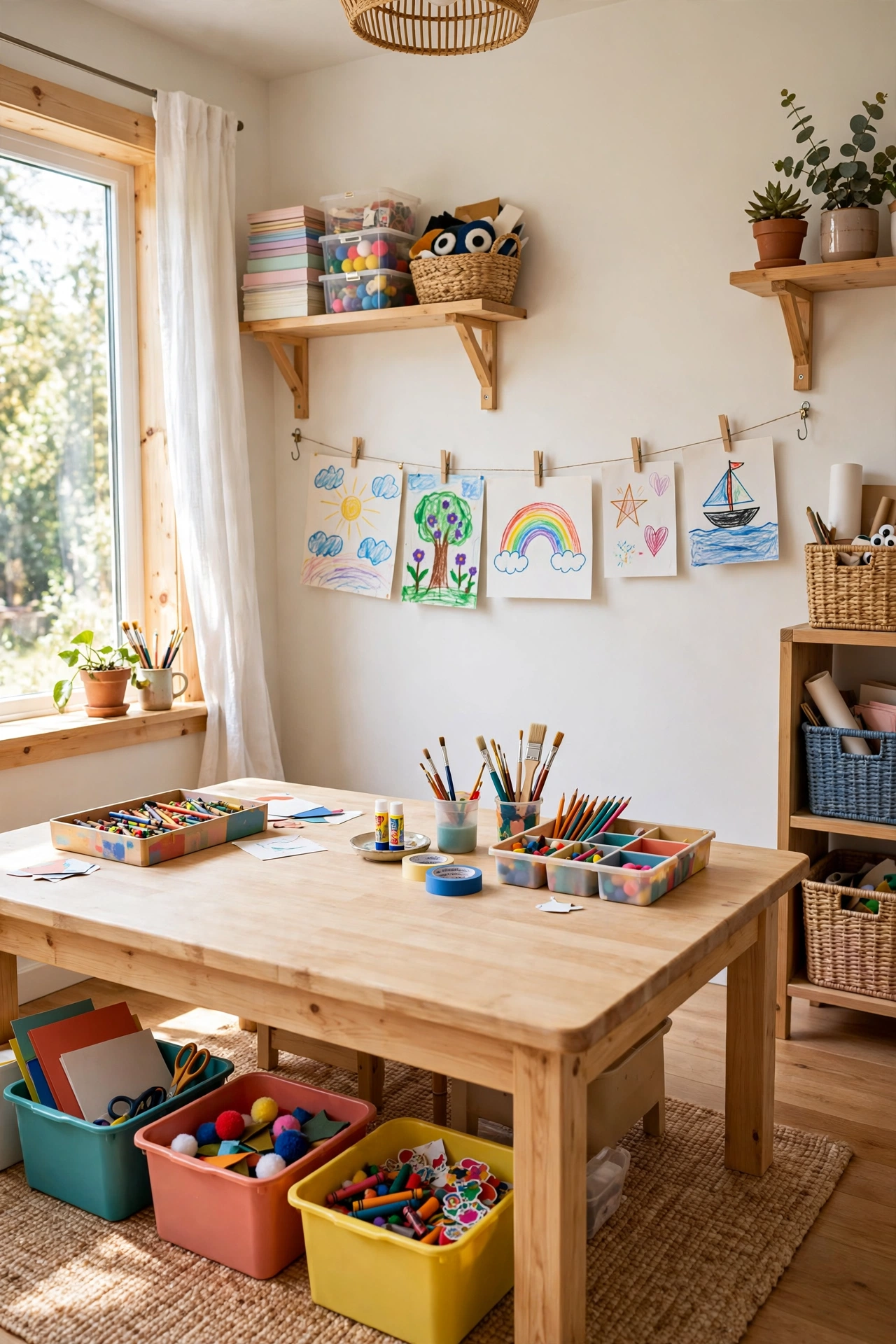
20. Share the Room With Kids Using One Washable Family Table
A hobby room that welcomes kids needs one rule: one table where mess is allowed. A large, washable table in the middle of the room — butcher block, laminate, or a desk with a vinyl cover — becomes the family work surface for homework, coloring, and your own projects, while your precision tools stay on your own desk out of small hands’ reach. Store the kids’ supplies in low, open bins they can reach themselves, and hang their finished art on a display wire or a gallery ledge at their eye level. A washable rug under the table catches the paint, and a small step stool means the kids can reach the table without climbing. Shared making is how hobbies get passed down.
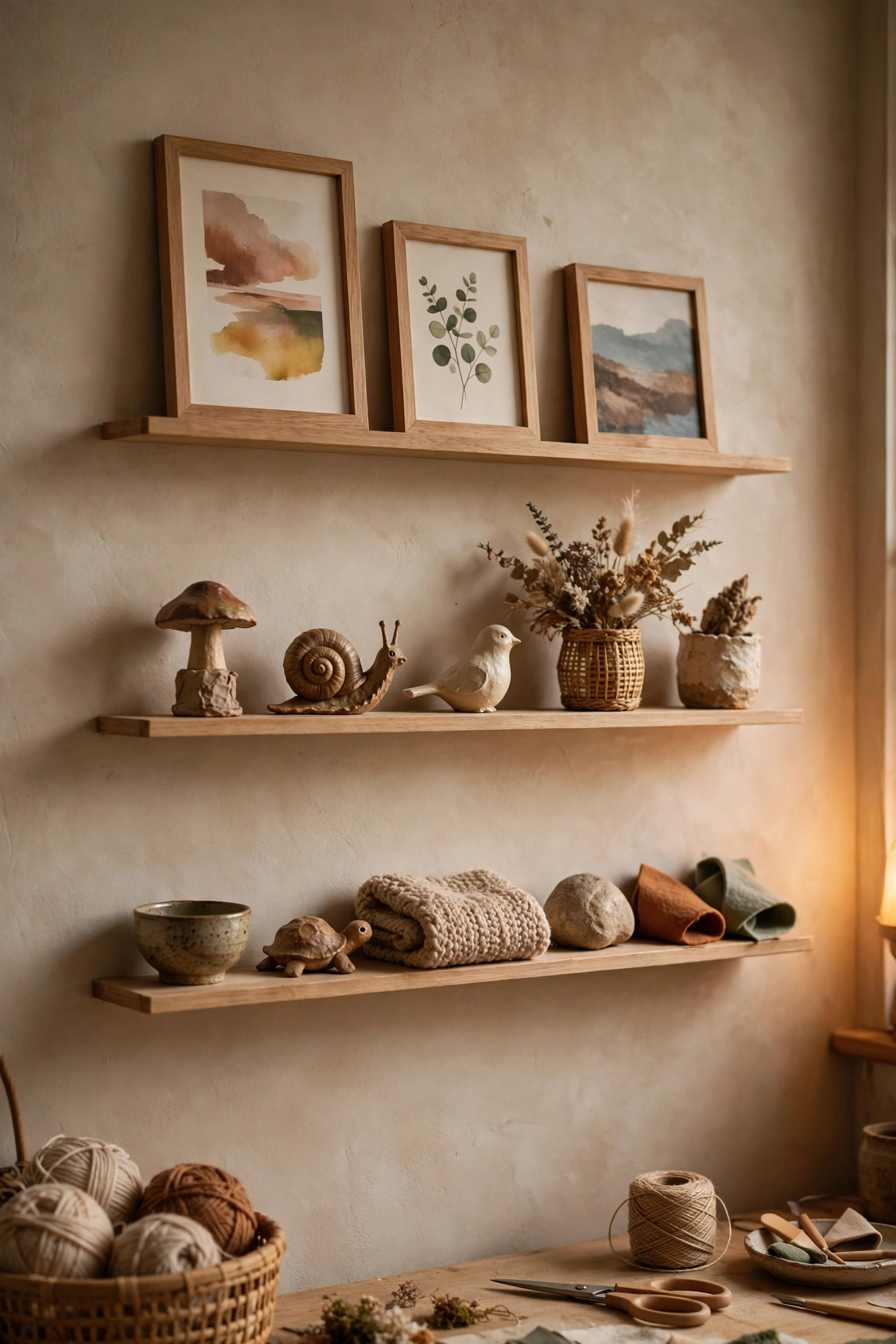
21. Put Finished Work on Display With Gallery Ledges
A hobby room that never shows the finished work slowly becomes a storage room, so build display into the design. Narrow picture ledges along one wall hold finished pieces — framed art, small sculptures, quilts folded over a rail, photographs — and let you swap them in seconds without hammering a single nail. Rotate the display with the seasons or with each finished project, and keep one ledge reserved for the current favorite. Seeing your work on the wall is the best motivation there is: it reminds you what you can do on the days the new project is fighting back. A vintage look suits display well — our 17 vintage craft room ideas show how to style finished pieces with old frames and collected objects.
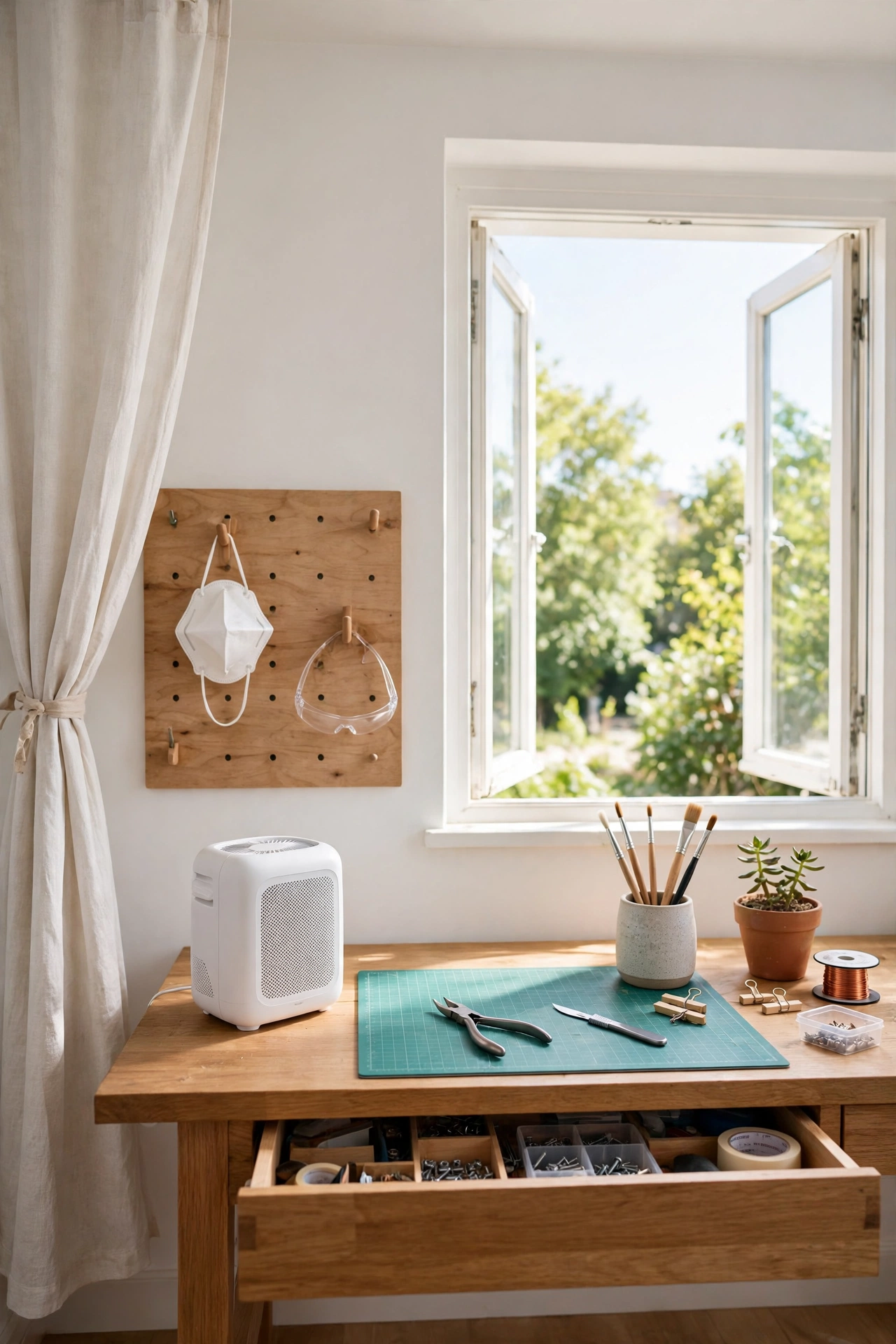
22. Plan Ventilation for Paints, Glues, and Dust
Some hobbies make fumes and dust, and a pretty room that smells of resin is a room you will avoid. Plan ventilation before you set up: a window that opens near the messy zone, a small exhaust fan or a portable air purifier with a carbon filter for fumes, and a dust mask and safety glasses stored right where you use them. Keep solvents and spray paints in a lidded bin away from the heater, and never sand or spray in a room with the door closed and no airflow. A simple rule covers most of it — if you can smell it strongly, ventilate more. Clean air is not a luxury feature; it is what lets you keep the hobby for years instead of months.
23. Add a Charging Station and Tame the Cables
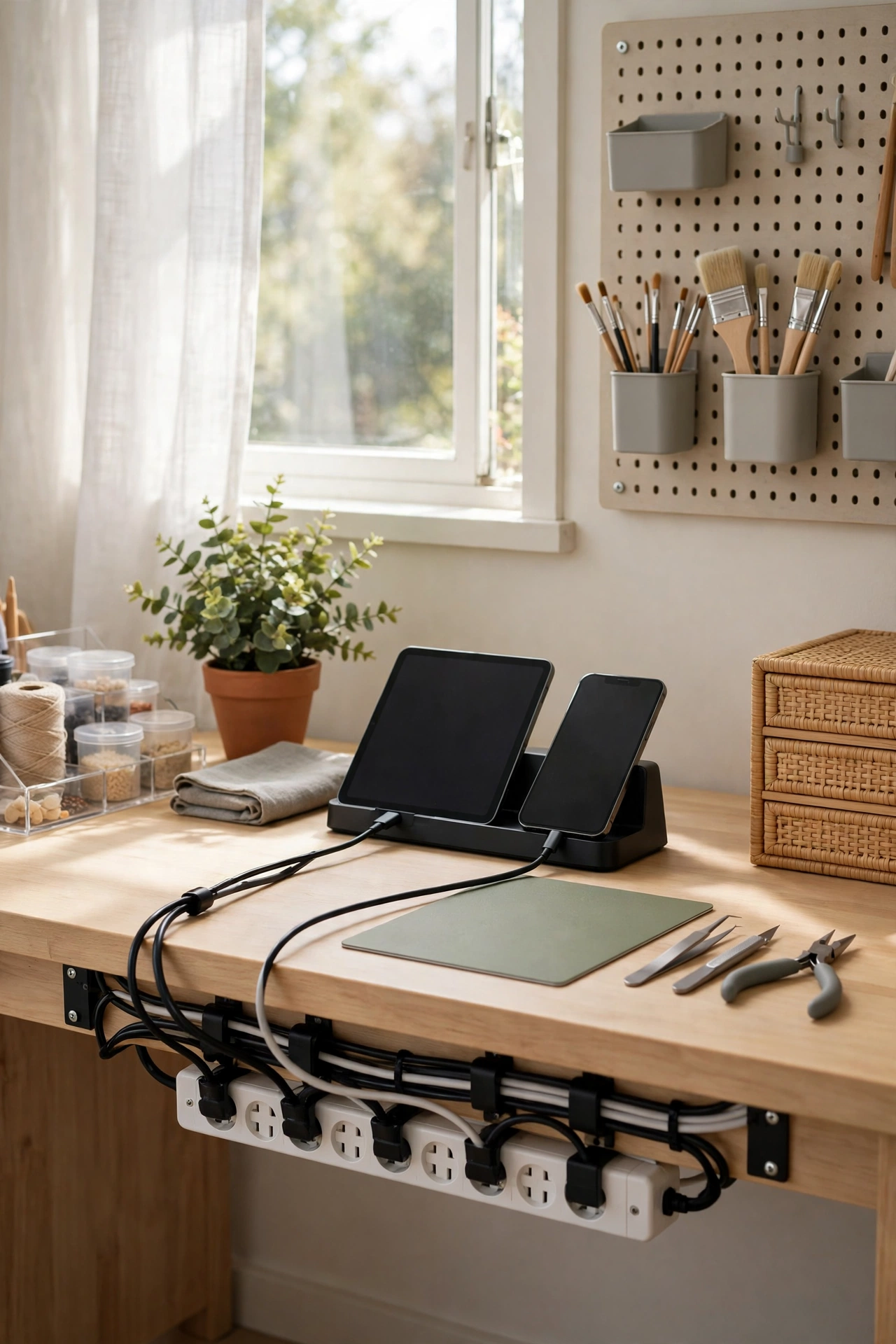
Modern hobbies run on power: Cricut machines, 3D printers, tablets for patterns, phones for reference photos, and a lamp or two. A single charging station — a power strip mounted under the desk or inside a small cabinet, with labeled cables and a few USB ports — ends the daily hunt for an outlet and the tangle of cords across the desk. Mount the strip where you can reach the switch without crawling under the desk, and use cable clips along the desk edge to route each cord to its device. Keep a small basket for the chargers you only use sometimes, and label every cable with a tag or a strip of tape. A room with no visible cable spaghetti looks calmer and works better.
24. Give Every Project Its Own Parking Shelf
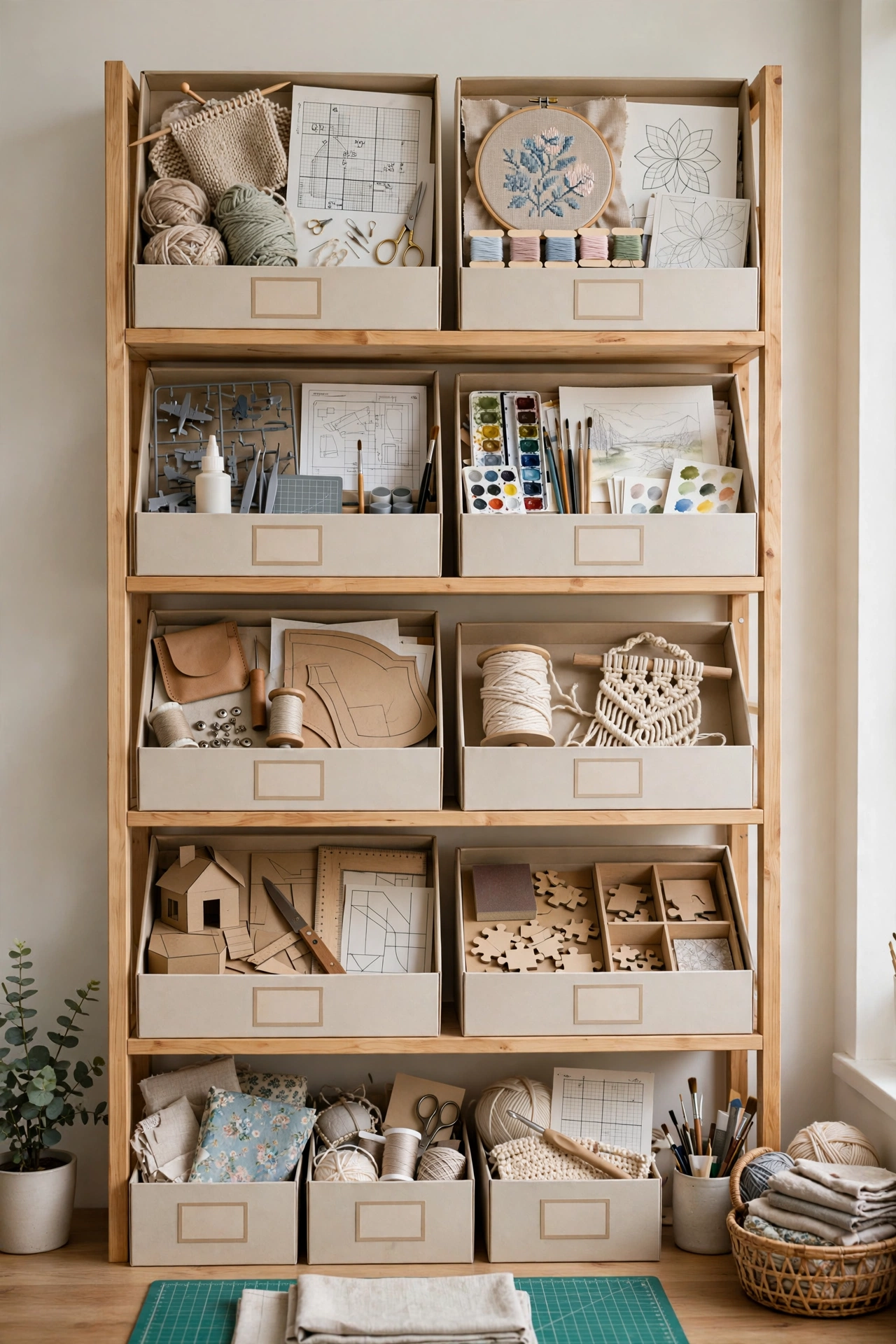
Unfinished projects are the clutter that kills hobby rooms, and the fix is a parking system: one labeled shelf, box, or tray per active project, with everything that project needs inside it — pattern, materials, tools, and notes. When you stop for the day, the whole project goes back on its shelf in one move, and the desk is clear for tomorrow. Limit yourself to three active projects at a time; anything more goes into a “someday” bin on a higher shelf, out of sight but not forgotten. Label each box with the project name and the date you started it, and once a month, open the someday bin and honestly retire one project. A clear desk is an invitation to start again.
25. Build a Budget Starter Setup for Under $200
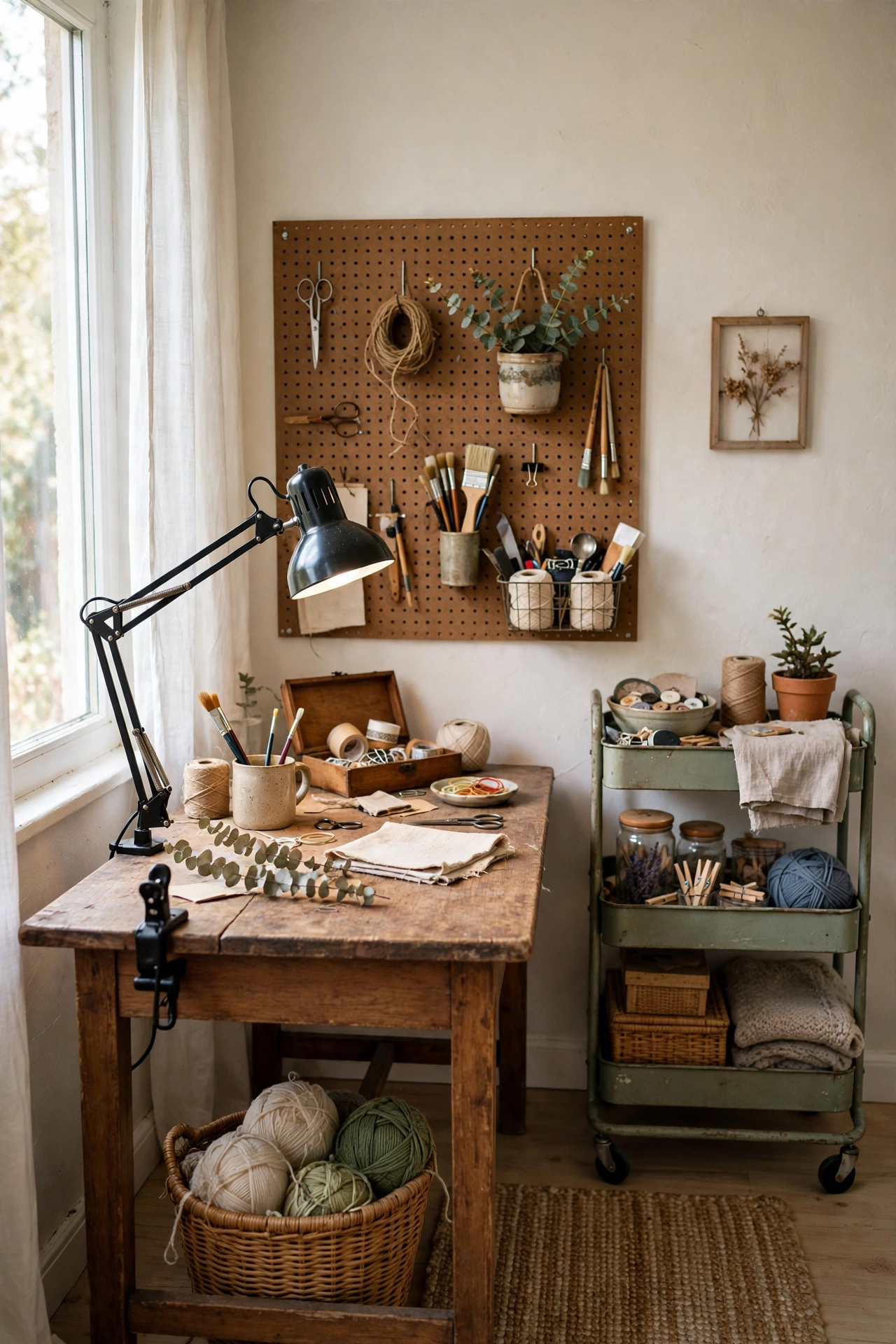
You do not need a showroom to start — you need a desk, light, and storage, and all three can come secondhand. A thrifted solid-wood table beats a new flat-pack desk at the same price, a daylight bulb in a clip-on lamp beats a designer fixture, and a pegboard plus a rolling cart from a discount store covers most of your storage. Hunt for the rest at estate sales and online marketplaces: jars, baskets, small shelves, and a comfortable chair. Spend the money you save on the one thing that actually affects your work — a good task light or a proper chair. For clever low-cost builds, see our 57 genius IKEA hacks. A $200 room you use every day beats a $2,000 room you are afraid to mess up.
26. Run a Seasonal Rotation So the Room Never Clutters Up
The final idea is not furniture — it is a habit. Four times a year, spend one hour rotating the room: move the current season’s supplies to the easy shelves and the off-season ones to the high bins, retire one unfinished project, wipe the pegboard and rehang what you actually use, and swap the display wall for the season’s finished pieces. The rotation is also the moment to check what ran out, what broke, and what you never touch — supplies you have not used in a year go to a friend or a donation box. A hobby room that gets a seasonal reset stays a hobby room; one that never gets reset slowly becomes a storage room with a desk in it.
Frequently Asked Questions
What is the best room in the house for a hobby room?
The best room is the one with the best light and a door you can close — usually a spare bedroom, a finished basement corner, or a large closet. Light matters more than size, because most hobbies are done with your hands and eyes. A small bright room beats a large dark one every time, and a door matters because it lets you leave a project out without the mess spreading through the house.
How much space do I need for a hobby room?
You can start with as little as a closet (about 4 feet wide) for a single hobby, while a comfortable multi-hobby room needs roughly 100 square feet — a small bedroom. The real measure is not floor area but work surface: one clear desk of at least 24 by 48 inches, plus wall storage, is enough for most hobbies. If you cannot dedicate a room, a rolling cart and a fold-down desk give you a hobby corner anywhere.
How do I organize a hobby room on a budget?
Start with the three things that matter most: a sturdy secondhand table, a good daylight task lamp, and wall storage like a pegboard or open shelves. Use clear jars, labeled bins, and a rolling cart for the rest, and buy storage only after you know what you actually own. Thrift stores, estate sales, and marketplace listings cover almost everything else for a fraction of retail.
What lighting is best for a hobby room?
Layer three kinds: bright even overhead light for the whole room, a daylight task lamp exactly where your hands work, and a warm accent lamp for atmosphere. Place the worktable near a window for natural light, with the light falling across your hands from the side. Avoid a single harsh ceiling bulb — it creates shadows right where you need to see.
Can a hobby room share space with a guest room or home office?
Yes, and it usually should — a spare bedroom with a daybed works as both a guest room and a hobby room, and a hobby corner can share a home office if each has its own zone and storage. The trick is a clear boundary: the guest bed stays clear, the desk stays yours, and the project parking shelf keeps half-finished work off the shared surfaces.
How do I keep a hobby room from turning into a junk room?
Give every project its own labeled box on a parking shelf, limit yourself to three active projects, and run a seasonal rotation four times a year — retiring one old project and rehanging the pegboard each time. The rule that saves every hobby room is simple: the desk is for working, not for storing. Anything that lives on the desk for more than a week needs a home somewhere else.
Conclusion
A hobby room is not about the size of the room or the price of the furniture — it is about removing the friction between you and the thing you love doing. A zone map, an L-shaped desk, a pegboard full of tools you can see, light where your hands are, and a parking shelf for every project: those five moves carry most of the 26 ideas on this list, and you can start with any one of them today. Pick the idea that fixes your biggest annoyance — the dark corner, the buried tools, the desk that is always covered — and build from there. Your hobby deserves a room that is ready when you are, and a room that is ready is a room you will use. Clear the desk, hang the pegboard, and go make something.