31 Small Apartment Ideas to Make a Tiny Space Feel Bigger
31 Small Apartment Ideas to Make a Tiny Space Feel Bigger
A small apartment is not a problem to solve — it is a space that rewards smart decisions. Every square foot has to earn its place, and the right ideas can make a studio feel like a one-bedroom and a one-bedroom feel like a proper home. The trick is not buying more stuff; it is choosing furniture that does two jobs, using the walls and the ceiling, letting light travel, and giving every zone a clear purpose. Below are 31 small apartment ideas that actually work in real rentals, from floating layouts and lofted beds to renter-friendly dividers and storage that hides in plain sight. Each one is a practical change you can make in a weekend, and together they turn a cramped apartment into a calm, organized home.
1. Float the Furniture Instead of Pushing It to the Walls
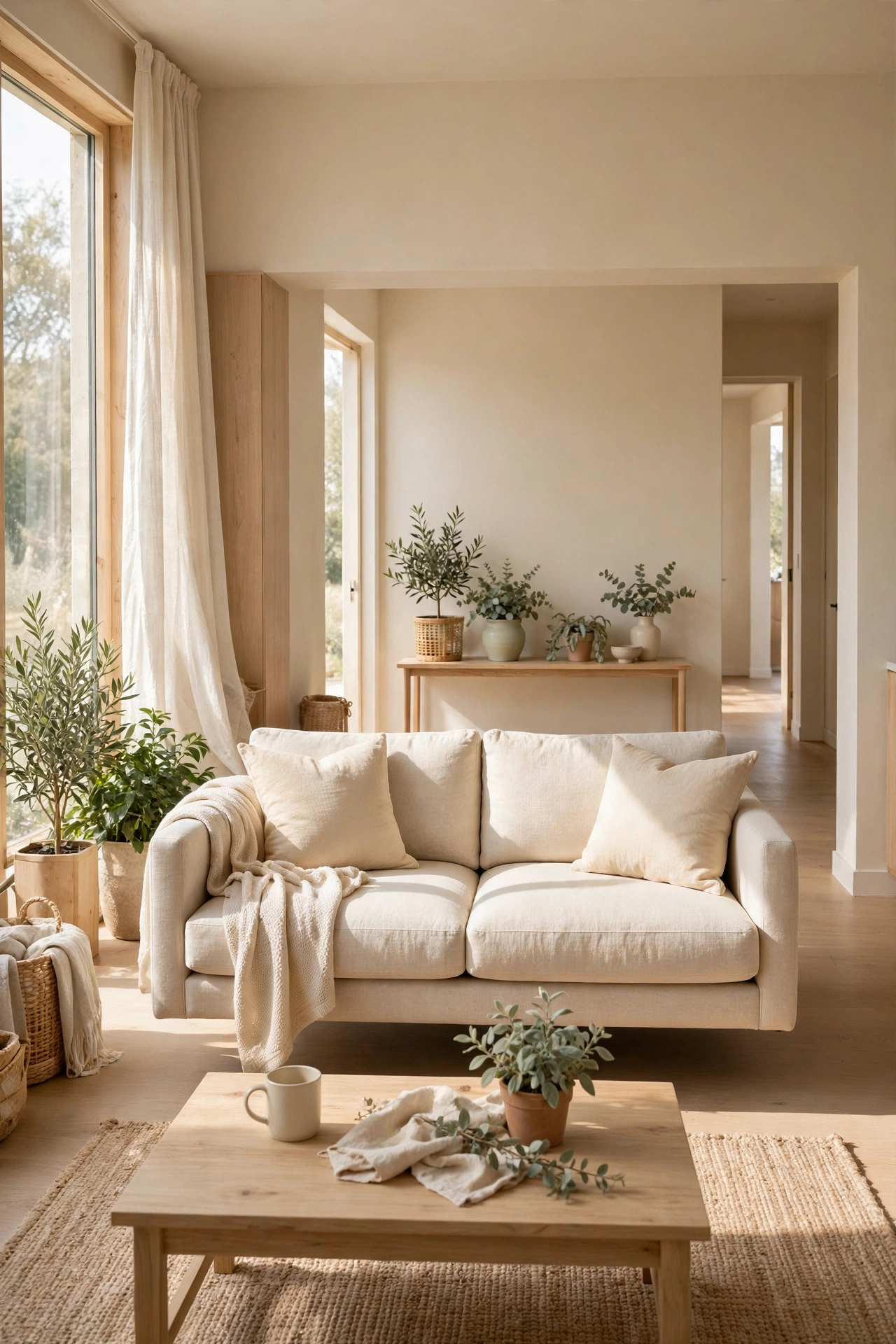
The instinct in a small apartment is to shove every piece of furniture against the wall, but that usually makes the room feel more cramped, not less. Pull the sofa a few inches out from the wall and angle a chair toward it, and suddenly there is breathing room behind the furniture and a natural walkway through the room. Floating the main pieces also lets you create zones: the sofa’s back becomes the edge of the living area, and the space behind it can hold a slim console or a dining spot. Leave at least 30 inches for main walkways so nobody has to sidestep furniture. This costs nothing, takes ten minutes, and it is the fastest way to make a boxy room feel intentionally arranged rather than stuffed full.
2. Put a Slim Console Behind the Sofa
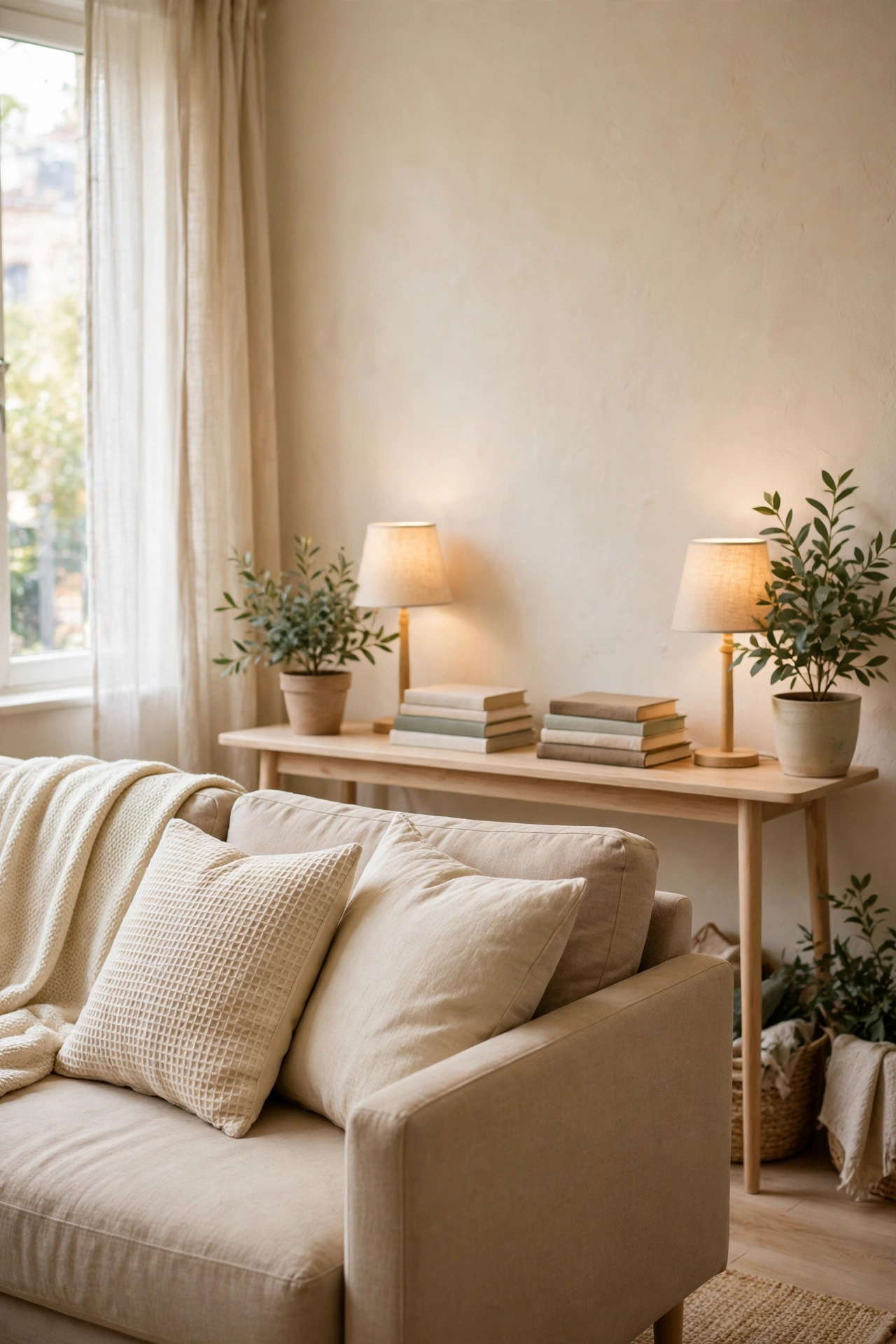
The gap behind a floated sofa is wasted space unless you use it, and a slim console table is the perfect fit. A console 10 to 12 inches deep gives you a surface for lamps, books, and a charging spot without eating into the walkway, and it makes the back of the sofa look finished instead of bare. Choose one with a lower shelf or drawers and it doubles as storage for remotes, board games, or work supplies. In a studio, a console behind the sofa can even act as a subtle divider between the living area and the sleeping area. Look for a narrow console with open legs rather than a solid base — seeing the floor underneath keeps the room feeling open.
3. Mount a Drop-Leaf Table on the Wall
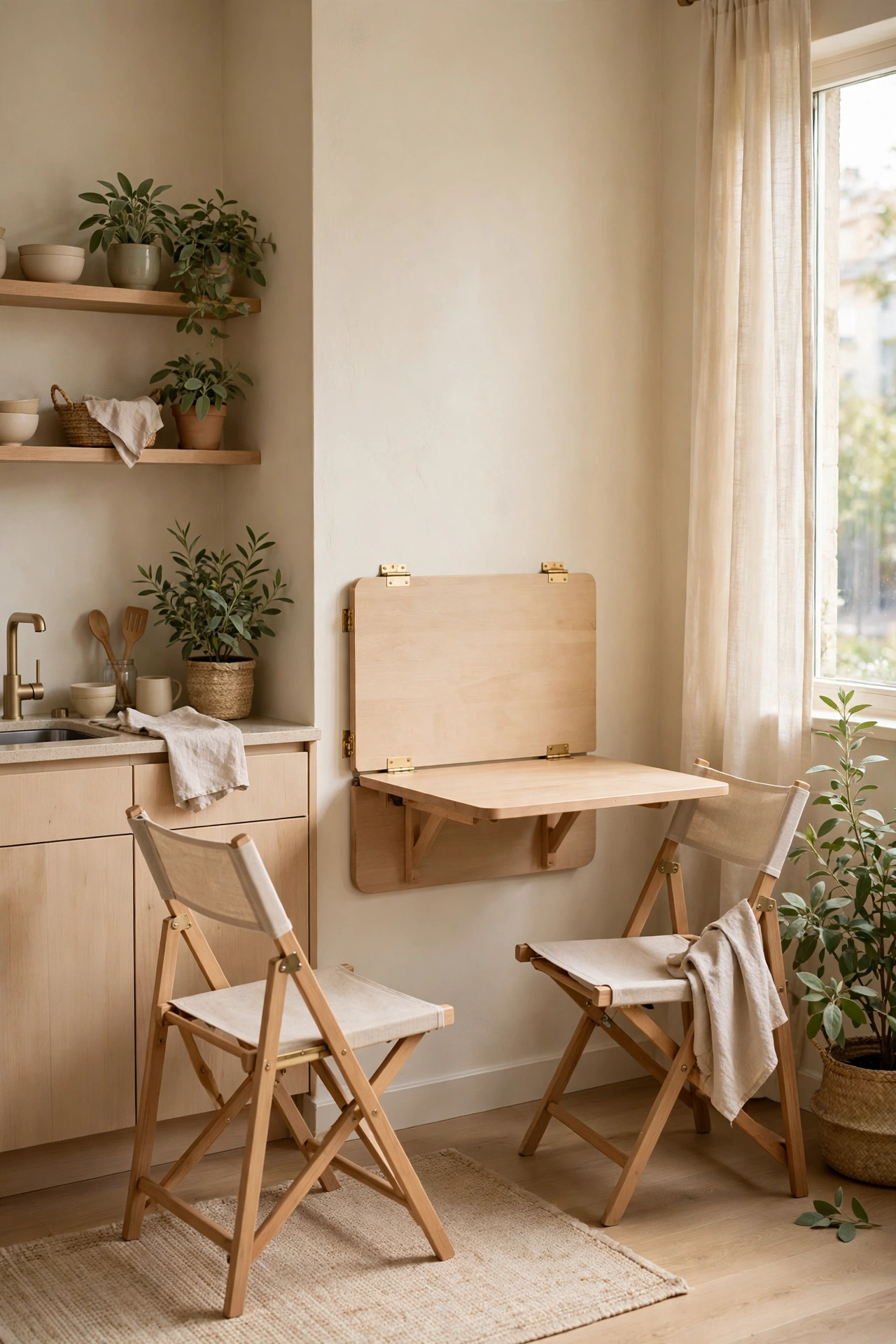
A dining table that folds flat against the wall is one of the best small apartment ideas ever invented. A wall-mounted drop-leaf table seats two for dinner, folds down to a slim shelf when you are done, and takes up zero floor space in between. Mount it at standard dining height, about 30 inches, and pair it with folding chairs that hang on wall hooks nearby. When it is folded up, the surface works as a laptop desk, a coffee spot, or a plant shelf. For renters, a drop-leaf table mounted with a French cleat comes down cleanly with only a few small holes to patch. It is the difference between having a dining area and eating on the sofa forever.
4. Swap the Sofa-and-Bed Combo for a Daybed
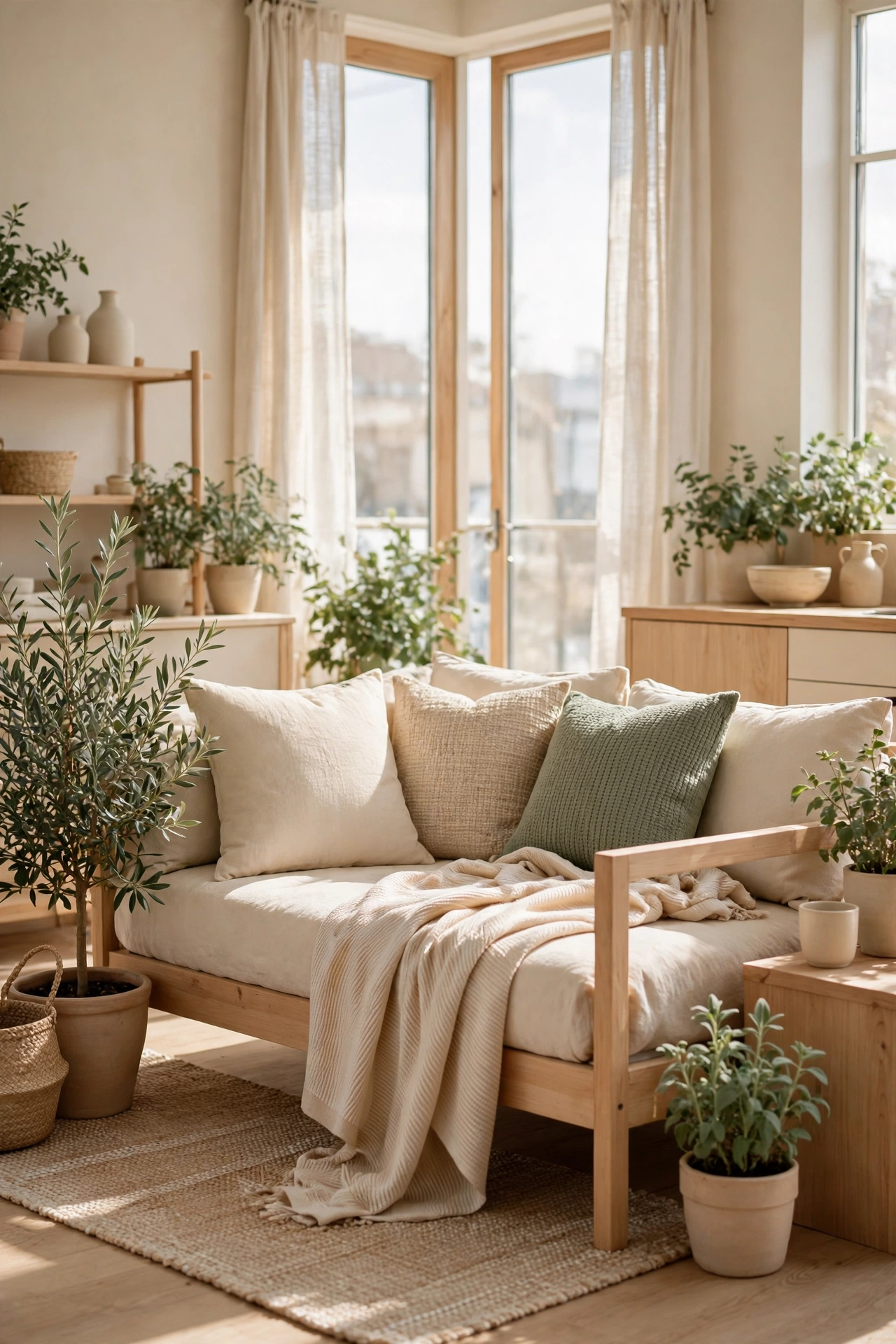
In a studio, a daybed does the work of a sofa by day and a bed by night without the nightly wrestling match of a pull-out. Dress it with a tailored cover and a row of firm back cushions and it reads as a sofa; pull the cushions away at night and it is a full twin or full-size bed. The frame’s storage drawers underneath hold bedding, off-season clothes, or shoes. Choose a daybed with a trundle and you gain a guest bed too. Compared with a sofa bed, a daybed is more comfortable to sleep on every night and it never develops that sagging middle. For more small-room layout inspiration, see our small sewing room ideas, where the same zone-and-hide logic makes a tiny room work hard.
5. Loft the Bed and Reclaim the Floor
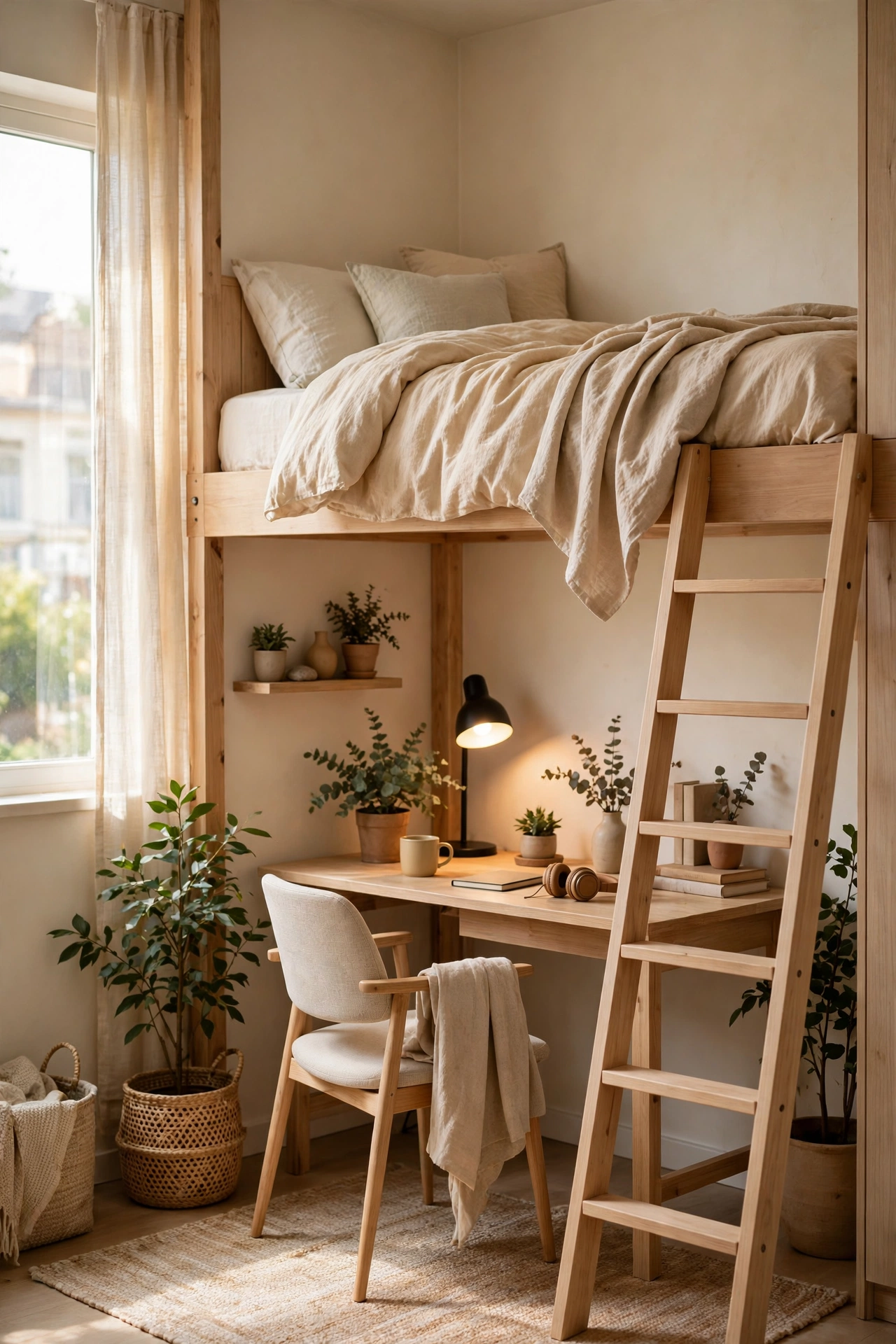
When floor space is the scarcest resource, the bed is the biggest thief — it eats a third of the room. A lofted bed hands that footprint back: the sleeping area moves up, and the space underneath becomes a desk, a reading nook, or a wardrobe wall. Loft beds work best with ceilings of at least 8.5 feet, leaving enough sitting room above the mattress. Add a guard rail, a sturdy ladder, and a small shelf or clip-on light up top so the loft feels like a real bedroom, not a camp bunk. If a full loft feels too high, a low loft or a bed raised on risers still frees under-bed space for drawers. It is the single biggest space win in any tiny apartment.
6. Use Rolling Under-Bed Storage
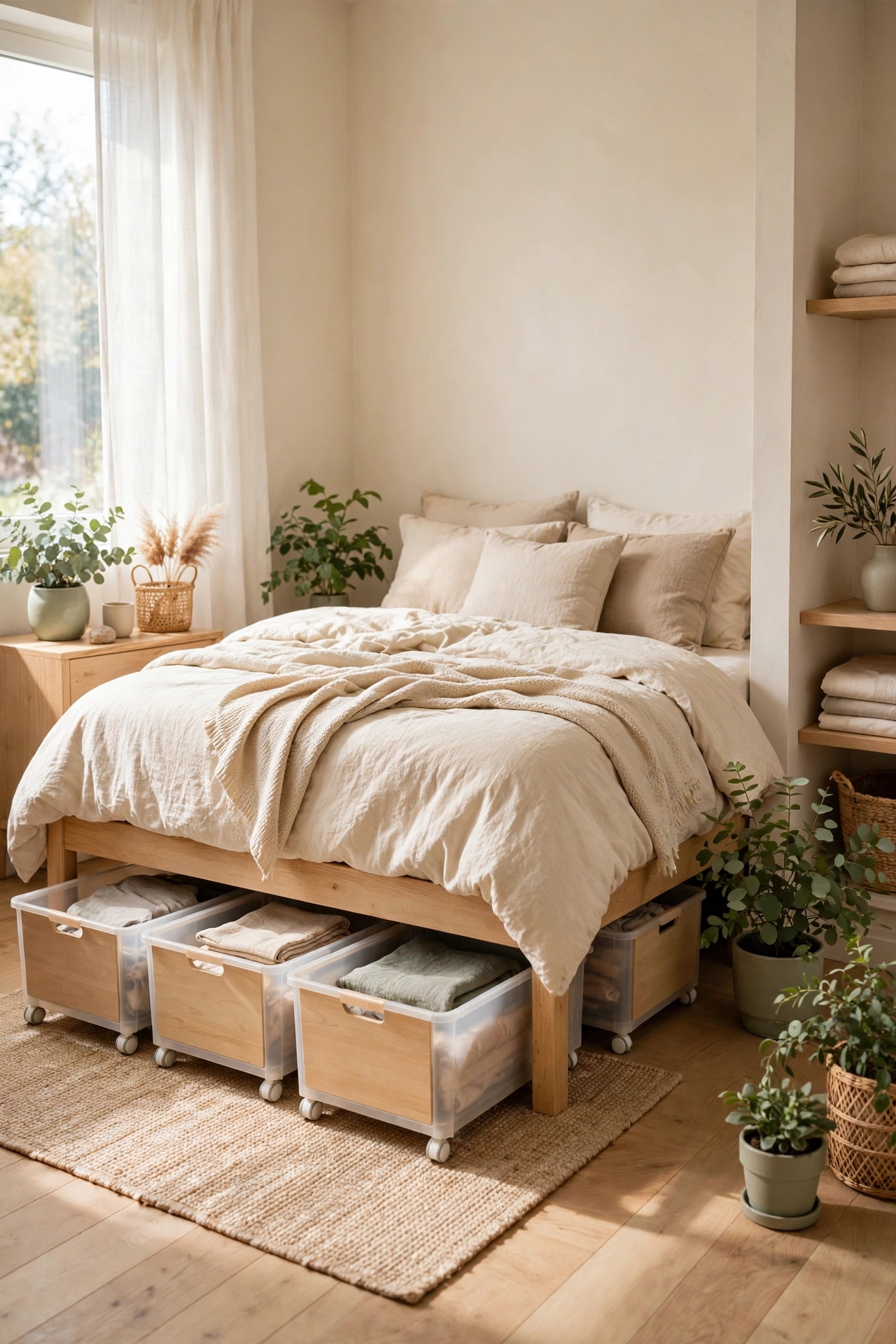
The space under the bed is the largest hidden storage area in any apartment, and rolling bins make it usable every day instead of once a year. Low, wheeled bins slide out like drawers and hold off-season clothes, spare bedding, shoes, or gift wrap. Clear bins with labels mean you can find things without dragging everything out. If your bed sits low, raise it on risers or a simple platform frame — even six extra inches creates a full layer of storage. Vacuum bags inside the bins compress bulky winter coats and duvets to half their size. The rule is simple: if it does not fit in a labeled bin under the bed, it probably does not belong in the apartment.
7. Run Shelving All the Way to the Ceiling
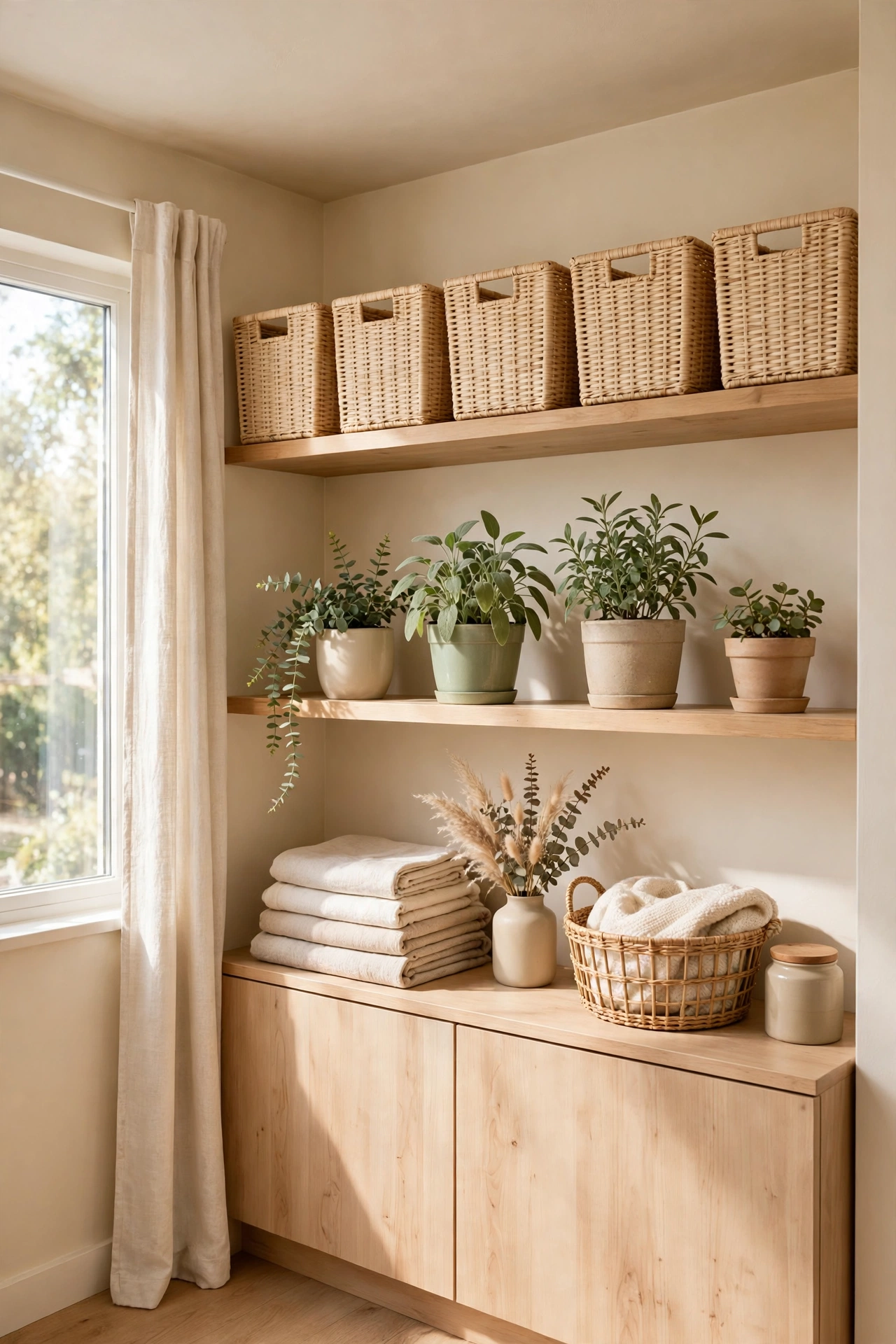
Most apartments waste the top two feet of every wall, and that is exactly where small-space storage belongs. Shelves that run from counter height to the ceiling turn dead wall into a library, a pantry, or a display. Put everyday items at eye level, weekly items a reach up, and rarely used things — holiday decor, luggage, keepsakes — at the very top in matching boxes. A small step stool that lives in the closet makes the top shelf genuinely usable. Keep the shelves shallow, 10 to 12 inches, so they never loom over the room, and leave some breathing space between objects so the wall reads as designed rather than crammed. In a kitchen, this same trick is why our kitchen corner cabinet ideas lean on vertical storage.
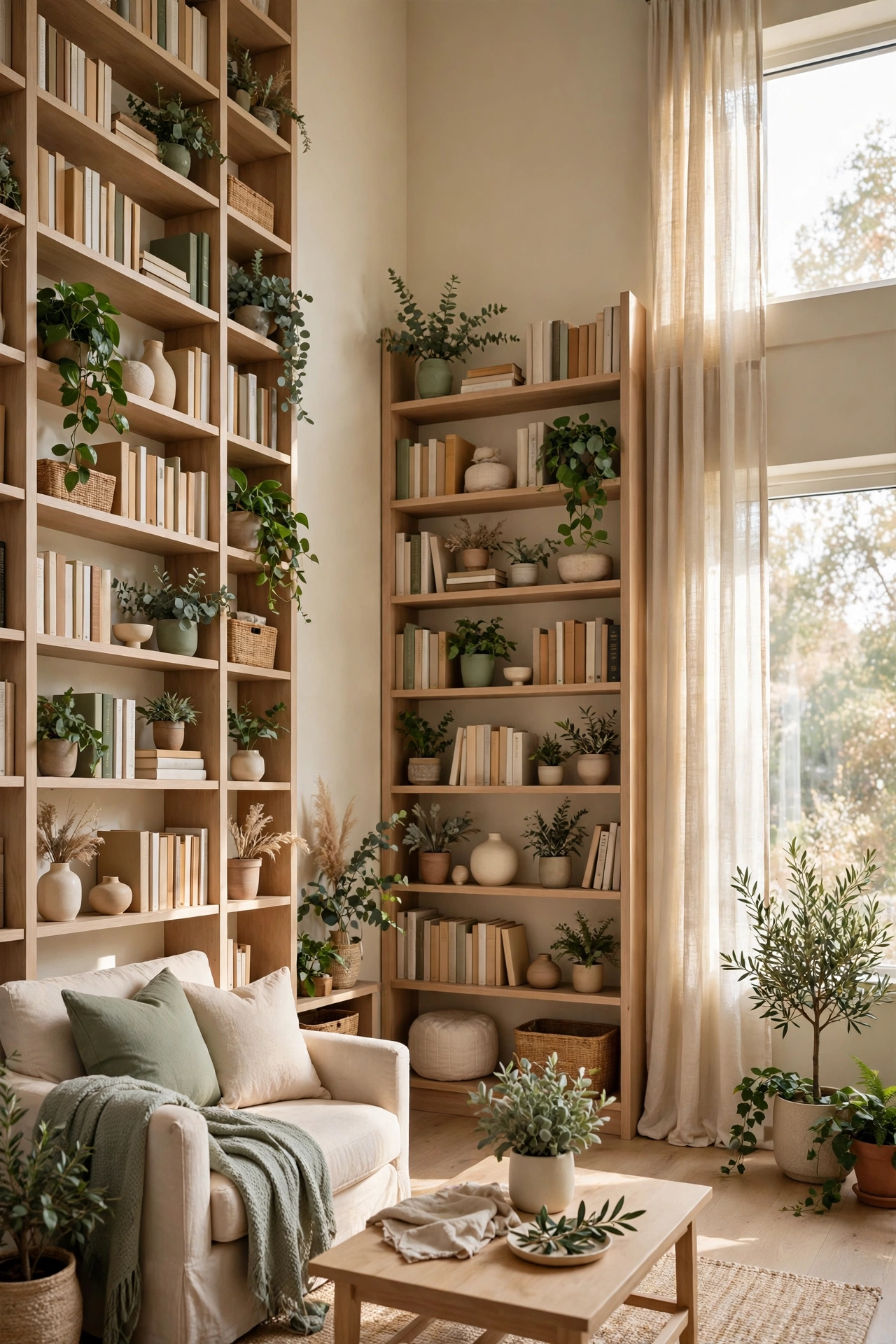
8. Divide the Room With a Tall Bookcase
A studio needs separate zones, but a solid wall kills the light. A tall, open-backed bookcase is the compromise: it divides sleeping from living, gives both sides storage, and lets light pass through. Style it from both sides — books and baskets on the living side, folded clothes and a small lamp on the bedroom side — so neither side looks like the back of a shelf. Anchor it to the wall with anti-tip hardware, especially if you have kids or pets. Leave the top shelf partly open or add a plant that trails over the edge to soften the hard line. Compared with a curtain or a folding screen, a bookcase divider earns its floor space by storing things too.
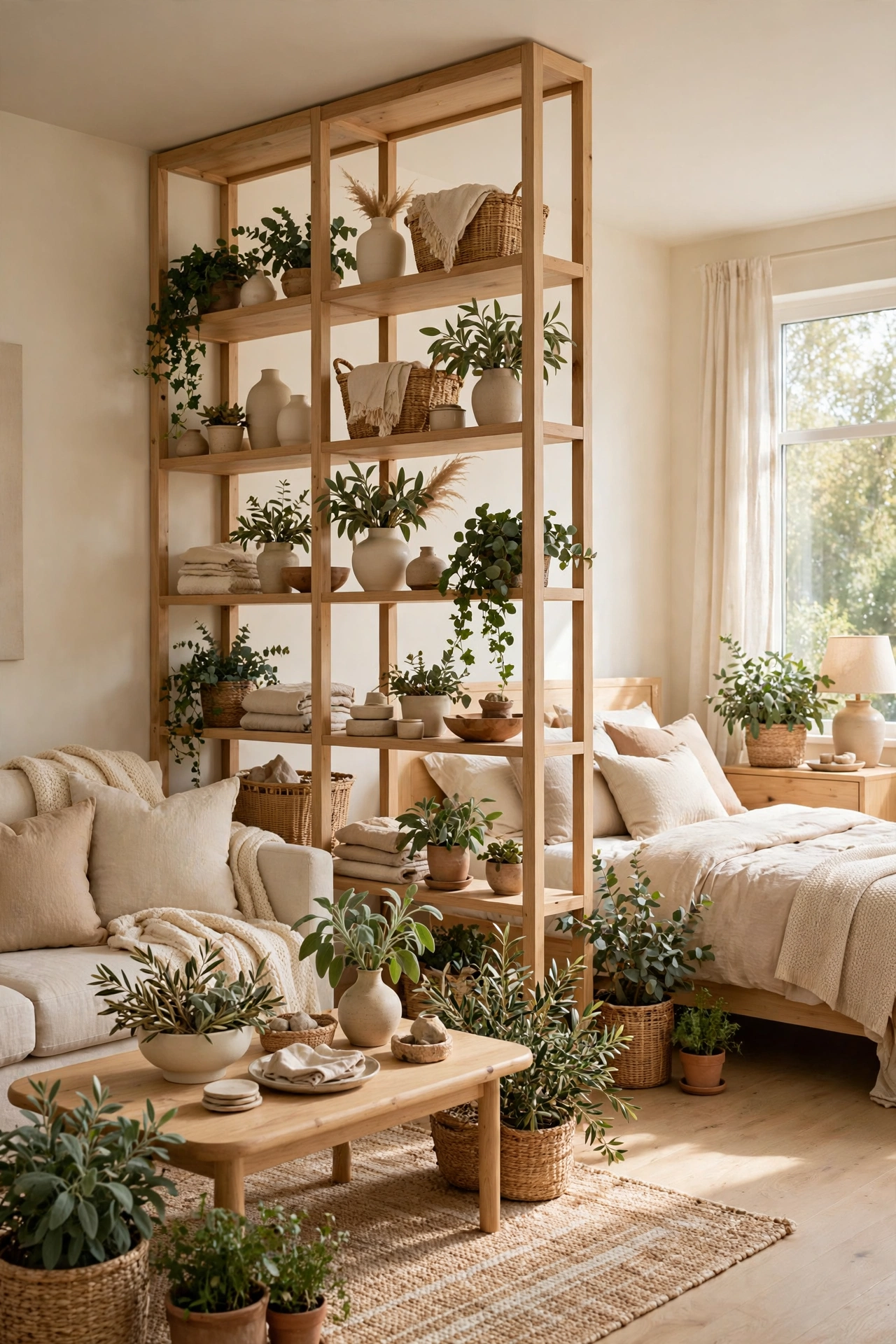
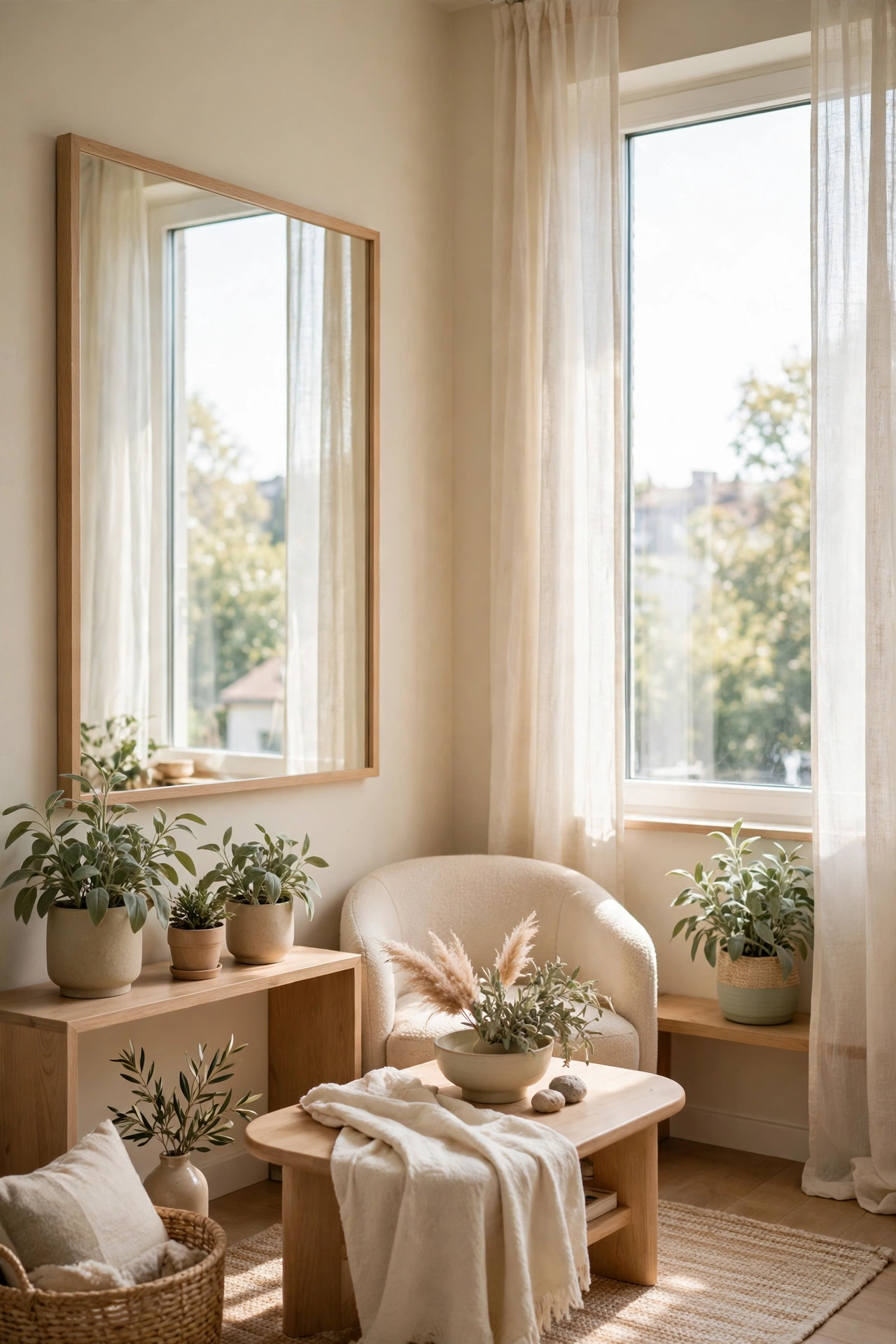
9. Hang the Biggest Mirror Opposite the Window
A mirror opposite a window doubles the light and the view, and in a small apartment that is free square footage for the eye. Choose the largest mirror the wall can take — a full-length leaning mirror or a wide framed piece — and hang it so it reflects the window, not a blank wall or a cluttered corner. The reflection makes the room feel twice as deep, and the extra daylight bounces into corners that lamps never reach. A mirror with a thin frame or no frame at all disappears into the wall, while a bold frame turns it into art. Avoid hanging mirrors where they reflect the bed directly if that bothers you at night, and skip mirrored furniture, which shows every fingerprint. One great mirror beats three small ones every time.
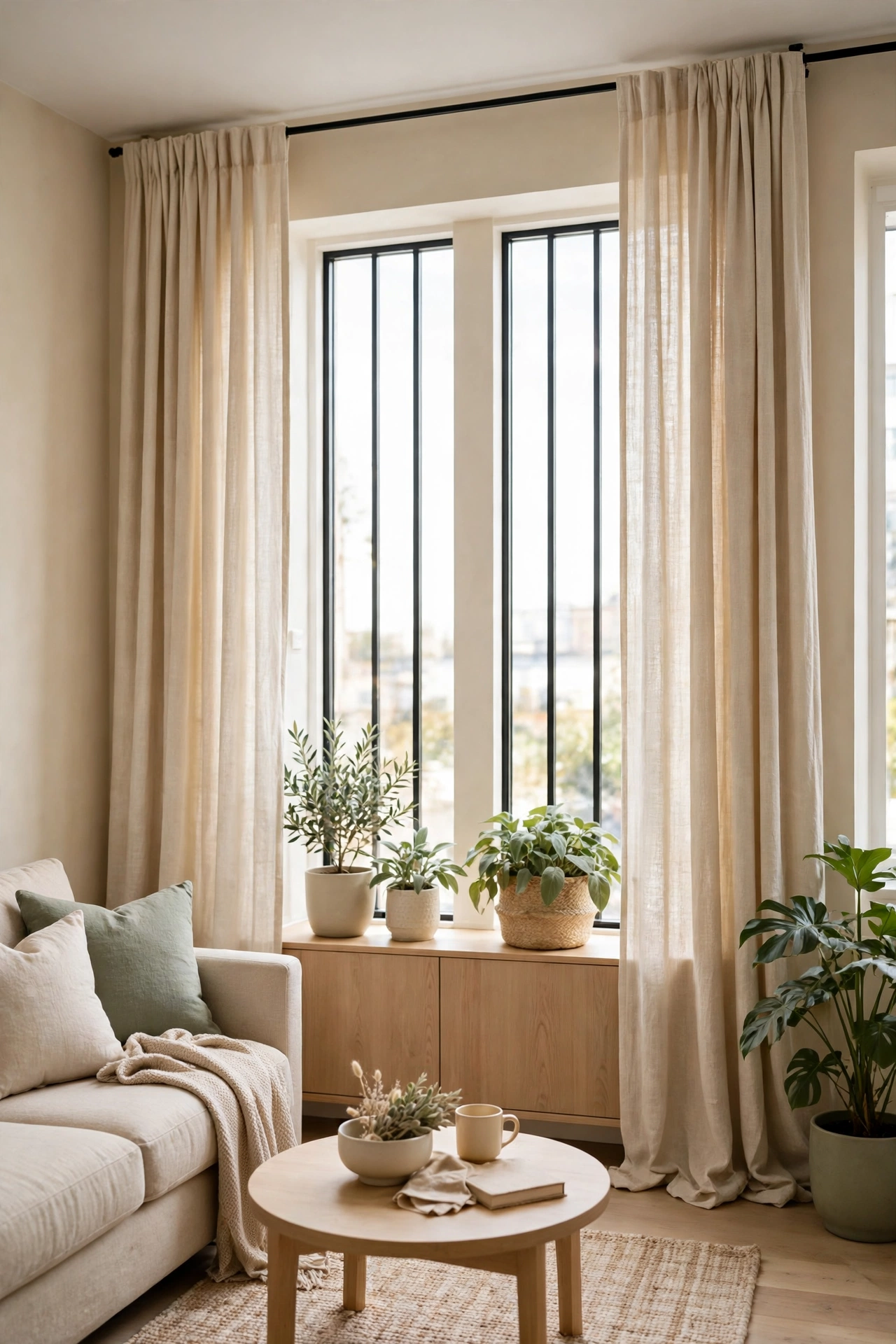
10. Hang Curtains at Ceiling Height
Curtains hung just above the window frame chop a wall in half and make the ceiling feel lower. Mount the rod at the ceiling — or at least six inches above the frame — and let the panels fall all the way to the floor, and the window suddenly looks twice as tall. The trick works even better with sheer or light linen panels, which soften the light without blocking it. Extend the rod six to twelve inches past the frame on each side so the open curtains clear the glass completely and the window reads wider too. In a rental, a ceiling-mounted track or a tension rod inside a deep window frame achieves the same lift without drilling into the ceiling. It is a ten-dollar change with a ten-foot effect.
11. Keep One Wall Completely Clear
When every wall is covered, the eye has nowhere to rest and the room feels crowded no matter how tidy it is. Pick one wall — ideally the one you face most often — and leave it almost empty: fresh paint, one piece of art, nothing else. That blank stretch gives the room a visual exhale and makes everything else look deliberate instead of accumulated. It also creates a natural focal point for the furniture arrangement, since the eye is drawn to the calm wall rather than the cluttered one. If a fully bare wall feels too stark, a single large print or a slim floating shelf with one object is enough. This is the hardest idea on the list for collectors, and the most rewarding.
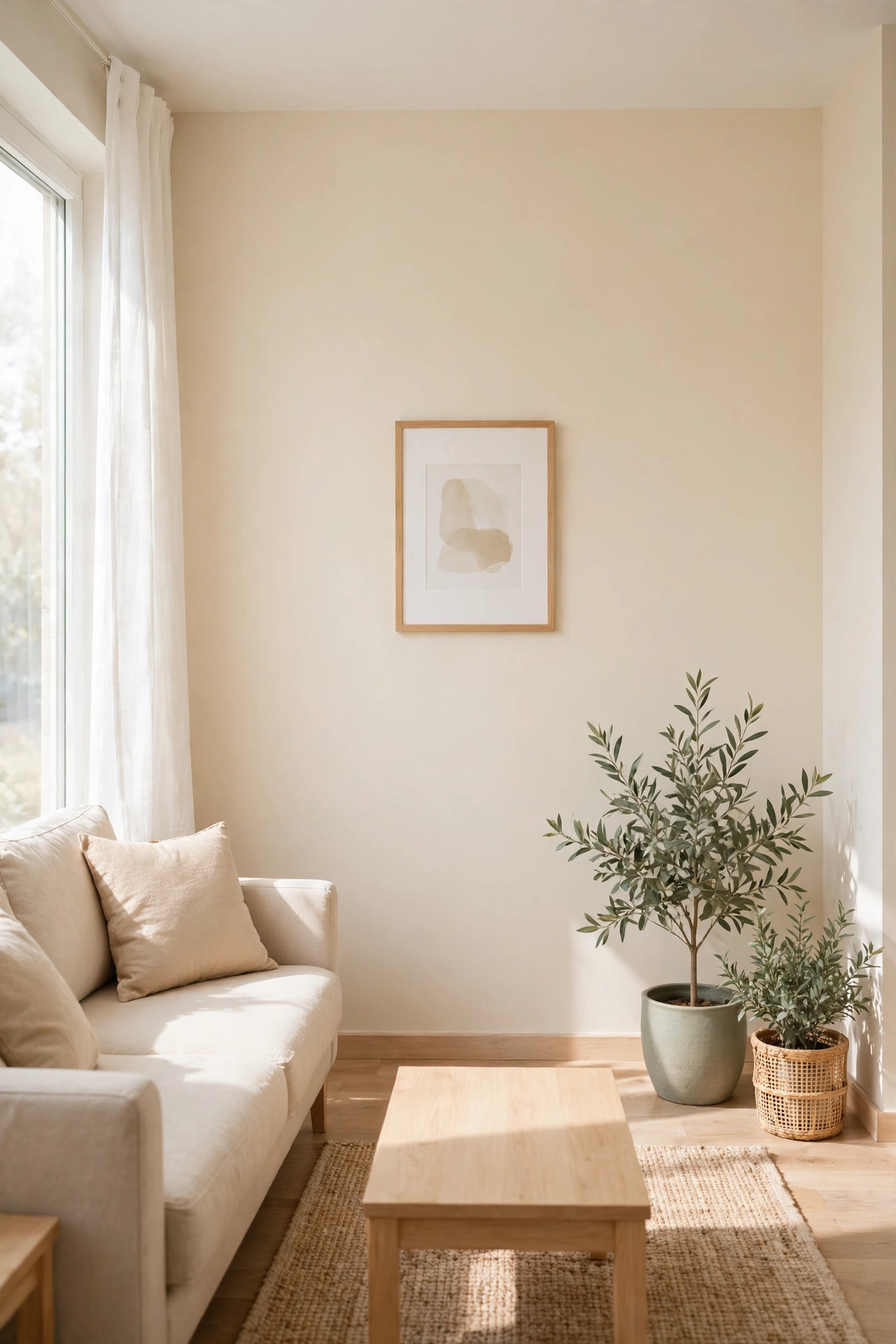
12. Zone the Floor Plan With Rugs
In an open-plan apartment, rugs are the walls you can roll up. A rug under the sofa defines the living zone, a smaller rug under the dining table marks the eating zone, and a runner by the bed softens the sleeping zone — all without blocking a single ray of light. Keep the rugs in the same color family so the zones feel connected, and vary the texture instead: a flat weave in the dining area, a plush pile by the sofa. The front legs of the furniture should sit on the rug, not beside it, or the rug will look like a postage stamp. A rug pad underneath stops sliding and adds a layer of quiet. If you are working out a studio layout, the zoning logic in our DIY banquette seating ideas shows the same principle around a dining nook.
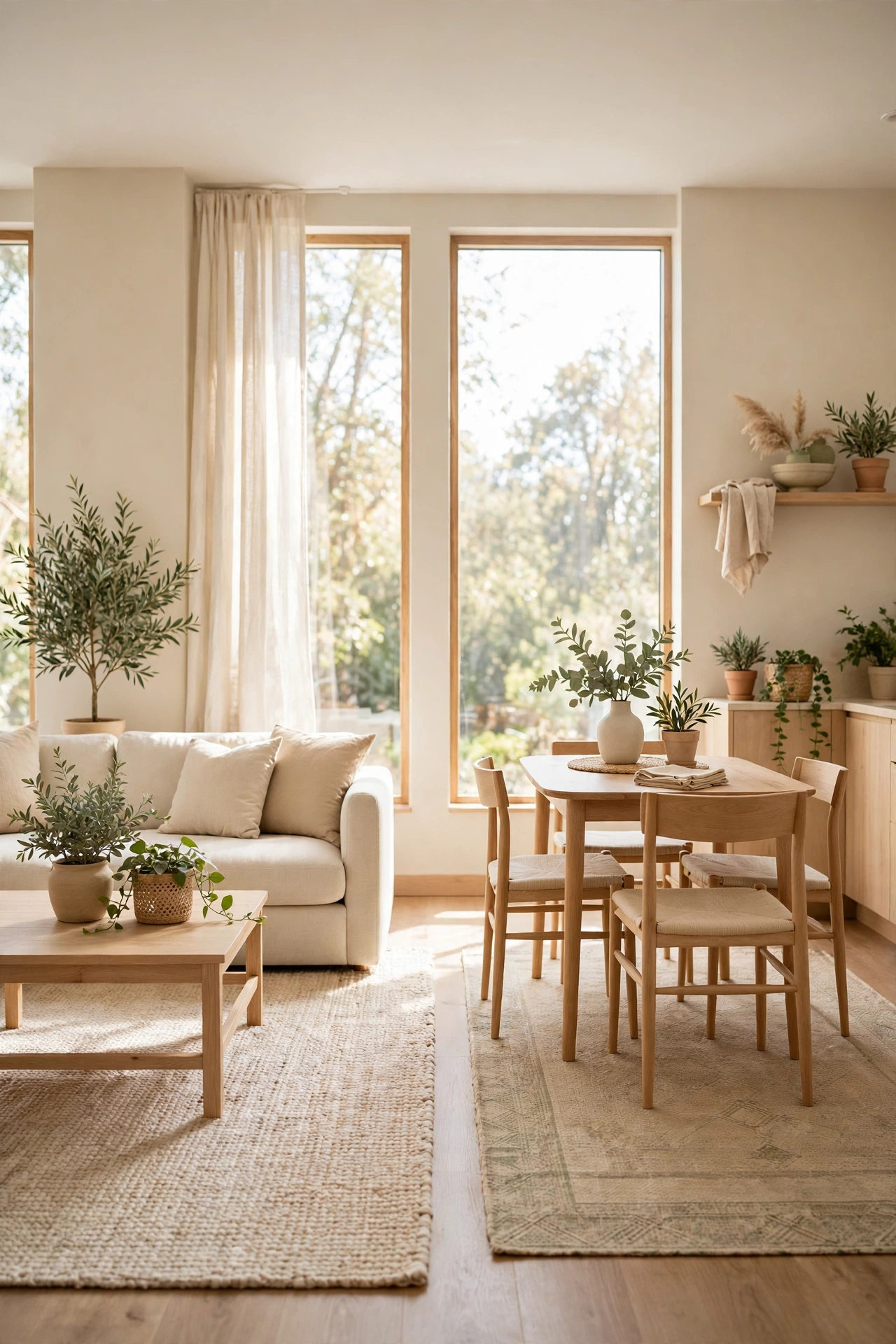
13. Fold Down a Wall Desk for Work From Home
A full desk eats floor space all day for work that happens eight hours a day, so a fold-down wall desk is the smarter trade. Mounted at desk height, it opens into a proper workspace with room for a laptop and a notebook, then folds flat against the wall when the workday ends. Add a floating shelf above it for a monitor riser, a small lamp, and supplies, and a wall-mounted file pocket for papers. The chair can be a dining chair that pulls double duty, so no extra seat clutters the room. Choose a desk with a magnetic or chalkboard front and it becomes a memo board when folded up. For renters, the same idea works with a heavy-duty folding bracket and a board you can take with you.
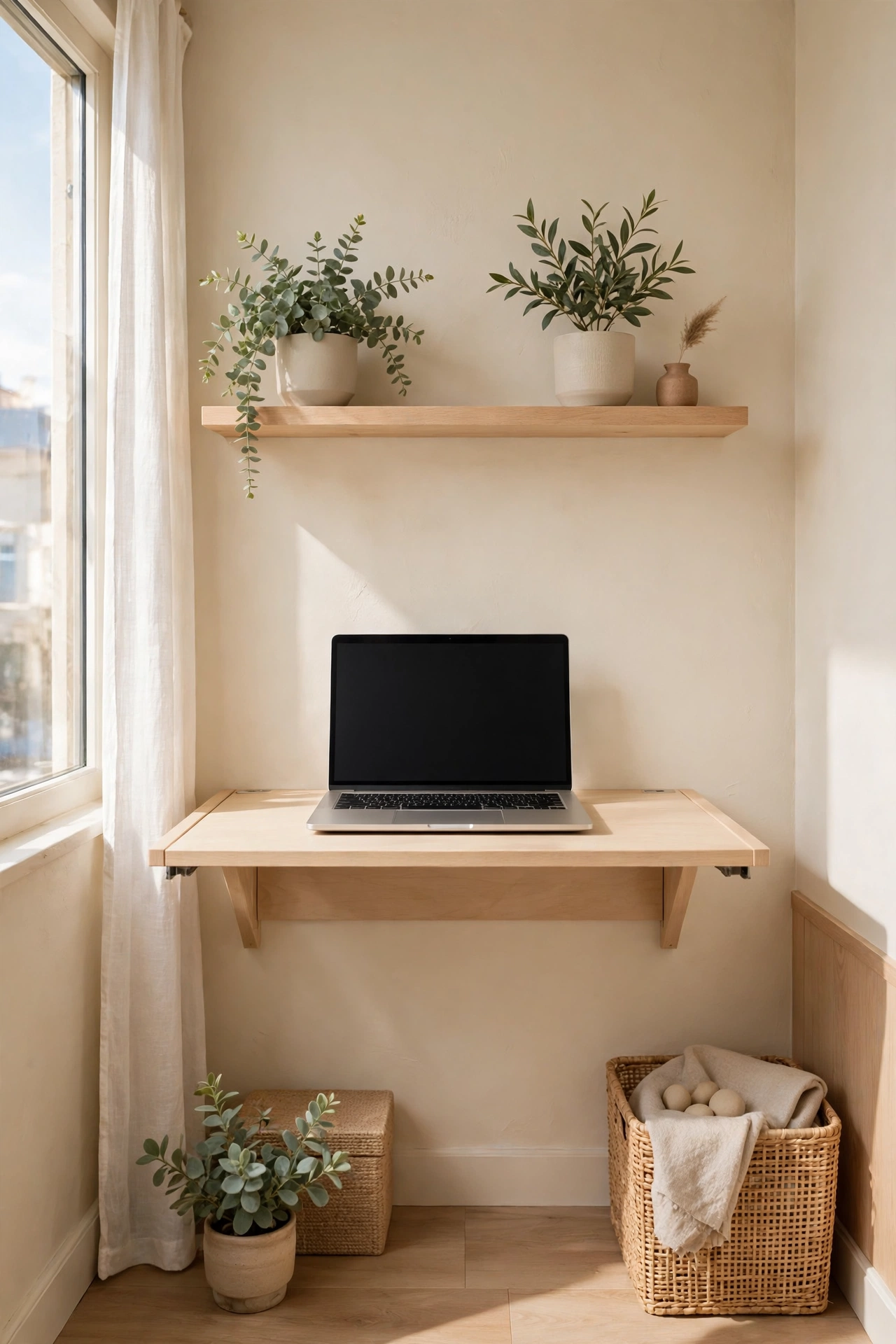
14. Roll a Kitchen Cart Into an Island
Small kitchens rarely have room for a fixed island, but a rolling cart gives you the same counter space on demand. A butcher-block cart with a shelf and a drawer adds prep space, holds pots and pans below, and rolls against the wall when you need the floor back. Choose one with locking casters so it stays put while you chop, and a top that overhangs slightly so two stools can tuck underneath for breakfast. A cart with a drop leaf doubles its surface when guests come over. Stainless steel or light wood keeps the look airy; avoid dark, heavy carts that visually shrink the kitchen. For more kitchen storage thinking, see our peel and stick backsplash ideas, which refresh a small kitchen without a renovation.
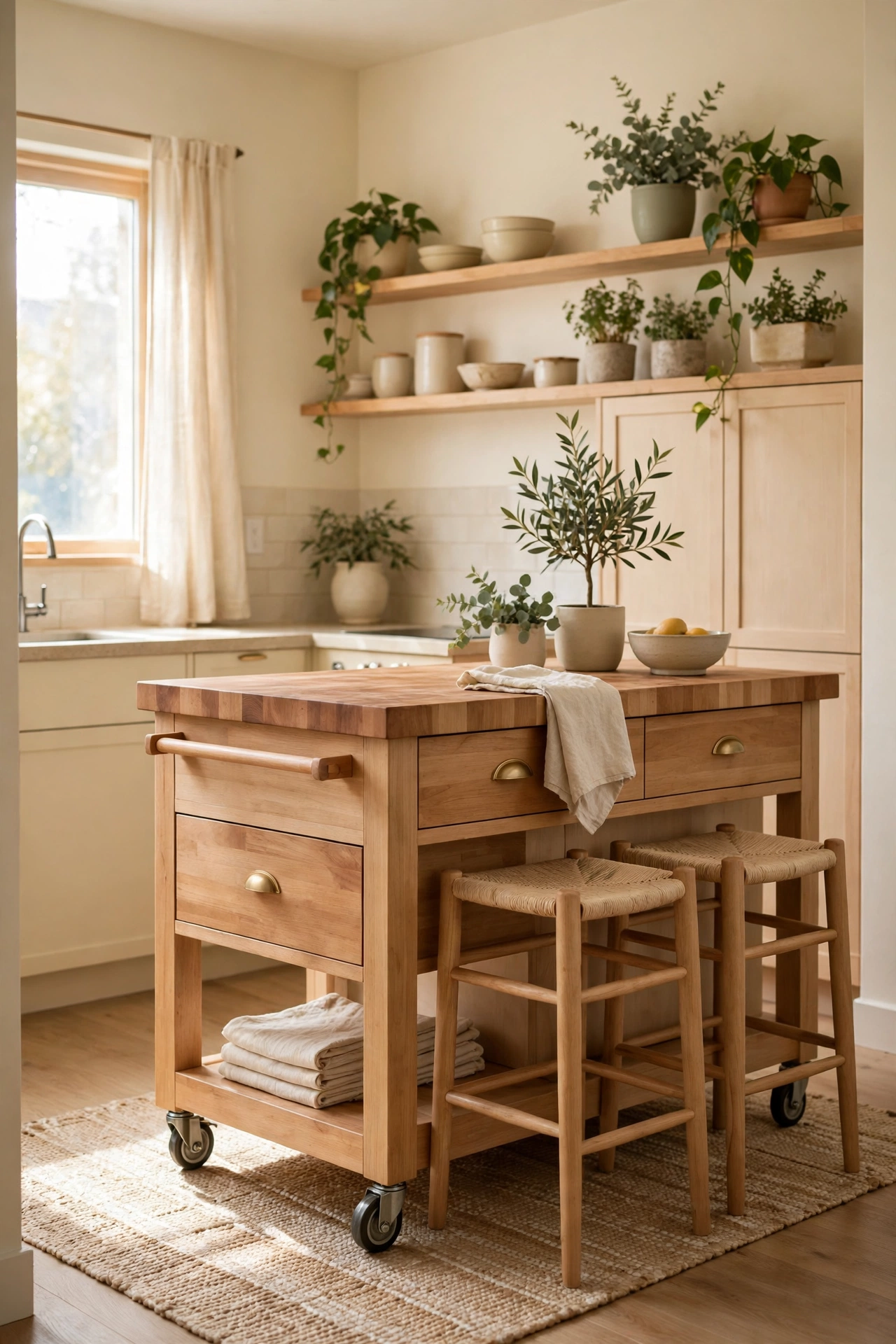
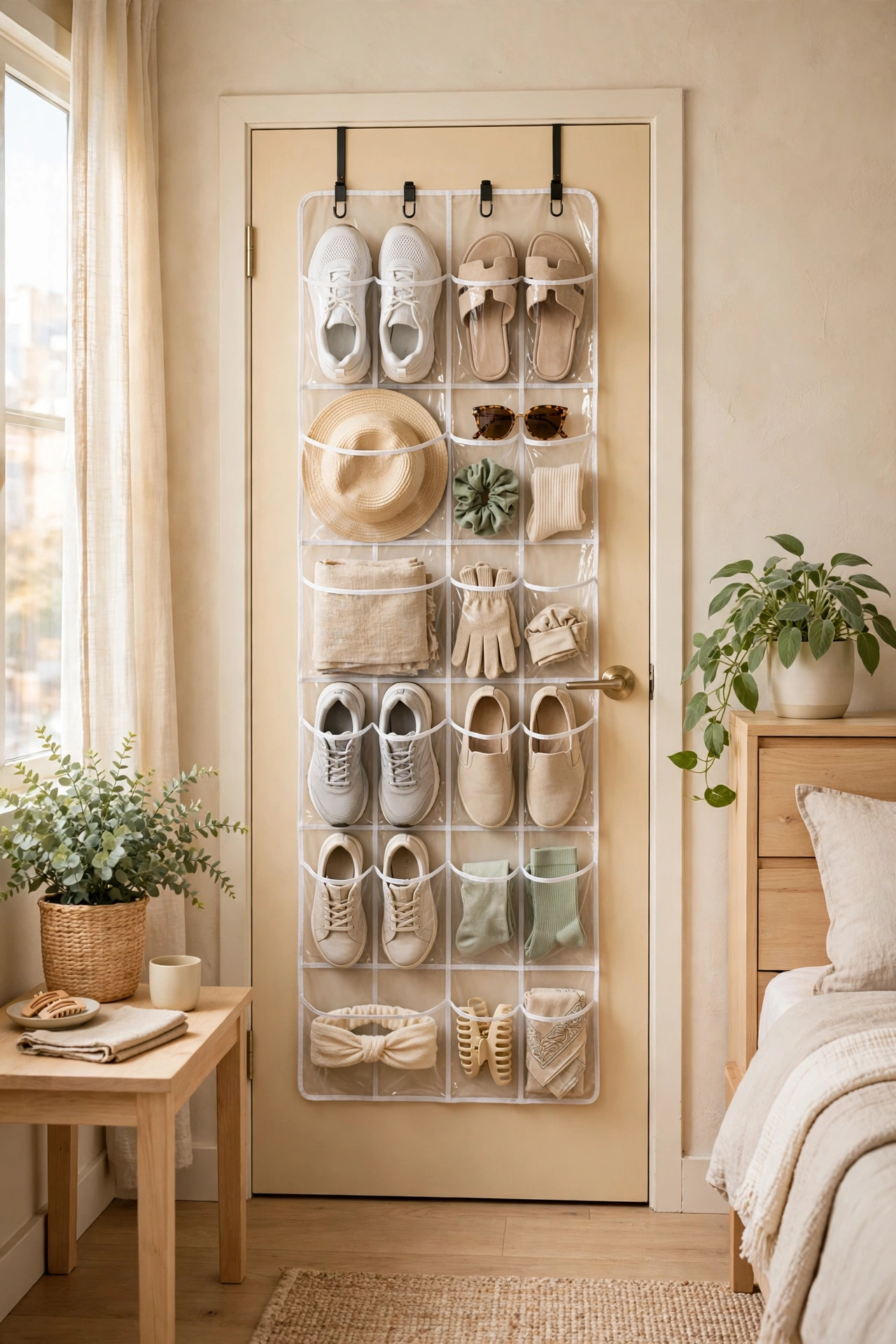
15. Use Over-Door Organizers Everywhere
The back of a door is free real estate in a small apartment, and over-door organizers turn it into a pantry, a shoe rack, or a cleaning closet. A clear-pocket organizer on the pantry door holds spices, snacks, and small packets; the same organizer on a bedroom door holds shoes, scarves, and accessories. Over-door hooks take coats, bags, and tomorrow’s outfit without a single screw. Choose slim organizers that let the door close fully — if the door does not latch, the organizer is too thick. This is a renter’s best friend because nothing is drilled, nothing is permanent, and the whole system moves with you to the next apartment.
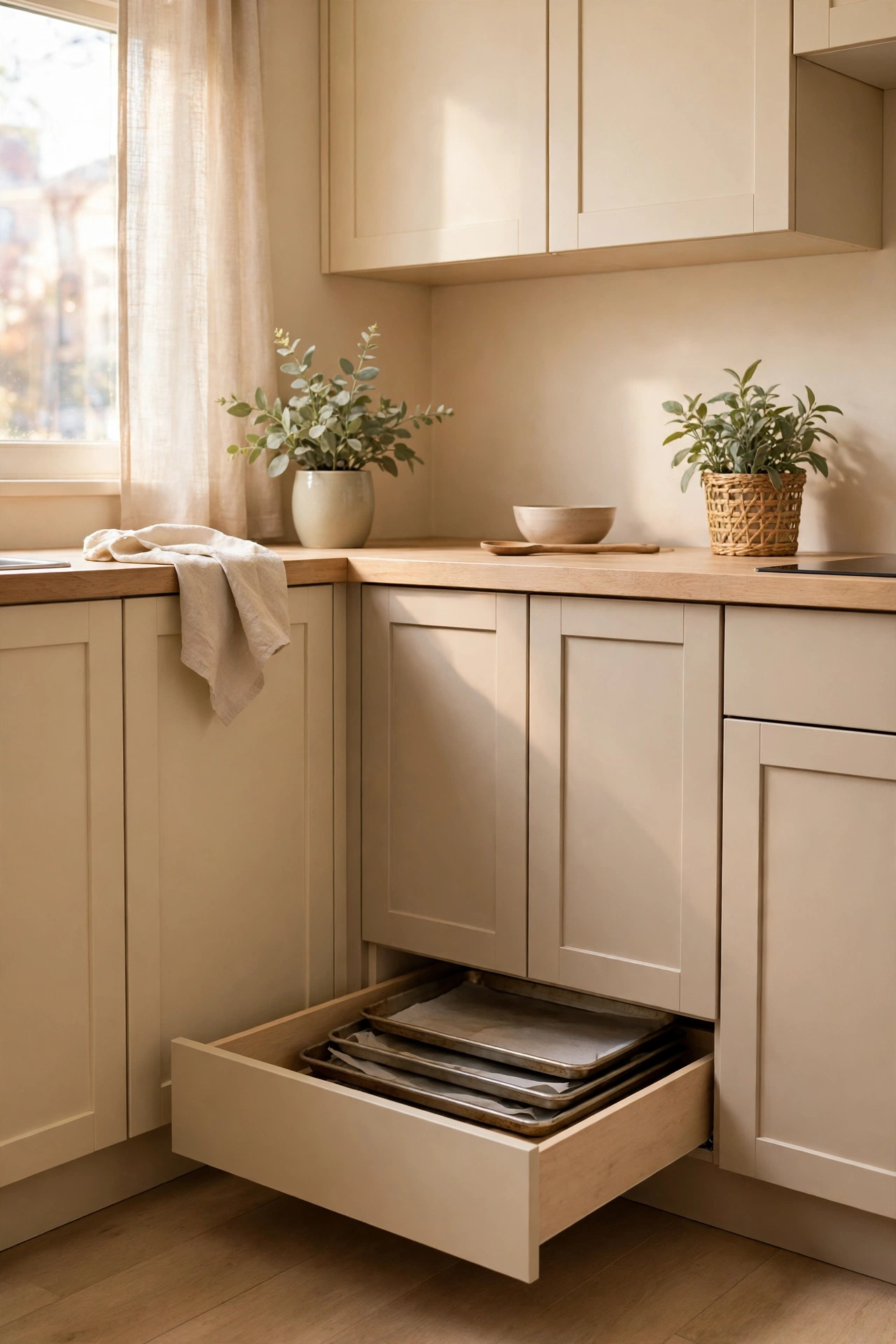
16. Add Toe-Kick Drawers in the Kitchen
The four-inch strip under your kitchen cabinets is dead space in almost every apartment, and toe-kick drawers turn it into storage for the flat things that never have a home: baking sheets, cutting boards, placemats, and serving trays. The drawers pull out with a toe tap and slide back flush, so they never get in the way of cooking. They are a bigger job than most ideas here — they usually need a carpenter or a confident DIY install — but in a tiny kitchen, one bank of toe-kick drawers can hold everything that currently lives in a pile on top of the fridge. If you cannot modify the cabinets, a slim rolling cart that slides into the same gap achieves a similar result with zero tools.
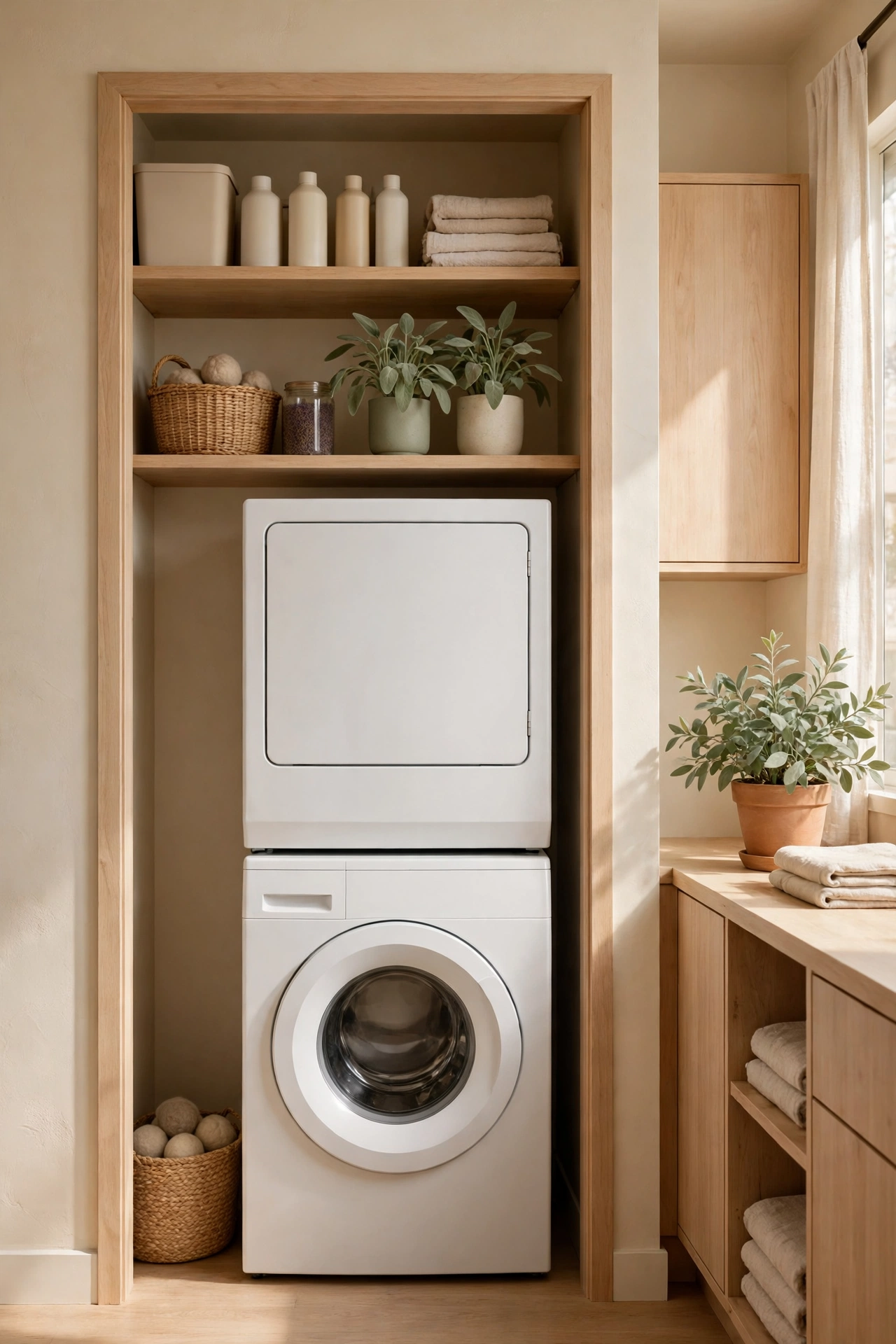
17. Stack the Washer and Dryer in a Closet
A full-size washer and dryer side by side can eat an entire wall of a small apartment, but stacked in a closet they take up half the footprint. A stacking kit turns two machines into one tall unit, and a louvered or bifold door hides them while letting heat and moisture escape. Use the wall above the machines for detergent shelves and a folding rod, and the closet becomes a complete laundry station. If your building has a shared laundry room instead, the same closet can hold a slim rolling laundry cart, a drying rack, and cleaning supplies. Our laundry room ideas cover the full layout, including stacked setups and closet conversions, if you want to plan the whole space.
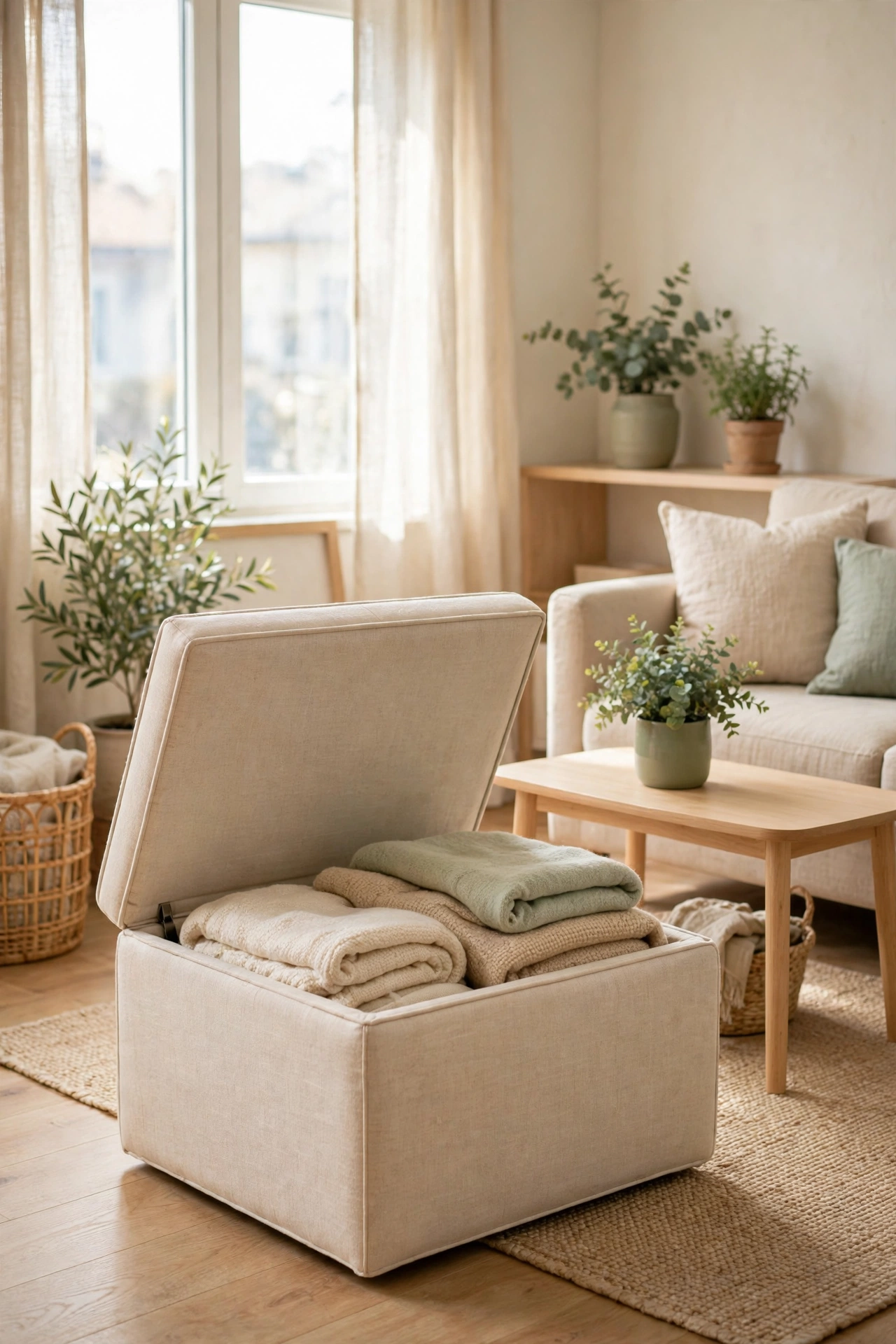
18. Choose a Storage Ottoman, Not a Coffee Table
A coffee table holds a mug and a book; a storage ottoman holds a mug, a book, blankets, board games, and the remote controls. Swap the table for a firm-topped ottoman and you gain a hidden storage box in the middle of the room, plus extra seating when friends visit and a footrest at the end of the day. Pick one with a flat, sturdy lid so it can still hold a tray and a drink, and a washable fabric if you have kids or pets. Two small ottomans instead of one large one are even more flexible — push them together as a table, pull them apart as seats. It is the easiest furniture swap on this list, and it removes an entire category of clutter from the living room.
19. Use Nesting Tables Instead of One Big Side Table
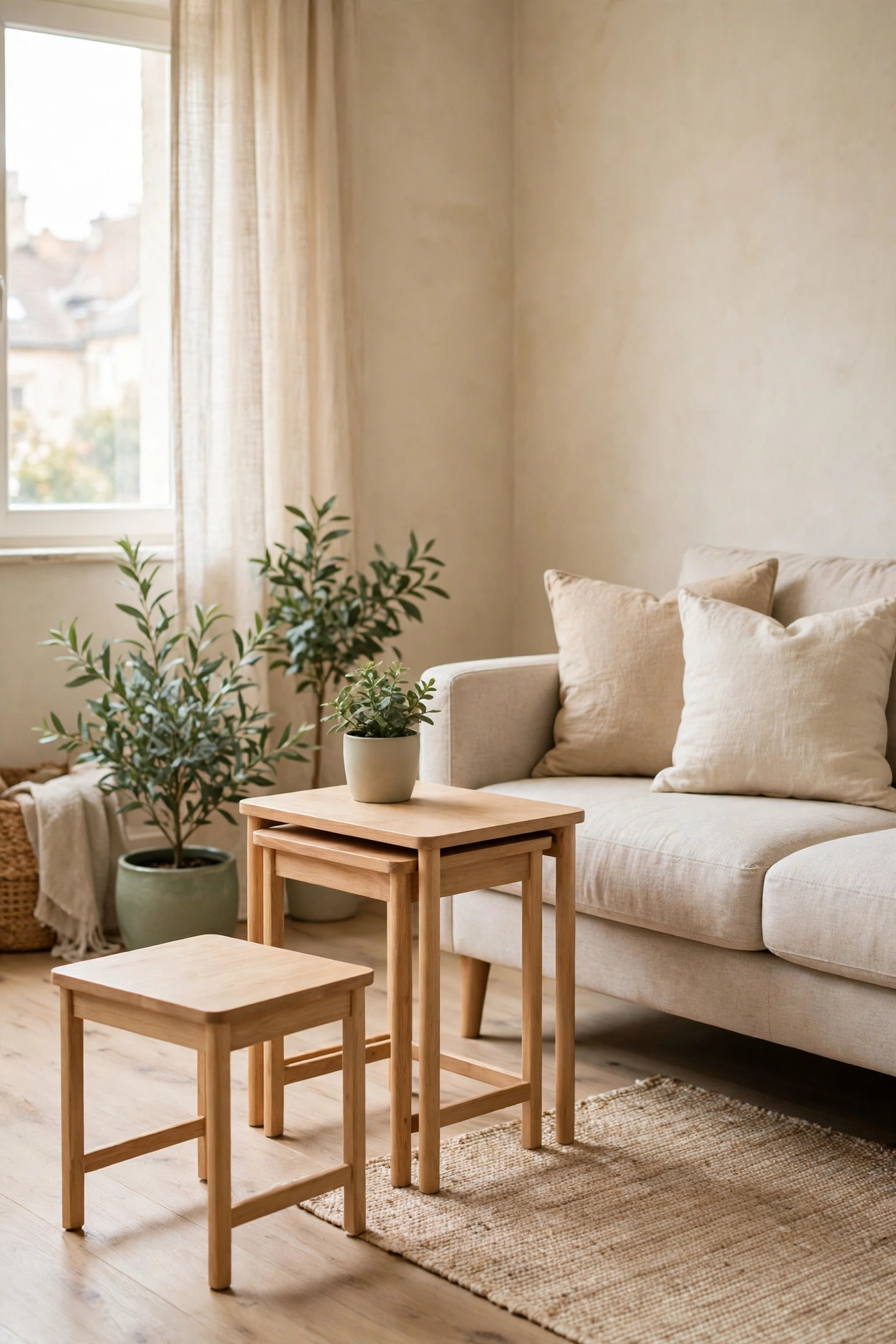
Nesting tables are the shapeshifters of small-space furniture: stacked, they take the footprint of one small side table; pulled apart, they become a coffee table, a laptop stand, and a drink table for three guests. Keep the set beside the sofa, and when someone visits, slide one out to their chair. When the room needs to breathe, tuck them back together. Choose a set with mixed heights so the smaller table slides fully under the larger one, and a light material — glass, thin metal, or pale wood — so the cluster does not look heavy. They are also the cheapest way to add surfaces to a room that has no room for a console or a second side table.
20. Mount the TV on the Wall and Skip the Console
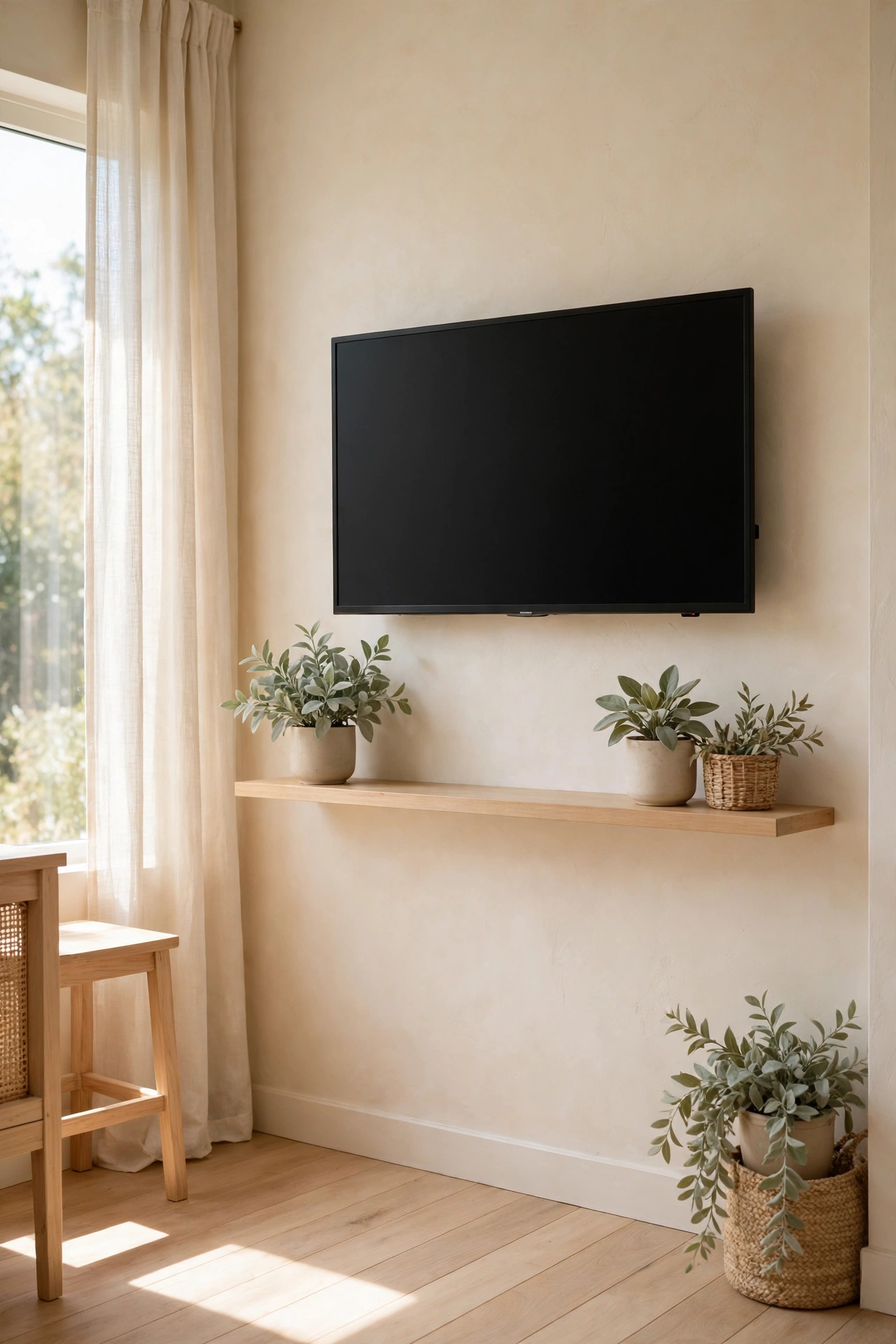
A TV console is a wide, low piece of furniture that holds a screen and a tangle of cables. Mount the TV on the wall and the console disappears: the screen floats at eye level, the floor underneath stays open, and the room instantly feels wider. Run the cables through a paintable cord cover or a recessed channel, and mount a slim floating shelf below the screen for the streaming box and the soundbar. The space under the TV can hold a plant, a small bench, or nothing at all — and nothing at all is often the right answer. Wall-mounting is renter-friendly with a no-drill mount rated for your TV’s weight, or a single stud mount with two small holes to patch later.
21. Put a Pegboard on the Wall
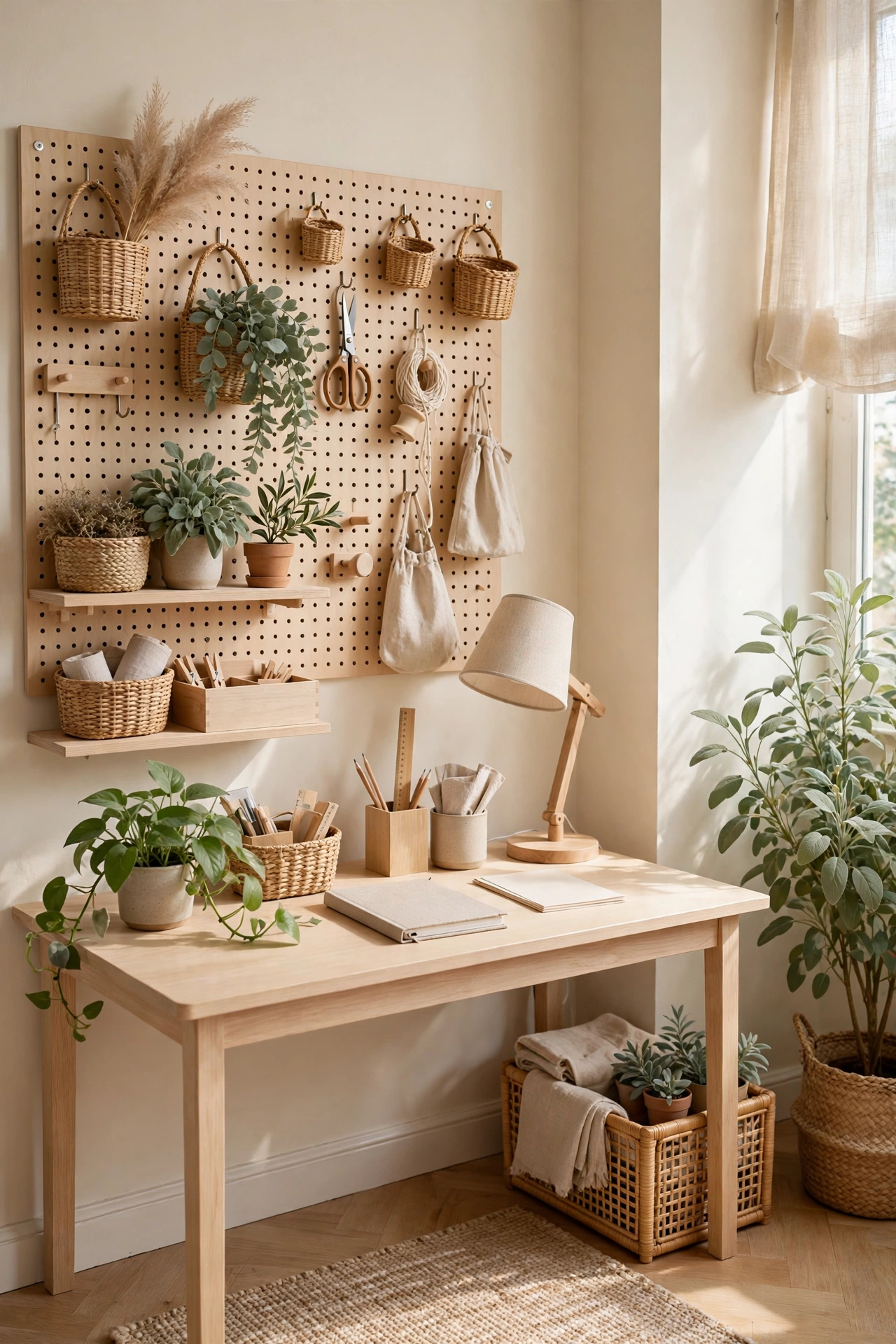
A pegboard turns a blank wall into a storage system you can rearrange whenever your life changes. Hooks hold kitchen tools, baskets hold office supplies, shelves hold plants and books — and everything is visible, so you actually use it. In a small kitchen, a pegboard beside the stove replaces a whole drawer of utensils. In a work corner, it holds headphones, cables, and notebooks. In an entryway, it is a coat rack, a key hook, and a mail slot in one. Paint the board the same color as the wall and it blends in; paint it a bold accent and it becomes art. The best part is that the system grows with you: add a hook, move a shelf, and the wall adapts.
22. Use Clear Furniture to Keep Sightlines Open
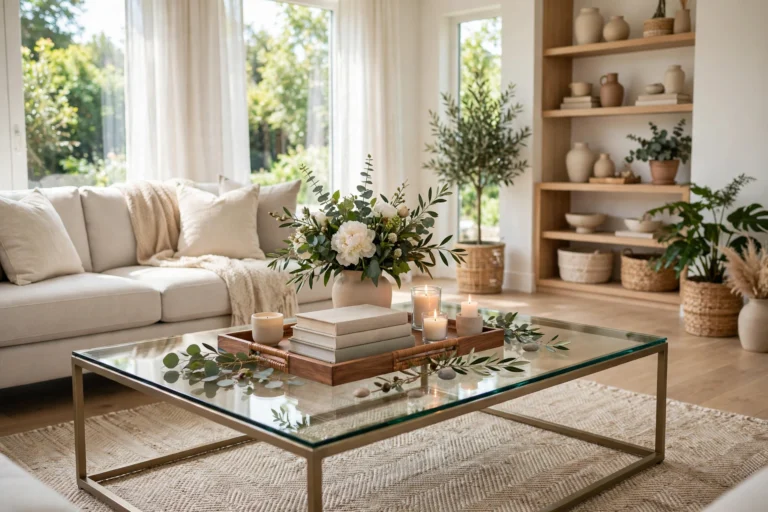
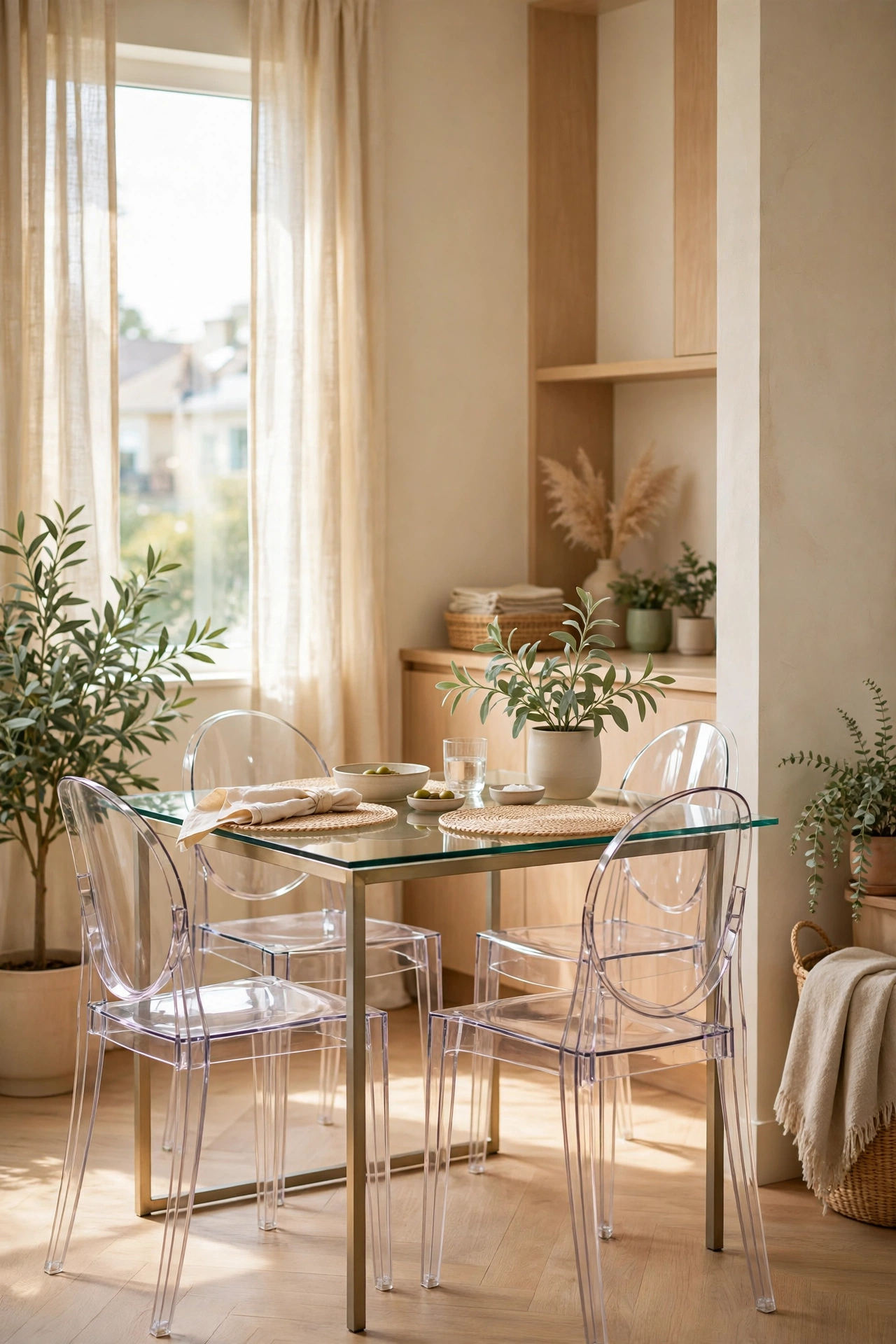
Every solid piece of furniture is a visual wall, and in a small room those walls add up fast. Clear acrylic or glass furniture — a ghost chair, a glass coffee table, a lucite console — gives you the function without the visual weight, because your eye travels straight through it to the wall beyond. The room reads larger because you can see more of it. Use clear pieces where the eye naturally travels: a dining chair, a side table, a desk chair. Mix them with solid, warm pieces like wood and fabric so the room does not feel cold or showroom-like. A quick wipe with glass cleaner keeps them invisible; fingerprints are the only maintenance.
23. Keep the Palette Light and Add One Bold Accent
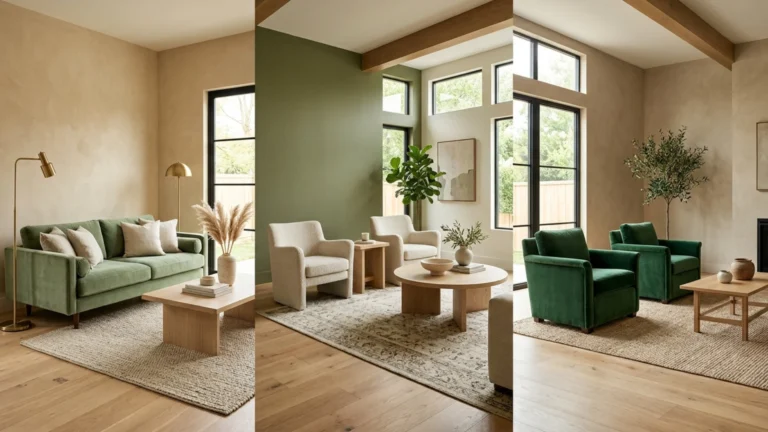
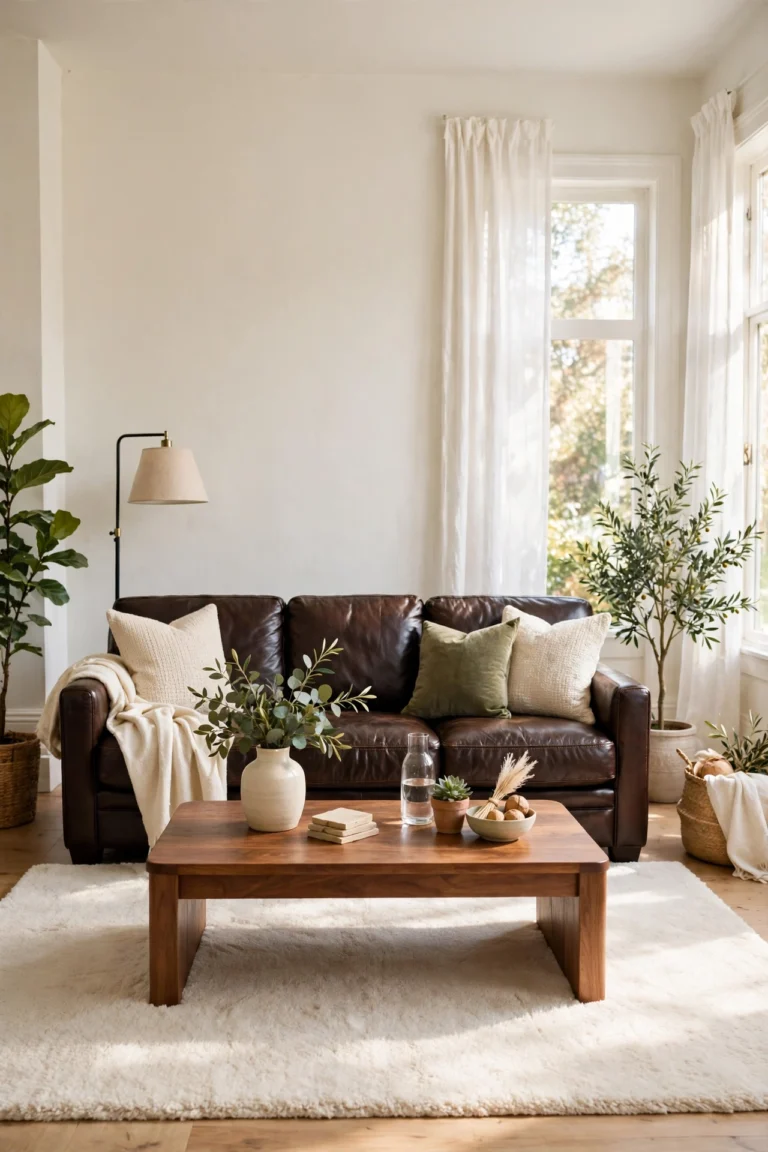
Light walls, light floors, and light furniture reflect daylight and make a small apartment feel open, but an all-white room can feel like a waiting room. The fix is one bold accent repeated three times: a deep green sofa, a matching green throw, and a green vase on the shelf, for example. The repetition makes the accent feel intentional rather than random, and the light background keeps it from overwhelming the room. Warm whites and pale neutrals work better than stark white, which can feel cold under apartment lighting. If you rent and cannot paint, the same effect comes from bedding, curtains, and a rug in your light base color with the accent in cushions and art. For color inspiration in a single room, our dark brown couch living room ideas show how one strong piece anchors a whole palette.
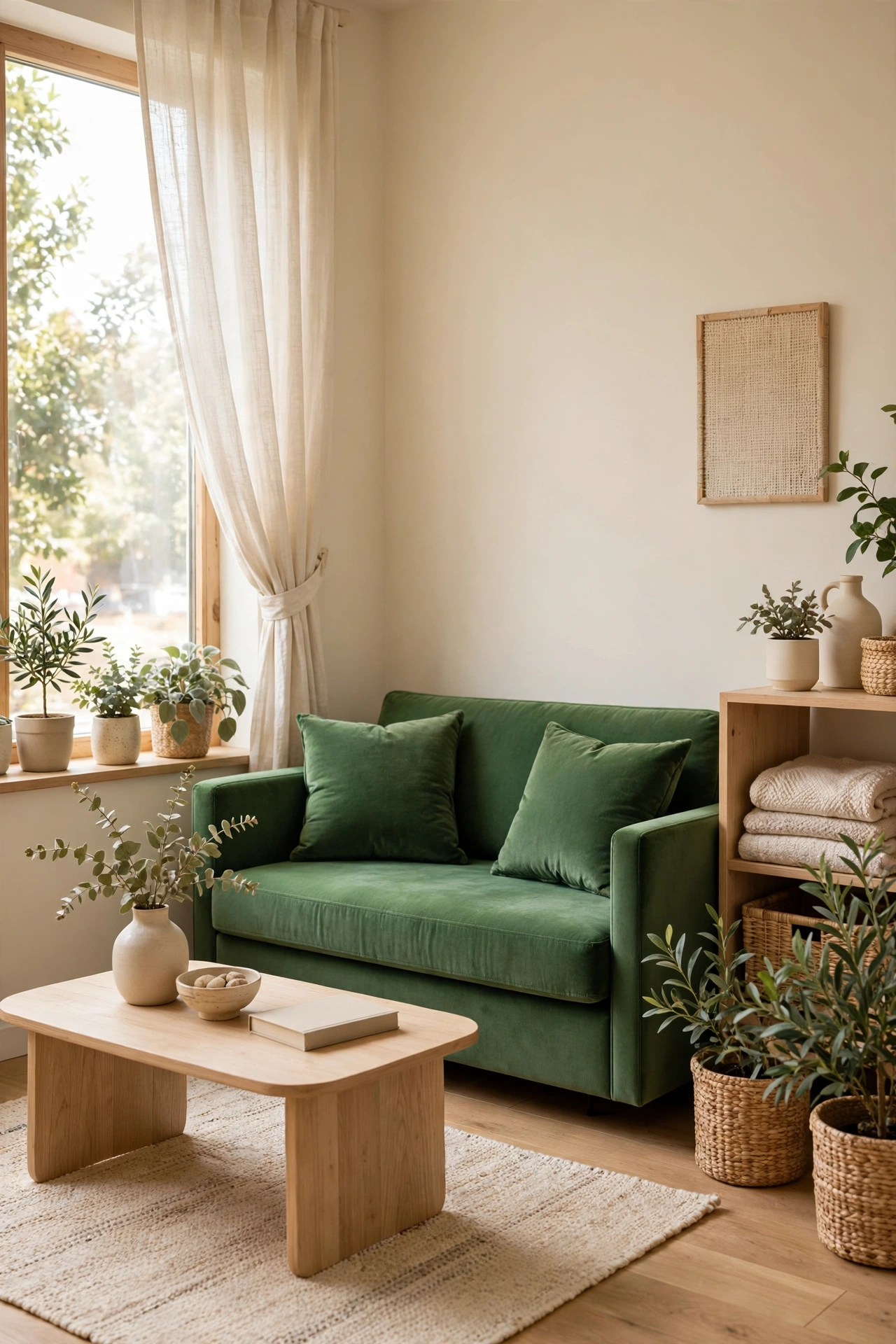
24. Layer the Lighting and Skip Floor Lamps
One ceiling light makes a small apartment feel flat, and floor lamps eat the floor space you are trying to save. Layer three kinds of light instead: a ceiling fixture for general light, wall sconces or plug-in picture lights for warmth, and a small table lamp or two for reading corners. Sconces are the secret weapon — they mount on the wall, free the floor, and throw a soft glow that makes the room feel taller. Add dimmers wherever you can, and use warm bulbs around 2700K so the light feels like home, not an office. A mirror opposite the window, from idea 9, multiplies all of it. The result is a room that feels bigger at night than it does at noon.
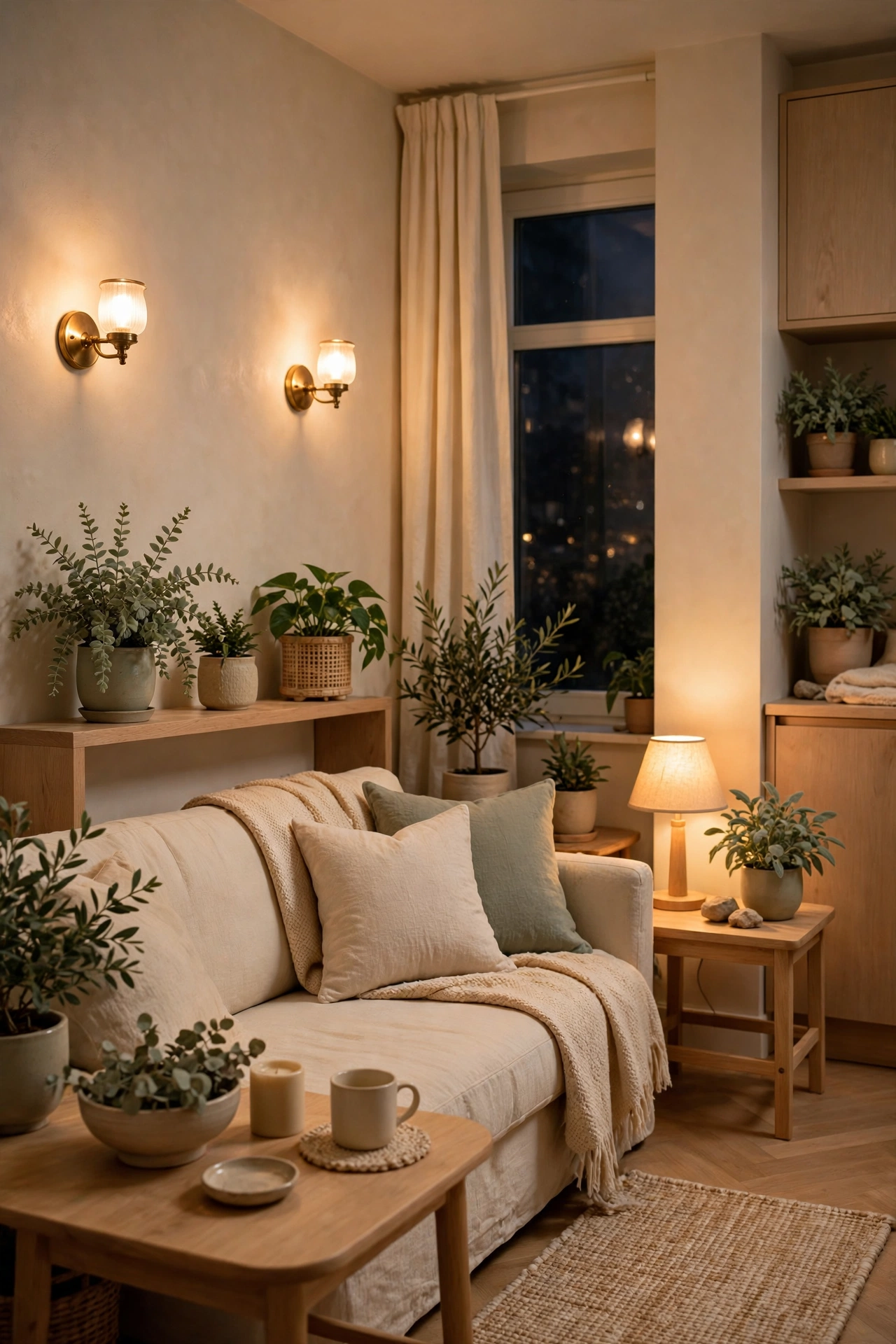
25. Hang a Ceiling-Mounted Curtain as a Divider
A curtain on a ceiling track is the most flexible room divider a renter can install: closed at night it gives the bedroom privacy, open by day it lets light and air flow through the whole apartment. Mount a ceiling track or a tension wire across the room, choose a fabric that matches the walls so the divider disappears when open, and add a tie-back so the curtain gathers neatly to one side. Sheer linen keeps the light while softening the view; a heavier weave gives real privacy and muffles sound. Unlike a folding screen, a curtain divider costs little, stores flat, and leaves no marks when you take it down. It is the classic studio solution for a reason.
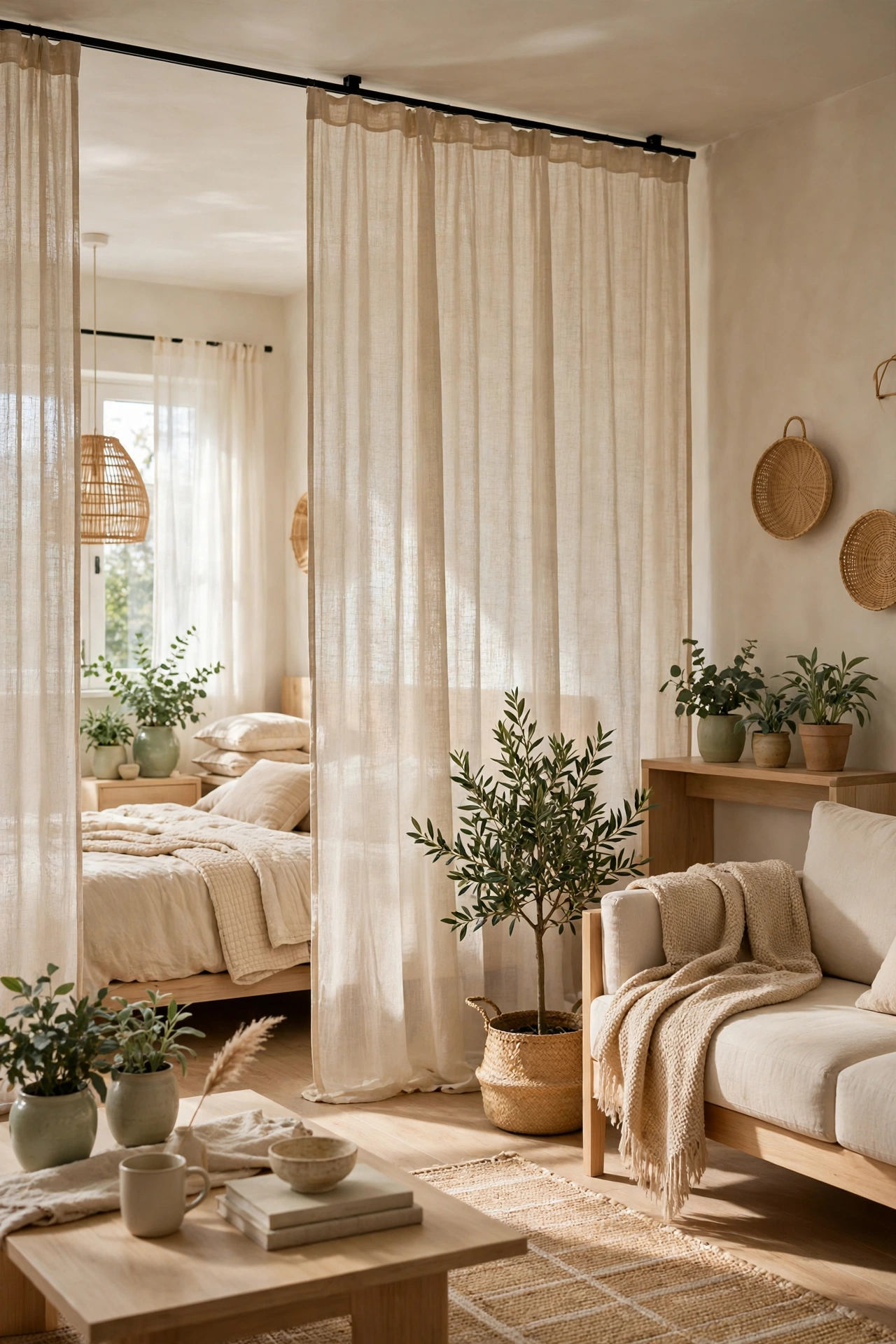
26. Replace Swinging Doors With Sliders
A swinging door needs a full arc of clear floor to open, and in a small apartment that arc is often the most useful square footage in the room. A sliding barn door on an exposed rail, or a pocket door that disappears into the wall, gives that space back. The bedroom door, the bathroom door, and the closet door are the usual suspects — swapping one of them can free enough floor for a chair, a plant, or a storage piece. Barn doors are the renter-friendlier option since the rail mounts on the wall surface, and they double as a design feature in wood or painted MDF. If a full door swap is too much, even removing a closet door and hanging a curtain frees the swing space.
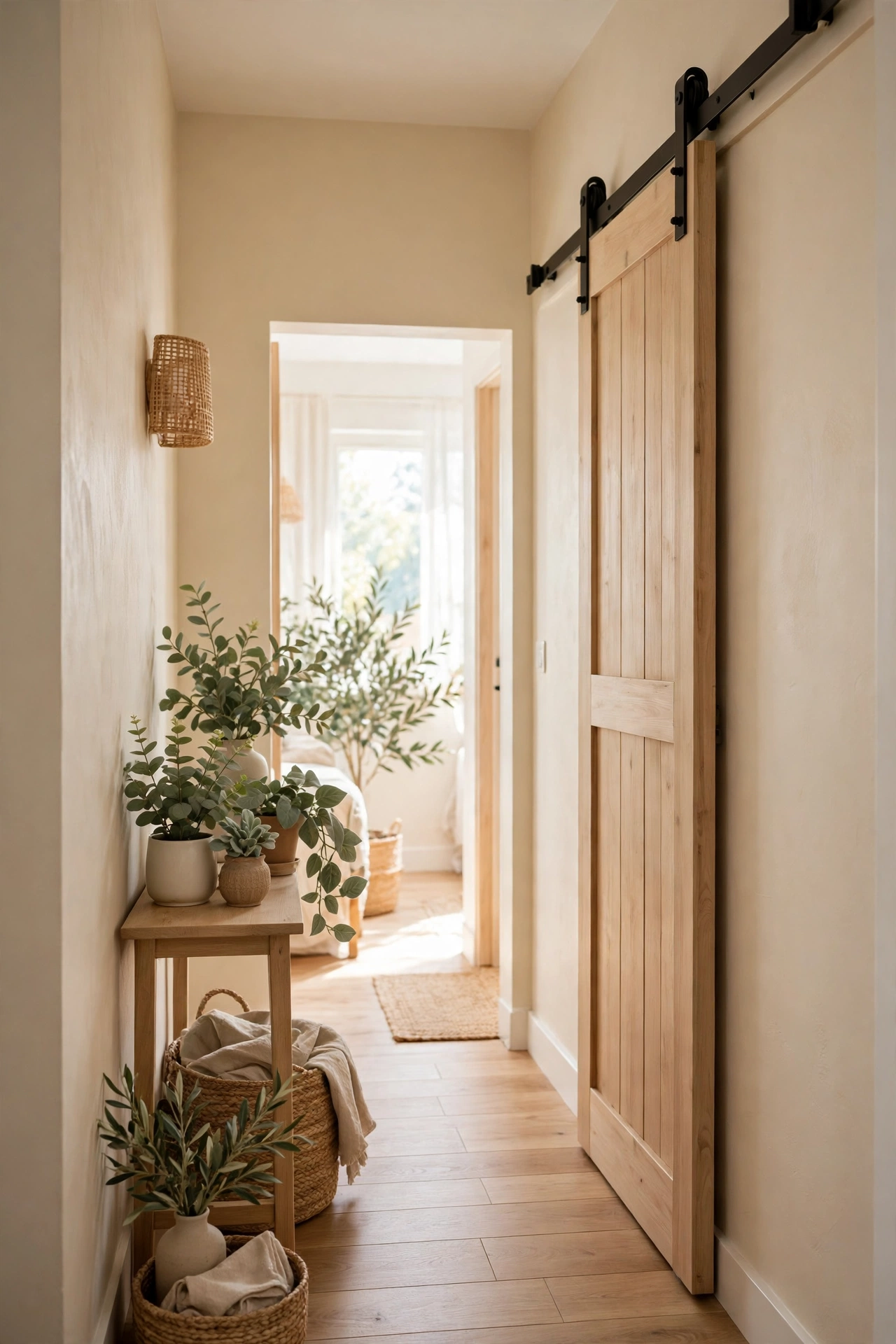
27. Build a Drop Zone by the Door
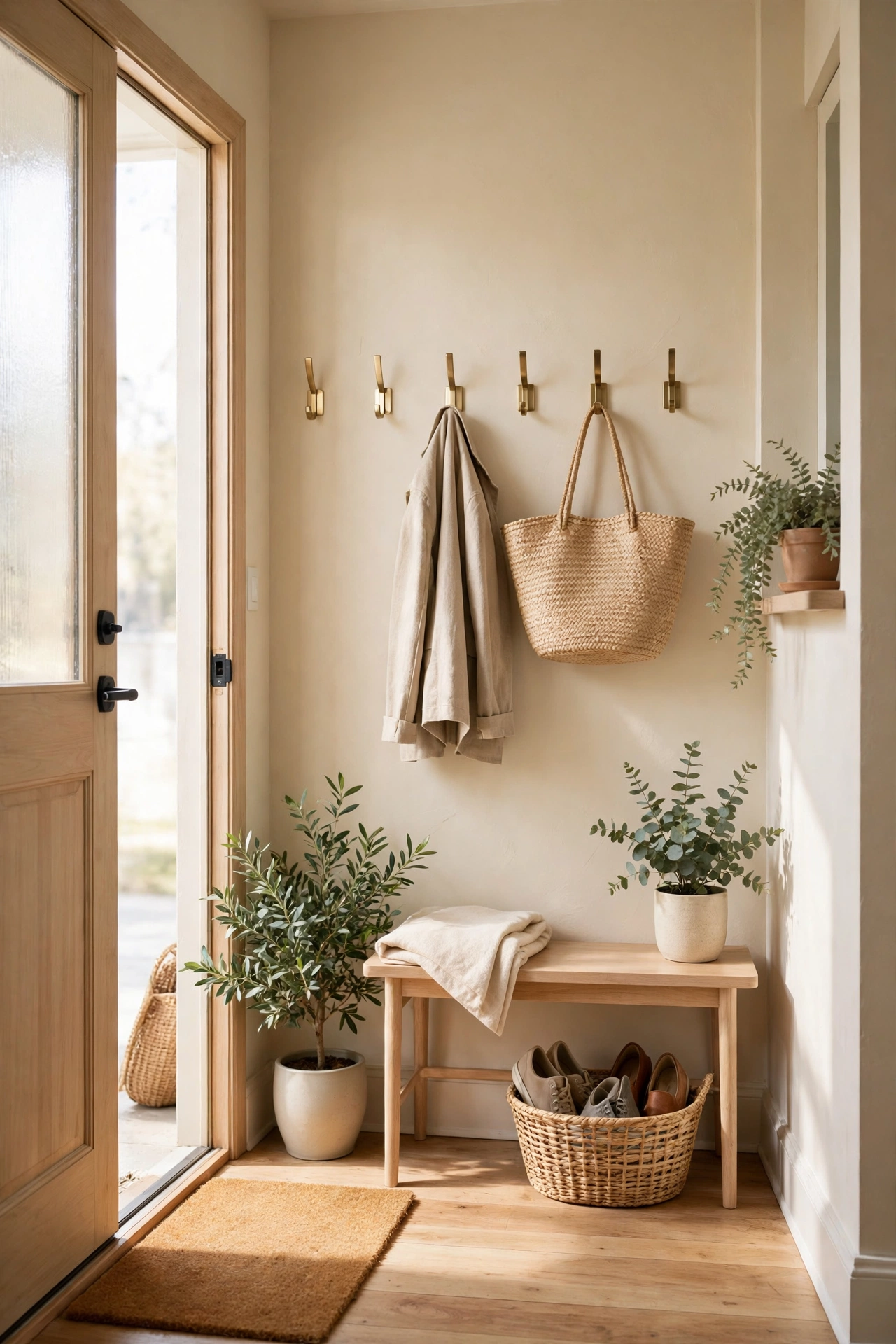
Without an entryway, keys, coats, and bags land on the nearest chair and the clutter spreads from there. A drop zone by the door stops it: a row of wall hooks at two heights, a slim bench or a floating shelf, a small tray for keys, and a basket underneath for shoes. The whole setup can fit in 24 inches of wall. Hooks at a lower height work for kids and for bags; a mirror above the shelf lets you check yourself on the way out and bounces light into the entry. Keep the zone to one wall and resist adding more furniture — the point is a landing spot, not a second closet. Our IKEA mudroom ideas are full of the same compact entryway systems, scaled for apartments.
28. Turn a Closet Into a Cloffice
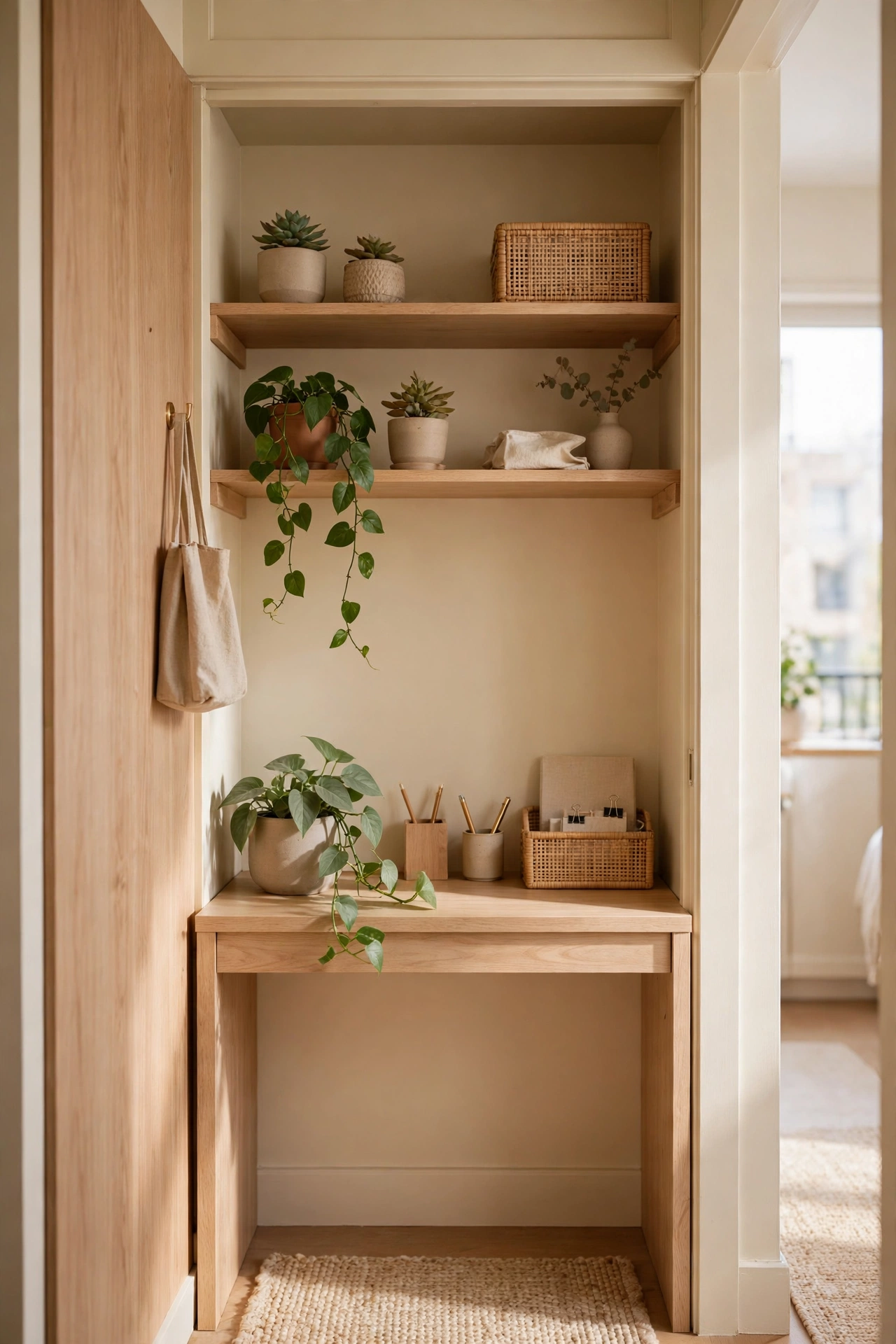
If your apartment has a closet you barely use, it might be the best home office you own. Remove the door or swap it for a curtain, add a desktop at sitting height, a shelf above for supplies, and a task light, and the closet becomes a cloffice — a tiny office that closes away at the end of the day. A folding chair that hangs on the wall beside it keeps the floor clear when you are not working. Paint the inside a light color and add a small mirror or art so the nook feels like a room, not a cupboard. When the workday ends, pull the curtain and the office disappears. For renters, a freestanding desk inside the closet achieves the same thing with zero changes to the walls.
29. Run a One-In-One-Out Rule With Seasonal Rotation
Storage only works if the amount of stuff stays constant, and the one-in-one-out rule is how you keep it that way: every new item that enters the apartment means one old item leaves — donated, sold, or recycled. Pair it with a seasonal rotation: twice a year, swap the contents of your top shelves and under-bed bins so winter coats and summer clothes trade places, and use the swap as a chance to let go of what you did not use. Labeled bins on the highest shelf hold the off-season rotation, so the swap takes an hour, not a weekend. This is not a decorating idea, it is the habit that makes all 30 decorating ideas keep working. A small apartment does not need more storage; it needs less stuff, on a schedule.
30. Grow Up, Not Out, With Hanging Plants
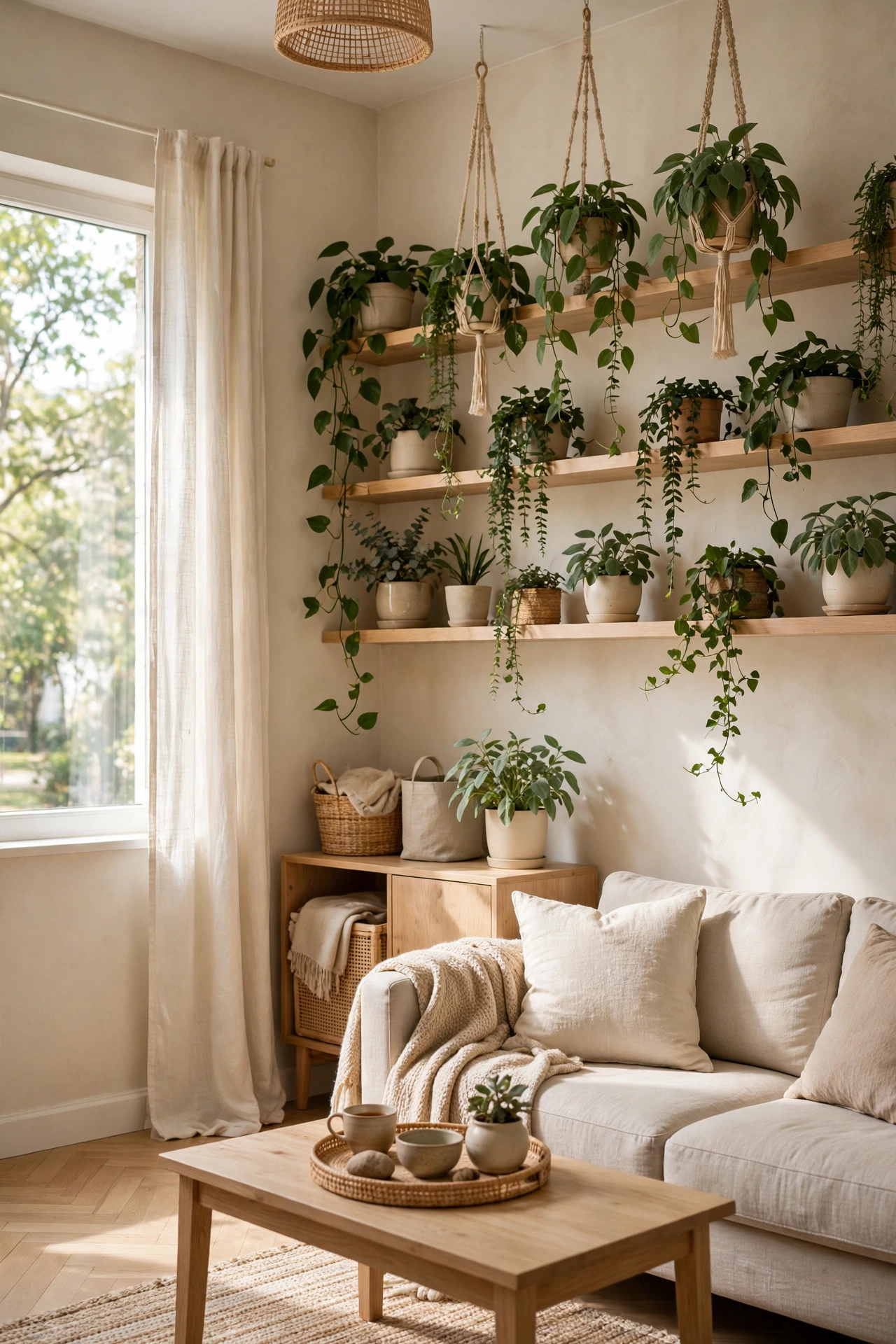
Plants make a small apartment feel alive, but pots on the floor and the windowsill eat the surfaces you need. Hang them instead: macrame hangers from ceiling hooks, a wall-mounted planter rail, or a trailing pothos on the top shelf of your bookcase. Plants at eye level and above draw the eye upward and make the ceiling feel higher, and they soften the hard edges of shelves and dividers. Choose low-maintenance varieties — pothos, spider plants, philodendron — that forgive a missed watering. Keep the count to five or six; a jungle is charming until it blocks the window. One trailing plant over the bookcase divider from idea 8 ties the whole room together.
31. Hide the Charging Station
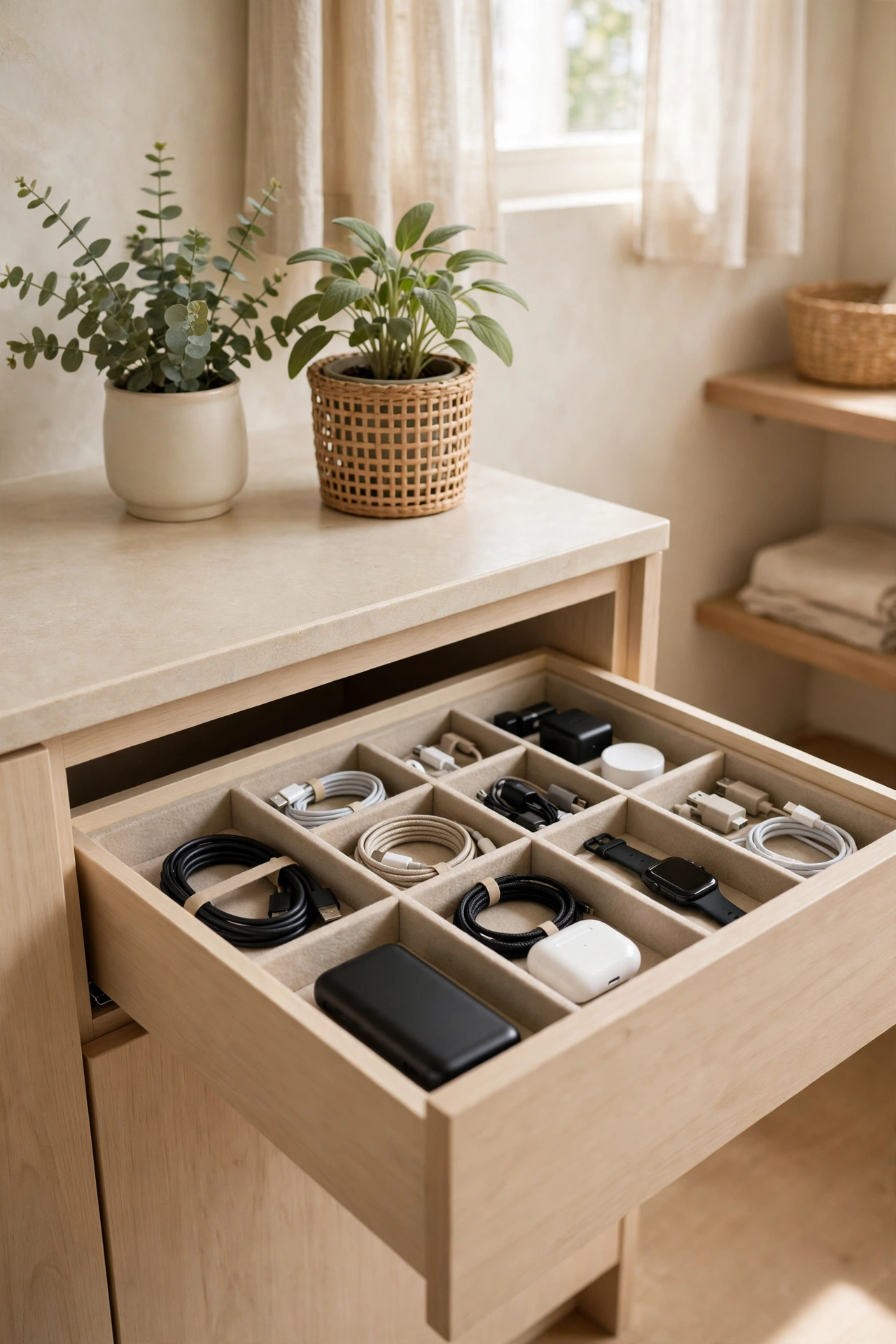
Phones, tablets, laptops, and watches each arrive with a cable, and in a small apartment those cables colonize every surface. A hidden charging station ends it: a drawer fitted with a power strip, a basket with a cable hole on the console, or a small cabinet with charging ports inside. Everything charges in one place, out of sight, and the counters stay clear. Add a cable clip under the desk and a short-cable rule — no cable longer than it needs to be — and the tangle never comes back. It is a small, unglamorous fix, and it is the one guests notice most, because a clear counter reads as a calm home.
Frequently Asked Questions
How do I make my small apartment feel bigger without renovating?
Start with layout and light: float the furniture off the walls, hang the biggest mirror opposite the window, and mount curtains at ceiling height. Those three changes cost almost nothing and make the room feel larger the same day. Then add one storage win, like under-bed rolling bins or a storage ottoman, so clutter has somewhere to go.
What furniture works best in a small apartment?
Choose furniture that does two jobs: a daybed that is a sofa by day, a storage ottoman instead of a coffee table, nesting tables instead of one fixed side table, and a drop-leaf table instead of a full dining set. Light, leggy pieces with visible floor underneath always read smaller than heavy, solid ones.
How can I create separate rooms in a studio apartment?
Use rugs to mark zones, a tall open bookcase as a divider that lets light through, and a ceiling-mounted curtain you can close at night and open by day. Each one defines a zone without building a wall, and together they make a studio feel like a one-bedroom.
What colors make a small apartment look larger?
Light, warm neutrals — soft white, pale greige, light oak — reflect daylight and open the room up. Add one bold accent color repeated in three places so the room has personality without feeling busy. Dark colors work as a single accent wall or a single piece of furniture, not as the whole palette.
How do I store things in an apartment with no storage?
Use the walls and the dead spaces: shelving to the ceiling, the space under the bed, over-door organizers, toe-kick drawers, and the back of the entry door. Keep the one-in-one-out rule so the amount of stuff never grows faster than the storage.
Are these small apartment ideas renter-friendly?
Most of them are. Floating furniture, mirrors, rugs, rolling carts, over-door organizers, storage ottomans, and the one-in-one-out rule need no drilling at all. The few that do — a drop-leaf table, a wall-mounted TV, a ceiling curtain track — use a handful of small holes that patch easily when you move out.
Conclusion
A small apartment rewards intention more than square footage. Float the furniture, let the light travel, give every zone a job, and hide the storage in the walls, under the bed, and behind closed doors. You do not need all 31 ideas — pick the three that fix your biggest frustration, live with them for a week, and add the next three. Within a month, the same apartment will feel calmer, larger, and unmistakably yours. The best small apartments are not the ones with the least stuff; they are the ones where every single thing has a reason to be there.