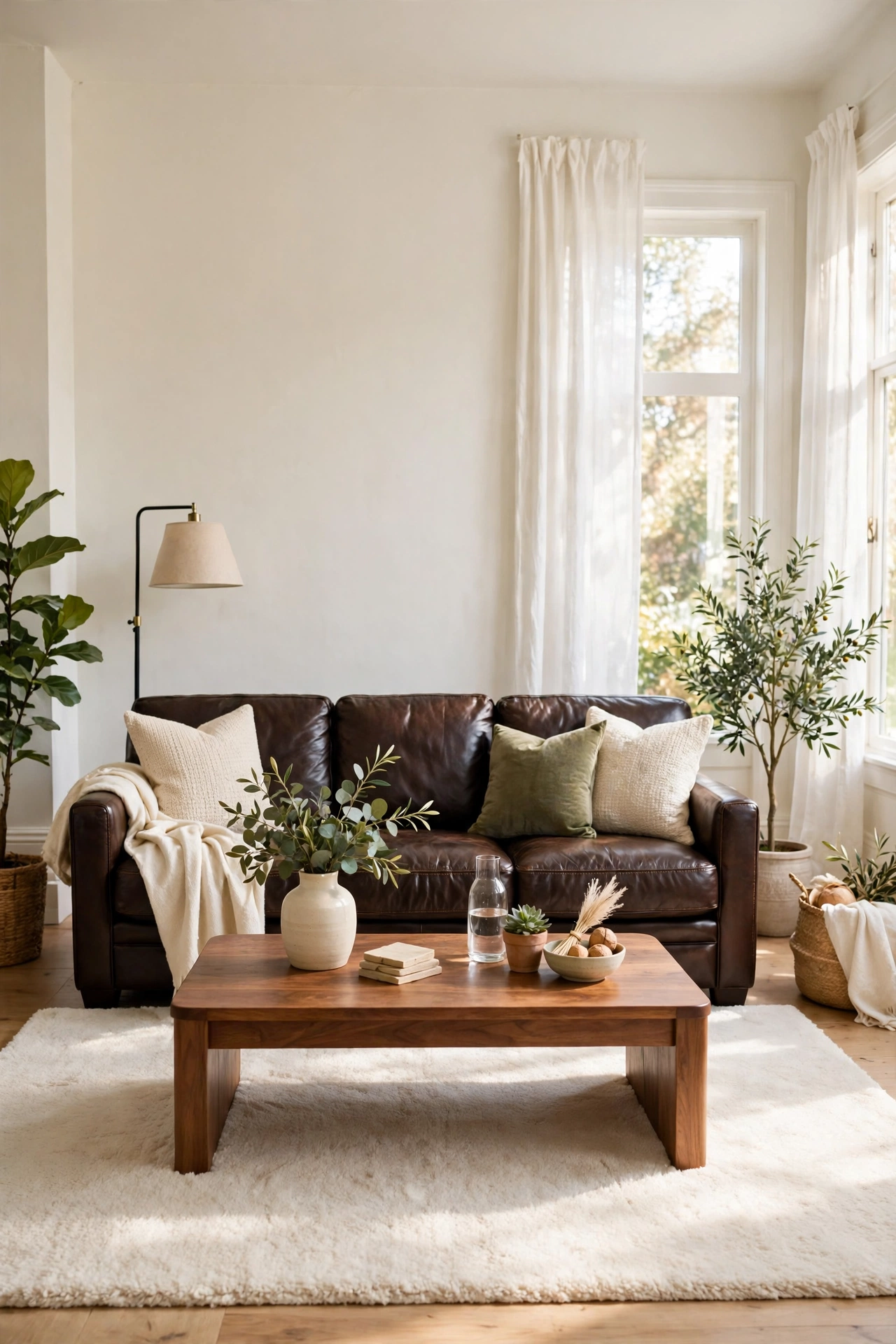
35 Dark Brown Couch Living Room Ideas for a Warm, Grounded Space
35 Dark Brown Couch Living Room Ideas for a Warm, Grounded Space
A dark brown couch is one of the most forgiving pieces of furniture you can own. It hides stains, grounds a room, and works with almost any style — from rustic farmhouse to clean modern. The catch is that brown is heavy. Left alone in a dark room with dark walls and dark floors, a brown couch can swallow the light and make the whole space feel smaller than it is. The fix is not to replace the couch; it is to build contrast around it. Pale walls, a light rug, warm wood, brass, plants, and the right lighting turn that same couch into the warm, confident anchor of the room. This guide walks through 35 ideas that cover the whole living room — walls, rugs, pillows, furniture, metal, texture, layout, light, and seasonal styling. Every idea works on its own, and together they give you a complete system for making a dark brown couch look intentional instead of accidental.
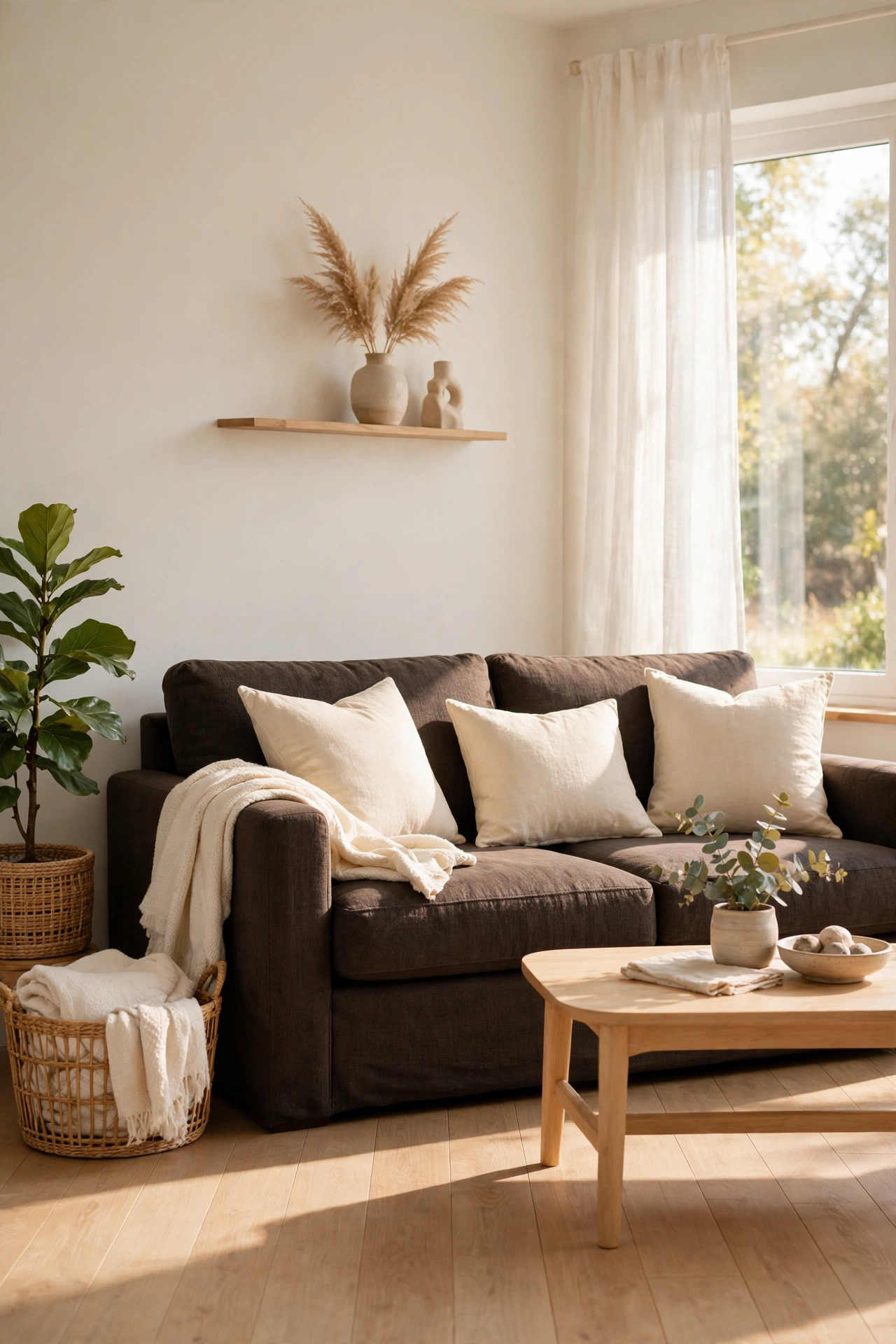
1. Start with Pale Walls for Instant Contrast
The single most effective change you can make around a dark brown couch is to lighten the walls behind it. Pale walls — warm white, soft ivory, or a light greige — create immediate contrast, so the couch reads as a deliberate anchor instead of a dark mass. The contrast also makes the room feel bigger, because the eye travels from the dark sofa to the bright wall and back again instead of getting stuck in one dark corner. Choose a warm undertone rather than a stark cool white; brown is a warm color, and a cold blue-white wall can make it look muddy. Paint the wall behind the sofa first if you are testing the idea — that one wall does most of the work. Keep the trim a shade brighter than the walls for a crisp edge, and let the couch’s own warm tones set the palette for everything else in the room.
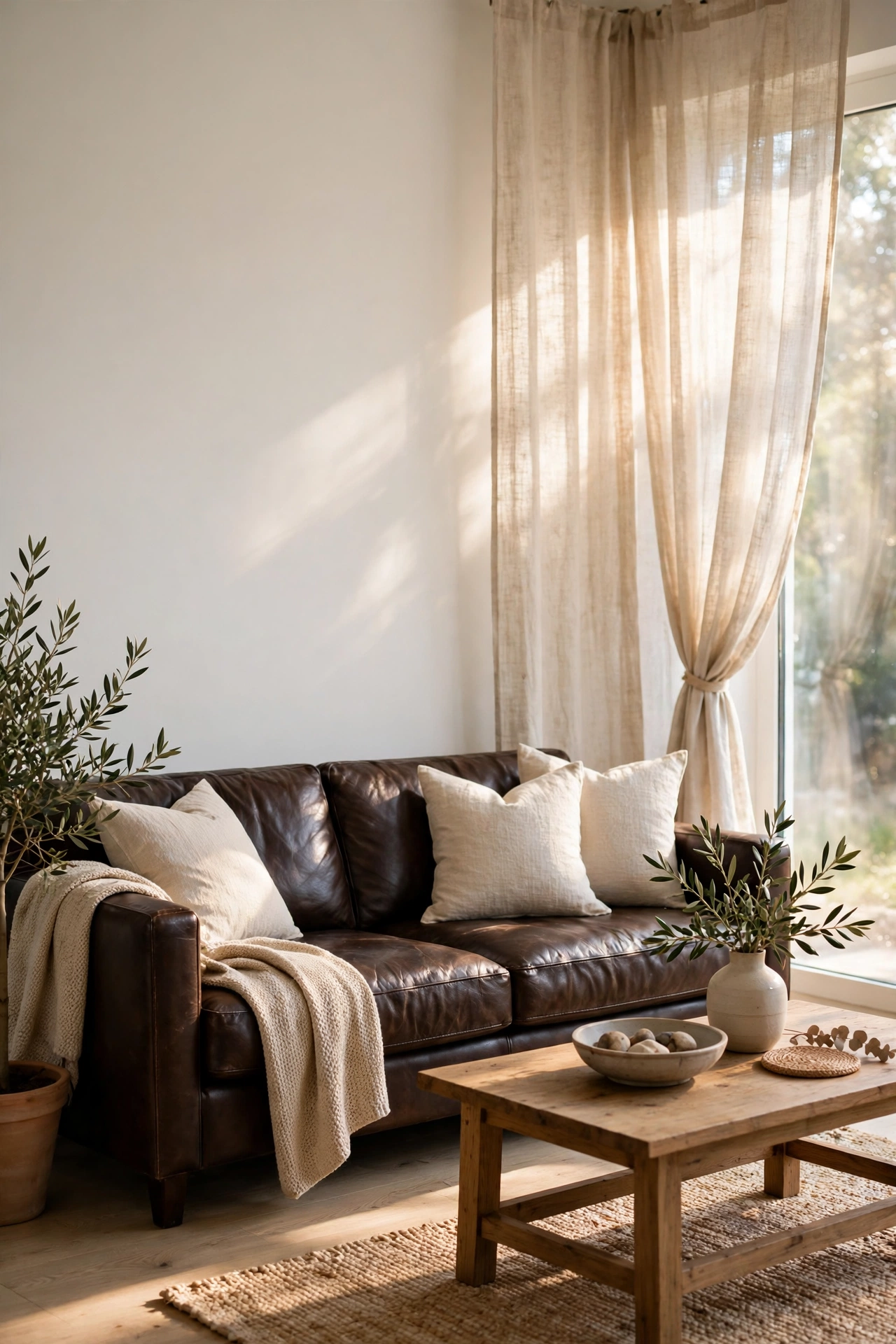
2. Pair It with Crisp White Walls and Sheer Curtains
If pale walls are the safe move, crisp white walls are the bold one. A true white wall behind a dark brown couch creates the strongest possible contrast, and it suits modern, coastal, and Scandinavian rooms especially well. The trick is softening the white so the room does not feel clinical: sheer linen curtains at the windows, a light wood coffee table, and cream textiles on the sofa itself. The curtains matter more than they seem — they filter daylight into a soft glow that warms the white walls and keeps the brown leather or fabric from looking flat. Keep the white consistent across walls and ceiling so the room feels tall, and use one warm accent — a terracotta throw, a brass lamp — to stop the palette from going cold. This is the cleanest backdrop a brown couch can have.
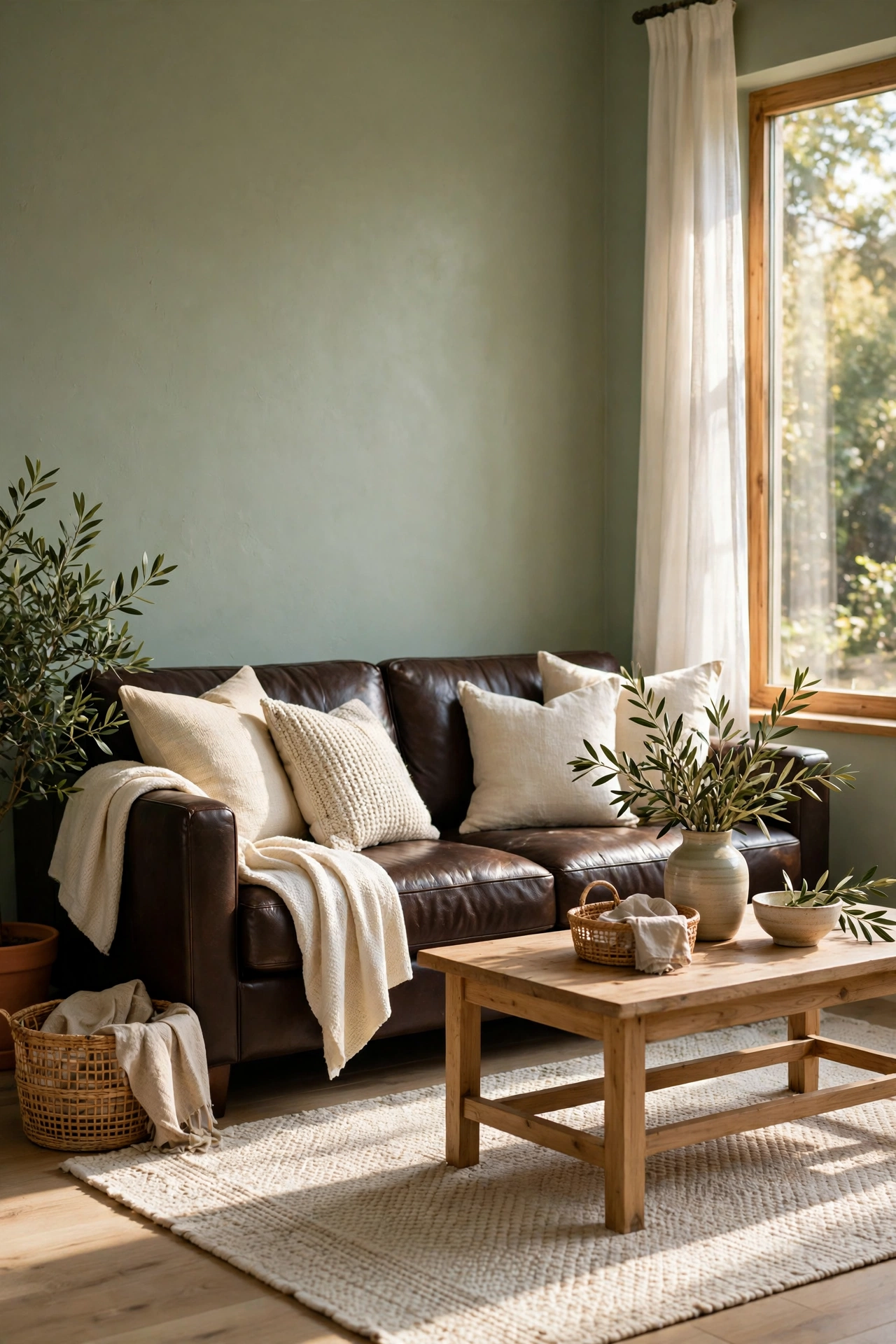
3. Try Sage Green Walls for a Calm, Earthy Backdrop
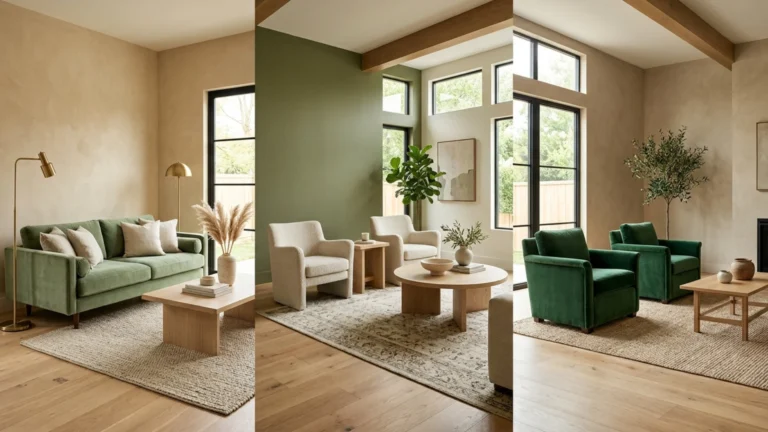
Sage green is one of the best wall colors for a dark brown couch because the two colors sit next to each other in nature — bark and leaves. A soft sage wall cools the room just enough to balance brown’s warmth without fighting it, and it makes cream pillows and light wood furniture look richer by comparison. Sage works in both small and large living rooms: in a small room it feels calm rather than closing in, and in a large room it gives the walls enough presence to hold their own against a big sofa. Pair it with cream or oatmeal textiles and a light rug so the green does not go murky. If sage feels too cool for your taste, look at the warmer olive end of the green family. Our green and beige living room ideas show how this exact palette plays out across a whole room.
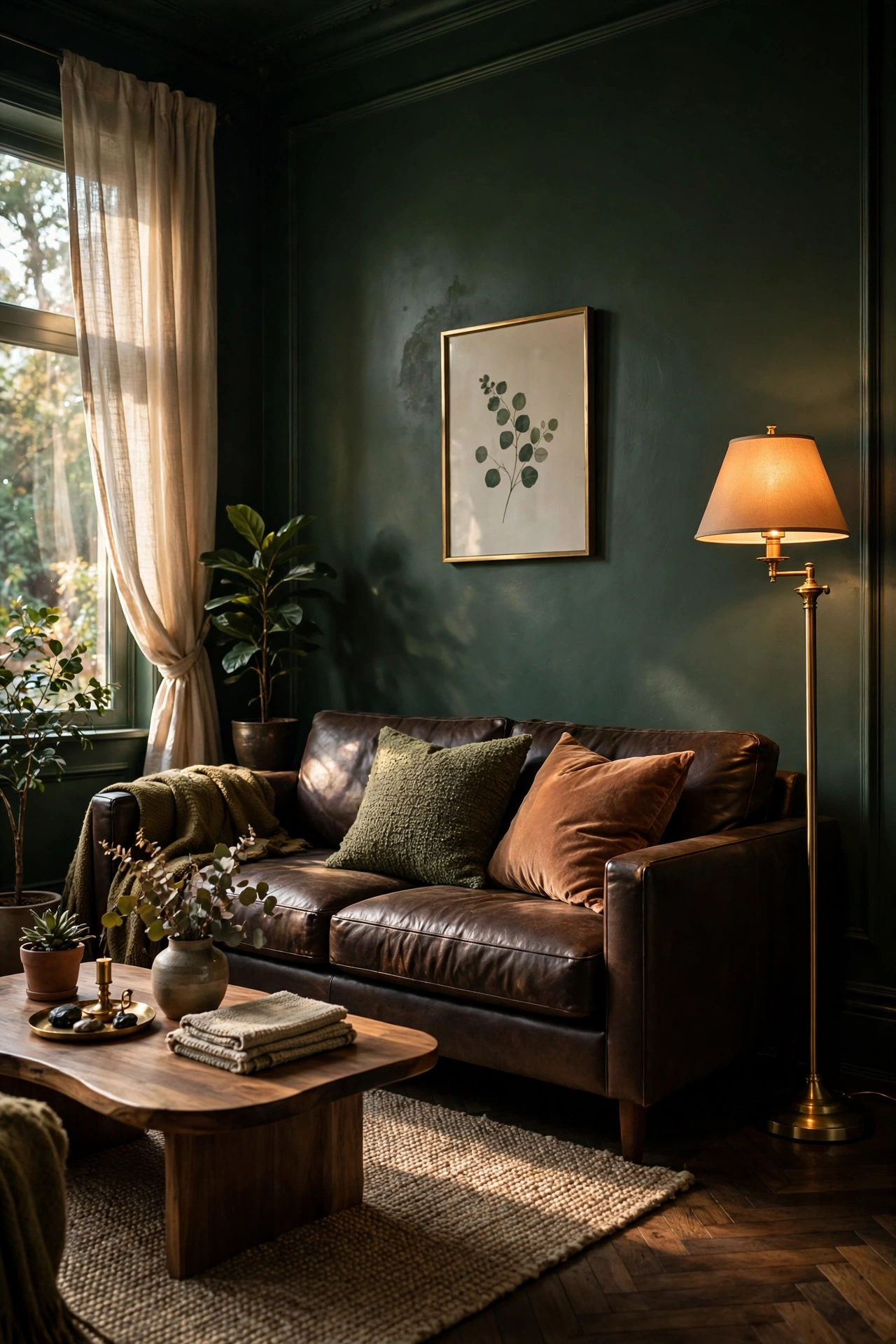
4. Go Bold with Dark Green Walls and Warm Light
Dark green walls behind a dark brown couch sound risky, and that is exactly why it works when it is done deliberately. A deep forest or hunter green wall turns the living room into a moody, library-like space where the brown sofa becomes part of a rich, layered palette instead of the only dark thing in the room. The rule that makes it work is light: you need warm lighting aimed at or behind the sofa — a brass floor lamp, picture lights, or warm-toned bulbs — so the brown keeps its color instead of disappearing into shadow. Add cream or tan pillows for a light break, and a wood coffee table to bridge the green and the brown. Keep the ceiling and trim light so the room does not feel like a cave. This is the look for people who want drama, not brightness.
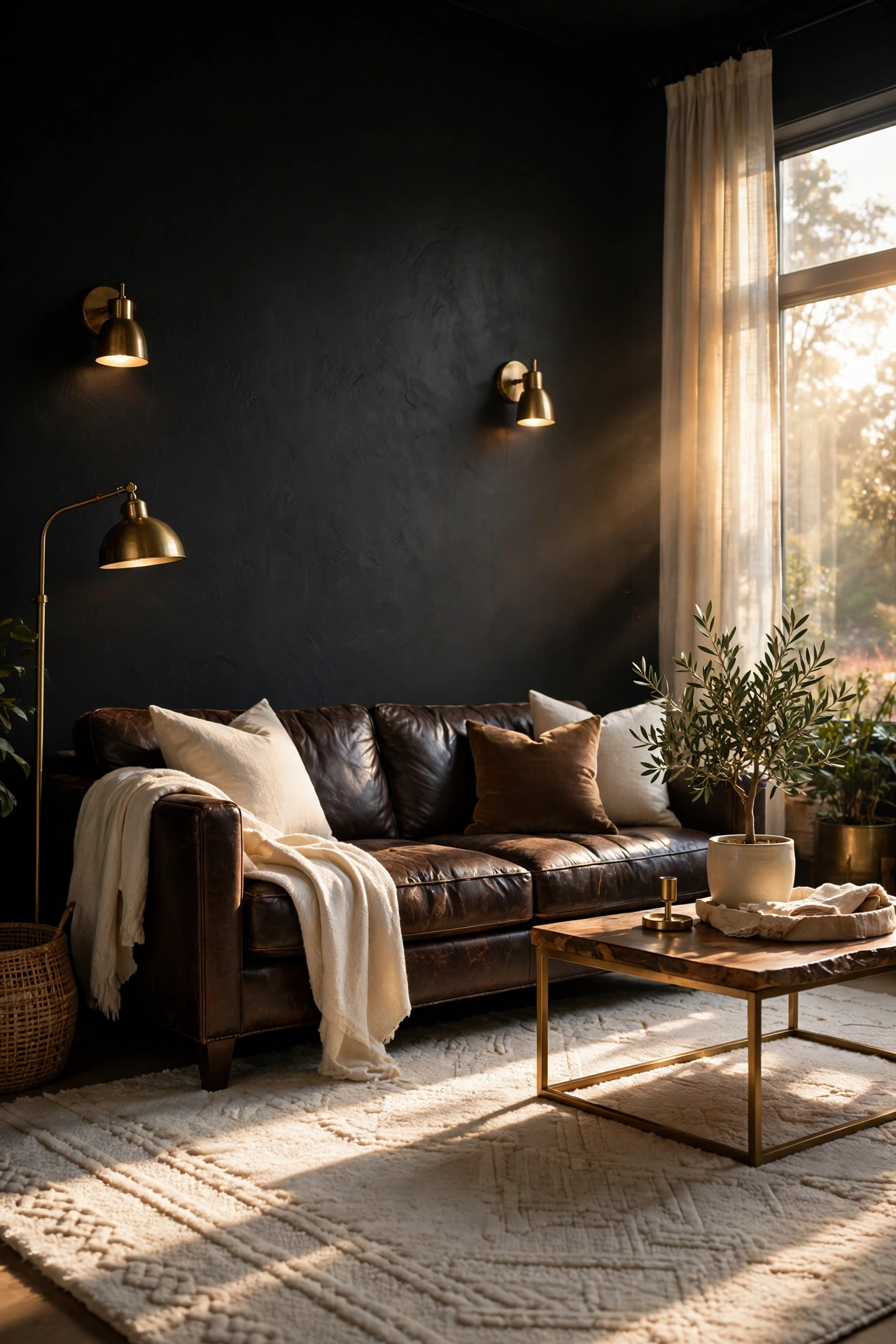
5. Embrace Moody Black Walls with Brass Accents
Black walls are the most dramatic backdrop a dark brown couch can have, and they work because they erase the boundary between wall and sofa — the room becomes one continuous, cocooning space. The key is contrast in the details, not the walls: brass or gold accents catch the light and stop the room from going flat, a cream rug defines the seating area, and warm wood keeps the palette from turning cold. Matte black reads softer than glossy black and hides marks better, which matters on a wall behind a sofa that gets touched constantly. Use this look in a room with good natural light or strong warm artificial light; in a windowless room it can feel heavy. A single oversized piece of art with a light frame on the black wall gives the eye somewhere to rest. It is a confident, grown-up look that makes a brown couch feel expensive.
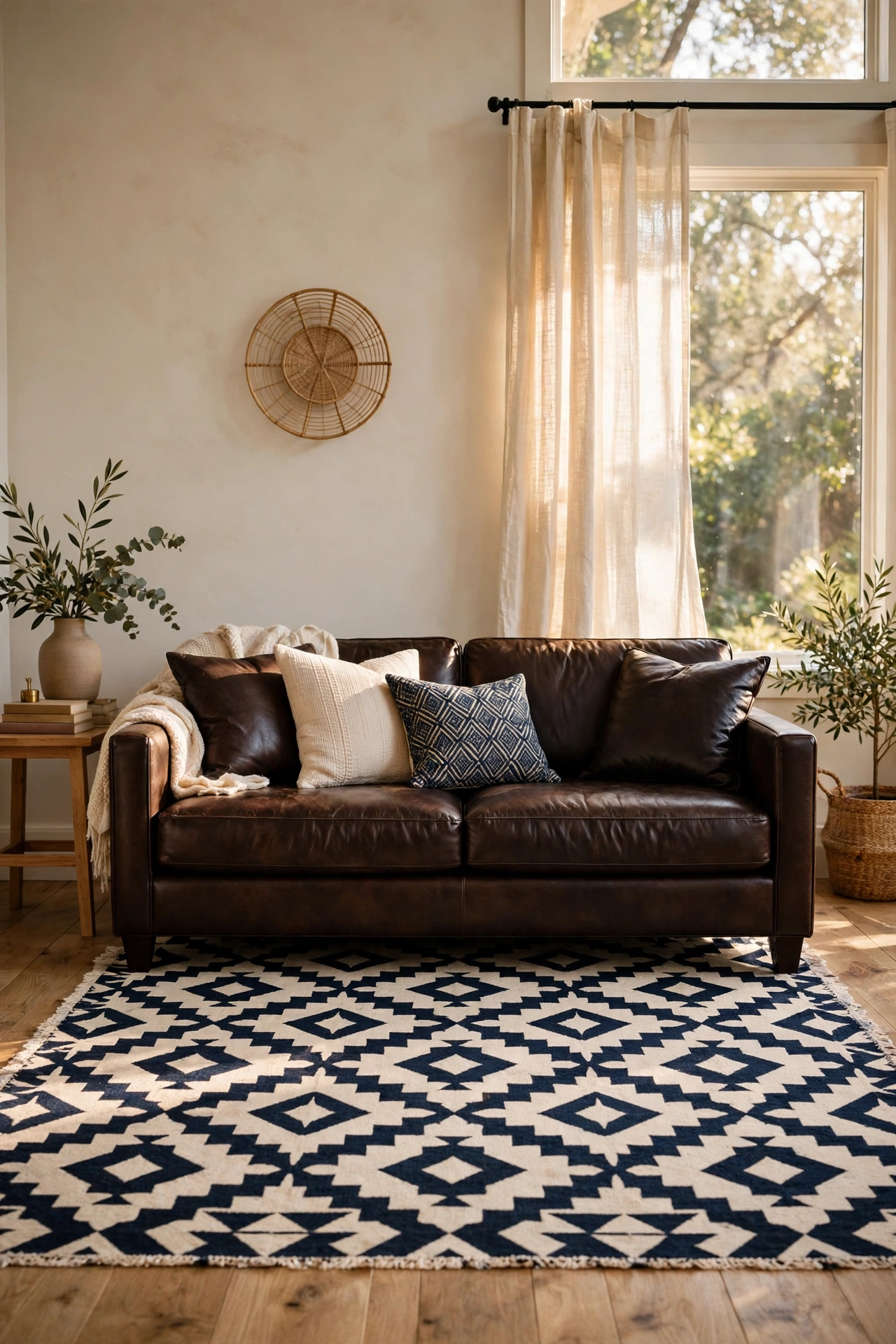
6. Anchor the Floor with a Bold Patterned Rug
A patterned rug is the fastest way to stop a dark brown couch from dominating the floor. Choose a rug with a strong pattern — geometric, Persian-style, or a bold stripe — in colors that include at least one light tone, so the rug reads as a separate layer rather than a dark extension of the sofa. Navy, burgundy, and cream patterns all work; the pattern itself matters more than the exact colors, because it breaks up the solid mass of brown and gives the eye something to follow. Size it generously: the rug should extend at least 18 inches beyond the sofa on each side, with the front legs of the couch sitting on it. A rug that is too small makes the sofa look stranded. Layer a smaller solid rug on top if you want extra texture, but keep the pattern as the star.
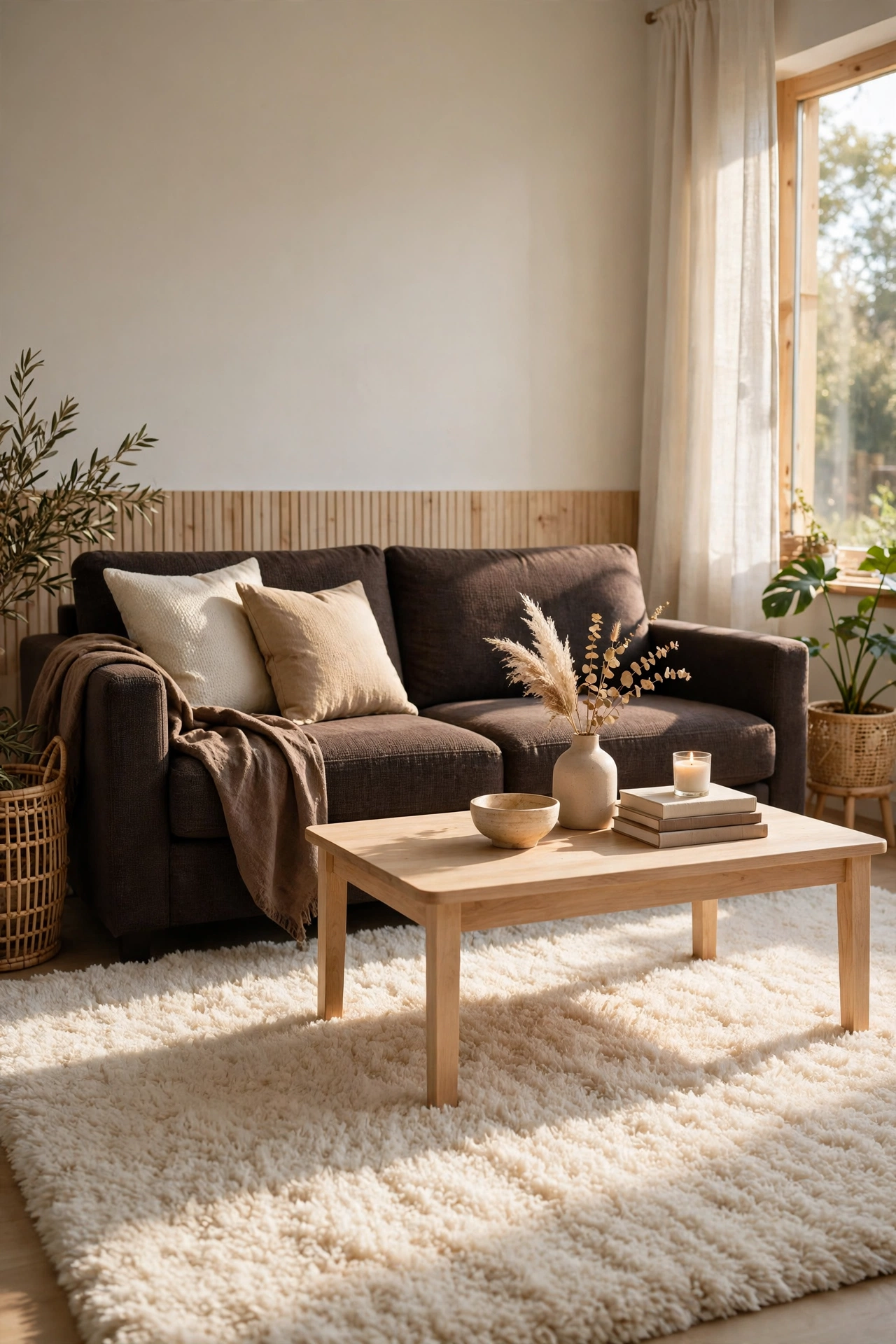
7. Lighten Everything with a Cream or Ivory Rug
If a patterned rug feels too busy, a cream or ivory rug does the same job with calm instead of pattern. A light rug under a dark brown couch creates a pale island in the middle of the room, and the contrast makes both the rug and the sofa look better — the rug reads brighter, the sofa reads richer. Choose a rug with some texture — a high-pile wool, a chunky weave, or a subtle loop — so it does not look flat against the smooth leather or fabric of the couch. In a household with kids or pets, pick a washable rug or a low-pile style in a warm ivory that hides crumbs better than a bright white. Keep the rug’s tone warm rather than blue-white so it harmonizes with the brown. This is the simplest, most reliable rug choice for a brown sofa.
8. Add a Natural Jute Rug for Organic Texture
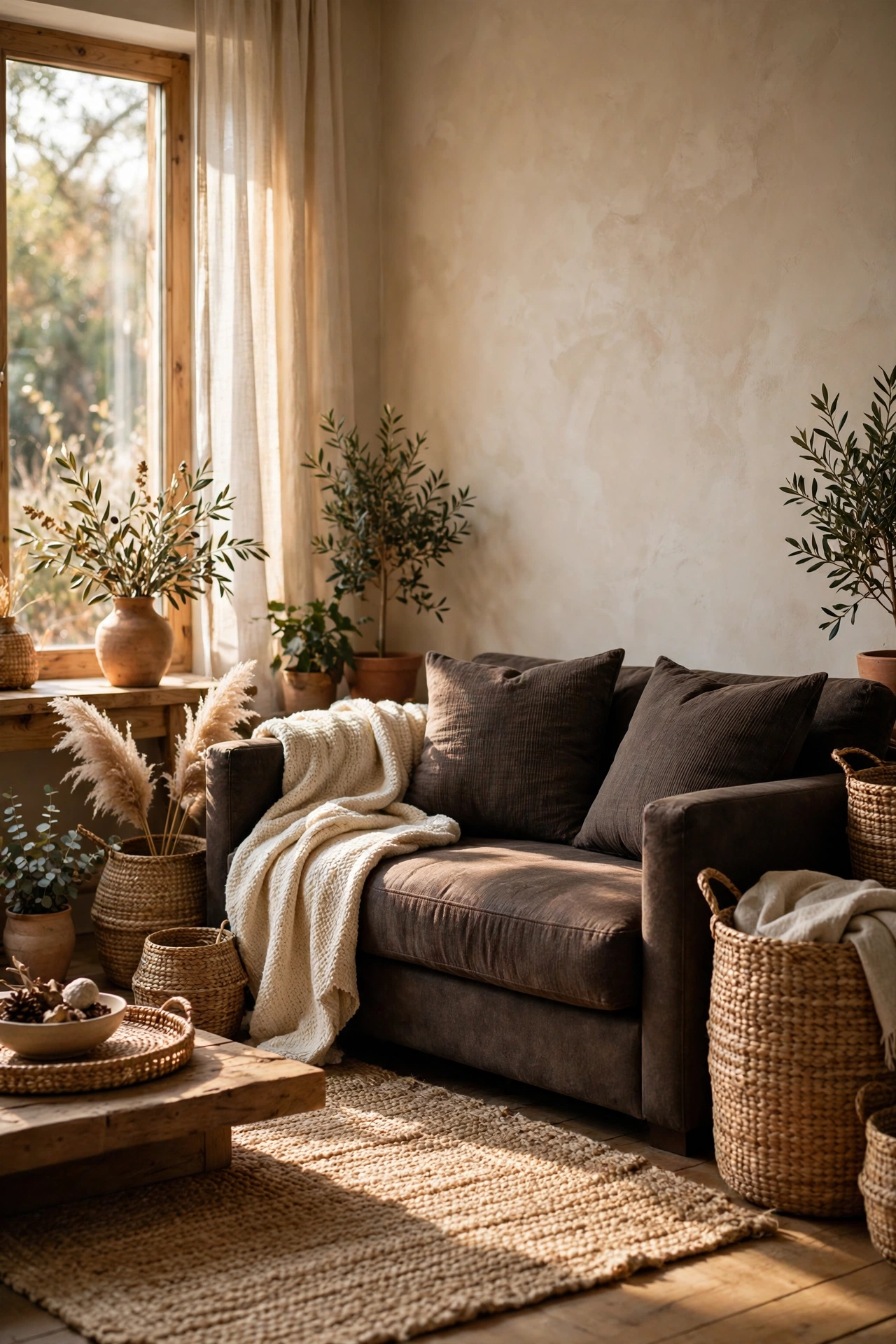
A jute or sisal rug brings a completely different texture to a brown-couch living room: rough, matte, and organic where the sofa is smooth and solid. The natural tan color lightens the floor without competing with the couch, and the woven texture adds the kind of visual interest that a flat rug cannot. Jute suits farmhouse, coastal, bohemian, and modern rustic rooms, and it pairs naturally with the wood furniture that usually sits next to a brown sofa. Layer a smaller, softer rug — a vintage-style wool rug or a flat-weave cotton one — on top of the jute in the seating area, because jute under bare feet is coarse. Keep the jute rug large enough to sit under the front legs of the sofa and the coffee table, so it reads as the room’s foundation rather than a mat.
9. Soften the Sofa with Cream and Beige Pillows
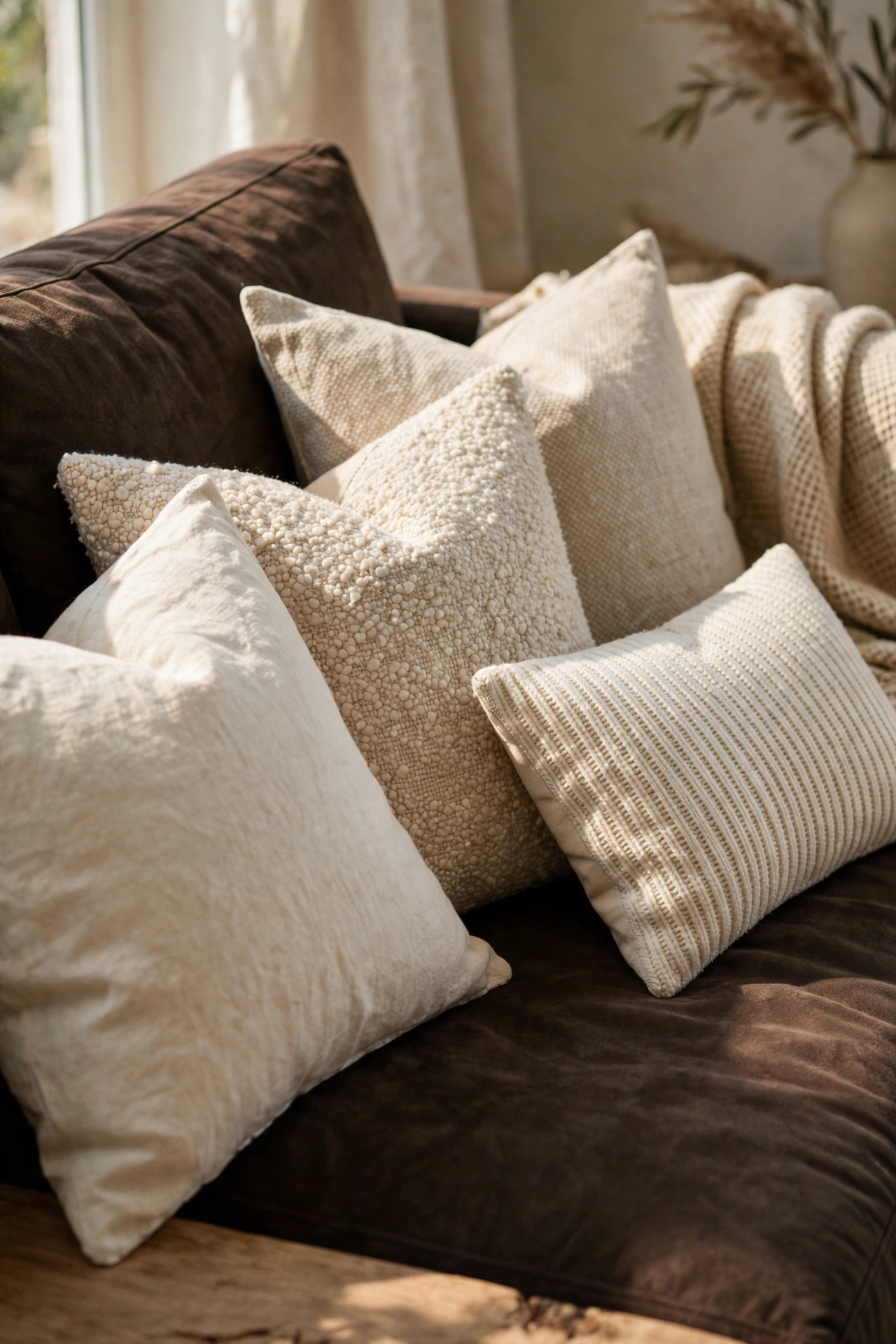
Pillows are the cheapest and fastest way to lighten a dark brown couch, and cream and beige are the safest place to start. A row of cream, oatmeal, and soft beige pillows breaks up the solid brown surface and gives the eye light places to land. Mix textures rather than colors: a linen pillow next to a boucle one next to a smooth cotton one creates depth without introducing a new color that might clash. Use odd numbers — three or five pillows on a three-seater — and vary the sizes so the arrangement looks collected rather than matched. Avoid pure white pillows, which can look stark against brown; warm ivory and oatmeal are kinder. Swap the pillow covers seasonally if you like — cream in summer, a warmer tan in winter — and the whole sofa changes with them.
10. Warm It Up with Rust and Terracotta Accents
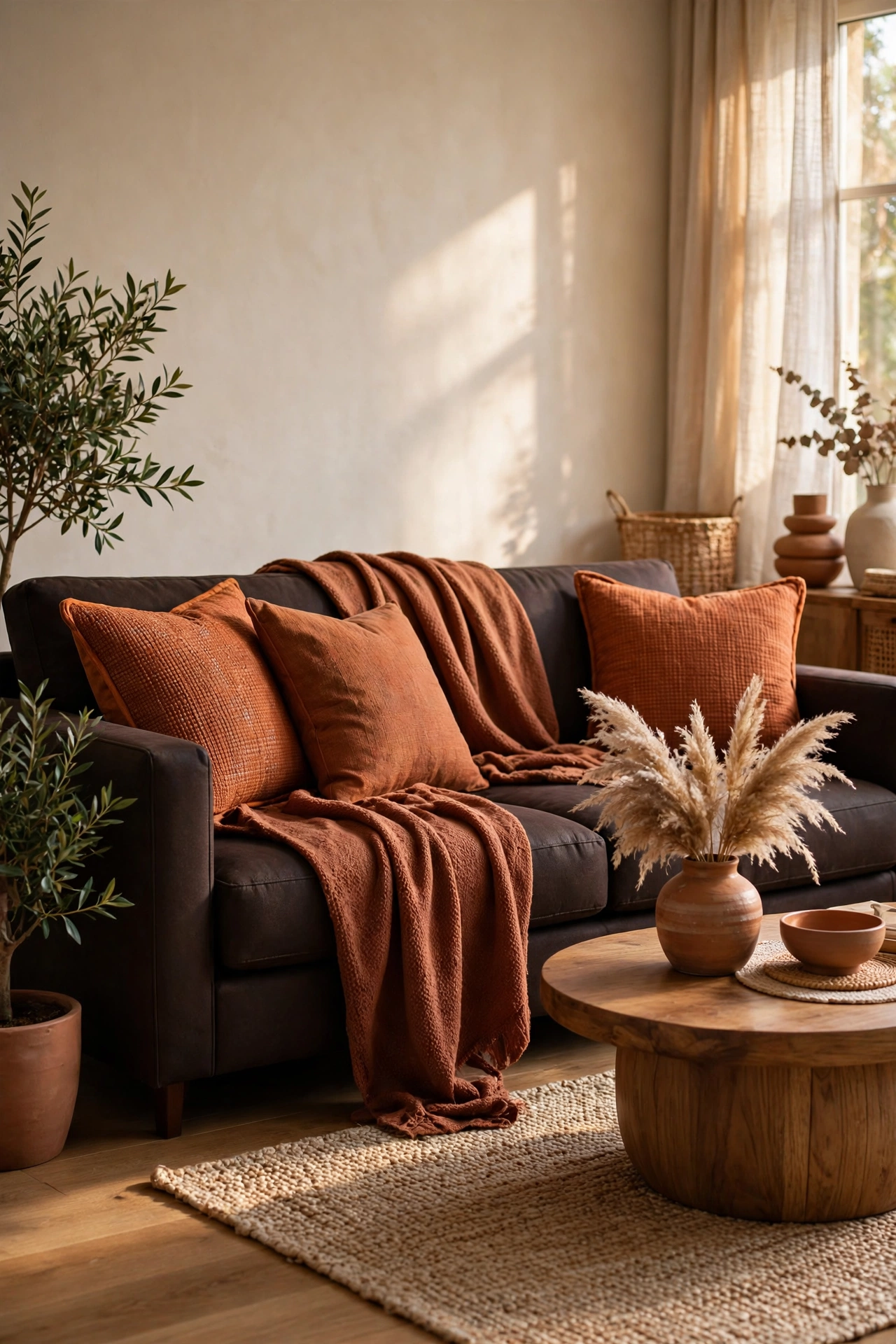
Rust and terracotta are brown’s closest warm relatives, and that is why they work so well as accents on a dark brown couch. A rust throw draped over one arm, terracotta pillows, and a clay-colored vase on the coffee table pull the warmth out of the brown instead of letting it sit flat. The trick is proportion: keep rust to about a third of the textiles — two pillows and a throw on a three-seater — so it reads as an accent rather than a second dominant color. Terracotta also connects the sofa to warm wood tones in the room, which makes the whole palette feel cohesive. This is the accent family to reach for in autumn, but it works year-round in rooms with warm lighting. Our Mexican home decor ideas use the same terracotta warmth across a whole house, if you want to take the palette further.
11. Mix Plaid and Patterned Pillows for Personality
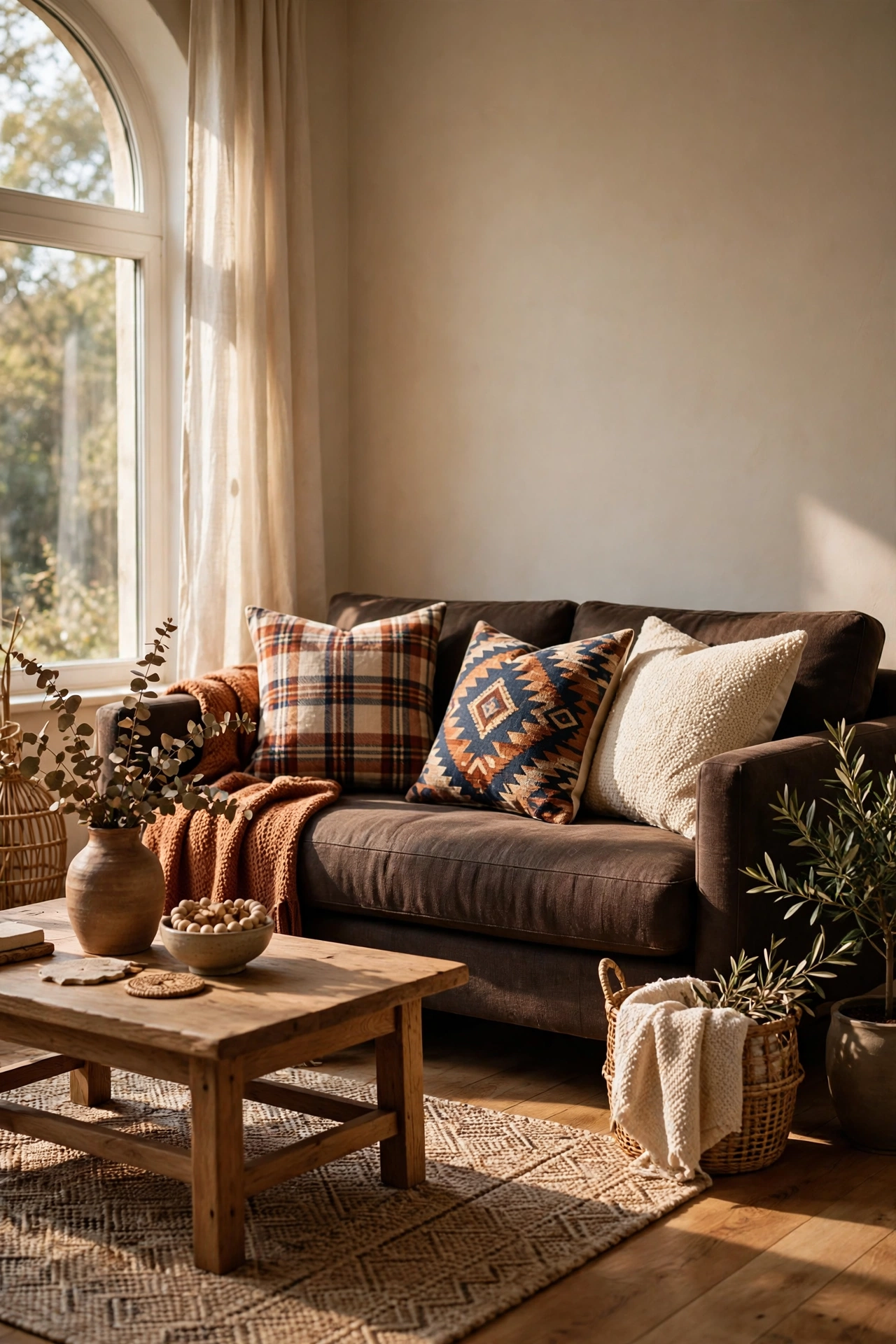
A solid brown couch is the perfect canvas for patterned pillows, because the sofa itself provides the calm background the patterns need. Plaid is the classic choice — a warm plaid in rust, cream, and navy instantly makes a brown couch feel like a cabin or a farmhouse living room — but geometric prints, small florals, and tribal patterns work just as well. The rule for mixing is simple: vary the scale. Pair one large-scale pattern with one small-scale pattern and one solid, all in a shared color family, and the combination looks intentional. Keep the total number of patterned pillows to two or three so the sofa does not look busy. A plaid throw folded over the back of the sofa ties the whole arrangement together without adding another pillow to the count.
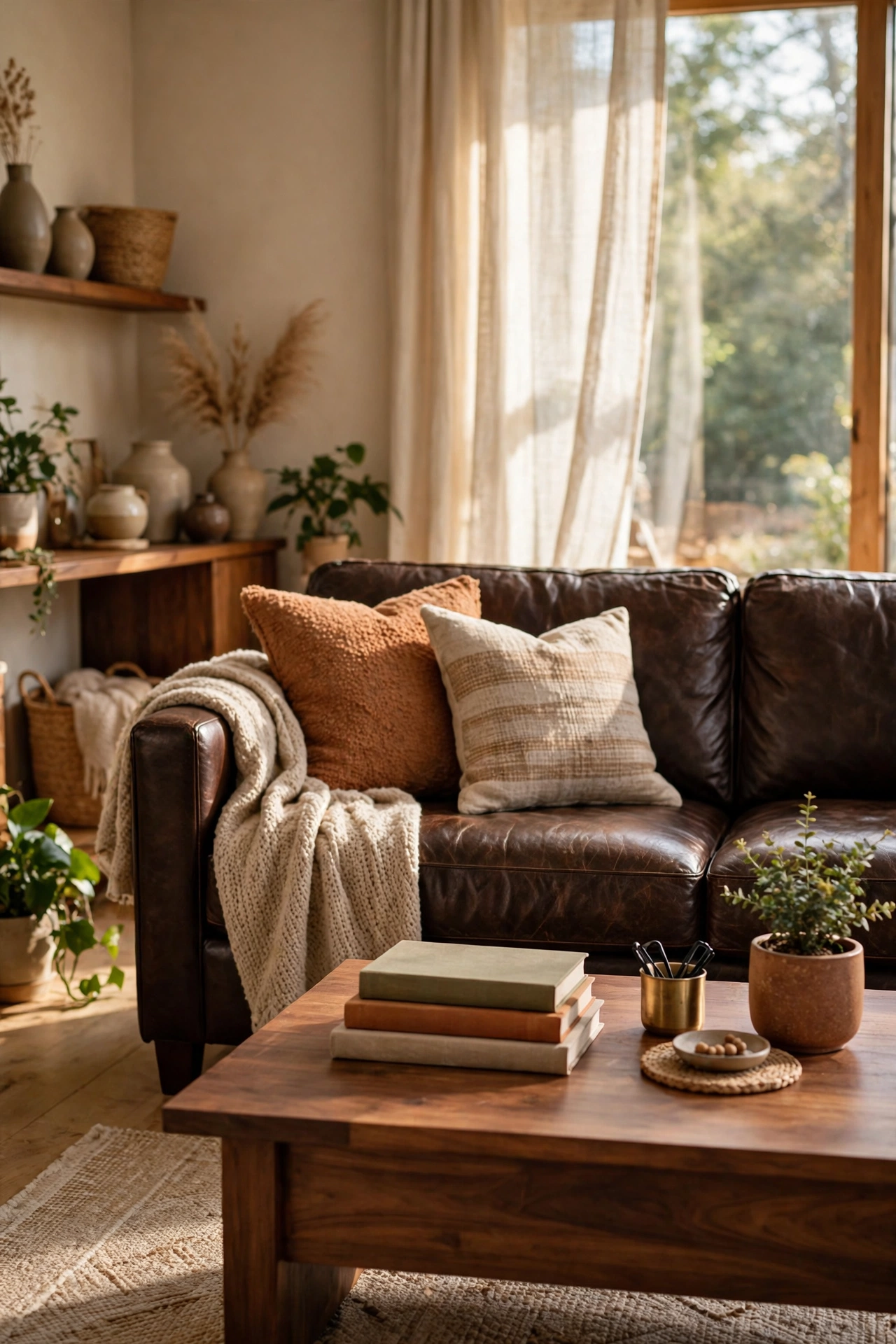
12. Set a Warm Wood Coffee Table in Front
The coffee table is the piece of furniture that sits closest to a brown couch, so its tone matters more than any other. Warm wood — walnut, oak, acacia, or reclaimed pine — echoes the brown of the sofa while adding grain and variation that keeps the two from blending into one dark block. Choose a wood tone close to the sofa’s own brown but not identical; a slightly lighter or warmer wood creates a visible step between the two. A live-edge slab or a table with visible grain adds character that a flat, dark table cannot. Keep the table’s surface styled lightly — a stack of books, a small plant, a tray — so the wood itself stays visible. If your floors are also wood, pick a table tone that differs from the floor by at least a shade, or the room starts to look like one continuous brown surface.
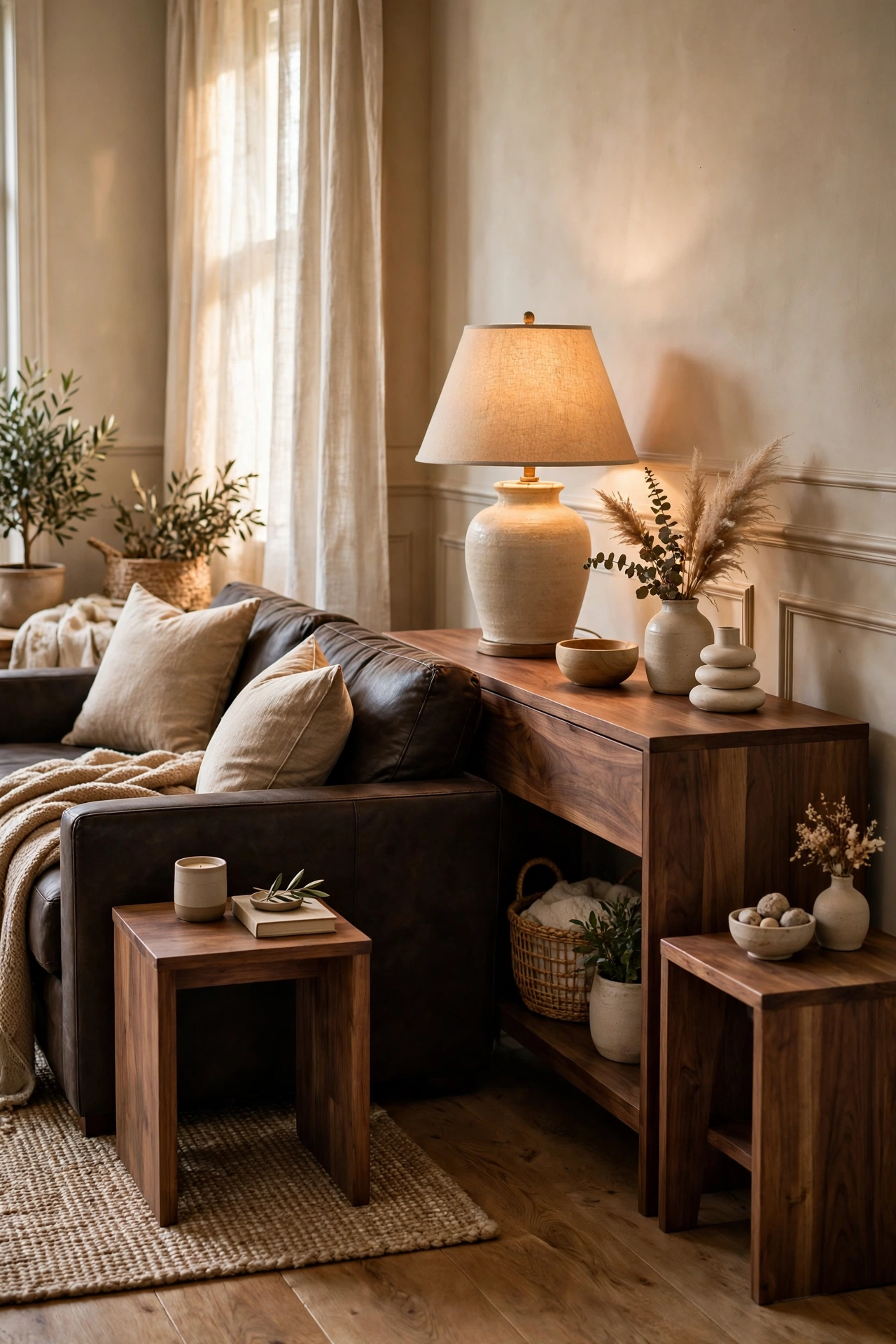
13. Add a Walnut Console and Side Tables
Side tables and a console table behind or beside the sofa are where warm wood does its quietest work. A walnut console behind a floating sofa gives you a surface for lamps, books, and a vase, and it frames the couch from behind so it does not look adrift in the middle of the room. Matching walnut side tables at each end of the sofa create symmetry and give everyone a place to set a drink. The wood should be warm and mid-toned rather than very dark — near-black side tables next to a dark brown sofa disappear. If you already own dark furniture, a lighter wood like white oak on the side tables can provide the contrast instead. Keep the table styling minimal: one lamp, one small object, and nothing else, so the wood and the sofa stay the focus.
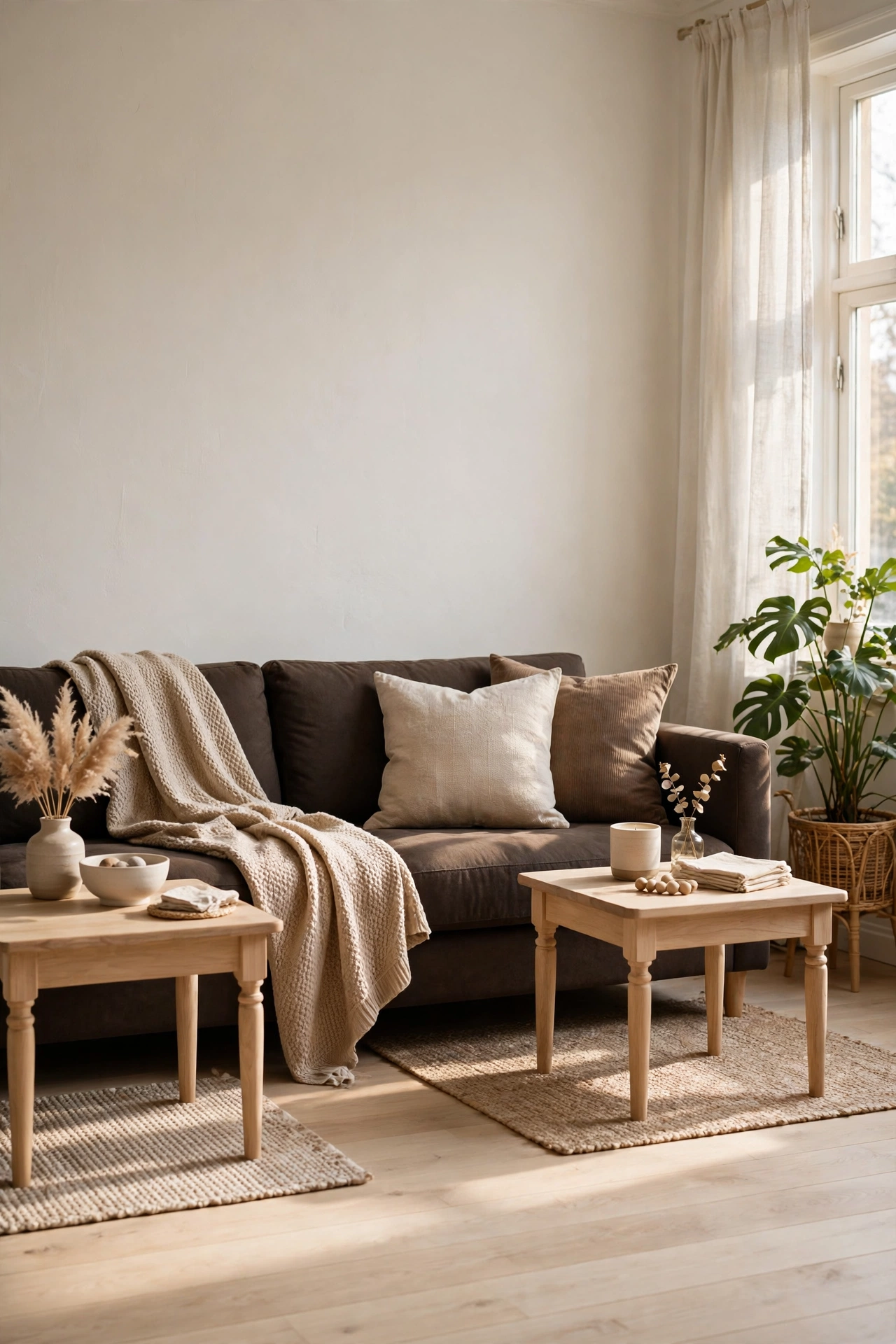
14. Contrast with Light Oak Pieces
Light oak is the counterweight to a dark brown couch. Where walnut echoes the sofa, pale oak argues with it — and that argument is what makes the room feel balanced. A light oak media console, a bleached-oak side table, or pale wood flooring under the rug all pull brightness into the lower half of the room, which is exactly where a dark sofa concentrates its weight. This contrast works especially well in Scandinavian and modern rooms, where the pale wood keeps the space feeling airy. Use light oak in at least two places — the floor and one piece of furniture, or two pieces of furniture — so it reads as a deliberate choice rather than a single stray item. Keep the oak’s finish natural and matte; glossy pale wood can look washed out next to rich brown leather.
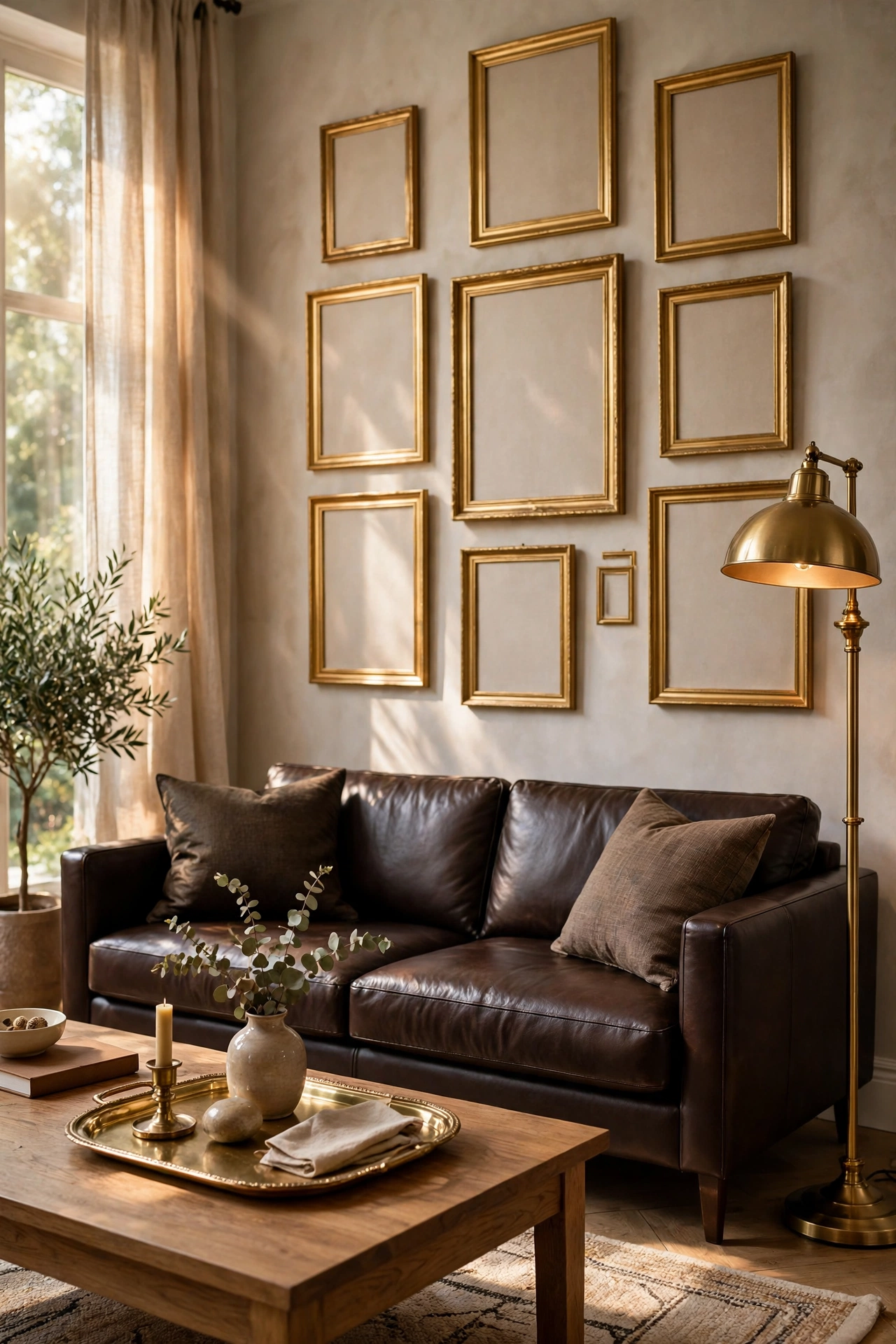
15. Add Brass and Gold Accents for a Touch of Glamour
Brass and gold are the metals that belong with brown. A brass floor lamp arcing over the sofa, gold picture frames on the wall behind it, or a brass tray on the coffee table all catch the light and give the room small bright points that keep the brown from feeling flat. Metallics work because they reflect light rather than absorbing it, which is the opposite of what dark brown leather or fabric does. Keep the metal warm — aged brass, brushed gold, or copper — and avoid chrome or polished nickel, which read cold against brown. Use the metal in three places at least: a lamp, a frame, and one small object, so it feels like a thread running through the room rather than a single random piece. A little goes a long way; too much brass turns glamour into clutter.
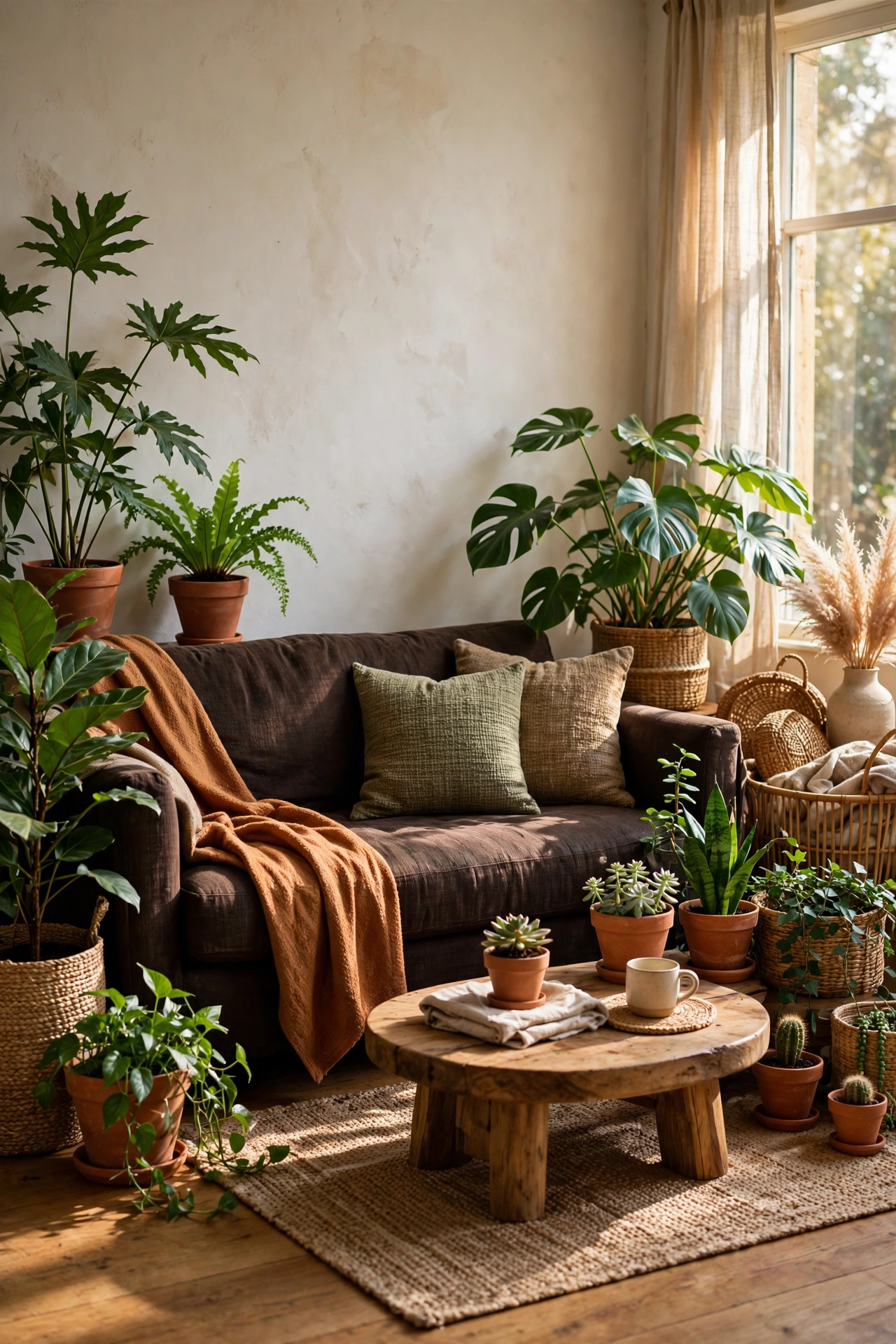
16. Soften the Weight with Plants Around the Sofa
Plants are the easiest living contrast for a dark brown couch. Green is brown’s natural complement, and a tall fiddle-leaf fig in the corner, a trailing pothos on the side table, or a cluster of small pots on the windowsill breaks up the solid mass of the sofa with shape, color, and movement. Plants also soften the hard lines of a leather couch in a way that no textile can. Choose plants with different heights and leaf shapes — one tall, one trailing, one bushy — and put them in warm pots: terracotta, woven baskets, or cream ceramic, which all harmonize with brown. Keep one plant within arm’s reach of the sofa so the green sits right next to the brown, and let the rest frame the seating area. If real plants are not your thing, a single large faux olive tree still does the job.
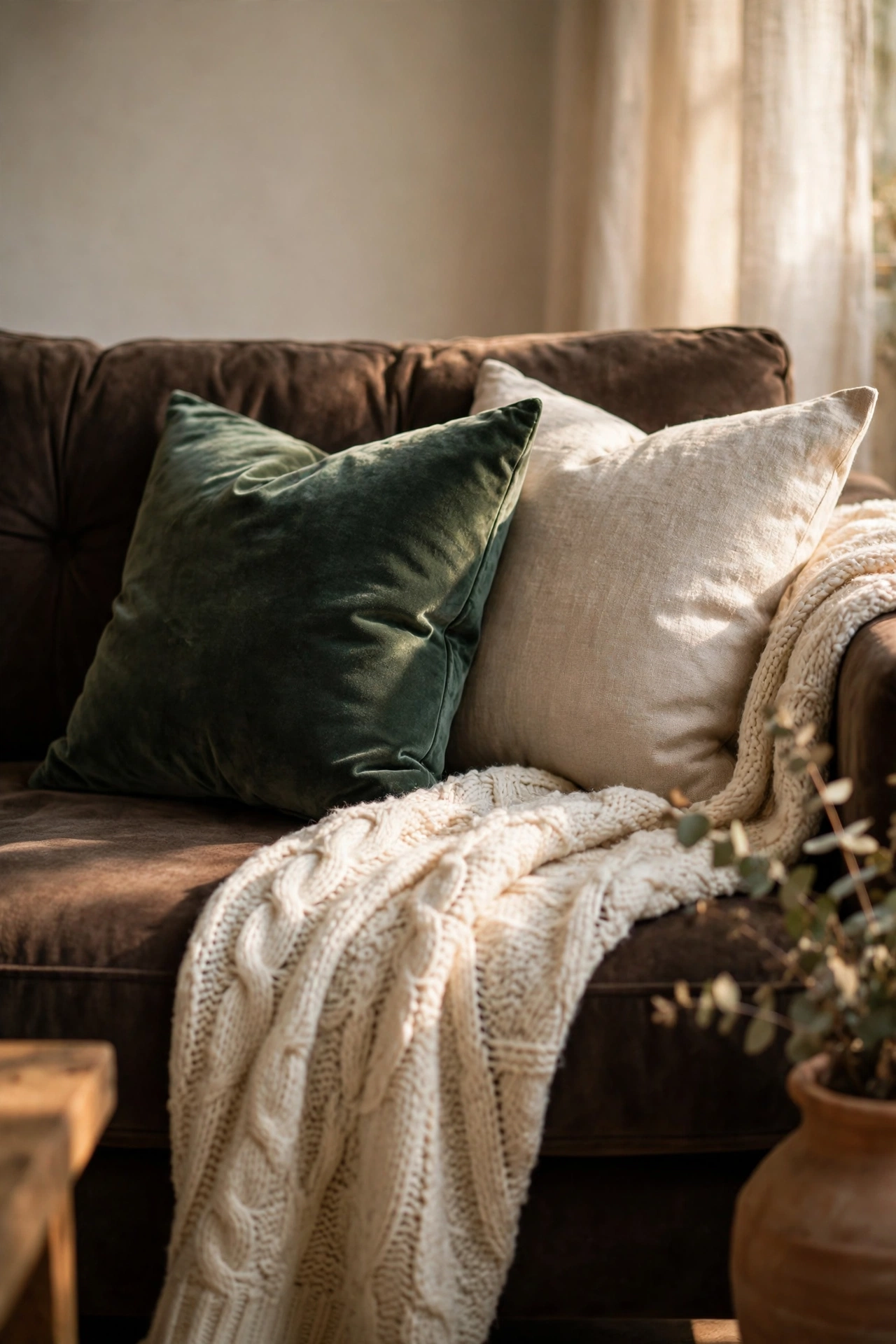
17. Layer Velvet, Linen, and Knit Textures
A dark brown couch can look heavy when everything around it is smooth, so texture is your best tool for lightening it without adding color. Layer three different textures on the sofa itself: a velvet pillow for sheen, a linen pillow for matte softness, and a chunky knit throw for weight. The contrast between the textures makes the eye read the sofa as a collection of surfaces rather than one flat brown slab. Extend the idea beyond the sofa — a nubby wool rug under the coffee table, a woven basket beside the sofa, a linen curtain at the window — and the whole room gains depth. The rule is to mix matte and shiny, rough and smooth, in every zone of the room. Texture is also the safest way to style a brown couch in a rental, because it needs no paint and no new furniture.
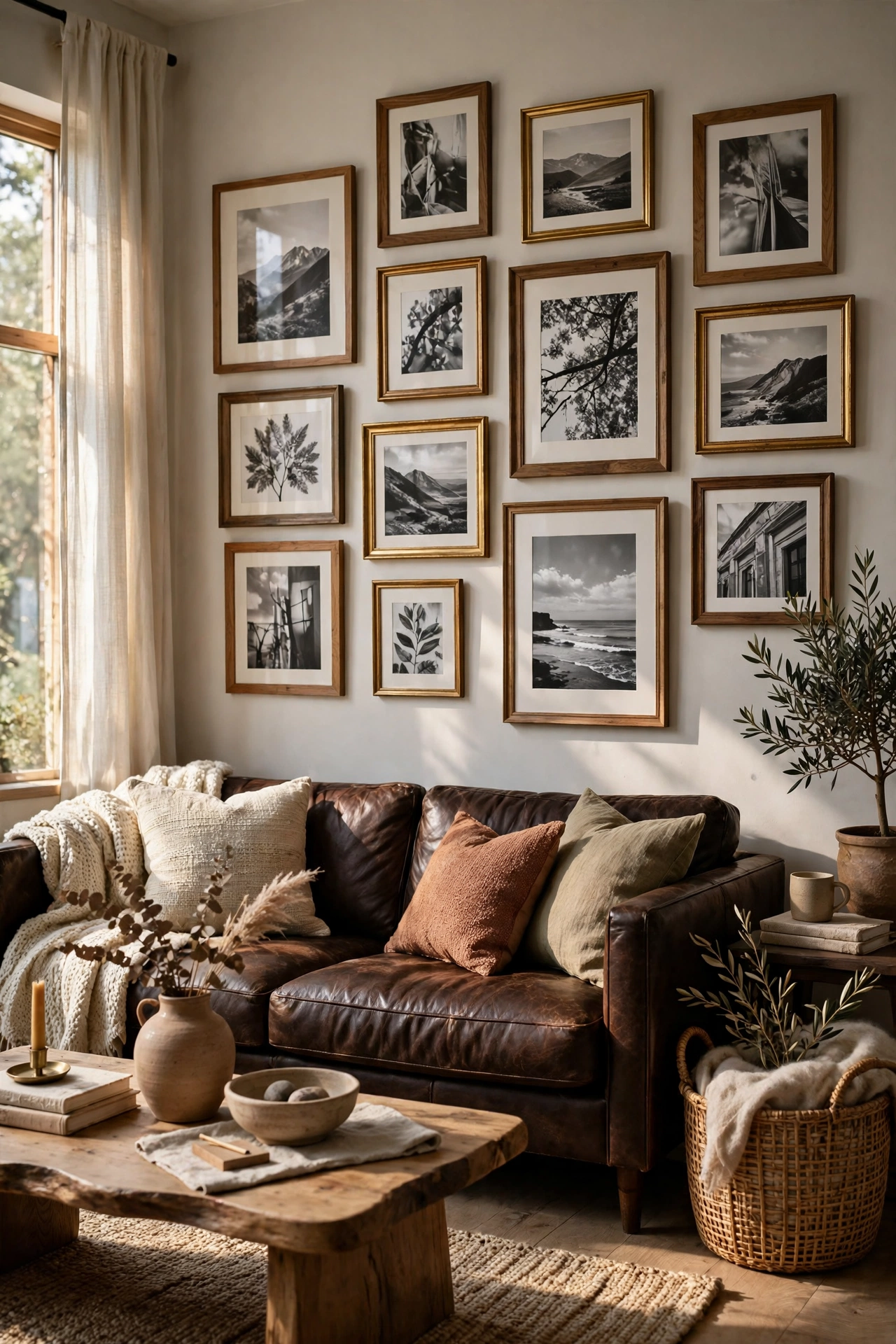
18. Hang a Gallery Wall Behind the Sofa
The wall behind a dark brown couch is usually the largest empty surface in the living room, and a gallery wall turns it into the room’s focal point. A mix of framed prints, photos, and mirrors in black, wood, and brass frames gives the eye somewhere to go above the sofa, which pulls attention up and away from the couch’s bulk. Keep the frames’ palette warm — wood, brass, cream mats — so the wall connects to the sofa instead of floating above it. Lay the arrangement on the floor first, start with the largest frame at eye level above the center of the sofa, and build outward with even spacing. Include one mirror in the mix: it bounces light around the room and brightens the dark sofa by reflection. Leave a gap of about 8 inches between the top of the sofa and the bottom of the lowest frame so the two read as separate layers.
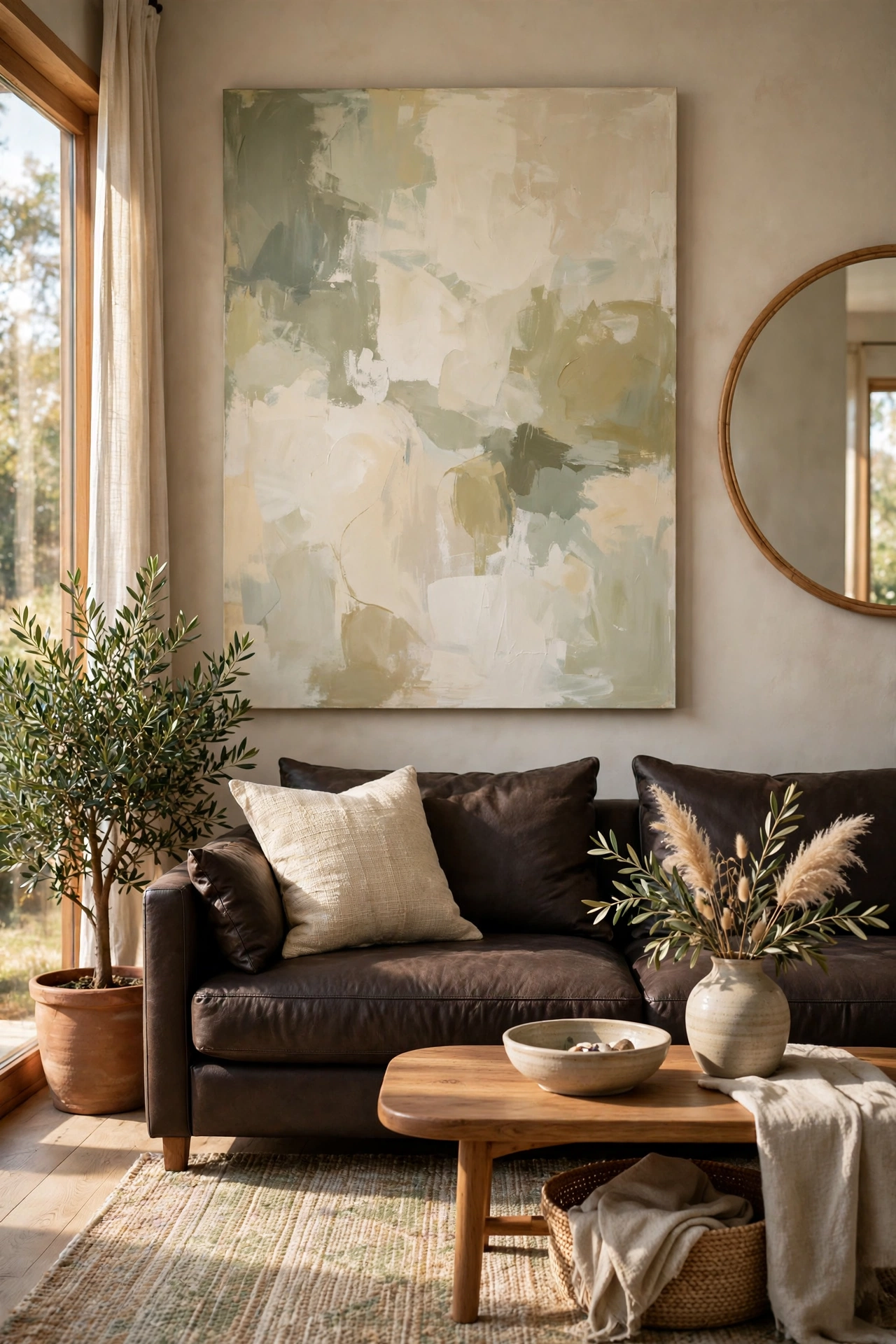
19. Make One Oversized Piece of Art the Focal Point
If a gallery wall feels too busy, one oversized piece of art does the same job with a single gesture. A large abstract painting — ideally two-thirds the width of the sofa — hung above the couch gives the wall a focal point that competes with the sofa for attention, which is exactly what you want: the room stops being “the brown couch room” and becomes a room with art and a couch. Choose art with at least one light color in it, whether that is cream, sage, or a pale blue, so the piece lifts the wall rather than adding another dark block. A large round mirror works the same way and adds light as well. Hang the piece so its center sits at eye level when you are standing, and keep the coffee table and sofa styling simple underneath it so the art keeps its authority. Our staggered floating shelves ideas show another way to fill that same wall if art is not your style.
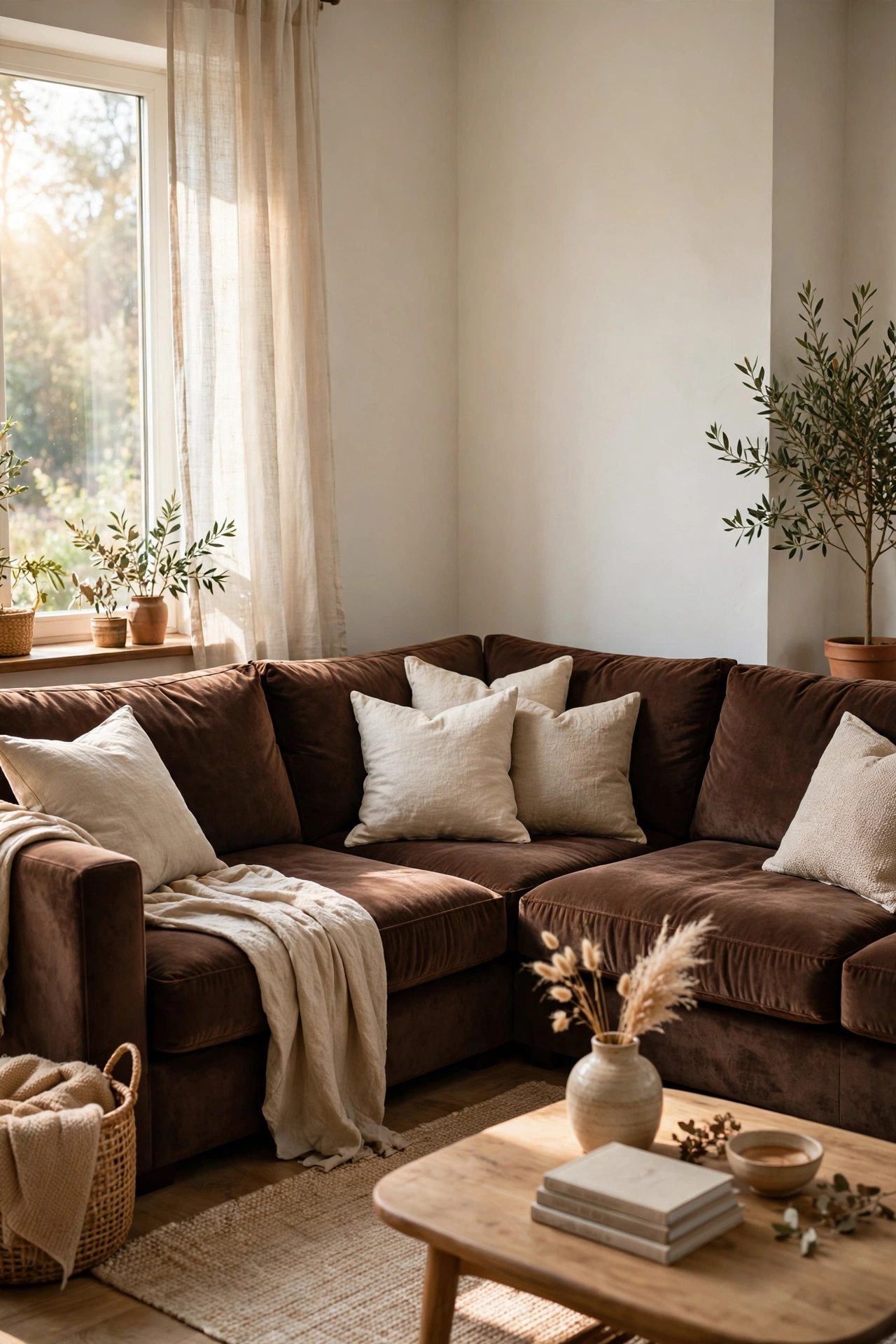
20. Choose a Chocolate Velvet Sectional for Depth
Not all brown couches are the same, and velvet changes the equation entirely. A chocolate brown velvet sectional catches the light differently from every angle, so the sofa looks lighter where the light hits it and deeper where it falls into shadow — that built-in variation stops the brown from reading as one flat color. Velvet also suits a sectional particularly well, because the large surface gives the fabric room to show its sheen. Style a velvet sectional with contrasting textures rather than contrasting colors: linen pillows, a wool throw, a marble or light wood coffee table. Keep the walls pale and the rug light so the velvet has room to shine. Velvet needs a little care — brush it occasionally and keep it out of direct sun — but it rewards that care with the richest-looking brown sofa you can own.
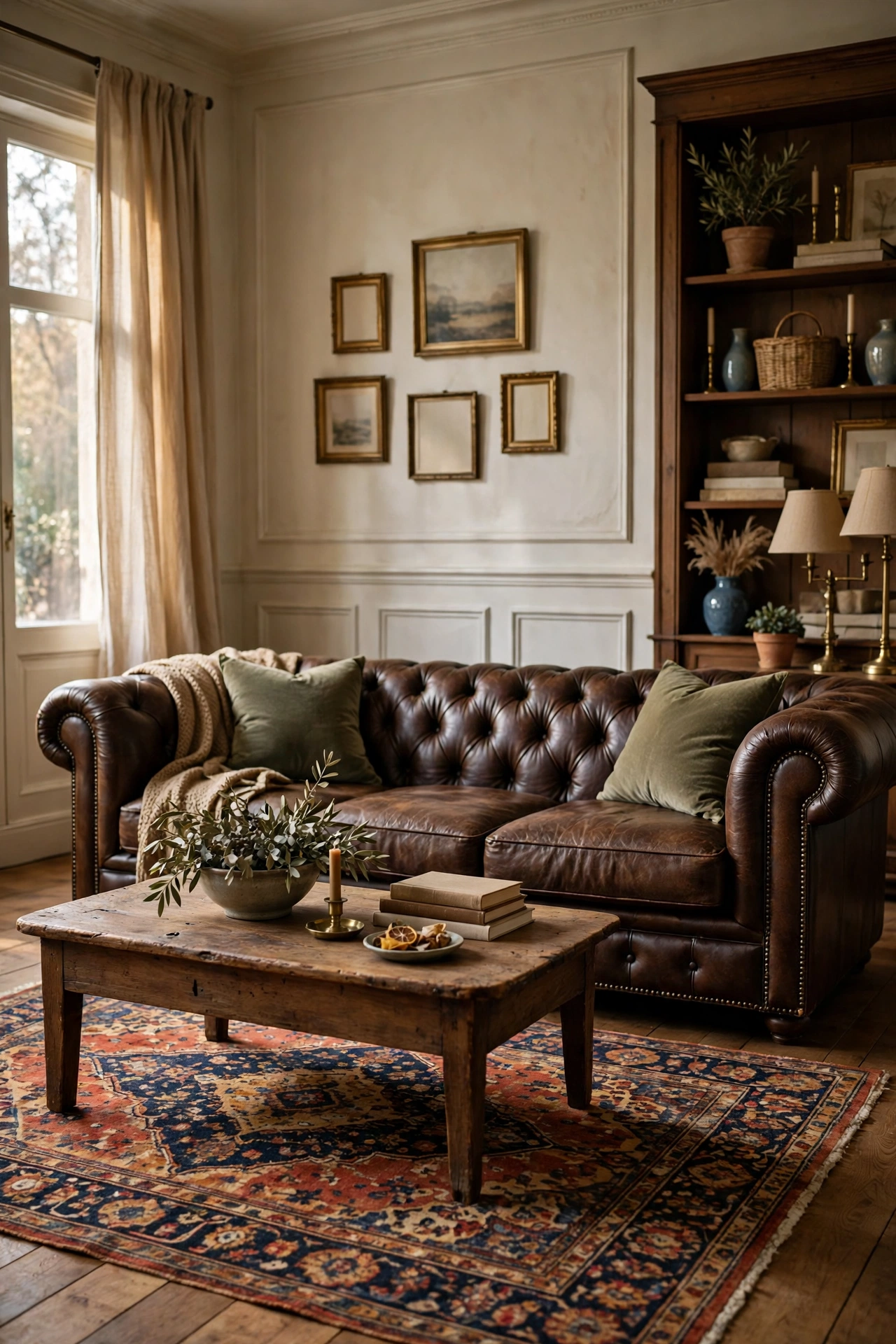
21. Go Classic with a Brown Chesterfield Sofa
A Chesterfield is the most characterful version of a dark brown couch, and its deep button tufting does something no plain sofa can: it breaks the brown surface into dozens of small facets that catch light and shadow. That texture is why a Chesterfield rarely looks heavy, even in a small room. Style it with pieces that respect its history — a worn wooden coffee table, a brass lamp, a Persian-style rug, books stacked on the side table — and let the sofa be the room’s statement piece. A Chesterfield also ages well: the leather develops a patina that makes the sofa look better after five years than it did new. Keep the rest of the room simple so the tufting stays the star, and avoid pairing it with other heavily tufted or ornate furniture, which would compete with it. One classic piece per room is enough.
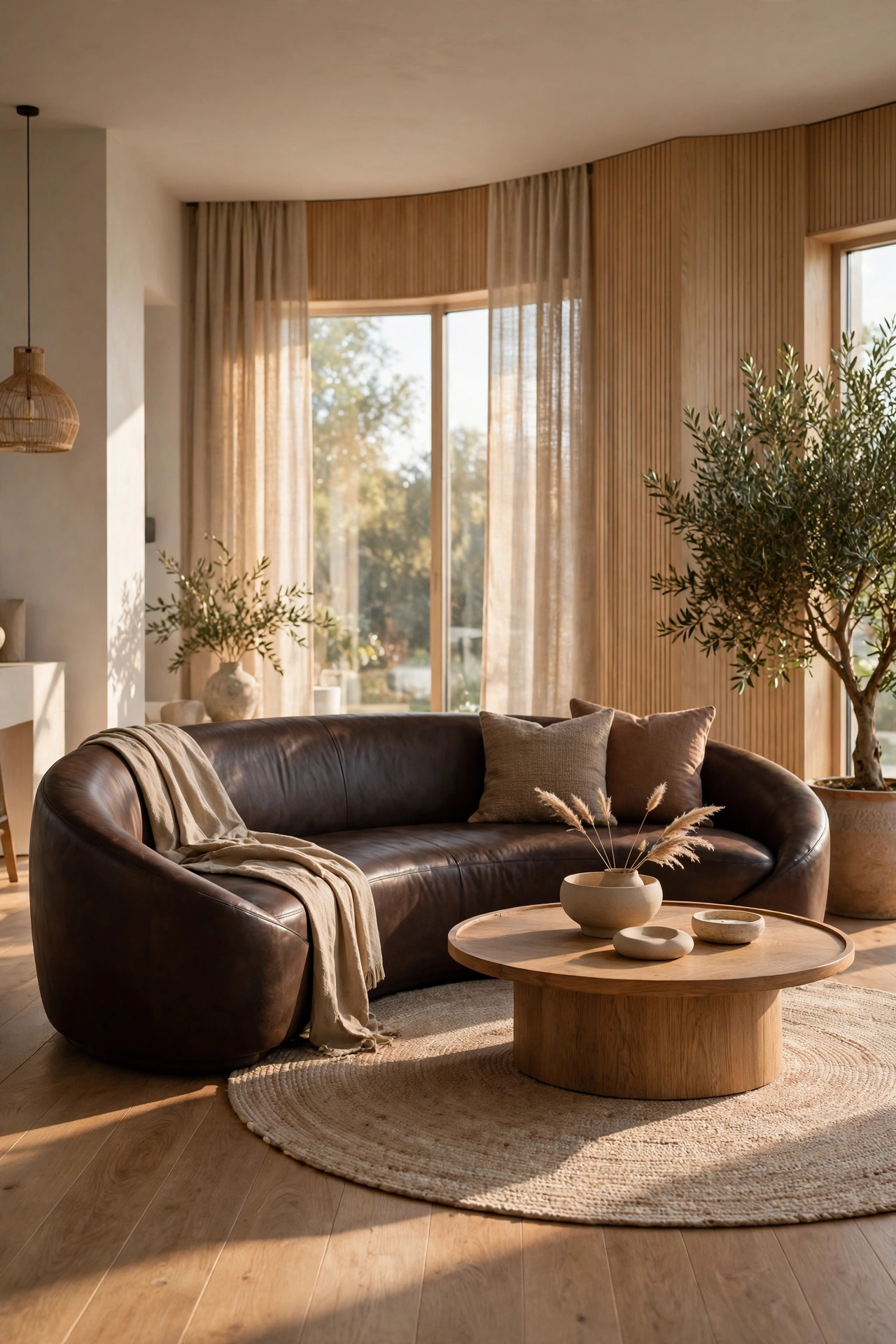
22. Soften the Room with a Curved Brown Sofa
A curved sofa is the modern answer to the heavy brown couch problem. The curve breaks the sofa’s straight, blocky silhouette, so the brown reads as a sculptural shape rather than a slab, and the room’s traffic flows around it instead of stopping at it. Curved sofas work best in larger living rooms where the curve has space to breathe, and they pair naturally with round coffee tables, arched doorways, and circular rugs that echo the shape. Style it simply — two or three pillows in cream and one accent color, a single throw — because the shape itself is the decoration. A curved brown sofa in leather looks especially good against pale walls and light floors, where the contrast shows off the curve. If a full curved sofa is too much of a commitment, a curved accent chair in the same brown next to a straight sofa gives you the same softening effect.
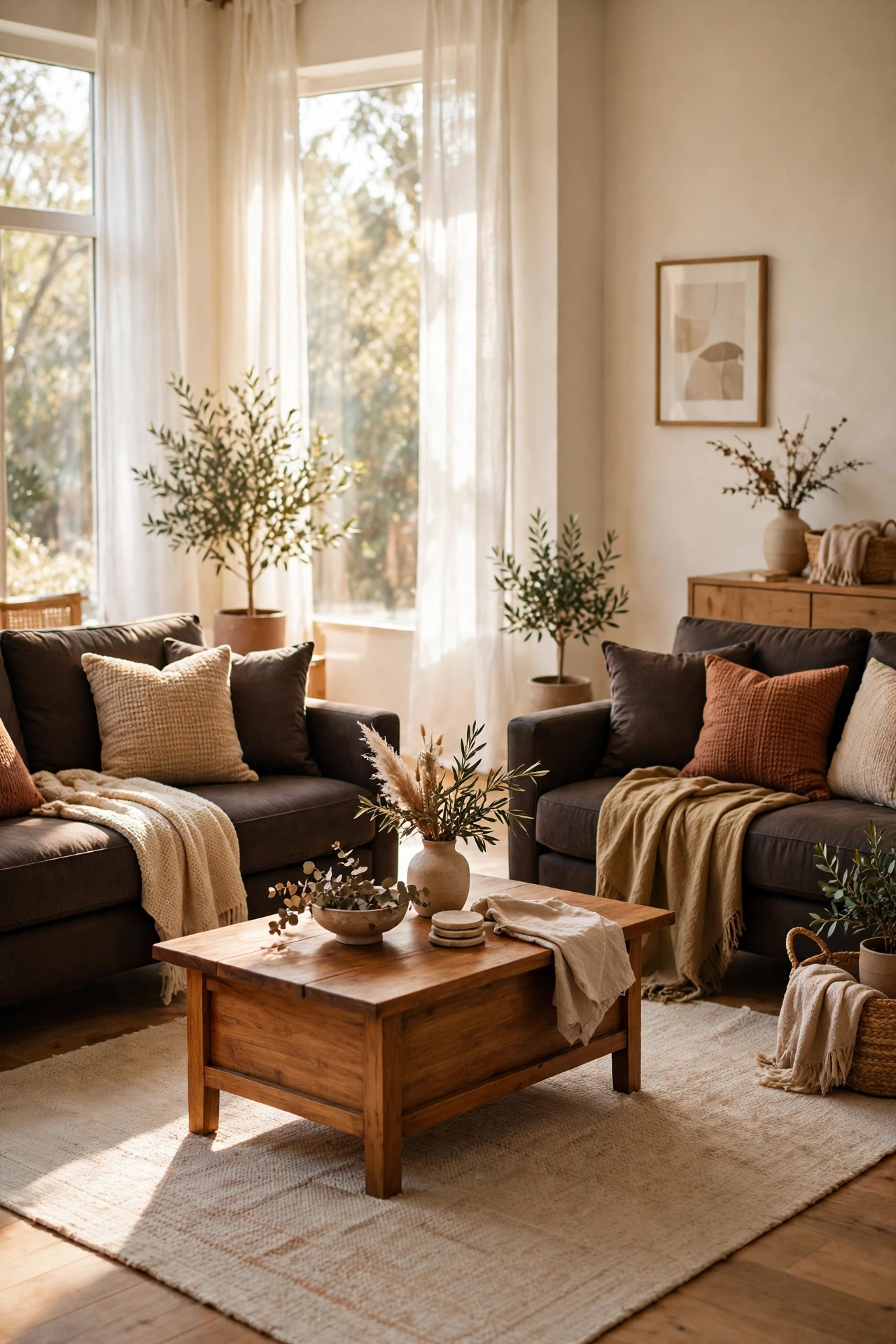
23. Try Two Matching Brown Sofas Facing Each Other
Two matching brown sofas facing each other across a coffee table is a classic arrangement that most people overlook, and it solves the brown-couch problem by making the sofas feel like a set rather than a single heavy piece. The symmetry balances the visual weight: each sofa anchors one side of the room, and the coffee table between them becomes the shared center. This layout suits long, narrow living rooms and rooms built for conversation, because everyone sits facing each other instead of staring at a television. Keep the rug light and the coffee table warm wood so the space between the sofas stays bright, and use matching pillows on both sofas so the pair reads as intentional. If two full sofas are too much, a sofa and a matching loveseat give you the same symmetry on a smaller scale.
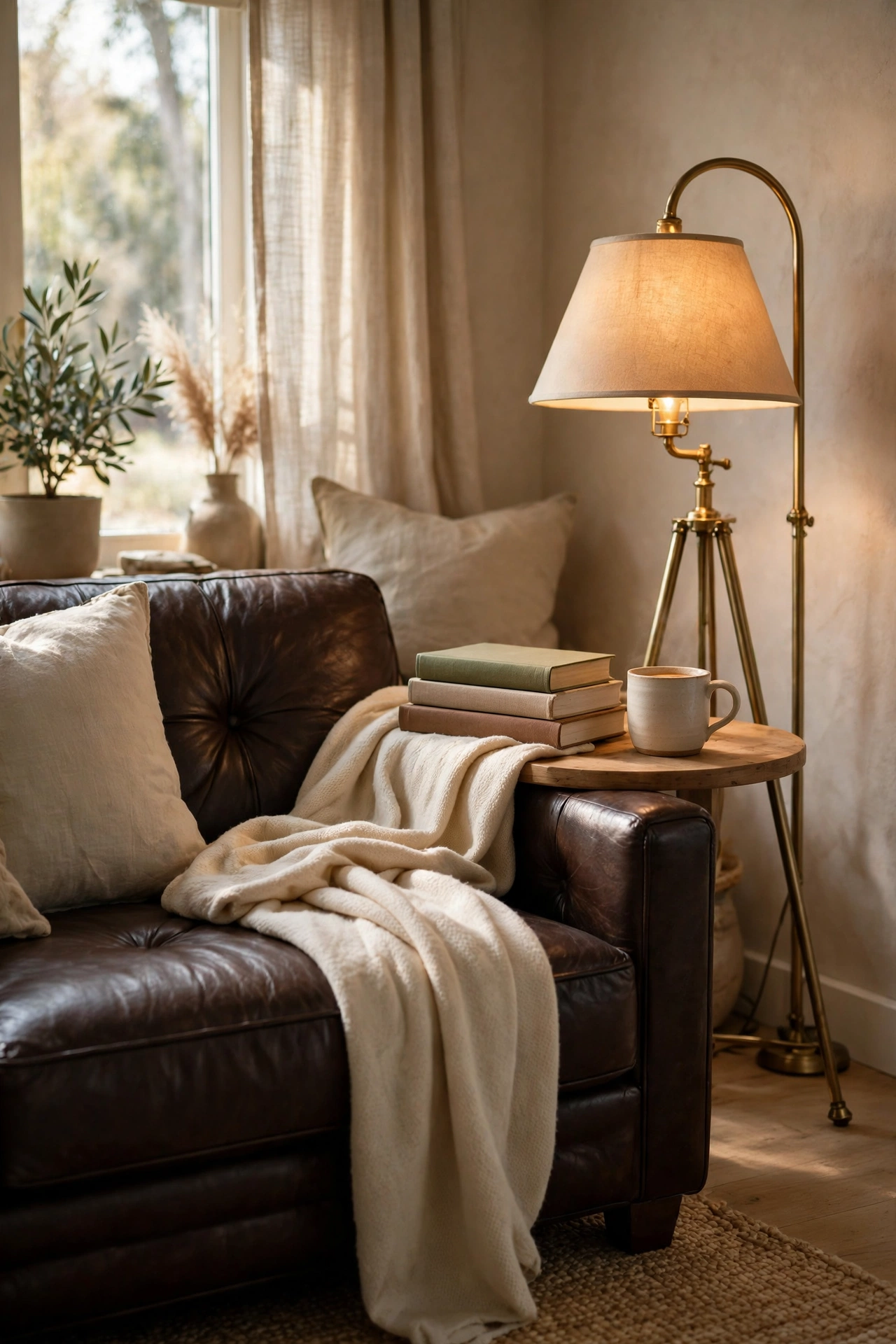
24. Turn One End into a Reading Nook
A dark brown couch is at its best when it has a job beyond sitting, and a reading nook gives one end of it a purpose. Put a floor lamp with a warm bulb behind one end of the sofa, add a small side table for a book and a mug, drape a soft throw over that arm, and place a basket of books beside it. The lamp’s warm light does double duty: it creates a cozy corner for reading and it lights the brown leather or fabric from the side, which shows off its texture. A reading nook also gives you a reason to keep that end of the sofa styled and uncluttered, which keeps the whole couch looking intentional. Choose a lamp with a linen shade rather than a metal one, so the light diffuses softly instead of throwing a hard spotlight on the brown.
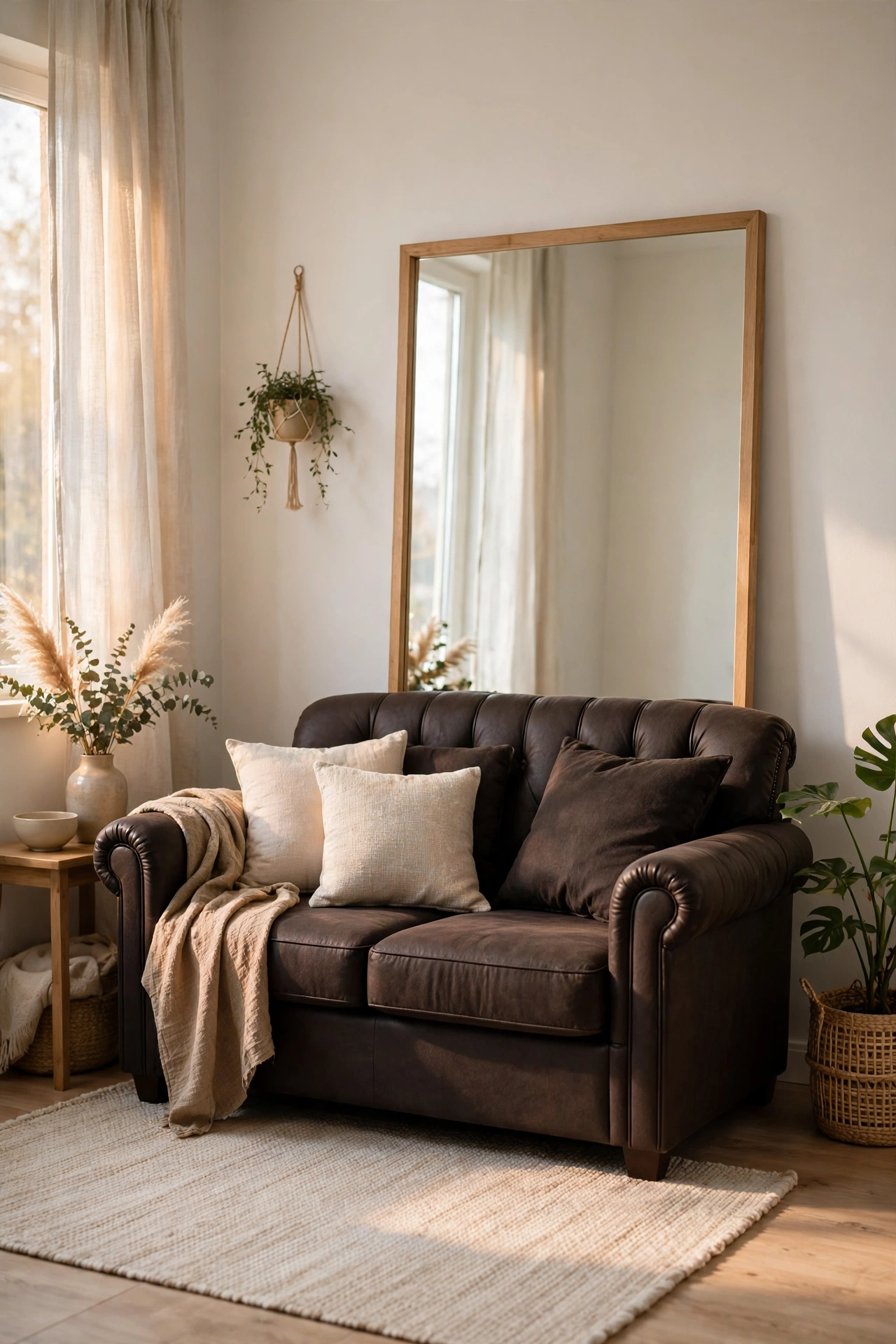
25. Make It Work in a Small Living Room
A dark brown couch in a small living room needs a different strategy: everything around it must work to create space. Choose a loveseat or an apartment-size sofa rather than a full three-seater, and keep its profile low — a low back and slim arms take up less visual space. Push the sofa against the longest wall, leave the floor in front of it clear, and use a light rug that extends under the front legs to define the seating area without closing it in. A large mirror on the opposite wall doubles the sense of space and bounces light onto the brown, and legs on the sofa — rather than a skirt that reaches the floor — let you see the floor underneath, which makes the room feel bigger. Keep the pillows to two or three and the coffee table small and light, and the small room will feel curated rather than crowded.
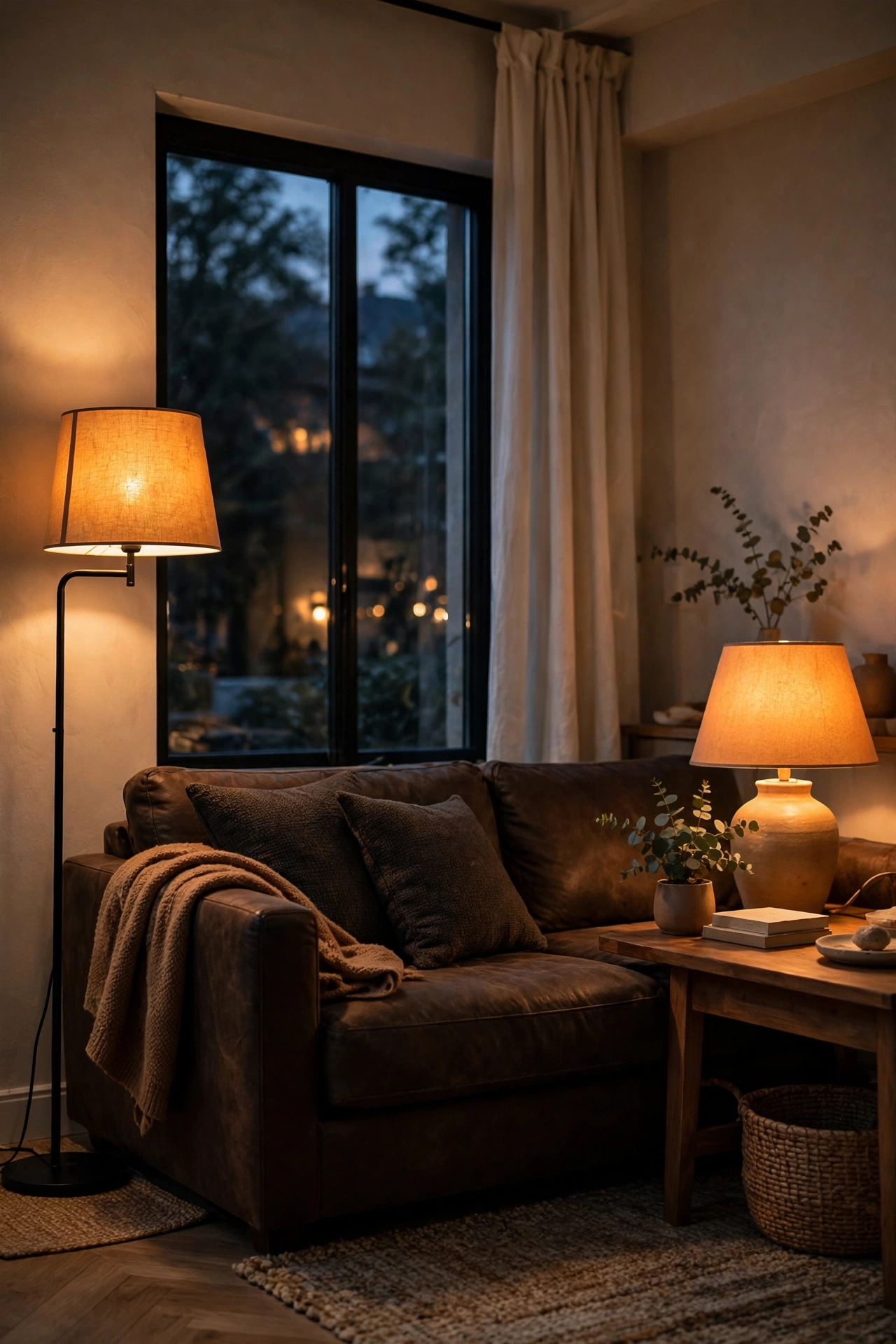
26. Light It with Warm Layered Lighting
A dark brown couch absorbs light, so lighting is not decoration around it — it is the thing that makes the brown visible. Layer three kinds of light: an overhead fixture for general brightness, a floor lamp behind one end of the sofa for warmth, and a table lamp on the side table for close work. Use warm bulbs — around 2700K — because warm light pulls the richness out of brown, while cool white light flattens it into gray. Aim at least one light at or near the sofa itself rather than only at the ceiling: a picture light above the art behind the couch, or a floor lamp whose shade sits just above the sofa’s back, both show off the leather or fabric’s color and texture. Add a dimmer if you can, so the room can shift from bright daytime to a soft evening glow. Without good light, even the best-styled brown couch looks muddy.
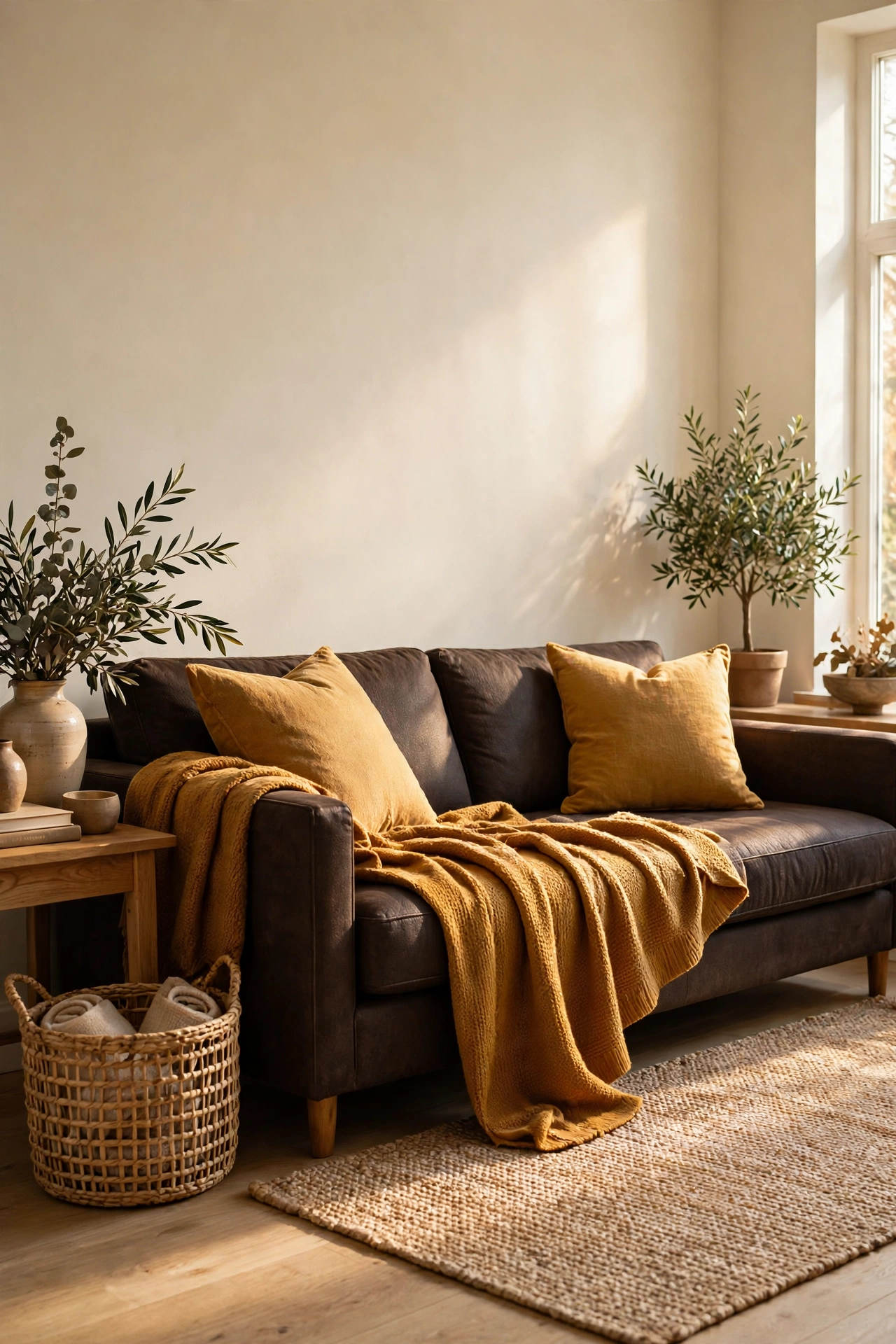
27. Pop It with Mustard and Ochre Accents
Mustard and ochre are the boldest accent colors that still feel natural next to dark brown, because they share brown’s warm, earthy roots. Two mustard pillows and an ochre throw on a brown couch create a warm, sunny focal point that lifts the whole room, especially in autumn and winter. The key is to keep the mustard to accents only — pillows, a throw, maybe a vase — and let the rest of the room stay neutral, so the yellow reads as a deliberate pop rather than a competing color. Mustard pairs beautifully with cream walls, a light rug, and warm wood, and it looks especially good on brown leather, where the yellow picks up the leather’s own golden undertones. If mustard feels too strong, start with one pillow and live with it for a week before adding more.
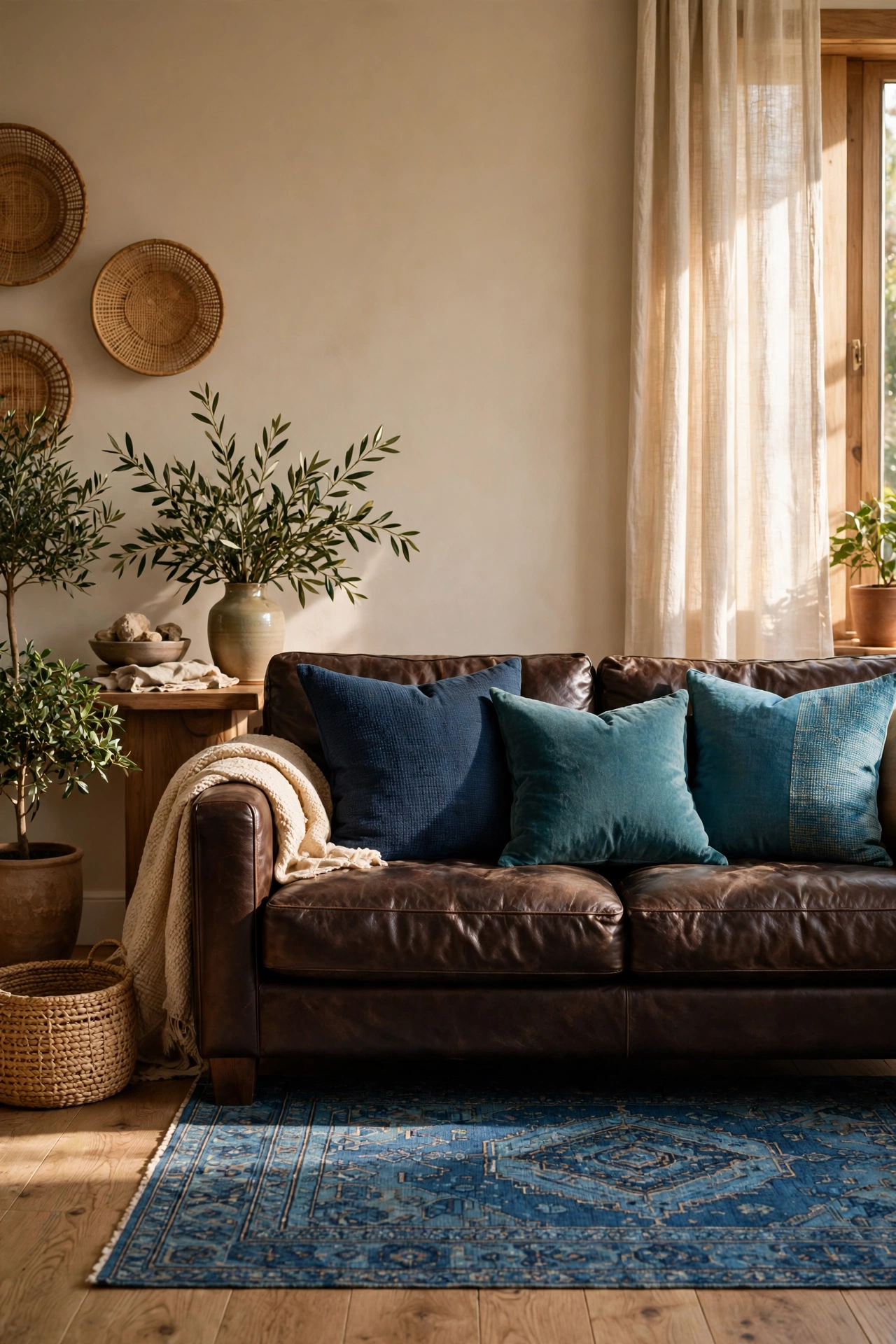
28. Balance It with Navy and Teal Blues
Blue is brown’s complementary color, and that is why navy and teal work so well as accents on a dark brown couch. A navy throw, teal pillows, or a blue patterned rug creates a cool counterweight to the sofa’s warmth, and the contrast makes both colors look richer. Use blue in the textiles and the rug rather than on the walls, so the cool color stays at the sofa’s level and balances it directly. Teal is the softer choice — it reads as a deep, moody blue-green that harmonizes with brown — while navy is bolder and more graphic. Both work with brass accents and warm wood, which bridge the warm sofa and the cool blue. Our blue and green living room ideas show how this cool-warm balance works across a whole room.
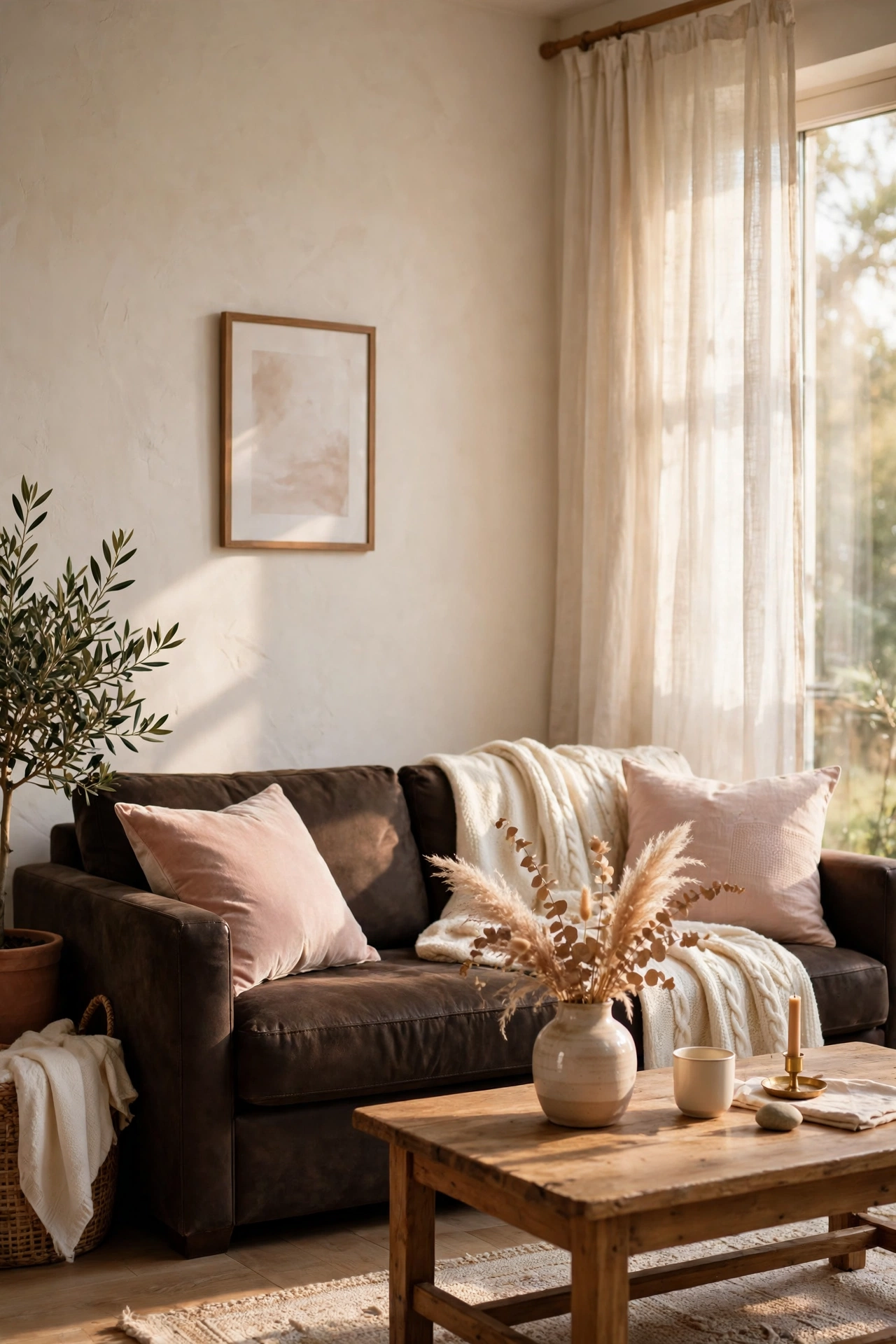
29. Soften It with Blush and Soft Pink
Blush pink is the surprise accent that works on a dark brown couch, because the soft pink lightens the brown without cooling it the way blue does. A blush pillow or two, a pale pink throw, and a small vase of dried flowers on the coffee table give the sofa a gentle, romantic edge that suits bedrooms-turned-living-rooms, soft modern spaces, and rooms that already lean feminine. Keep the pink pale and dusty rather than bright — a muted blush reads as sophisticated, while a hot pink fights the brown. Pair blush with cream and light wood rather than with other strong colors, so the pink stays the single soft note in the room. This is also a good accent for spring, when the room wants to feel lighter after a dark winter.
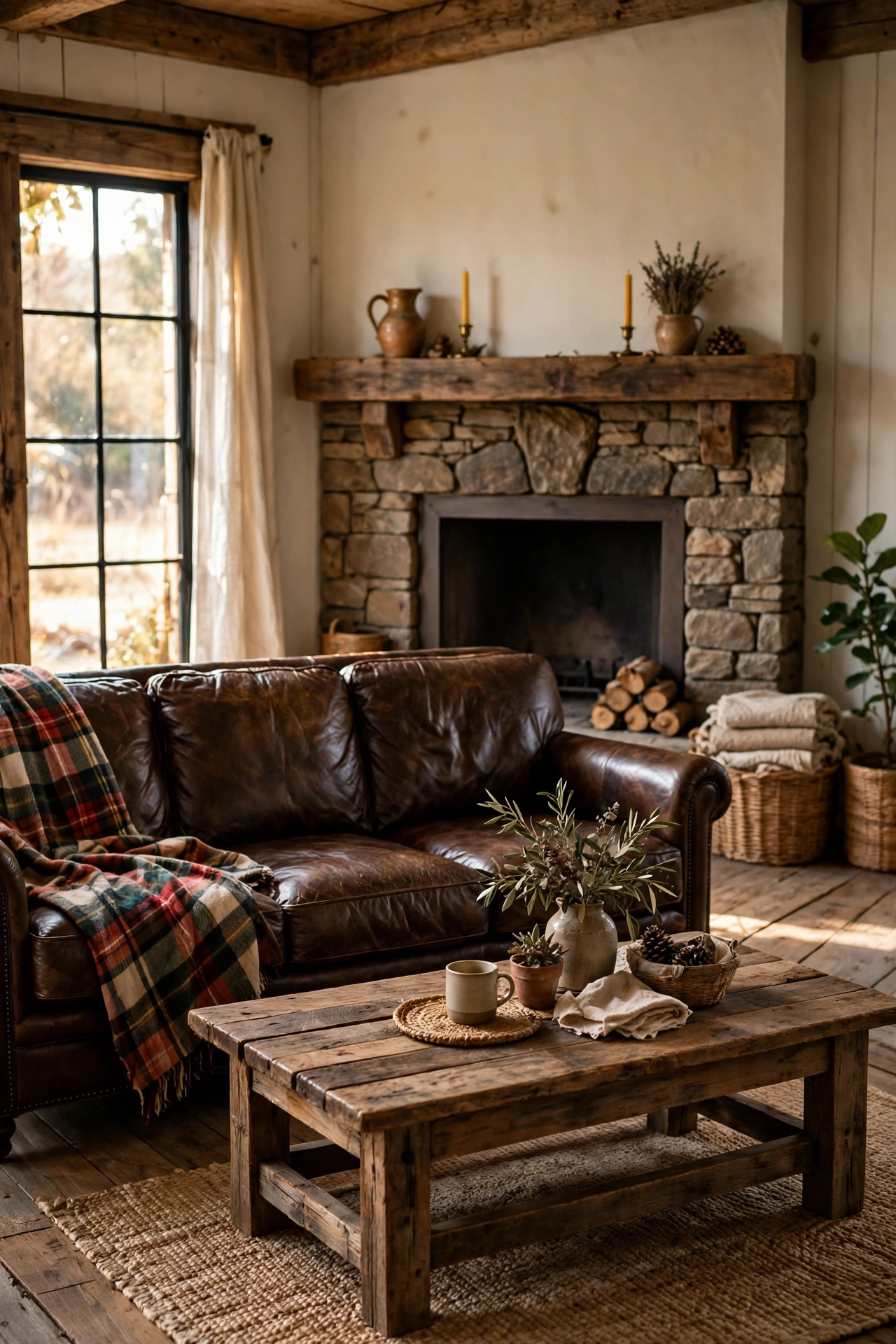
30. Go Rustic Farmhouse with Stone and Wood
A dark brown leather couch is the natural centerpiece of a rustic farmhouse living room, because the style is built from the same materials: worn wood, stone, and leather that looks better with age. Set the sofa across from a stone fireplace, add a reclaimed wood coffee table, layer a plaid throw over one arm, and let the room’s imperfections — a scuffed floor, a weathered beam — do the decorating. The farmhouse look works because it never tries to make the brown couch look light; it leans into the warmth and the weight and balances it with texture instead of color. Keep the walls pale — white shiplap or a soft cream — so the dark leather has contrast, and add greenery in woven baskets for a living touch. This is the most forgiving style for a brown couch, because every element in the room is already warm.
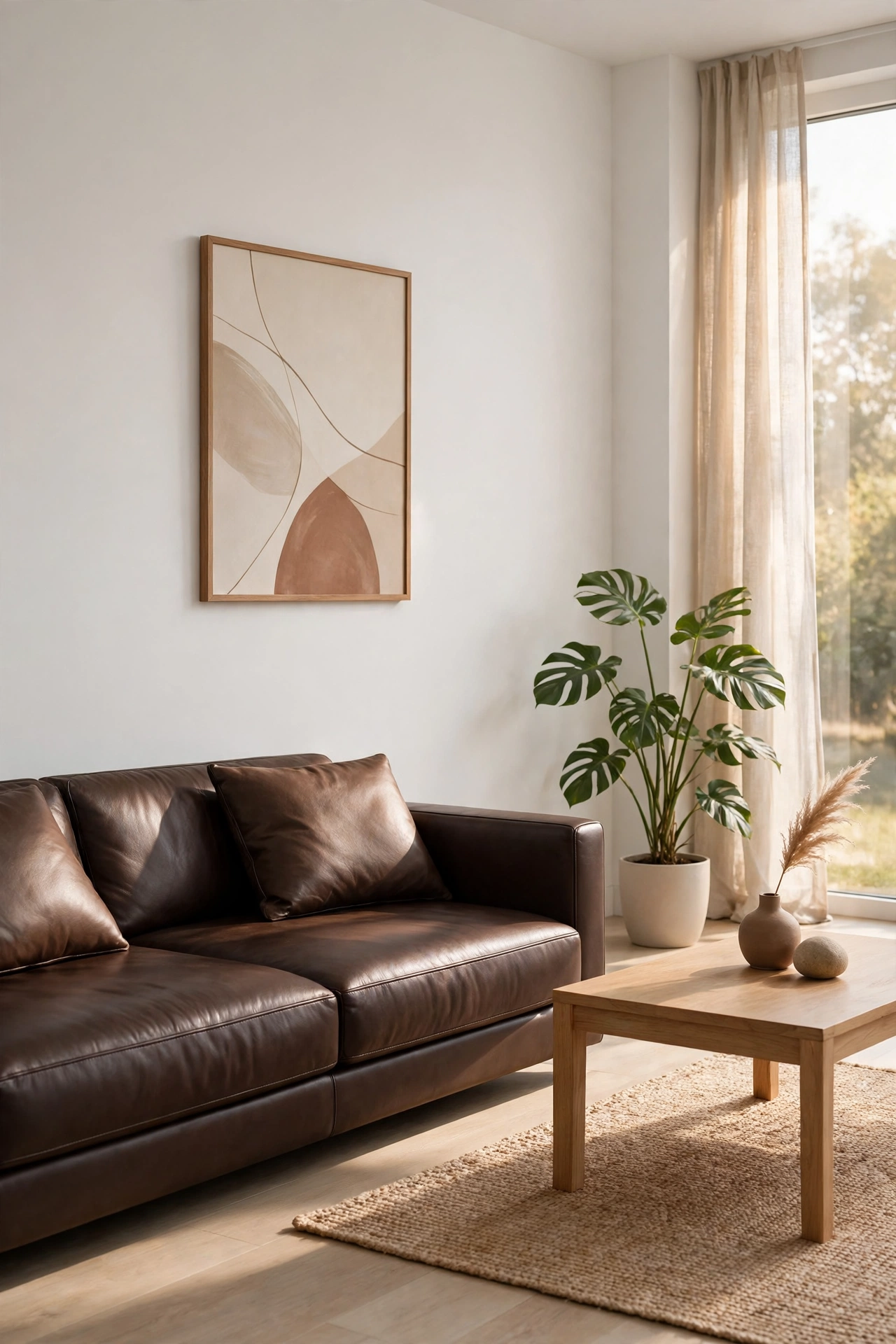
31. Keep It Modern and Minimalist
A dark brown couch can anchor a modern minimalist living room, as long as everything around it is disciplined. Choose a sofa with clean lines — straight arms, no skirt, visible legs — and keep the room’s palette to three colors: brown, white, and one warm wood tone. The coffee table should be simple — a slab of light wood or a plain white surface — and the walls should stay bare except for one piece of art. Minimalism works for a brown couch because it removes the clutter that makes brown feel heavy; with nothing competing for attention, the sofa’s color and shape become the room’s single statement. The risk is a room that feels cold, so add one soft element — a wool throw, a linen pillow — to keep the space livable. Less is the whole point here.
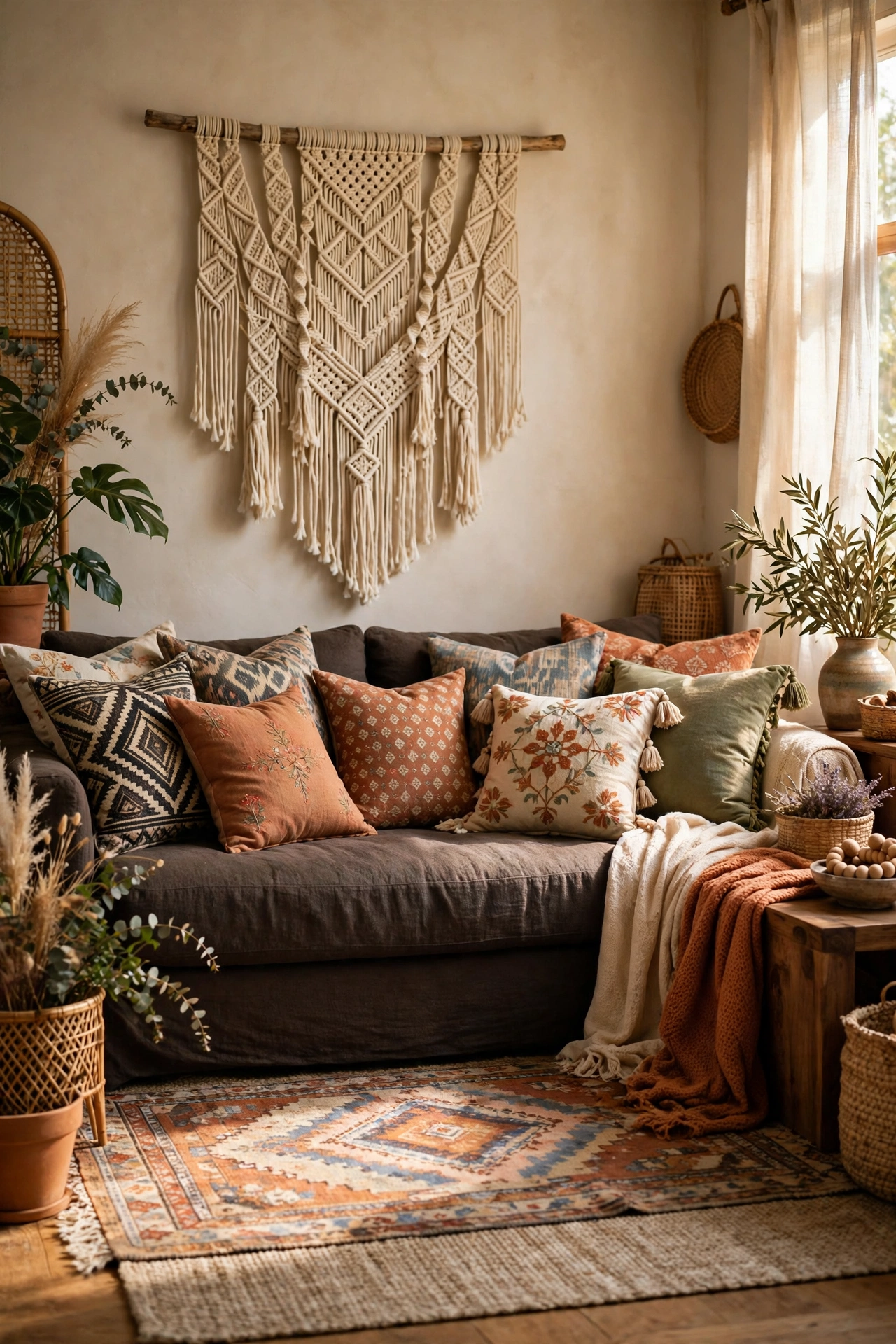
32. Style It Bohemian with Layered Textiles
Bohemian styling is the most forgiving way to live with a dark brown couch, because the style is built on layering — and layers are exactly what a brown sofa needs. Drape a patterned throw over the back, pile on pillows in different prints and textures, layer two rugs under the coffee table, hang a macrame wall piece above the sofa, and let plants trail from the shelves. The brown couch becomes one layer among many rather than the room’s dominant feature, and the mix of patterns and textures keeps the eye moving. The rule that keeps boho from becoming clutter is a shared color family: keep the pillows, throws, and rugs in warm tones — rust, cream, ochre, olive — so the layers feel collected rather than random. A brown couch in a boho room feels like it was found at a market, which is the whole charm.
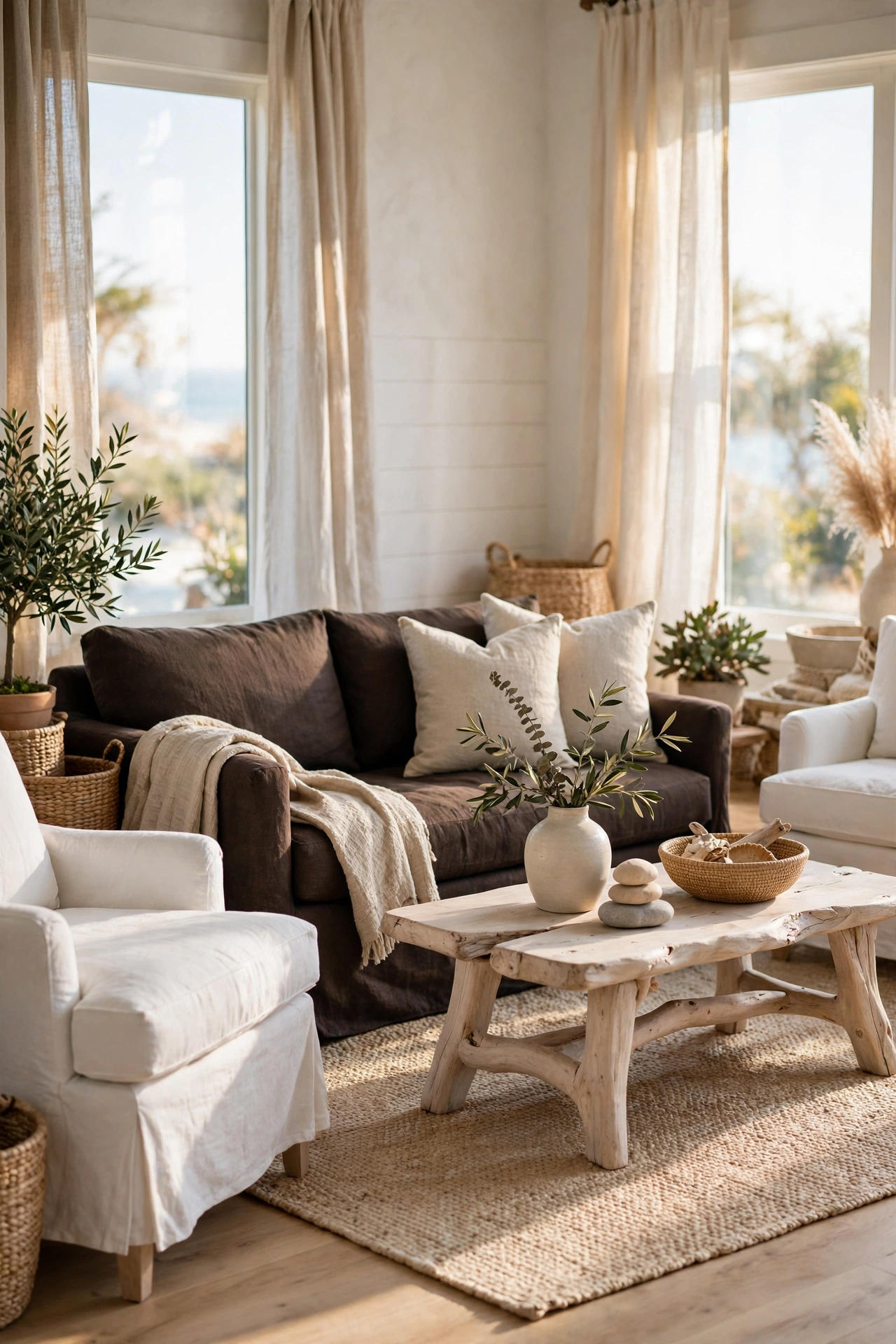
33. Lighten It with a Coastal Touch
Coastal style seems like the opposite of a dark brown couch, and that contrast is what makes it work. White slipcovered accent chairs, linen curtains, a pale driftwood coffee table, and a light rug all pull brightness into the room, while the brown sofa provides the grounding weight that keeps a coastal room from floating away. The trick is to keep the coastal elements light and natural — bleached wood, woven seagrass, linen, and glass — rather than themed, so the room reads as bright and airy instead of beachy. A few blue accents — a navy pillow, a sea-glass vase — connect the sofa to the coastal palette without overwhelming it. This is the best style for a brown couch in a room with big windows and lots of daylight, where the light itself does half the work.
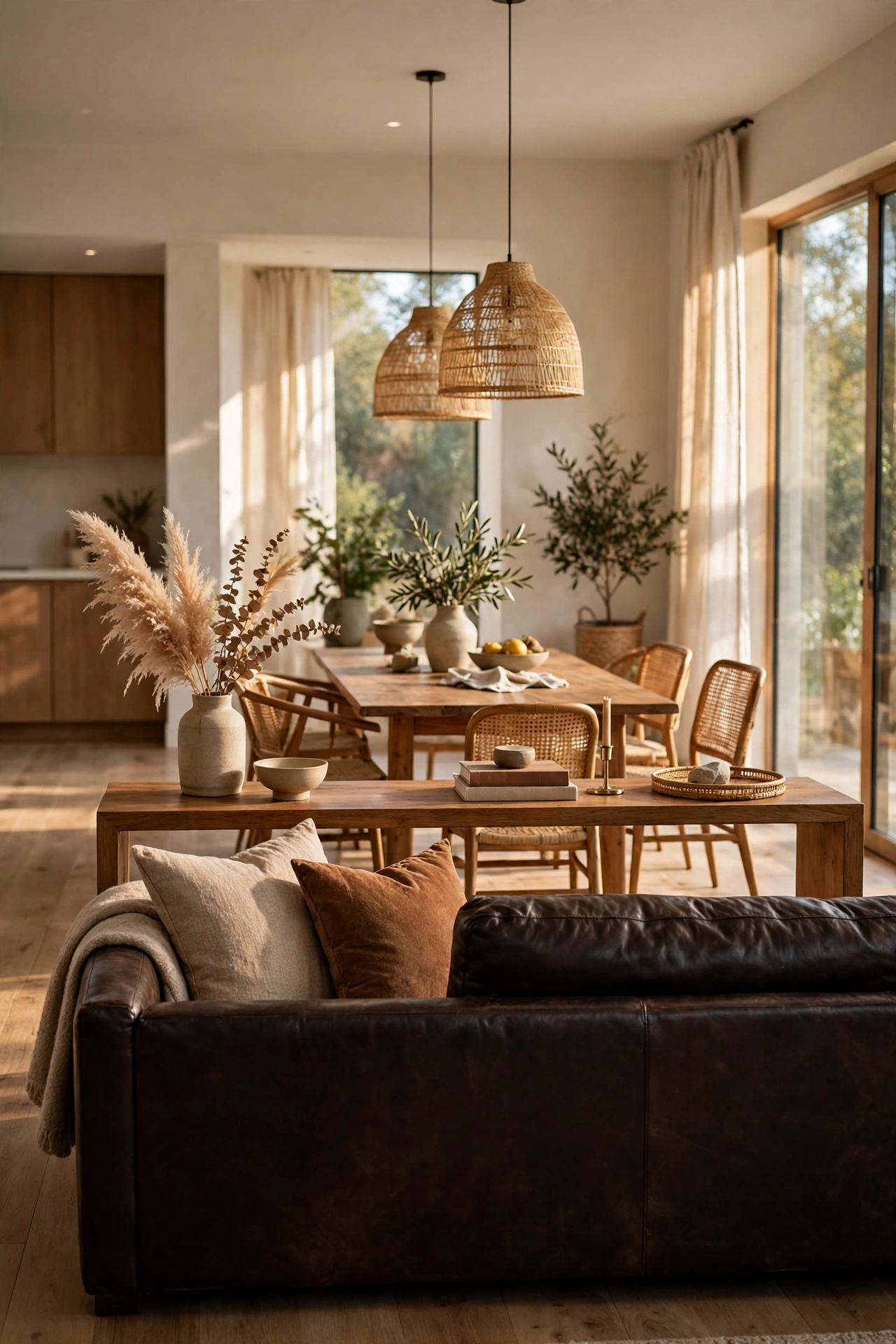
34. Use the Sofa as a Room Divider in an Open Plan
In an open-plan living room, a dark brown couch can do a job no other piece can: divide the space. Place the sofa with its back to the dining area and it becomes a wall — a low, soft wall that separates the living zone from the dining zone without blocking light or conversation. This works because the sofa’s dark color reads as a boundary from the other side of the room, while its low height keeps the space feeling open. Put a console table behind it to finish the division and give the dining side a surface for a lamp or a vase. Keep the rug under the sofa and the coffee table in front of it, so the living zone is clearly defined, and let the dining area have its own lighter palette. The sofa stops being just seating and becomes the room’s architecture.
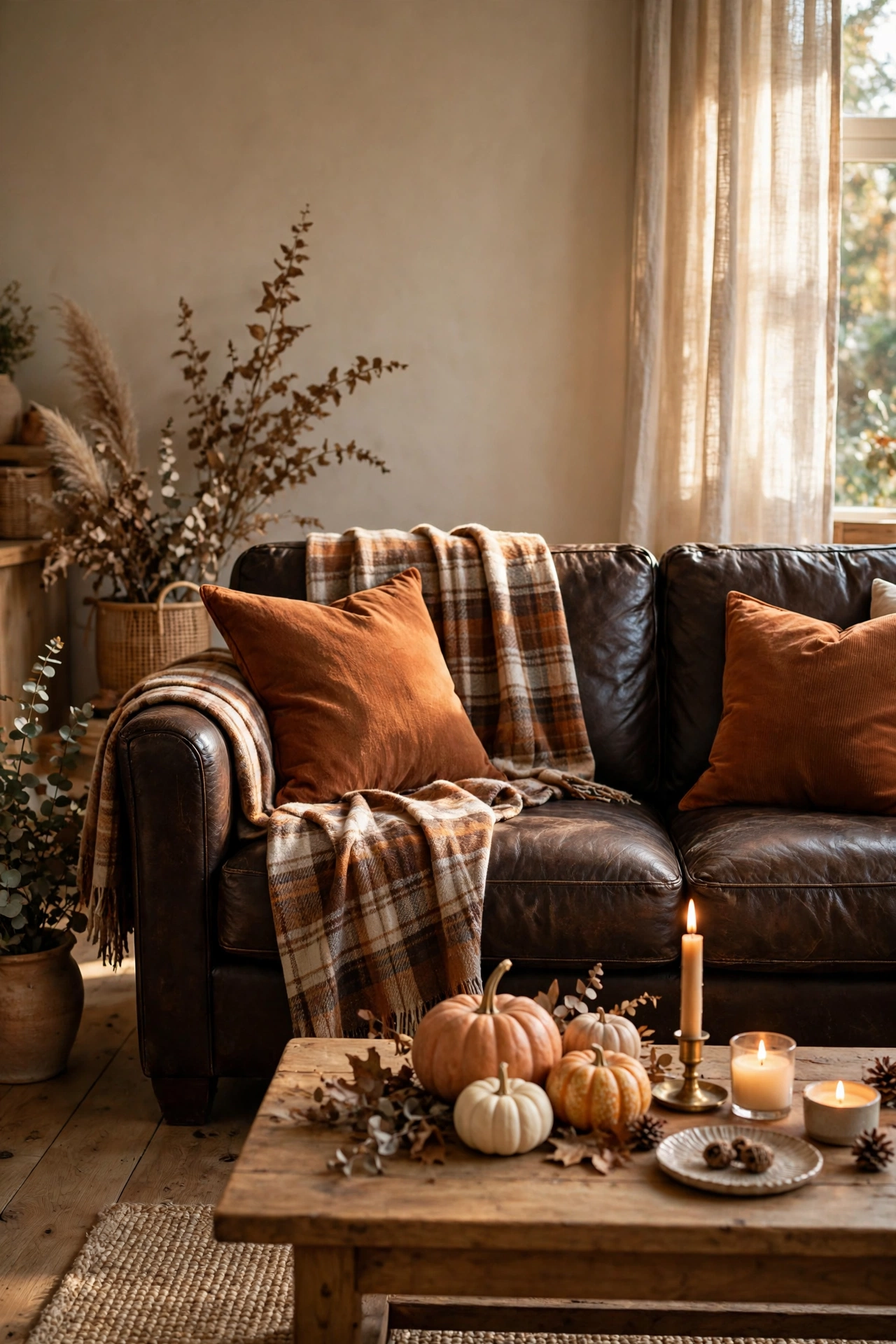
35. Style It Seasonally for Fall
Fall is the season a dark brown couch was made for, and seasonal styling is the easiest way to make it feel fresh again. Swap in a plaid throw and rust-colored pillows, set a wooden tray on the coffee table with candles and a small pumpkin or two, and add a basket of chunky knit blankets beside the sofa. The warm, harvest palette — rust, ochre, deep red, cream — harmonizes with the brown instead of fighting it, and the candles add the warm light that brown needs to look its best. Keep the seasonal decor to one surface — the coffee table and one arm of the sofa — so the room feels styled rather than decorated for a holiday. When fall ends, swap the plaid for cream linen and the room is ready for spring. A brown couch is the one sofa that genuinely looks better in October than it does in July.
Frequently Asked Questions
What colors go best with a dark brown couch?
Warm whites, cream, and beige are the safest partners because they brighten the room without creating a cold contrast. For more contrast, olive green and deep blue both stay grounded next to brown, while rust and terracotta intensify its warmth. Avoid cool grays, which can make brown look muddy, and avoid pairing brown with another very dark color unless you are deliberately going for a moody look with strong warm lighting.
How do I keep a dark brown couch from making the room feel heavy?
Build contrast at every level: pale walls behind the sofa, a light rug underneath it, cream pillows on it, and warm light aimed at it. Keep the furniture around it lighter in tone — light wood tables, a light rug — and add one reflective element, like brass or a mirror, to bounce light around. The goal is not to hide the couch but to surround it with enough lightness that its darkness reads as richness rather than weight.
What color rug goes with a dark brown couch?
A cream or ivory rug is the safest choice because it creates a pale island under the sofa. A bold patterned rug in navy, burgundy, or cream works if you want more personality, and a natural jute rug adds organic texture. Whatever you choose, size it generously — it should extend at least 18 inches beyond the sofa on each side, with the front legs of the couch sitting on it — because a rug that is too small makes the sofa look stranded.
What color walls look good with a dark brown sofa?
Warm white, soft ivory, and light greige are the most reliable choices because they give the sofa maximum contrast. Sage green is the best colored option for a calm, earthy room, while dark green and even black walls work if you want a moody look — but only with strong warm lighting and cream or brass accents to keep the brown visible. Avoid cool gray walls, which can make brown look dull.
Is a dark brown couch still in style?
Yes. Brown sofas are very much in style right now, as rooms move away from cool gray and back toward warmer, more layered palettes. A dark brown couch works in modern, farmhouse, bohemian, and traditional rooms alike, and leather versions age particularly well. The key is styling: a brown couch with pale walls, layered textures, and warm lighting looks current, while the same couch in a dark room with dark furniture looks dated.
How do I style a brown leather couch vs a brown fabric couch?
Leather is smooth and reflective, so it needs soft, matte textures around it — linen pillows, a wool throw, a woven rug — to keep the room from feeling slick. Fabric is matte and absorbent-looking, so it benefits from a little sheen nearby — a velvet pillow, a brass lamp, a glass vase — to keep it from looking flat. Leather suits rustic, classic, and moody rooms; fabric suits modern, coastal, and family rooms. The wall, rug, and lighting rules are the same for both.
Conclusion
A dark brown couch is not a problem to solve — it is an anchor to build around. The ideas in this guide all work on the same principle: give the brown something to play against. Pale walls and a light rug create the contrast, warm wood and brass add richness, plants and texture add life, and good lighting makes the whole thing visible. You do not need to use all 35 ideas. Start with the three that cost the least — lighter pillows, a lighter rug, and a warmer bulb — and the room will already feel different. Then add the bigger moves — the wall color, the gallery wall, the layout change — one at a time, and let the couch earn its place as the warm, grounded center of your living room. If you want more living room inspiration, our genius IKEA hacks show how simple, budget-friendly pieces can work hard in the same space.