
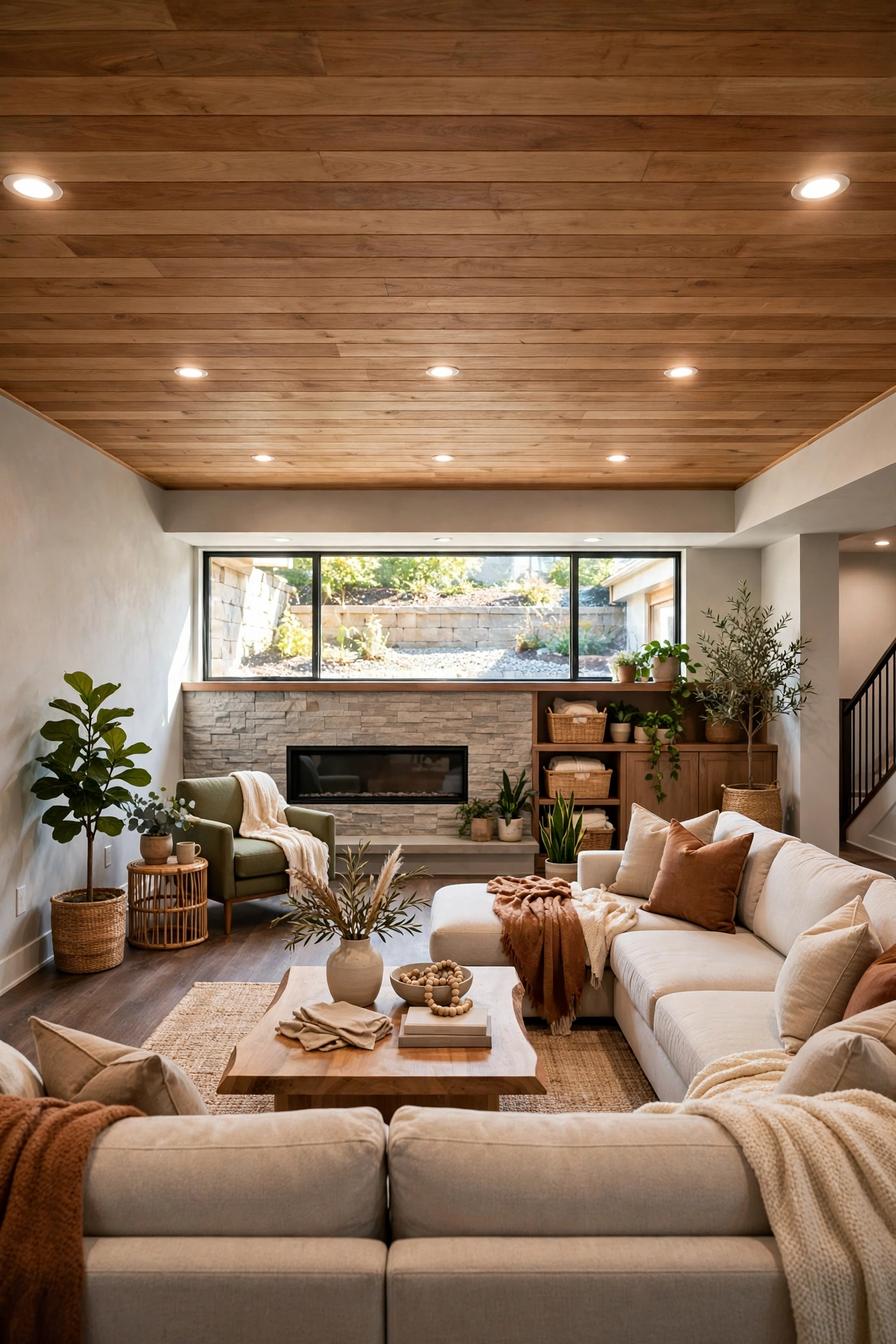
37 Brilliant Basement Ceiling Ideas That Brighten Any Room
Why Your Basement Ceiling Deserves a Real Plan
Most basements fail from the top down. Low joists, exposed pipes, ductwork, and a single bare bulb can make even a nicely furnished room feel unfinished. The good news is that the ceiling is also the fastest way to change how a basement feels: the right treatment can add height, bounce light around, hide clutter, and still leave you access to everything above it. These 37 brilliant basement ceiling ideas cover every situation, from budget-friendly paint jobs to showpiece coffered designs, so you can pick the one that fits your ceiling height, your moisture level, and your budget.
Before you choose, measure your finished headroom, note where shut-off valves and junction boxes sit, and check for any damp spots. A ceiling that looks great but blocks access to a valve is a future headache. Every idea below tells you where it works best and what to watch out for, so you end up with a ceiling that looks finished and stays practical.
1. Painted White Exposed Joists
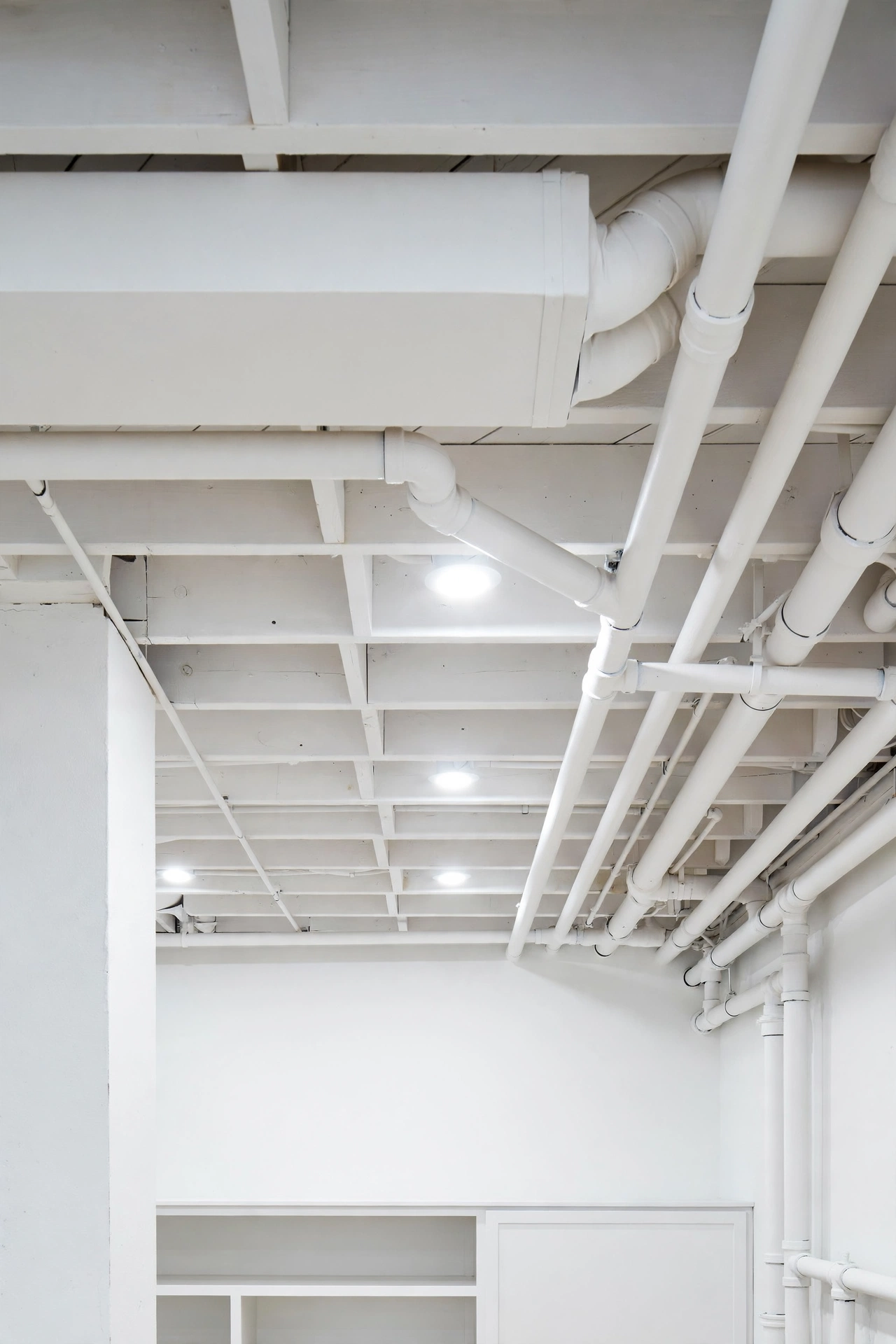
Painting the joists, subfloor, pipes, and ducts all one bright white is the quickest basement transformation there is. It keeps every inch of headroom, costs little more than paint and primer, and instantly makes the space feel cleaner and taller. Use a sprayer for an even coat, and prime any metal ductwork first so the paint grips. This works best in basements with decent headroom and dry conditions, and it pairs beautifully with light walls and warm wood furniture to stop the room feeling stark.
2. Matte Black Exposed Ceiling
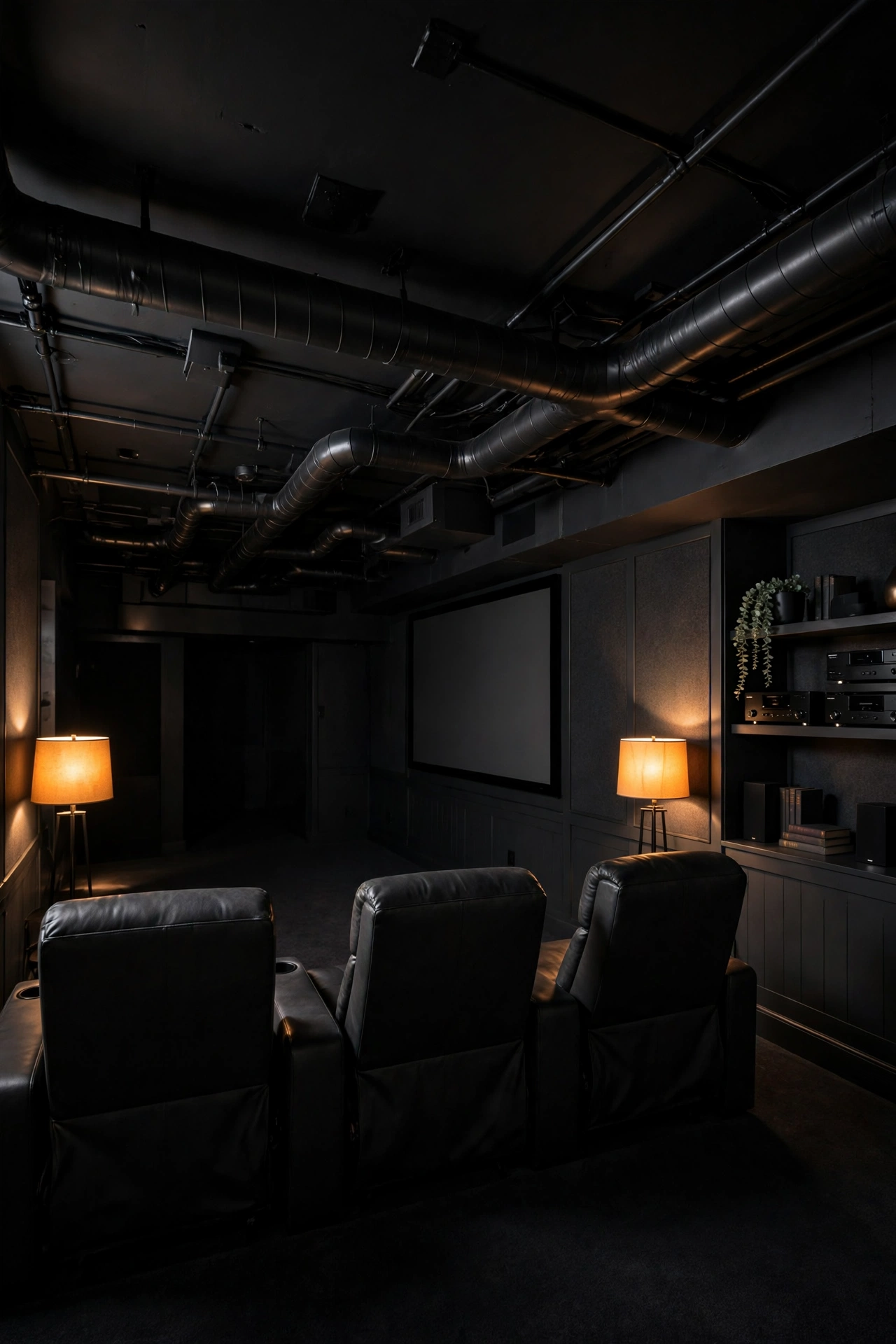
A matte black ceiling does the opposite trick: it makes pipes and ducts visually disappear into shadow, so the eye focuses on the room below instead of the clutter above. It is a favorite for home theaters, bars, and modern lounges. Use flat or matte paint, never gloss, and balance it with light floors, pale walls, and plenty of warm lighting, or the room can feel like a cave. Keep recessed or track lights on dimmers so you can control the mood.
3. Classic Finished Drywall Ceiling
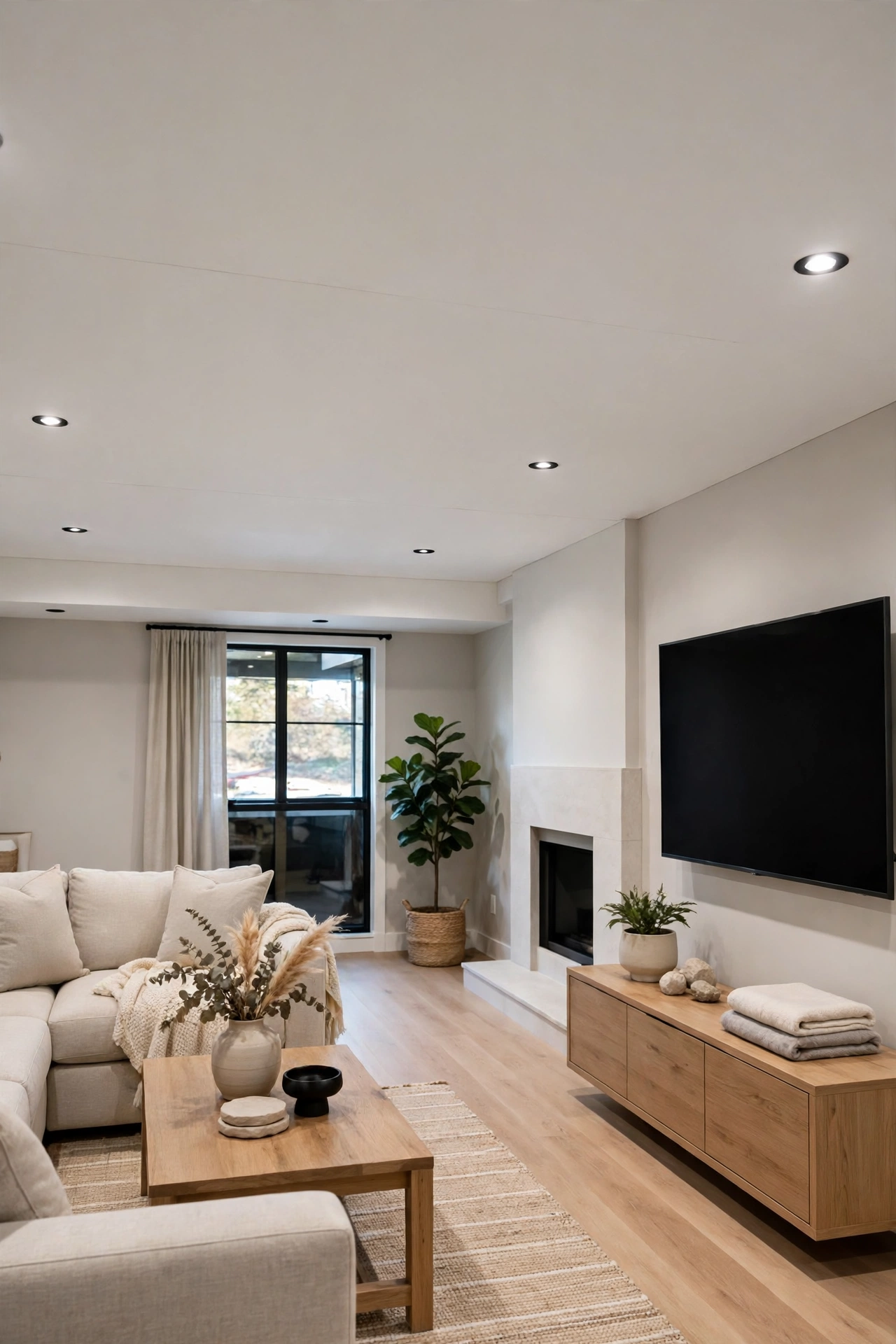
Nothing makes a basement feel like a real room quite like smooth finished drywall. It gives you a clean, paintable surface, hides everything above, and works with any style. The trade-off is access: plan removable panels or access hatches over valves, cleanouts, and junction boxes before the drywall goes up. If your basement is dry and you want the most polished, upstairs look, this is still the gold standard.
4. Modern Drop Ceiling With Decorative Tiles
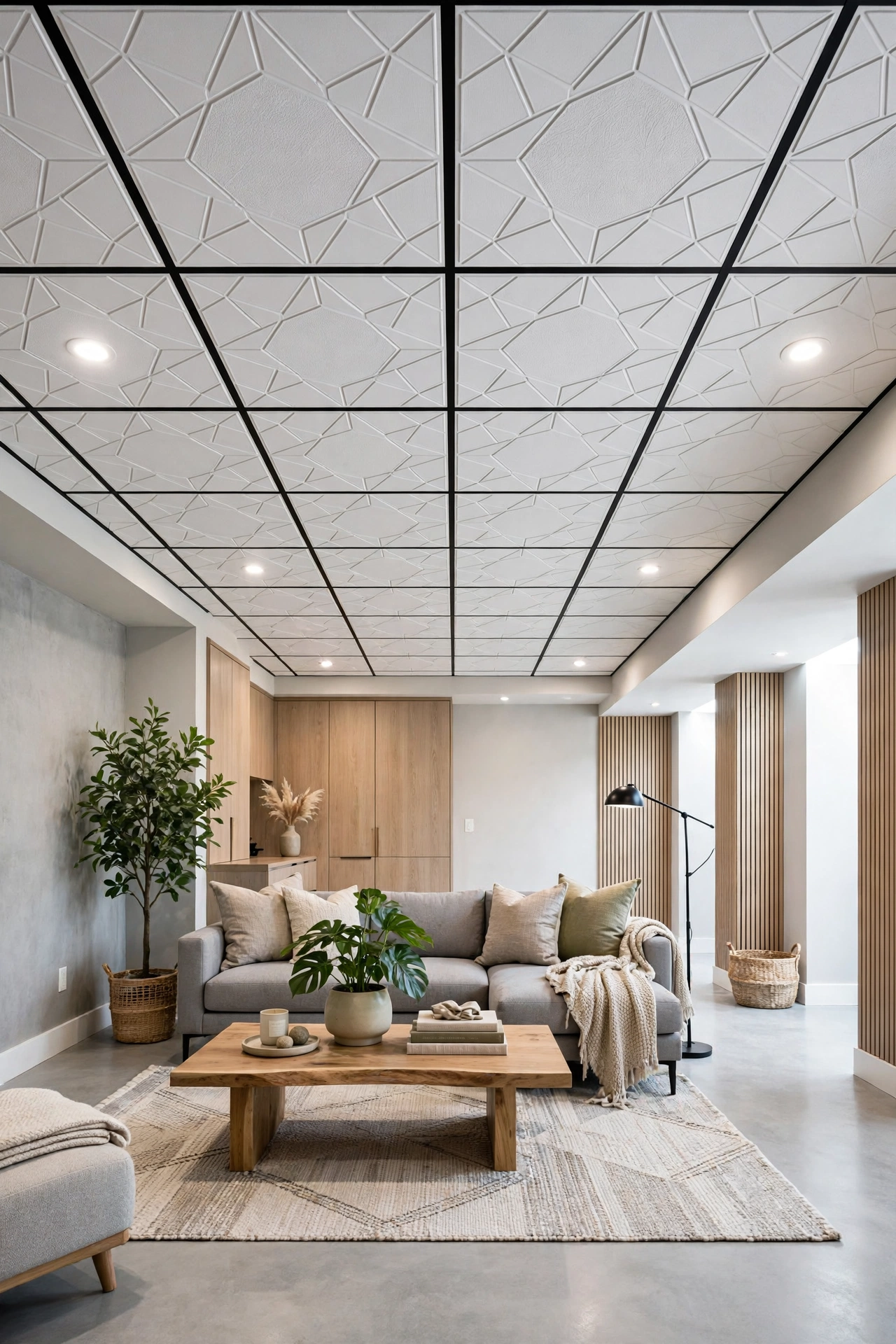
Drop ceilings have moved far beyond the dingy office tiles of the past. Today’s tiles come in wood looks, geometric patterns, and smooth contemporary finishes, and every single tile lifts out for instant access to pipes and wiring. You lose a few inches of height to the grid, so this suits basements with at least eight feet of clearance. Choose tiles with a high light-reflectance rating to keep the room bright.
5. White Beadboard Plank Ceiling
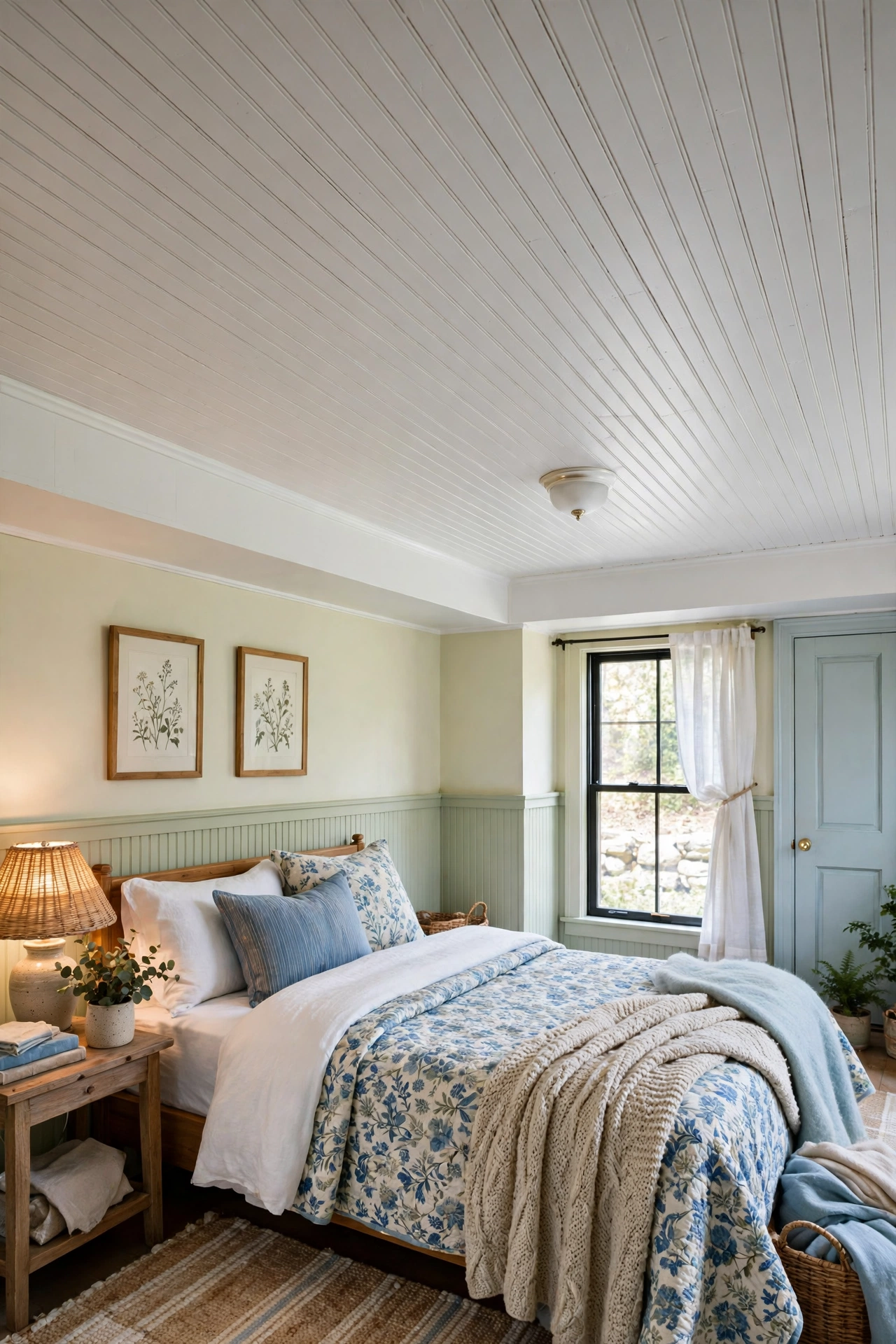
Beadboard brings instant cottage charm. Narrow planks with a beaded groove add texture without heaviness, and painted white they reflect light beautifully. Beadboard panels install faster than individual boards, and they hide minor imperfections in the joists above. It is a lovely choice for a basement guest suite, craft room, or coastal-style lounge, especially when paired with soft blue or sage walls.
6. Warm Wood Plank Ceiling
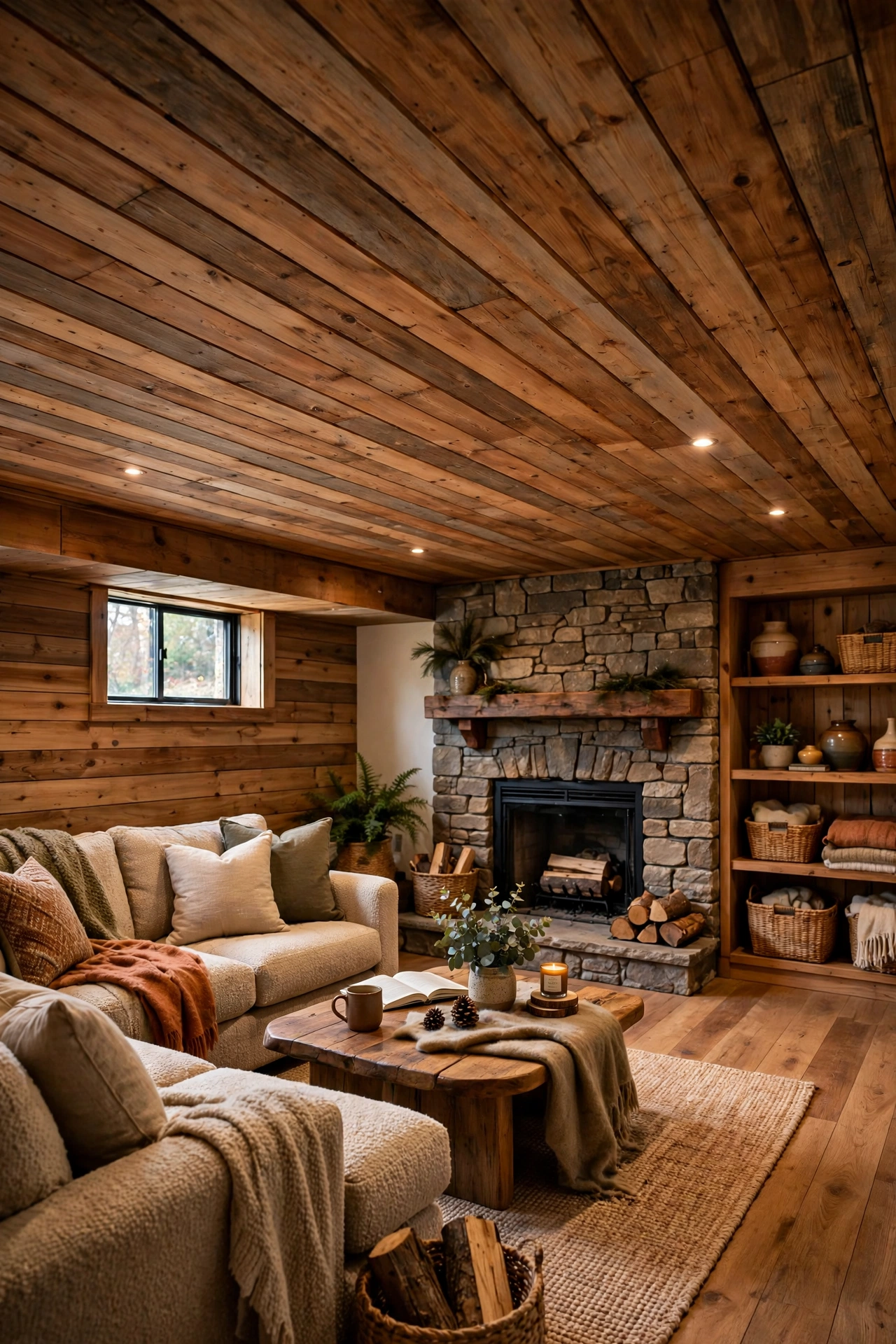
Wide wood planks in a warm natural stain turn a basement into a cabin-like retreat. The wood adds warmth that concrete and drywall never can, and it works in family rooms, bars, and home offices alike. In a basement, choose planks rated for below-grade humidity, leave small expansion gaps, and seal the finish well. For budget-friendly wood routes, see our cheap wood ceiling ideas for planks, plywood, and faux beams that look far more expensive than they are.
7. Faux Wood Beam Grid
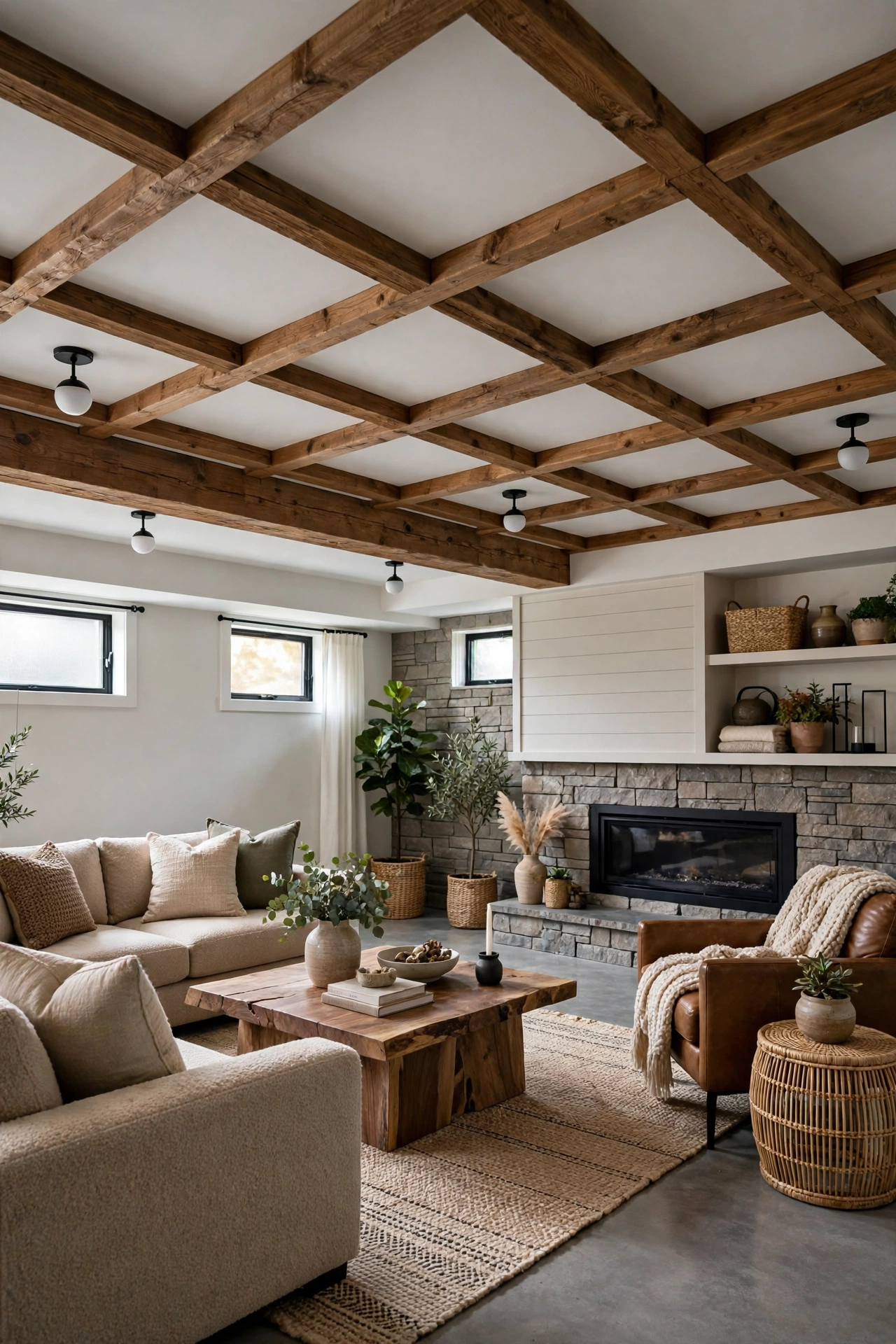
Faux beams give you the architectural drama of heavy timber at a fraction of the weight and cost. Hollow polyurethane or wood-veneer beams mount to the joists and can even hide wiring or a curtain track inside. Run them in a grid over a painted ceiling for a coffered effect, or use a few parallel beams to break up a long, tunnel-like basement. Stain them darker than the ceiling for contrast, or match them for a subtle, tailored look.
8. Coffered Ceiling Panels
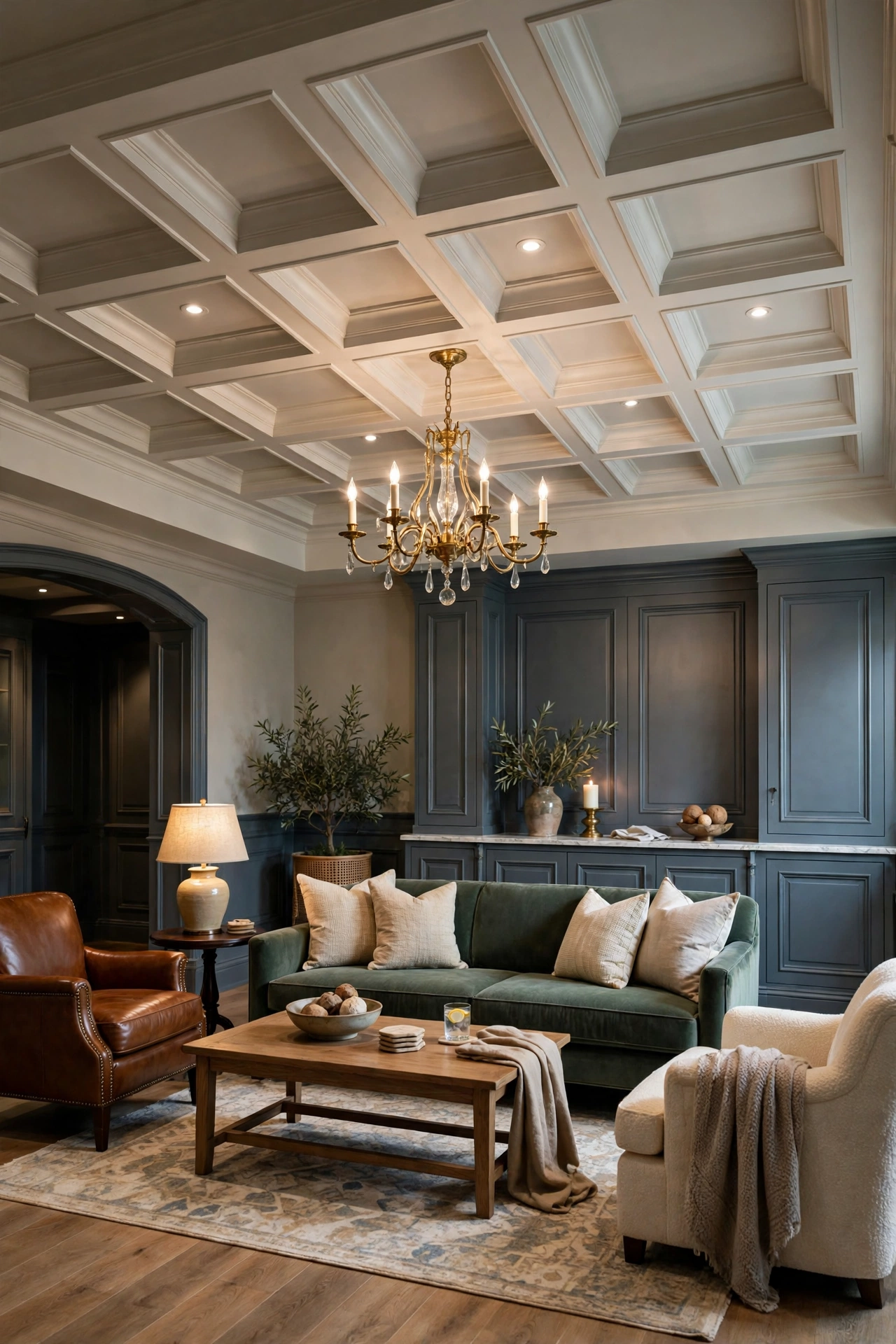
Coffered ceilings, with their grid of recessed panels, add depth and a sense of occasion that flat ceilings cannot match. In a basement, lightweight coffer kits or trim-built coffers keep the weight down and the cost manageable. Paint the recesses a shade darker than the beams for extra depth, and add a dimmable chandelier or pendant in the center panel to anchor the room. This is the showpiece choice for a basement lounge or home theater.
9. Wood Slat Ceiling
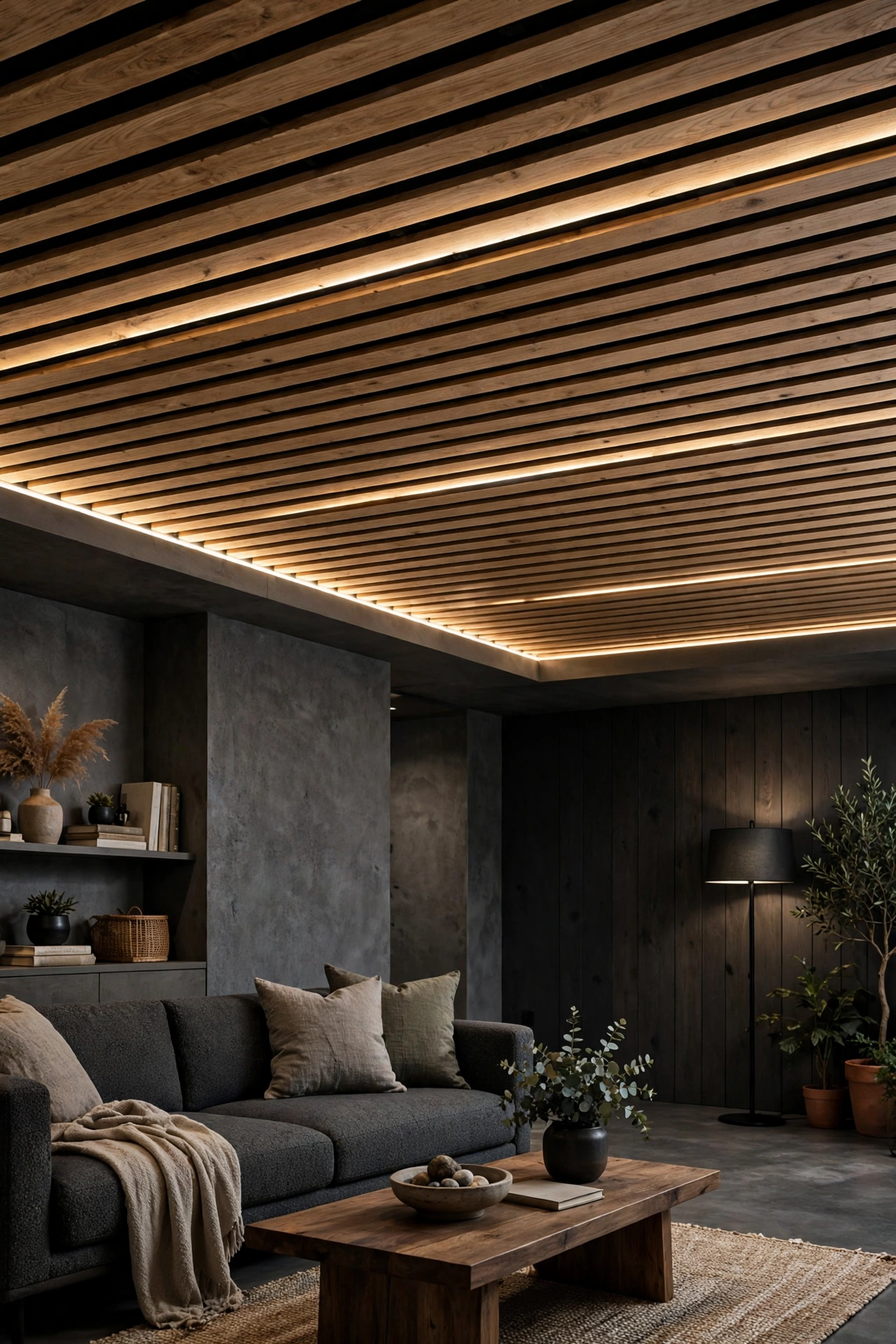
Spaced wood slats, with dark gaps between them, create rhythm and movement overhead. The gaps can hide acoustic backing or LED strips, so the ceiling glows softly from within. Slats draw the eye along their length, which helps a long, narrow basement feel more intentional. Use consistent spacing with a simple jig, and keep the slats slim in low basements so the ceiling does not feel heavy.
10. Shiplap Ceiling
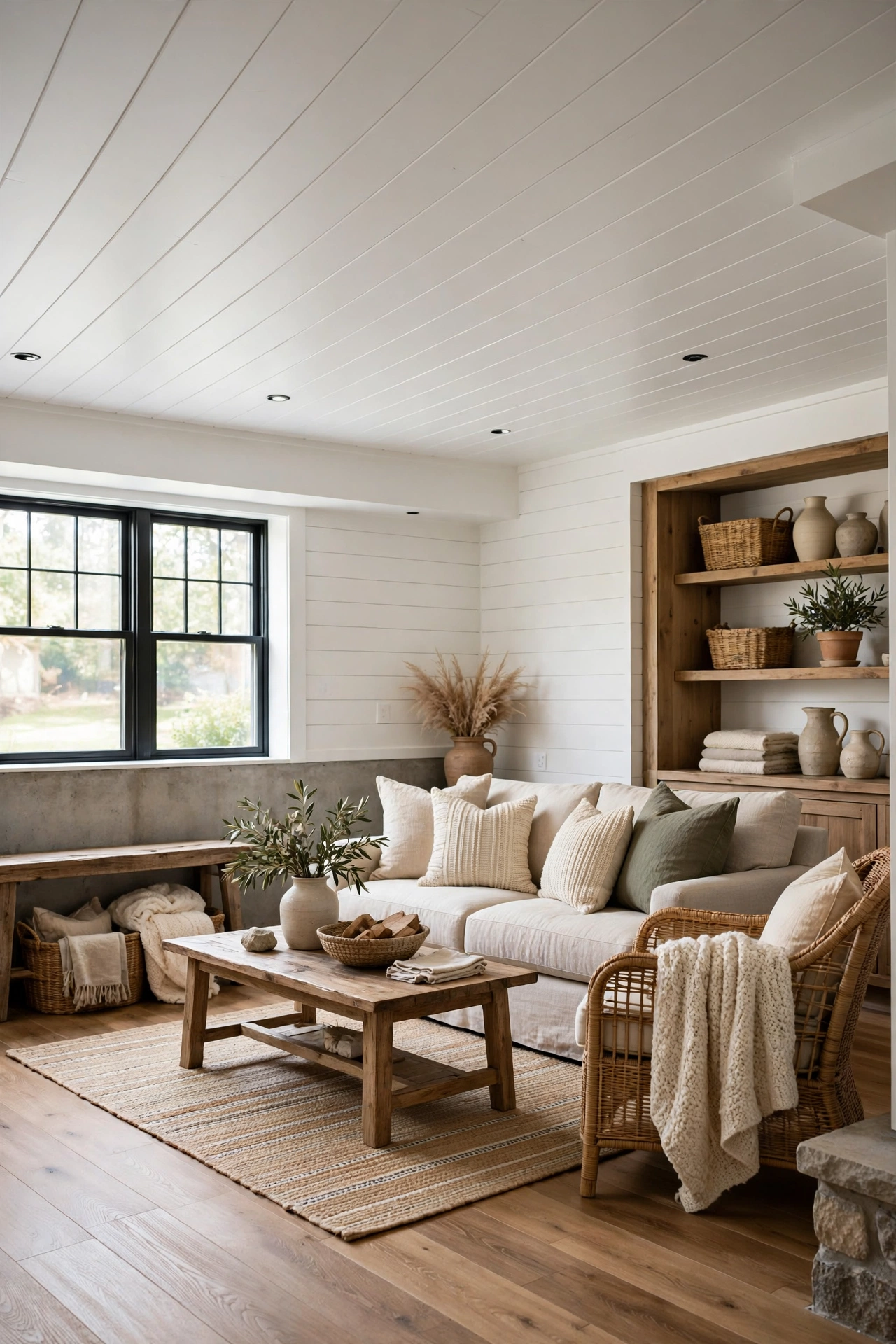
Shiplap’s clean, overlapping lines suit farmhouse and modern-farmhouse basements perfectly. Installed in white, it brightens the room; in a natural stain, it warms it. Shiplap boards are forgiving to install and easy to paint later if your style changes. Run the boards across the shorter dimension of the room to make the space feel wider, and carry the same shiplap onto one accent wall for a finished, designed feel.
11. Tray Ceiling With LED Cove Lighting
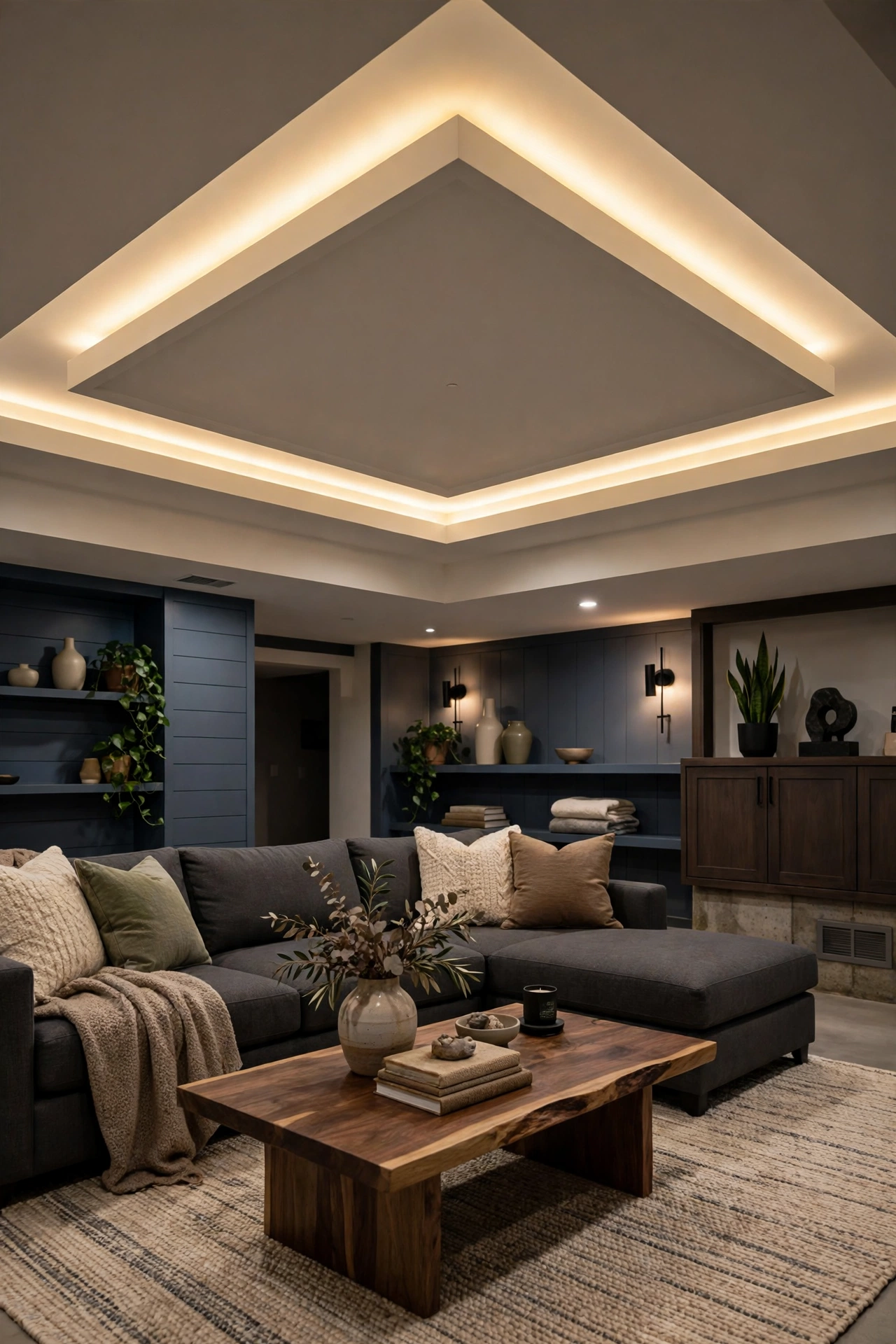
A tray ceiling, a raised central panel with a dropped border, adds architectural height exactly where you need it. Tuck LED strip lighting into the tray’s lip and the ceiling appears to float, washing soft light across the room without any visible fixture. This works best in basements with enough height for the dropped border, and it is a beautiful way to define a seating area or dining zone within an open basement plan.
12. Recessed Can Lights in a Finished Ceiling
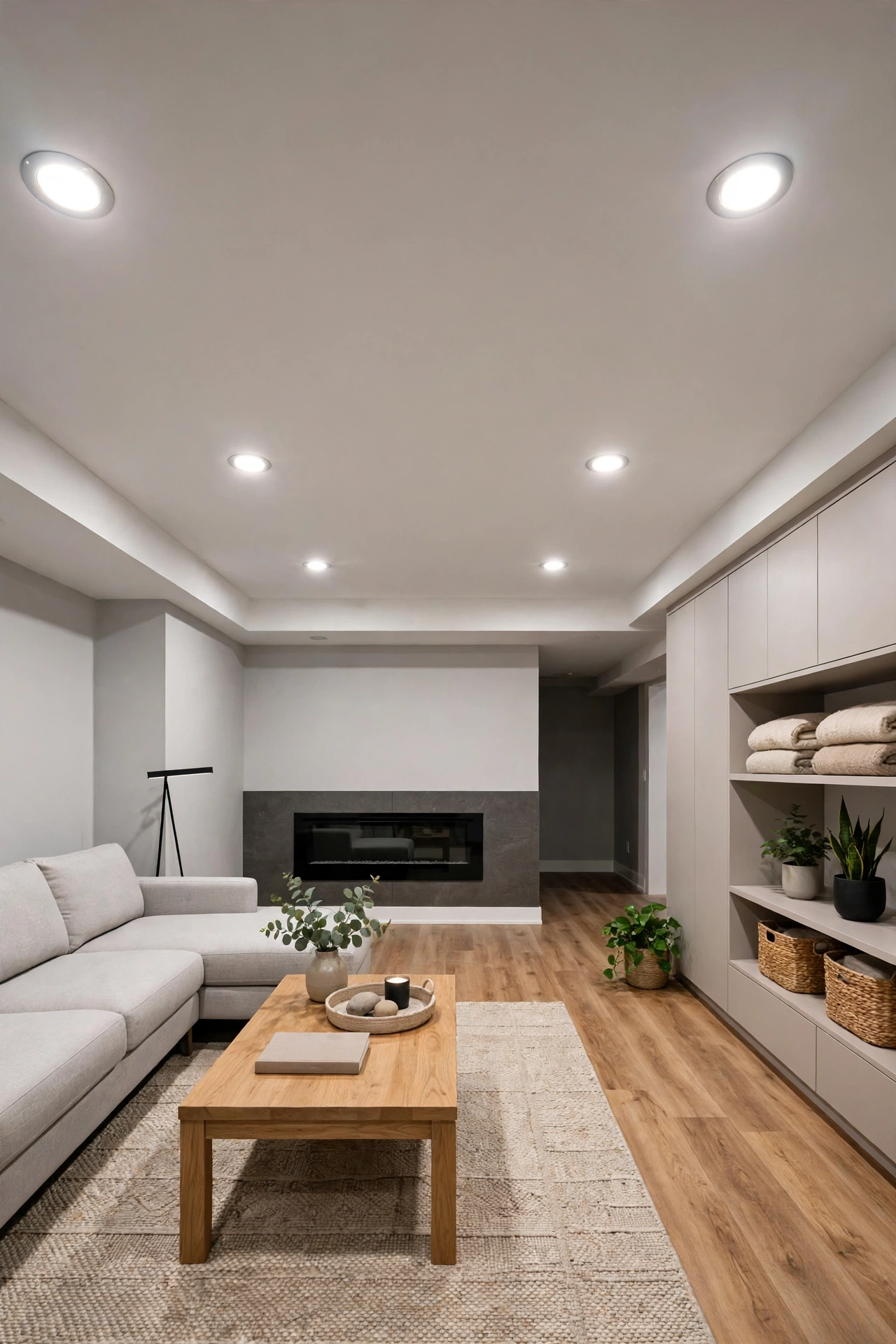
Recessed lights are the workhorse of basement lighting because they add zero visual clutter and preserve headroom. Space them about four to five feet apart, use dimmable LEDs, and aim a few at artwork or shelving rather than just scattering them evenly. If your joists run the wrong way, slim wafer lights fit in tight cavities where old-style cans cannot. Pair them with a dimmer and warm-white bulbs for a cozy evening glow.
13. LED Strip Perimeter Glow
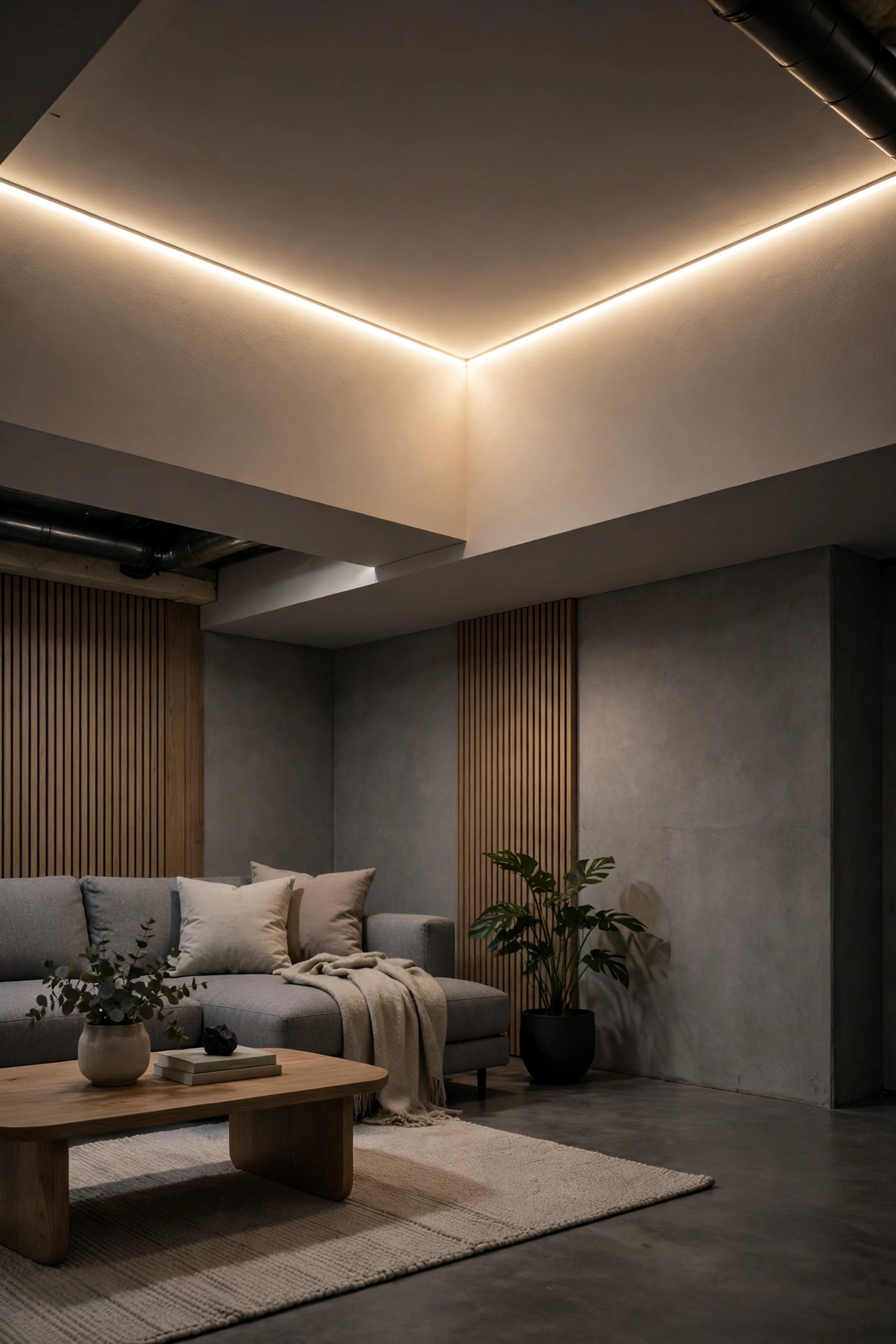
Running LED strips along the perimeter of the ceiling, behind a simple trim lip or crown, creates a soft halo that makes the ceiling feel higher. It is inexpensive, easy to install, and instantly modern. Choose color-temperature-adjustable strips so you can switch from bright daylight white for work to warm amber for movie night. Hide the strip itself completely; only the glow should be visible.
14. Pressed Tin Tiles for Vintage Charm
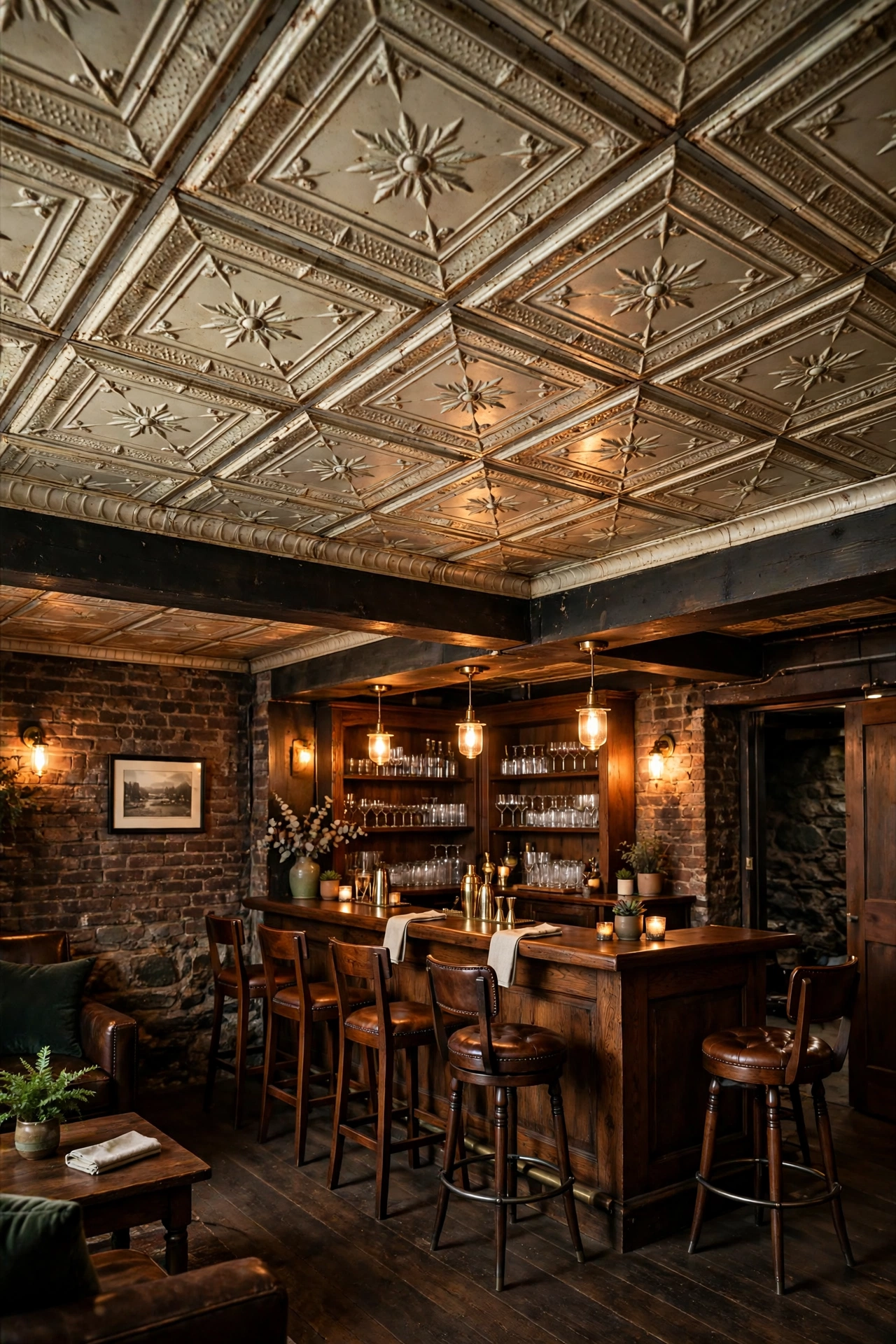
Pressed tin tiles bring old-house character to a basement in a single weekend. Available in dozens of patterns and finishes, from bright white to aged copper, they install as drop-ceiling tiles or nail-up panels. They are light, durable, and easy to wipe clean. Use them across the whole ceiling for a vintage bar or parlor feel, or as a single accent panel over a seating area for a lighter touch.
15. Corrugated Metal Panels for an Industrial Edge
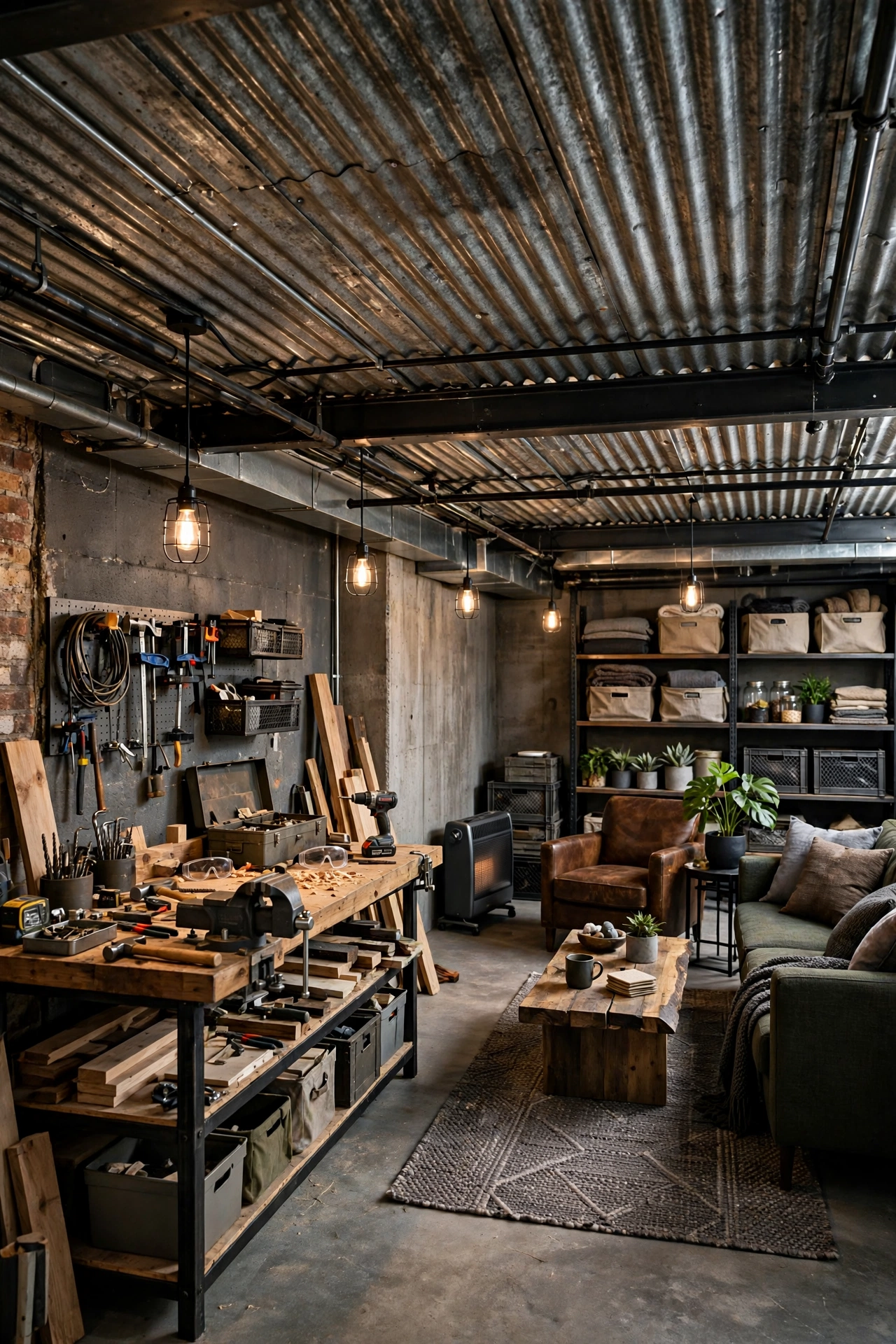
Corrugated metal between the joists gives a basement a bold industrial look that suits workshops, gyms, and urban lounges. The ridges catch light and shadow beautifully, and the panels are tough and moisture-resistant. Paint them matte black for a subtle effect, or leave the galvanized finish exposed for a raw workshop feel. Seal cut edges to prevent rust, and pair metal with warm wood below to keep the room inviting.
16. Fabric Stretch Ceiling
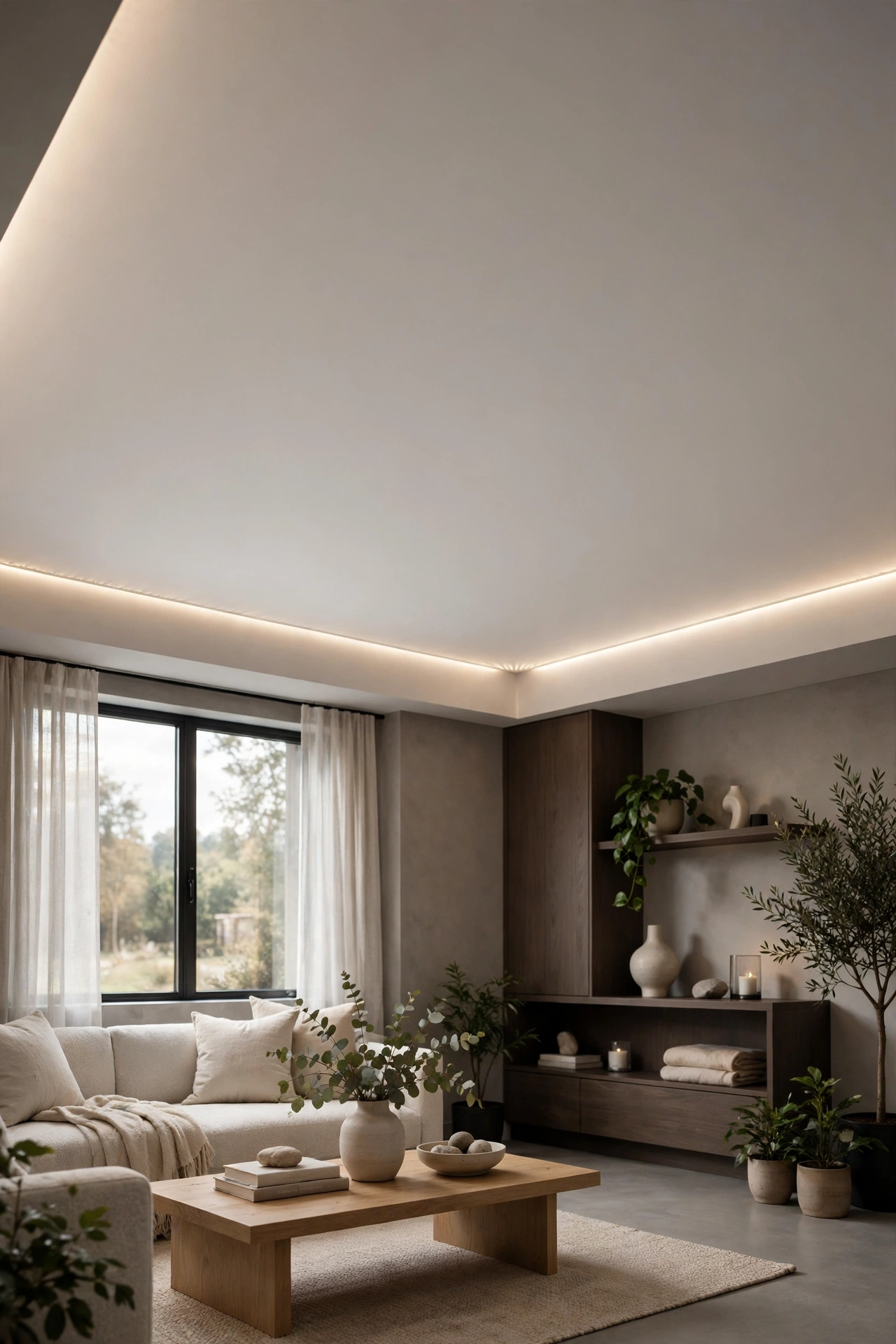
A stretch ceiling is a thin PVC or fabric membrane pulled taut across a perimeter track, creating a flawlessly smooth surface that hides every pipe and wire. It can be printed with a sky, a pattern, or a soft color, and it installs without dust or demolition. Some systems even allow backlighting for a glowing ceiling effect. It is a premium option, but one of the cleanest finishes available for a low, uneven basement ceiling.
17. Acoustic Panels for a Home Theater Ceiling
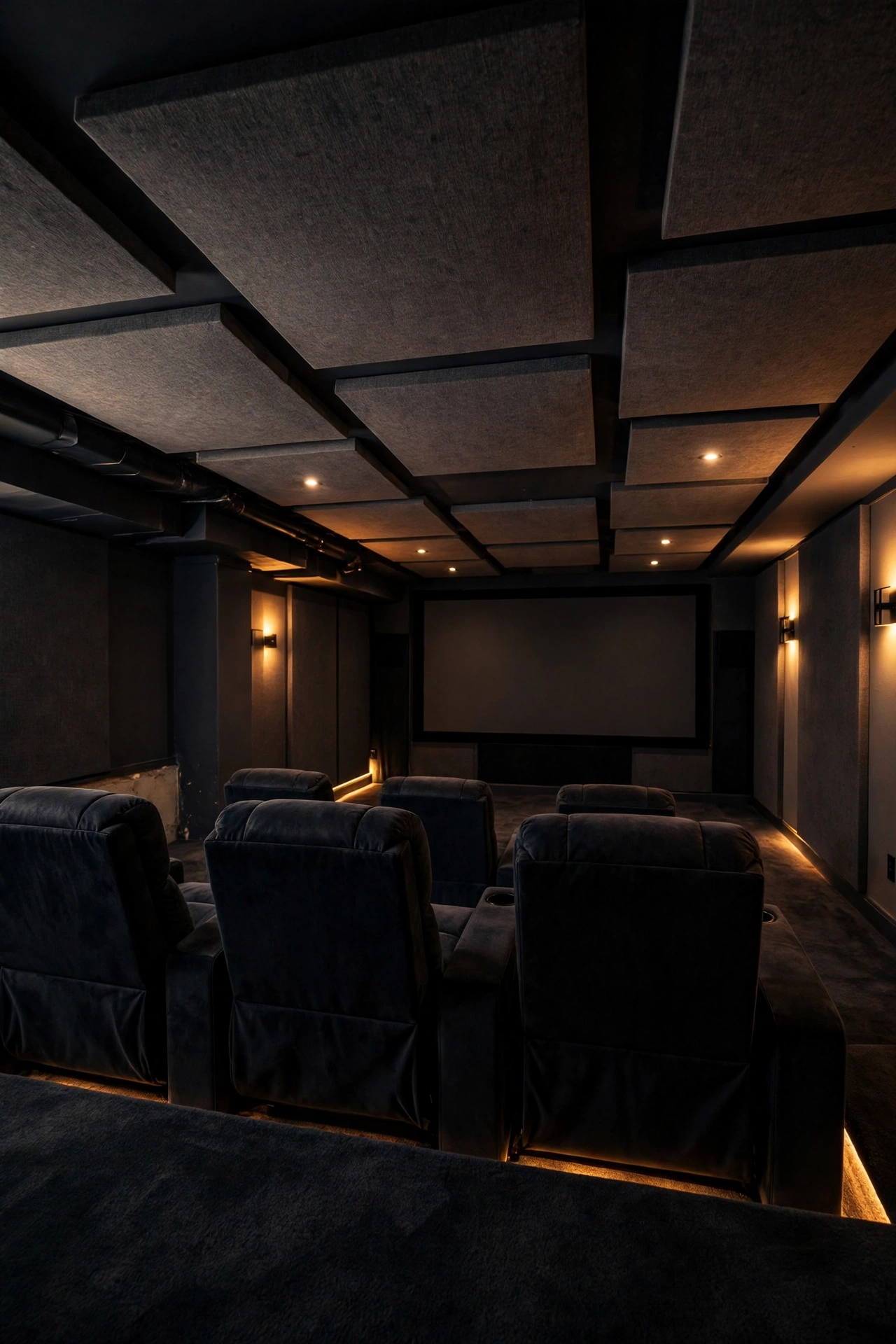
If your basement is a theater or music room, acoustic panels on the ceiling are not a luxury, they are the point. Fabric-wrapped panels absorb echo and make dialogue crisp, while their grid layout looks intentional and designed. Choose panels in a color that matches your walls, or alternate two tones for a subtle checkerboard. Leave access panels over any equipment, and combine them with dark walls and dimmable sconces for a true cinema feel.
18. Starry Sky Fiber-Optic Ceiling
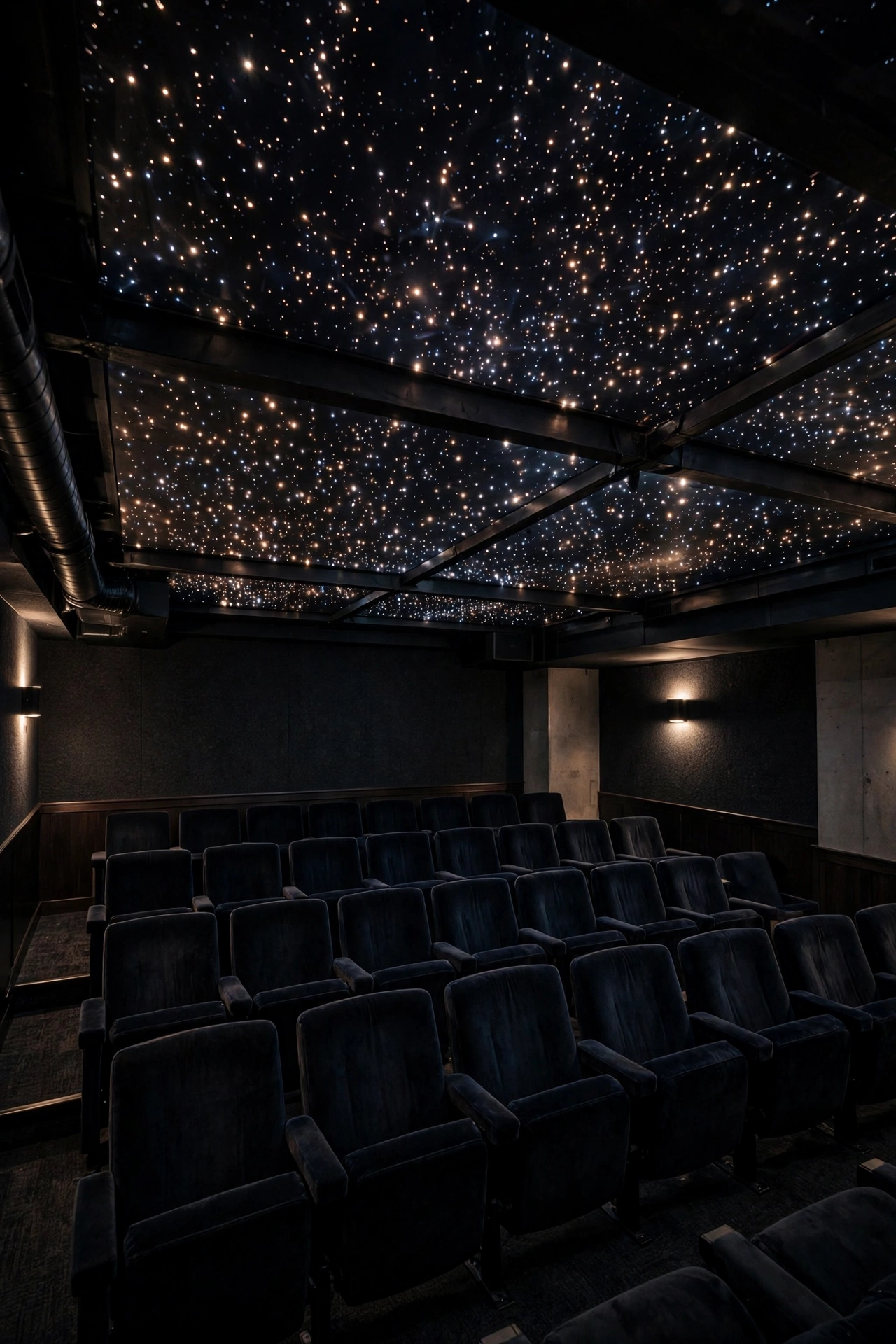
A starry ceiling turns a basement bedroom or theater into a magical escape. Tiny fiber-optic points twinkle across a dark ceiling like a night sky, and many kits let you control twinkle and color from a remote. Install the fibers through a dark painted panel or acoustic board, and keep the rest of the room’s lighting low so the stars take center stage. Kids love it, and adults do too on movie nights.
19. Painted Sky or Cloud Mural
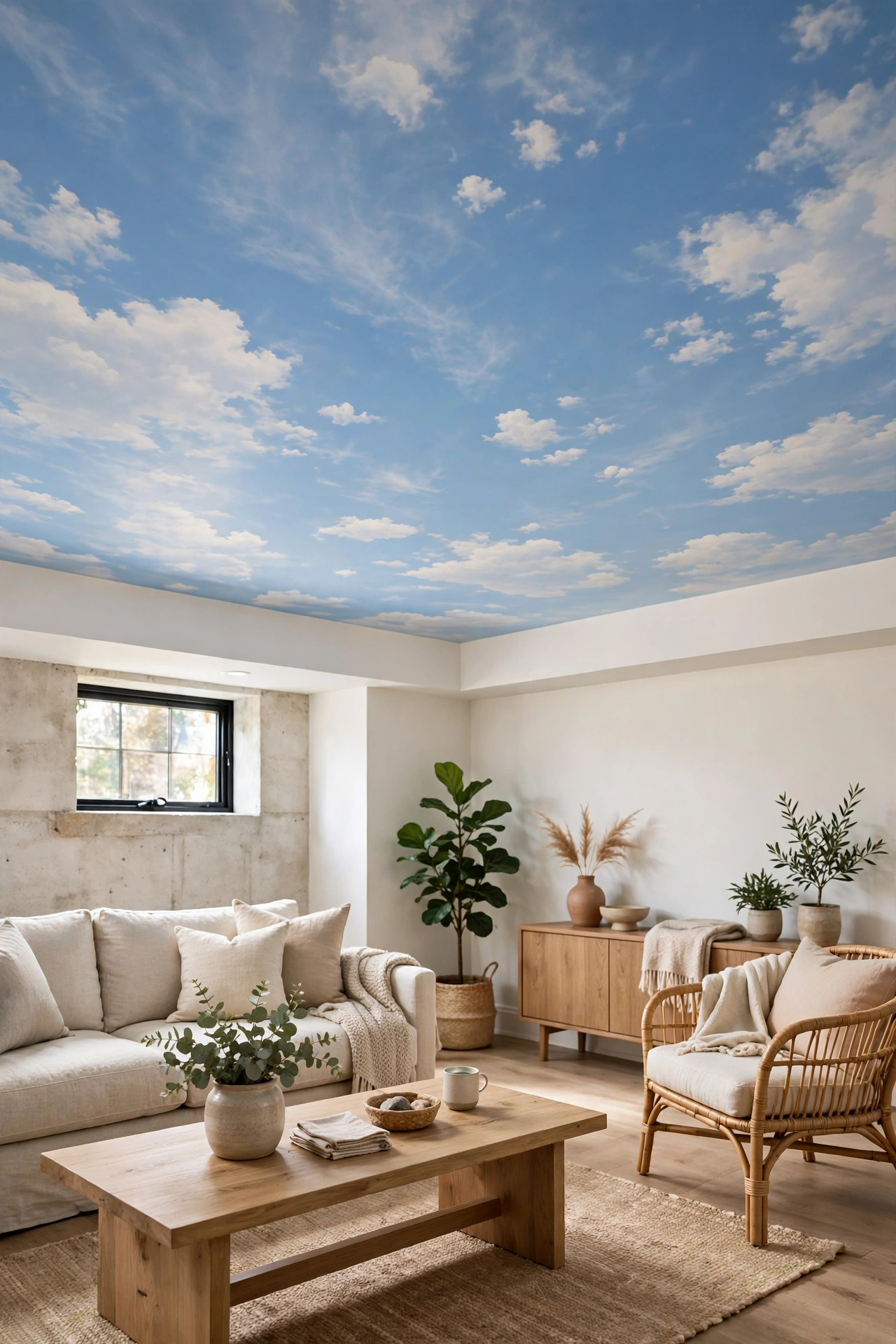
A painted sky mural is the oldest trick for making a windowless basement feel open. Soft clouds, a pale blue gradient, or even a simple trompe-l’oeil skylight can lift the whole room. You do not need to be an artist: stencil kits and peel-and-stick mural panels achieve the same effect. Keep the palette light and airy, and repeat one sky tone on an accent wall to tie the room together.
20. Mirrored Panels to Bounce Light
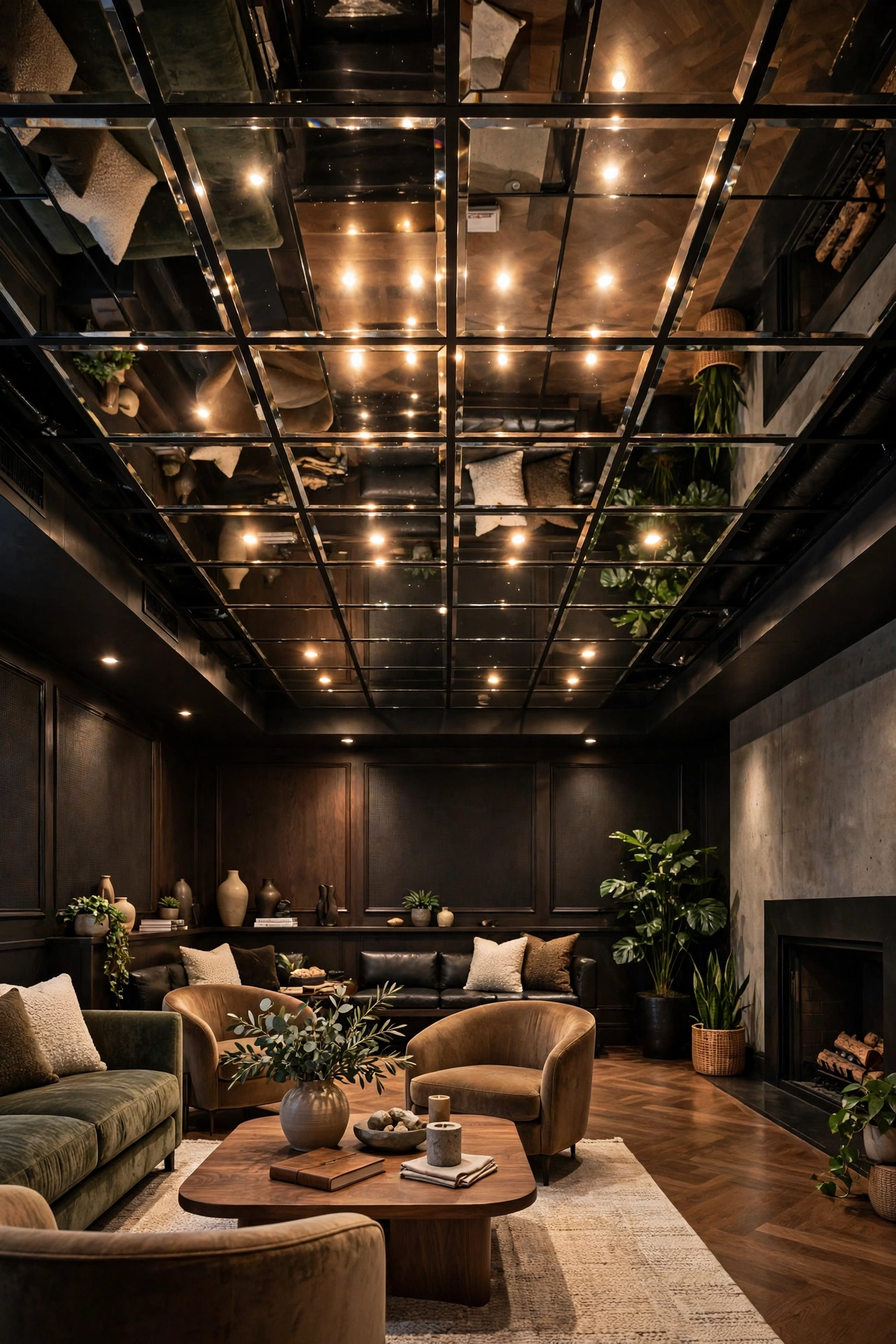
Mirrored ceiling panels, used sparingly, double the perceived light and height in a dark basement. A mirrored border, a single mirrored panel over a bar, or antiqued mirror tiles over a seating area can transform the room without the funhouse effect of a full mirror ceiling. Keep mirrors away from direct views of clutter, and pair them with warm lighting so reflections feel golden rather than harsh.
21. Plywood Plank Ceiling on a Budget
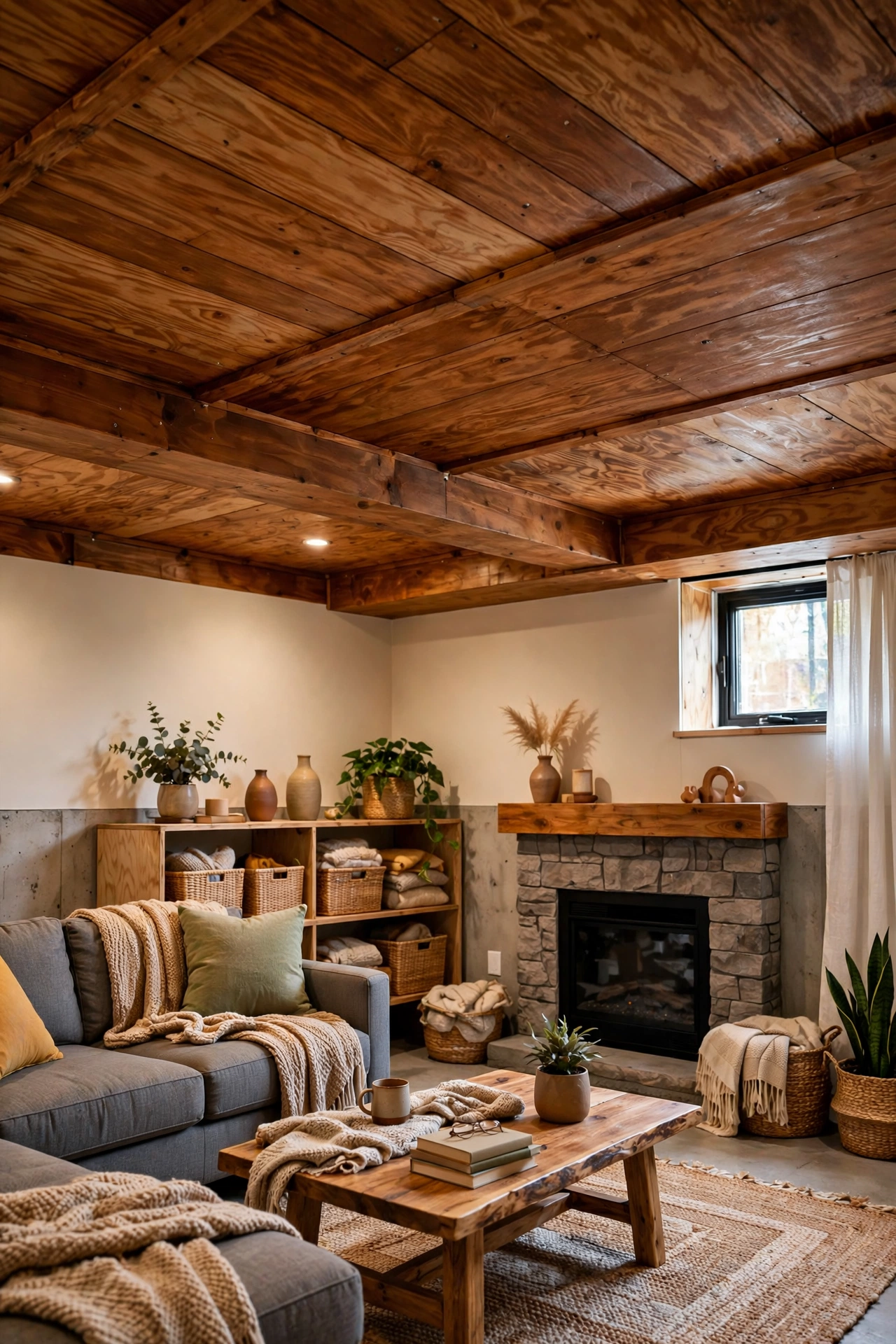
Cut plywood into planks, stain or paint them, and you have a warm wood ceiling for a fraction of lumber prices. Plywood planks are stable, light, and easy to cut around obstacles, which matters in a basement full of pipes. A clear seal keeps the grain visible, while whitewash gives a Scandinavian feel. This is one of the best budget routes to a finished ceiling, and it leaves money in the budget for lighting, which matters just as much.
22. Moisture-Resistant Vinyl Plank Ceiling
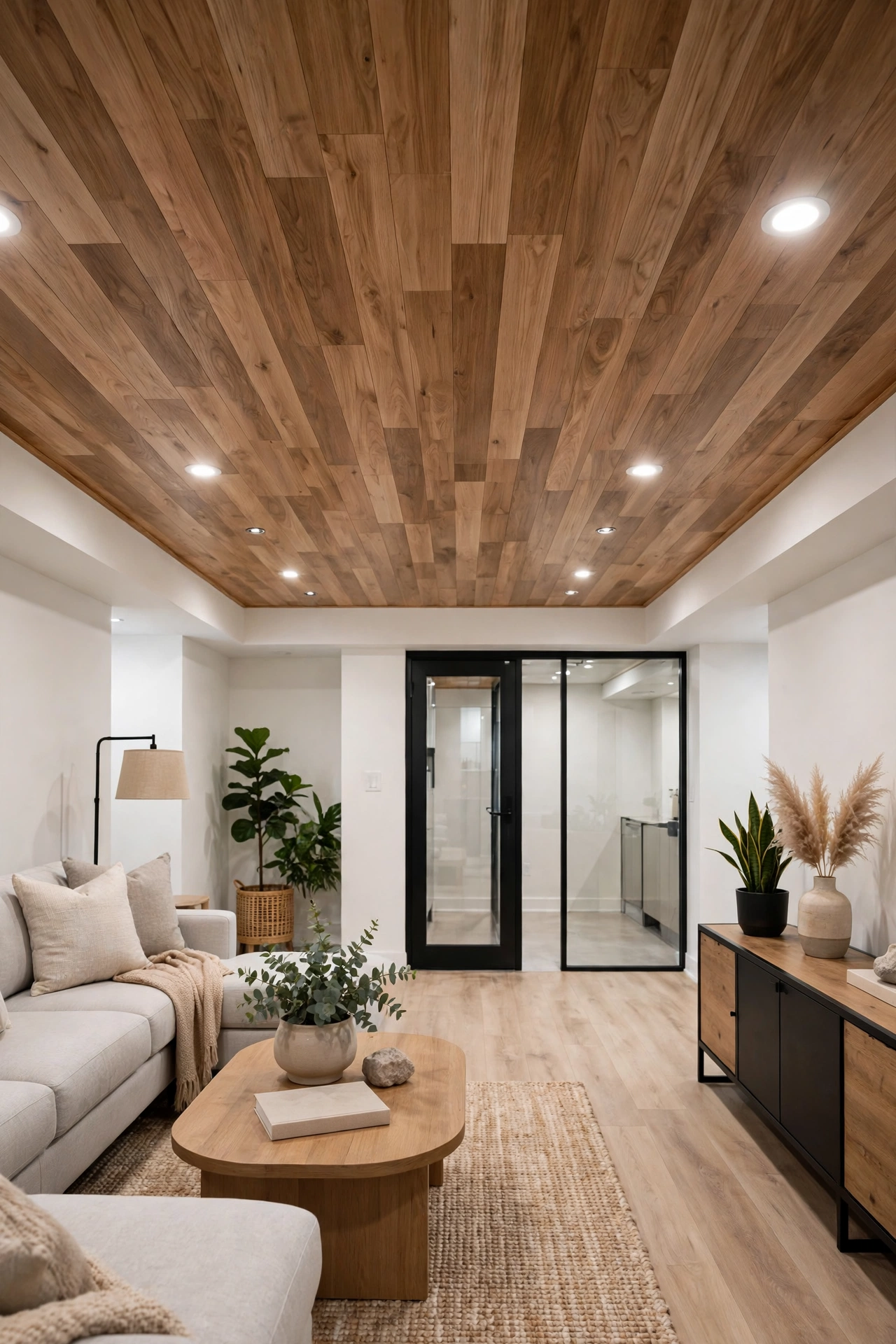
Vinyl planks made for ceilings resist moisture, wipe clean, and will not warp if your basement runs humid. They come in convincing wood, stone, and whitewashed finishes, and they install with a simple tongue-and-groove system. If your basement has ever had damp issues, vinyl is a safer bet than real wood or drywall. Run a dehumidifier anyway, and check that the planks are rated for ceiling use, not just floors.
23. Warm Cork Panel Ceiling
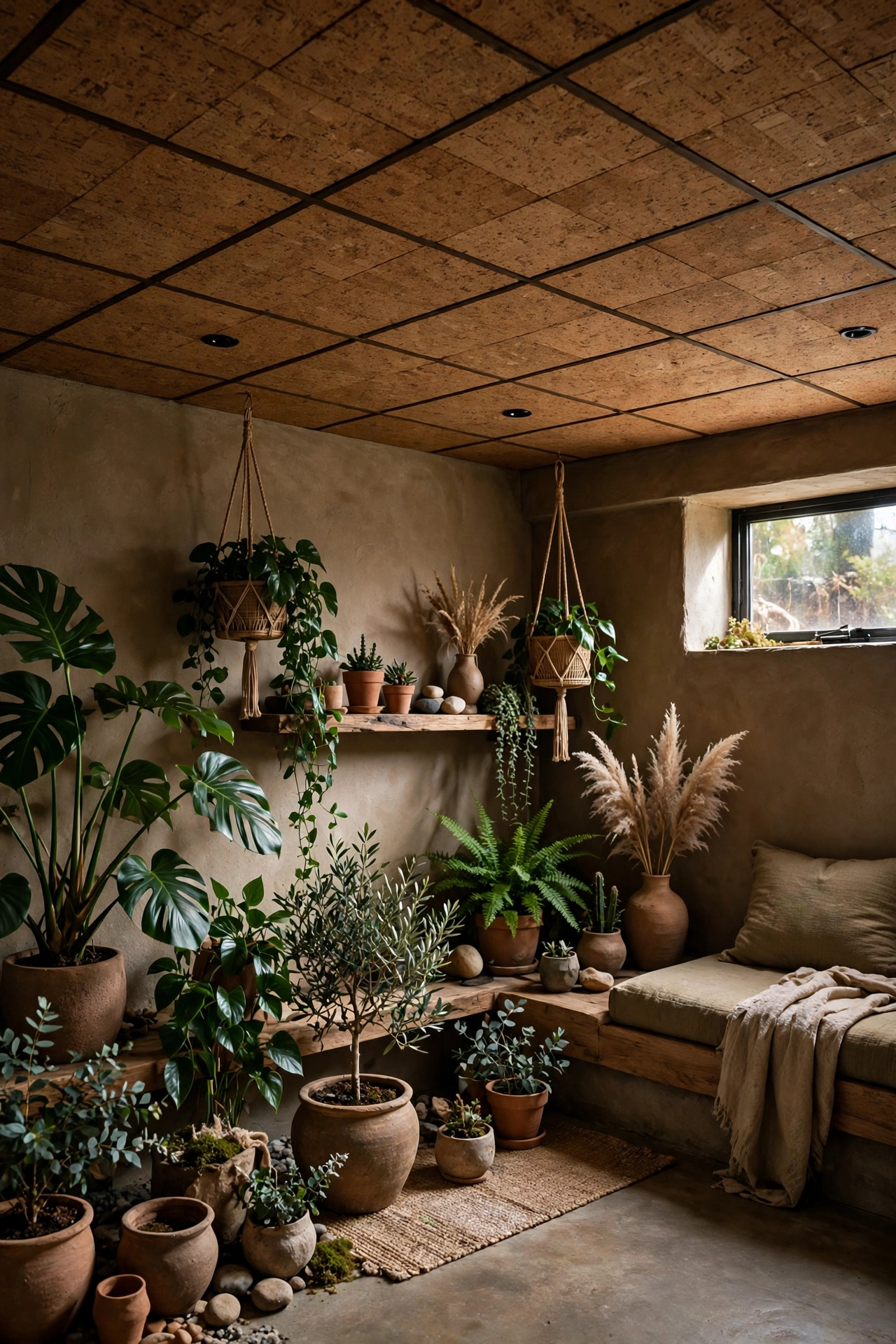
Cork tiles bring natural warmth, soft texture, and real acoustic benefits to a basement ceiling. They absorb sound, feel warm to the eye, and add an organic, earthy layer that pairs beautifully with plants and wood furniture. Cork is also naturally resistant to mold and mildew, a genuine plus below grade. Use large-format tiles for a clean look, and seal them to protect against humidity.
24. Draped Fabric Canopy Ceiling
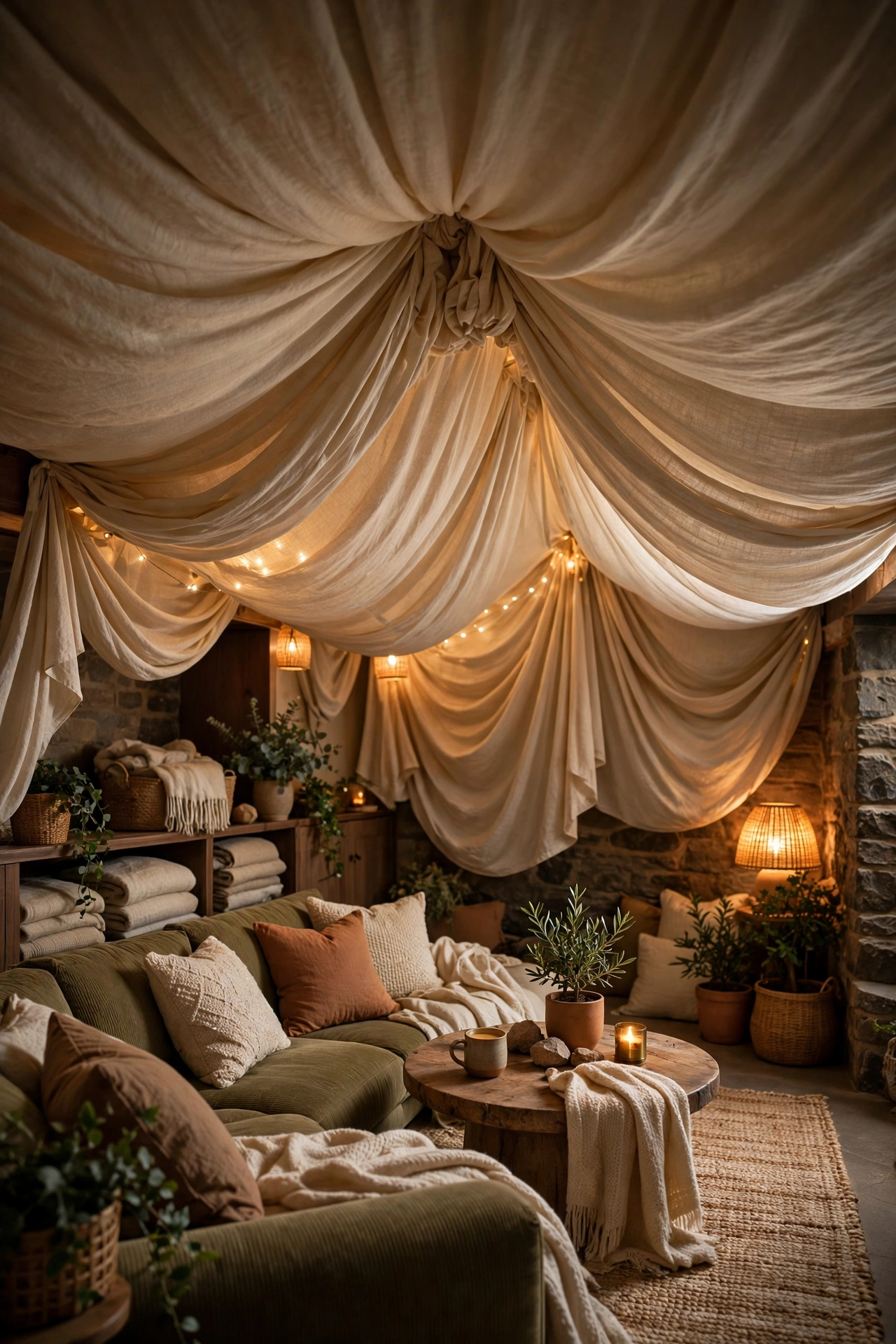
Draped fabric softens a basement like nothing else. Billowing panels hung from a simple track hide an imperfect ceiling, absorb echo, and create a cozy, tent-like atmosphere perfect for a lounge, reading nook, or kids’ playroom. Choose washable, light-colored fabric, keep it clear of light fixtures and heat sources, and make sure it can be taken down for cleaning. It is a renter-friendly, low-commitment ceiling idea.
25. Beams Painted in a Contrasting Color
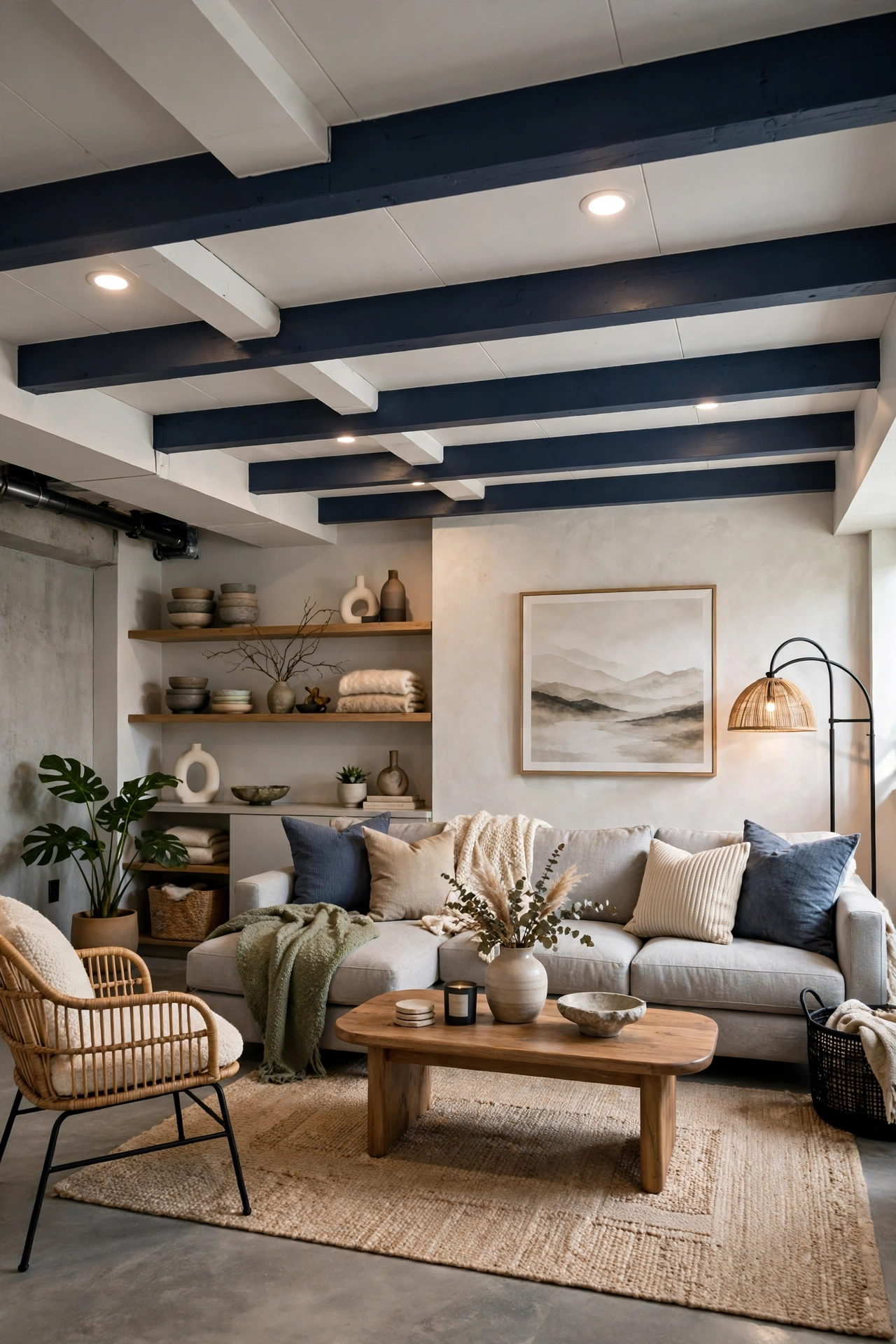
Instead of painting everything one color, paint the ceiling white and the beams a contrasting shade, navy, charcoal, sage, or even a bold accent color. The contrast turns structural beams into a design feature and adds rhythm overhead. This works especially well in basements where the beams are already prominent. Keep the rest of the palette calm so the beams stay the star, and repeat the beam color in small accents below.
26. Black Grid With Warm Wood Infill
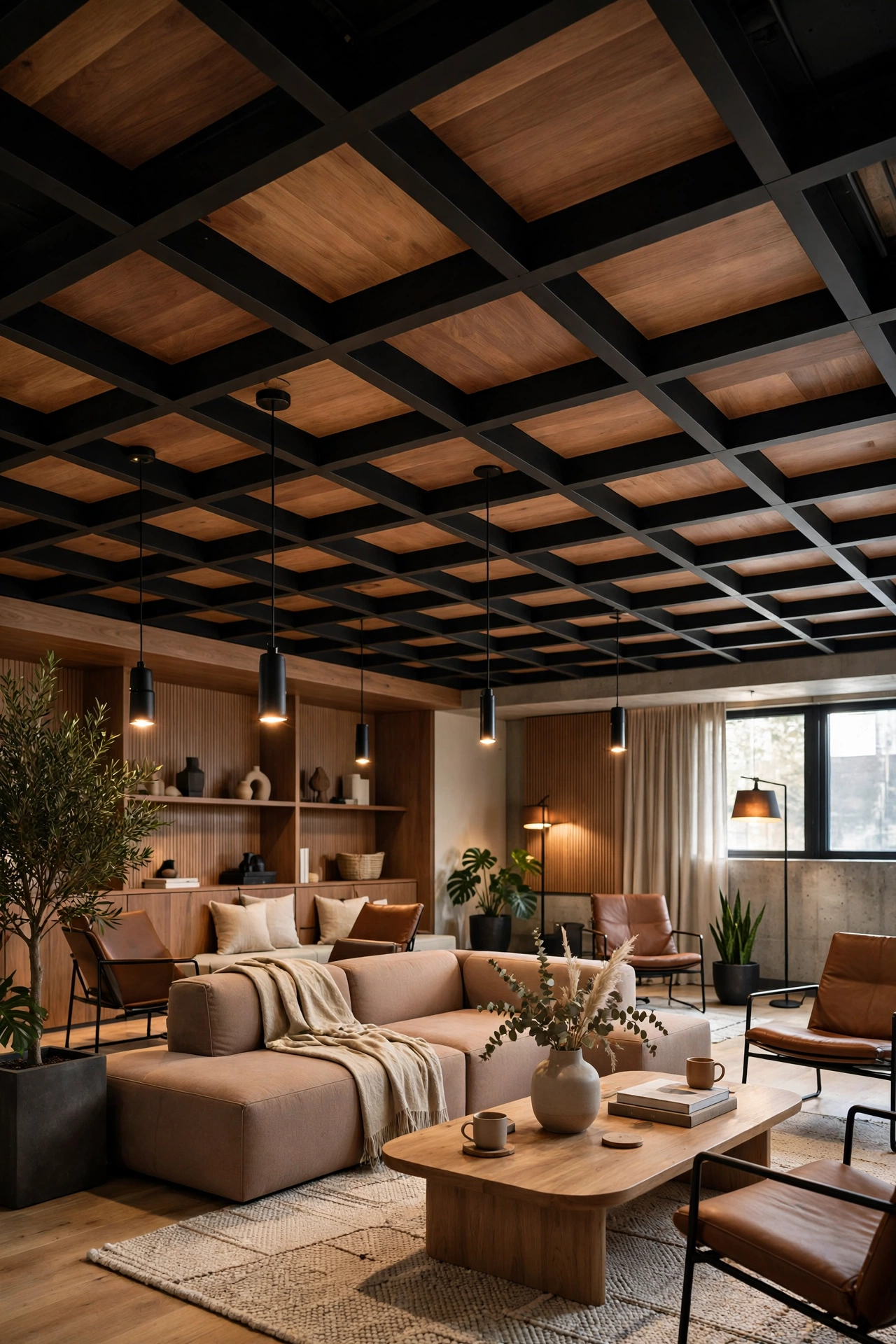
A matte black grid filled with warm wood panels gives you the best of two worlds: the crisp, modern structure of a grid ceiling and the warmth of wood. The grid keeps every panel removable for access, while the wood stops the ceiling feeling industrial or cold. This is a smart choice for a basement office or lounge where you want a designed look without losing practical access to wiring and pipes.
27. Backlit Glass or Acrylic Panels
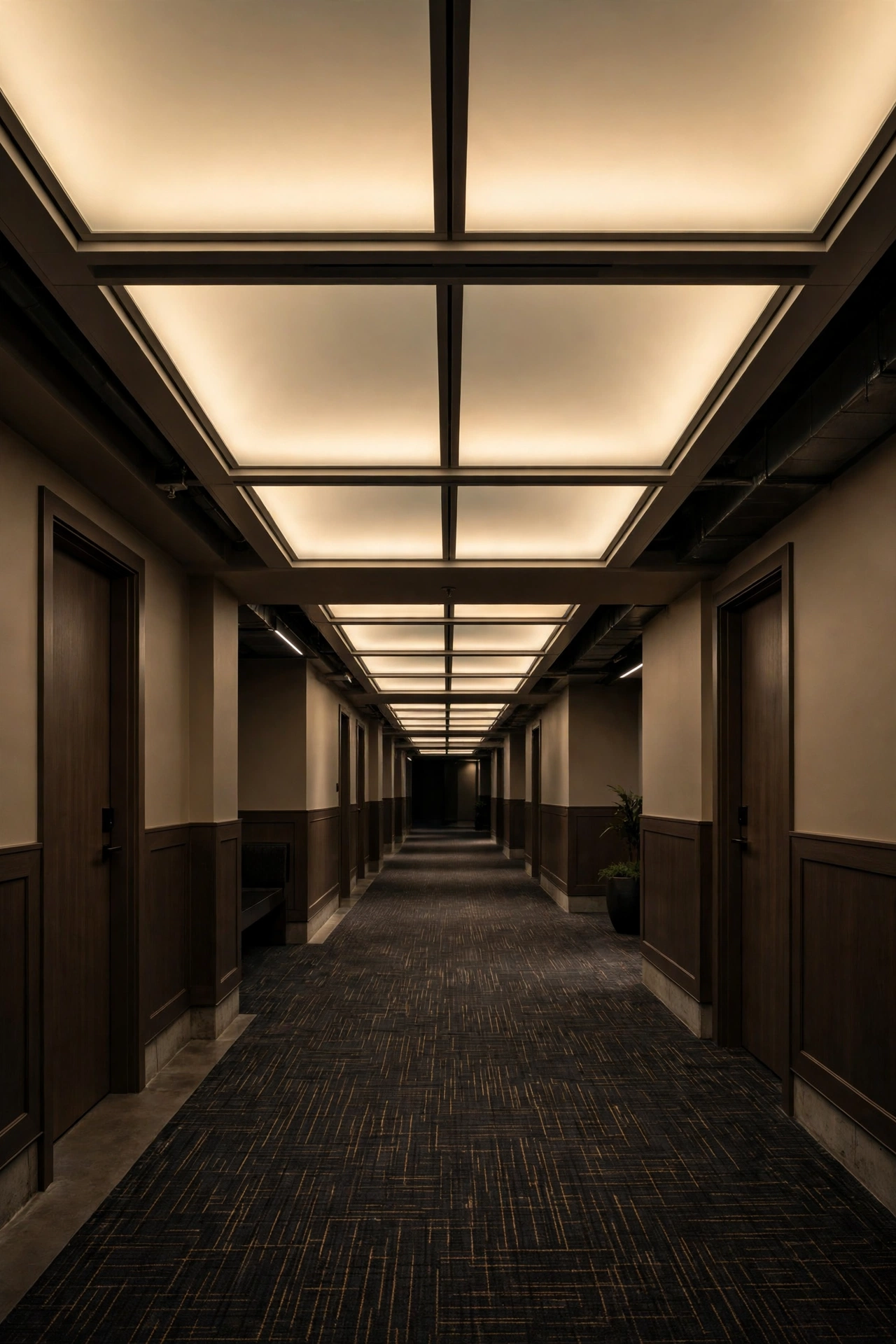
Backlit panels, frosted glass or acrylic lit from behind, glow like oversized skylights. They are perfect for windowless basements, hallways, and bathrooms, where they provide both light and a focal point. Use diffused LED panels behind them for even light with no hot spots, and keep the frames slim and simple. A row of backlit panels down a basement corridor looks like a high-end hotel hallway.
28. Chalkboard Accent Panels for a Kids’ Zone
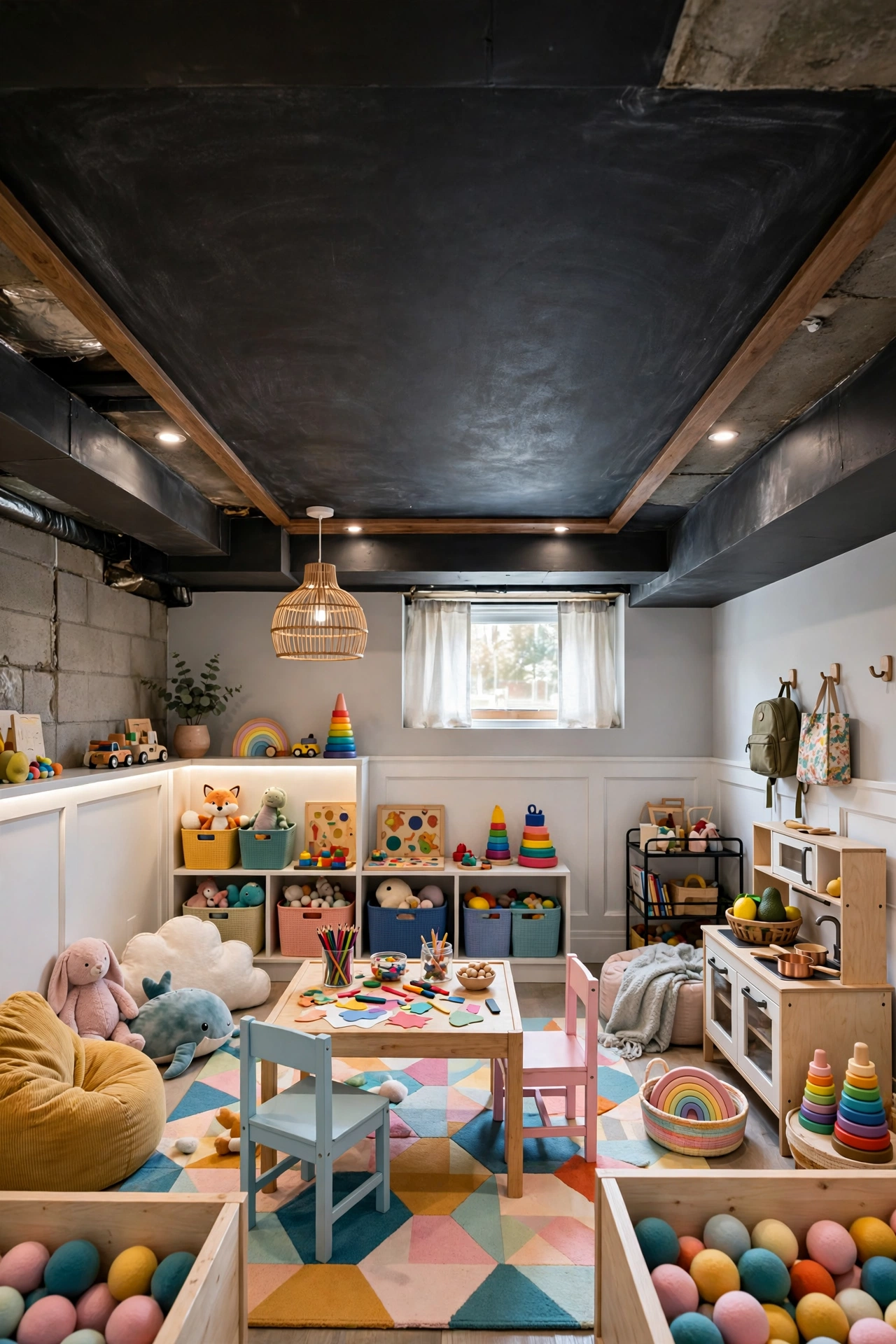
In a basement playroom, a chalkboard ceiling panel or border turns the ceiling into part of the fun. Kids can draw, write, and decorate overhead, and the dark panel adds a playful contrast to bright walls. Use proper chalkboard paint on a smooth panel, frame it neatly, and keep chalk dust away from electronics. It is a small, inexpensive idea that makes a playroom feel made just for them.
29. Stenciled Pattern Ceiling
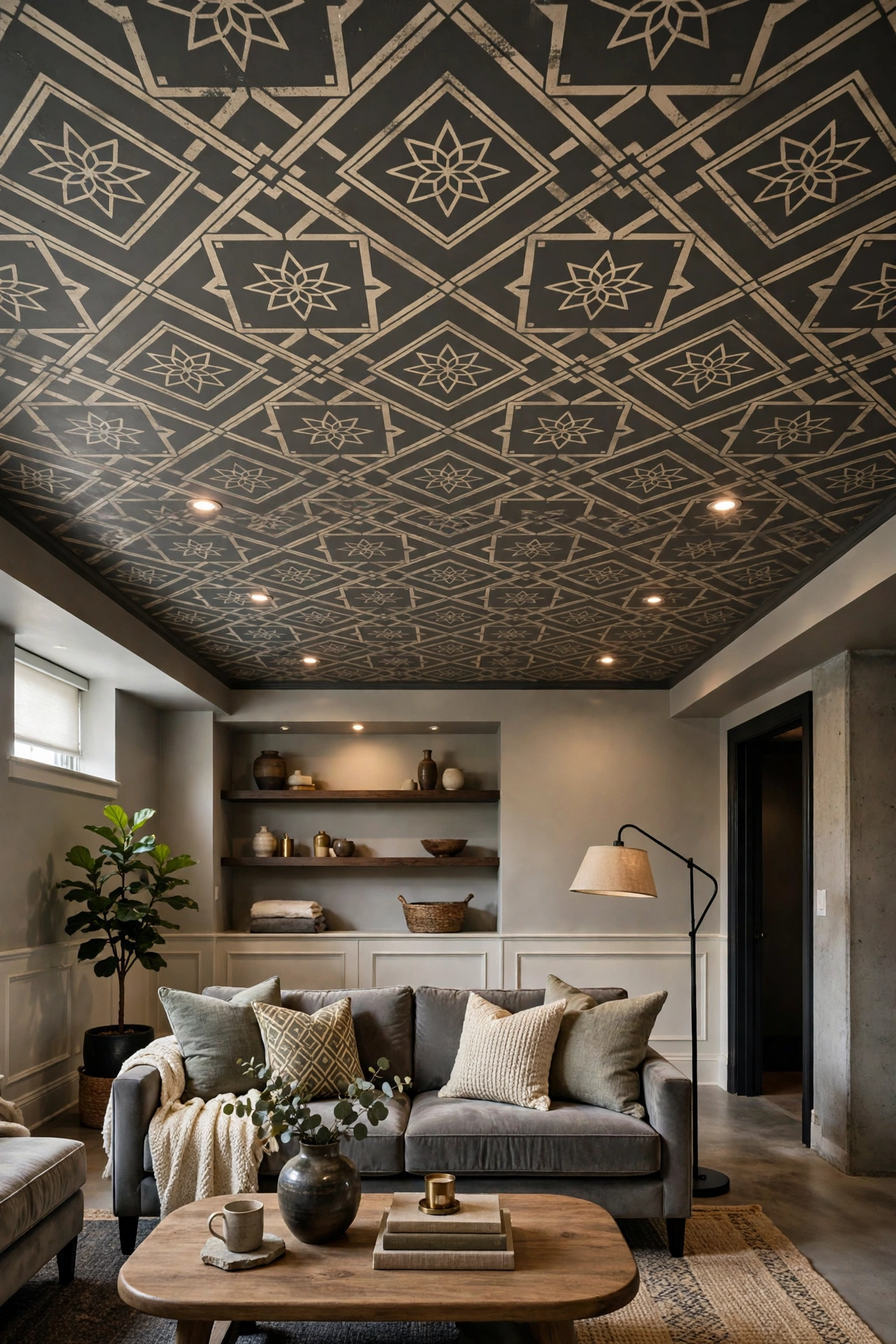
Stenciling a repeating pattern onto a painted ceiling adds custom detail for the price of a stencil and a roller. Geometric, Moroccan, or botanical patterns all work, and the effect is far more expensive than the effort suggests. Practice on a board first, use a dense foam roller with very little paint to avoid bleeding, and keep the pattern scale modest in a low basement so it does not overwhelm the room.
30. Geometric Wood Lattice Overlay
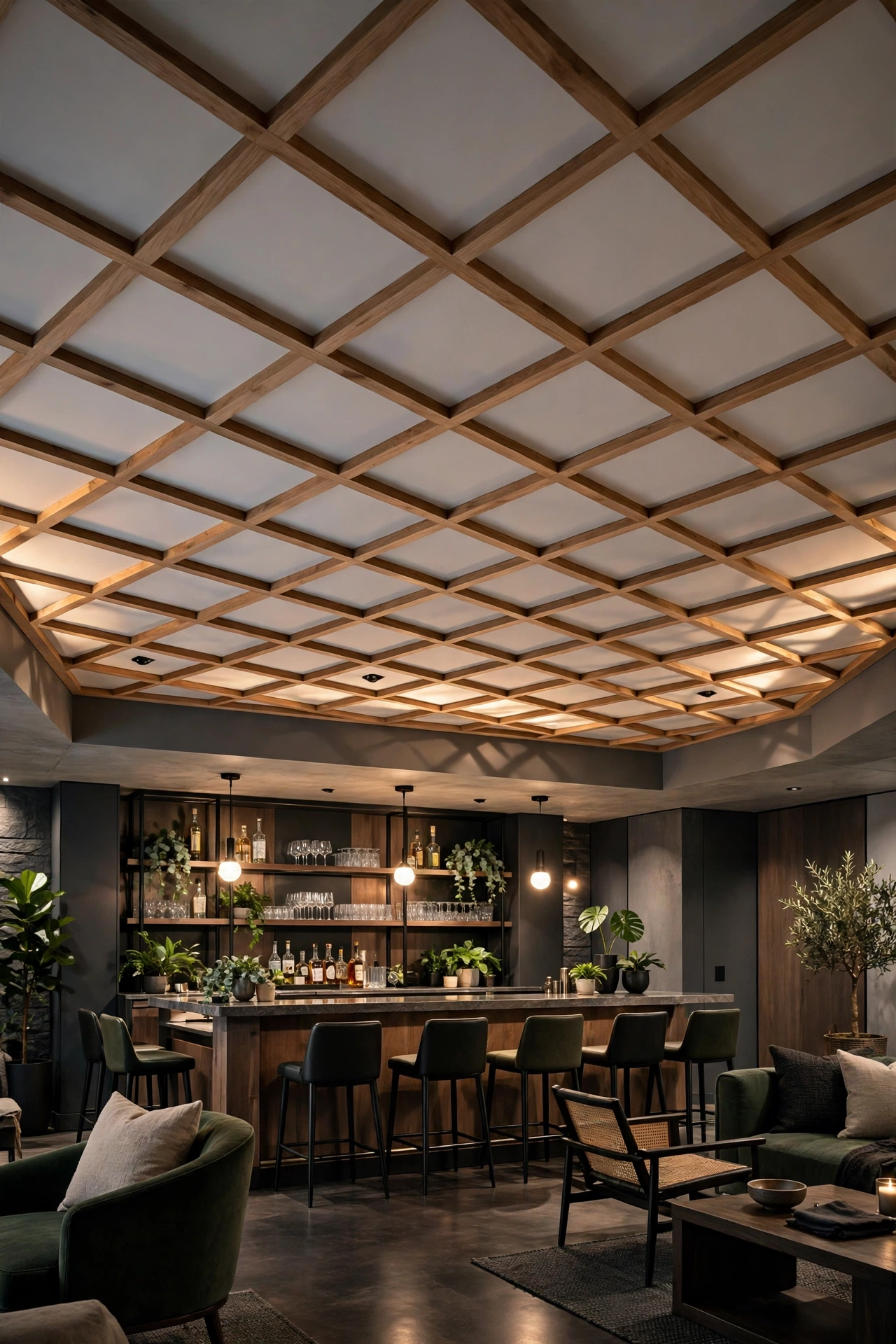
A geometric lattice of thin wood strips laid over a painted ceiling creates a striking graphic pattern, from diamonds to hexagons to bold chevrons. The lattice adds depth without lowering the ceiling, since it mounts almost flat. Paint the base ceiling a contrasting color so the pattern pops, and keep furniture below simple so the ceiling can carry the room’s visual interest. This is a brilliant choice for a basement bar or lounge with a modern edge.
31. Copper and Brass Metallic Tiles

Metallic tiles in copper, brass, or bronze add glamour overhead. They catch light beautifully, warm up a room, and make a basement bar, wine cellar, or lounge feel luxurious. Use them across the whole ceiling for drama, or as a border or medallion accent for a lighter touch. Pair metallics with dark walls and warm lighting, and keep other metals in the room in the same family so the look feels collected, not random.
32. Reclaimed Barn Wood Planks
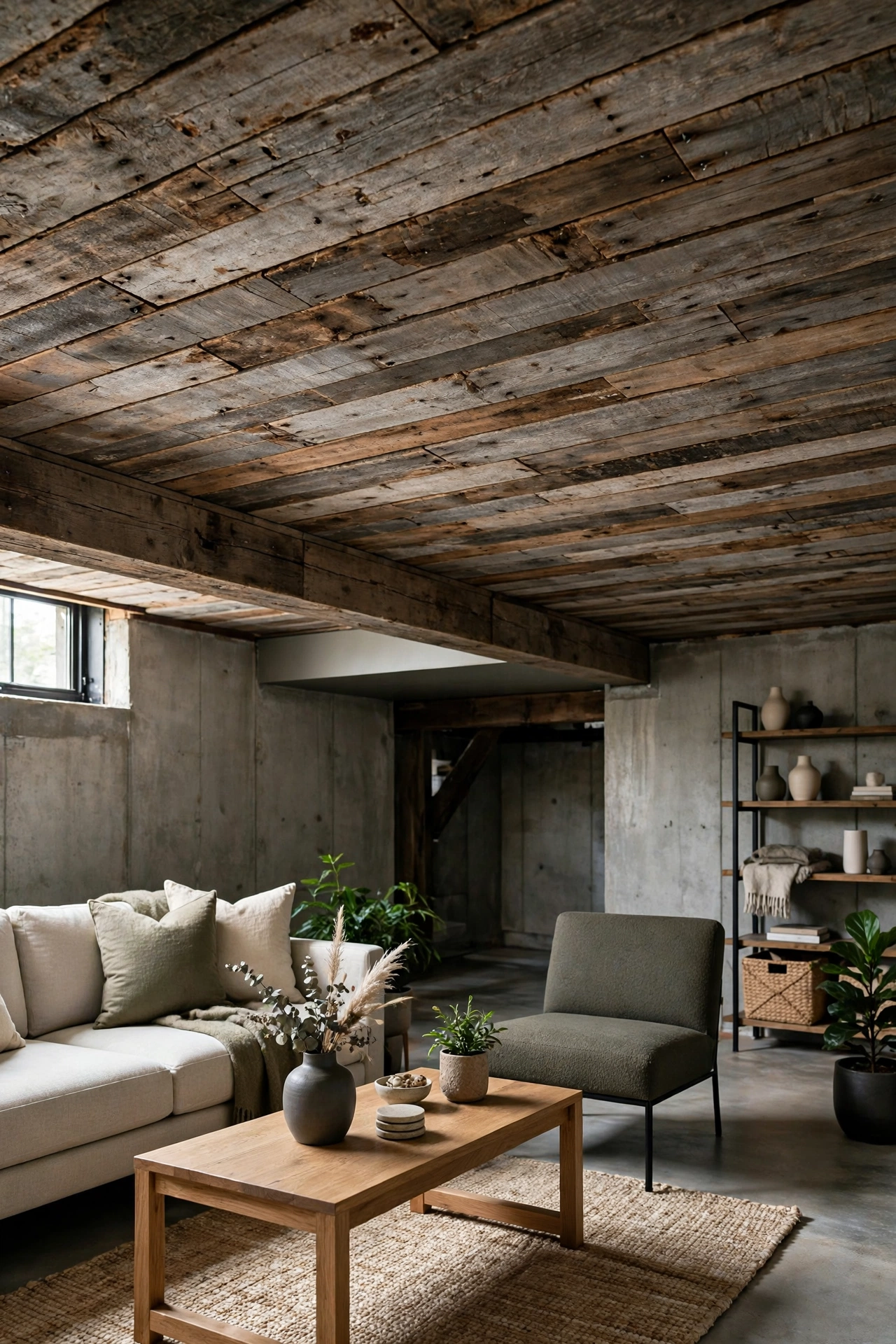
Reclaimed barn wood brings history, texture, and one-of-a-kind character to a basement ceiling. Every board has its own grain, nail holes, and weathered tone, so no two ceilings look alike. Source boards from a reputable dealer, check them for pests and moisture, and seal them well for below-grade use. Pair reclaimed wood with simple, modern furniture below so the ceiling reads as rustic character, not clutter.
33. Whitewashed Beams and Planks for a Coastal Feel
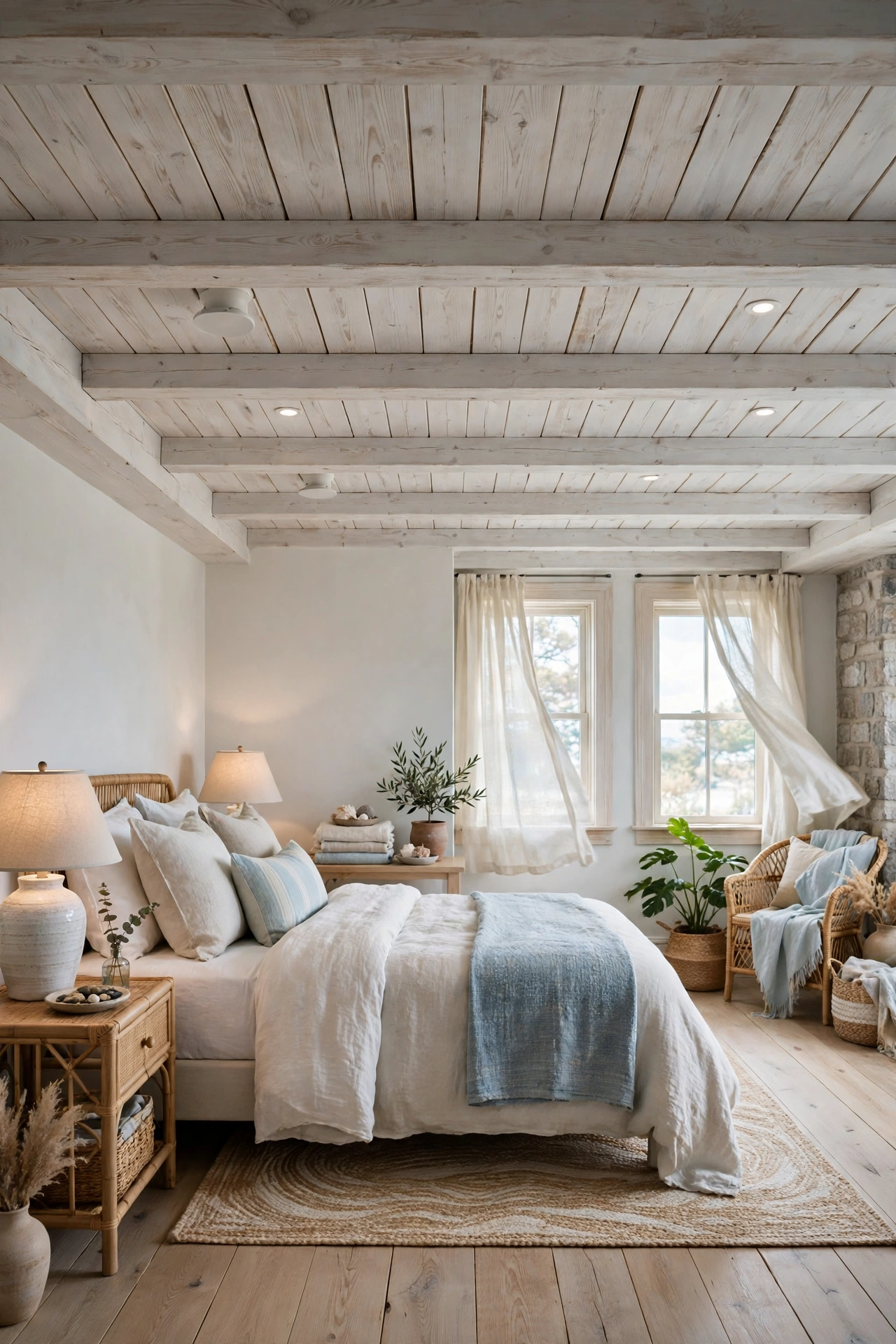
Whitewashing lets wood grain show through a soft white veil, giving a basement a breezy coastal feel without the heaviness of dark timber. Whitewashed planks brighten the room, reflect light, and pair beautifully with sandy neutrals, linen, and pale blue accents. This is a lovely choice for a basement guest room or lounge that you want to feel like a beach house, even miles from the coast.
34. Two-Tone Ceiling: Dark Border, Light Center
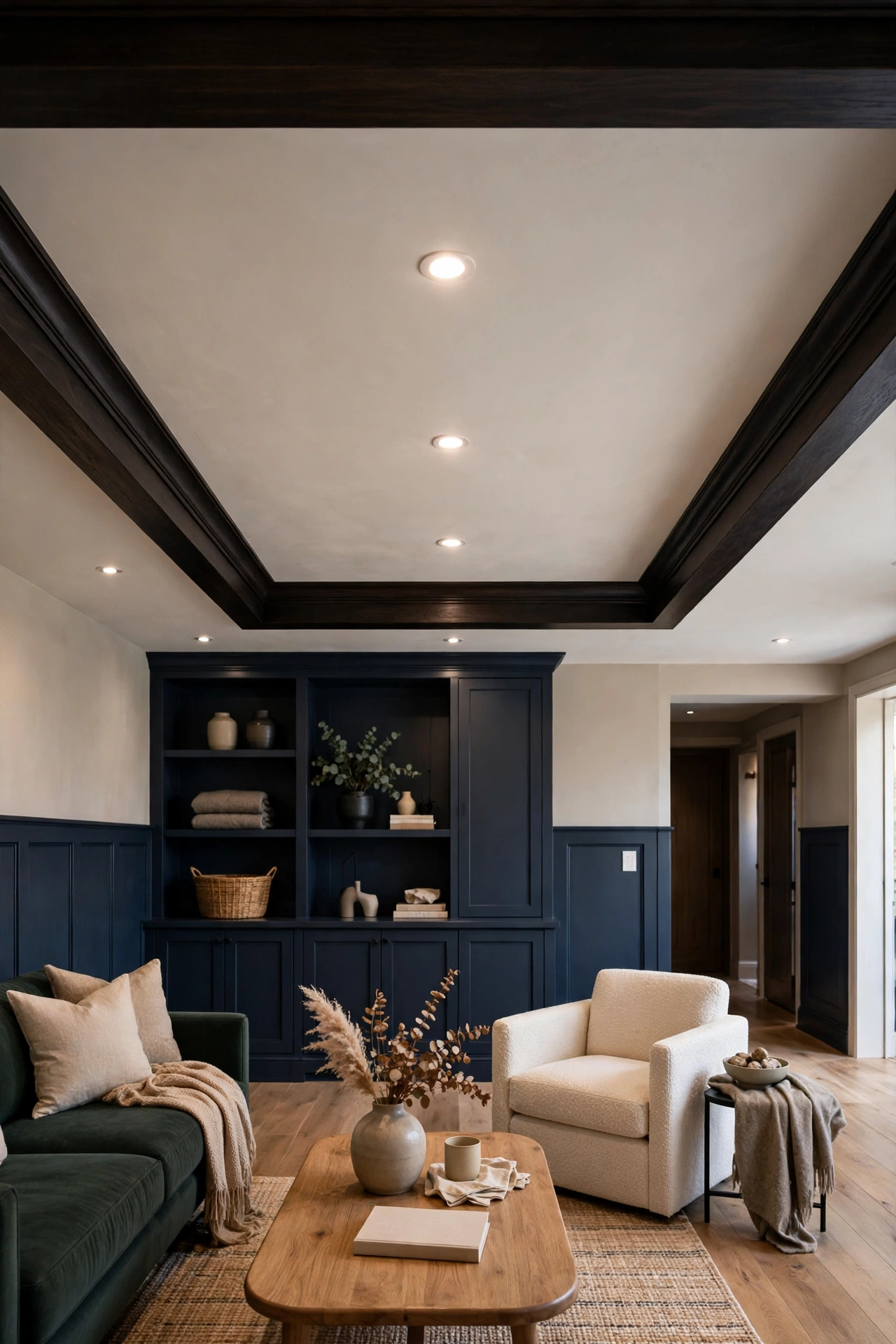
Painting the ceiling’s border dark and its center light, or vice versa, creates a framed effect that defines the room’s proportions. A dark border makes the ceiling feel tailored and intentional, while a light center keeps the room bright. Use painter’s tape and a crisp line, or add a slim trim molding at the color change for a finished edge. This simple paint trick works in any basement and costs almost nothing.
35. Ceiling Medallions and a Statement Pendant Zone
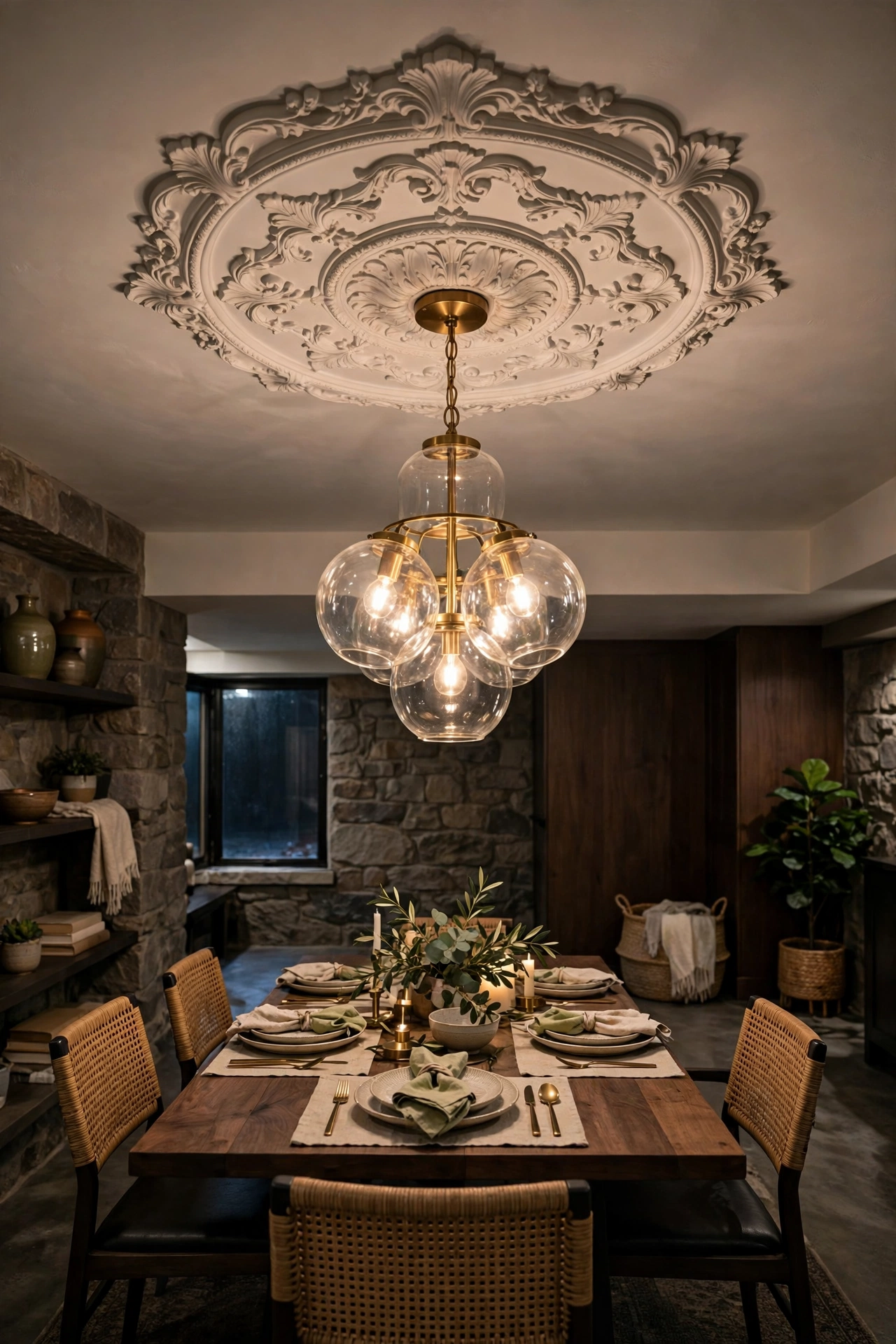
A decorative ceiling medallion with a statement pendant or chandelier turns one spot in the basement into a destination. Medallions are inexpensive, install in an afternoon, and instantly make a light fixture look intentional. Center one over a dining table, a reading chair, or a bar, and choose a fixture that hangs low enough to matter but high enough to walk under comfortably. In a low basement, use a semi-flush fixture instead of a long pendant.
36. Hidden Access Panels Disguised as Design
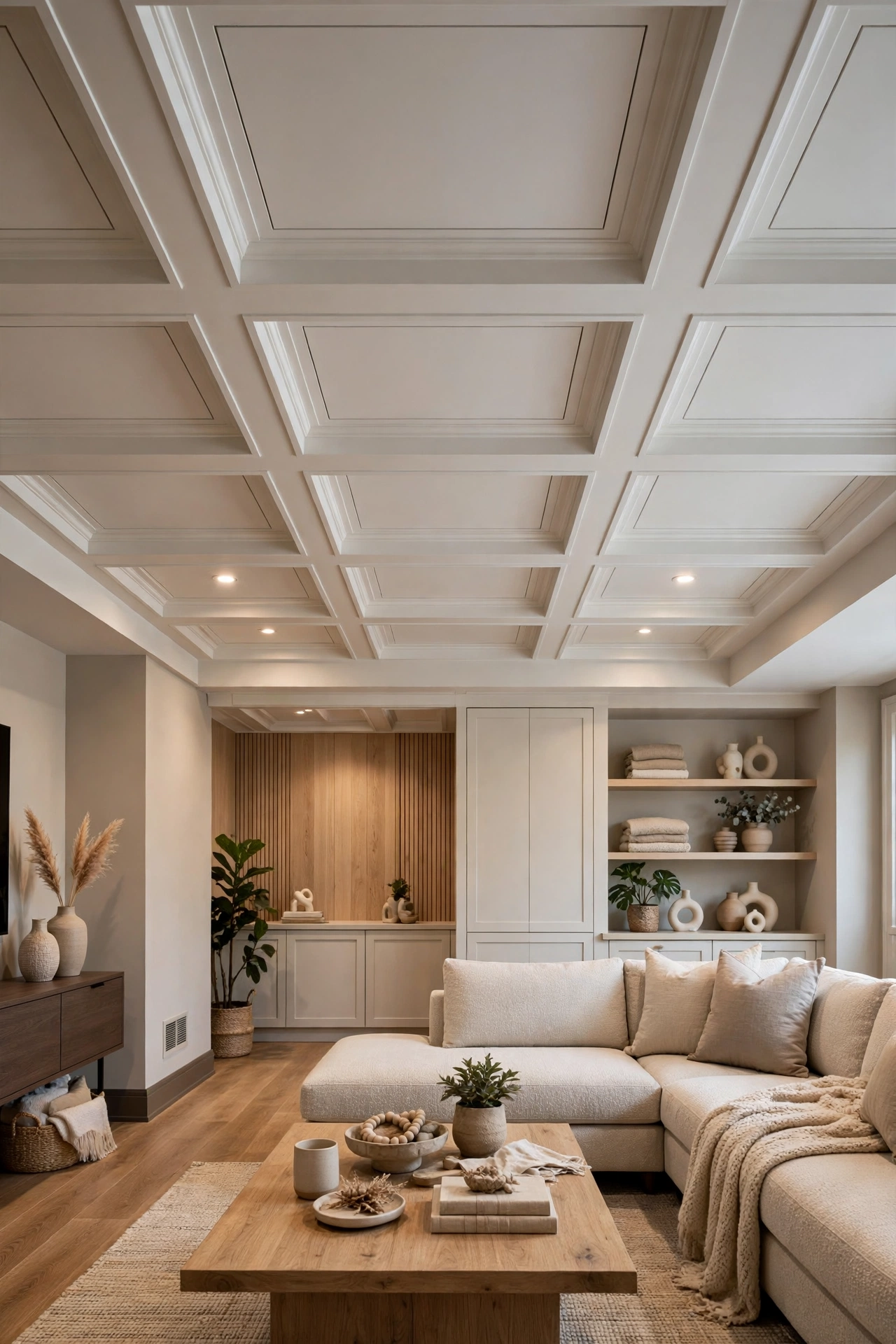
The smartest basement ceilings hide their practical side in plain sight. Build access panels into a coffered or paneled design so the panel over a valve or junction box looks exactly like its neighbors, with a discreet push latch instead of visible screws. Mark the panel locations on a simple sketch you keep with your house records. You get a seamless, finished ceiling and never have to cut drywall in an emergency.
37. Faux Skylight LED Panels
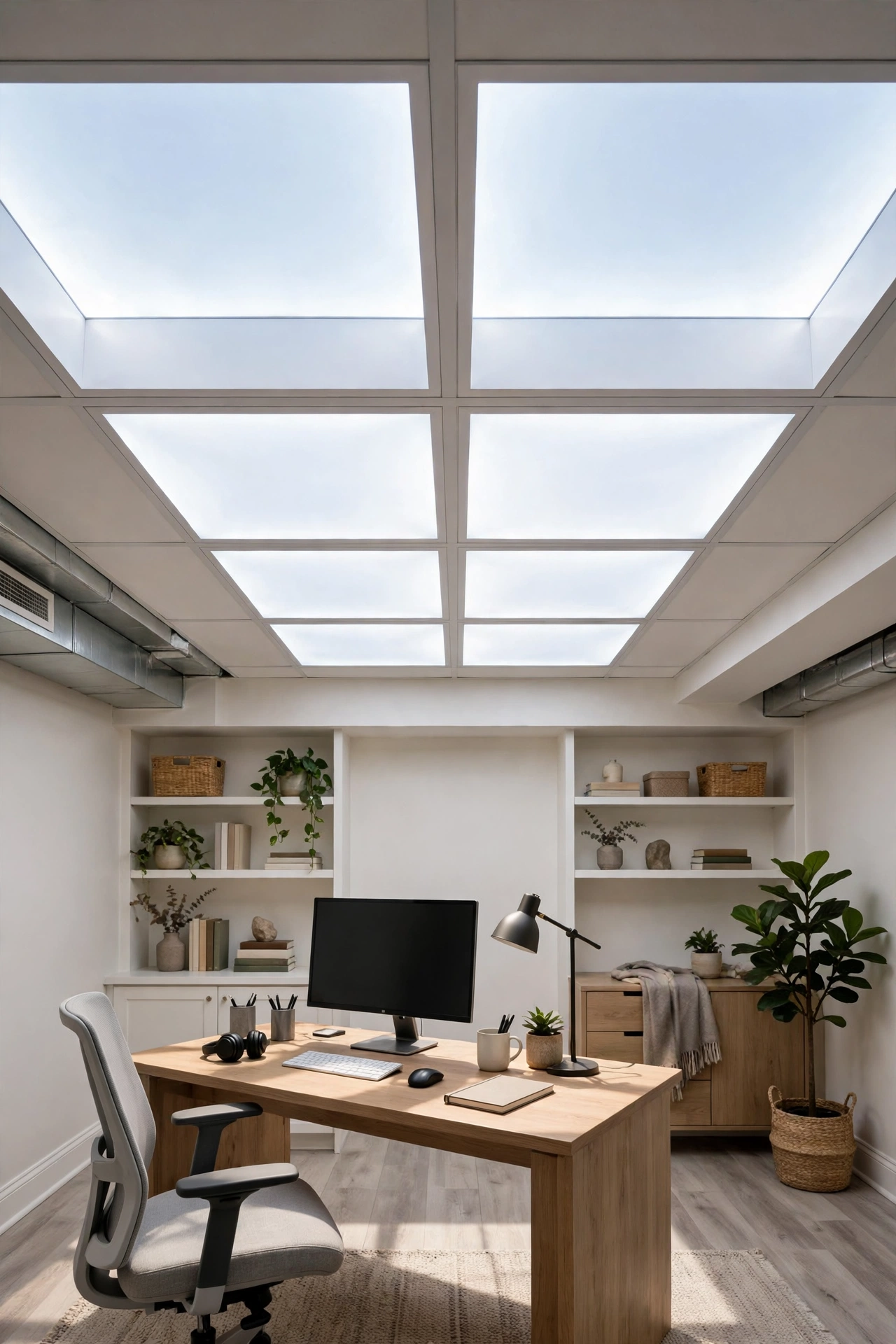
Faux skylights are LED panels that mimic daylight, complete with a sky image and a frame that looks like a real skylight well. In a windowless basement, they are genuinely transformative: the room feels brighter, larger, and more natural. Install them in a hallway, bathroom, or home office where real daylight is impossible, and choose panels with adjustable color temperature so the light feels like morning sun, not office fluorescents.
How to Choose the Right Basement Ceiling
Start with headroom: if you have under seven and a half feet, favor paint, thin planks, or lattice that add almost no depth. Next, check access needs: if valves and junction boxes are scattered, a drop ceiling, grid, or disguised access panels will save you trouble later. Then weigh moisture: below-grade humidity favors vinyl, metal, cork, and sealed wood over raw drywall. Finally, match the ceiling to the room’s job, acoustic panels for a theater, wipeable surfaces for a playroom, and warm wood for a lounge. If you are converting a whole utility space, our garage makeover ideas show how to plan a similar transformation room by room, and staggered floating shelves can finish a basement lounge wall once the ceiling is done. For a cozy reading corner below, pair the ceiling with a tree bookshelf, and style the seating area with glass coffee table decor ideas.
Frequently Asked Questions
What is the cheapest way to finish a basement ceiling?
Painting the exposed joists and ducts is the cheapest route, followed by plywood planks and peel-and-stick options. Paint keeps all your headroom and can transform the space in a weekend for the cost of primer and paint.
What ceiling is best for a low basement?
Painted exposed ceilings, thin wood planks, shiplap, and flat lattice overlays add almost no depth, so they are best for low basements. Avoid drop ceilings and deep coffers unless you have at least eight feet of clearance.
Should a basement ceiling be white or black?
White brightens and visually lifts the ceiling, which suits most basements. Black hides pipes and ducts and creates drama, but it needs strong lighting and light walls and floors to avoid feeling cave-like. Contrasting beams offer a middle ground.
How do I keep access to pipes above a finished ceiling?
Use a drop ceiling with removable tiles, a grid with lift-out panels, or build disguised access panels into a drywall or coffered ceiling over every valve, cleanout, and junction box. Sketch their locations for future reference.
Can I install a wood ceiling in a damp basement?
Yes, with precautions: fix moisture sources first, run a dehumidifier, choose sealed or engineered wood, and leave expansion gaps. In persistently humid basements, vinyl planks, metal panels, or cork are safer choices than raw wood.
Do basement ceilings need special lighting?
Basements need more light than upstairs rooms because they lack windows. Layer recessed lights, LED strips, and lamps, use dimmers, and favor warm-white bulbs for living spaces. Backlit panels and faux skylights can add daylight-like brightness where windows are impossible.
Conclusion
Your basement ceiling is not just something to cover up, it is the single biggest lever for how the whole room feels. Whether you paint it white for instant brightness, go matte black for theater drama, or build a coffered showpiece, the right choice balances looks, headroom, access, and moisture. Pick the idea that fits your basement’s reality, start with lighting, and enjoy a below-grade room that finally feels like a favorite room in the house.