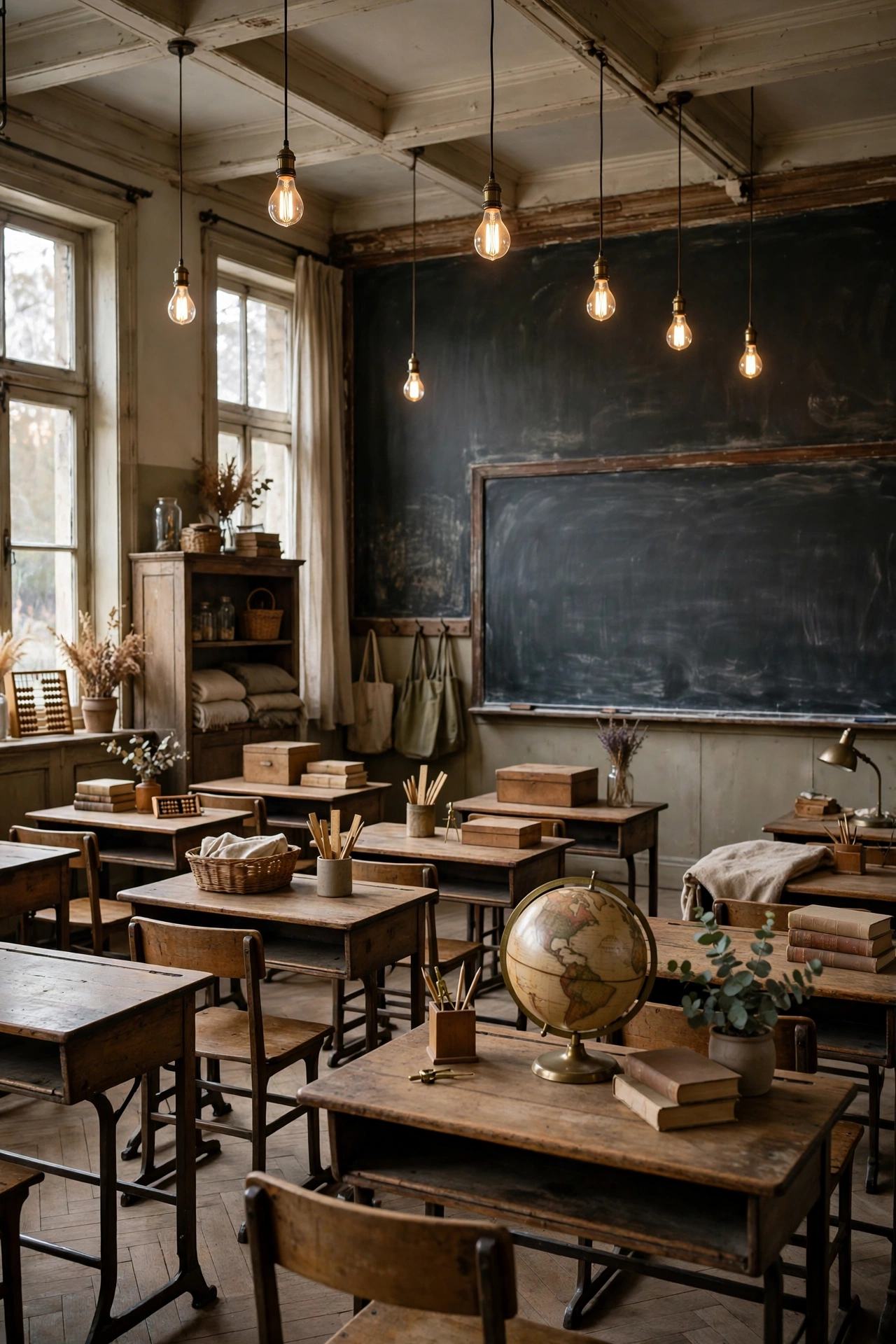
26 Vintage Classroom Decor Ideas for a Timeless, Storybook Learning Space
26 Vintage Classroom Decor Ideas for a Timeless, Storybook Learning Space
There is a reason vintage classrooms never really go out of style. A chalkboard wall, a worn wooden globe, a row of old books with cloth spines — these details carry a warmth that brand-new plastic decor simply cannot fake. They tell students that this room has stories, that learning here is part of something bigger than one school year. The best vintage classroom decor is not about turning your room into a museum or spending a fortune at antique shops. It is about choosing a few honest, old-fashioned anchors — wood, chalk, paper, brass, and warm light — and letting them do the heavy lifting while the rest of the room stays practical and calm. Every idea below is something a real teacher can thrift, build, or buy on a classroom budget, and each one works on its own, so you can start with three or four favorites and add more over the year. No two ideas repeat the same trick: you will find walls, storage, lighting, reading corners, and displays that each earn their place.
1. Classic Chalkboard Accent Wall
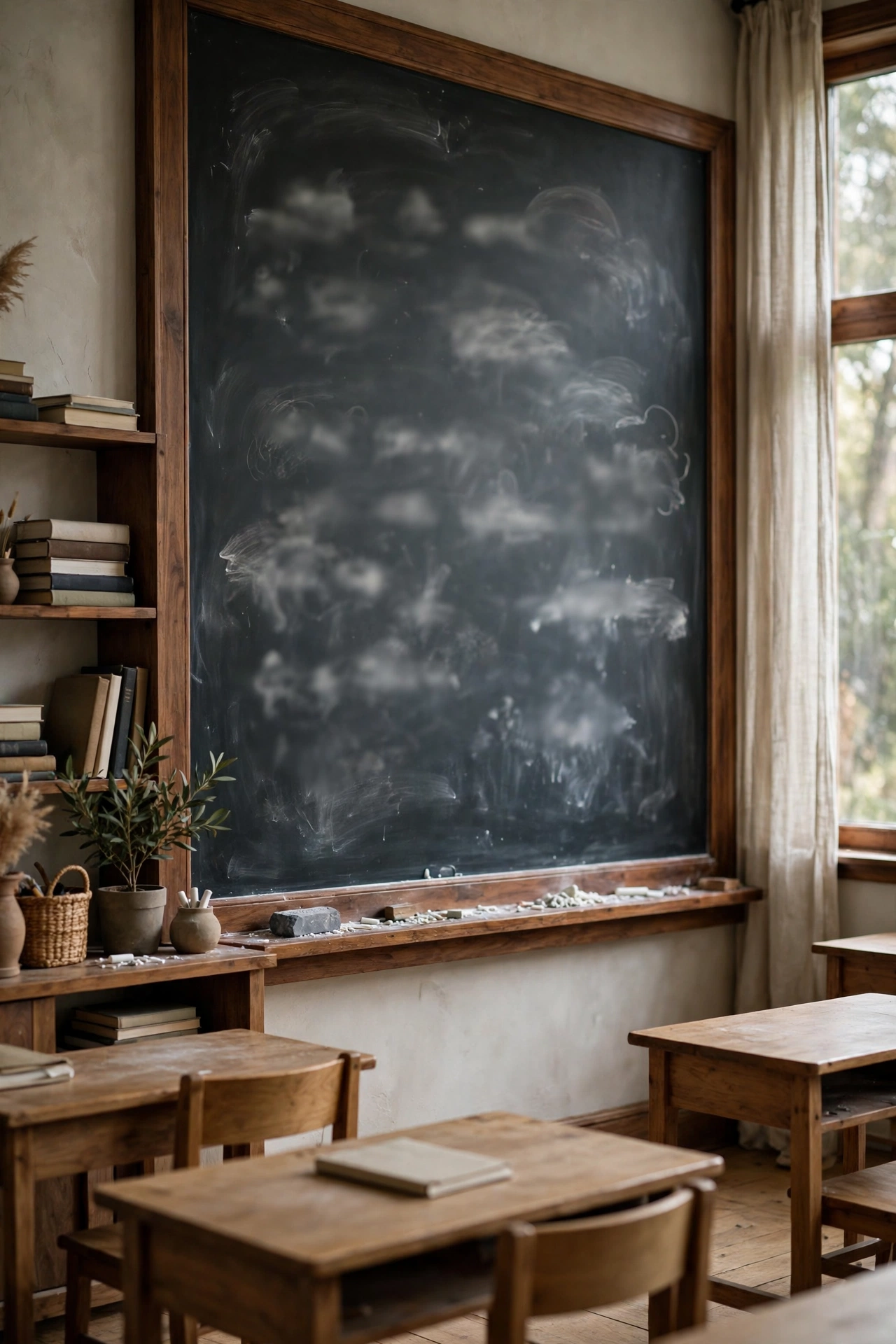
Paint one wall, or even one large framed panel, with chalkboard paint and trim it with simple wood molding so it reads as a deliberate feature rather than a leftover board. Use it for the daily schedule, a rotating quote, or a weekly question students answer in chalk. Real chalk dust and handwriting are the whole point here — skip perfect vinyl lettering. If painting a wall is not allowed, mount a large framed chalkboard or two chalkboard panels on plywood instead. Keep chalk trays tidy with a small cup for stubs, and wipe the board with a barely damp cloth at the end of the day so tomorrow’s writing stays crisp. This single change makes every other vintage piece in the room look intentional.
2. Pull-Down Vintage World Map
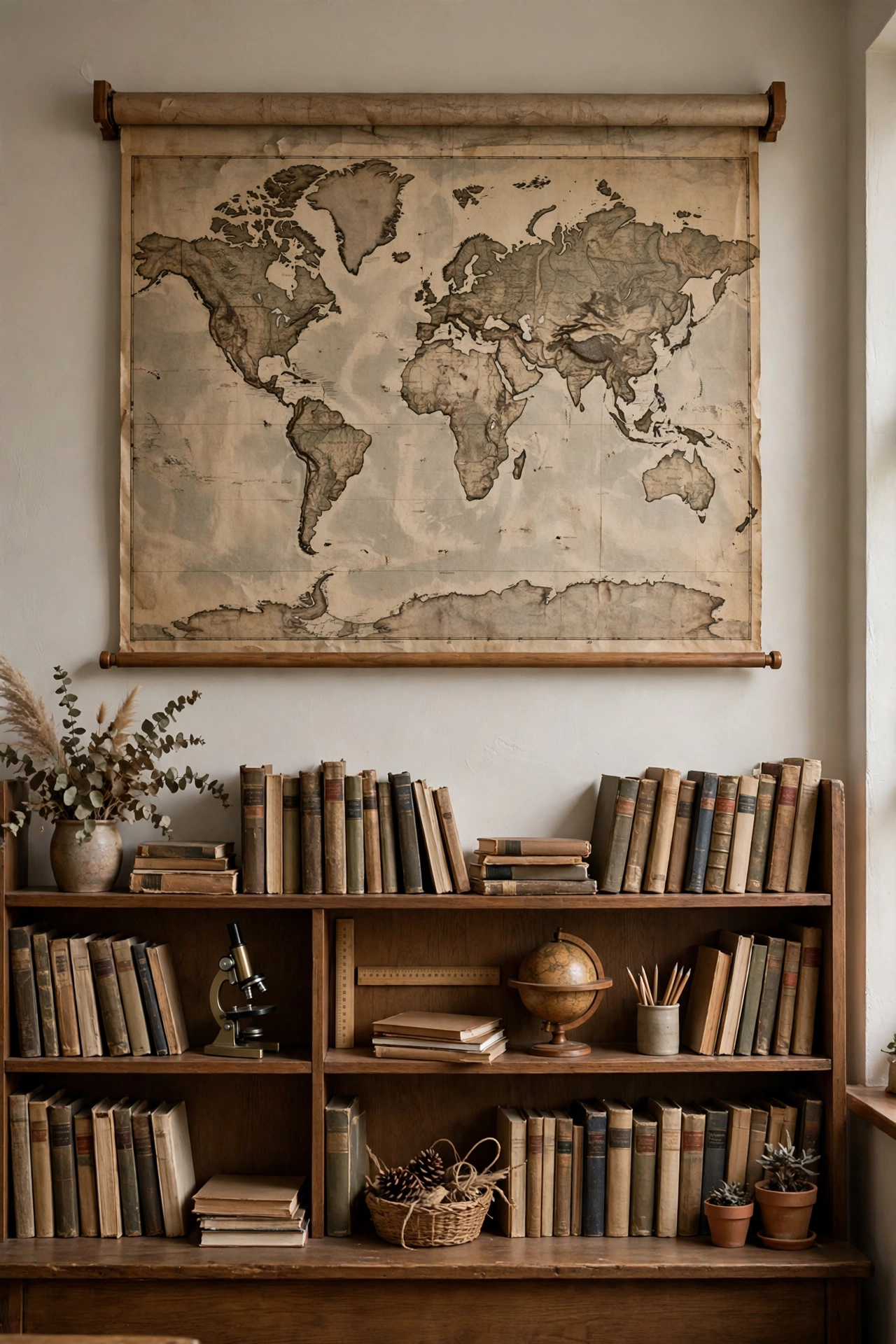
Hang a reproduction pull-down map above a bookshelf or beside the reading corner, mounted on a wooden roller so it can be pulled down for lessons and rolled up when you need the wall. Choose muted, aged tones rather than a bright modern map — sepia oceans, faded borders, and serif place names carry the vintage look. Thrift stores and online marketplaces often sell genuine old school maps for very little, but check that the map is not torn at the roller before you buy. Pin small flags or dots to mark places from books you are reading, and change them as the year goes on. Students will study it during free moments without being asked.
3. Antique Globe Collection
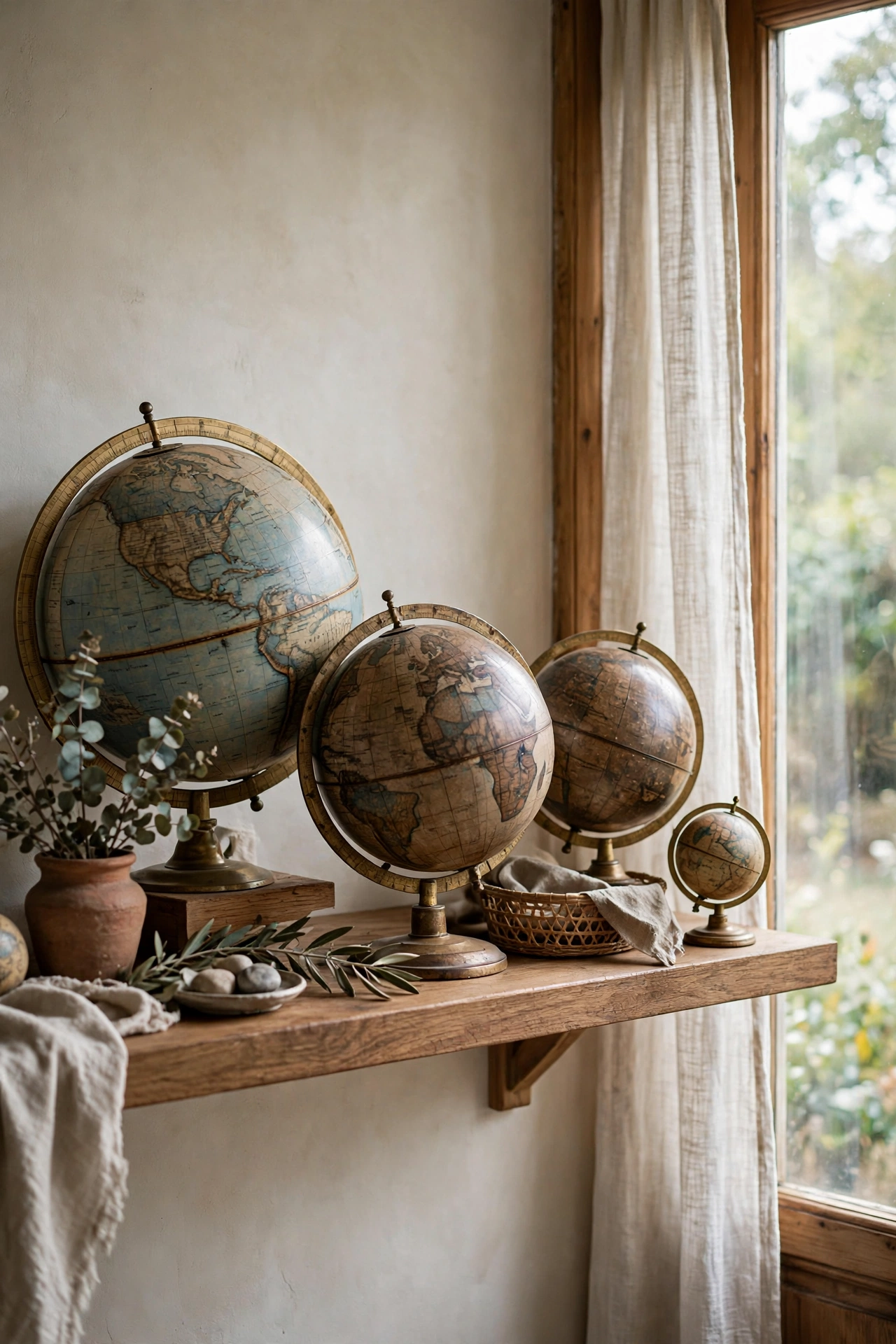
Place one large vintage-style globe on the teacher desk and two or three smaller ones on a low shelf where students can reach them. Mixed sizes and stands — brass, dark wood, black metal — look collected over time rather than bought as a set. Teach students to spin gently and to find one new place each week, or keep a small card beside the globes with a “place of the week” challenge. If a real antique globe is out of budget, a new globe with an antique-style finish gives the same look for a fraction of the price. Keep globes away from direct sun so the finish does not fade, and dust them with a dry cloth.
4. Wooden Crate Bookshelves
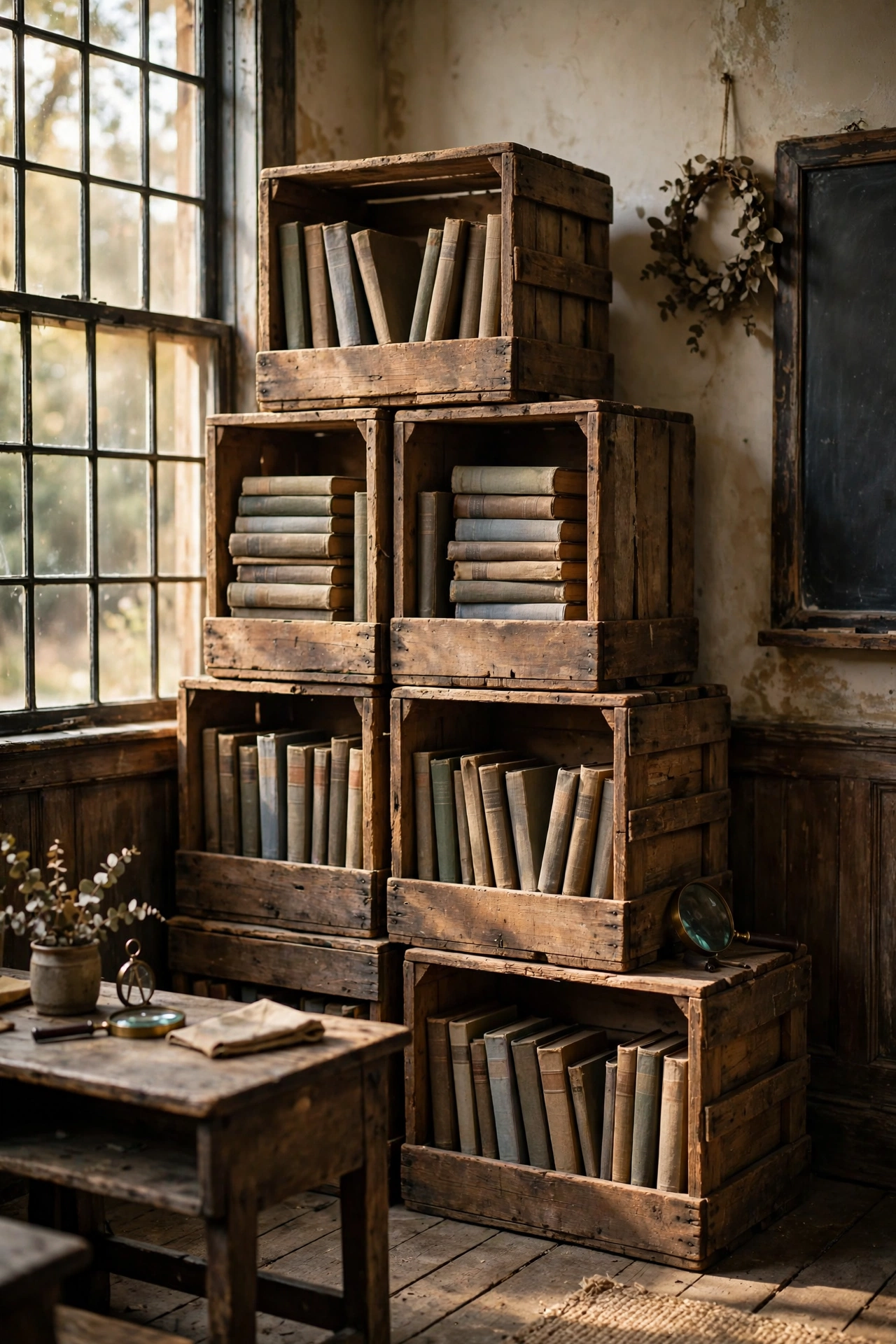
Stack sturdy wooden crates on their sides to build open shelving, securing each crate to the wall and to its neighbors with screws so nothing wobbles. Sand rough edges, leave the wood natural or stain it a warm walnut, and sort books by subject or reading level with small kraft-paper labels on each crate front. Crates are shallow enough that book spines stay visible, which matters in a classroom — students browse what they can see. Add one crate turned upright for oversized picture books or atlases. This beats a flat-pack bookcase on character, and it costs far less if you source crates from farm shops or secondhand sellers.
5. Retro Alphabet and Number Banner
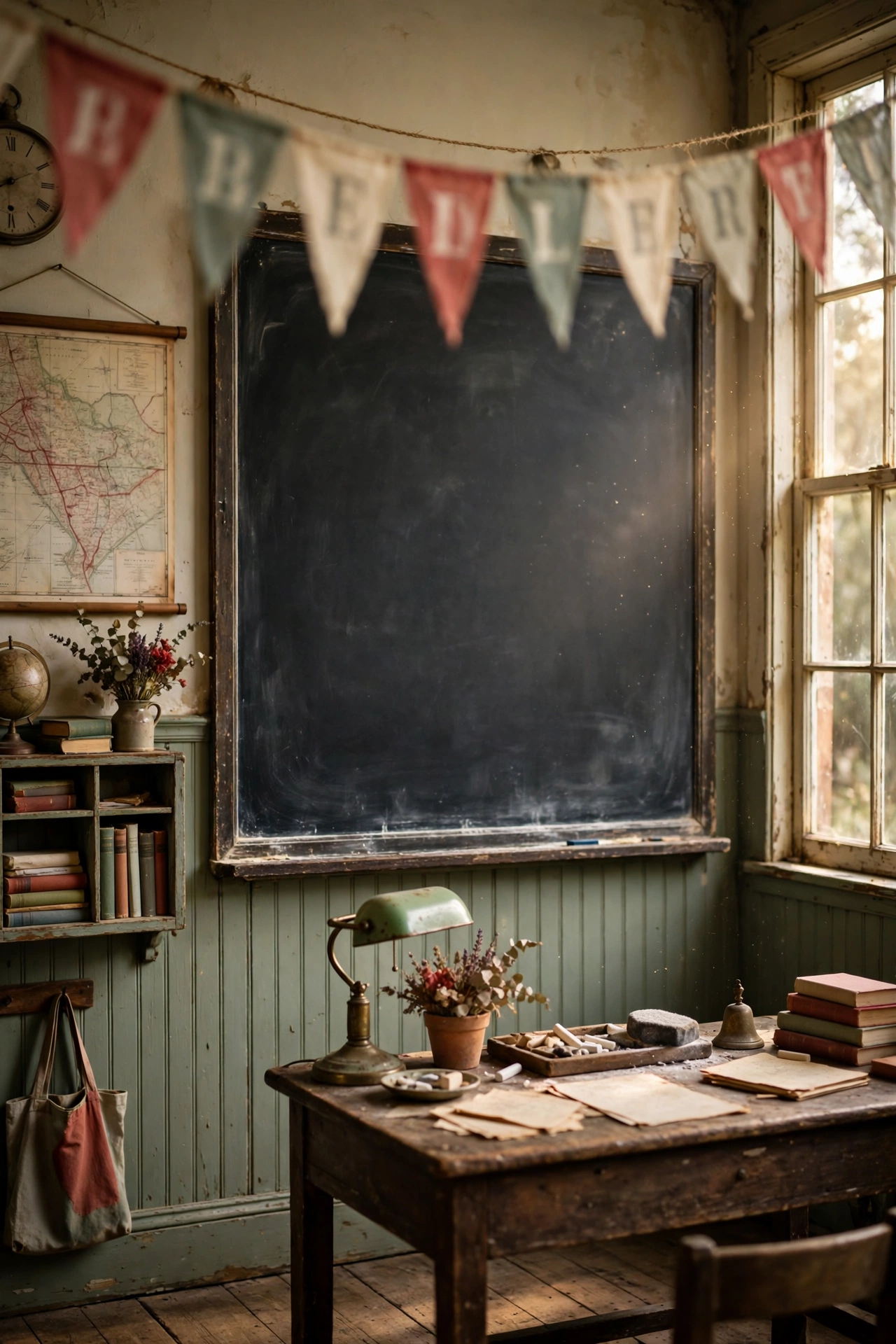
Run a classic alphabet strip with serif letters and small, simple illustrations above the chalkboard or along the top of a wall, keeping the color palette muted — cream, sage, dusty red, and navy rather than neon. For older students, swap the picture alphabet for a cursive alphabet chart or a set of vintage-style number cards. Print on matte cardstock so there is no glare, and mount with the strip perfectly level; a crooked alphabet strip ruins the effect faster than anything else. This is one of the cheapest ideas on this list, and it immediately signals “old school” to anyone walking in.
6. Library Card Catalog Station
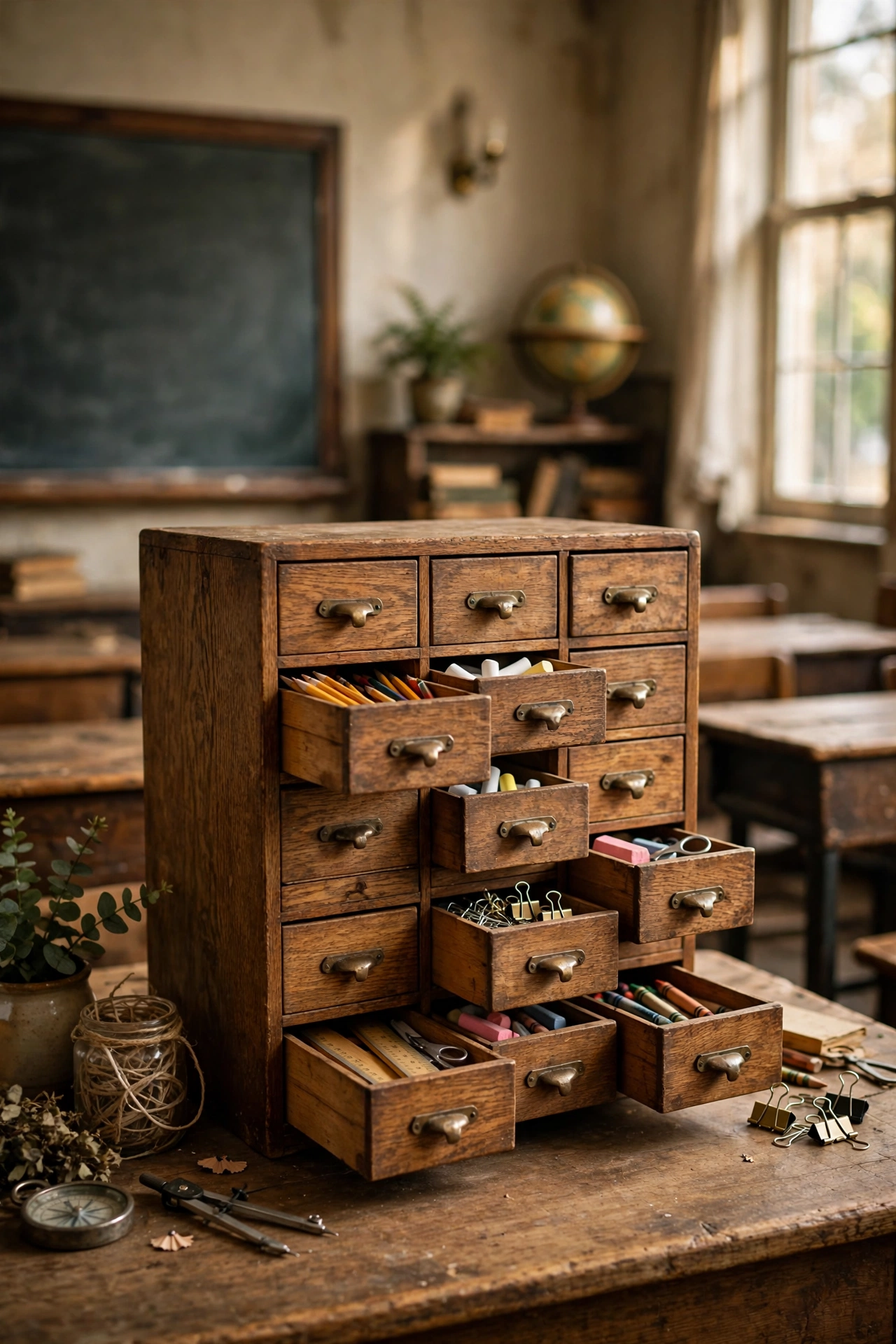
A small wooden card catalog — even a three- or six-drawer unit — makes a wonderful supply station. Label each drawer with brass or kraft tags: pencils, erasers, bookmarks, stickers, or vocabulary cards. Students love opening little drawers, so supplies that usually disappear into a tub suddenly get put away properly. If a real catalog cabinet is too expensive, use a small apothecary-style drawer unit or build the look with labeled kraft boxes on a shelf. Keep one drawer as a “mystery drawer” with a rotating surprise — a new book, a puzzle, a class joke — and students will check it every morning.
7. Warm Edison Bulb String Lights
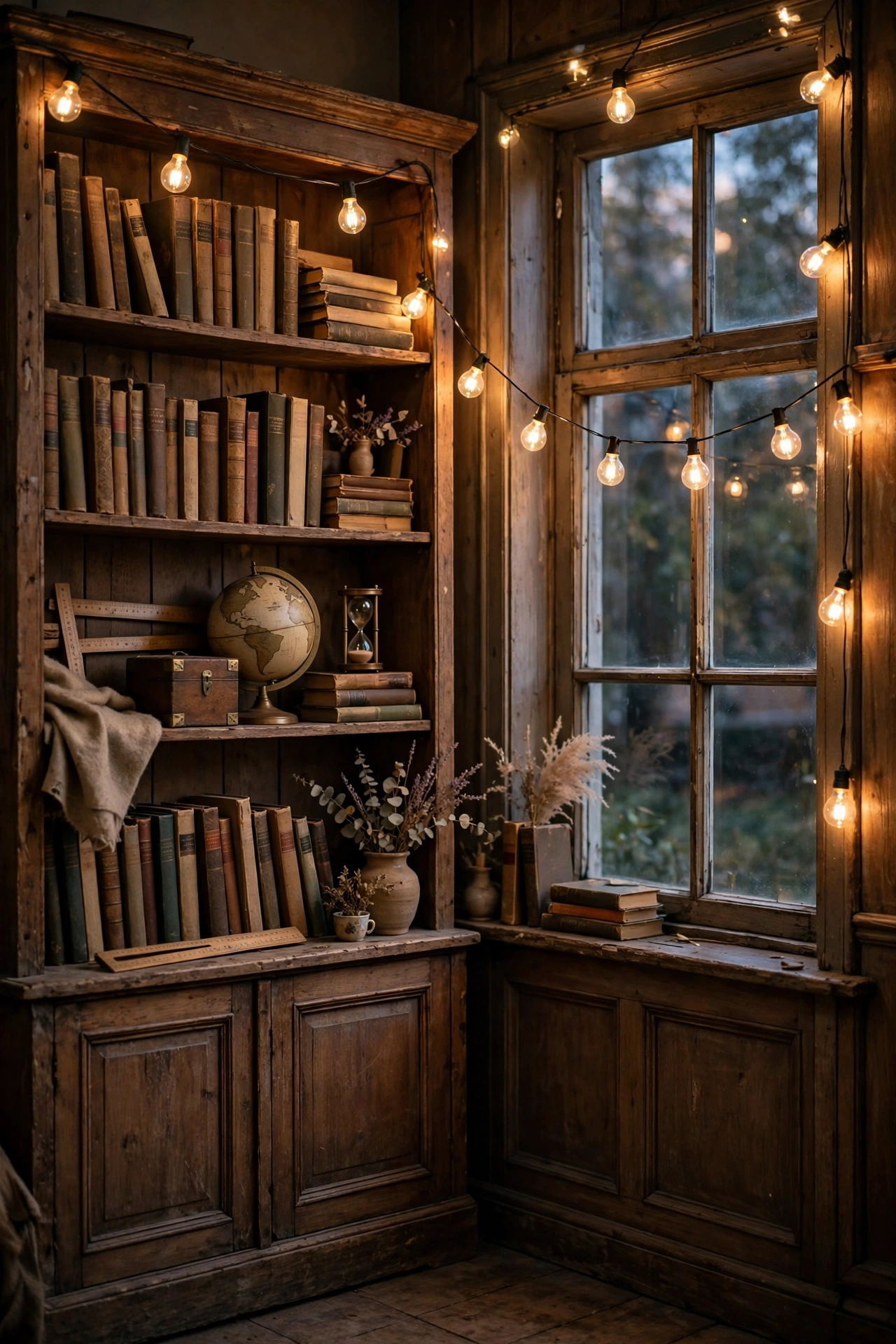
Drape warm-white Edison-style string lights along a bookshelf, a window frame, or the top of the chalkboard wall. Choose LED versions so they stay cool and safe, and use a timer plug so they switch off automatically at the end of the day. The goal is a gentle glow, not a party — one or two strands are enough, and they should never replace proper task lighting for reading and writing. Use them during quiet reading time or rainy afternoons, when the softer light genuinely changes the mood of the room. Keep cords clipped neatly to the wall and out of walkways.
8. Vintage Teacher Desk Corner
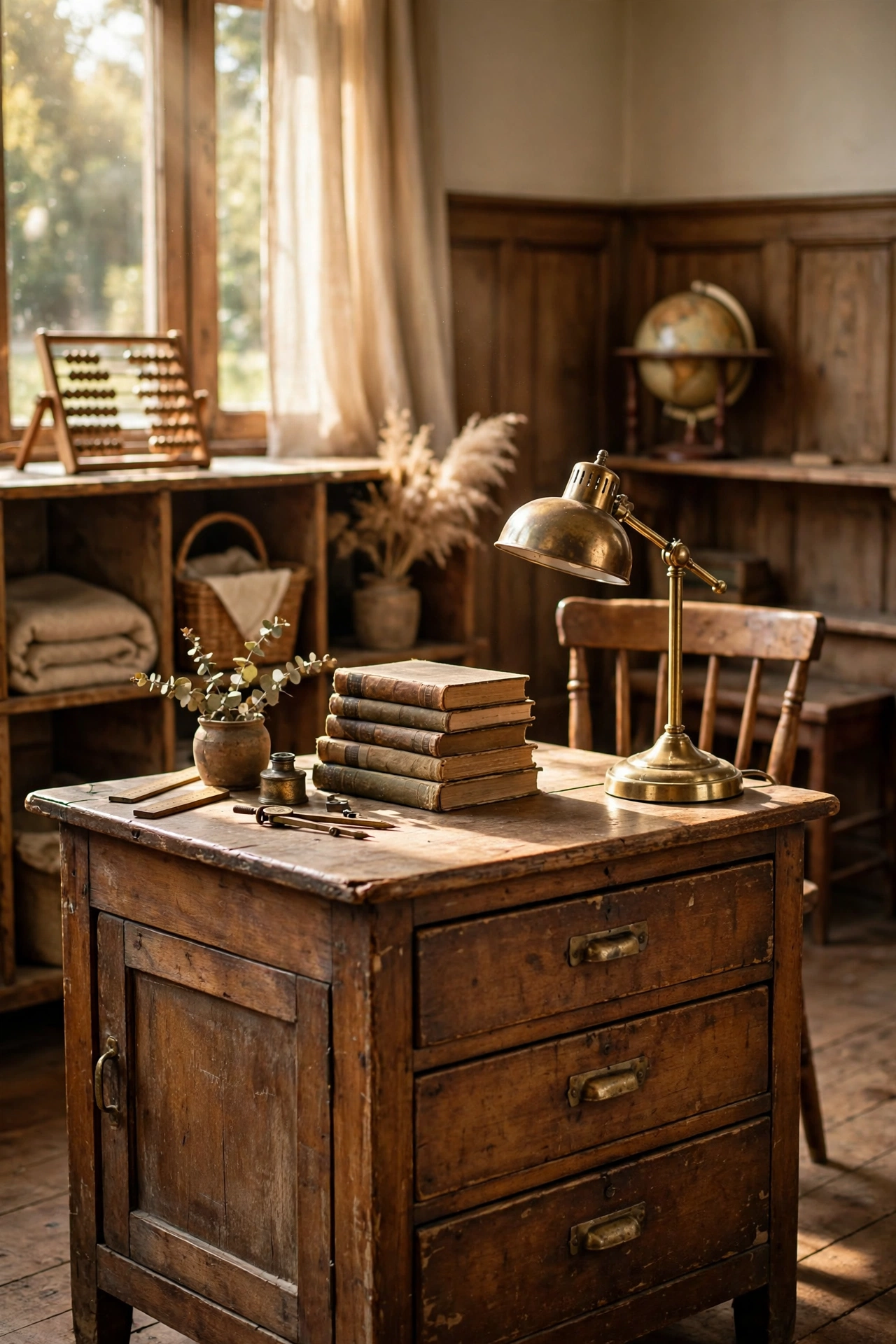
If you can find a solid wood desk with drawers — a thrifted oak or pine desk is ideal — make it the anchor of your teacher corner. Add a brass or banker’s lamp, a small stack of cloth-bound books, and a ceramic mug for pens. Keep the desktop mostly clear: one inbox tray, one small plant, and the lamp. A heavy wooden desk also gives you real drawer storage, which means fewer plastic bins visible around the room. Sand and oil the wood once at the start of the year and it will look cared for all year, even if the rest of the room gets battered by daily use.
9. Old-School Reading Nook with a Wing Chair
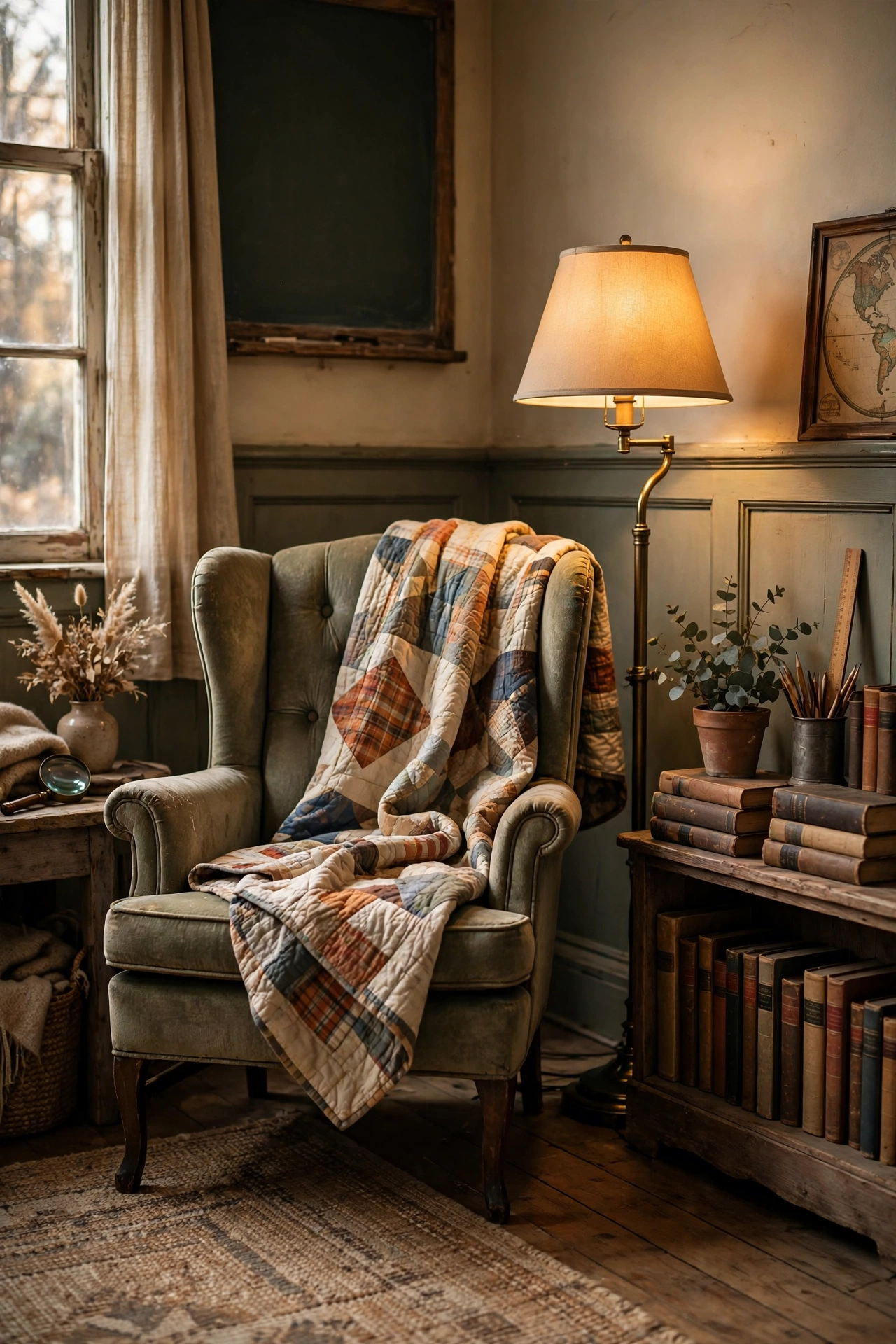
Set one comfortable vintage-style chair — a wing chair, a wooden rocking chair, or a well-padded armchair with a washable slipcover — in a corner with a small rug, a floor lamp, and a low shelf of books. Add a folded quilt over the chair arm for cooler months. Set a simple rule: the chair is for reading only, one student at a time, for a set number of minutes. Because the chair feels special, students treat it with more care than a pile of cushions. Choose a chair you can wipe or launder, and check secondhand shops first — a sturdy old chair with good bones is far better than a cheap new one.
10. Chalkboard Job Chart and Schedule Board
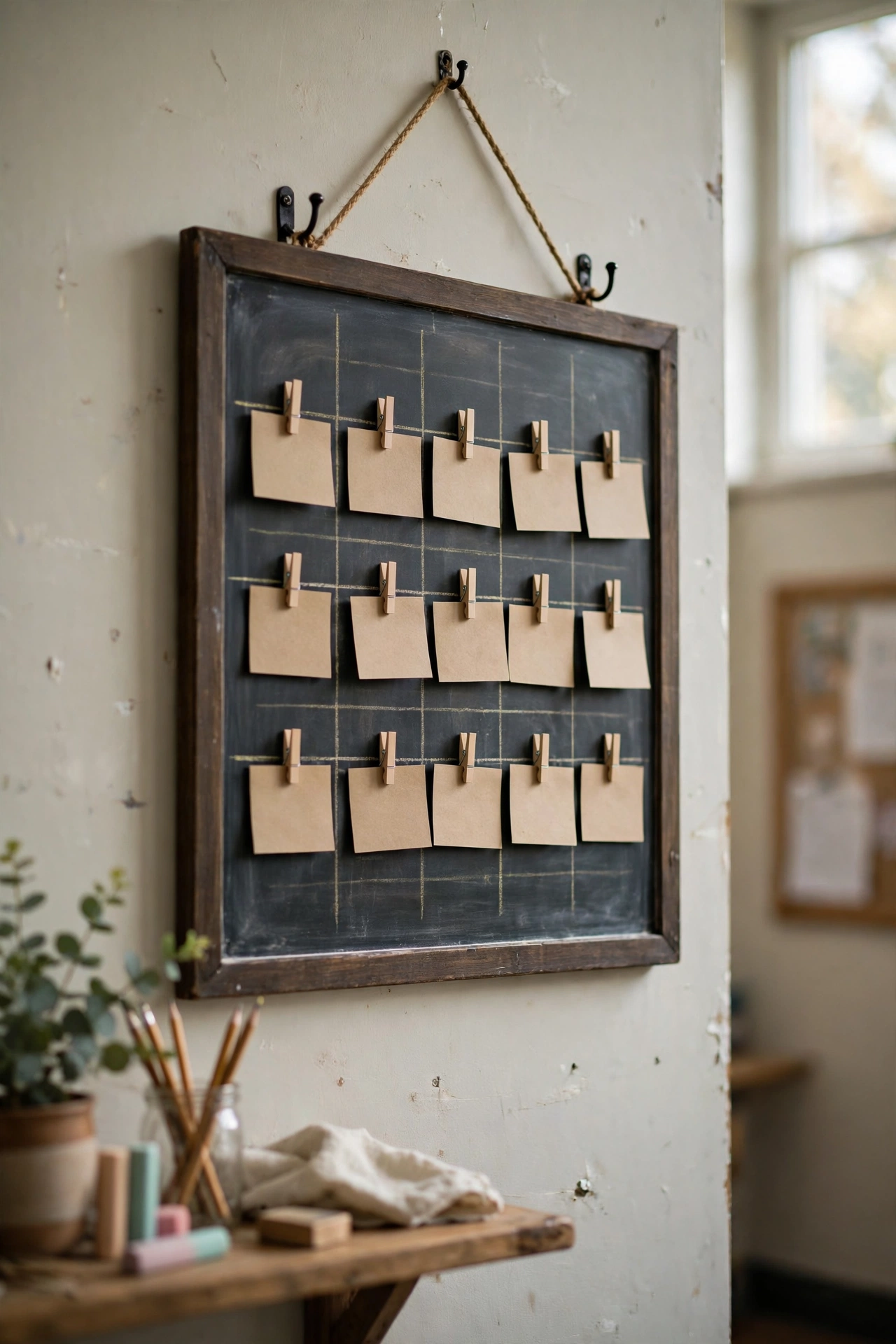
Mount a framed chalkboard near the door and divide it into classroom jobs — line leader, librarian, plant keeper, board cleaner — with student names on small kraft cards clipped or pinned beneath each job. Rewrite it by hand each week; the handwriting is part of the charm, and students notice when their name appears in fresh chalk. Keep a second small chalkboard for the daily schedule in the same frame style so the two boards read as a set. This replaces two plastic pocket charts with something quieter, cheaper, and far more in keeping with a vintage room.
11. Enamel and Tin Storage Bins
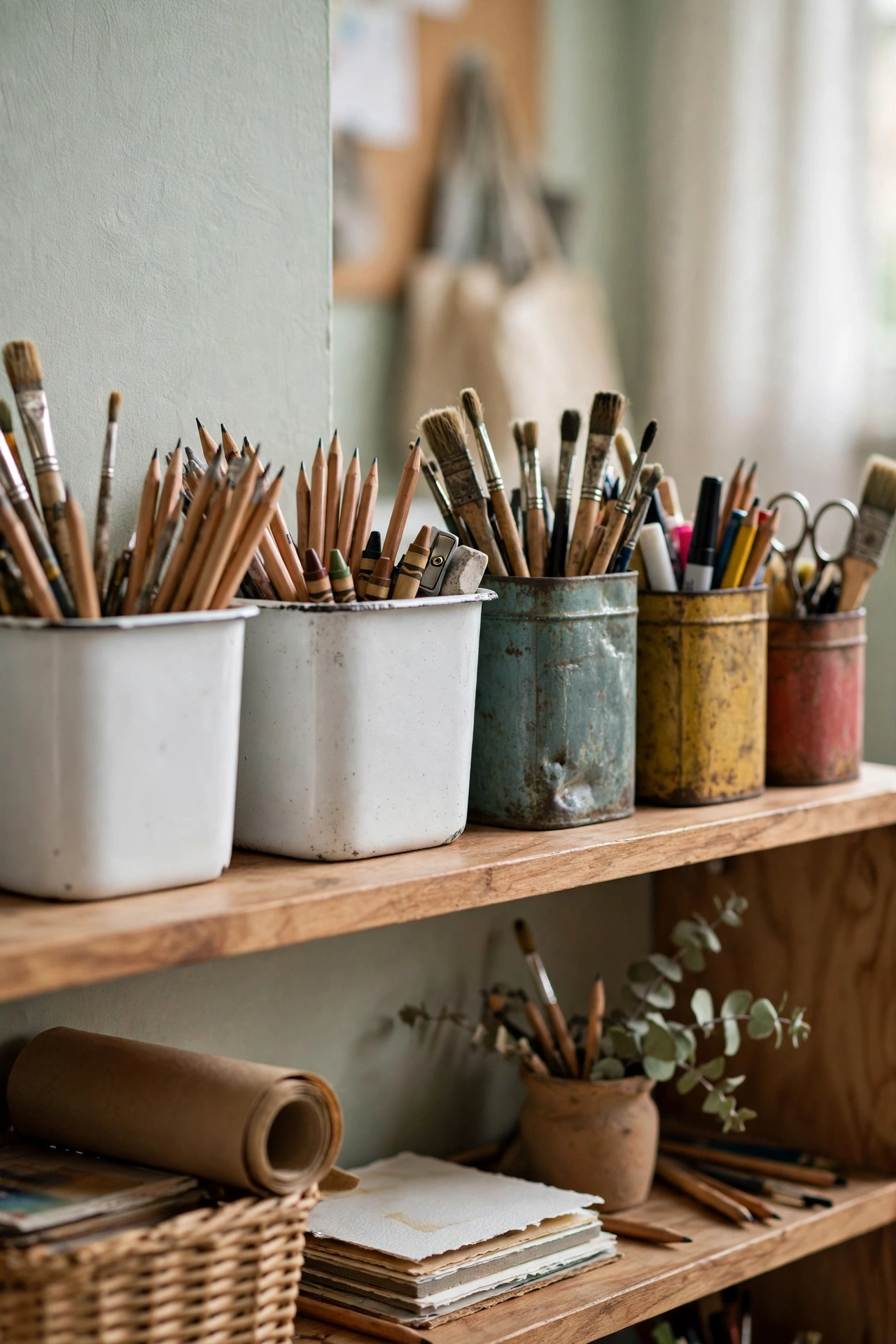
Swap bright plastic tubs for white enamel bins, galvanized tins, or old metal lunch pails for pencils, crayons, scissors, and art supplies. Label each bin with a simple kraft tag tied on with twine. Metal bins are easy to wipe clean, they stack neatly, and they instantly quiet the visual noise of a supply shelf. Check thrift stores and kitchen shops for enamelware — small bowls and canisters work just as well as purpose-made bins. Keep sharp tools in a lidded tin out of reach of younger students, and keep one bin per table group so supplies travel less and stay sorted.
12. Curiosity Cabinet of Natural Specimens
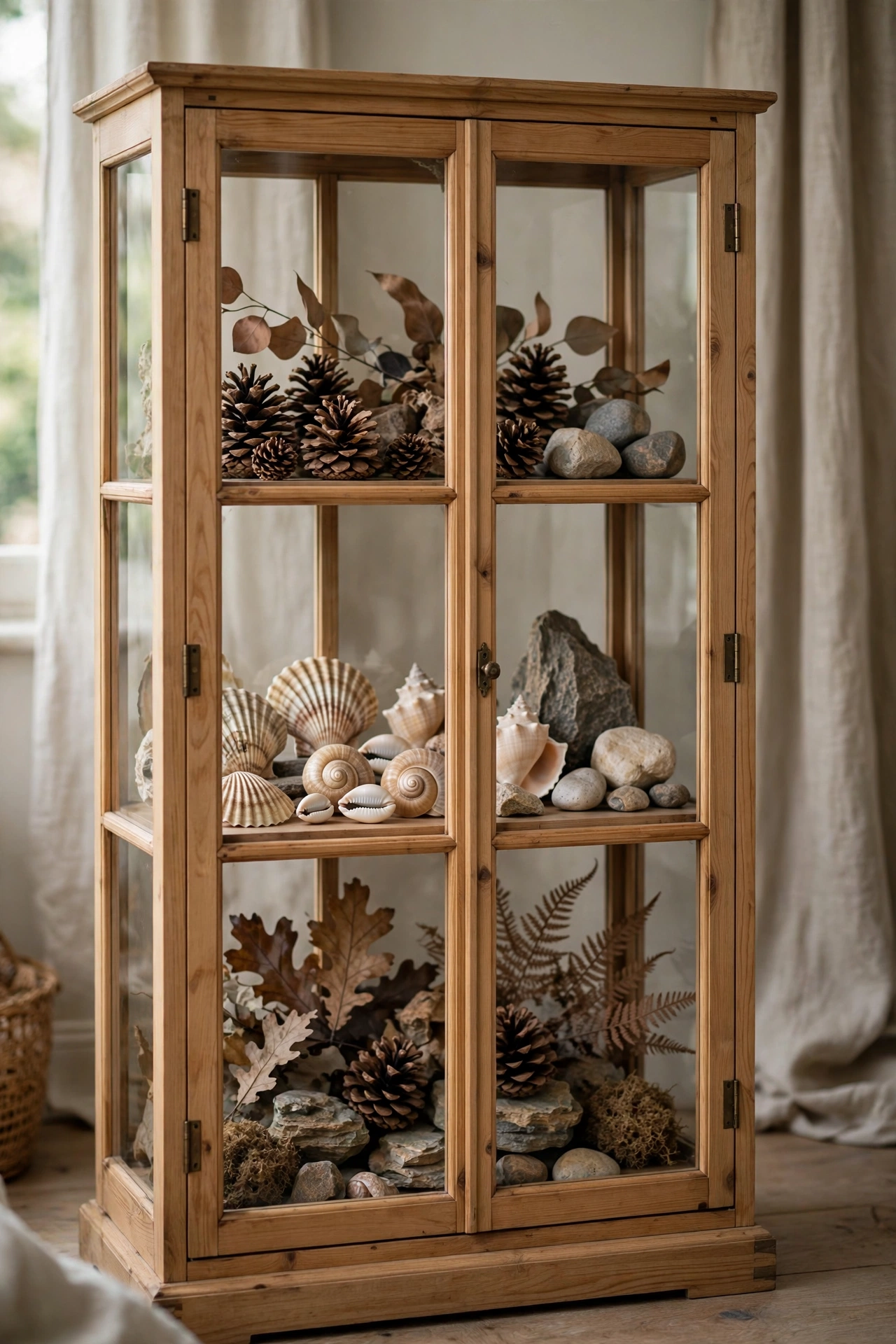
Fill a small glass-front cabinet, or even a single glass-door shelf, with pinecones, shells, interesting rocks, dried leaves, feathers, and seed pods, each labeled with a small handwritten card. Rotate a few items each month and add one “mystery object” students can guess at. This is the vintage version of a science center: it invites close looking and questions without a worksheet. Keep everything non-toxic, sturdy, and too large to be a choking hazard for younger children, and keep the cabinet locked or high if it holds anything fragile. A curiosity cabinet also gives early finishers something worthwhile to do.
13. Antique Typewriter Writing Station
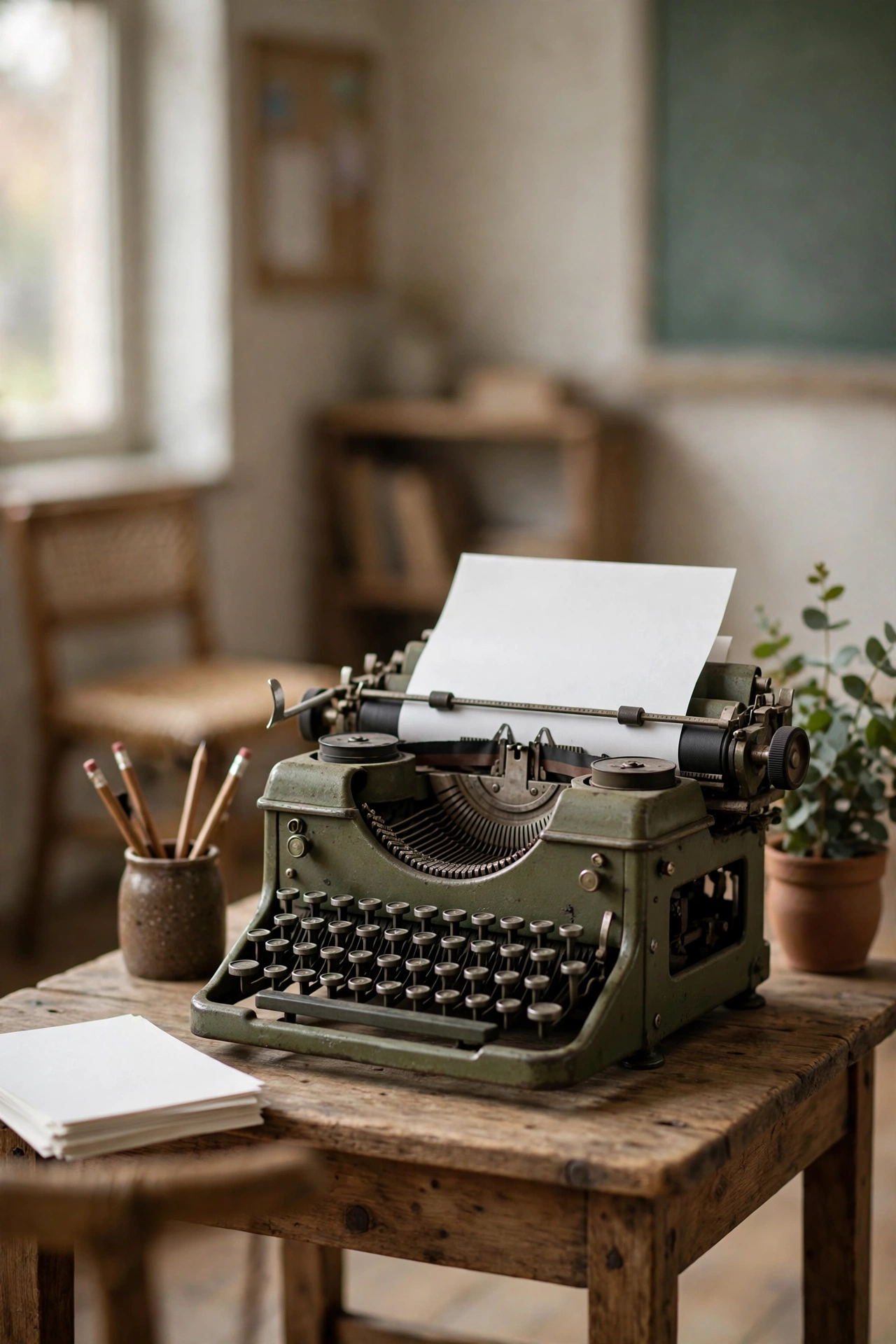
Place a non-working or gently used manual typewriter on a small table with a stack of paper, and let students type a sentence, a poem, or a story title during writing time. Even a decorative typewriter that students are allowed to tap and explore changes how they think about writing — the clack of keys and the sight of real letters appearing feels magical. If you find a working machine, keep a ribbon and paper stocked and set a short time limit per student. Put a small sign beside it: “Type one beautiful sentence.” Display the best typed sentences on a string with clips above the station.
14. Sepia Photo Timeline Wall
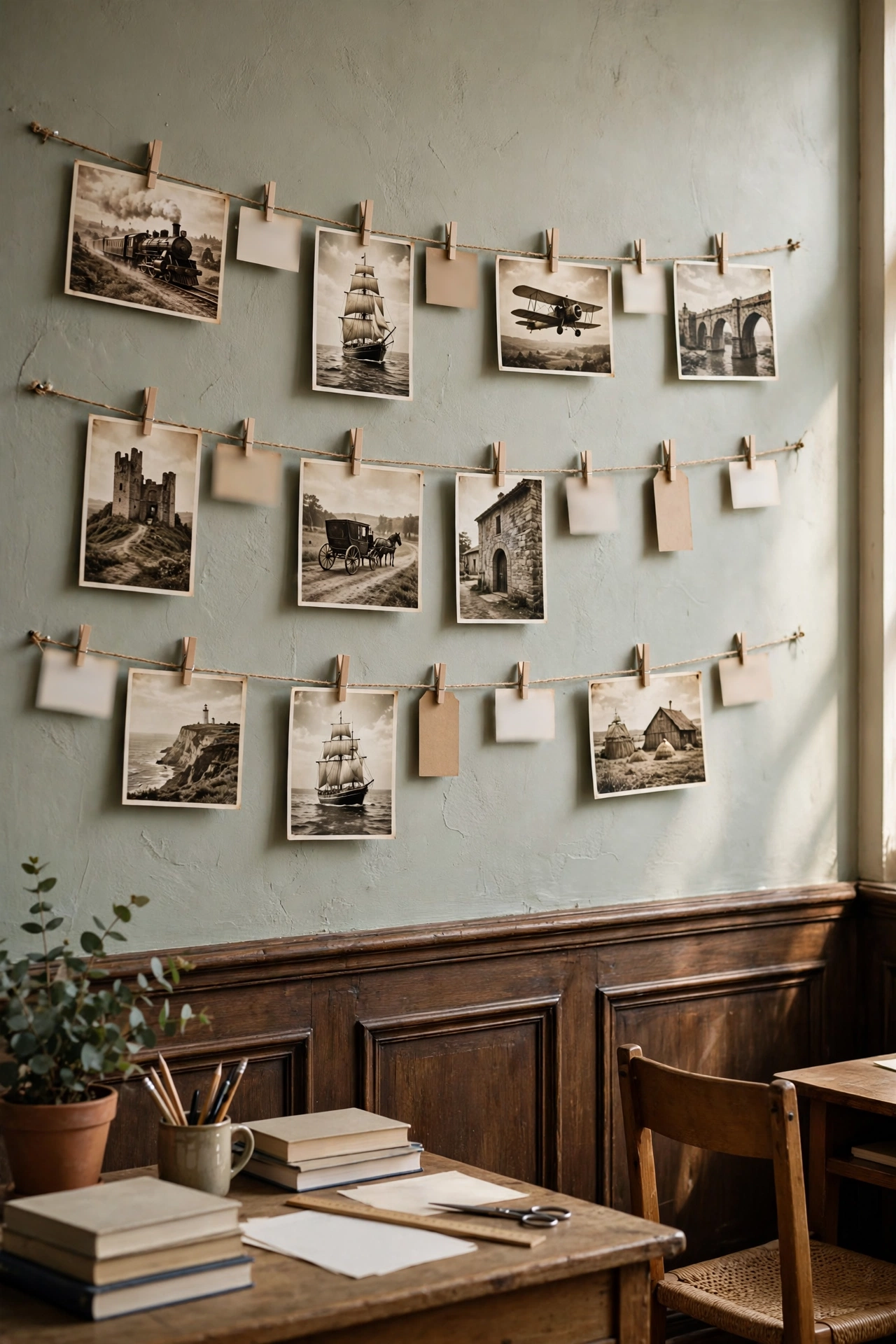
String twine along one wall and clip sepia-toned prints — old school photos, historical scenes from your curriculum, or black-and-white images of your town — in chronological order with small handwritten date cards. Mix in a few photos of your own class from earlier in the year so students see themselves as part of the timeline. Print on matte paper and keep the images small and uniform in size so the display looks curated, not cluttered. Change two or three photos each unit so the wall stays tied to what you are teaching, and let students add a caption card for a photo they research.
15. Classic Schoolhouse Clock Display
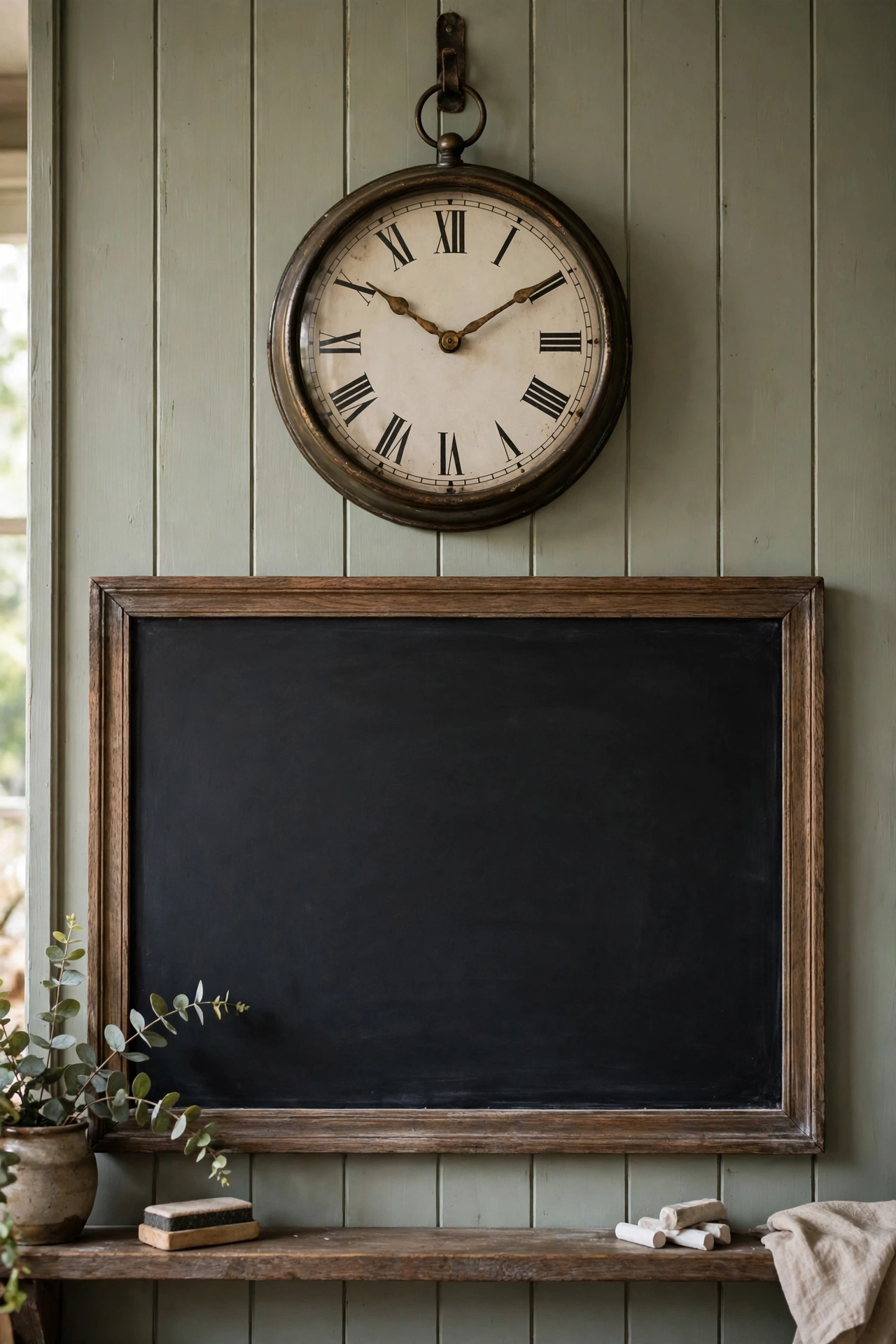
Hang one large round clock with Roman numerals and a wooden or brass rim where every student can see it from their seat. A schoolhouse-style clock does double duty in a primary classroom: it is decor and a daily time-telling lesson. Keep it accurate — a vintage-style clock that shows the wrong time teaches the wrong lesson — and change the battery at the start of each term. Pair it with a small “time words” card beneath it for younger students: o’clock, half past, quarter to. One good clock beats a wall of small novelty clocks every time.
16. Wooden Abacus and Counting Tools
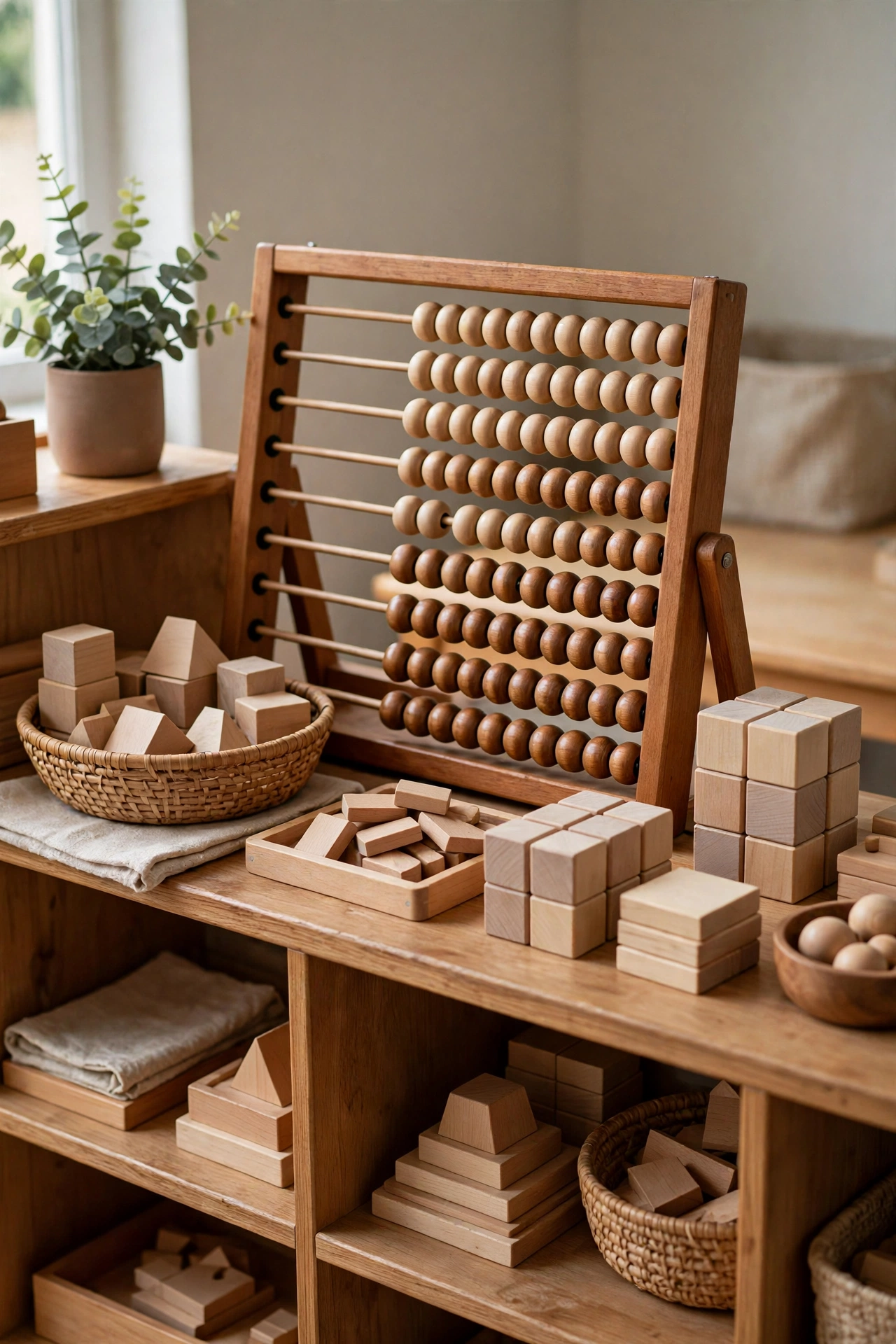
Display a large wooden abacus on a math shelf alongside counting blocks, wooden number rods, and a set of vintage-style number cards. Let students use the abacus during math centers rather than keeping it as decoration only — the beads are satisfying to move and they build number sense in a way a screen does not. Choose solid wood over plastic, and keep small pieces in a lidded tin when younger children use them. A math corner built from wood and brass fits a vintage room far better than a rainbow plastic set, and it survives years of use.
17. Old Book Page Garland
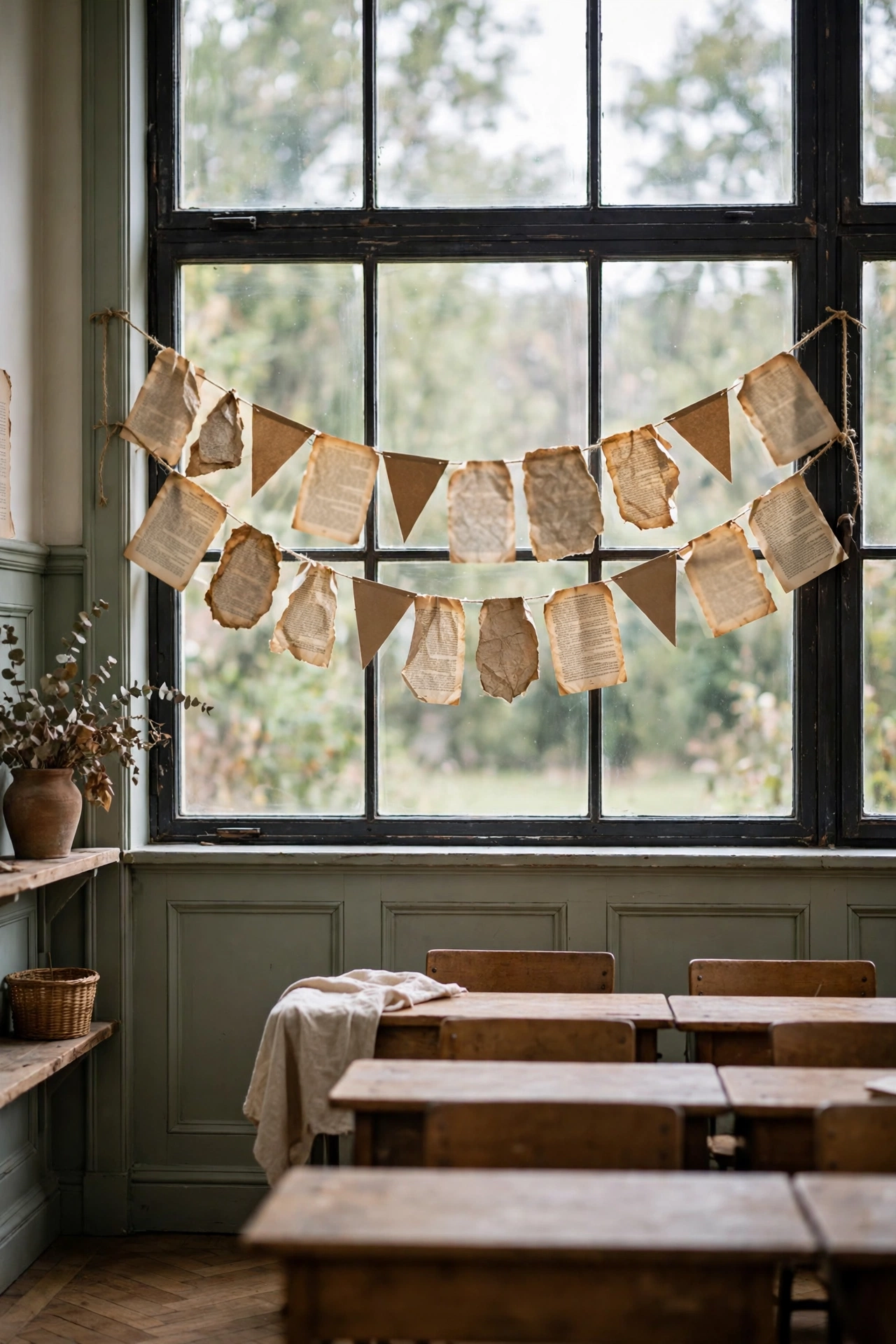
Cut triangles or flags from damaged, unsalvageable books — never from books students still read — and string them with twine across a window or bookshelf. Alternate book pages with plain kraft paper flags so the garland reads as decoration, not as a pile of paper. This is a perfect use for books with broken spines or missing pages that would otherwise be thrown away, and it costs nothing. Keep garlands high enough that students cannot pull them down, and replace faded pages once a term. Add a few dried leaves or small wooden beads for texture in autumn.
18. Brass School Bell and Hand Bell Display
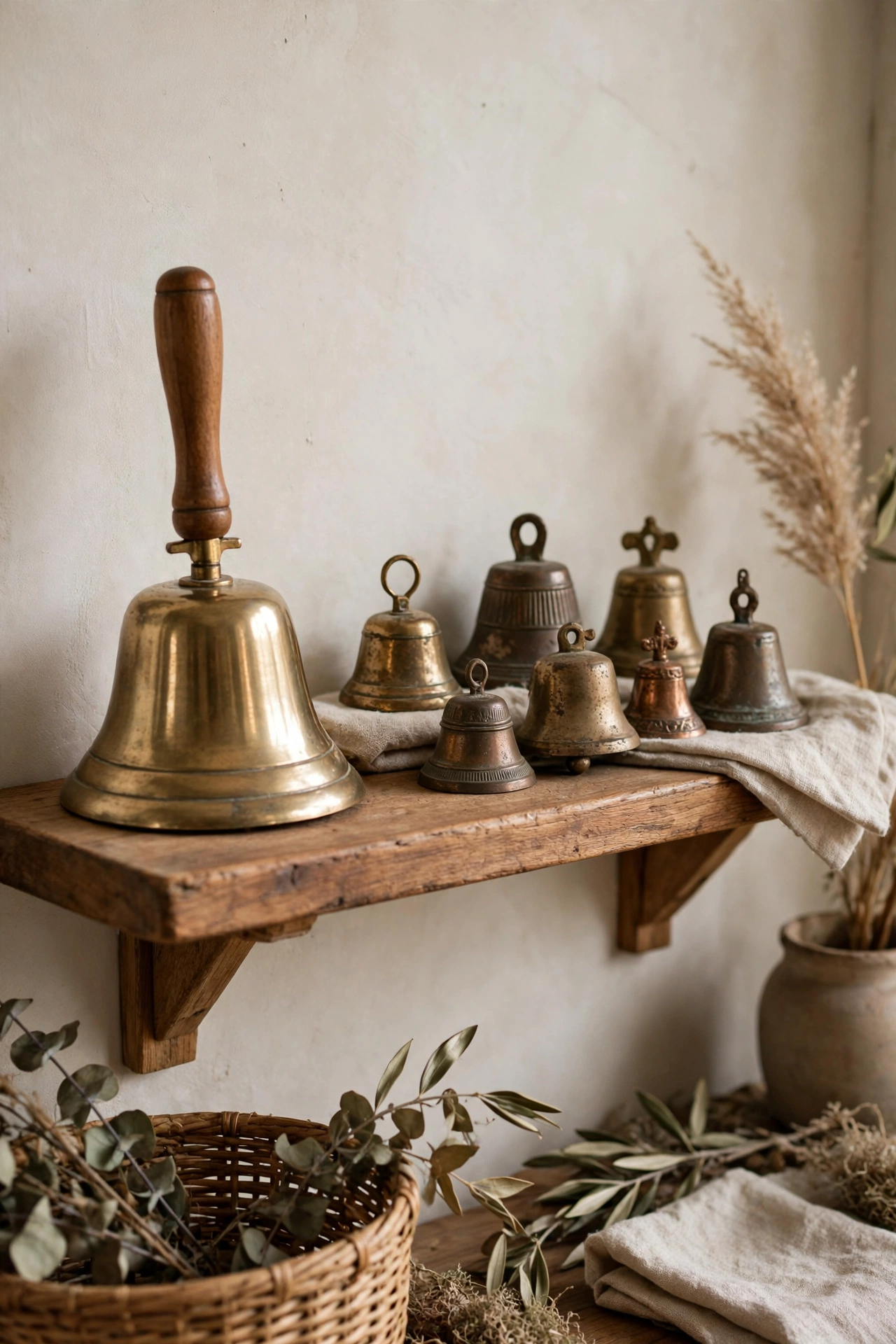
Keep a small brass hand bell on your desk for transitions and attention signals, and display one or two more bells on a shelf — a small service bell, a vintage school bell, or a brass desk bell. A bell signal is quieter and kinder than a raised voice, and students respond to it quickly once the routine is set: one ring means eyes on me, two rings means tidy up. Polish brass once a month with a soft cloth, and set a clear rule that only the teacher rings the bell except during a designated student job. The sound itself becomes part of the room’s vintage character.
19. Oversized Pencil and Crayon Props
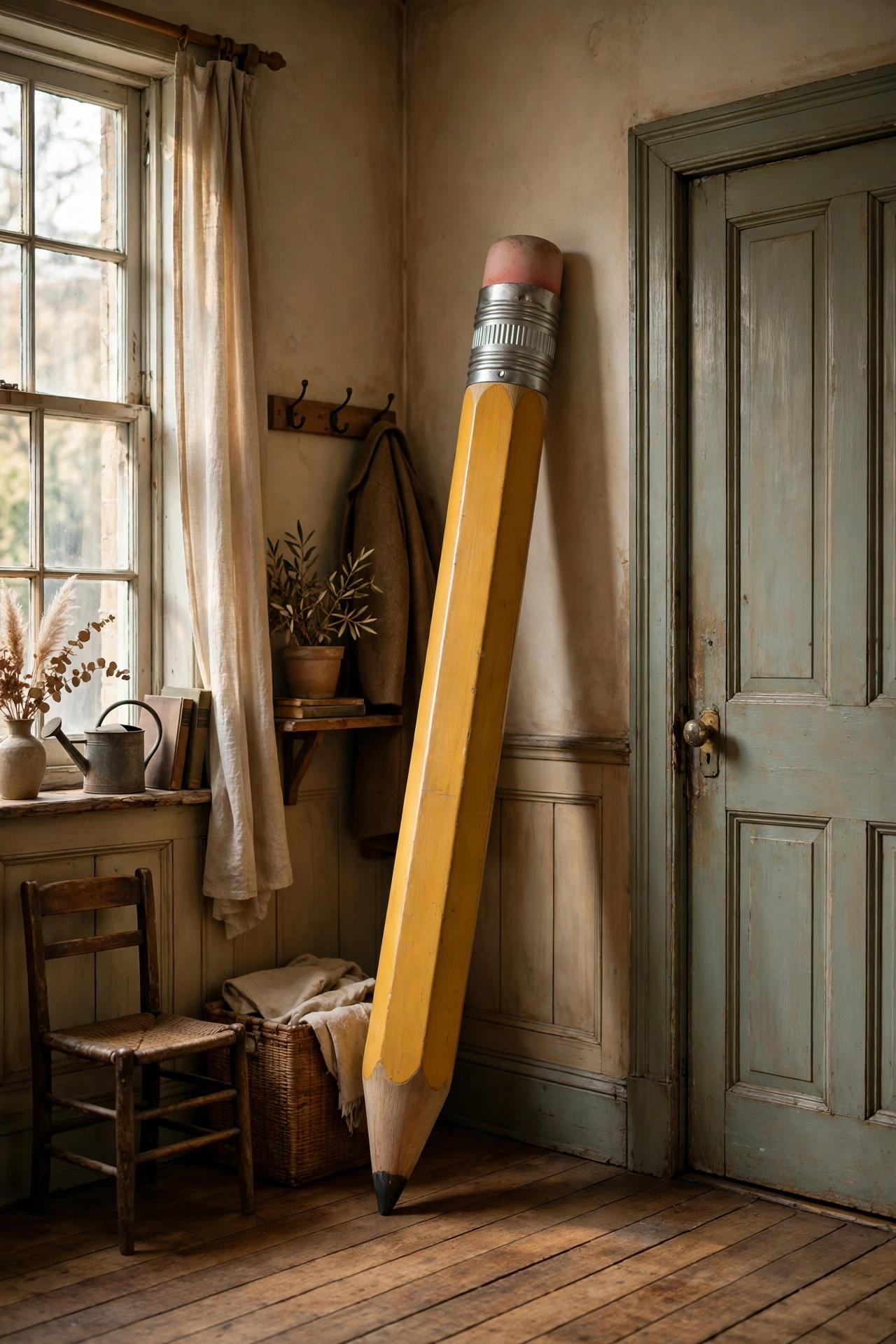
Lean one oversized wooden pencil — a real vintage school prop, or a large pencil made from a dowel and painted wood — in the corner by the door or beside the writing center. Add a giant crayon or a wooden ruler prop if you have room, but stop at two: the charm is in the single, slightly absurd scale. These props photograph beautifully for classroom displays and open-house nights, and younger students love measuring themselves against the pencil. Make sure props are stable, have no sharp points at eye level, and are not blocking a fire exit or walkway.
20. Apothecary Jars for Supplies
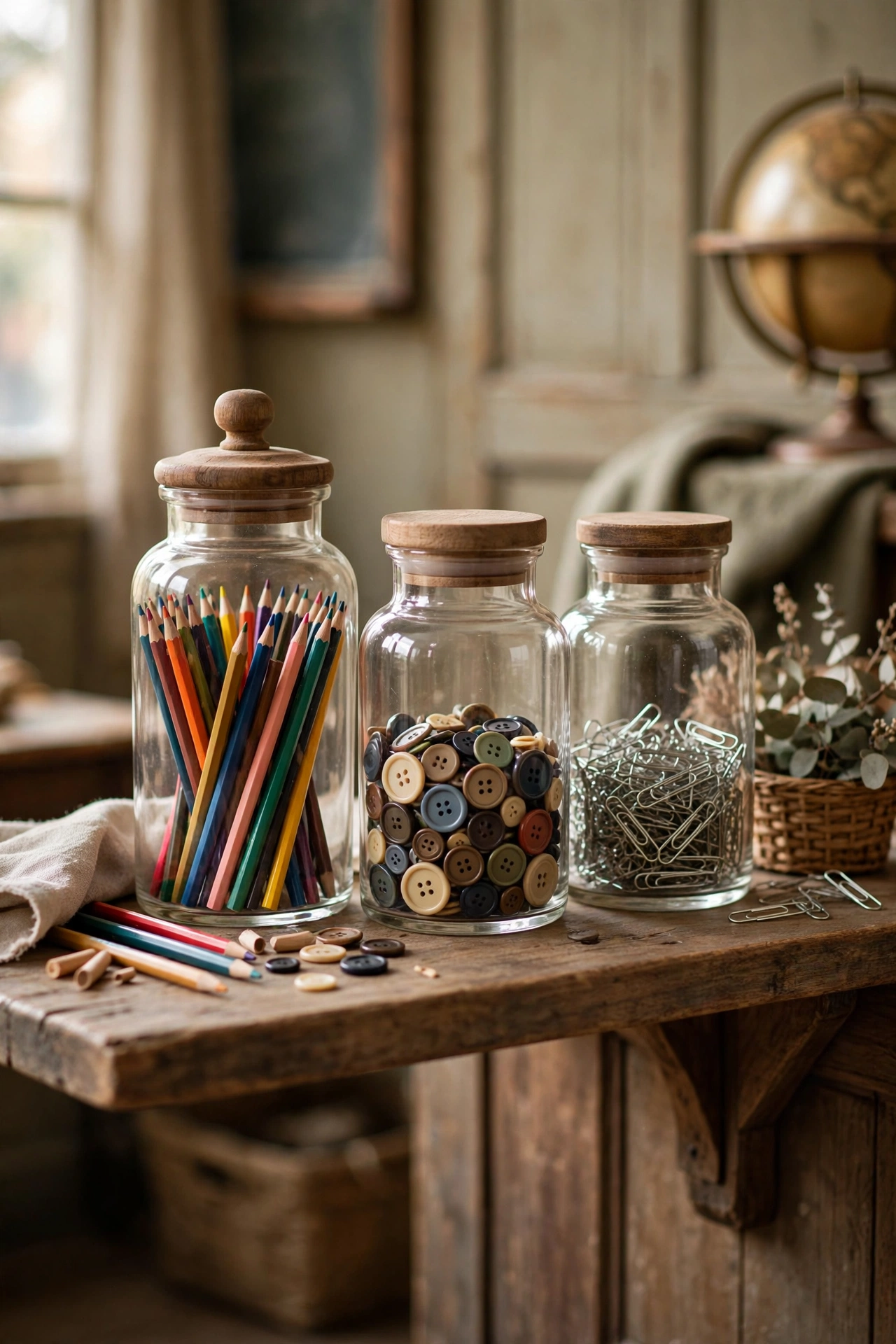
Line a shelf with glass apothecary jars with wooden or cork lids, filled with colored pencils, buttons, paper clips, rubber bands, and other small supplies sorted by color or type. Seeing supplies organized in glass makes students more likely to return them to the right jar, and the jars themselves look like an old general store. Label each jar with a small kraft tag, keep heavy jars low, and keep glass jars away from the youngest students’ reach or use sturdy plastic jars that look like glass if breakage is a concern. Refill jars at the end of each week so the display never looks half-empty.
21. Vintage Pennant Bunting
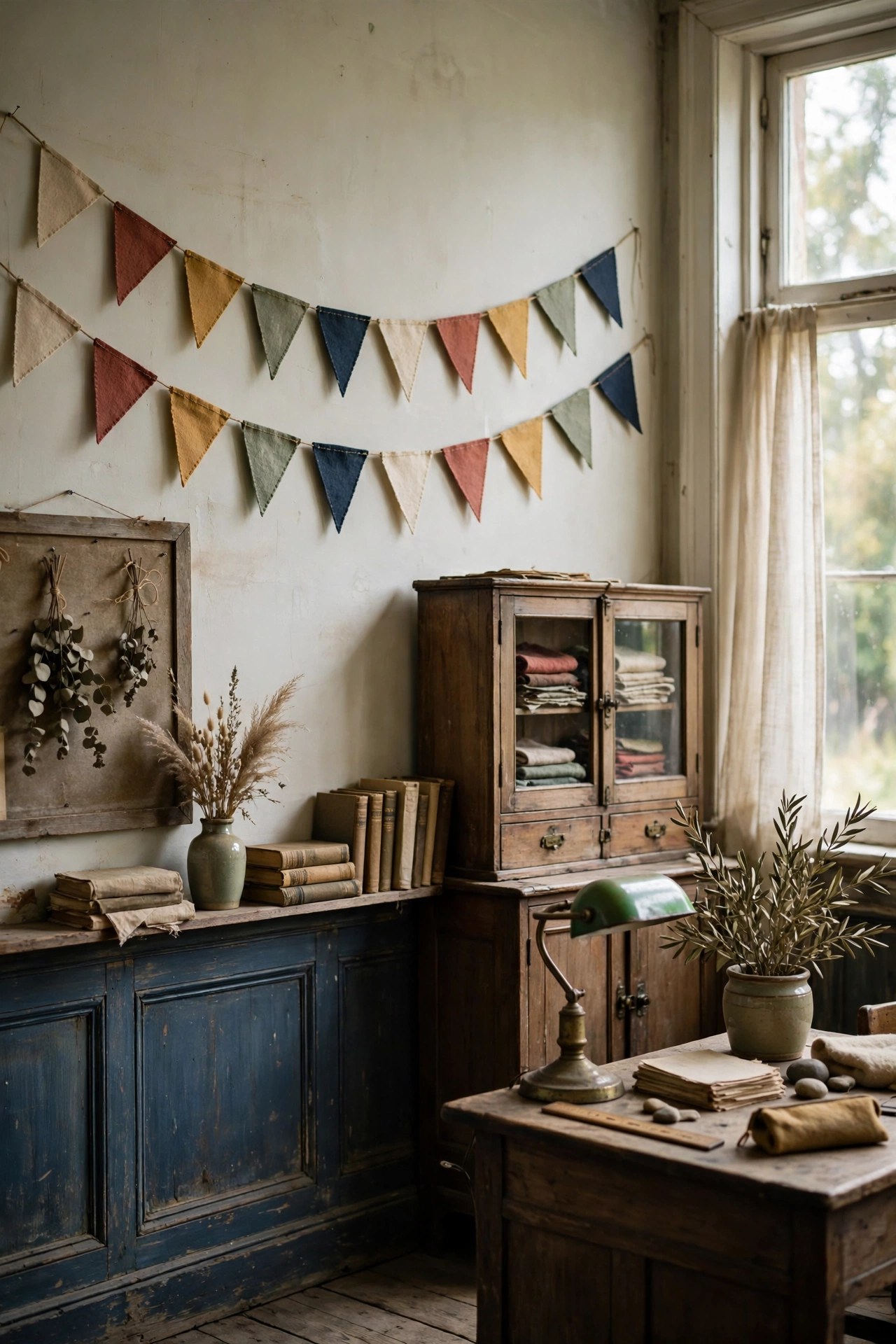
Hang felt pennant bunting in muted vintage colors — dusty red, mustard, sage, navy, and cream — across a wall or above the reading corner. Unlike bright plastic bunting, felt pennants absorb light softly and look like old school spirit flags. You can buy a strand cheaply or cut pennants from felt and stitch or glue them to twine with students as a class project, adding one pennant per student with their initial or a word they love. Keep the bunting high, taut, and level, and take it down and brush it clean once a term so dust does not dull the colors.
22. Gingham and Ticking-Stripe Curtains
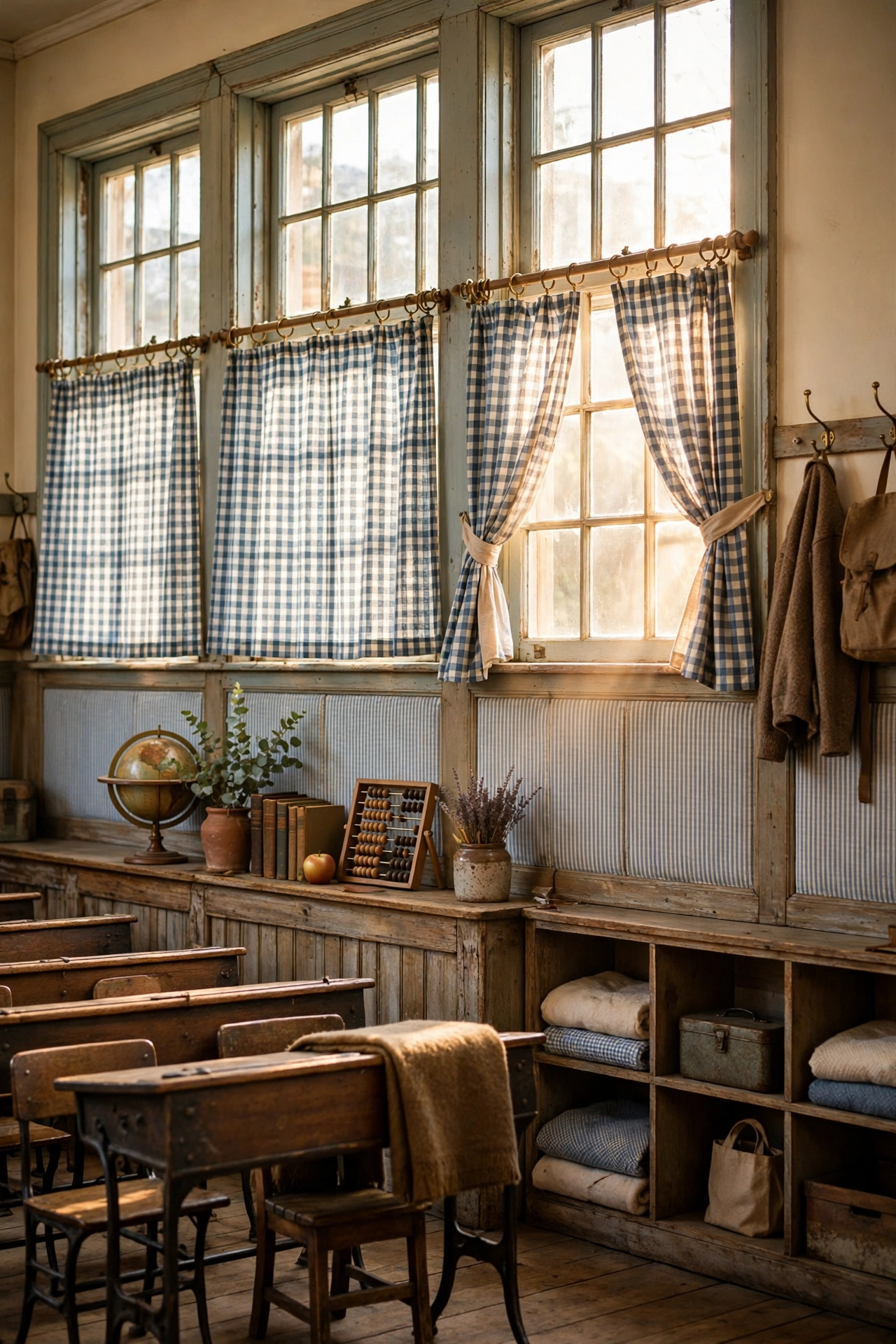
Dress classroom windows with cafe curtains in gingham or ticking stripe — hung on a simple tension rod covering only the lower half of the window so light still pours in. Gingham in red, blue, or sage reads instantly vintage, and cafe curtains are easy to wash, which matters in a classroom. Sew or buy simple rod-pocket panels, and choose a pattern scale that suits the window: small checks for small windows, larger checks for big ones. Keep curtains clear of radiators and heaters, and wash them at the start of each term so they stay fresh rather than dusty.
23. Wicker and Rattan Basket Storage
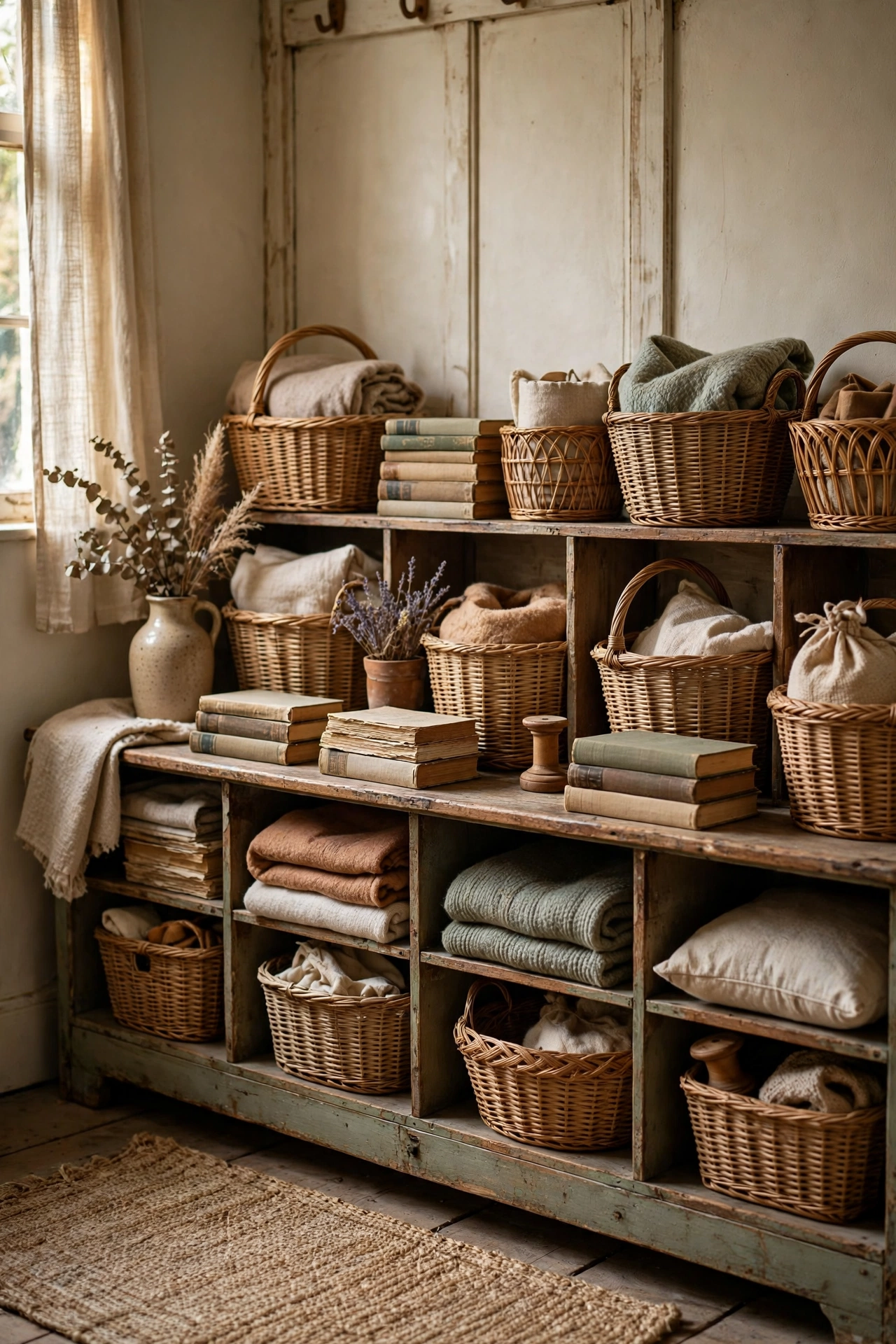
Replace open plastic bins on low shelves with wicker or rattan baskets for soft toys, dress-up items, blocks, and loose parts. Baskets are light enough for students to carry, they stack and nest when empty, and their natural texture warms up a whole wall of shelving. Label each basket with a small wooden tag or a chalkboard tag tied with twine, and sort contents so each basket holds one kind of item. Check baskets regularly for broken strands that could snag clothing, and retire any basket with a cracked base. A row of matching baskets looks calmer than a row of mismatched bins.
24. Yardstick and Ruler Border
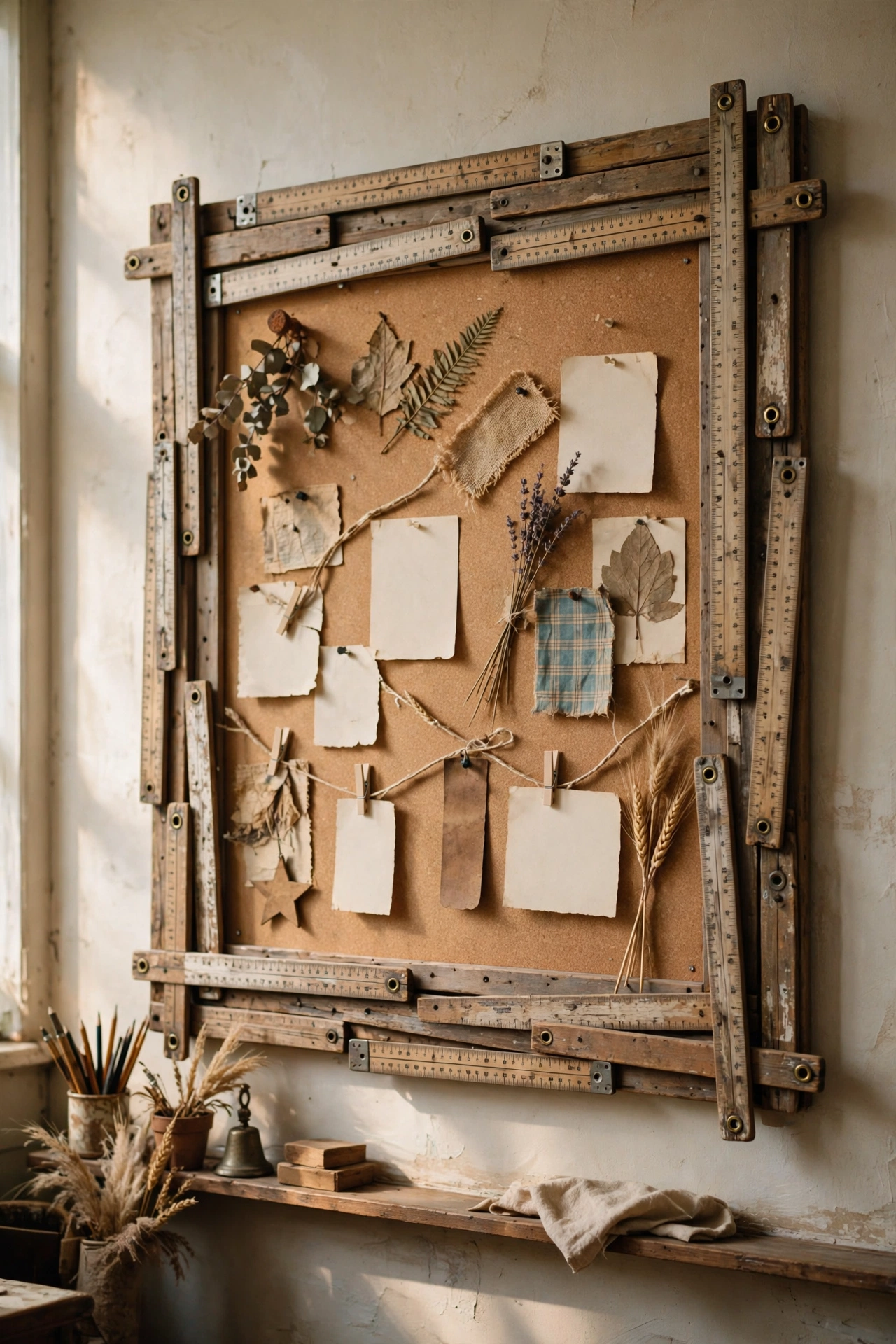
Frame a bulletin board or a doorway with old wooden yardsticks and rulers, screwed or glued to a backing board so they form a neat border. Thrift stores often sell bundles of old rulers for very little, and their worn numbers and faded markings are exactly what makes them beautiful. Use the border on one feature board only — a reading display or a student-work gallery — so it stays special. This idea costs almost nothing, takes under an hour, and tells visitors immediately that this is a classroom that loves its tools.
25. Classic Literature Shelf
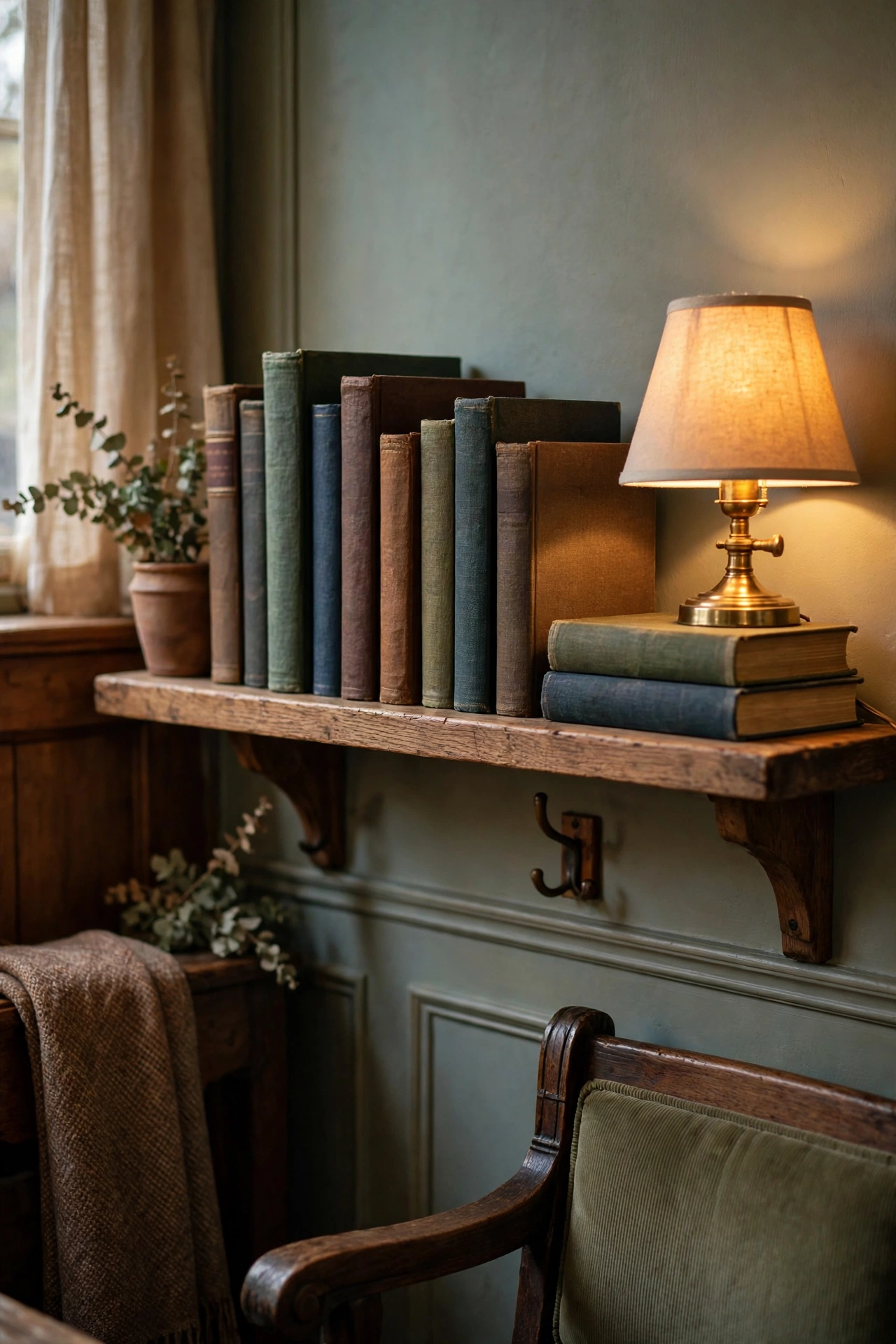
Dedicate one shelf to cloth-bound classics — old editions of fairy tales, adventure stories, poetry, and folk tales — arranged with spines out and a small framed author portrait or a brass lamp beside them. Let students borrow from this shelf with a simple sign-out card, just like an old library, and add a card pocket inside each book for the borrower’s name. Even if students mostly read modern books, seeing beautiful old editions teaches them that books can be objects worth keeping. Keep the shelf at student height, dust it weekly, and rotate two or three titles each month to keep it inviting.
26. Retro Music and Listening Corner
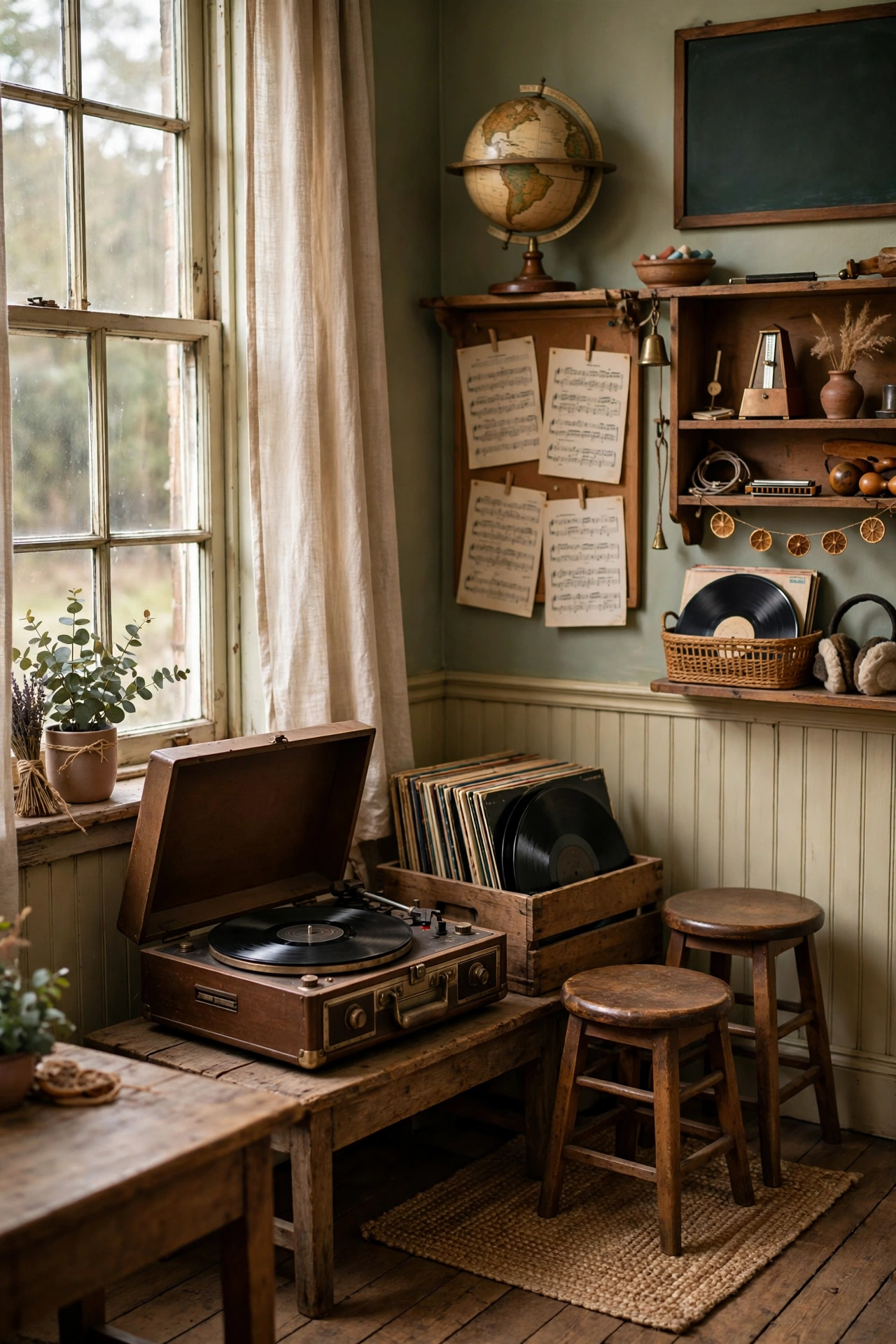
Set up a small listening corner with a vintage-style record player or a simple wooden music box, a few records or a basket of rhythm instruments, and two low stools. Use it for a short daily music break, a calm-down routine, or background music during art time. A record player, even a modern one with a vintage look, makes listening feel deliberate: students choose a record, place the needle, and listen together. Keep records out of reach of the youngest students, set volume low, and choose instrumental or folk recordings that suit the room. This corner rounds out a vintage classroom with sound, not just sight.
Frequently Asked Questions
How do I decorate a vintage classroom on a small budget?
Start with paint and paper: a chalkboard panel, an alphabet strip, and a book-page garland cost very little and change the whole room. Then thrift one anchor at a time — a wooden desk, a globe, a crate — rather than buying a matching set. Vintage decor looks better collected slowly than bought all at once.
Where can I find real vintage classroom items?
Thrift stores, estate sales, school surplus sales, and online marketplaces are the best sources. Ask colleagues and families too — many people have old globes, maps, and wooden rulers in attics. Always check old items for sharp edges, lead paint, and broken glass before bringing them into a classroom.
How do I keep a vintage classroom from looking cluttered?
Choose one vintage anchor per wall or zone, keep the rest of the room calm and neutral, and use closed storage — crates, baskets, and bins — for everything else. If a new piece does not have a clear home, do not add it. Editing is what separates a curated vintage room from a crowded one.
Is vintage decor suitable for older students?
Yes, with a shift in tone: high school rooms suit the map, globe, clock, literature shelf, and typewriter ideas best, while younger classrooms suit the alphabet banner, pencil props, and reading nook. Keep the palette muted and the displays purposeful, and older students will take the room seriously.
Can I mix vintage decor with modern classroom technology?
Absolutely. A smart board beside a chalkboard wall, or tablets stored in a wooden crate, looks intentional rather than mismatched. Keep technology tidy — cables hidden, devices in one charging station — and let the vintage pieces provide warmth while the modern tools do the work.
How do I keep vintage items safe and clean in a classroom?
Dust weekly, keep fragile items high or behind glass, wash fabrics each term, and oil wooden pieces once a year. Set clear rules for items students may touch and items that are display-only, and check old items regularly for wear. A little maintenance keeps vintage decor looking loved, not neglected.
Conclusion
A vintage classroom is not about perfection or expense — it is about warmth, honesty, and a sense of time. Pick the ideas that fit your room and your students, start with a chalkboard wall or a crate shelf, and let the room grow one thrifted treasure at a time. The goal is a space where students feel calm, curious, and a little bit enchanted every time they walk in — a room that looks like learning has always mattered there. Which of these 26 ideas will you try first? Start this week, and watch how quickly a few old-fashioned touches change the feel of your whole classroom.
Related reading: 19 Neutral Classroom Decor Ideas, 25 English Classroom Decor Ideas, 27 School Hallway Ideas, 19 Teaching Classroom Decor Ideas, 18 Gorgeous Aesthetic Classroom Decor Ideas, 21 High School Classroom Decor Ideas