25 English Classroom Decor Ideas for an Inspiring ELA Classroom
25 English Classroom Decor Ideas for an Inspiring ELA Classroom
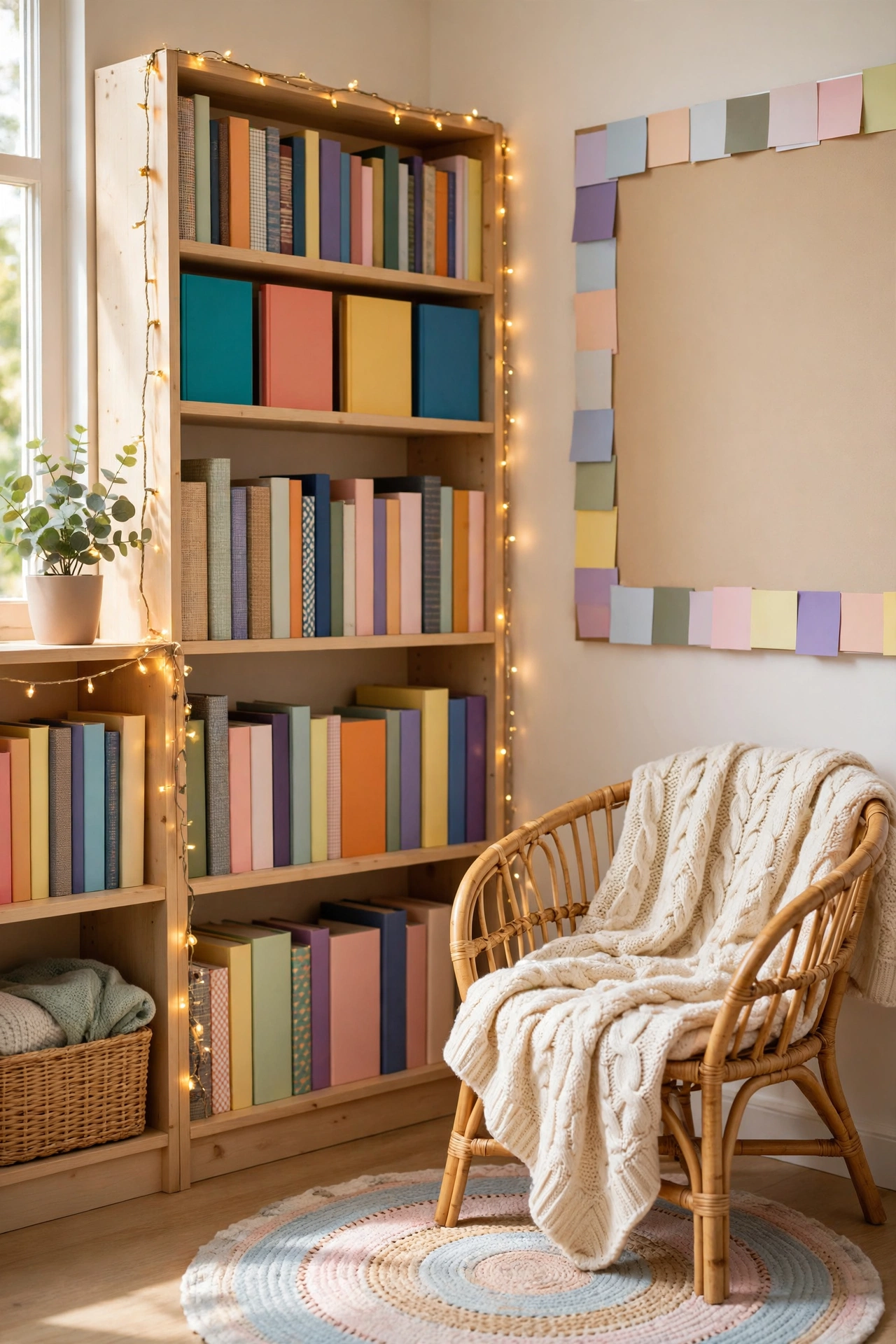
An English classroom filled with bookish touches — quotes, books, and a cozy reading corner — makes every class period feel like stepping into a story.
An English classroom should feel different the moment a student walks through the door. Unlike a math or science room, yours is the place where language lives on the walls — where a quiet kid discovers a poem on a door, where a reluctant reader trips over a book recommendation from a classmate, where vocabulary stops being a worksheet and starts being wallpaper. The best ELA decor does double duty: it sets a warm, literary mood and quietly teaches. A well-placed anchor chart reinforces a concept you will teach in October. A quote wall gives students something to think about while their brains warm up. You do not need a big budget or an artist’s hand to pull this off. These twenty-five ideas are organized around what English teachers actually need — reading culture, writing support, vocabulary growth, and literary atmosphere — with concrete steps for each so you can start with the ones that fit your room, your students, and your weekend.
1. Literary Quote Wall with Rotating Quotes
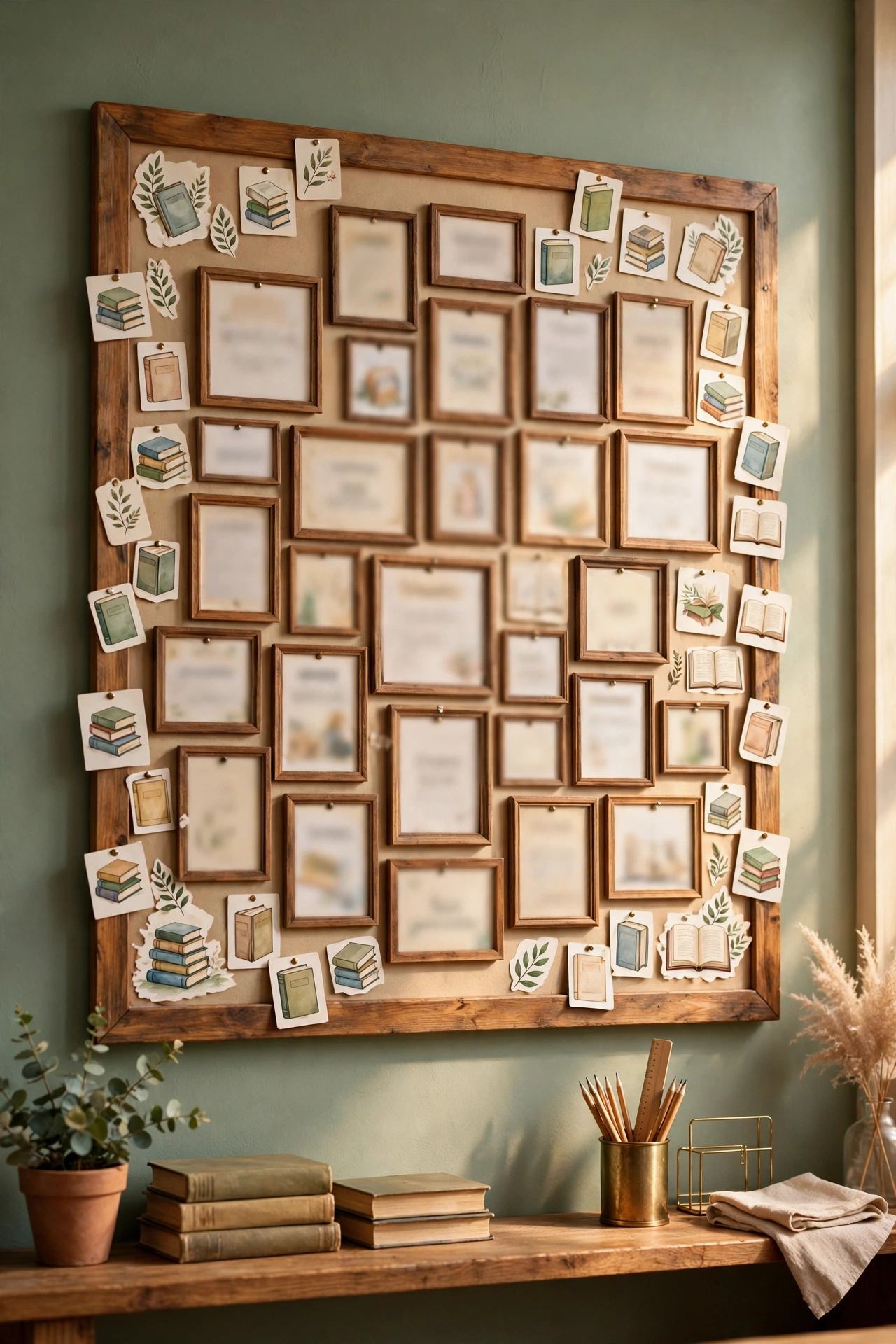
A big blank wall becomes a rotating gallery of lines worth remembering.
Pick one large, highly visible wall — ideally the one students face when they enter — and turn it into a quote gallery drawn from the books you actually teach. Print each quote large on cardstock, 8.5 by 11 inches at minimum, and frame a few in cheap black frames for anchor pieces. Leave space to rotate: every two to three weeks, swap in lines from the next text on your syllabus, and let students nominate favorites from their independent reading. Use removable painter’s tape or command strips so swaps take ten minutes. Add small author nameplates under each quote, and consider a mini “why this one” note from the teacher or a student. The wall works best when it feels curated rather than permanent. If you are looking for wall pieces that carry the room’s overall style, ideas from teaching classroom decor ideas can help you balance statement walls with everything else.
2. Front-Facing Classroom Library with Genre Bins
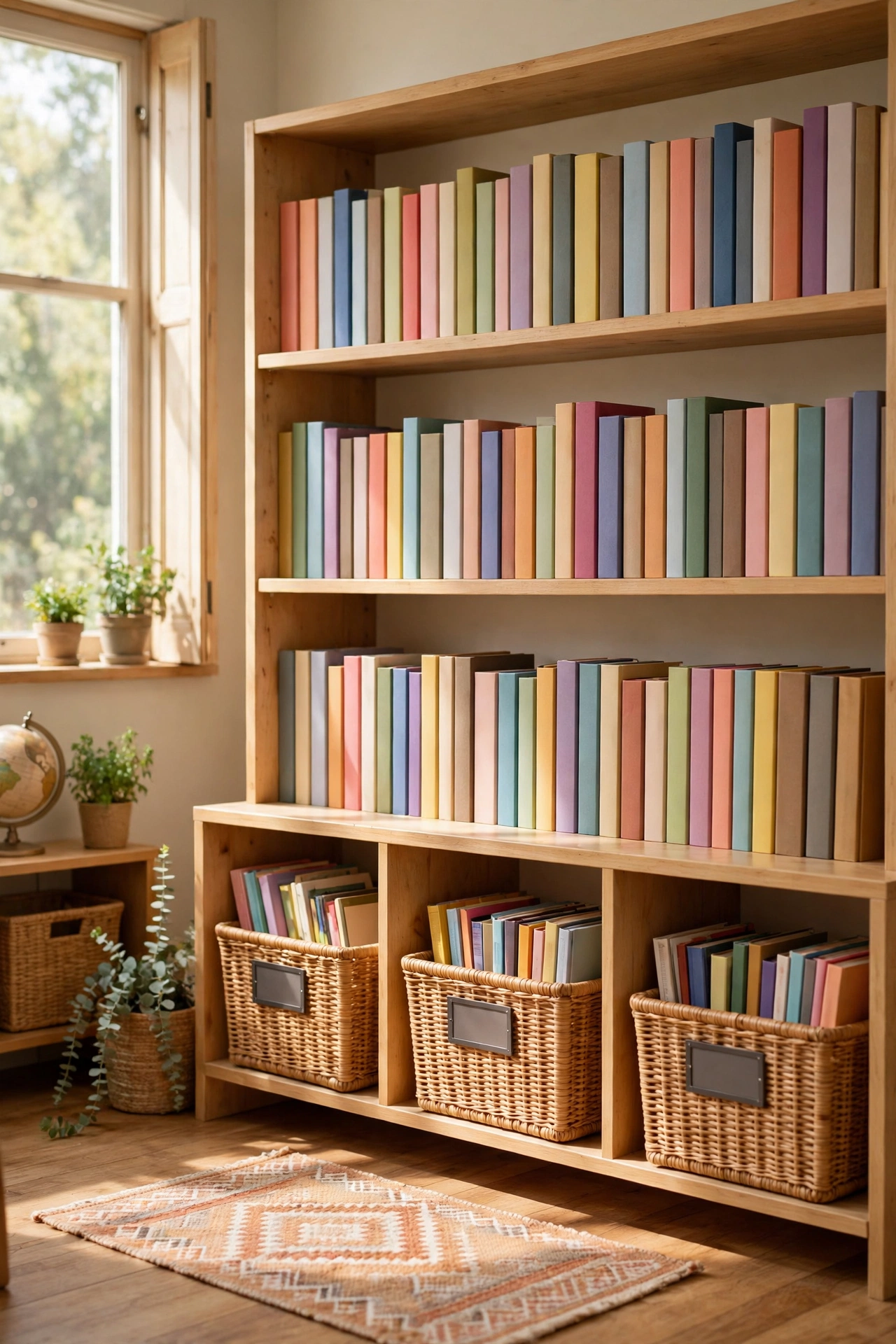
Books displayed cover-out in genre bins get picked up far more often than books spine-out on a shelf.
Move your classroom library out of a corner and face the books outward. Use low bookshelves or even sturdy cardboard magazine holders and file boxes, one per genre: mystery, fantasy, realistic fiction, graphic novels, poetry, nonfiction, classics, and memoirs. Label each bin with a big, clear genre sign — print the label at least 4 inches tall so it reads from across the room. Place the library near the classroom entrance so it is the first thing students see, and add a small “new arrivals” shelf for fresh titles. Keep a sign-out clipboard or a simple Google form beside it. Front-facing displays work because students judge books by covers, exactly like bookstore browsers do. Restock seasonally by asking students which genres feel thin, and weave the library into your independent reading time so it stays active rather than decorative. A few aesthetic classroom decor ideas around the bins — a small plant, a wooden crate, a rug — keep it feeling intentional instead of cluttered.
3. Cozy Reading Nook with Flexible Seating
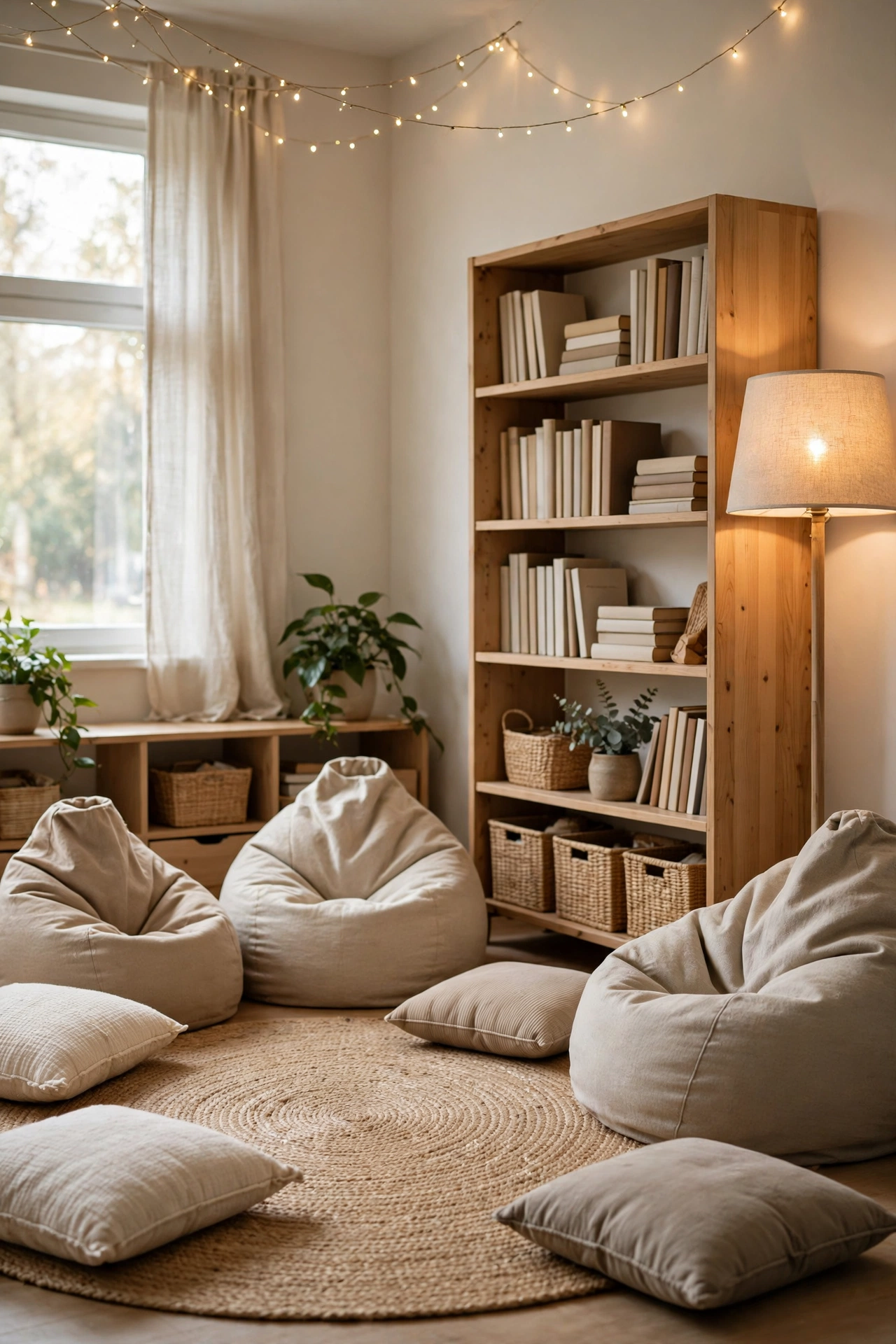
A soft corner with comfortable seating turns independent reading from a task into a treat.
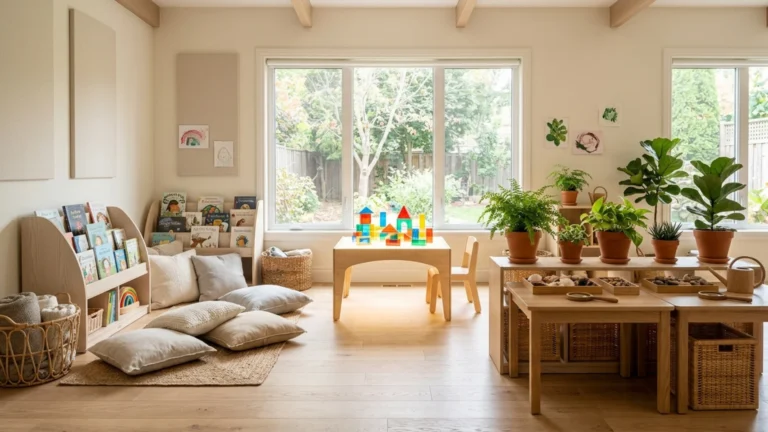
Carve out a corner — even a six-by-six-foot square — and define it with a rug, floor cushions, a bean bag chair, or a few wobble stools. Add a small bookshelf or basket of high-interest titles and a soft throw blanket to make it feel like a destination rather than a seat. Set simple norms: two to three students at a time, silent reading only, and a 15-minute rotation during independent reading blocks. If your school allows it, check out flexible seating grants or browse secondhand stores for poufs and floor pillows; the whole nook can come together for under a hundred dollars. Position it away from the main traffic lane so readers are not interrupted. The payoff is real: students who choose to read in a cozy spot associate reading with comfort instead of compliance. For classrooms shared across periods, make the cushions stackable and the rules posted on a small laminated sign so the nook resets in under a minute between classes.
4. Interactive Vocabulary Word Wall
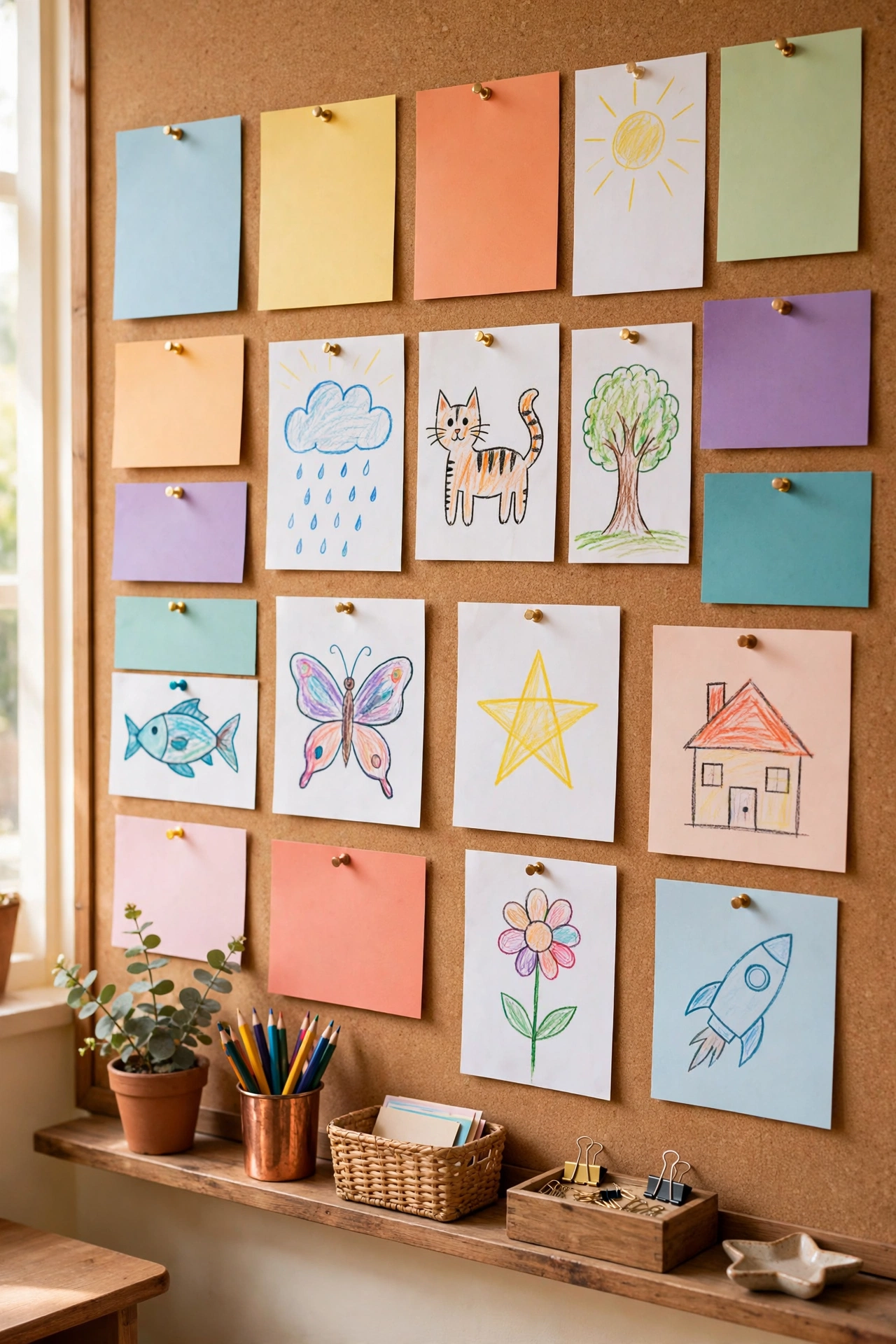
A word wall students add to themselves becomes a living reference, not wallpaper.
Start the year with a blank section of wall, some large letter cards for A through Z, and a pack of blank index cards. Every time the class meets a powerful new word in a text — during read-alouds, discussions, or writing conferences — a student adds a card with the word, a short definition in their own words, and a tiny drawing or example sentence. Use different colored cards for parts of speech: nouns one color, verbs another, adjectives a third. Reference the wall during writing time (“grab a wall word”) so students actually use it. Keep it interactive by letting students initial their cards and running a weekly challenge: use five wall words in a paragraph. Retire old cards into a binder at the end of each unit to make room for new ones without losing the collection. Middle schoolers especially love seeing their names on the wall — if you teach that age group, pair this with the middle school classroom decorating ideas for displays that suit their energy.
5. Grammar Anchor Charts for Figurative Language and Parts of Speech
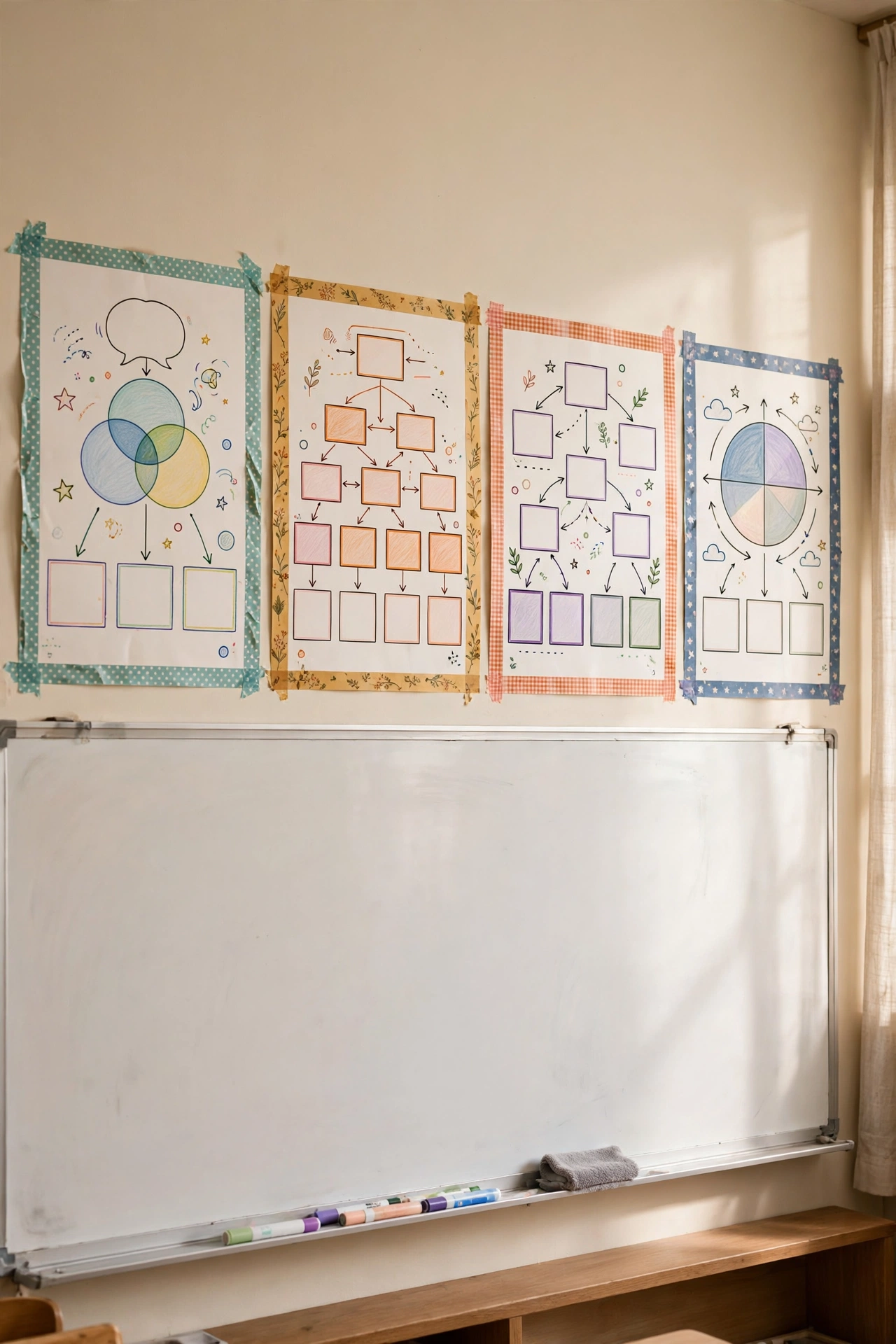
Anchor charts work when they teach at a glance — clear headers, examples, and color coding.
Hang a rotating set of anchor charts behind or beside your main teaching wall, each covering one concept you will reference all year: simile versus metaphor, personification, hyperbole, and the eight parts of speech. Make them large — chart paper size at minimum — with a bold header, a one-line definition, and three short examples from books students have actually read. Color-code the examples so the pattern pops at a glance. The trick is timing: build the chart WITH your class during the lesson, then hang the finished product. Charts made live get far more attention than store-bought posters. Laminate the final chart so it survives the year, and swap sets with each unit — figurative language charts during poetry month, sentence-structure charts during essay season. Point to the relevant chart during mini-lessons instead of re-explaining from scratch; the charts become a silent co-teacher that saves you repeated explanations.
6. Essay-Structure and Writing-Process Anchor Display
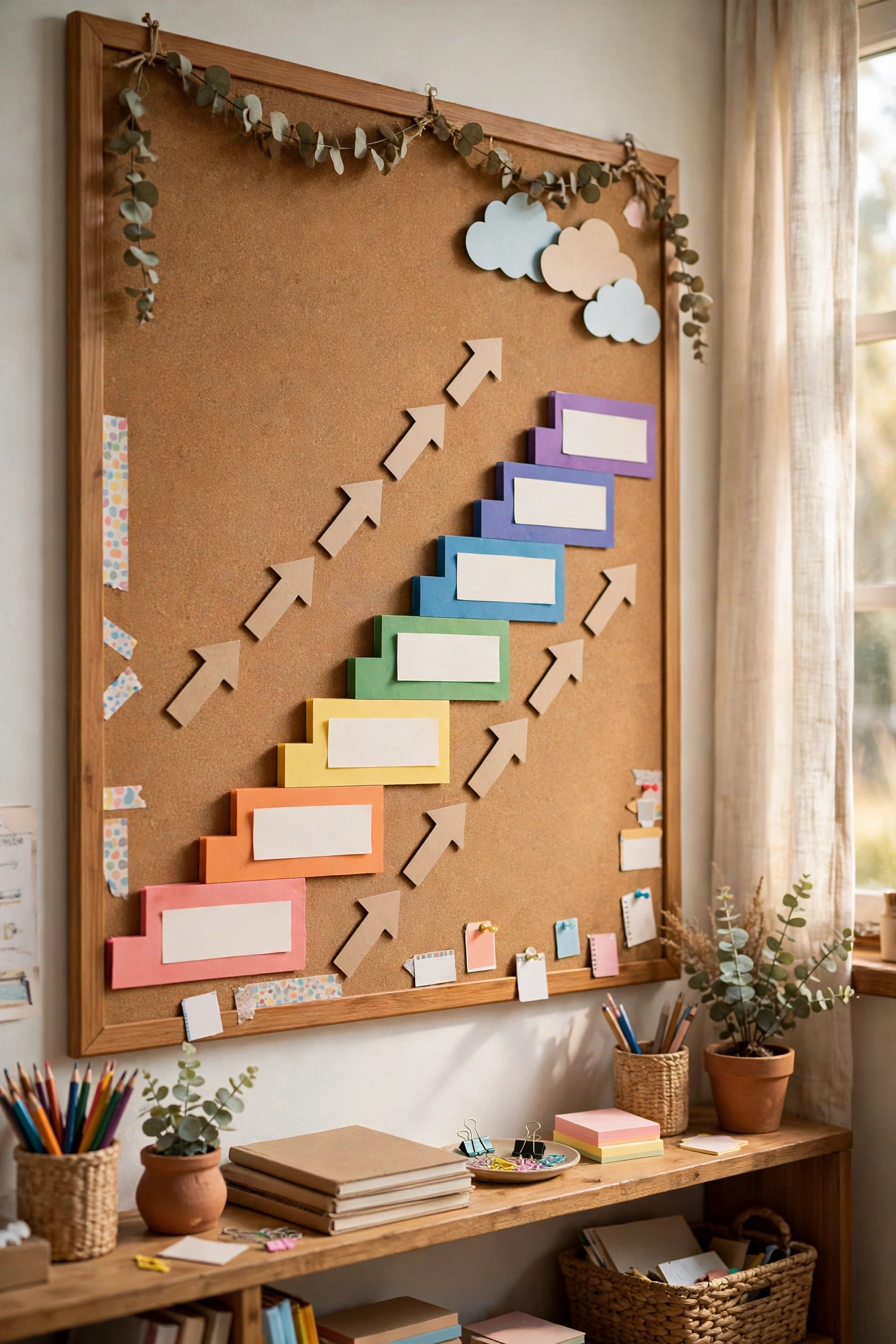
A permanent writing-process display gives students a map every time they draft.
Dedicate one display to the writing process and keep it up all year. Build it as a vertical strip: prewriting, drafting, revising, editing, and publishing — each step with a one-sentence description and a student-friendly tip, like “revising means re-seeing, not just fixing commas.” Beside it, hang a hamburger-style essay structure chart showing introduction with hook and thesis, body paragraphs with topic sentences and evidence, and a conclusion that answers “so what.” Make both interactive by attaching a clothespin rail under each step where students can clip their current draft, so the display shows where every writer is in the process. Use a consistent color scheme across both displays so students learn to associate green with planning, blue with drafting, and so on. This pair of displays quietly answers the two questions English teachers hear most: “what do I do first?” and “how long should this be?”
7. Student Writing Gallery Wall
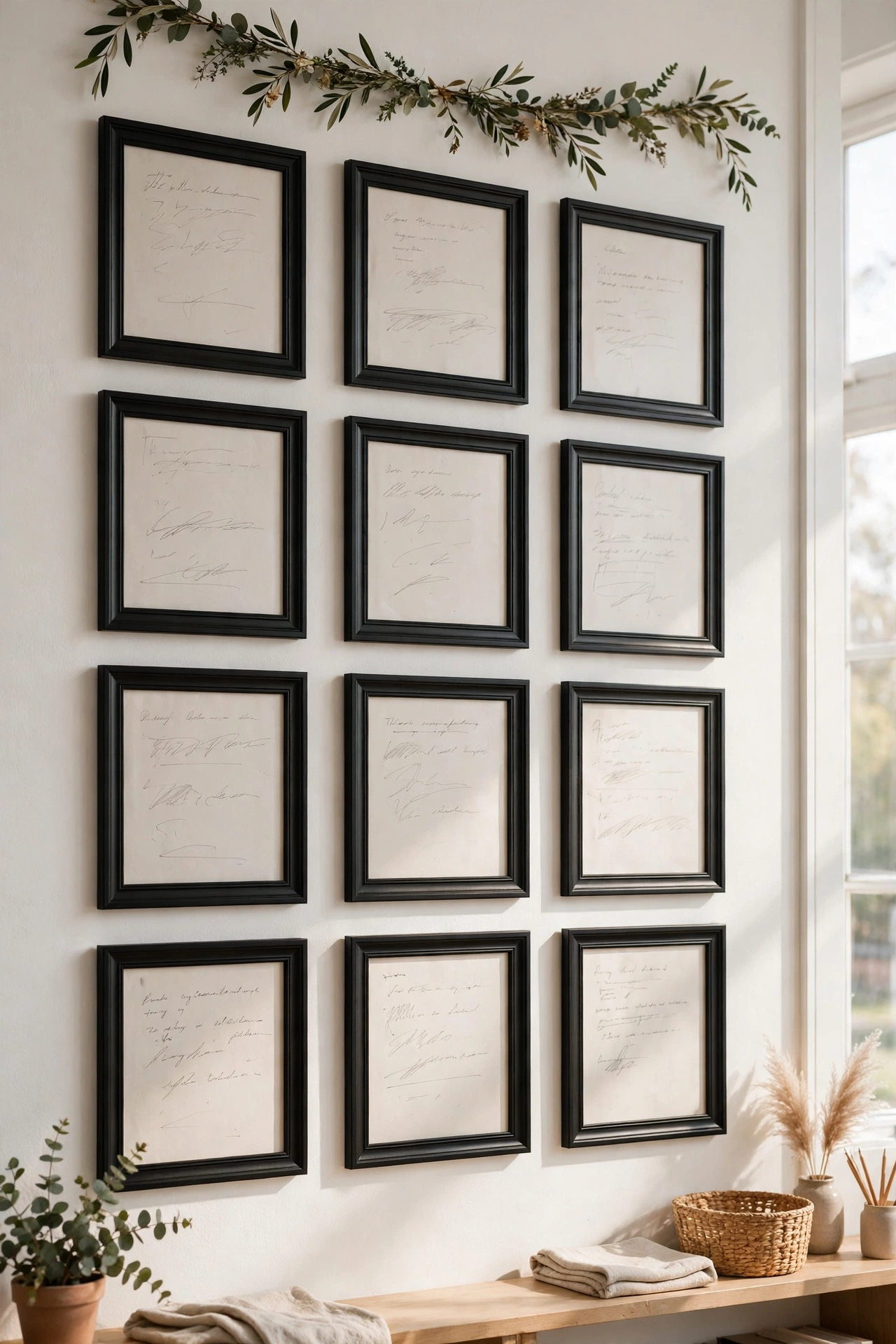
Published student writing on the wall signals that this room takes their words seriously.
Reserve a prominent wall as the place where student writing gets “published.” Rotate pieces every few weeks: polished paragraphs, poems, creative stories, or strong essay introductions. Display them on clipboards hung in neat rows, in cheap frames for featured pieces, or clipped to a wire with mini clothespins for an art-gallery feel. Add small author cards with each student’s name and a one-line “about this piece” note in their own words. Choose a mix of skill levels so every student sees a realistic path to the wall — including pieces that improved dramatically through revision, with a small “revised from” note showing growth. Students who see their words framed walk taller in your room, and students who have not been featured yet write with more care. This display also does quiet work at open house: parents stop and read, and that builds your classroom’s reputation.
8. Author of the Month Spotlight
A monthly author spotlight turns a bare wall into a rotating literary hall of fame.
Create a dedicated bulletin board or framed display spot that celebrates one author each month. Include a printed portrait, a short biography written at student reading level, a list of their best-known works with one-line descriptions, and one memorable quote. Tie the spotlight to your curriculum when you can — feature the author you are studying — but leave some months open to student votes, especially for contemporary YA authors students love. Add an interactive piece: a QR code linking to an author interview video, or a small basket with two or three of their books available to borrow. Keep a running “past authors” strip along the board’s edge so the hallway of fame grows all year. This display doubles as an independent reading recommendation engine, and it gives students a face to connect with the names in their textbooks.
9. Book Spine Banners Hanging from the Ceiling
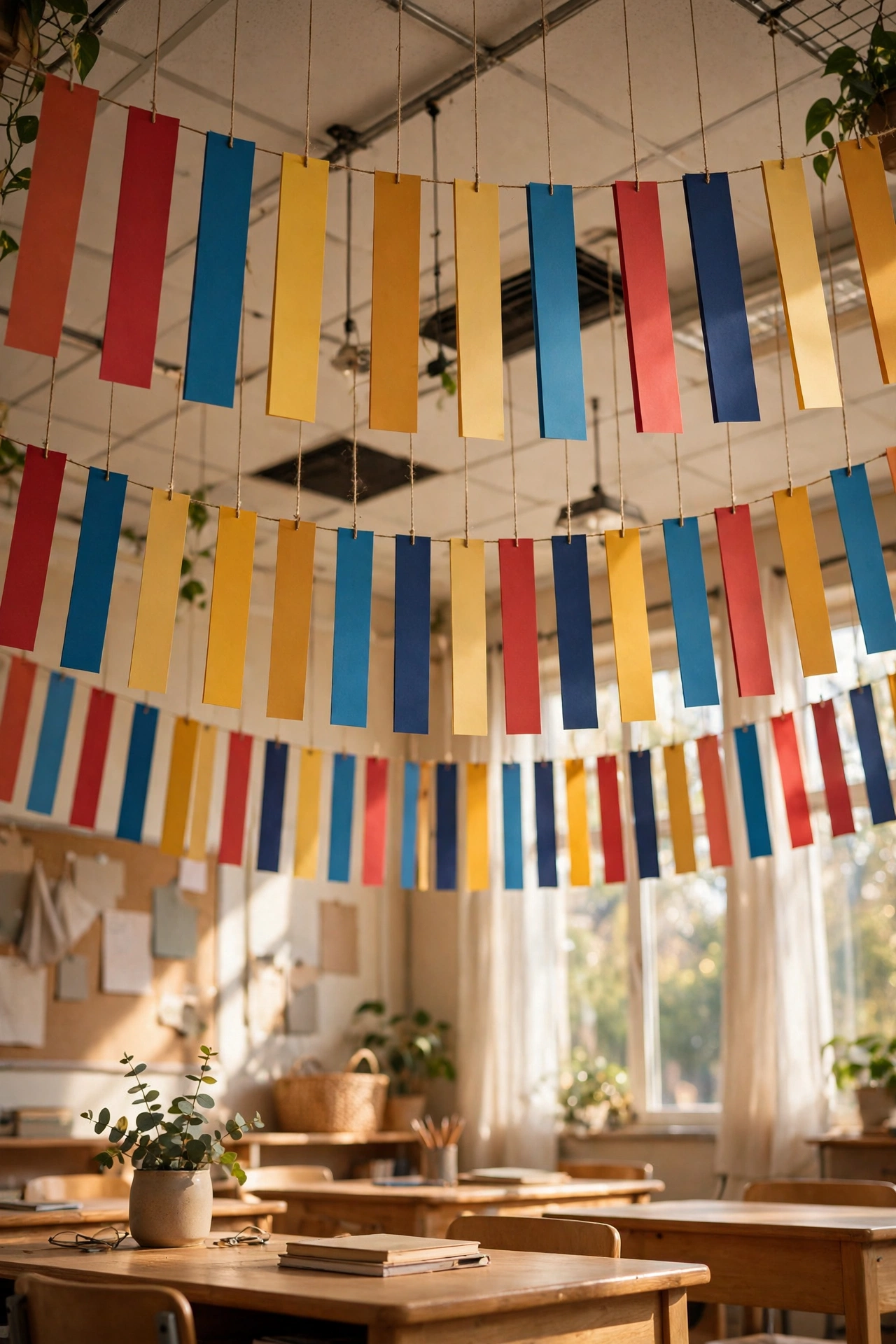
Ceiling-hung book spines turn dead air space into a floating library.
Print oversized book spines — roughly 3 by 12 inches — on cardstock, punch a hole in the top, and string them on fishing line or ribbon hung from the ceiling in two or three rows across the room. Choose a mix of classroom classics, current bestsellers, and student favorites so every reader spots something they know. Add the author’s name and a tiny star or sticker marking any titles you have studied as a class. Hang them high enough that they clear heads but low enough to read from a desk — about seven feet off the floor works in most rooms. They sway gently with air movement, which catches the eye without being distracting. Use double-sided tape on the backs so spines do not spin and show blank paper. This is one of the cheapest ways to fill vertical space, and visitors always comment on it — the ceiling is the most underused wall in any classroom.
10. Character Analysis Wall with Traits and Quotes
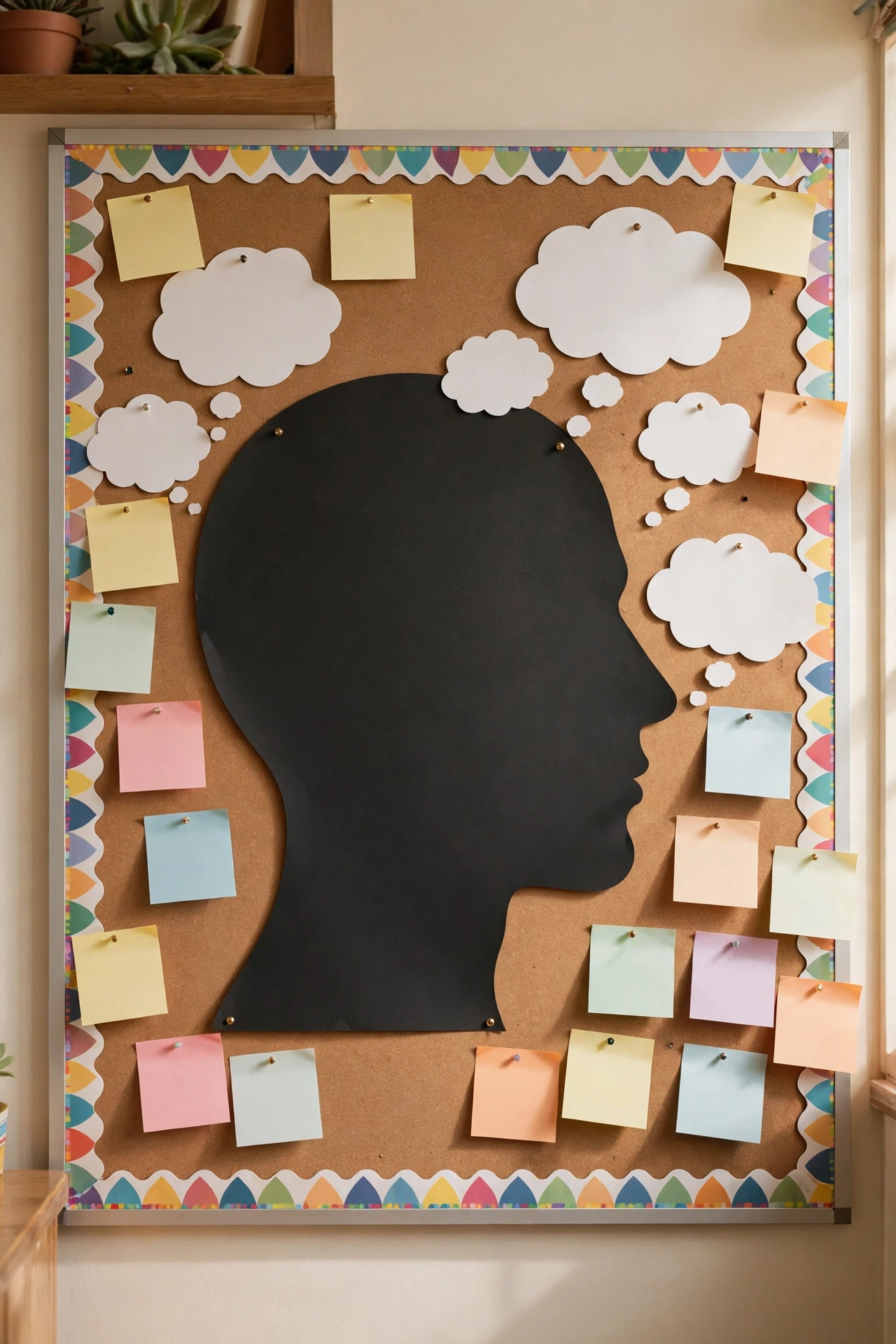
A character wall gives students a shared visual map of the people inside their current novel.
Turn one wall into a running dossier on the characters of the novel you are reading. Give each major character a column or a large card: a printed portrait or student-drawn illustration at the top, three personality traits beneath it, and a text-evidence quote pinned under each trait. As the unit progresses, students add new cards — plot twists, revealed secrets, character growth — using sticky notes in a designated color so the wall shows the story’s evolution. End the unit with a “final verdict” section where students vote on the most changed character and defend their choice in a sentence. Keep a camera handy and photograph the wall before you take it down; the photos make excellent review material before assessments. For high school classes, where character analysis drives essay grades, this pairs naturally with the displays in high school classroom decor ideas that suit older students’ academic seriousness.
11. Poetry Corner with Poem of the Week
A weekly poem display gives students a low-pressure doorway into poetry.
Claim a small bulletin board or a section of your quote wall for poetry and refresh it every Monday. Print the poem of the week large — 16-point font at least — with the poet’s name and one discussion question underneath. Choose a mix: a classic sonnet one week, a spoken-word piece the next, a student-written poem the week after. Keep a small basket of poetry collections beneath the display and a stack of blank cards so students can copy a favorite line or write their own two-line response and pin it up. Read the poem aloud as a class on Monday and spend two minutes discussing it — the ritual takes almost no time but builds a habit. Include one “poet bio card” each week at student reading level. The corner works because it removes poetry’s intimidation factor: one poem, one week, no quiz, just words on a wall that invite a second look.
12. Teacher “Currently Reading” Display Plus Student Picks

When students see YOU reading, reading becomes a habit of the room, not just homework.
Mount a small display near your desk or the door that shows what you are reading right now: the book cover propped in a stand, your name, and a one-line review or a sticky note with your current page number. Update it every time you finish a book. Beside it, run a “student picks” section with the same format — book cover, name, one-line review — and rotate new picks weekly. Make it easy to contribute: keep a small box of “review cards” students can fill out anytime, and pick one or two each Friday to feature. Include a mix of genres so every kind of reader sees themselves represented. This display is culture-building disguised as decor: students learn that readers recommend books to each other, that adults read for pleasure, and that their opinion about a book is worth posting. It costs almost nothing and becomes one of the most-visited spots in the room.
13. Literary Genre Stations Around the Room
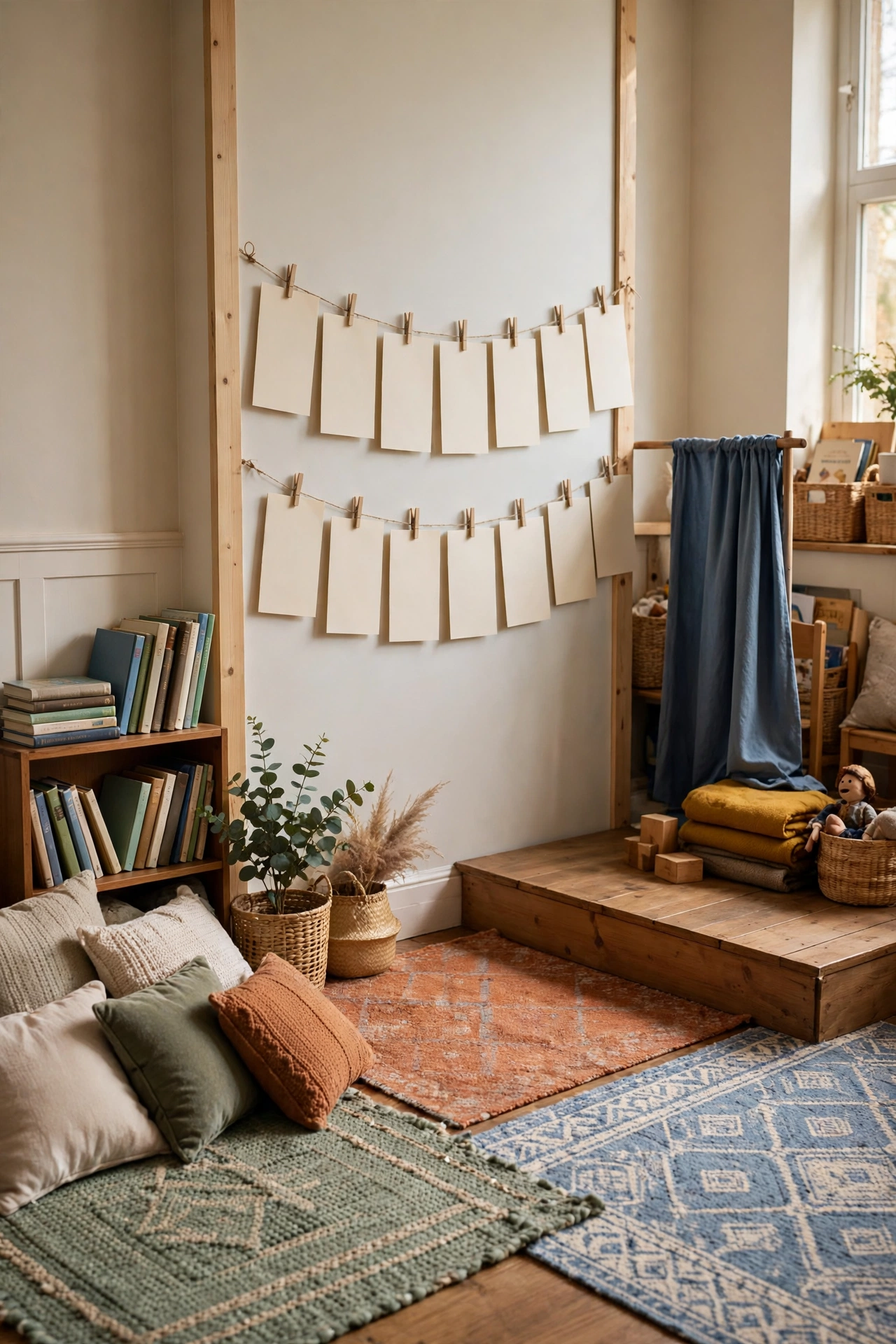
Spreading genres across the room makes the whole space feel like a bookstore.
Instead of one library corner, distribute genre stations around the perimeter of your room. Give each station a big label — fantasy, mystery, historical fiction, poetry, science fiction, nonfiction — with a small shelf, basket, or crate of titles in that genre plus a one-sentence “try this if you liked…” card connecting it to popular books or movies. Let students browse stations during independent reading time or as a reward activity. Rotate the stations’ positions mid-year so familiar corners feel new again. Add a “station passport” sheet: students collect a stamp or sticker for every genre they try, which nudges reluctant readers to venture beyond their usual pick. This layout works especially well in larger rooms where one library corner leaves dead wall space, and it turns browsing into movement — a gift during long class periods.
14. Shakespeare Corner

A dedicated Shakespeare display makes the Bard feel like a resident, not a required unit.
Whether you teach Shakespeare every year or once in a blue moon, a permanent corner honoring the Bard adds literary gravity to your room. Frame a classic portrait, hang three famous lines in large lettering — “To be or not to be,” “All the world’s a stage,” “Love looks not with the eyes” — and shelve a few different editions of the plays, including graphic-novel and modern-English versions that make him approachable. Add a small display of “Shakespeare words we still use”: eyeball, fashionable, gossip, lonely — words he popularized or coined, with quick definitions. Students love discovering that the old guy invented their vocabulary. Keep a basket of the sonnets for early finishers. The corner stays up year-round and gets extra attention during your Shakespeare unit, when you can add character cards, insult generator printables, and scene summaries. It gives your room a sense of literary tradition that anchors everything else.
15. Book Towers and Stacked-Books Shelving Decor

Simple stacks of hardcover books become free, sturdy decor with instant literary character.
Collect old, retired hardcover books — library discards, thrift-store finds, donations — and stack them into towers of six to ten books on top of shelves, filing cabinets, and window ledges. They need no frame, no print, no glue: the spines themselves are the decor. Sort each tower by spine color for an ombre effect, or keep them mixed for a classic library feel. Use them to fill the awkward gaps on top of tall furniture where posters would warp in the heat. Add a small potted plant or a bookend on the tallest tower for variety. Because these are real books, students occasionally pull one down and start reading — which is exactly the point. If you want a more styled look, ribbon-tie a few stacks of three books with twine and a sprig of greenery. For a calm, coordinated backdrop that lets the book towers shine, neutral classroom decor ideas offer palettes that keep bookish displays from feeling busy.
16. Literary Map Wall with Novel Settings on a World Map
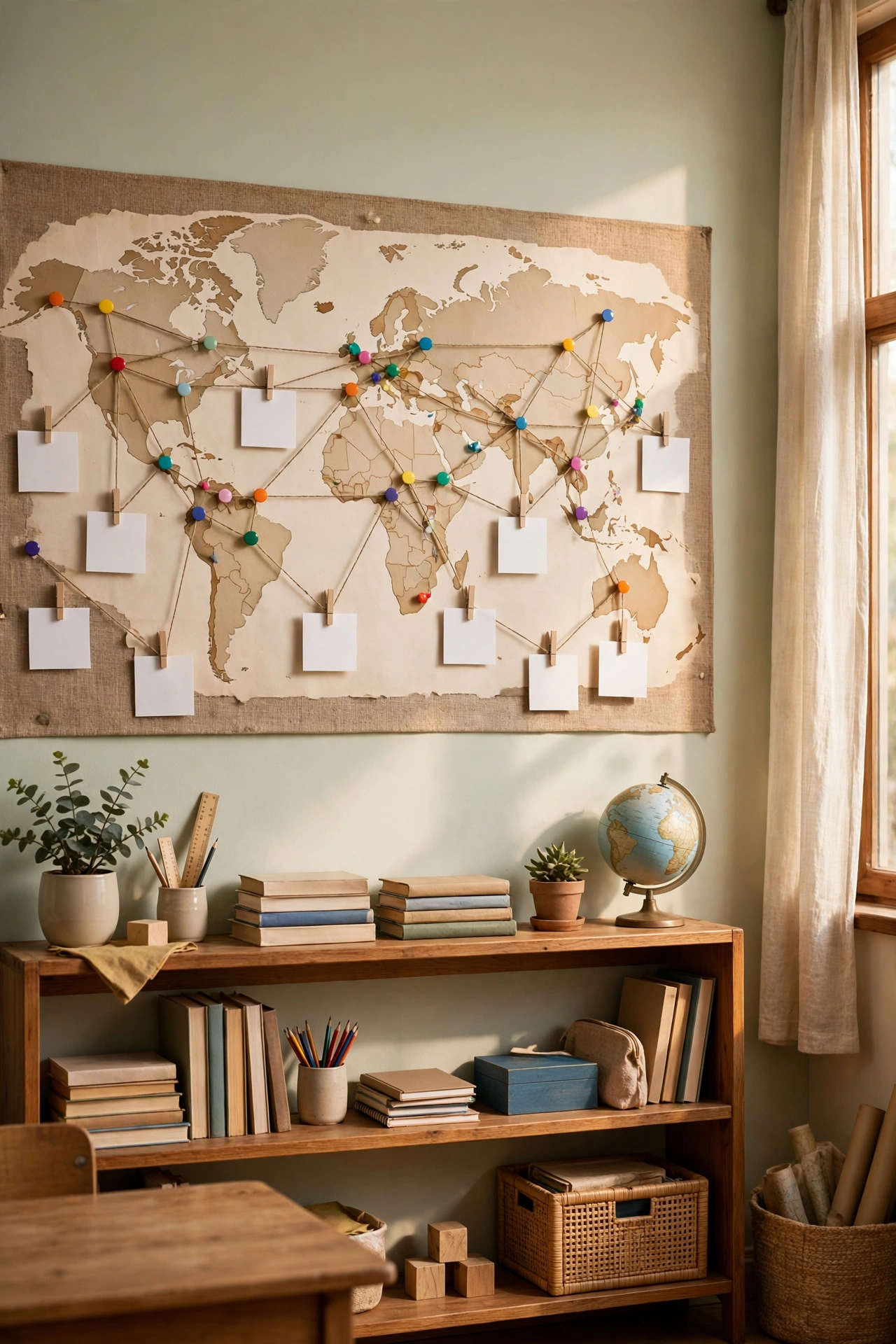
Pinning novel settings on a map turns geography into literary context.
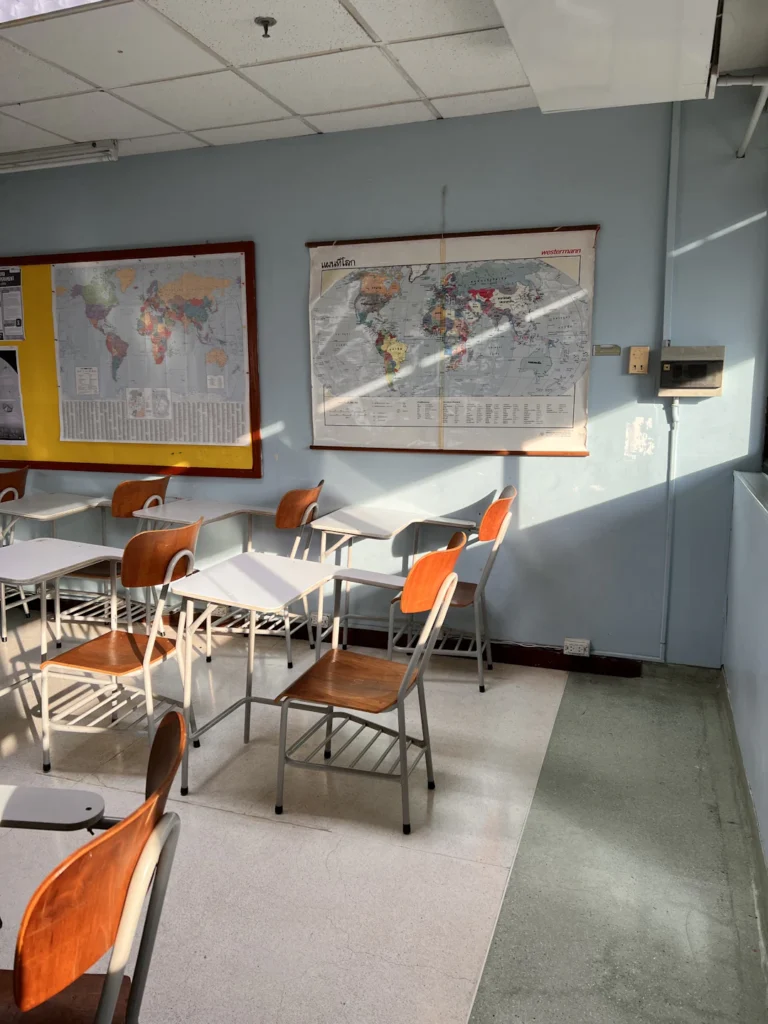
Hang a large world map — a pull-down school map or a printed poster version — and pin every setting from the books you read this year. Each pin gets a small label: the novel’s title, the place, and one sentence about why the setting matters to the story. Connect pins to a legend along the map’s edge so students can read it like a key. Add pins for the birthplaces of your authors and for the settings of popular independent-reading picks students nominate. This wall quietly teaches context: students see that stories come from everywhere, and discussions about why a setting shapes a plot become visual. Pair it with string connecting an author’s birthplace to their novel’s setting for a layered effect. Update it with each new unit, and at year’s end the map becomes a stunning visual record of how far the class has traveled together.
17. Sticky-Note Book Recommendation Wall
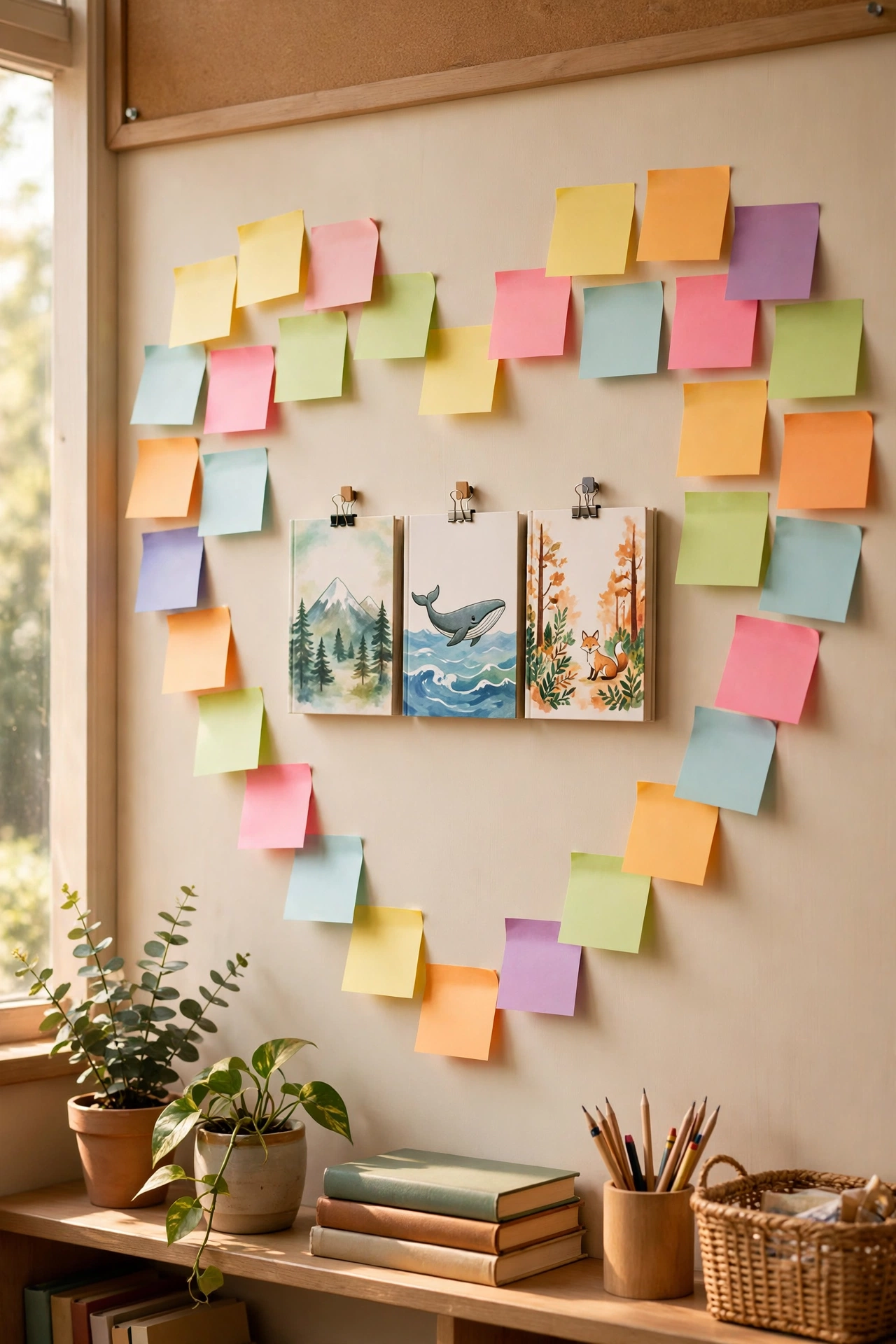
Hundreds of sticky-note recommendations turn peer pressure into reading pressure — the good kind.
Cover one wall section — even a door or a cabinet side — with blank space and put a basket of sticky notes and pens beside it. The only rule: write a book title, your name, and one sentence about why someone should read it. No teacher approval needed, no grades attached. Watch the wall fill itself. Organize it loosely with colored notes per genre, or let students draw small stars for books they have read and loved based on someone else’s note. Empty the wall into a binder at the end of each quarter and start fresh, keeping the binder as a growing recommendation archive. This display succeeds because teenagers trust each other more than they trust reading lists. The wall’s messy, colorful, handwritten look IS the aesthetic — do not over-organize it. Photograph it before each reset; those photos are gold for parent night.
18. Reading Goal Tracker and Book Challenge Board
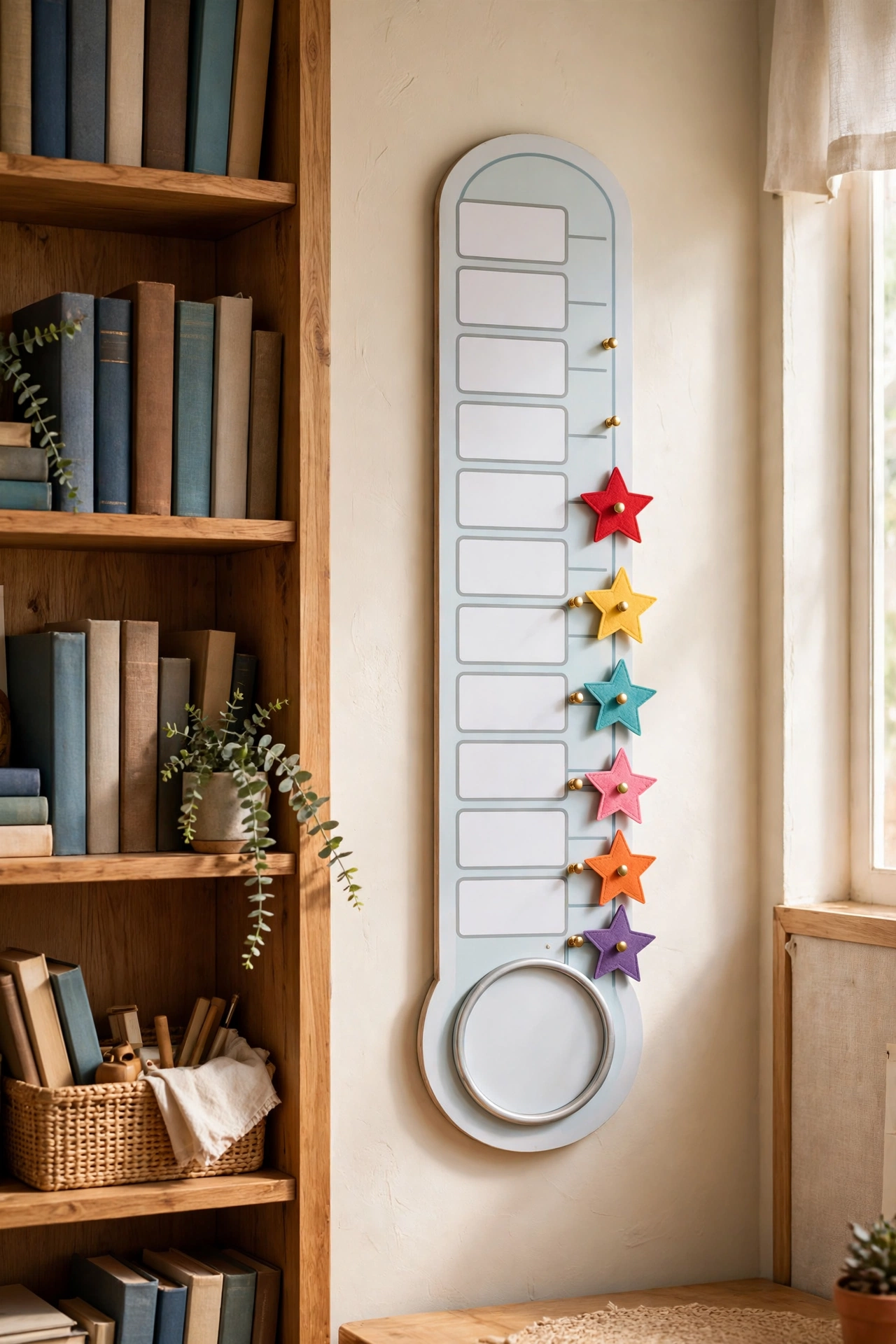
A visible reading challenge turns independent reading into a shared, celebrated pursuit.
Build a year-long reading challenge display: a large chart where every student has a row or a labeled marker, and each finished book earns a stamp, sticker, or colored dot. Set a class goal — “500 books this year” works well — and add a big progress bar that fills as the total climbs. Keep the display honest but encouraging: track books finished, not pages or levels, so every reader can participate. Celebrate milestones with small rewards like bookmarks, extra reading-nook time, or a class read-aloud party at the halfway point. Include a “teacher row” so students can race you — they love that. Update the board weekly during independent reading time so the ritual stays visible. At year’s end, the completed chart is a powerful visual of collective achievement, and it gives your reading culture something measurable to celebrate.
19. Word-Play Wall with Puns and “English Is Weird” Humor
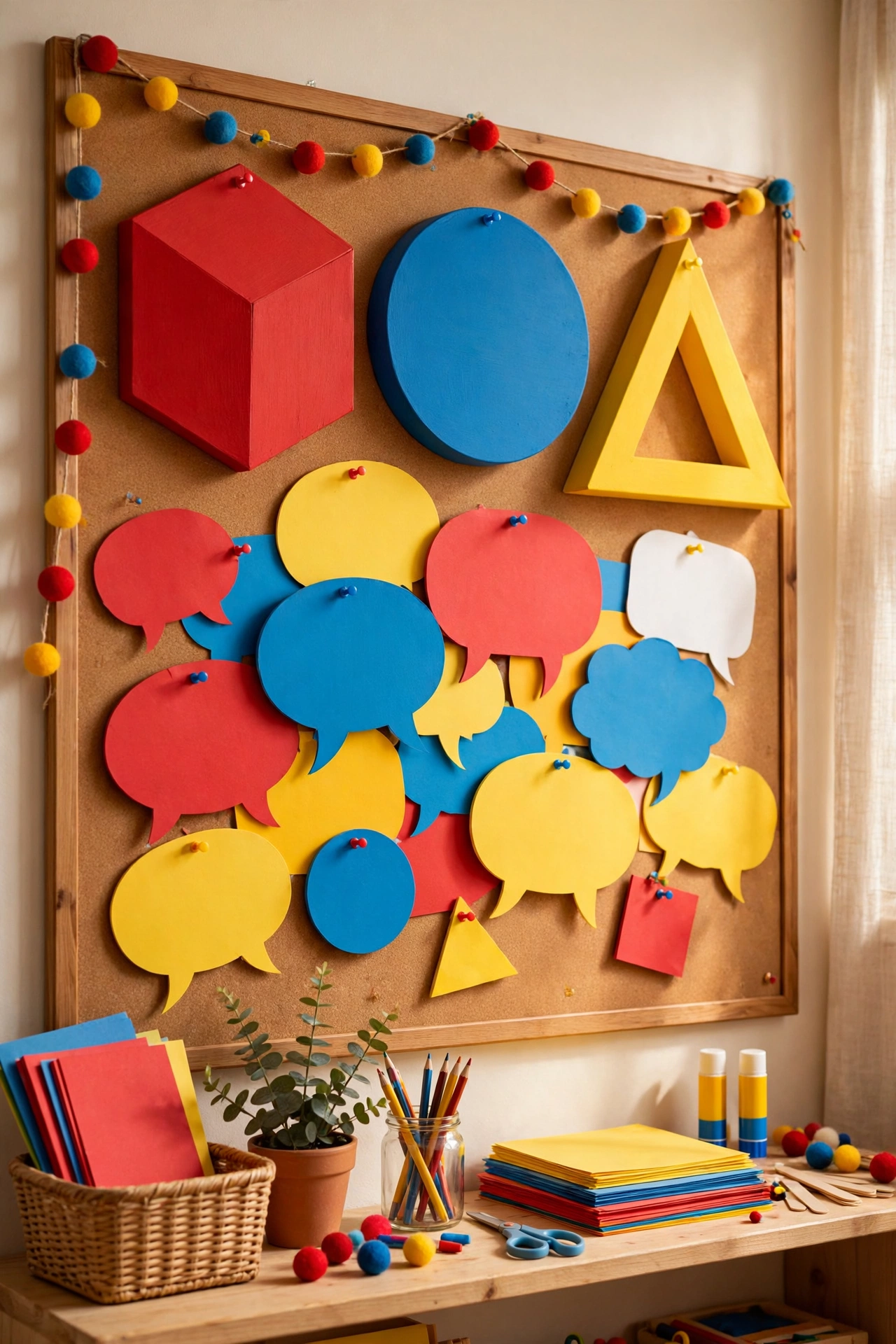
A wall of language humor reminds students that English is fun, not just a subject.
Dedicate a lighthearted wall to the strangeness of English itself. Print large cards with puns (“I’m reading a book on anti-gravity — it’s impossible to put down”), weird idioms with literal illustrations (“raining cats and dogs” drawn exactly as it sounds), and true oddities like the fact that “queue” is pronounced the same with four letters removed. Invite students to submit their own finds: funny autocorrect fails, punny headlines, or bilingual students’ comparisons with other languages. Rotate submissions monthly with a small “submitted by” credit. Keep the tone playful, not academic — this wall is the dessert of your room. It works because humor lowers the stakes around language: students who laugh at a pun are paying attention to words. Place it where students line up or wait, like beside the door, so the wall entertains during transition time instead of competing with instruction.
20. Rotating Bulletin Board Tied to Each Literature Unit
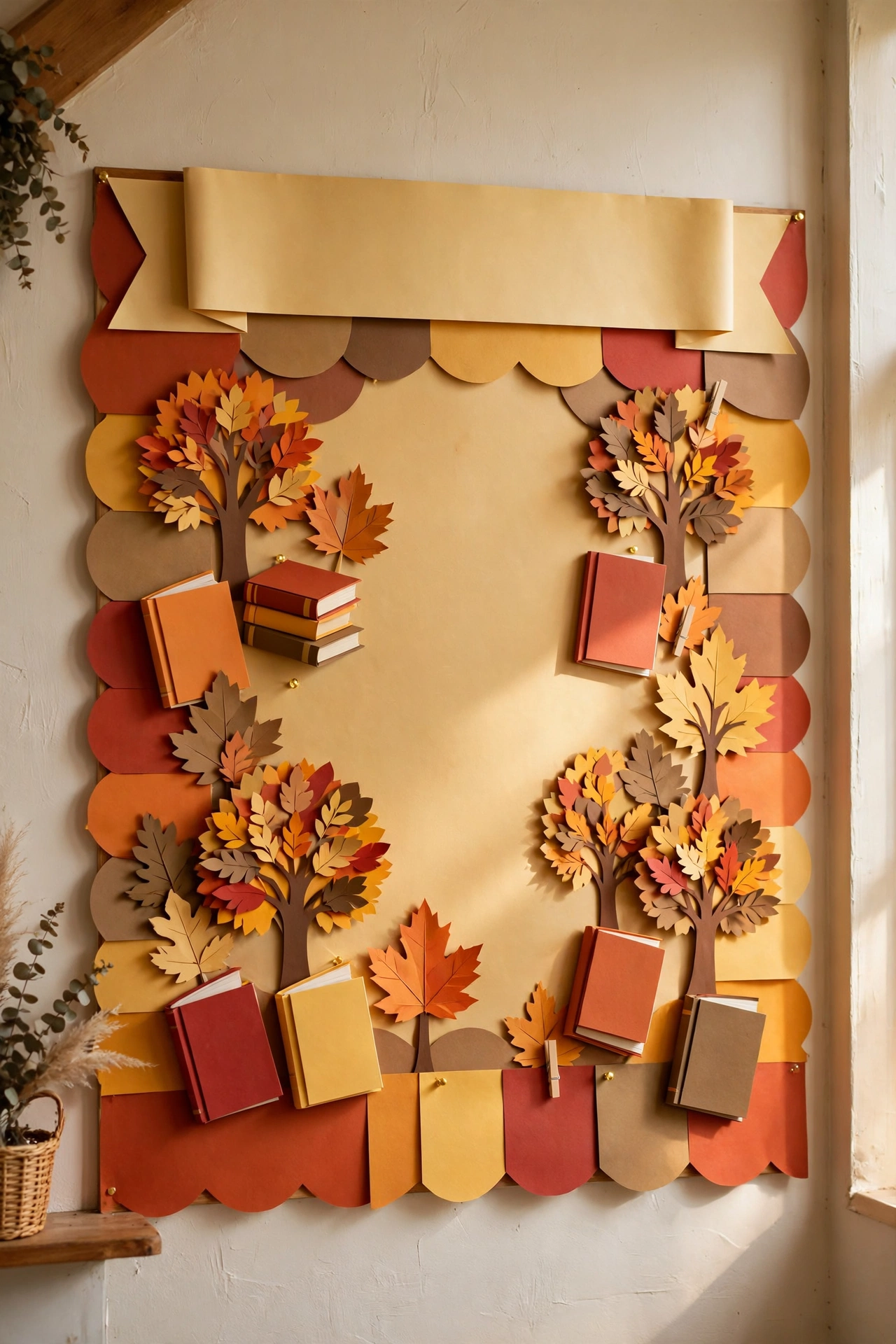
A board that changes with each unit keeps the room’s story moving forward.
Choose your biggest bulletin board and commit it to the current unit — nothing else goes there. At the start of each novel or theme study, redecorate it completely: the title in large letters, key themes, the essential question of the unit, a timeline of the plot’s arc, and images or maps connected to the setting. As the unit unfolds, add student work: theme posters, character maps, and standout quotes with page numbers. The board becomes a living table of contents for the unit, and students glance at it to orient themselves mid-lesson. Keep a “parking lot” pocket on the board for questions students want answered by the unit’s end, and celebrate when questions get resolved. Photograph each version before the swap so you have a gallery of your year’s units. If you extend this concept into the hallway outside your door, school hallway ideas offer ways to carry your ELA theme beyond the classroom walls.
21. Classroom Door Decorated as a Giant Book Cover
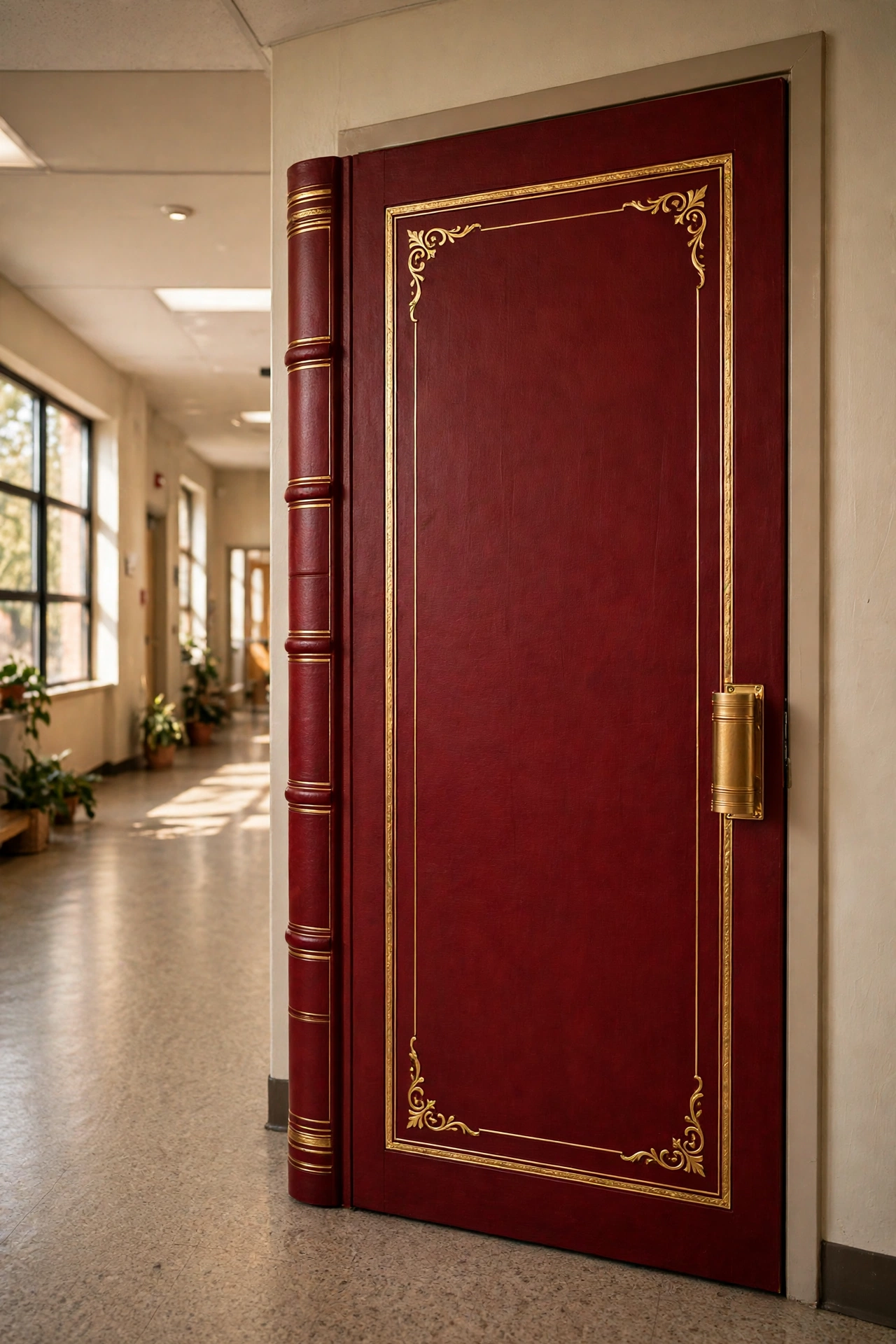
A door disguised as a book cover makes your room the most recognizable in the hallway.
Wrap your classroom door in paper or a printed vinyl wrap designed as the cover of the book you are currently teaching: title, author, and a striking image. Build it with a large-format print at a copy shop for a polished look, or hand-paint it on butcher paper with students for a personal touch. Add “review quotes” from your students on the “back cover” — the door’s back side or an adjacent panel — with their star ratings. Change the cover with each major unit, and keep a small gallery of past covers beside the door so the hallway sees your year’s reading journey. This is pure curb appeal: students find your room faster, visitors stop to look, and the daily act of walking “into a book” sets a tone no poster can match. Laminate or seal the surface so it survives hands, backpacks, and the occasional hallway collision all year.
22. Literary Timeline Wall with Eras and Movements
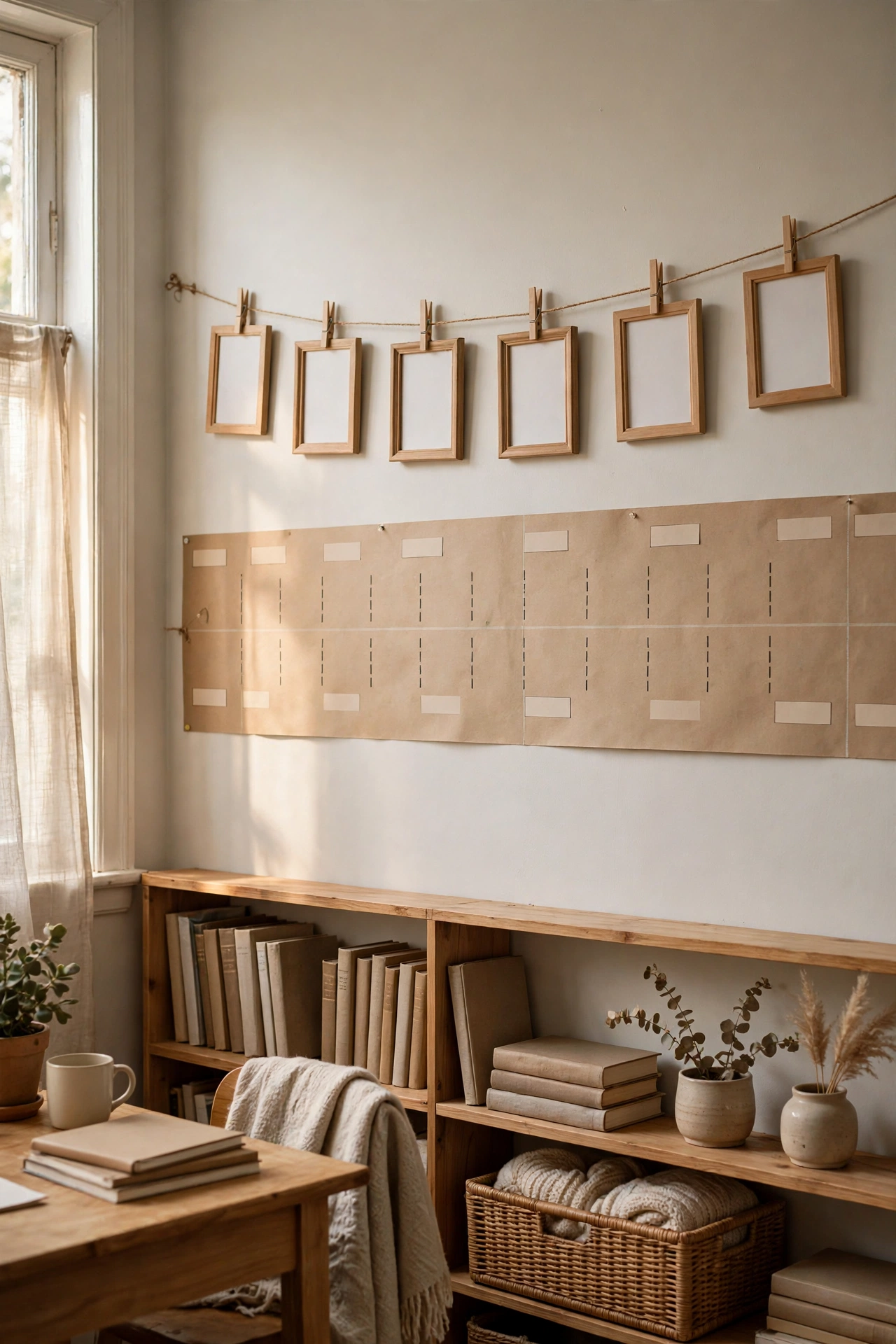
A timeline of literary movements gives students the big picture behind the books they read.
Run a horizontal timeline along one wall — painter’s tape makes a clean line — marking the major literary eras you will touch: the Renaissance, Romanticism, Realism, Modernism, and contemporary writing. For each era, hang a card with the dates, three hallmark traits, and the authors or texts from your curriculum that belong to it. Add portraits of key authors at their era’s position so students connect names to periods. As you teach each text, walk the class to the timeline and physically place a marker on it — the physical movement cements the concept. Leave blank eras at the end labeled “the future of literature?” and let students add their favorite contemporary authors there. This wall answers the question students always ask — “when was this written and why does it matter?” — before they ask it, and it makes cross-unit connections visible.
23. Warm Reading Lighting with Lamps and String Lights
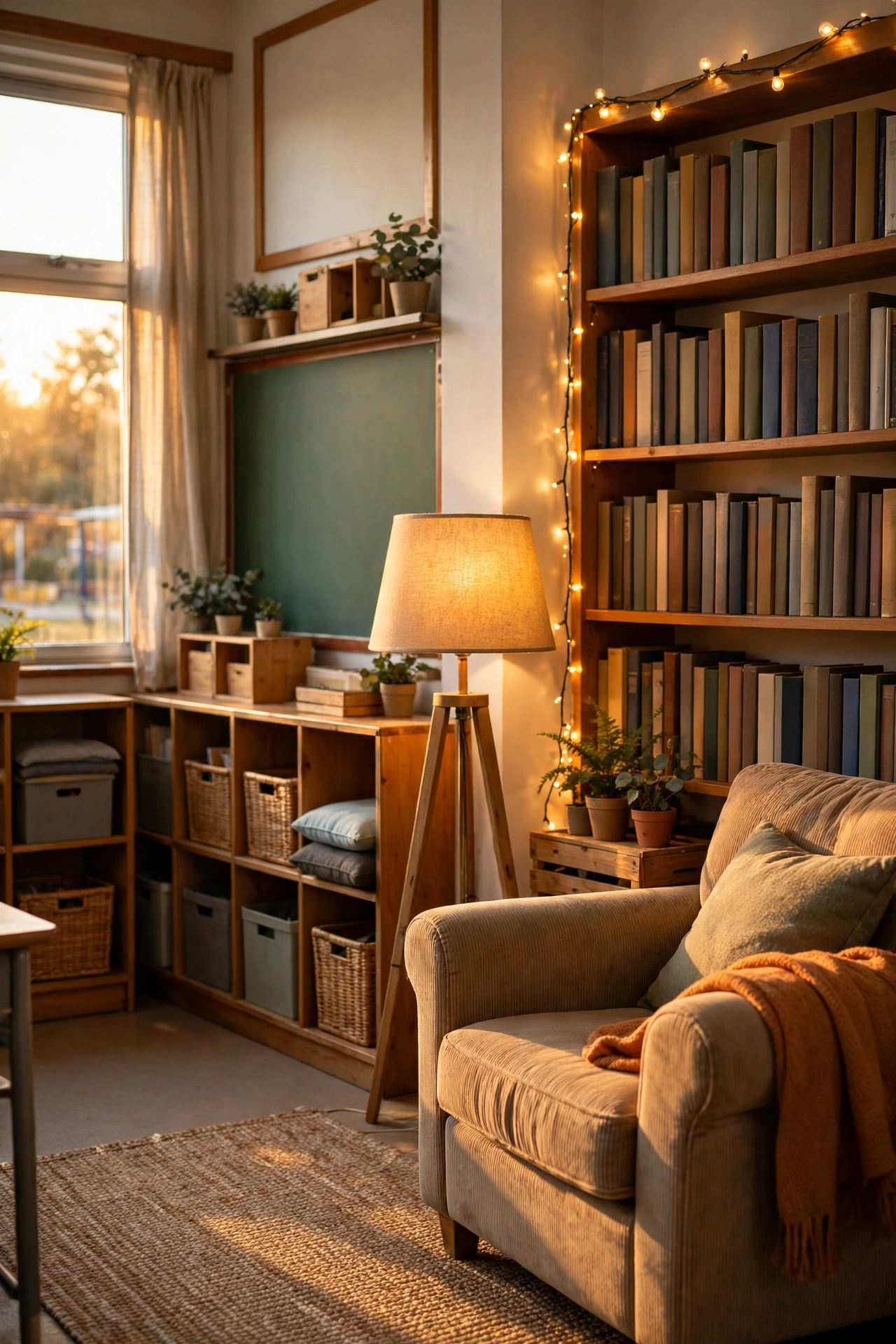
Warm lamps and string lights over the library corner turn fluorescent light into reading light.
Harsh overhead fluorescents are the enemy of atmosphere, and lighting is the fastest mood change you can make. Place two or three warm-toned floor or table lamps in your library and reading nook — thrift stores and discount shelves have them for a few dollars each — and drape a strand of warm-white string lights above the bookshelves or along the reading corner’s edge. Use plug-in timers so the lights turn on and off with your school day and you never forget. Keep the string lights on during independent reading and writing workshop, and dim or switch off the overheads in just that zone when you can. The warm pool of light signals “reading time” the way a bell signals class change, and students visibly settle faster. Check your school’s fire-safety rules for hanging lights first — LED strands stay cool and are usually approved — and use adhesive hooks rather than nails.
24. Banned Books Week Display
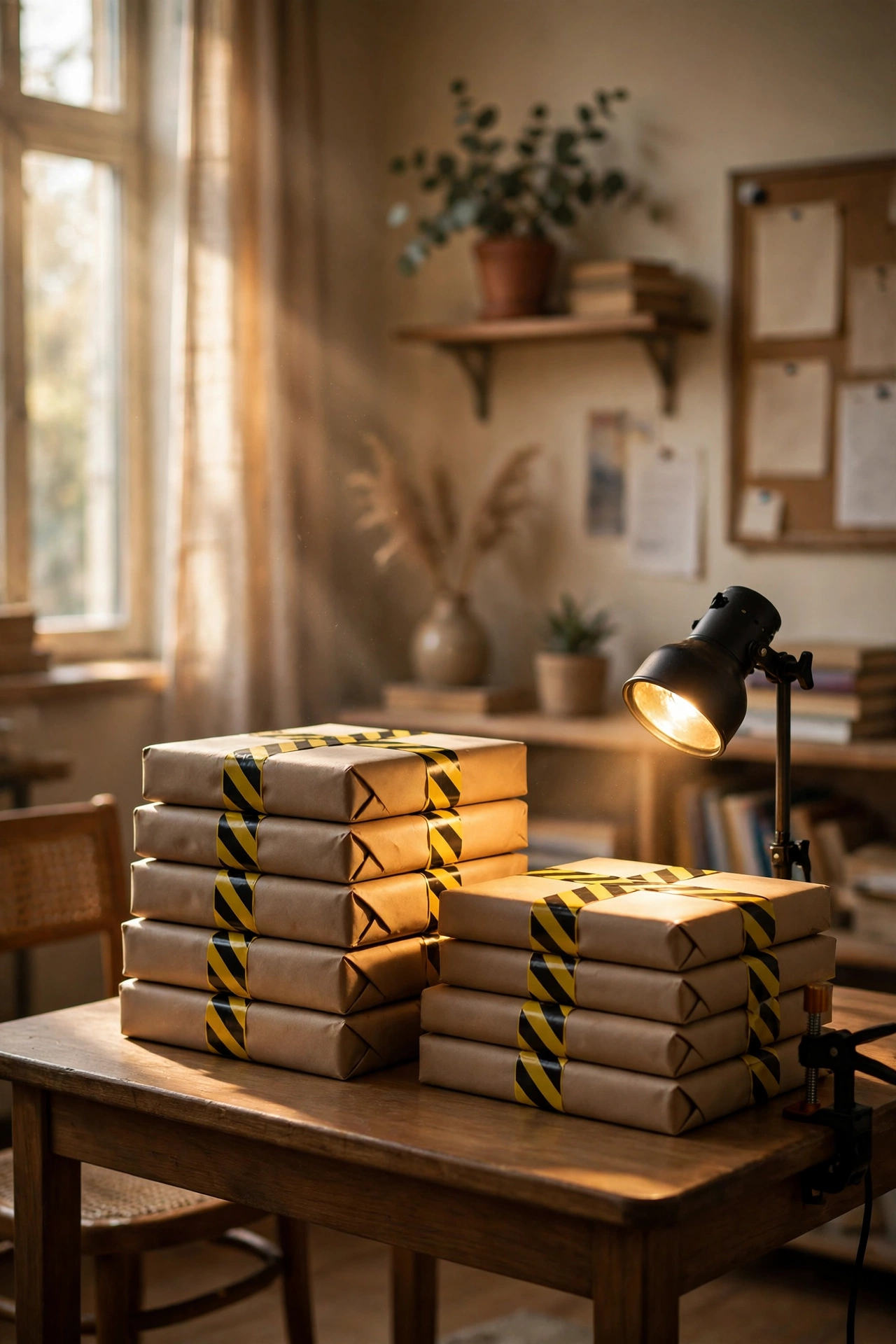
A banned-books display turns censorship into one of the year’s liveliest conversations.
Build a display for Banned Books Week that stays up long enough to start real conversations. Arrange the spines or covers of frequently challenged books — many of them classroom staples — wrapped in yellow “caution” tape with tags noting where and why each was challenged. Add a simple sign: “You decide.” Keep a few of the titles available for students to borrow so curiosity has an outlet. Include a short, neutral card explaining what a challenge is versus a ban, written at student reading level, so the display informs rather than preaches. Invite students to write one-sentence defenses of a challenged book on cards and add them to the display. Even if your school does not formally observe the week, this display fits any unit on voice, perspective, or authorial intent. It consistently becomes the display students talk about at lunch.
25. Student Book-Review Cards with Star Ratings
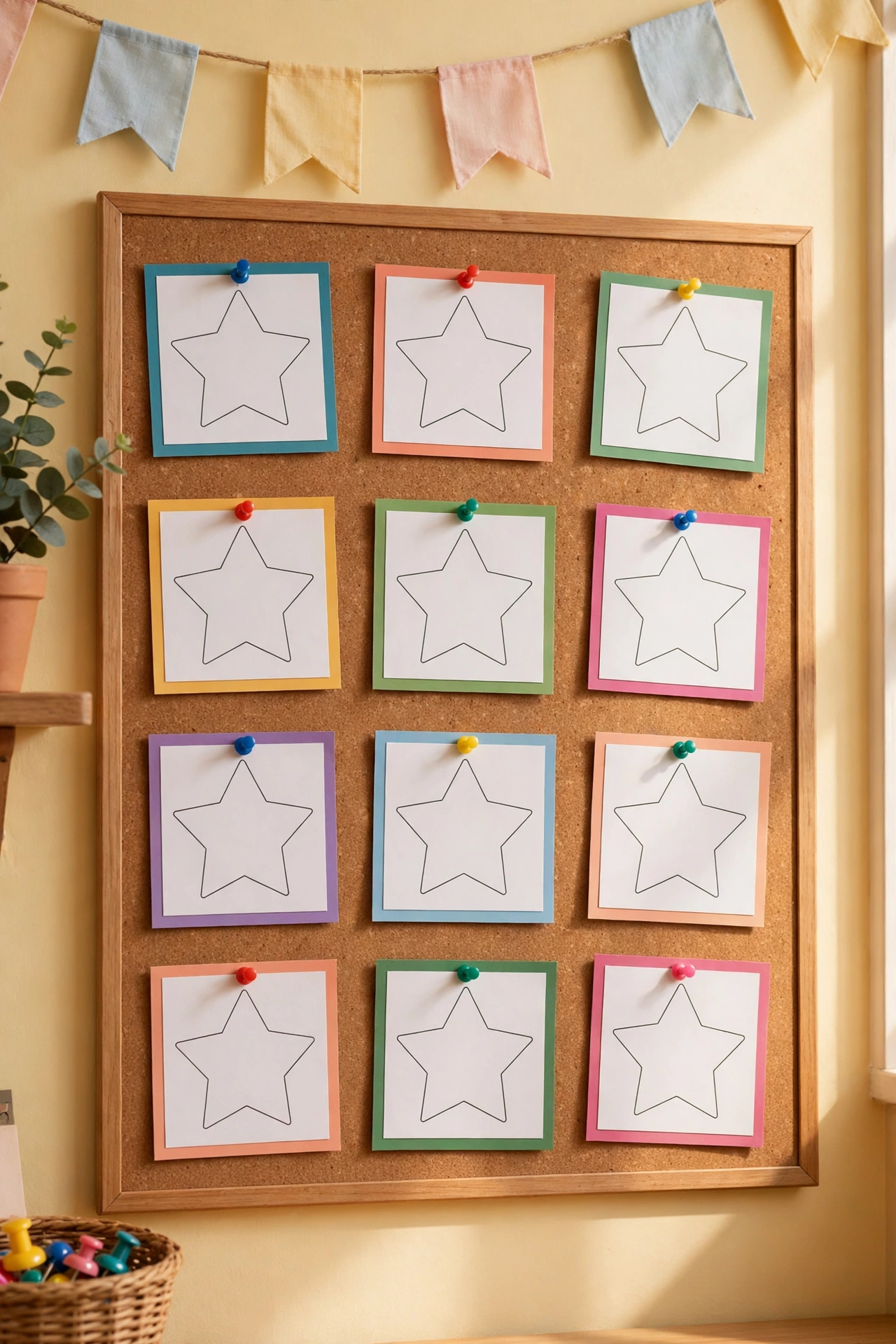
Star-rated review cards let students publish opinions the way readers do in the real world.
Finish your review wall with a board of student book reviews in the style of online bookstore ratings. Provide small cards — half index cards work — with space for the title, author, a star rating from one to five, the reviewer’s name, and a two-to-three-sentence review. Students complete a card every time they finish an independent reading book, and you pin them in a grid on the board, sorted by star rating into columns. The five-star column becomes a trusted recommendation shelf built entirely by peers. Require a minimum of one card per quarter so the board grows steadily, and let students update their reviews if they reread. This display closes the loop between reading and writing in your room: students write for a real audience of classmates, and every finished book feeds the classroom’s collective reading life. It is simple, sustainable, and it never runs out of content.
FAQs
How can I decorate an English classroom on a tight budget?
Start with the displays that cost almost nothing: the sticky-note recommendation wall needs only sticky notes and pens, the word-play wall can be built from student submissions, and book towers use donated or discarded hardcovers. Printables from your school’s copier — quotes, timelines, genre labels — cover most of the rest. Thrift stores are gold mines for lamps, frames, and floor cushions. Spend any actual money on one or two high-impact pieces, like a rug for the reading nook or a large map, and let student work fill the remaining walls for free.
What works for a small English classroom?
Go vertical. Ceiling-hung book spine banners, a door decorated as a book cover, and tall stacked-book towers use air and door space instead of floor space. Replace a full reading nook with a single cozy chair in a corner, and keep the classroom library in rolling carts or bins that slide under a counter. Choose displays that layer: a timeline wall above a word wall, or a quote wall that doubles as the poetry corner. Fewer, bigger pieces read better in tight rooms than many small ones.
How should English classroom decor differ for middle school versus high school?
Middle schoolers respond to color, movement, and ownership: let them draw, submit, vote, and pin things themselves, and lean into playful displays like the word-play wall and the sticky-note recommendation wall. High schoolers need the same engagement but with more polish — frame their writing, use clean typography on the quote wall, and give them sophisticated formats like the literary timeline and the banned-books display. The underlying principle is the same at both levels: students care for walls they helped build.
How do I keep literary displays fresh without redoing everything?
Build the permanent frame once — the timeline line, the map, the library shelves — and rotate only the content: new quotes every few weeks, a new poem each Monday, a new author each month, new book covers on the door each unit. Photograph each version before you swap it so you have a record and students see the year’s progression. The displays that update themselves, like the recommendation wall and the review cards, stay fresh with almost no teacher effort.
Should I use digital displays or printed materials?
Print wins for permanence: physical walls are always visible, survive power outages, and become part of the room’s identity. Use digital tools as support, not replacement — a QR code on the author spotlight linking to an interview video, or a slideshow of student work projected during open house. Screensavers and slideshows get ignored; a quote at eye level gets read every day. If your school requires a digital component, rotate a “digital quote of the week” on your projector while keeping the physical displays as the backbone.
Conclusion
Your English classroom is more than a room with desks — it is the place where students decide whether books and words belong to them. The ideas above share one principle: the walls should teach, invite, and celebrate at the same time. You do not need all twenty-five. Pick the three that match your space and your energy, build the permanent frames once, and let your students fill them with words all year. A quote wall that rotates, a library that gets browsed, a wall of student reviews that grows by the week — these are the displays that turn a classroom into a literary home. Start with one wall this weekend, and watch your room start telling its own story.