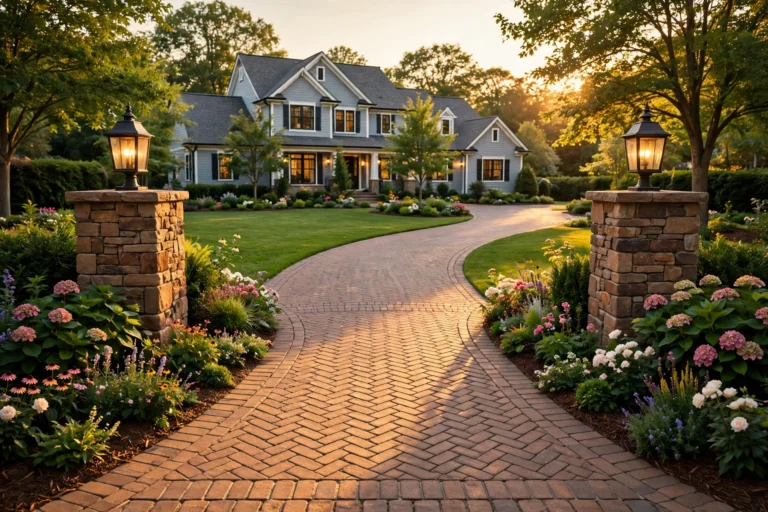
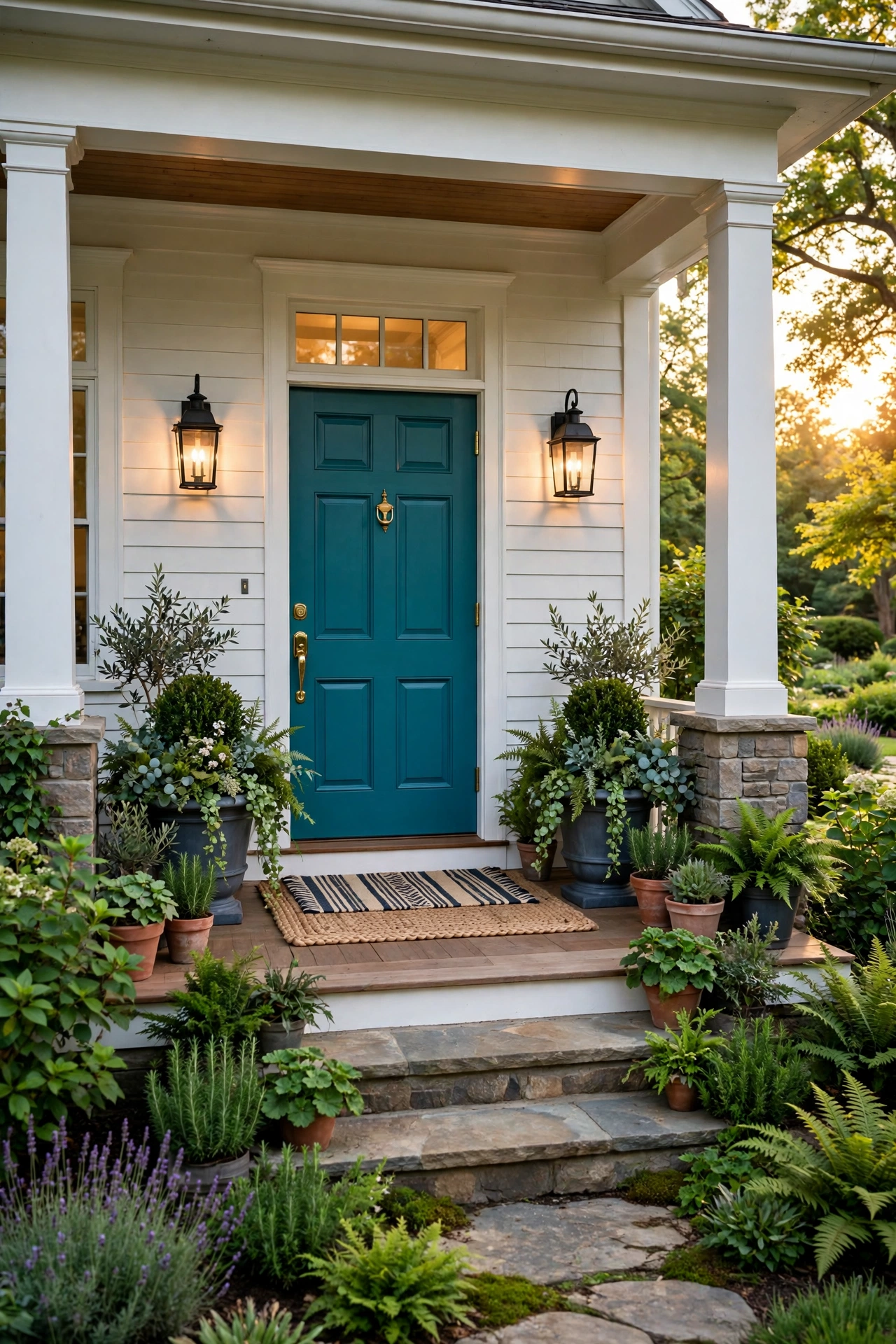
23 Outdoor Entryway Decor Ideas That Make Guests Feel Welcome Before They Knock
23 Outdoor Entryway Decor Ideas That Make Guests Feel Welcome Before They Knock
Your outdoor entryway is the first thing guests see and the last thing they remember — yet it is the spot most homes leave as an afterthought: a bare doormat, a tired light fixture, and a door that has not been painted in a decade. It does not take a renovation to change that. A few deliberate layers — color at the door, greenery at the sides, light at night, and something soft underfoot — turn a plain threshold into a welcome that feels intentional. These 23 outdoor entryway decor ideas work for sprawling porches and tiny stoops alike, in every budget, and in every season. Pick the ones that fit your space, and your front door will start doing the greeting for you.
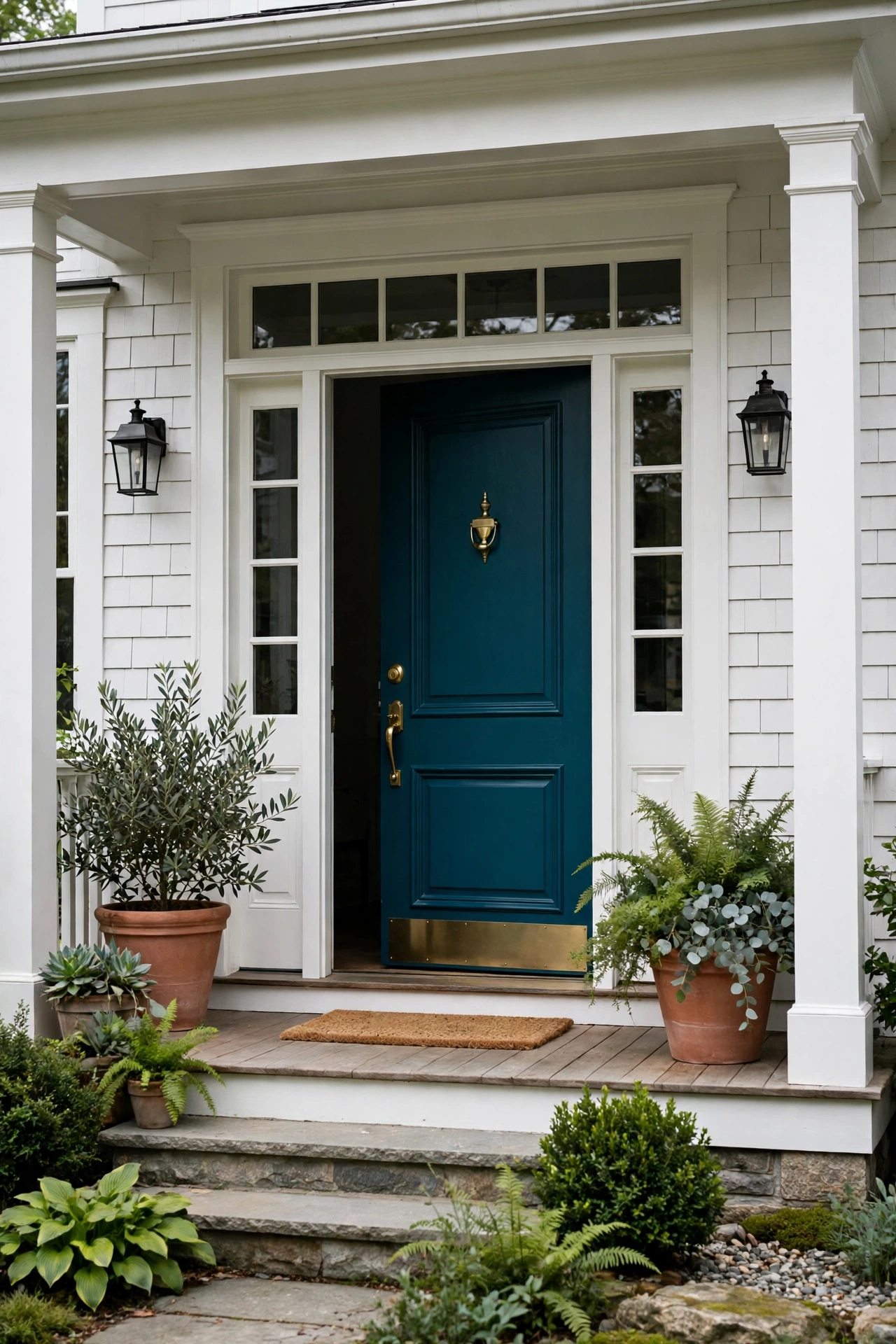
1. Paint the Front Door a Bold, Weatherproof Color
Nothing changes an entryway faster than a freshly painted front door. A deep teal, classic navy, cheerful coral, or rich forest green turns a flat facade into a focal point, and the whole porch suddenly looks styled even before you add anything else. Choose an exterior-grade paint with a satin or semi-gloss finish so it resists rain, sun, and fingerprints, and paint the trim in a crisp contrasting white or a matching dark tone for a finished look. If a bold color feels risky, test a sample on a small section first and live with it for a few days — colors read differently in morning light than at dusk. Keep the hardware simple and let the color do the talking. One gallon of paint and an afternoon is all it takes, and it is the single highest-impact, lowest-cost upgrade on this list.
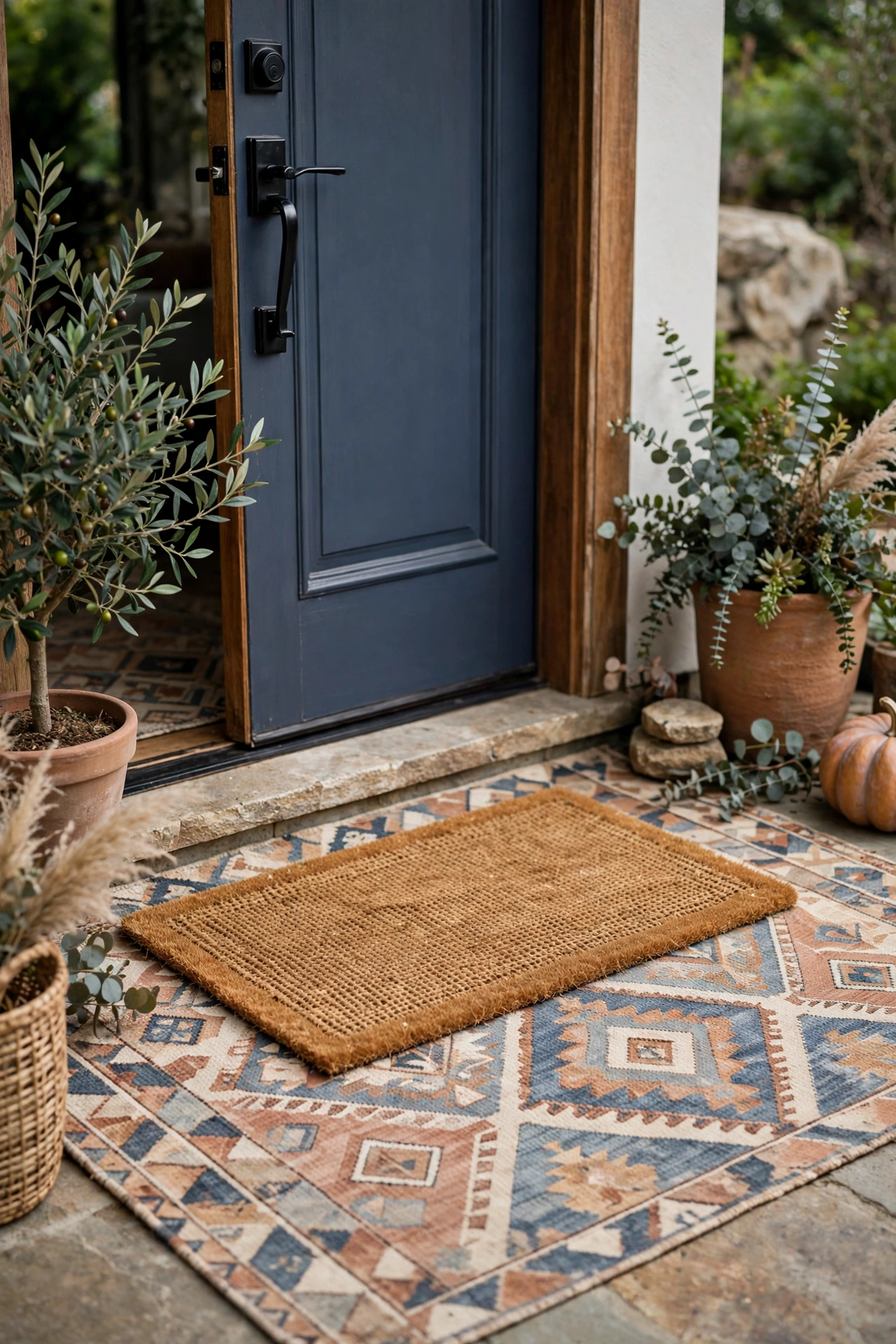
2. Layer a Patterned Rug Under a Coir Doormat
A single doormat often looks lost on a wide porch, but two layers instantly look deliberate. Start with a larger outdoor rug — roughly 3 by 5 feet — in a pattern like buffalo check, stripes, or a simple geometric print, then place a standard coir doormat on top, slightly off-center so the pattern peeks out around the edges. The layered look adds color and texture while the coir mat does the practical work of scraping shoes clean. Choose outdoor-rated materials that can handle rain and sun without fading or holding moisture, and shake both layers out weekly so dirt never builds up underneath. It is a five-minute change that makes the threshold feel like a designed zone instead of a bare step.
3. Frame the Door With Symmetrical Planters
Symmetry is the fastest way to make an entryway look polished, and a matched pair of planters flanking the door does it in one move. Choose pots that are identical in shape and finish — tall tapered planters in matte black, glazed ceramic, or weathered stone — and fill them with the same plant on both sides so the balance is exact. Evergreens like boxwood or small conifers stay green all year, while seasonal flowers add color in spring and summer. Scale matters: the planters should be about one-third the height of the door so they anchor the space without blocking the walkway. Water them on the same schedule so one side never outgrows the other, and the pair will quietly make the whole facade look considered.
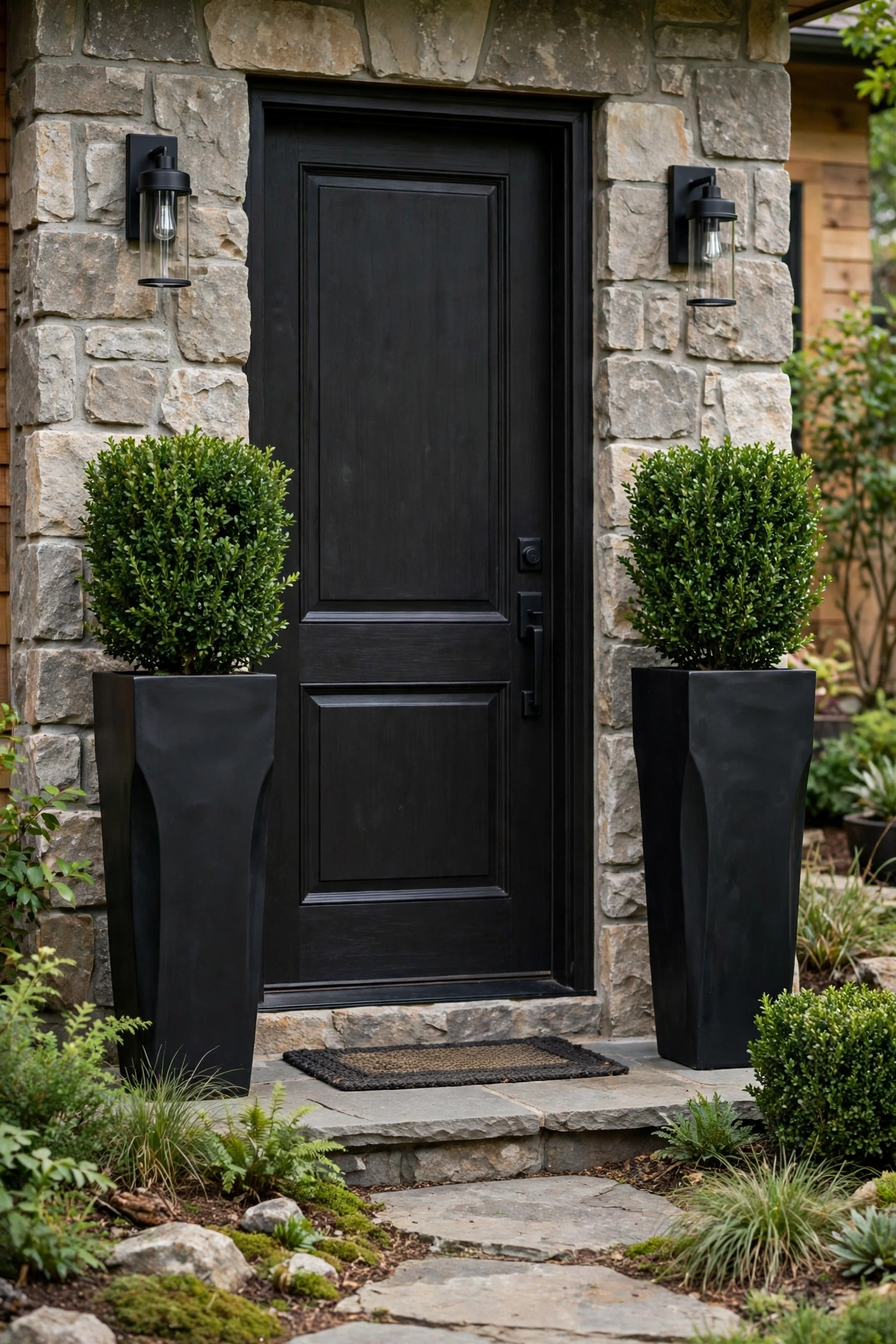
4. Hang a Statement Seasonal Wreath
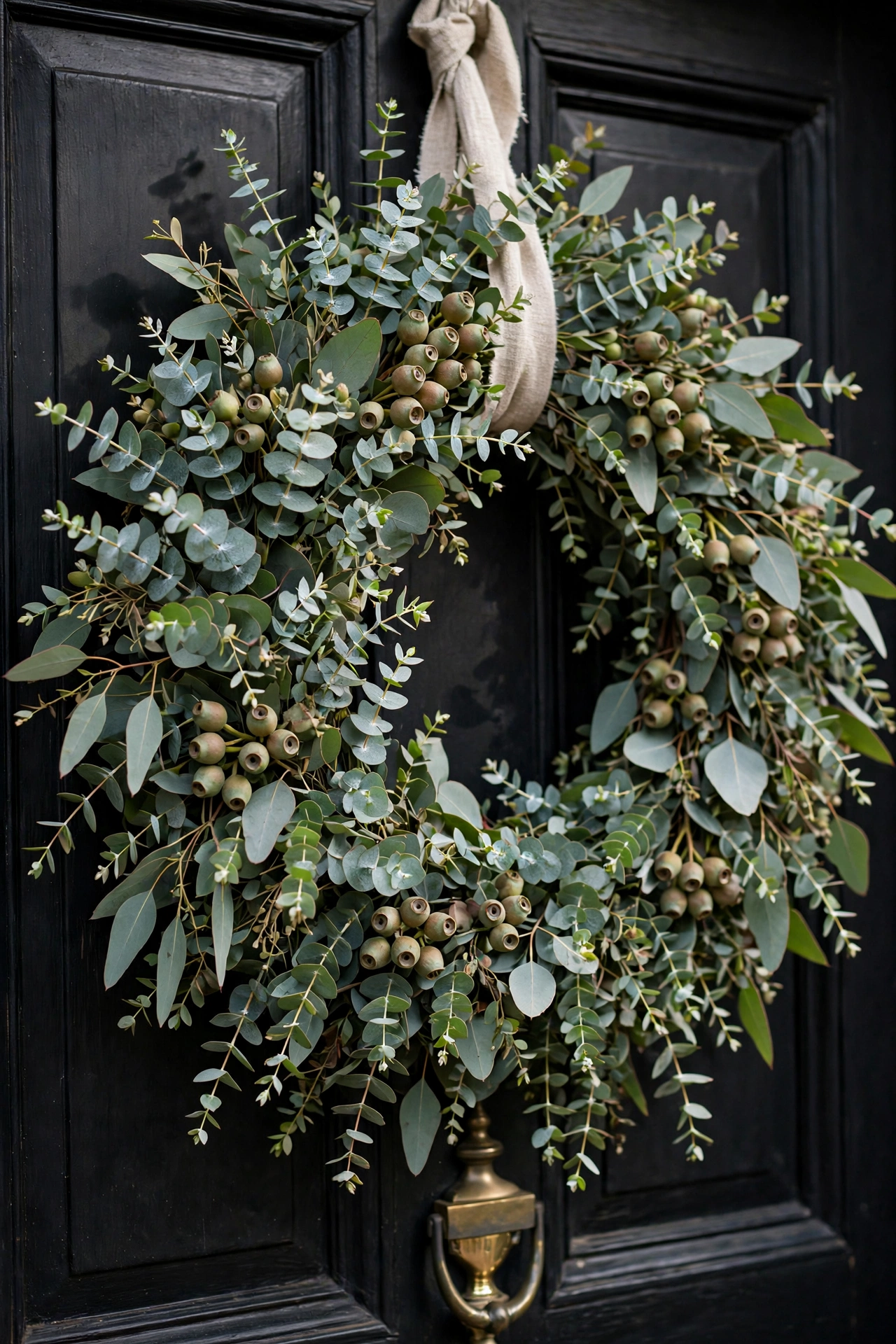
A wreath is the jewelry of the front door — small, but it sets the tone for everything around it. Go oversized rather than dainty: a 24- to 28-inch wreath reads clearly from the street, while a small one disappears. Eucalyptus and olive leaf work year-round, dried grasses suit autumn, and fresh pine or magnolia feels right in winter. Use a simple over-the-door hanger or a removable adhesive hook so you never drill into the door, and swap the wreath with the seasons to keep the entryway feeling current. One good wreath, changed four times a year, gives the porch a fresh look without buying new decor every month.
5. Swap in Oversized Wall Lantern Sconces
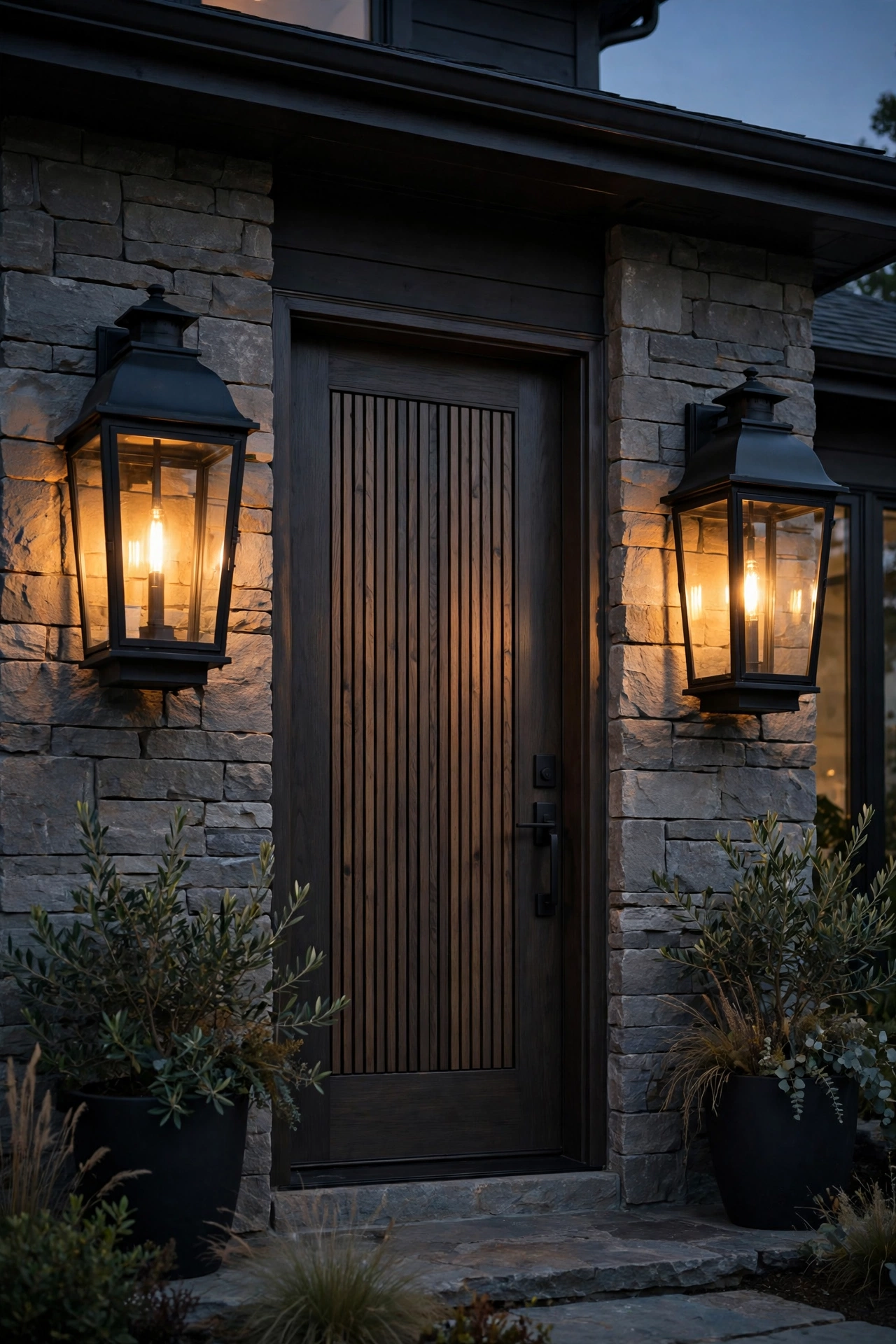
A tired porch light makes the whole entryway feel dated, but swapping the fixture is a job most homeowners can finish in under an hour. Choose oversized lantern sconces — at least one-quarter the height of the door — in matte black, aged brass, or oil-rubbed bronze, and fit warm bulbs around 2700K so the glow feels like candlelight instead of a parking lot. If your entryway has room for two, mount one on each side of the door at eye level for balanced light; a single fixture works best centered above the door on narrow stoops. The right sconces do double duty: they make the house safer at night and they give the facade an architectural detail that reads as intentional even in daylight.
6. Line the Walkway With Solar Path Lights
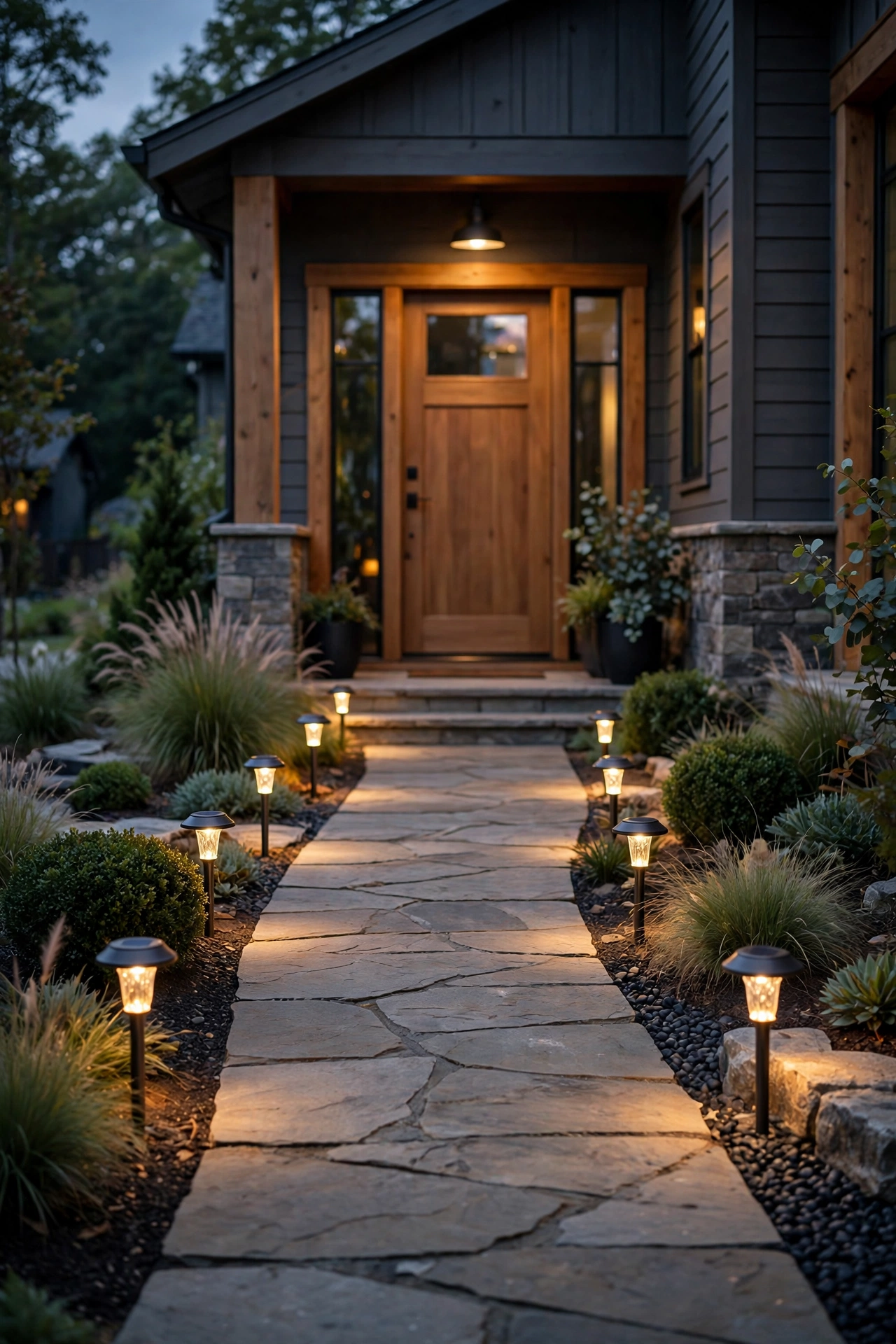
Guests should never have to guess where to step after dark. Solar path lights guide the way without wiring, trenching, or an electrician — push them into the soil along the walkway, let them charge by day, and they glow on their own at dusk. Space them about six to eight feet apart in a casual rhythm rather than a rigid line, and choose warm-white LEDs in simple black or bronze stakes so they disappear by day and glow softly by night. Keep the solar panels clear of overhanging shrubs and wipe them clean once a month so they charge fully. For a finished look, match the light finish to your door hardware and sconces so the whole entryway reads as one coordinated scheme.
7. Add a Weatherproof Bench or a Pair of Chairs
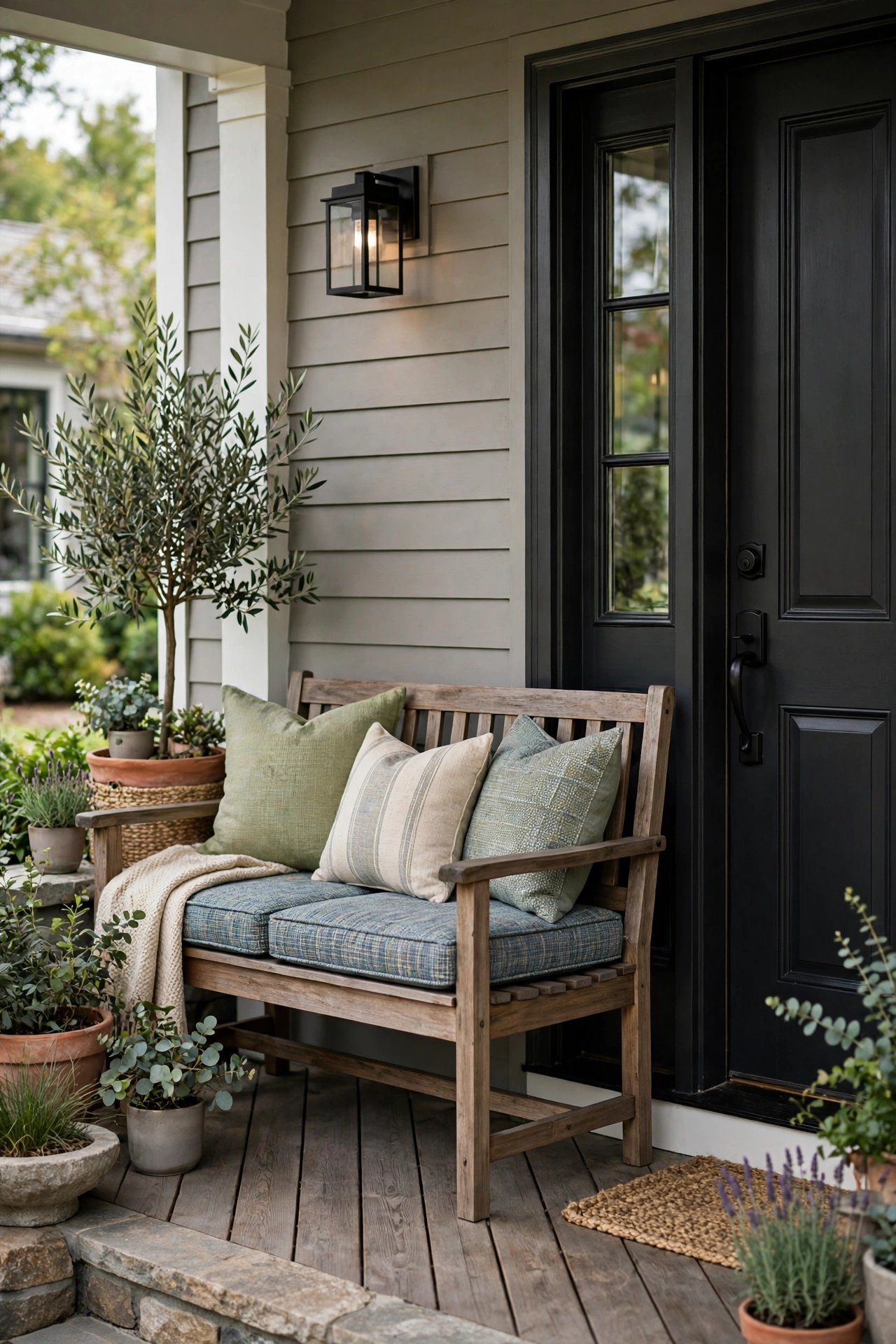
Seating turns an entryway from a pass-through into a place. A simple wooden bench gives guests somewhere to set a bag, slip off muddy shoes, or wait comfortably, and it fills the empty wall space beside the door that most porches leave blank. On a wide porch, a pair of rocking chairs or cushioned armchairs with a small side table creates a spot for morning coffee. Choose teak, powder-coated metal, or all-weather wicker so rain never ruins it, and add outdoor cushions in a color pulled from your doormat or planters to tie the scheme together. Even one small bench changes how the space feels — suddenly the porch is a room, not just a slab.
8. Plant Topiary Trees in Tall Planters
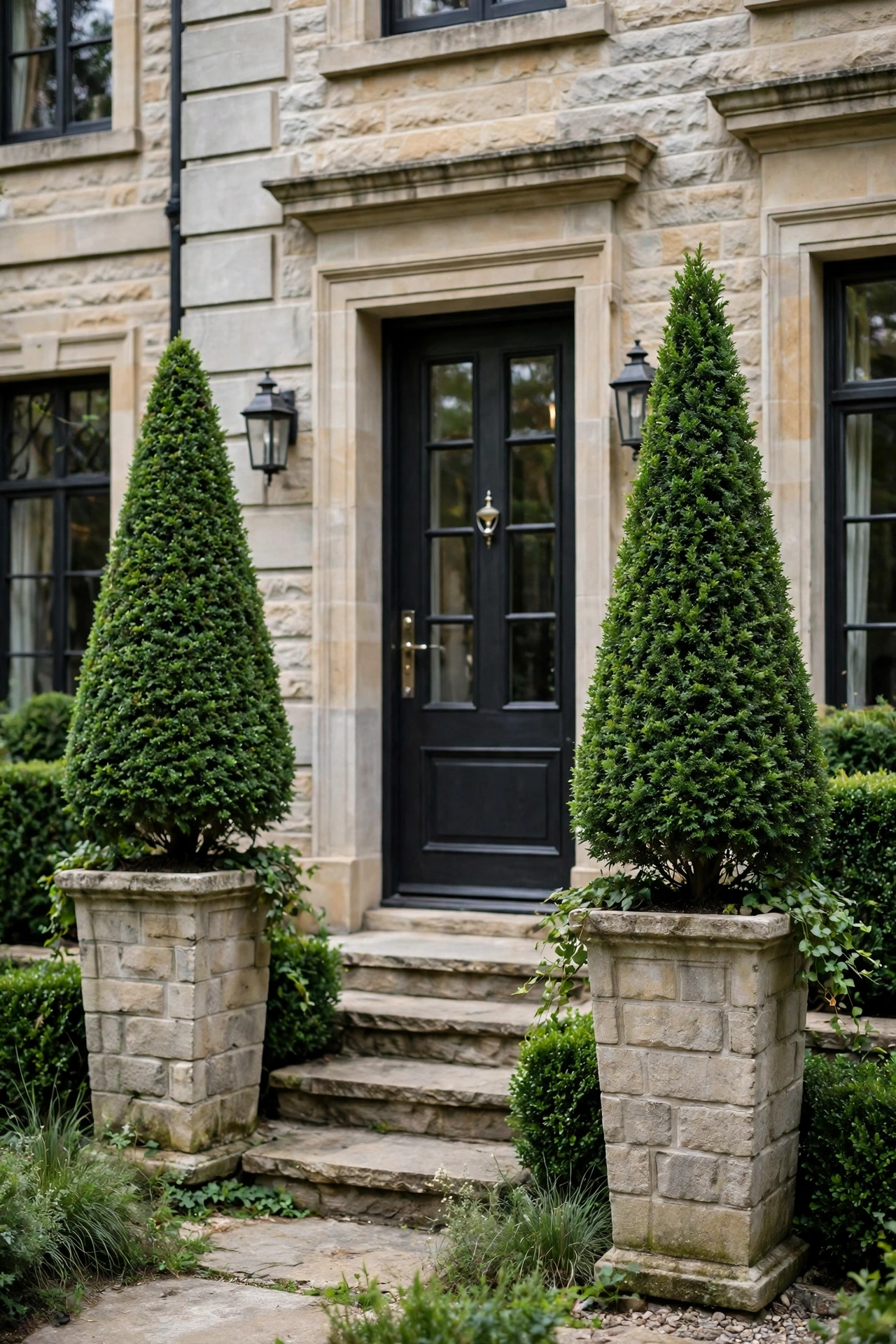
Topiaries bring instant structure to an entryway. A pair of cone or spiral topiaries in tall, narrow planters draws the eye upward, frames the door like columns, and adds the kind of formal polish that usually costs far more. Real boxwood or dwarf Alberta spruce looks best and stays green through winter, but high-quality faux topiaries are a fair trade if your porch gets harsh sun or you travel often. Keep the planters heavy — stone, concrete, or a weighted base — so a strong wind never tips them onto the walkway. Trim real topiaries lightly twice a season to hold their shape, and the pair will look sharp for years with very little effort.
9. Upgrade the House Numbers
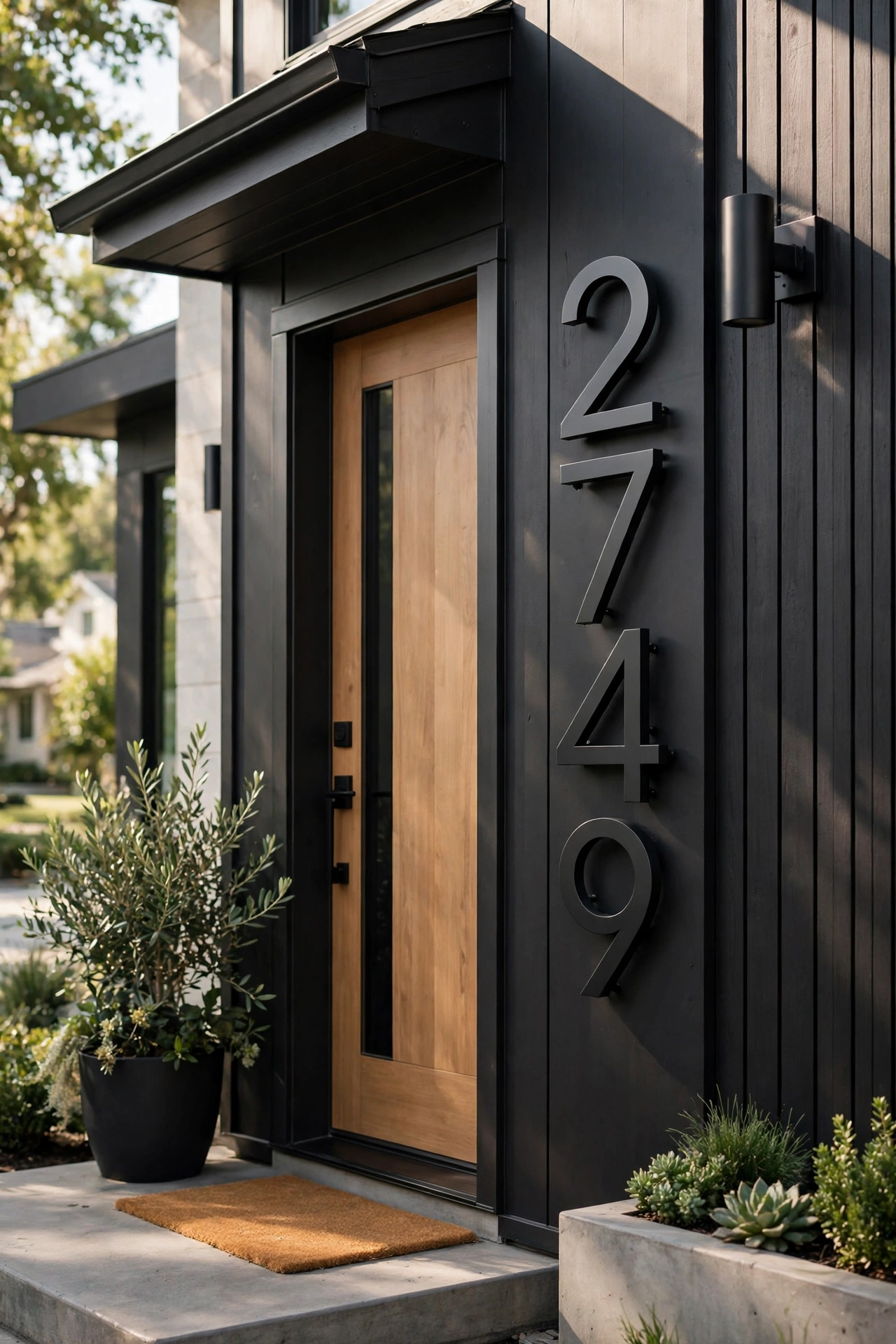
House numbers are a tiny detail with an outsized effect, and most homes still wear the flimsy builder-grade set. Swap them for large, modern numerals — at least five or six inches tall — in a finish that matches your sconces and door hardware, whether that is brushed brass, matte black, or oil-rubbed bronze. Mount them on the wall beside the door, on a wooden plaque, or vertically along the door frame, and make sure they are readable from the street at night. Backlit numbers or a small spotlight above them look especially sharp after dark. It is a twenty-minute job that makes the house easier to find and quietly signals that someone cares about the details.
10. Shelter the Door With a Pergola or Awning
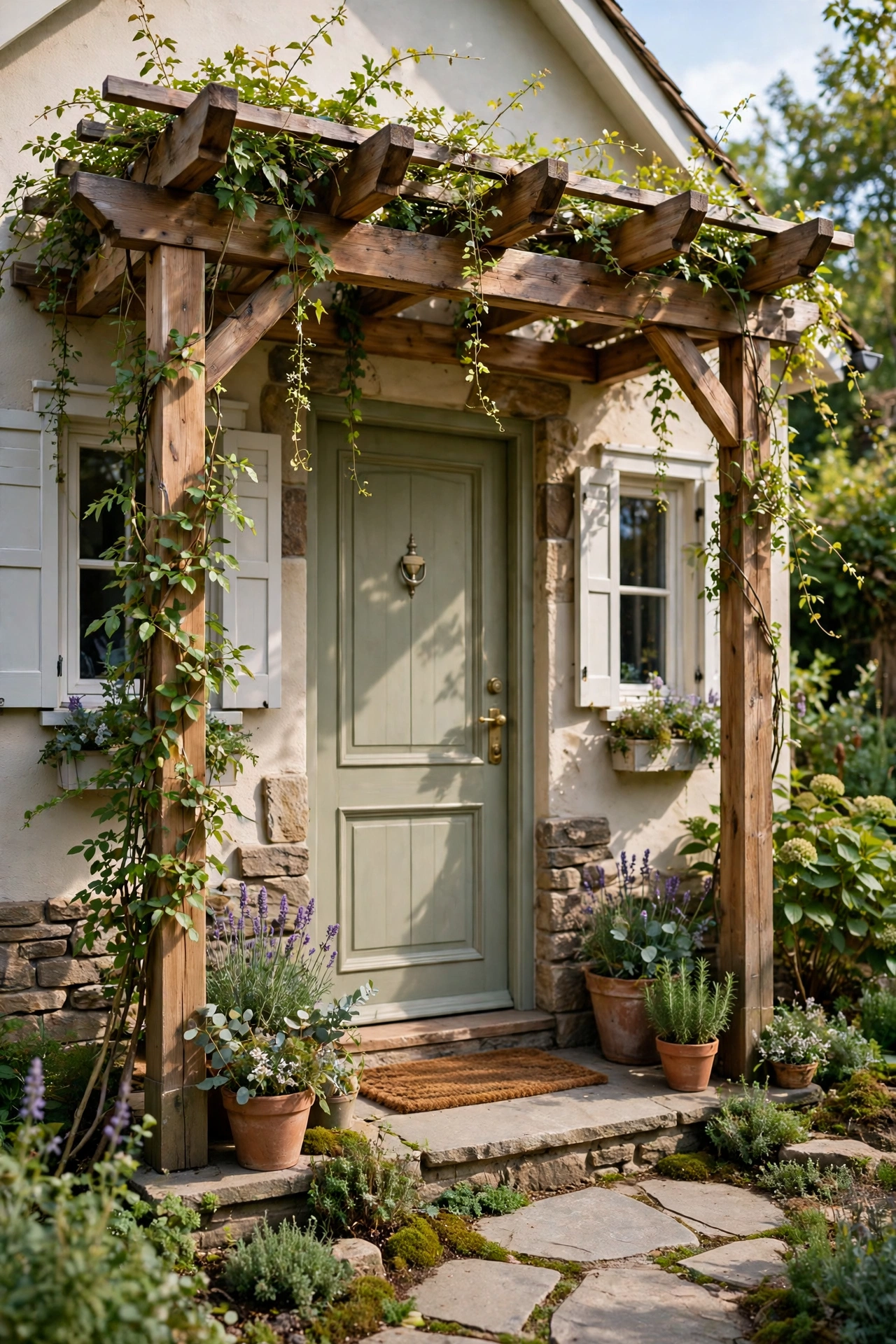
A small pergola, portico, or fabric awning over the door does two things at once: it shelters guests from rain while they find their keys, and it gives the facade an architectural layer that makes the entryway look finished. A simple cedar pergola with a few climbing vines softens a plain wall, while a metal-and-glass canopy suits a modern home. Keep the structure proportional — it should extend just past the door width and sit high enough to clear the door swing. Even a basic canvas awning in a neutral stripe changes the whole look of a flat front wall. Check local rules before building, and anchor everything properly so it stands up to wind.
11. Define the Zone With an Outdoor Rug
An outdoor rug is what turns a concrete slab into an outdoor room. Lay a large, weatherproof rug across the porch to define the seating area, anchor the furniture, and add the pattern and warmth that bare concrete can never offer. Flat-weave polypropylene rugs handle rain, hose off easily, and come in every style from vintage Persian to clean modern stripes. Size it so the front legs of chairs and benches sit on the rug, with a few inches of border showing around the edges. In a covered porch it will last for years; on an open stoop, pick a quick-dry weave and store it during the wettest months. One rug, and the whole entryway suddenly has a floor plan.
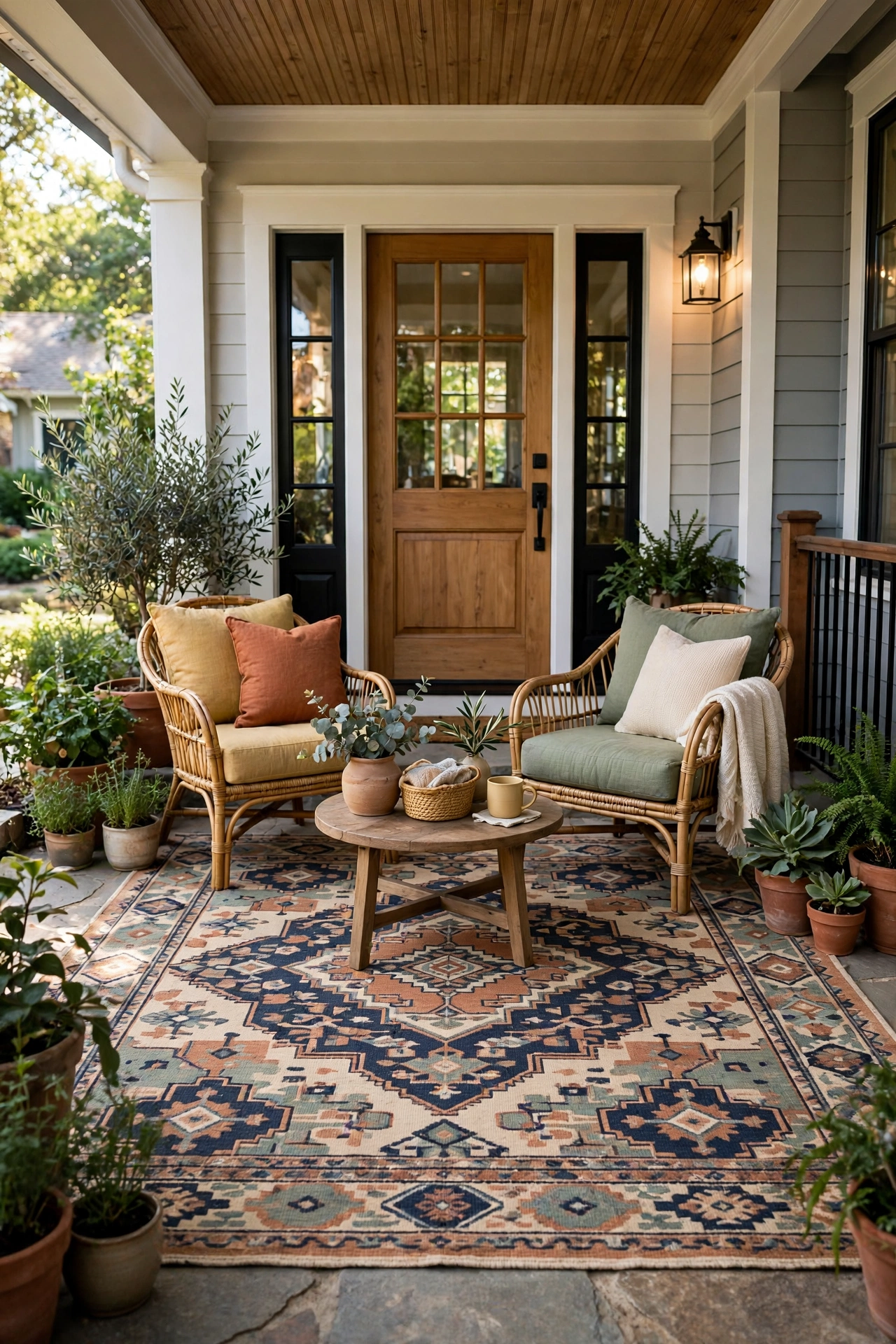
12. Hang Ferns or Trailing Plants From the Porch Ceiling
Hanging plants fill the empty air above an entryway and soften hard rooflines. Boston ferns in simple baskets are the classic porch plant for a reason — their fronds spill down in a full, lush curtain — but trailing pothos, ivy, or string-of-pearls work just as well in warmer climates. Hang them from sturdy ceiling hooks at staggered heights so they frame the door instead of blocking it, and keep them at least a head above the walkway. Water them more often than ground plants, since baskets dry out fast in wind and sun. Two or three hanging baskets, kept full and healthy, give the porch a garden feel without taking a single inch of floor space.
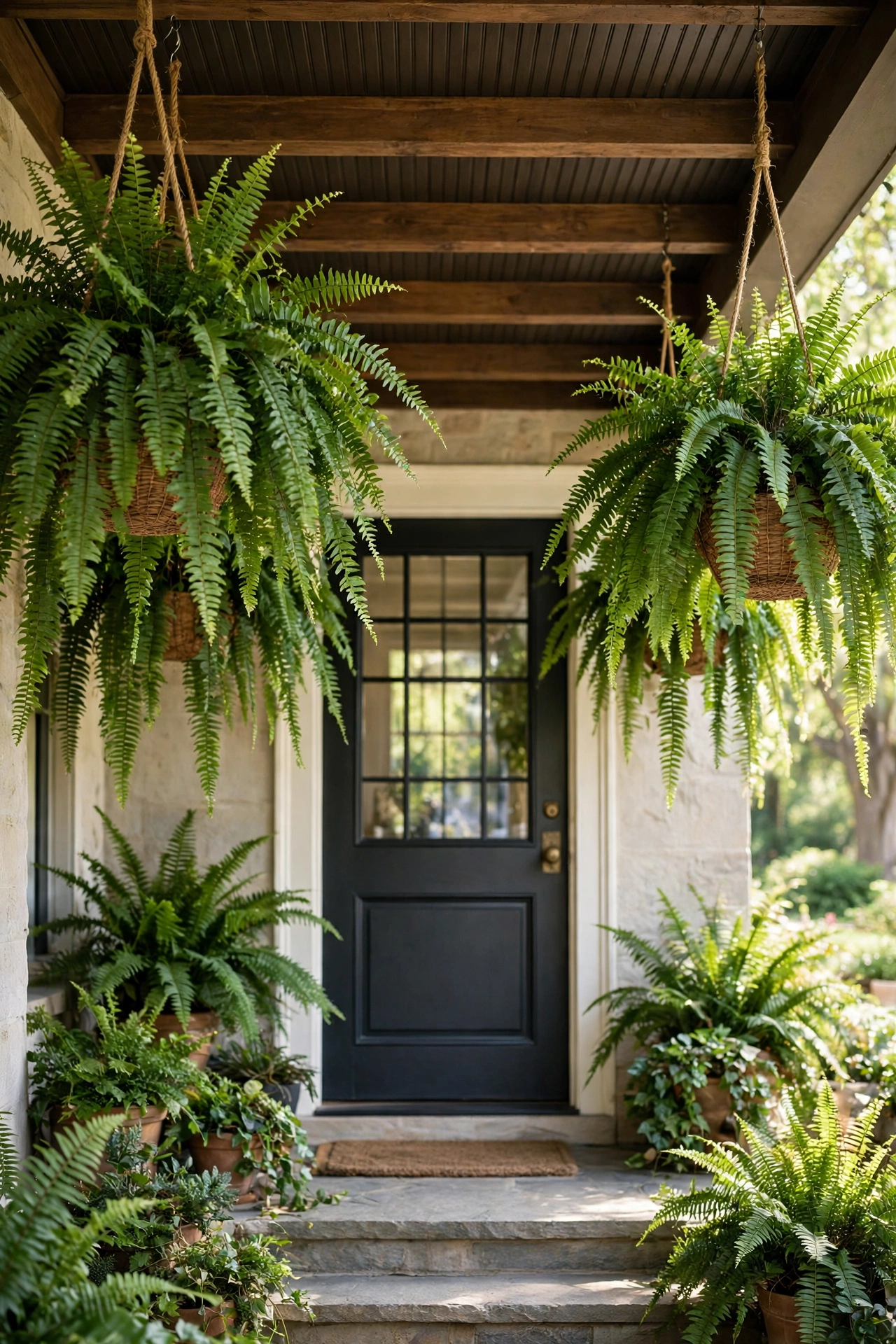
13. Set a Slim Console or Potting Bench by the Door
A slim console table or potting bench against the wall beside the door gives the entryway a working surface — a place for a lantern, a small potted plant, or a tray for keys and mail. Choose a narrow piece, no deeper than about twelve inches, so it never crowds the walkway, in teak, cedar, or powder-coated metal that can handle weather. Style the top sparingly: one lantern, one plant, and one small decorative object is plenty. Underneath, a pair of baskets can hold dog leashes, garden gloves, or kids’ outdoor shoes. It is the outdoor equivalent of a hallway console, and it makes the porch feel furnished instead of empty.
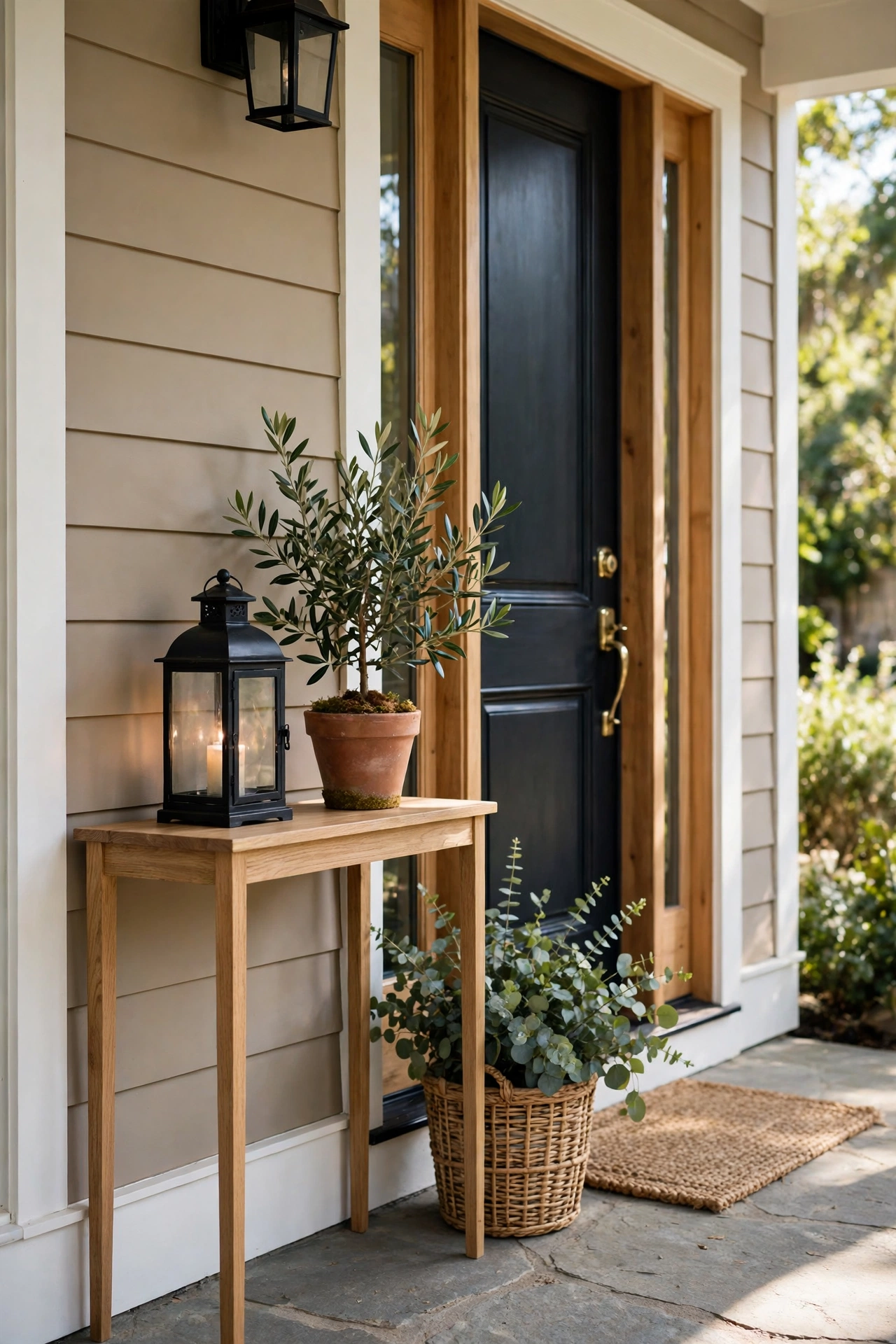
14. Upgrade the Door Hardware
Door hardware is the part guests touch first, and cheap, tarnished hardware quietly drags the whole entryway down. Replace the handle set, deadbolt, knocker, and kick plate in one matching finish — brushed brass, matte black, or satin nickel — and the door instantly feels newer and more expensive. A solid brass knocker or a sleek modern pull adds character that a standard knob never will, and a kick plate in the same finish protects the bottom of the door from scuffs while looking intentional. Measure your existing bore holes before ordering so the new set fits without drilling, and the whole swap takes about thirty minutes with a screwdriver. Small change, big first impression.
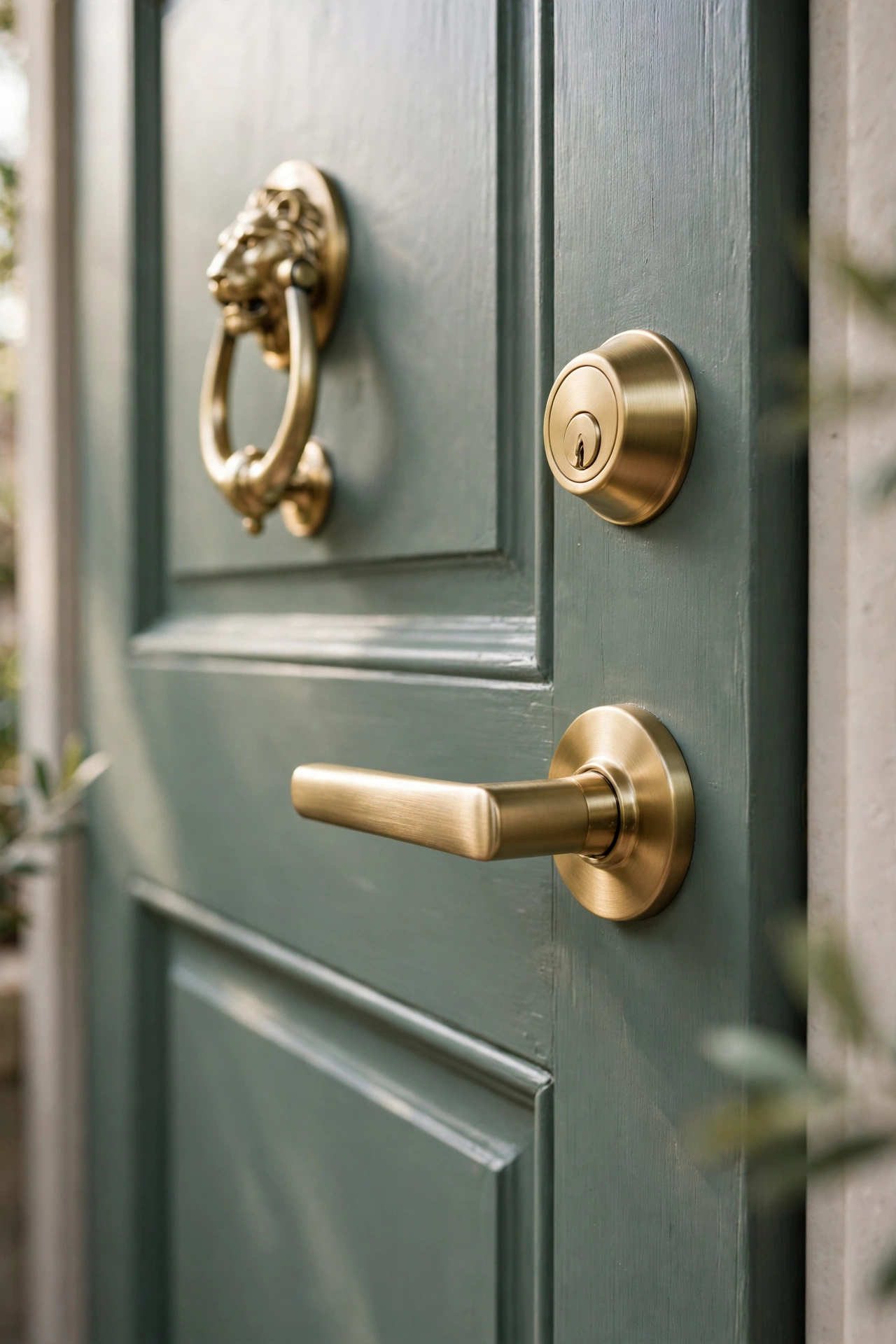
15. Rotate a Seasonal Planter by the Door
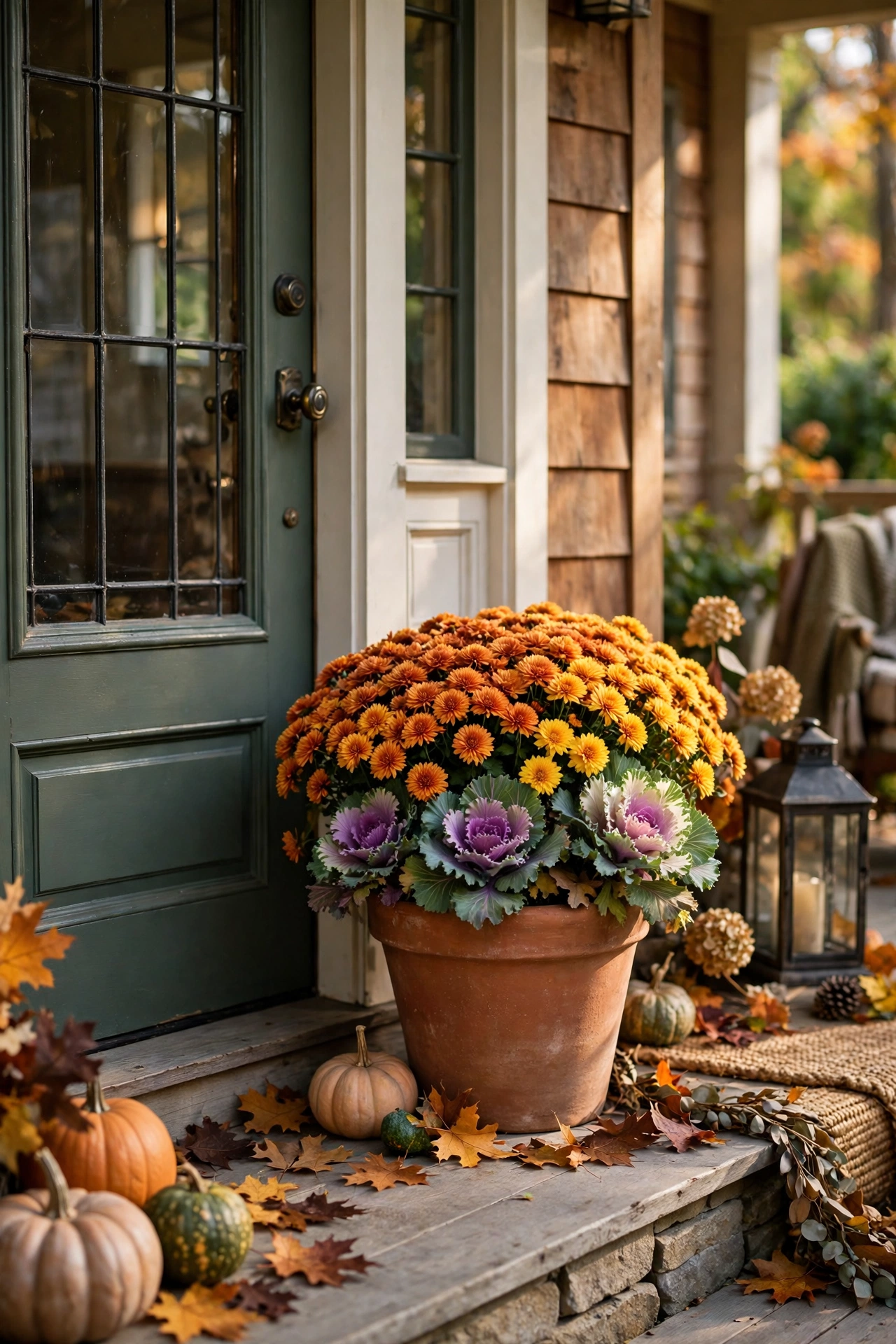
One planter that changes with the seasons keeps the entryway feeling alive all year without a full redecoration. In spring, fill it with tulips and hyacinths; in summer, switch to bright geraniums or trailing petunias; in autumn, use ornamental kale, mums, and pumpkins; in winter, pack it with pine branches, red berries, and birch stems. Keep the planter itself the same — a classic stone or terracotta pot — so the container becomes a familiar anchor and only the planting changes. Four small swaps a year, each taking ten minutes, give the porch a fresh look every season and a reason for neighbors to notice.
16. String Festoon Lights Across the Porch
Festoon or string lights are the fastest way to make an entryway feel magical after dark. Drape warm-white bulbs in a gentle swag across the porch ceiling, along a railing, or from the pergola beams, and the whole space glows like a cafe terrace. Choose outdoor-rated, shatterproof bulbs and hang them with proper hooks or guide wires so they never sag onto the walkway. A dimmer or a smart plug lets you set the mood and schedule them to switch on at dusk automatically. They cost little, install in an afternoon, and turn an ordinary porch into the place everyone gathers on summer evenings.
17. Add a Small Wall Fountain or Water Bowl
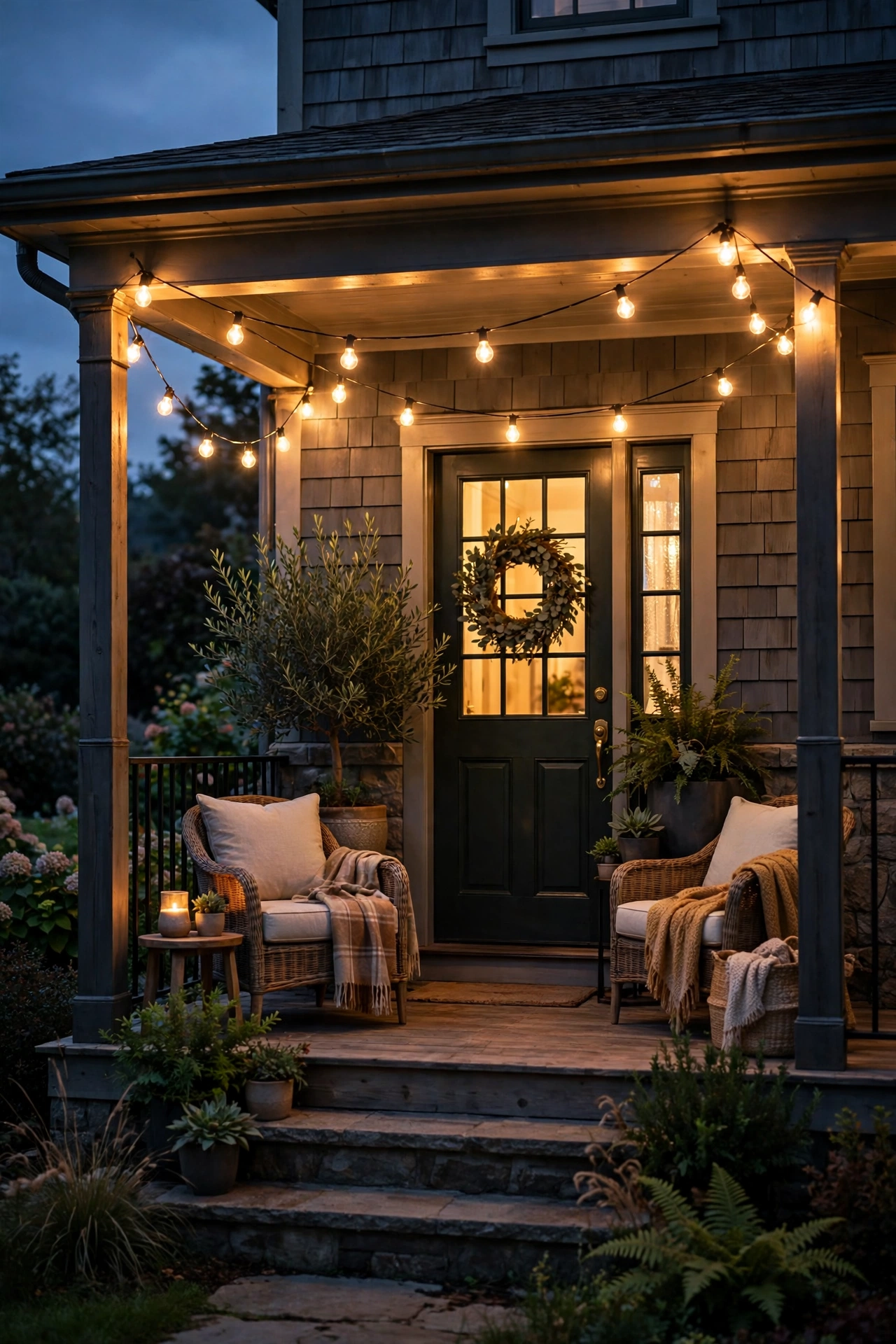
The sound of moving water changes how an entryway feels before anyone even looks at it. A small wall-mounted fountain, a stone basin with a gentle bubbler, or even a ceramic bowl with floating flowers adds a calm, spa-like note to the threshold. Wall fountains work best on a covered porch where the pump stays dry, while a simple basin suits an open stoop. Keep the scale modest — it should be a detail, not a centerpiece — and clean the pump monthly so the water stays clear. In cold climates, drain it before the first freeze. One small water feature, and the entryway feels like a retreat instead of a doorway.
18. Screen the Porch With a Trellis and Climbers
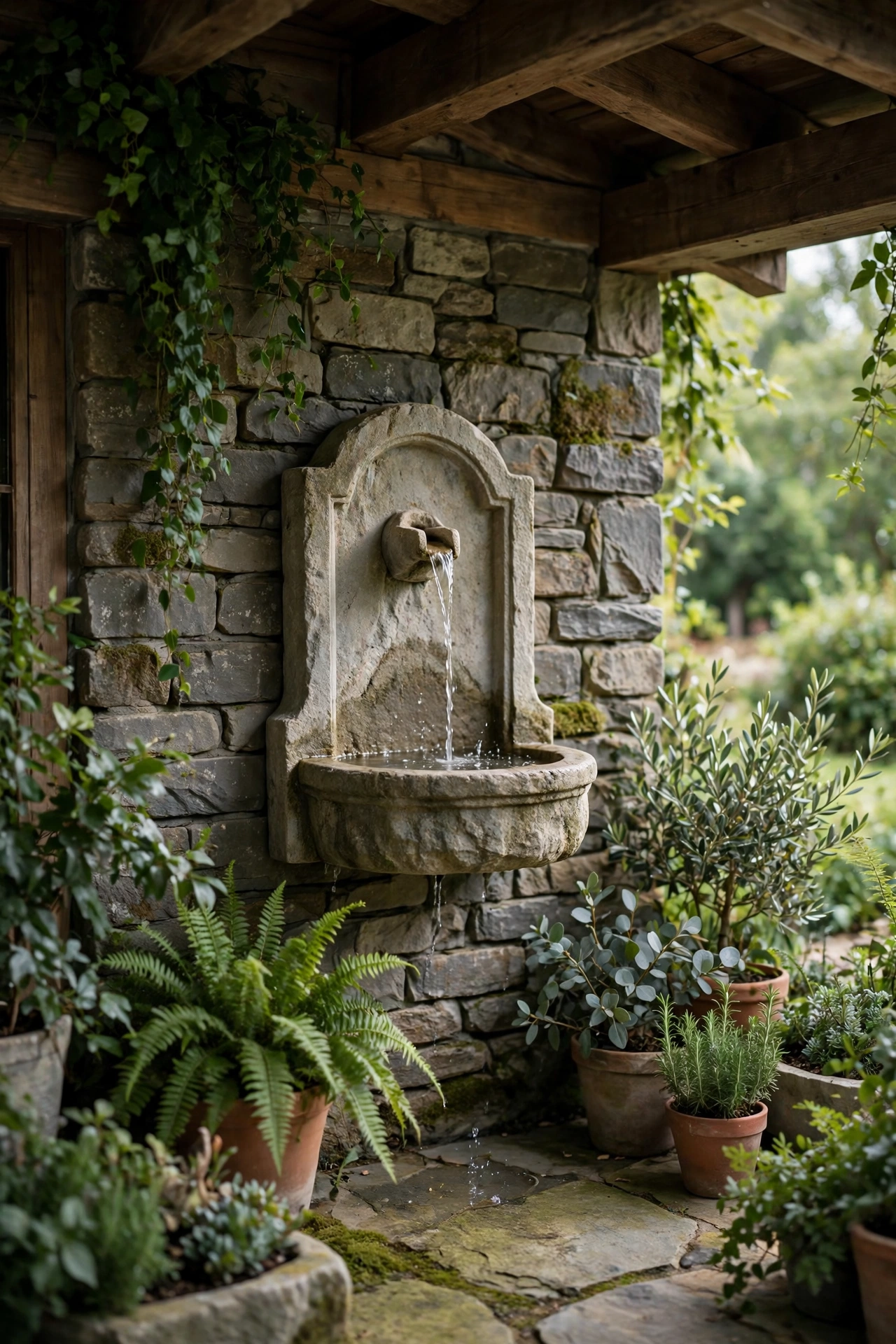
A trellis panel with climbing plants gives an entryway privacy, shade, and a living wall all at once. Mount a wooden or metal trellis on the side of the porch that faces the street or a neighbor, and train jasmine, clematis, or climbing roses up it for scent and color. In a single season the vines soften the hard edges of the house and filter the view without building a wall. Choose a trellis that matches the house trim for a built-in look, and leave a gap behind it so air circulates and the plants stay healthy. It is a simple structure with a big payoff: a greener, more private, more beautiful entrance.
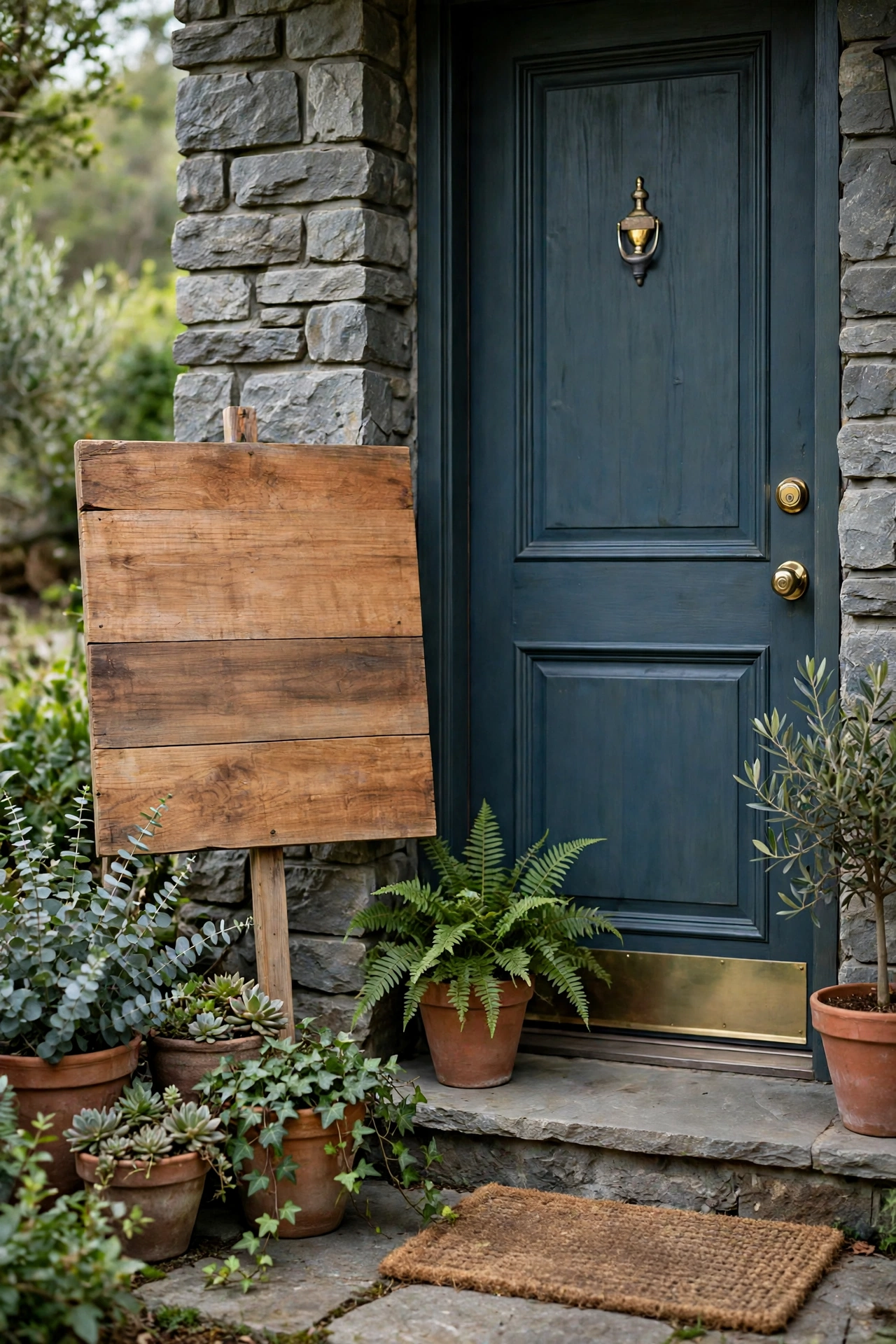
19. Personalize It With a Monogram or Welcome Sign
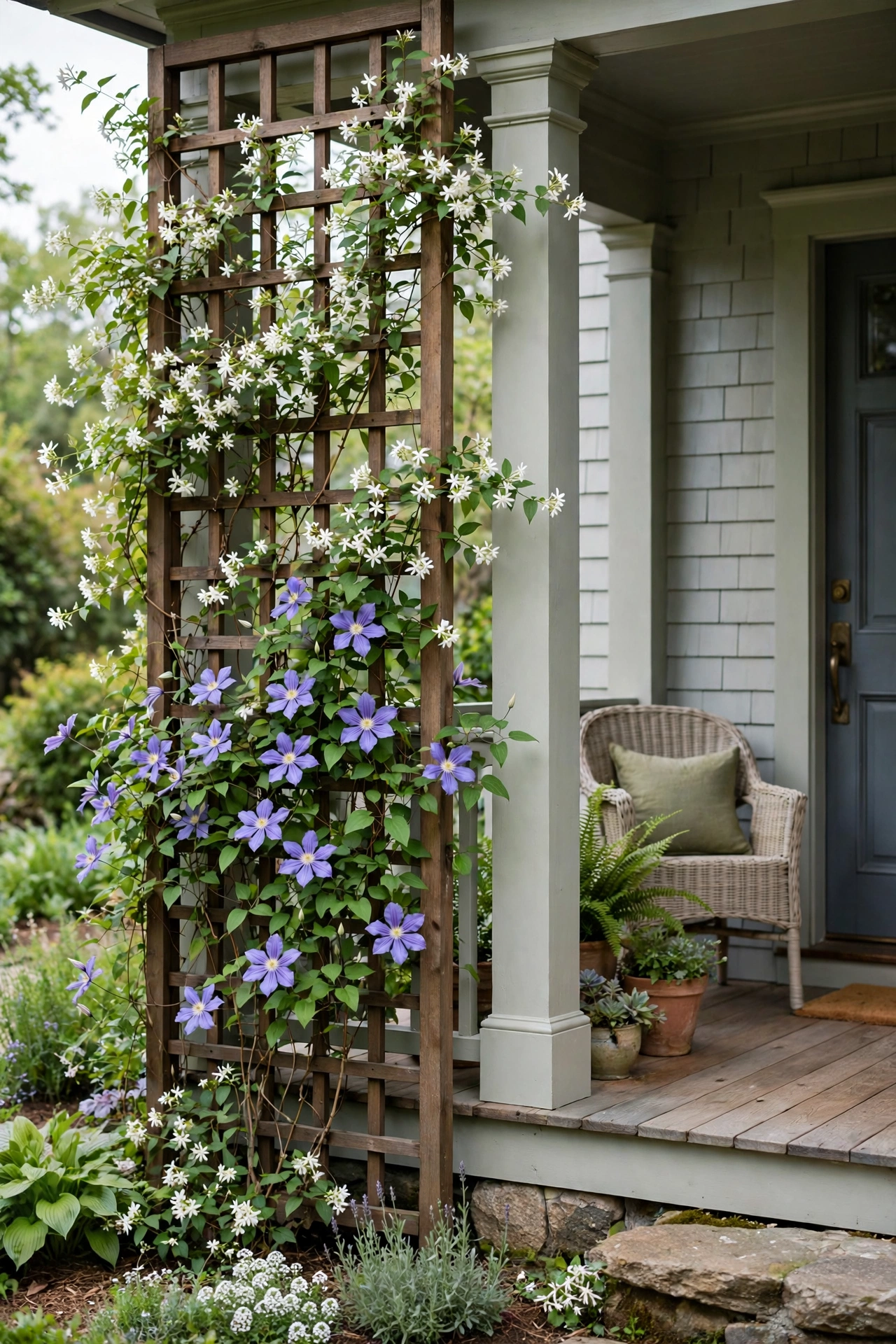
A personal touch is what separates a styled entryway from a showroom. A monogrammed door mat, a wooden sign with your family name, or a simple “welcome” plaque in a finish that matches your hardware tells guests this is a home, not a display. Keep it to one personalized piece so it reads as a signature rather than clutter, and place it where it is seen on arrival — beside the door, above the bench, or on the mat itself. Weatherproof materials matter: sealed wood, powder-coated metal, or outdoor-rated vinyl will last, while paper and untreated craft signs will not survive one rainy week. One personal detail is all it takes.
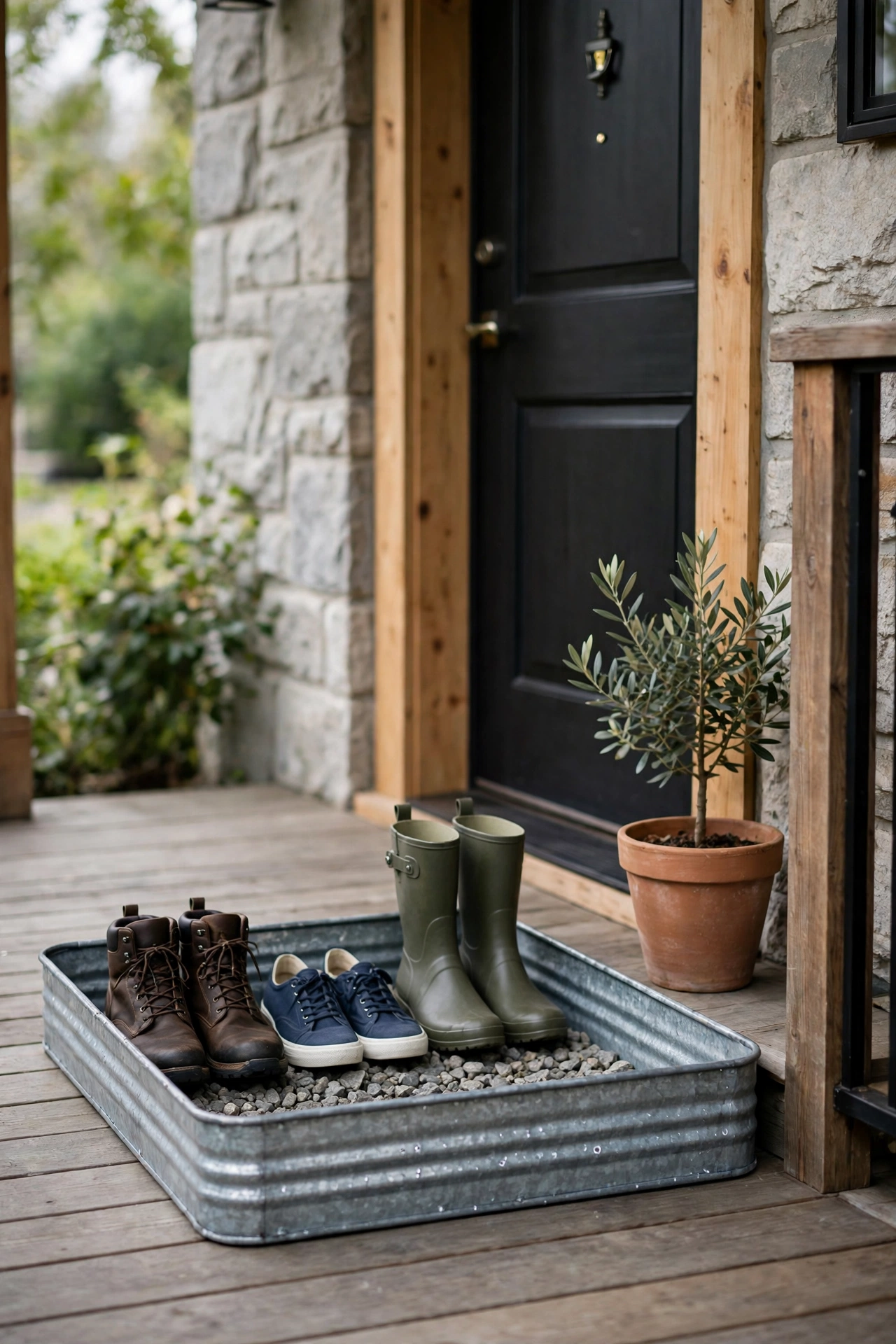
20. Keep Muddy Shoes in Check With a Boot Tray
An entryway that looks good should also work hard, and nothing ruins the look faster than a pile of muddy shoes. A low boot tray with a raised edge, filled with pebbles or a slatted insert, keeps wet footwear contained and the porch floor clean. Place it just inside the door swing or against the wall beside the bench, and choose a tray in galvanized metal, rubber, or teak that matches the rest of the decor. In wet seasons it earns its keep daily; in dry months it still looks intentional holding a pair of garden clogs. Practical and tidy, it is the kind of detail that makes guests think the house is always this organized.
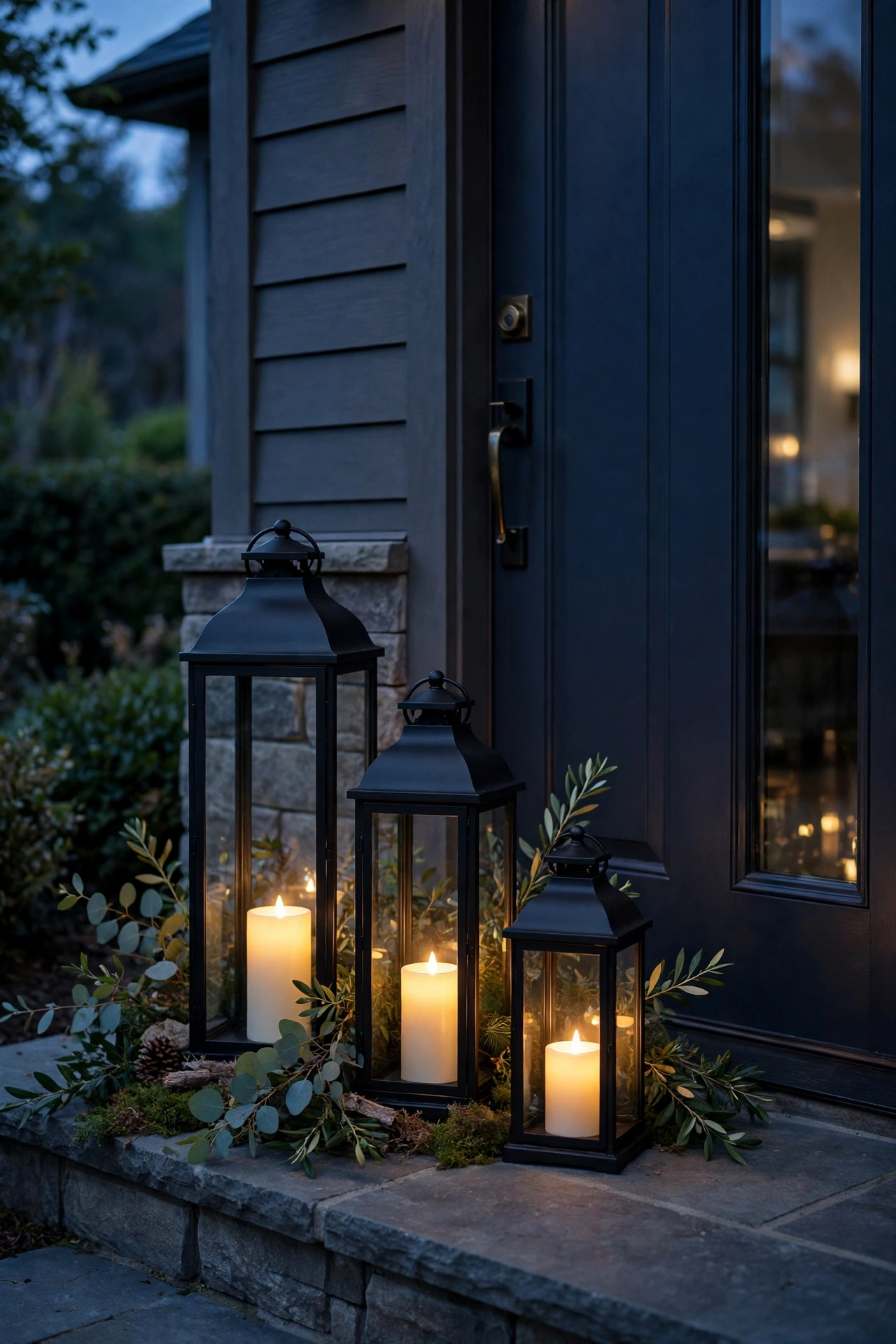
21. Cluster Lanterns by the Door
A cluster of lanterns at different heights beside the door adds glow, texture, and a collected feel that a single lantern never achieves. Group three lanterns — tall, medium, and small — in the same finish, matte black or aged brass, and fill them with LED pillar candles on a timer so they light themselves every evening. Set the tallest at the back and the smallest in front, slightly overlapping, on the porch floor or on a low stool. The flicker of candlelight softens the hard lines of the facade and makes the entryway feel warm even in winter. It is a ten-minute styling move with an outsized effect.
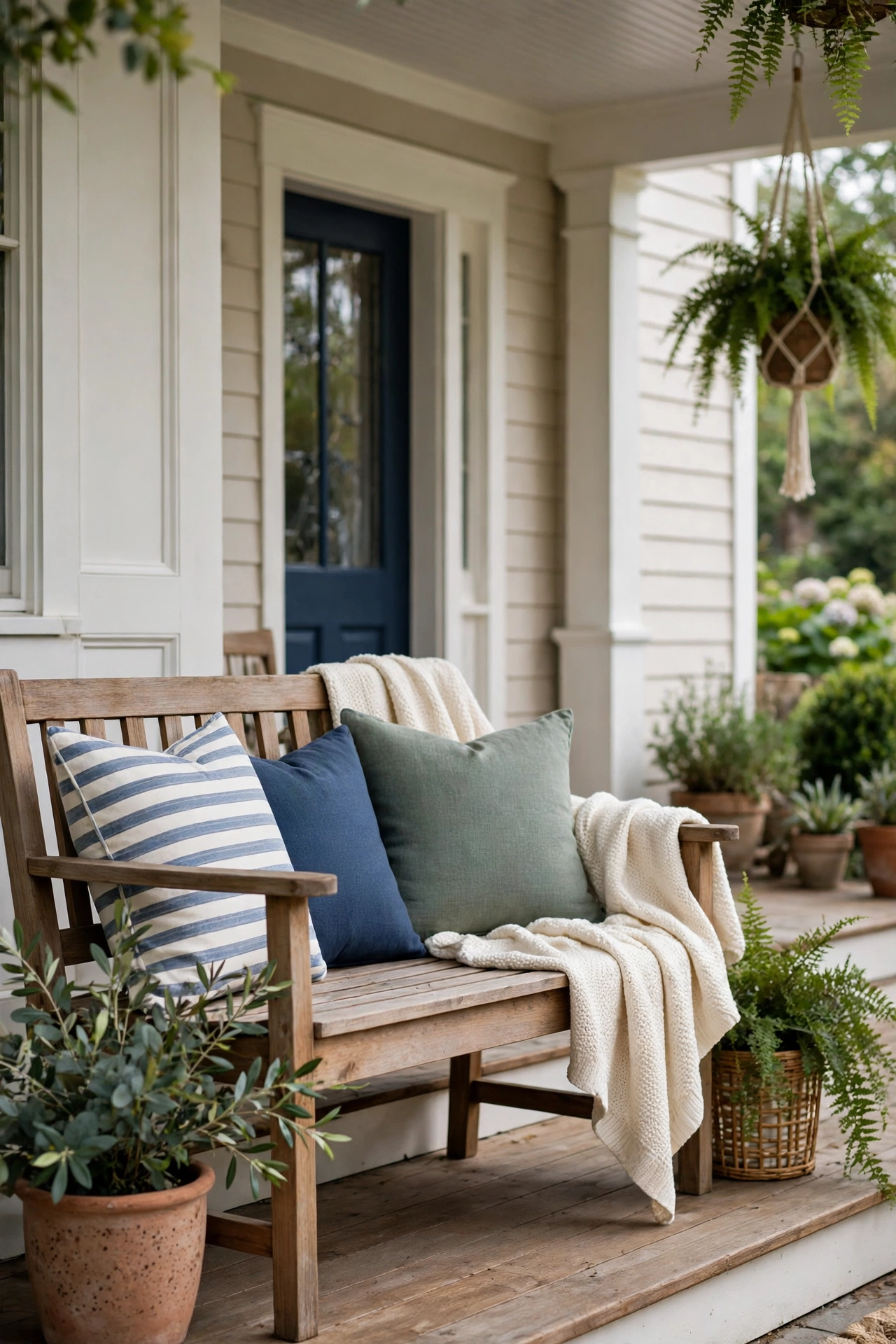
22. Coordinate Cushions and a Throw on the Seating
Outdoor cushions are the textiles that make porch seating look finished. Pick two or three cushions in colors pulled from your doormat, rug, or planters — a solid, a stripe, and a small pattern is a reliable mix — and add a lightweight outdoor throw draped over the bench arm for cooler evenings. Choose solution-dyed acrylic or polyester fabrics that resist fading and mildew, and store them in a deck box during storms if your porch is uncovered. Swap the cushion covers seasonally for a fresh look without buying new inserts. Soft furnishings are what make guests sit down and stay a while, and that is the real test of a welcoming entryway.
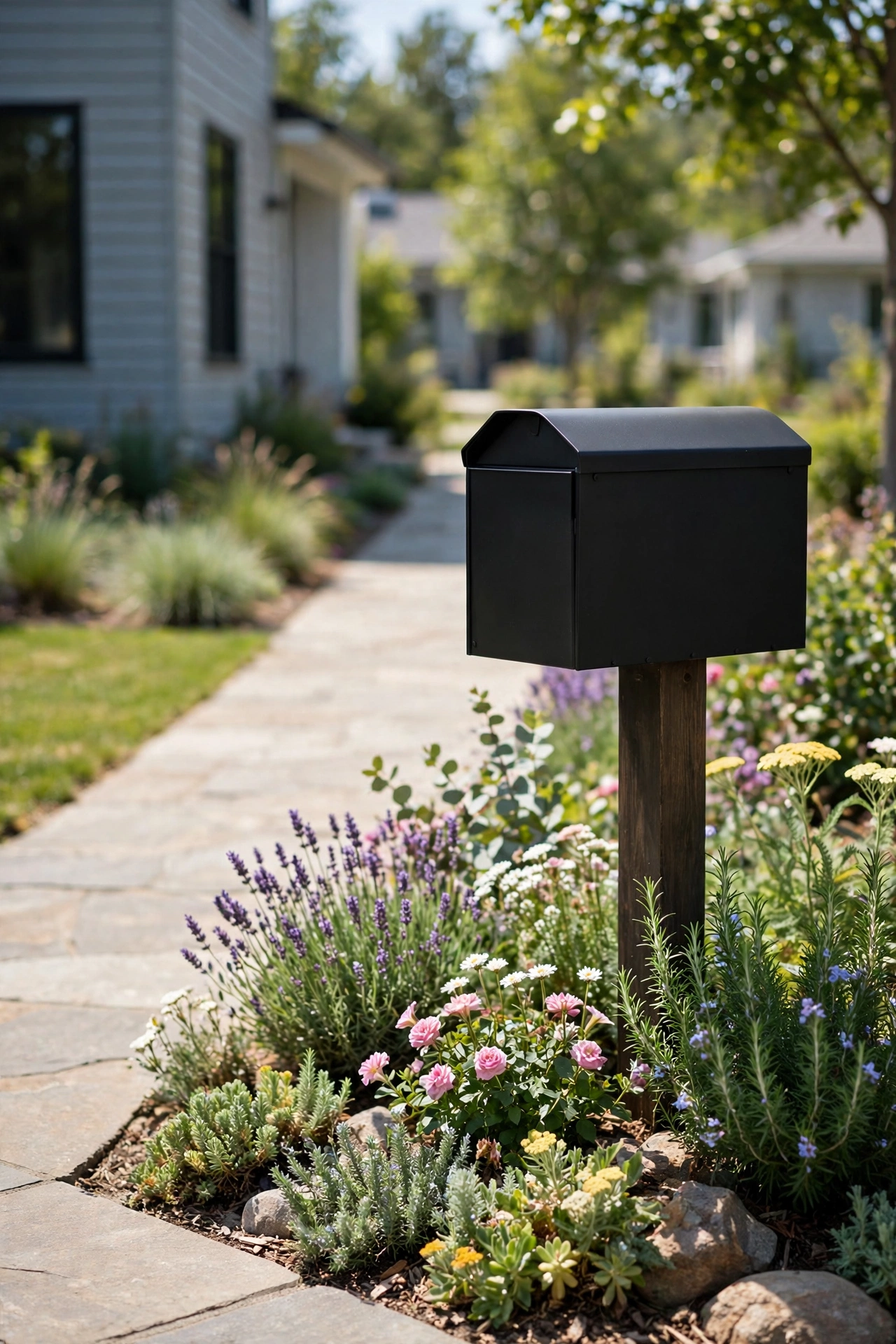
23. Make the Mailbox Part of the Design
The mailbox is often the first thing visitors see, yet it is usually the most neglected. Upgrade it to a sturdy box in a finish that matches your sconces and hardware, mount it at a comfortable height beside the door or at the end of the walkway, and plant a small bed of flowers or a low boxwood hedge around its post. A parcel box in the same style keeps deliveries tidy and safe. If a wall-mounted box suits your home better, center it beside the door at eye level with a small planter underneath. One coordinated mailbox pulls the whole entryway scheme together — proof that even the most functional details deserve a design decision.
Frequently Asked Questions
How can I decorate my outdoor entryway on a small budget?
Start with the three cheapest high-impact moves: paint the front door, layer a patterned rug under a coir doormat, and hang a seasonal wreath. Together they cost well under a hundred dollars and change the whole look of the threshold. Add solar path lights and a pair of potted plants next, and the entryway will look styled without any big purchase.
What plants work best for an outdoor entryway?
Boxwood, dwarf conifers, and topiary forms are the safest year-round choices because they stay green through winter. For seasonal color, add geraniums, petunias, and mums in the matching planters, and hang ferns where the porch is shaded. Always match the plant to the light your porch actually gets — sun-loving plants will fail in a north-facing entryway, and shade plants will scorch in full afternoon sun.
How do I make a small stoop look welcoming?
On a tiny stoop, go vertical instead of wide: a bold door color, one tall planter, an oversized sconce, and a layered doormat do the job without crowding the walkway. Skip bulky furniture and use a wall-mounted lantern, a hanging fern, and large house numbers to add interest upward. A small space styled deliberately always beats a large space left bare.
What color should I paint my front door?
Choose a color that contrasts with your house exterior and suits your style: navy, forest green, and charcoal read classic; teal, coral, and sunny yellow feel cheerful; black is timeless on almost any home. Test a sample in daylight and at dusk before committing, and use an exterior satin or semi-gloss paint so the finish survives weather and wipes clean.
How do I light my outdoor entryway at night?
Layer three kinds of light: a main fixture such as lantern sconces by the door, guiding light like solar path lights along the walkway, and accent light from string lights or a lantern cluster. Warm bulbs around 2700K keep the glow welcoming, and a timer or smart plug makes the whole scheme switch on by itself at dusk.
Can I decorate an outdoor entryway in a rental or apartment?
Yes — stick to removable pieces: a layered doormat, a potted plant, a wreath on an over-door hanger, battery lanterns, and a small bench. Avoid drilling, painting, or anything fixed to the building, and check your lease or building rules first. Even two or three portable pieces make a rental threshold feel like home.
Conclusion
An outdoor entryway does not need a renovation to feel welcoming — it needs a few deliberate layers. Color at the door, greenery at the sides, light after dark, and something soft underfoot will carry most of the work, and the smaller details — the house numbers, the hardware, the lantern cluster — are what make it feel finished. Start with one or two ideas from this list this weekend, live with them for a week, and add the next layer when you are ready. Your front door is the first hello your home gives; make it a warm one.
Looking for more curb appeal ideas? See our 29 driveway entrance curb appeal ideas to style the approach to your door, browse 33 backyard ideas for the rest of the outdoor space, or check shoe storage cabinet entryway ideas for keeping the inside of the entry just as tidy. For desert-friendly planting around the entrance, our 27 Arizona backyard ideas has plenty of heat-tolerant options, and if your entry opens straight into a small home, 31 small apartment ideas will help the inside match the welcome outside.