
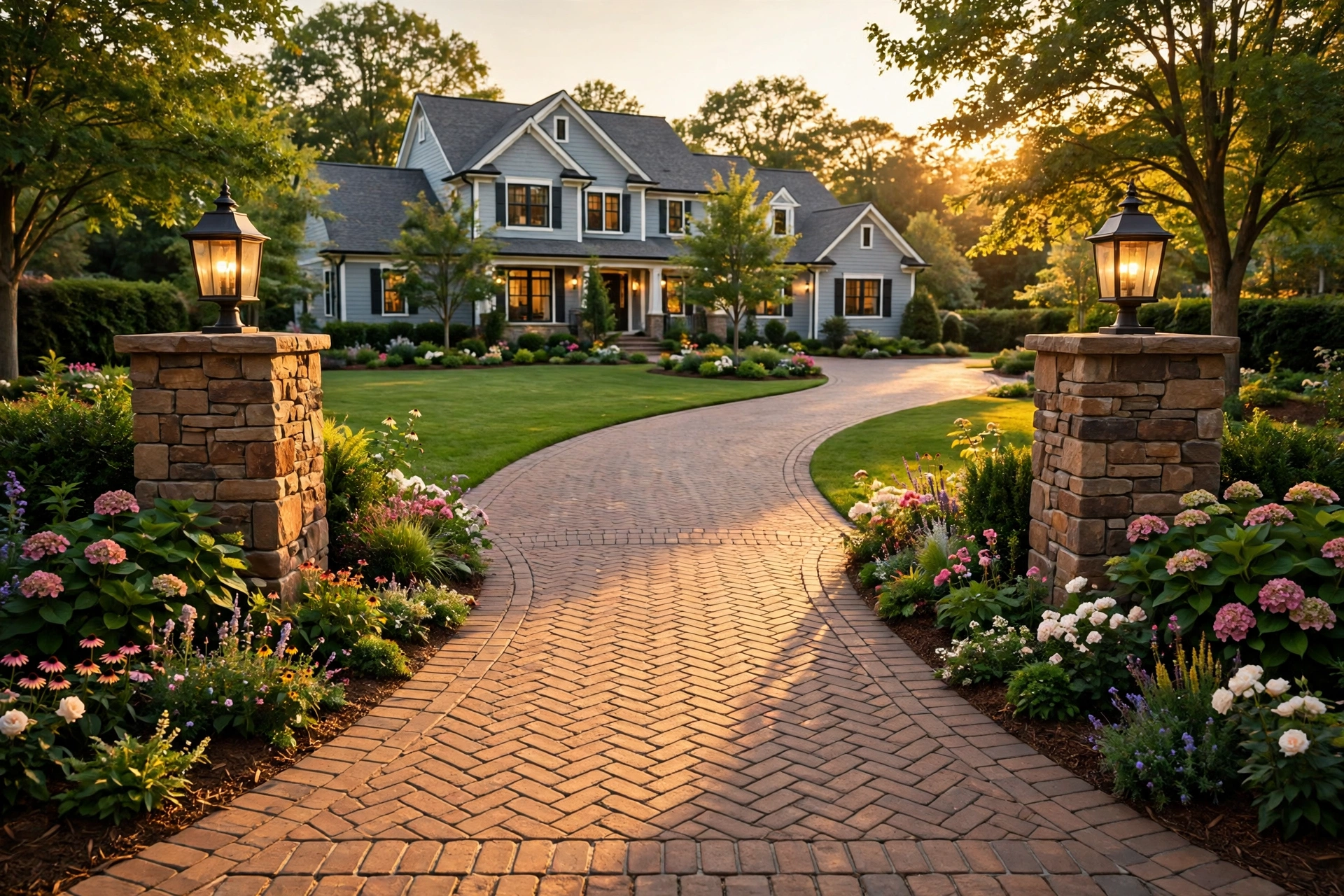
29 Driveway Entrance Curb Appeal Ideas That Make a Great First Impression
Your driveway is the first thing guests see when they arrive, and the last thing they remember when they leave. It sets the tone for everything behind it — the house, the garden, the welcome waiting at the front door. Yet most driveways get treated as nothing more than a parking strip: a flat slab of concrete or asphalt that nobody thinks about until it cracks, stains, or fades into the background.
The good news is that a driveway entrance does not need a full rebuild to look remarkable. A pair of stone pillars, a row of solar lights, a fresh band of brick at the street, or a border of ornamental grasses can change the whole arrival experience for a fraction of what a new surface costs. The ideas below cover every budget and every style, from a simple pressure wash and reseal to a full circular drive with a garden island in the middle. Each one is a real, doable project — pick the ones that fit your home, your climate, and your weekend, and start with the change you will notice every single time you pull in.
1. Frame the Entrance With Stone Pillars and Lanterns
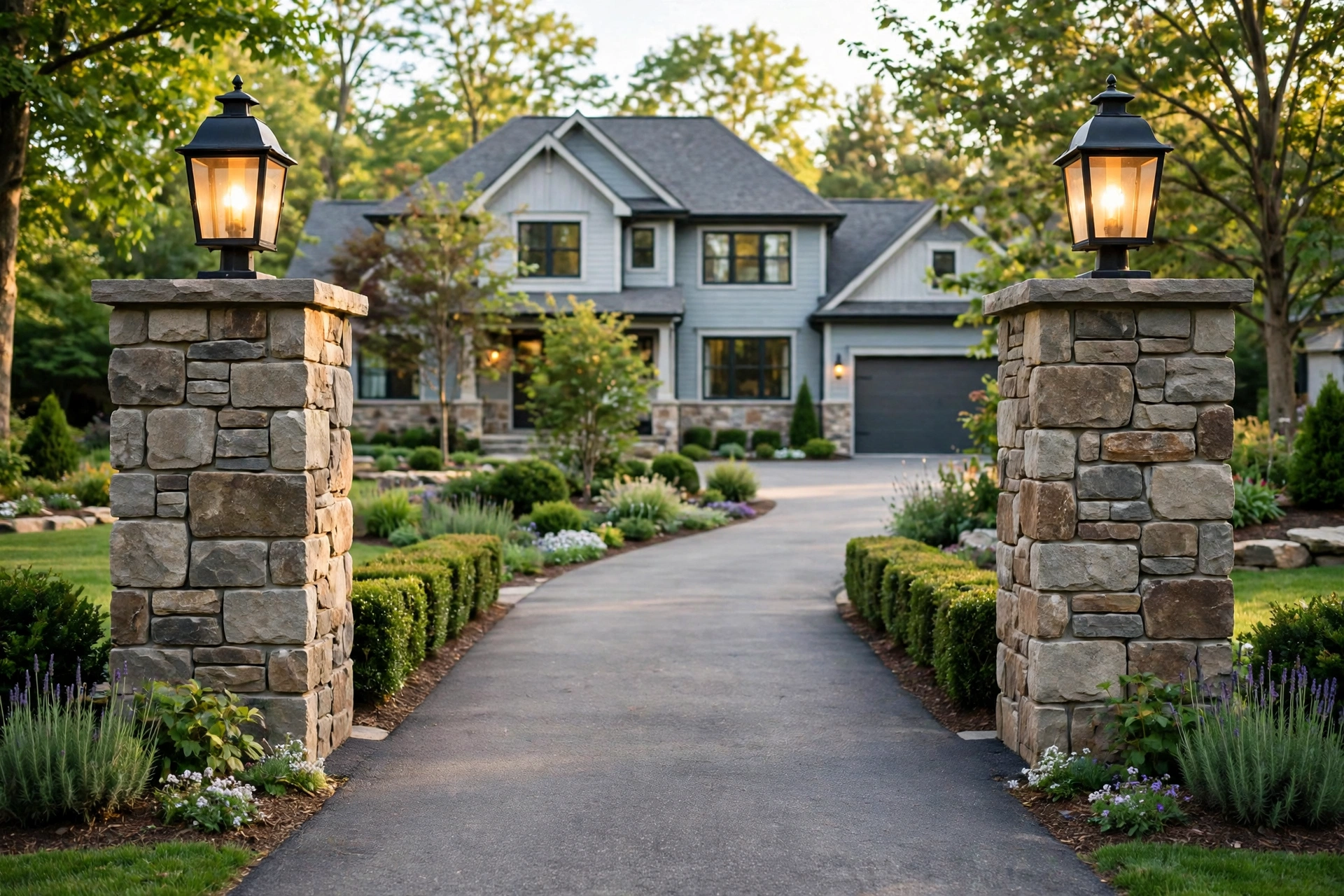
Nothing says “you have arrived” quite like a pair of stone pillars flanking the mouth of the driveway. Built from natural stone, stacked stone veneer, or brick with stone caps, pillars give the entrance weight and permanence that a flat driveway edge never will. Top each one with a lantern — real flame, electric, or solar — and the entrance glows after dark, guiding guests in and making the whole front of the house feel finished. Keep the pillars in proportion to your home: chunky, waist-high pillars suit a wide suburban lot, while slimmer pillars work better on a narrow city drive. Match the stone to your house’s foundation or chimney so the entrance feels like part of the architecture rather than an add-on. If a full masonry build is beyond the budget, pre-cast stone pillar kits and veneer panels achieve the same look for far less, and most go up in a single weekend.
2. Add a Wrought Iron Gate for Instant Grandeur
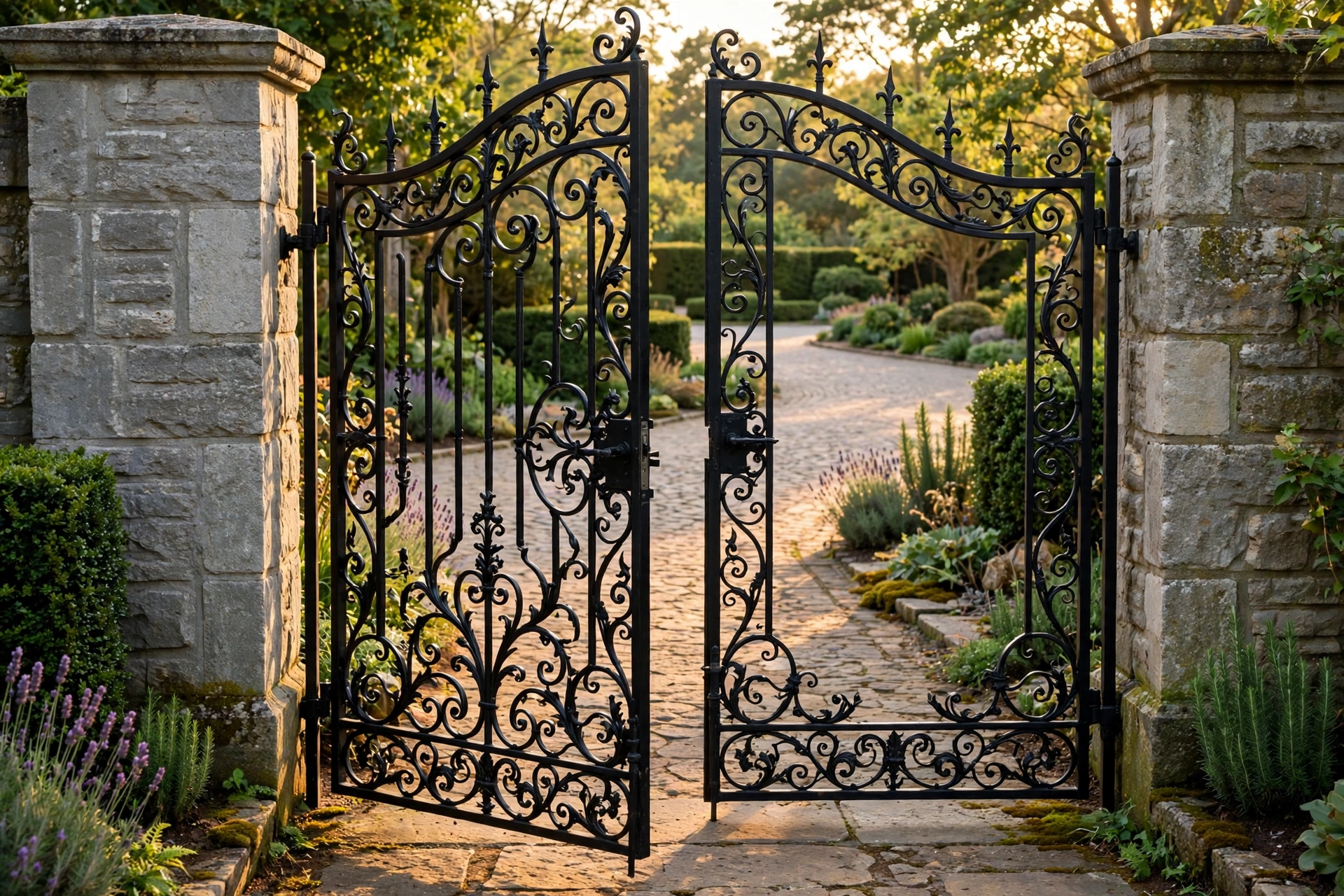
A wrought iron gate turns a driveway into an entrance. The open scrollwork keeps the view through to the house while drawing a clear, elegant line between the street and your property. Choose a design that echoes your home’s style — simple vertical bars for a modern house, curved scrolls for a traditional one — and paint it black for a classic look or a deep bronze for something warmer. A gate also adds practical value: privacy, security, and a clear signal to delivery drivers about where the property begins. Automatic openers are more affordable than most people expect, and a solar-powered opener removes the need for trenching power to the gate. If a full gate is too much, a single decorative panel or a pair of gate posts with finials gives you much of the same effect at a fraction of the cost.
3. Curve the Driveway for a Softer Arrival
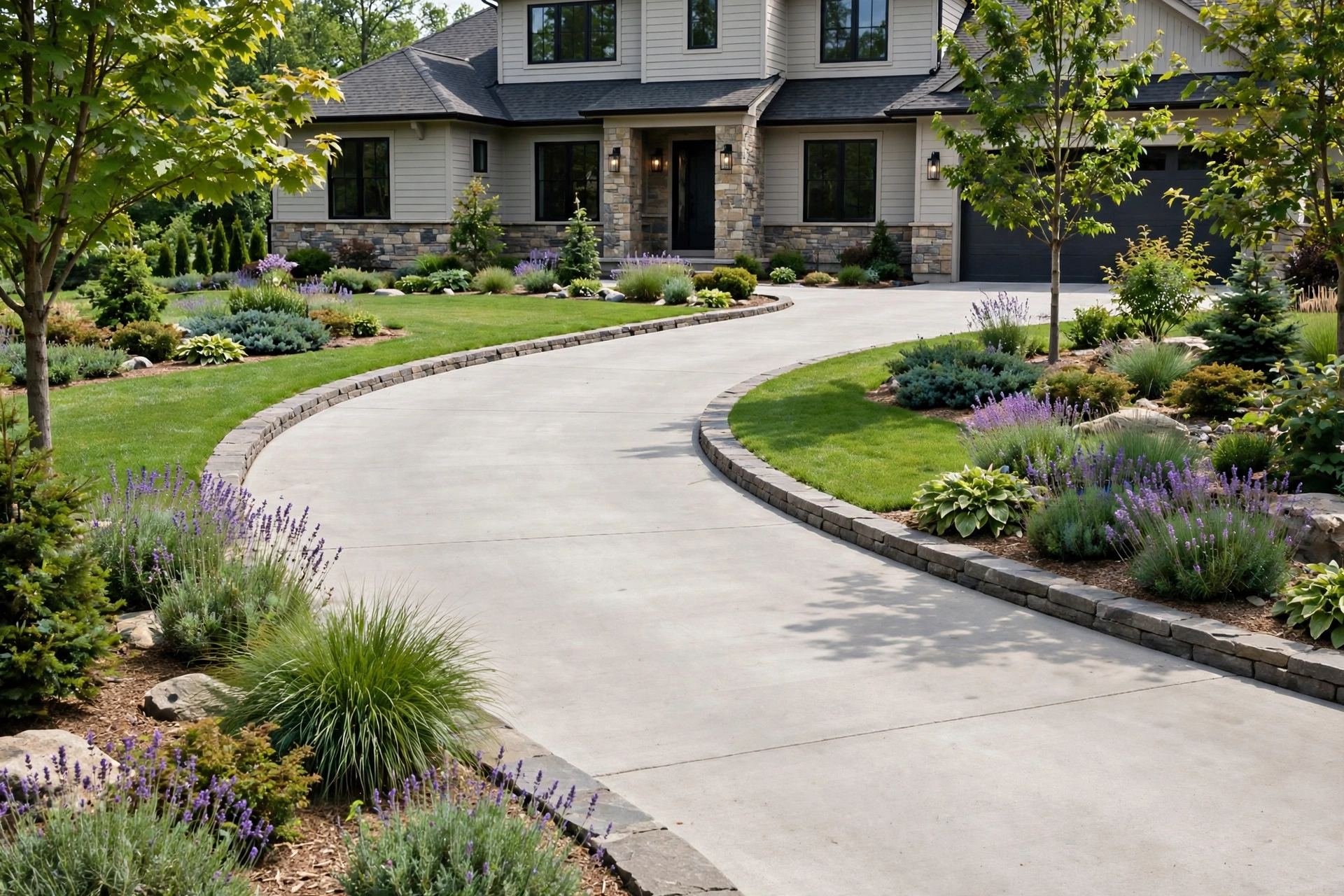
A straight driveway is efficient, but a gentle curve is welcoming. A sweeping arc slows the eye, hides the garage door until the last moment, and makes even a modest home feel like it sits at the end of a proper approach. Curves also solve practical problems: they can route around a mature tree, follow the natural shape of the lot, and create planting pockets on the inside of the bend that a straight drive never offers. You do not need to repave the whole drive to get the effect — widening the entrance into a soft flare, or reshaping just the first few feet where the drive meets the street, delivers most of the visual payoff. Edge the curve with a low stone border or a ribbon of ground cover so the line reads clearly from the street.
4. Lay a Brick Paver Apron at the Street
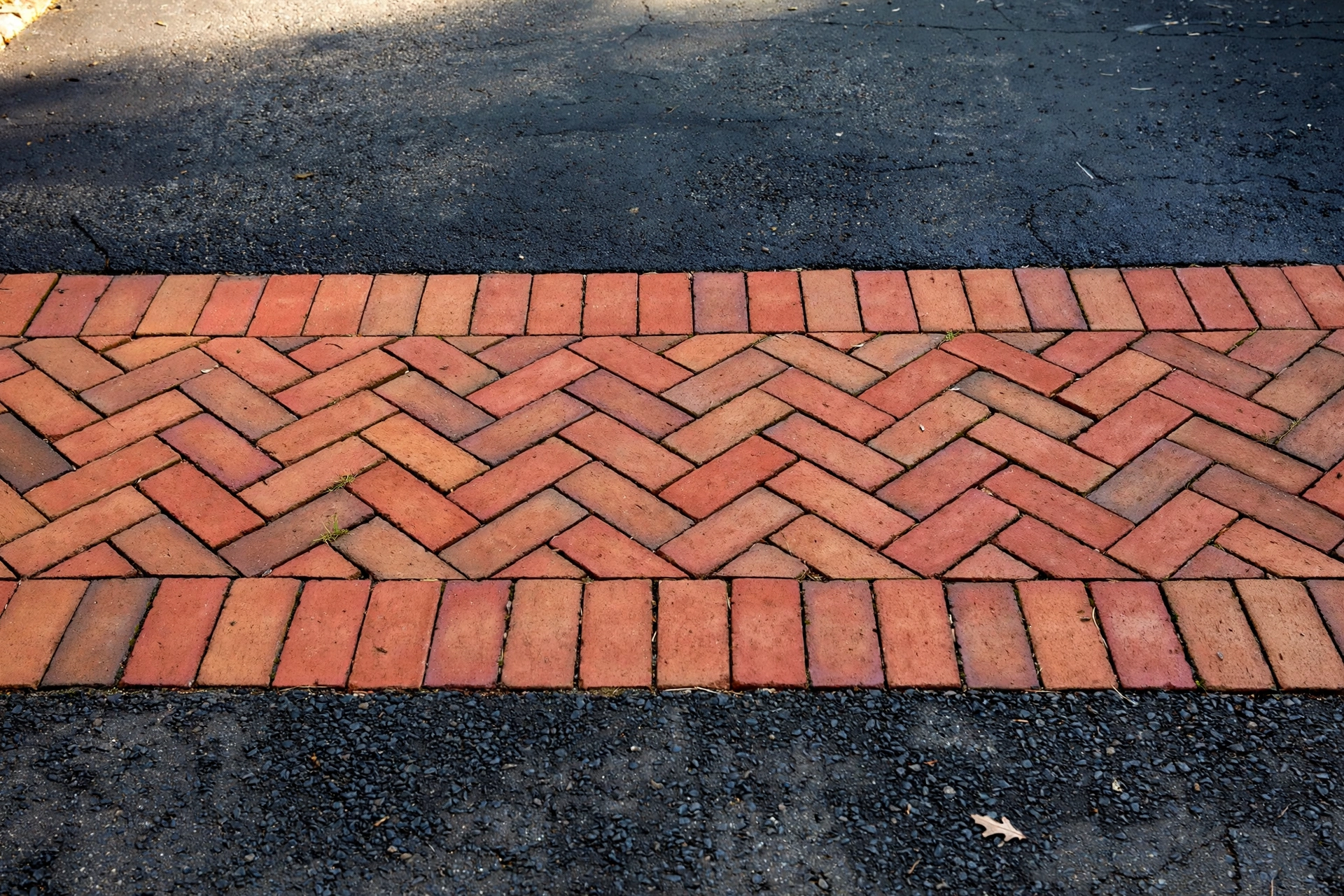
The apron — the strip where your driveway meets the street — takes the hardest beating on the property, from delivery trucks to snowplows. Turning that strip into a band of brick pavers does two things at once: it armors the most abused section of the drive, and it creates a threshold that makes the whole entrance look deliberate. A band about two feet deep in a contrasting color, laid in a herringbone or soldier-course pattern, reads like a welcome mat in stone. Brick also repairs in pieces: if one paver cracks, you lift and replace it instead of patching a slab. Match the brick to your front walk or porch steps and the whole front of the house ties together.
5. Go Classic With a Cobblestone Driveway
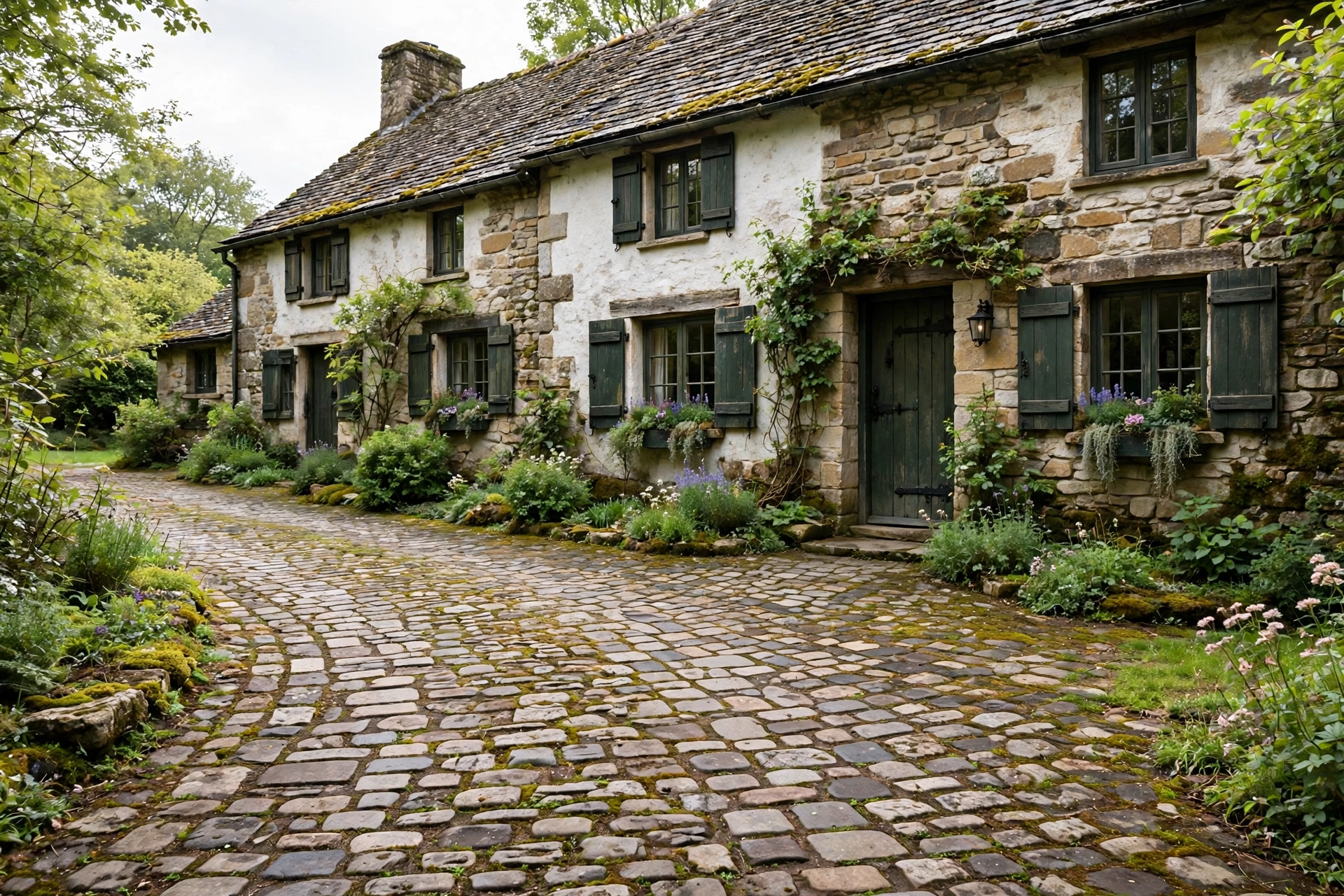
Cobblestone brings an old-world, storybook quality that no poured surface can match. The irregular shapes, the soft color variation, the way moss settles into the joints over time — it all makes a driveway feel like it has been there for a century, even when it was laid last spring. Modern cobblestone pavers are cut flat on top, so they drive and walk smoothly, unlike the ankle-twisting stones of old streets. Cobble works best as a full surface on smaller drives, or as a border and apron on a larger one. It is one of the most durable driveway materials you can buy, it never needs sealing, and it only looks better as it ages.
6. Refresh Concrete With an Exposed Aggregate Finish
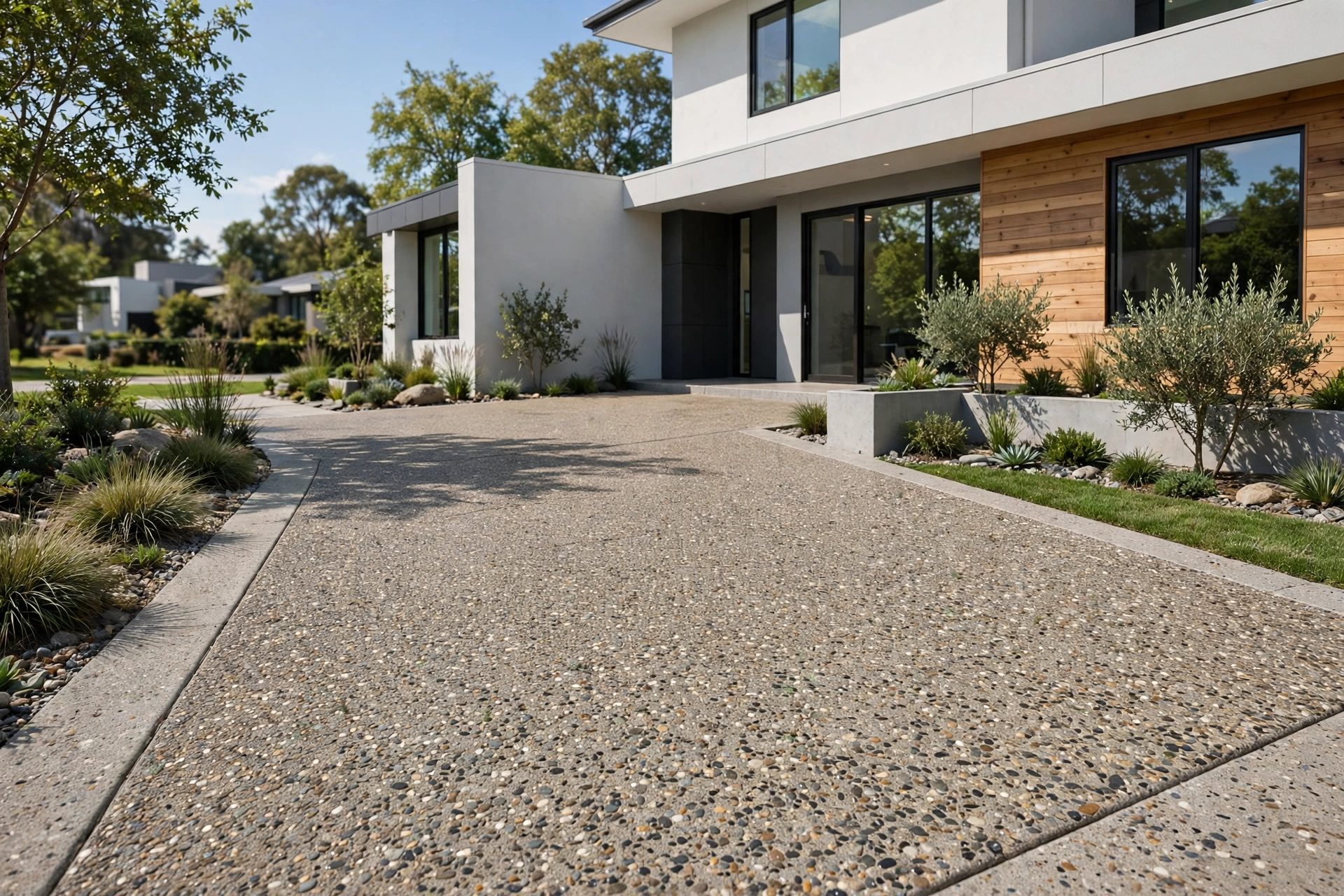
If your concrete driveway is structurally sound but visually tired, an exposed aggregate finish can make it look brand new without a tear-out. The top layer of cement paste is washed away to reveal the small stones beneath, leaving a textured, slip-resistant surface with natural color and sparkle. It hides tire marks and small stains far better than smooth concrete, and it pairs beautifully with a darker border band or a brick edge. On a new pour, exposed aggregate costs only a little more than plain concrete. On an existing drive, an aggregate overlay or a resurfacing coat delivers a similar look. Add a penetrating sealer every few years and the finish stays rich and easy to clean.
7. Lay Brick in a Herringbone Pattern
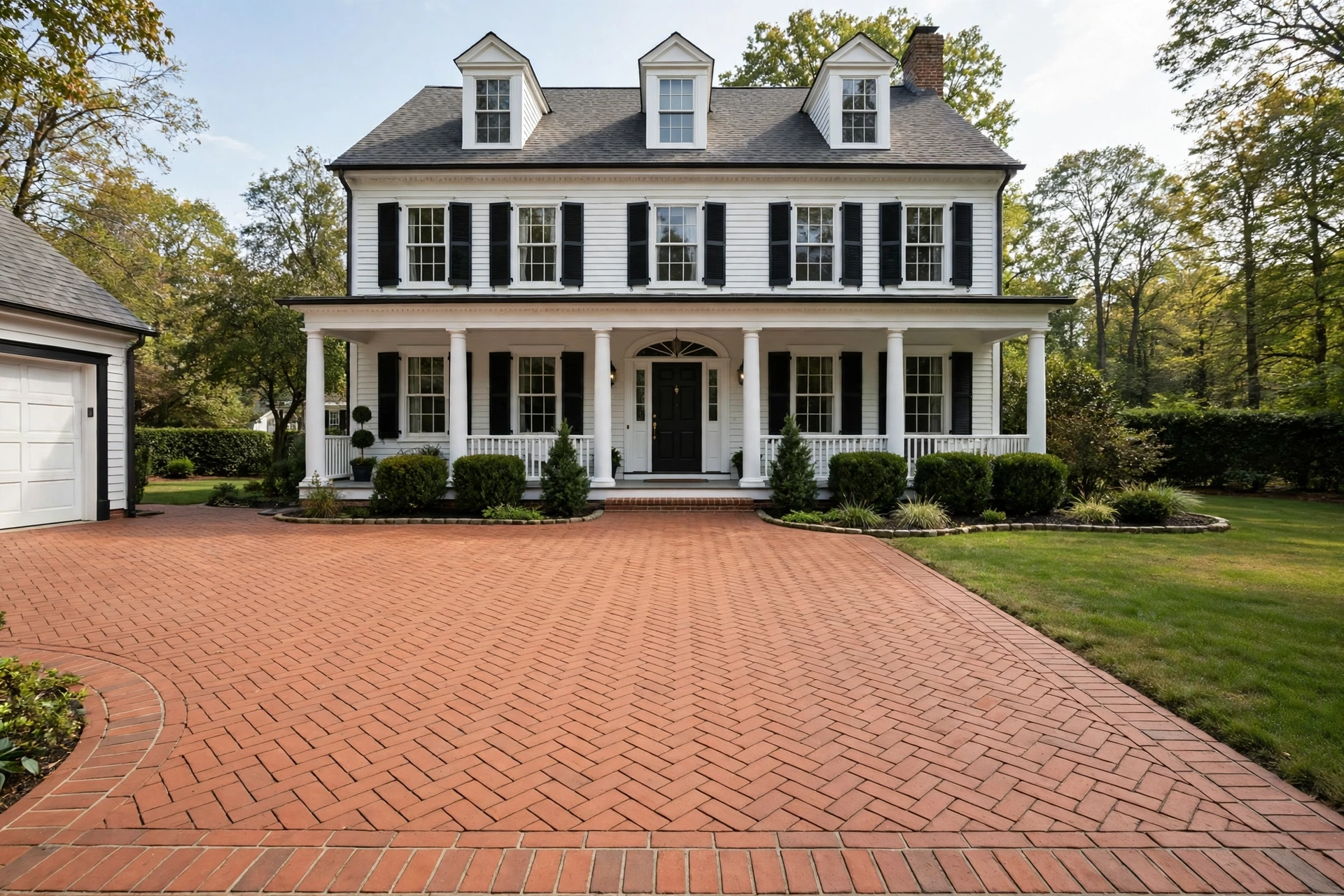
Herringbone is the pattern that makes a brick driveway look like it belongs to a much grander house. The interlocking zigzag locks each brick against its neighbors, so the surface resists shifting under tires better than a simple running bond — which is why it has been the standard for European streets for centuries. A herringbone drive in warm clay red suits a colonial or craftsman home; a cooler gray or charcoal brick suits a modern one. Keep the border simple — a single soldier course in a darker tone — and let the pattern do the talking. Brick costs more than concrete up front, but it lasts for decades, repairs brick by brick, and never needs resurfacing.
8. Choose Gravel With a Crisp Stone Edge
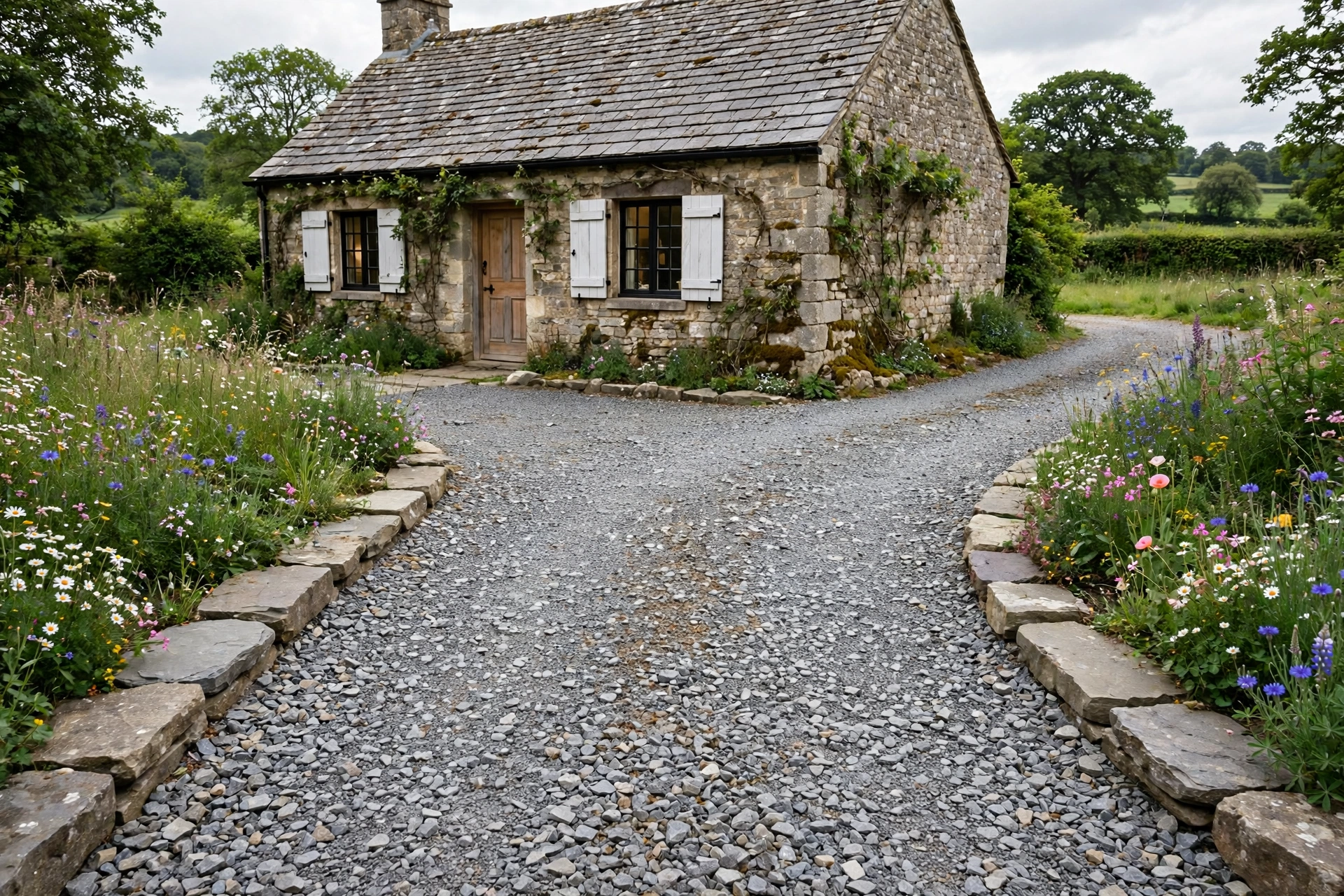
A gravel driveway is the most affordable way to get a soft, natural-looking entrance, and it suits country and cottage homes perfectly. The trick is the edge: without a firm border, gravel wanders into the lawn and the drive looks unfinished within a season. Set a row of large flat stones, steel edging, or timber sleepers along both sides, and the gravel stays put while the line of the drive reads cleanly from the street. Use angular crushed stone rather than rounded pea gravel — the sharp edges lock together under tires instead of rolling away. A gravel drive also drains naturally, which makes it a smart choice for properties where stormwater runoff is a concern.
9. Install Permeable Pavers With a Rain Garden
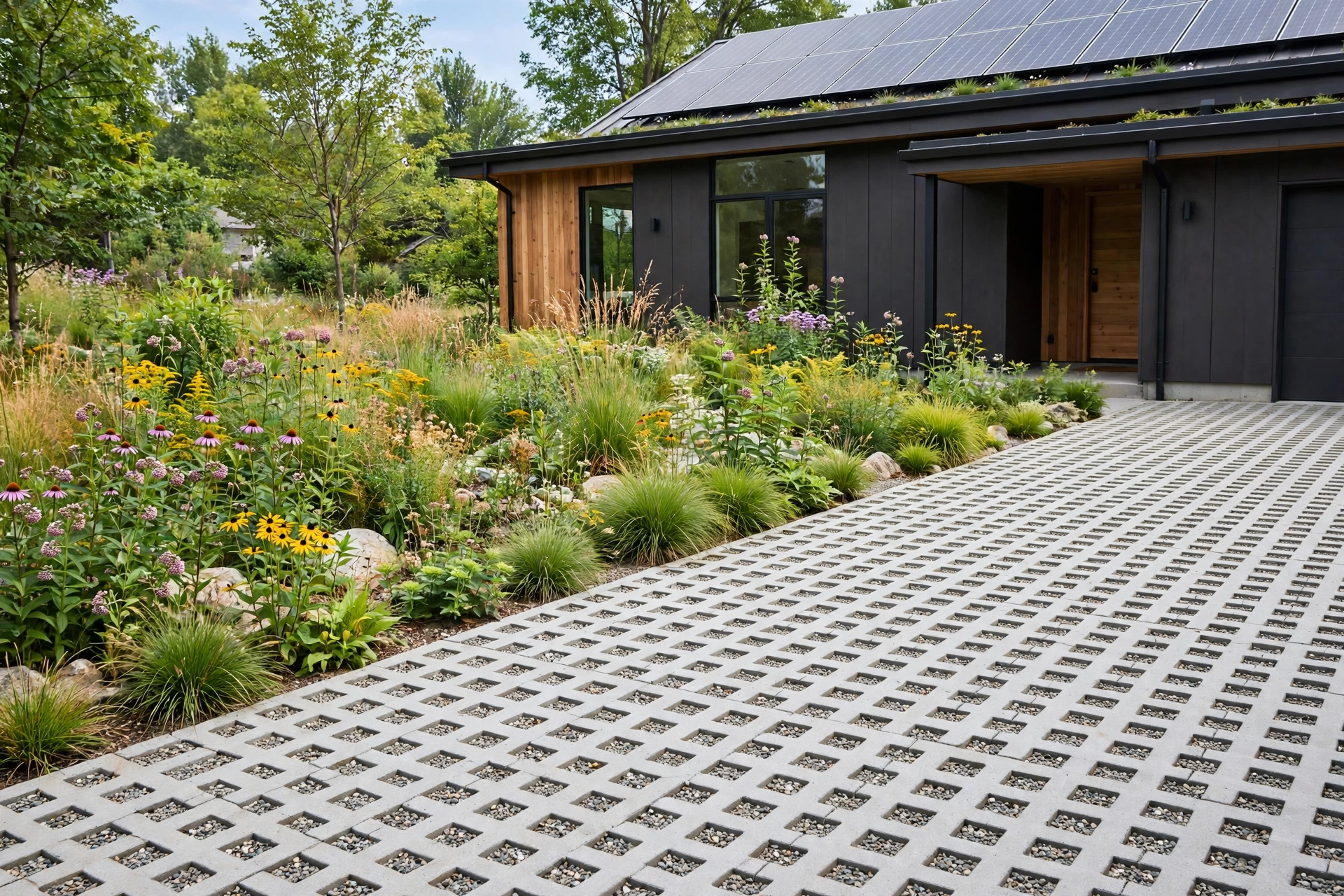
Permeable pavers let rainwater drain straight through the driveway surface instead of sheeting off into the street, which keeps puddles down and takes pressure off local storm drains. The gaps between pavers are filled with fine gravel, and a rain garden — a shallow planted basin of native grasses and flowers — catches whatever runs off at the low end. The combination looks intentional and lush rather than utilitarian, and many towns offer rebates or stormwater credits for permeable installations. Choose pavers in a warm gray or sandstone tone so the surface reads as design, not drainage infrastructure. The system needs an occasional sweep and a top-up of joint gravel, but it never puddles, never ices over as badly as sealed asphalt, and stays cooler in summer than a solid slab.
10. Line the Drive With Trees and an Archway
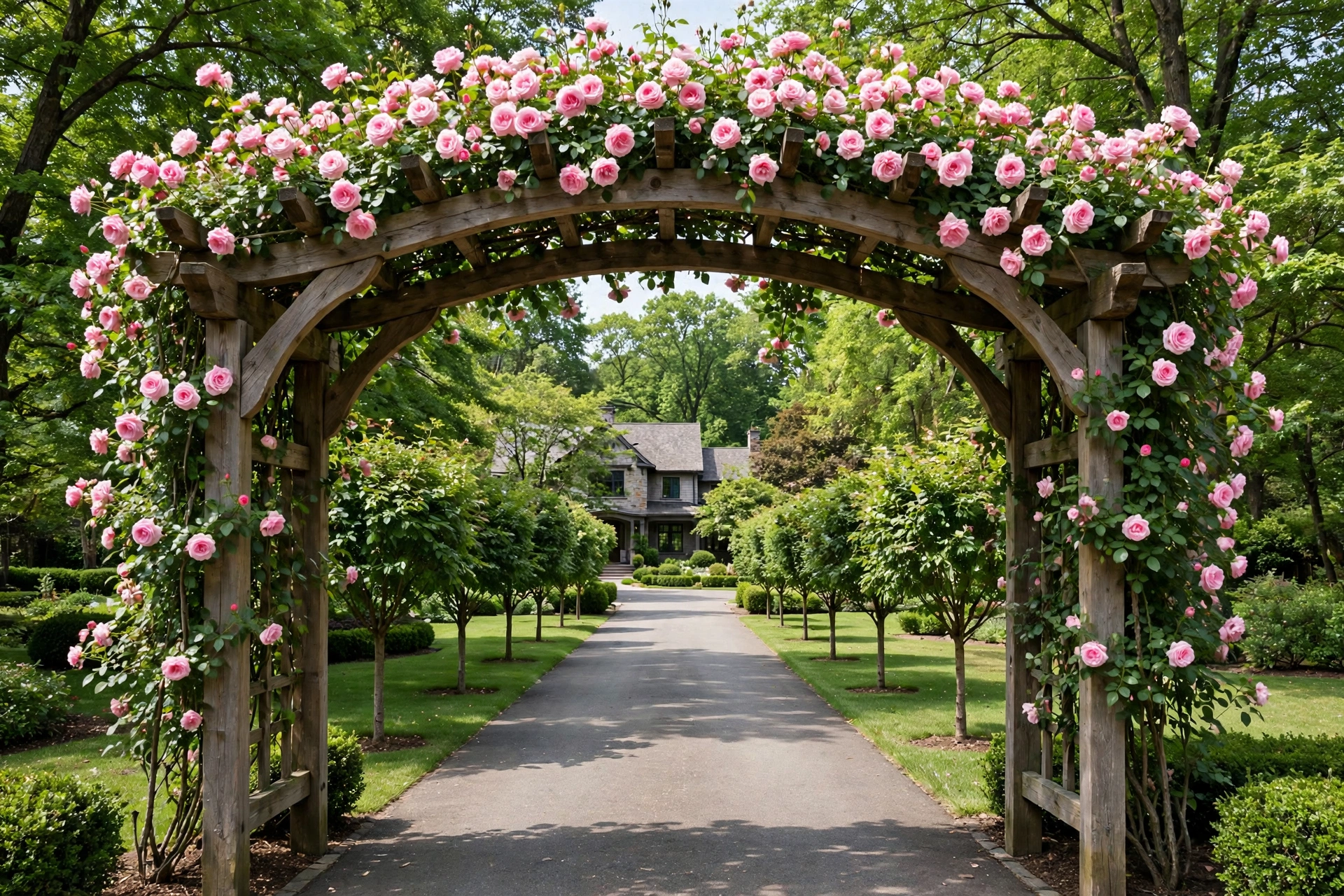
A tree-lined driveway is the single most transformative planting move you can make. Two matching rows of small ornamental trees — flowering dogwood, Japanese maple, or crepe myrtle, depending on your climate — create a green corridor that frames the house and gives the entrance a sense of occasion. Space them so their canopies will eventually meet overhead, and add a simple arch at the street end, built from wood or metal and trained with climbing roses or clematis. The arch marks the threshold and gives the trees a destination to grow toward. Keep the trees a few feet back from the driving surface so roots and branches never interfere with cars, and choose varieties whose mature size fits the lot.
11. Plant Flower Beds Along Both Edges
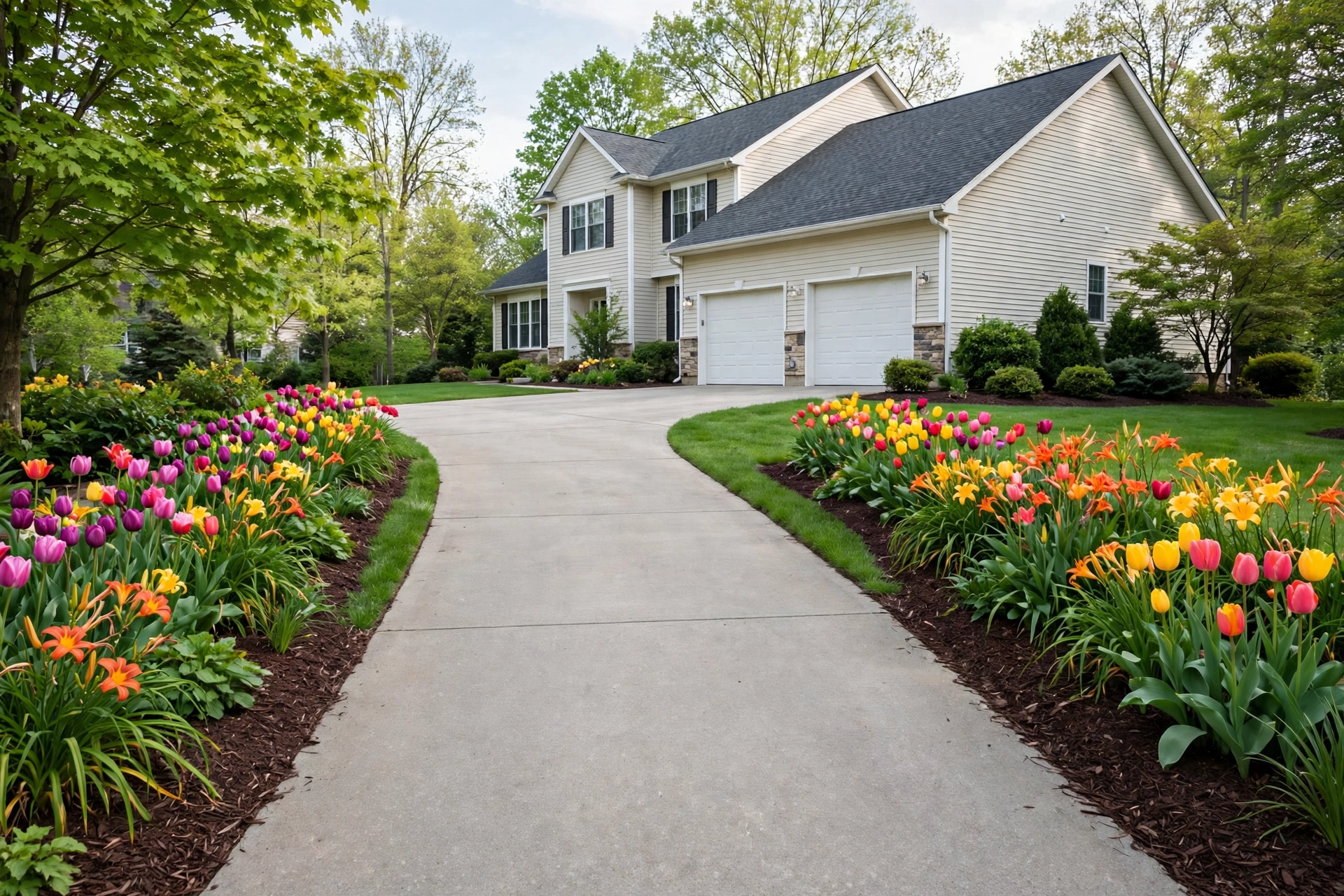
Flower beds are the fastest, cheapest way to soften a hard driveway edge. A strip of layered planting — low ground cover at the front, mid-height perennials behind, and a few taller shrubs at the back — turns a concrete edge into a garden border. Choose flowers that bloom in succession so something is always in color from spring through fall: tulips and daffodils early, daylilies and lavender in summer, mums and asters in autumn. Keep the planting at least a foot back from the tire line and pick varieties that stay under knee height near the entrance so they never block a driver’s view of the street. Mulch the beds dark and the colors will pop even more.
12. Border the Drive With Ornamental Grasses
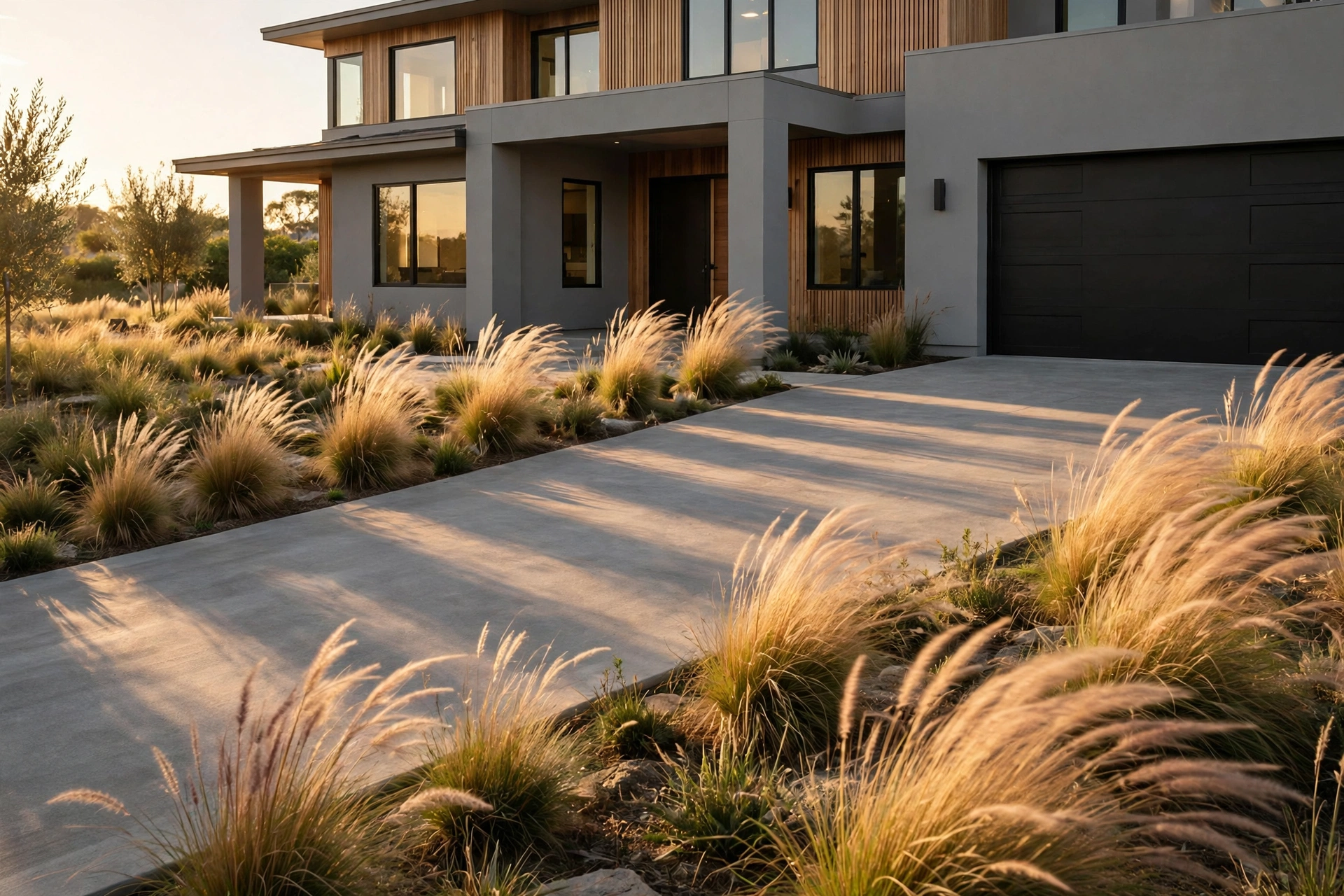
Ornamental grasses give a driveway movement and texture that flowers alone cannot. Planted in drifts along one or both edges, varieties like fountain grass, blue fescue, and feather reed grass catch the breeze, change color through the seasons, and need almost no care once established. They are tough enough to handle reflected heat from the pavement, they do not drop messy fruit or sap onto cars, and most stand through winter as a sculptural silhouette. For a modern look, plant a single variety in a strict rhythm; for a cottage feel, mix three heights and let them blur together. Cut them back once in late winter and they return stronger every spring.
13. Create a Formal Symmetrical Entrance
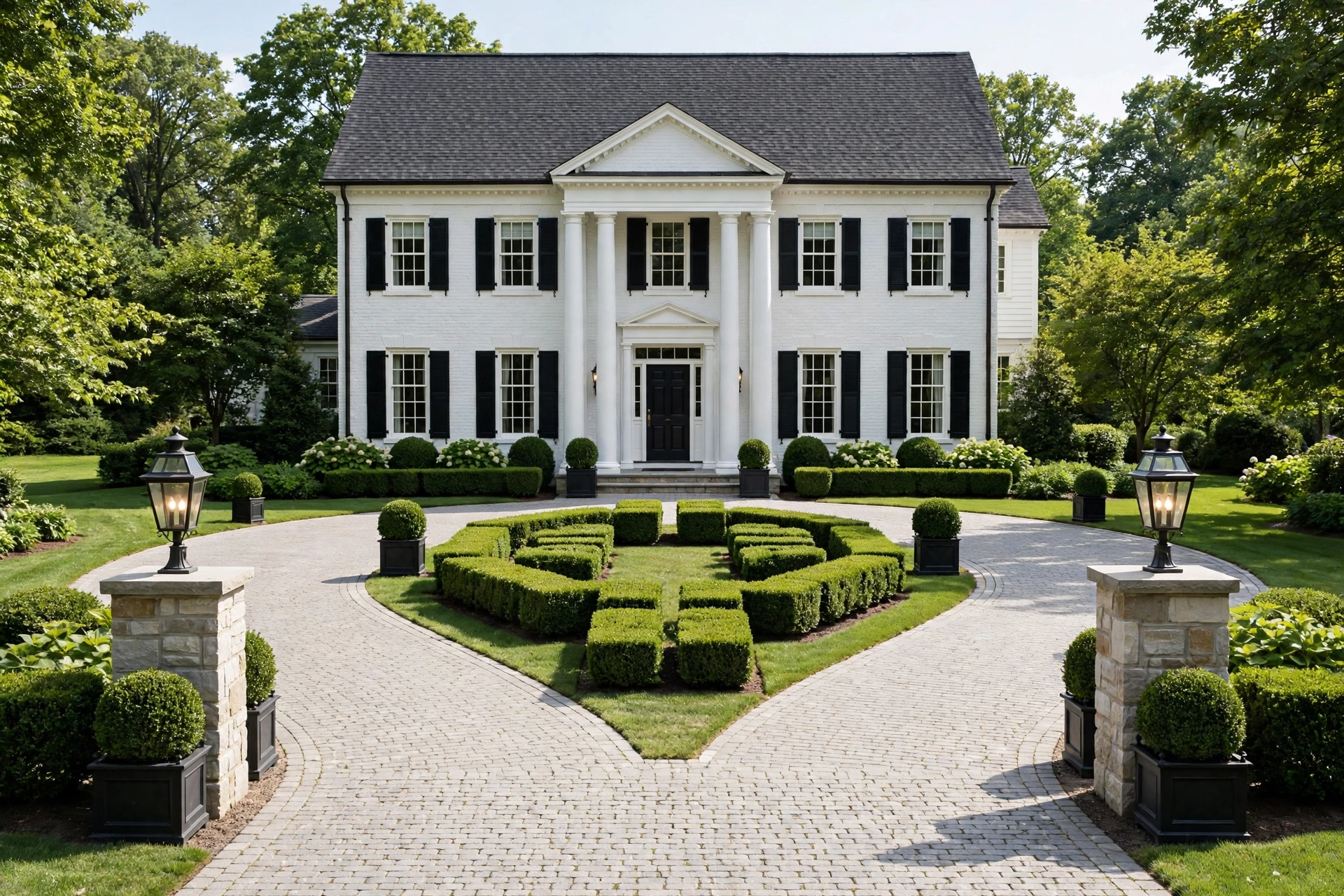
Symmetry is the quickest route to an entrance that looks expensive. Place matching trees, shrubs, planters, or lanterns on either side of the driveway and the eye reads order, intention, and care — even if the plants themselves are modest. Start with identical anchor plants at the street end, such as a pair of boxwoods or small evergreens, then mirror the planting along the length of the drive. Keep the palette tight: one or two greens, one flower color, repeated all the way to the house. The trick is maintenance — trim both sides on the same day so they never drift out of balance. A symmetrical entrance suits formal, colonial, and Georgian homes best, but even a modern house gains polish from a mirrored pair of sculptural planters.
14. Place Oversized Planters at the Entrance
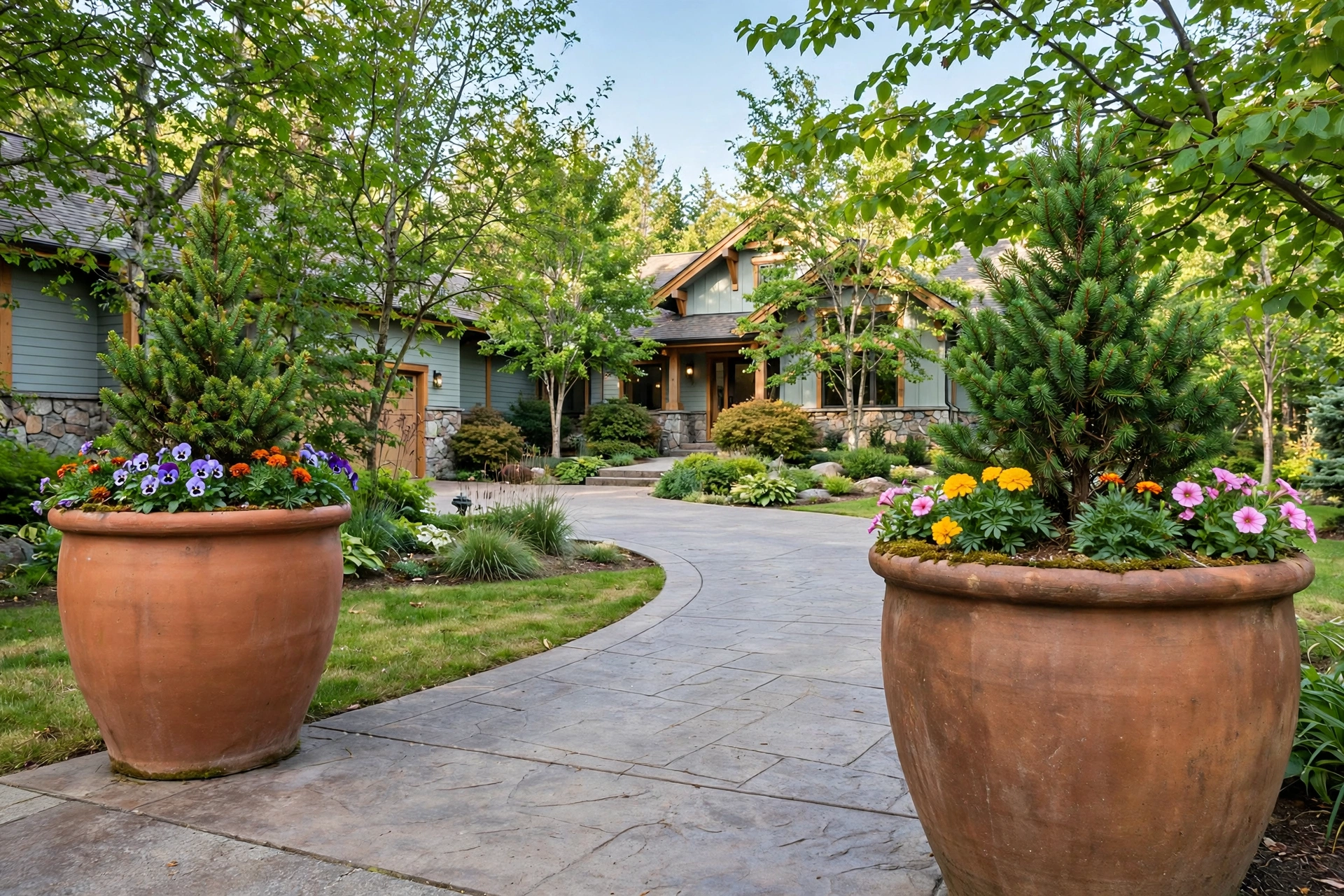
When you cannot plant in the ground — a narrow lot, a rental, or a driveway that runs right to the property line — oversized planters solve the problem in an afternoon. A pair of large pots at the mouth of the drive, filled with a small evergreen, seasonal flowers, and a trailing vine, creates a focal point that rivals a built garden bed. Go big: pots that look generous from the street are usually larger than people expect, so choose the size up from the one that feels right. Match the pot material to the house — terracotta for Mediterranean and Spanish styles, glazed ceramic for modern homes, weathered wood or stone for farmhouse. Grouping a tall pot with a shorter one on each side adds height variation without clutter.
15. Light the Way With Solar Path Lights
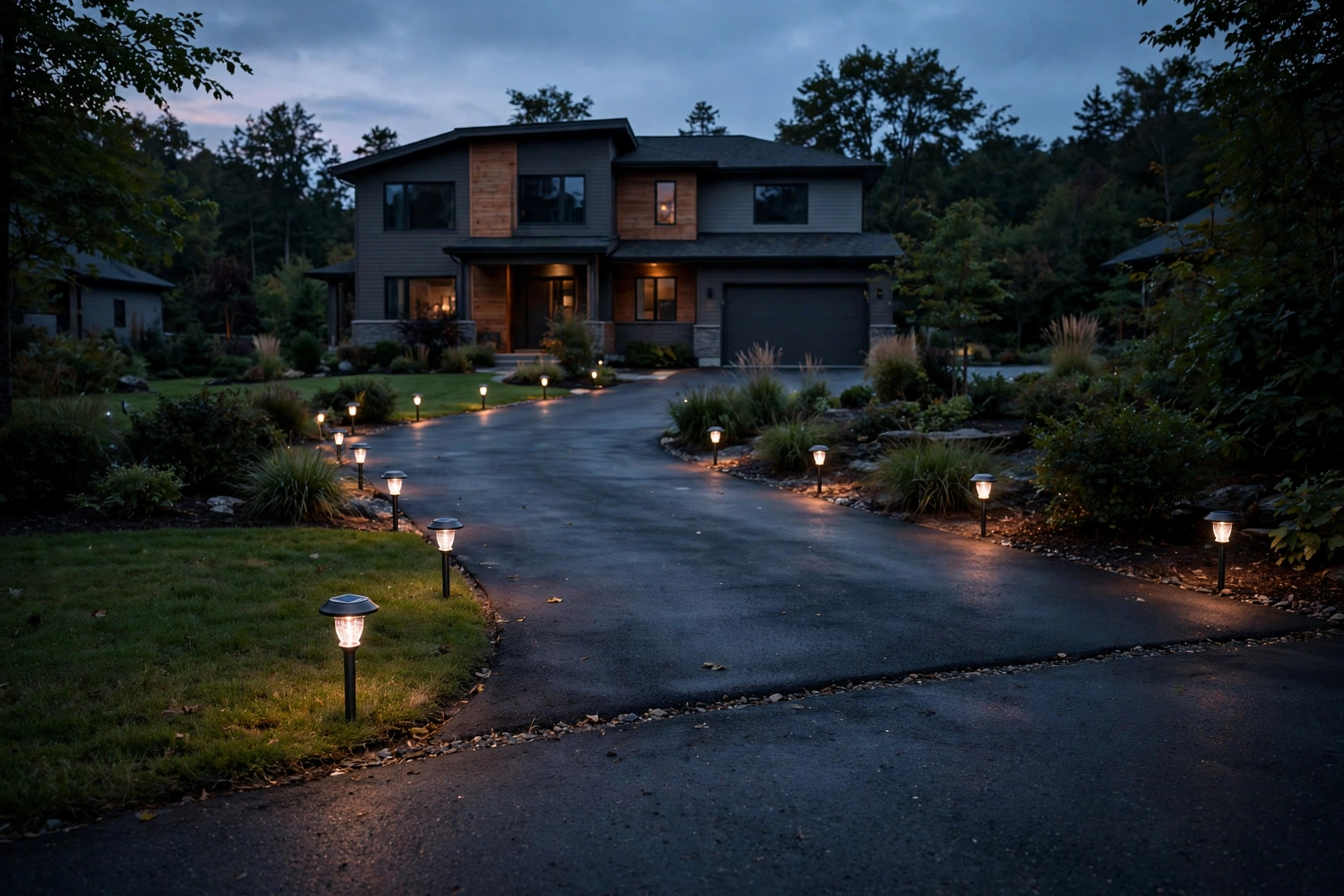
Solar path lights are the easiest lighting upgrade there is: push them into the soil, and they charge by day and glow by night with no wiring, no electrician, and no power bill. Space them evenly along both edges of the drive, about six to eight feet apart, and stagger them slightly so the line feels natural rather than military. Warm-white light flatters brick, stone, and planting far better than cool blue-white, so check the color temperature before you buy. Solar lights will not flood the drive with brightness, but that is the point — a soft, low glow marks the edges, guides guests safely, and makes the whole entrance feel cared for after dark. Replace the rechargeable batteries once a year and the lights keep going for years.
16. Uplight the Trees for Nighttime Drama
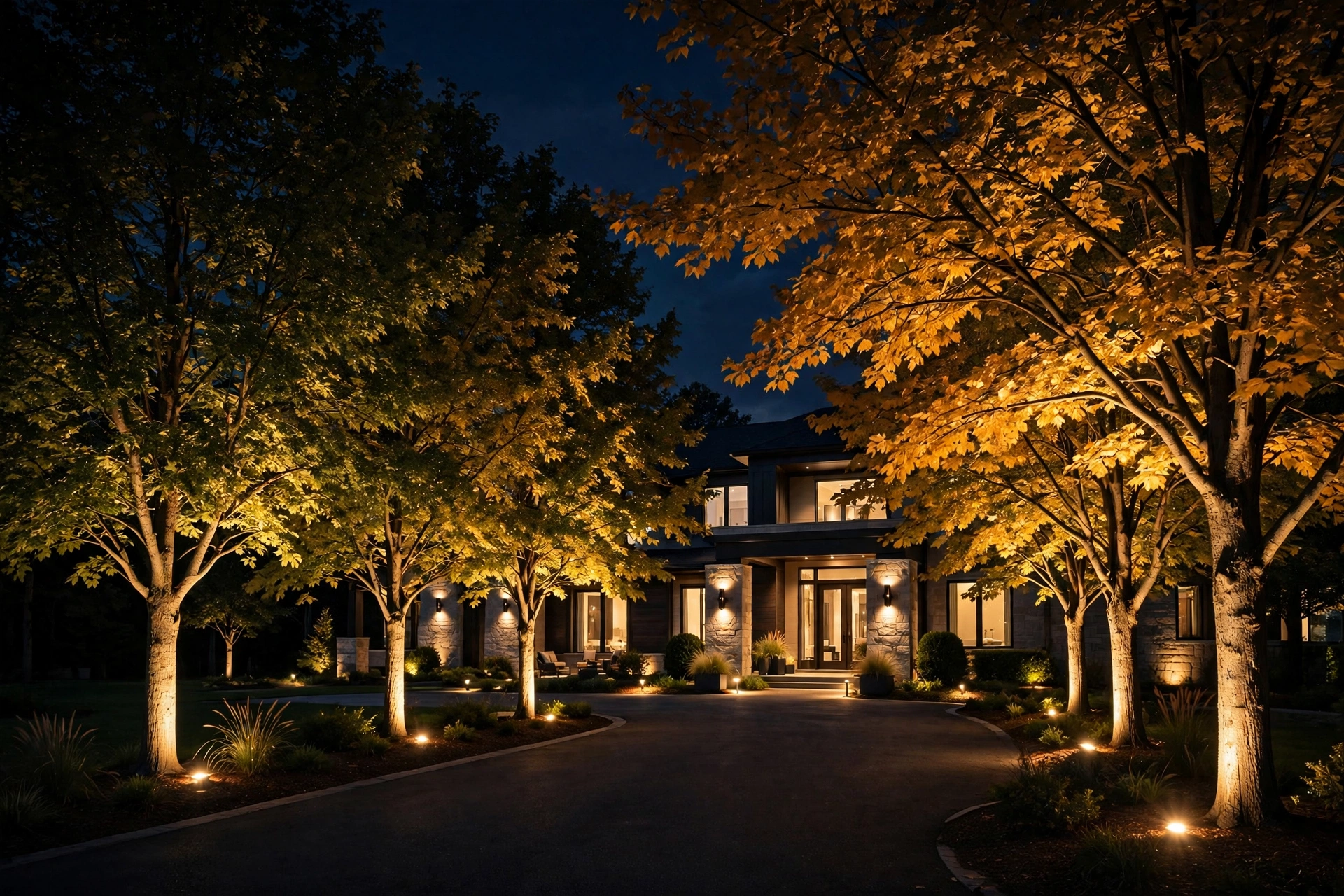
Uplighting turns the trees and pillars you already have into a nighttime feature. A small low-voltage spotlight buried at the base of each tree throws light up through the canopy, creating a glow that can be seen from the street and a ceiling of light over the drive. The effect is dramatic but the hardware is discreet: a transformer, a run of low-voltage cable, and a handful of well lights that disappear into the mulch by day. Light the entrance pillars and the front of the house with the same system so the whole arrival sequence reads as one composition. Warm 2700K bulbs flatter foliage and stone; cool light makes everything look like a parking lot. Set the system on a dusk-to-dawn sensor or a smart timer and it runs itself.
17. Make the Mailbox a Feature, Not an Afterthought
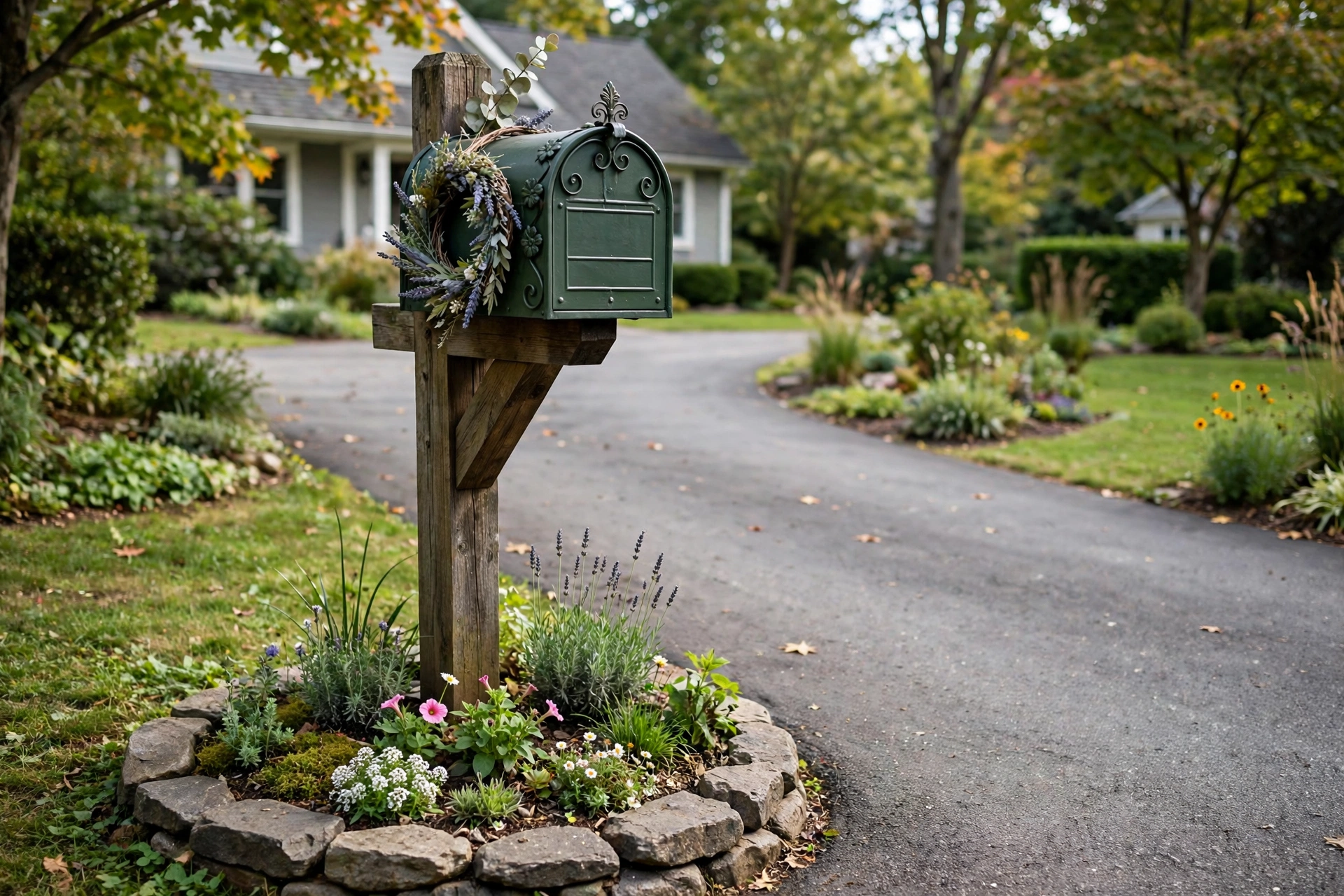
The mailbox sits at the very start of the driveway, so it is quite literally the first thing anyone sees — yet most mailboxes are an afterthought, a dented box on a leaning post. A decorated mailbox changes that in an afternoon. Choose a sturdy post in a material that matches the house, add a small flower bed or a ring of stone around its base, and top the box with a simple number plaque or a seasonal wreath. For a bigger statement, build a low brick or stone pier to hold the box, echoing the pillars at the entrance. Keep the box itself at the height your postal service requires and the numbers large enough to read from a moving car, and the practical side stays as good as the pretty side.
18. Add a Custom Address Sign Guests Can Actually Read
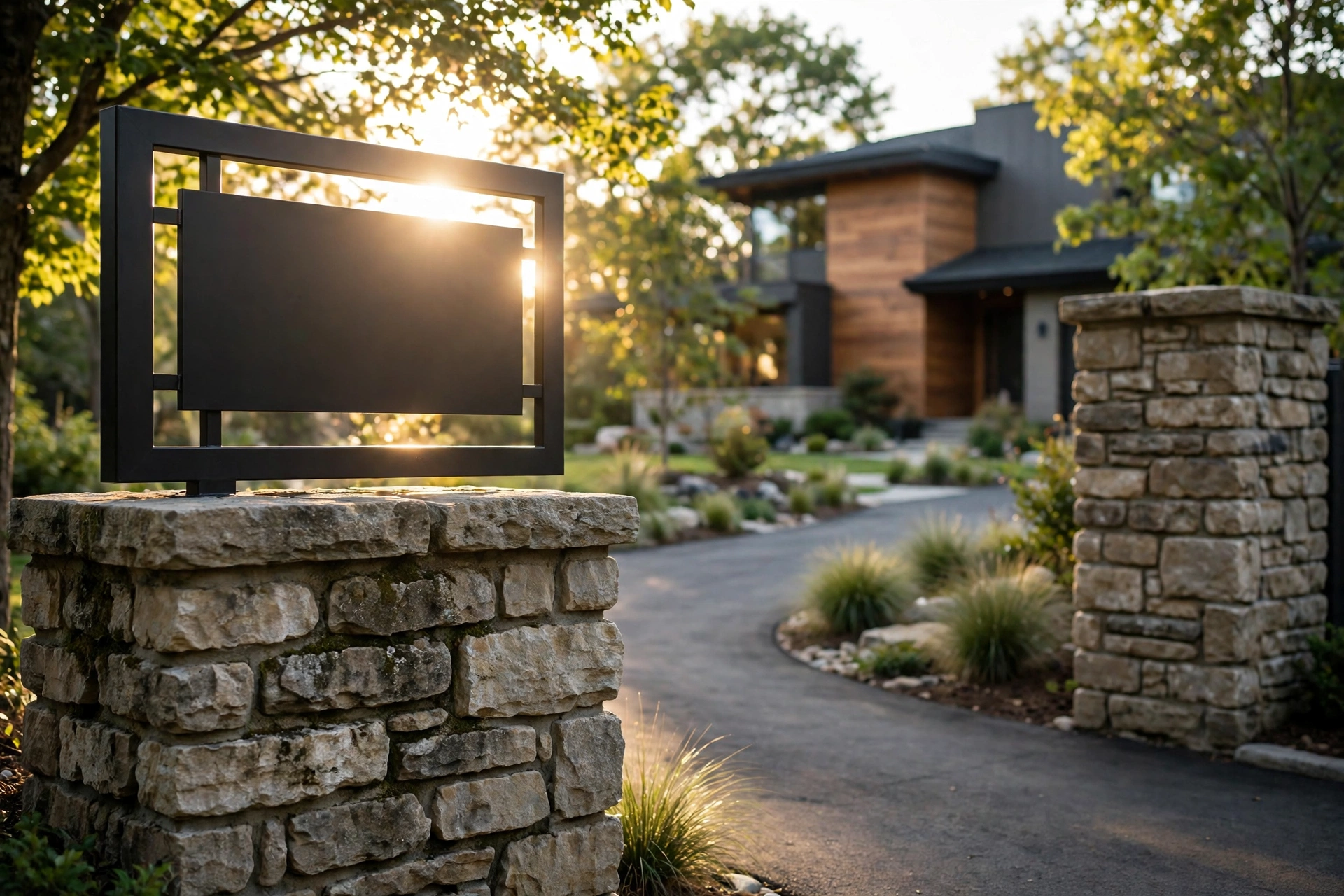
Nothing frustrates a guest — or a delivery driver — more than a house number they cannot find. A custom address sign at the driveway entrance solves the problem and adds character at the same time. A hand-carved wooden sign, a backlit metal plaque, or bold modern numerals mounted on a stone pier all work, as long as the numbers are large, high-contrast, and visible from the street in both directions. Place the sign where the drive meets the road, at eye level from a car, and light it if you can — a small solar spotlight costs little and makes the numbers readable after dark. Adding the family name under the numbers gives the entrance a personal, welcoming touch.
19. Run a White Picket Fence Along the Drive
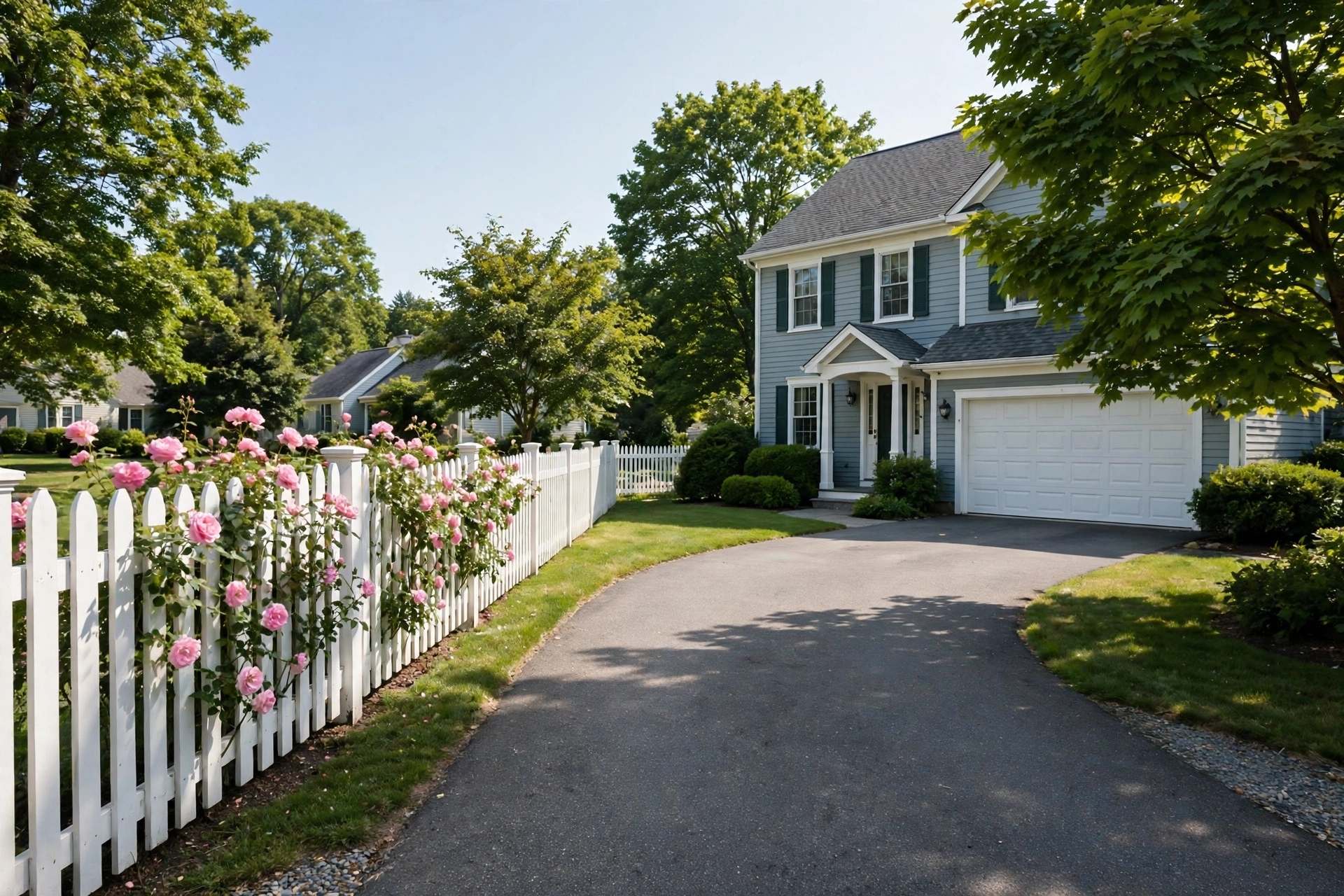
A white picket fence is the classic American driveway border for a reason: it frames the entrance, marks the property line, and photographs beautifully in every season. Run a low picket fence — three to four feet high — along one or both sides of the drive, with a small gate or an opening where the front walk crosses. Vinyl pickets give you the look with almost no maintenance, while painted wood feels more authentic and ages gracefully if you keep up with a fresh coat every few years. Keep the fence low enough that it frames rather than hides the house, and let climbing roses or clematis soften a section or two. The result is a driveway that reads as part of a garden, not just a slab of pavement.
20. Try a Split Rail Fence for Country Charm
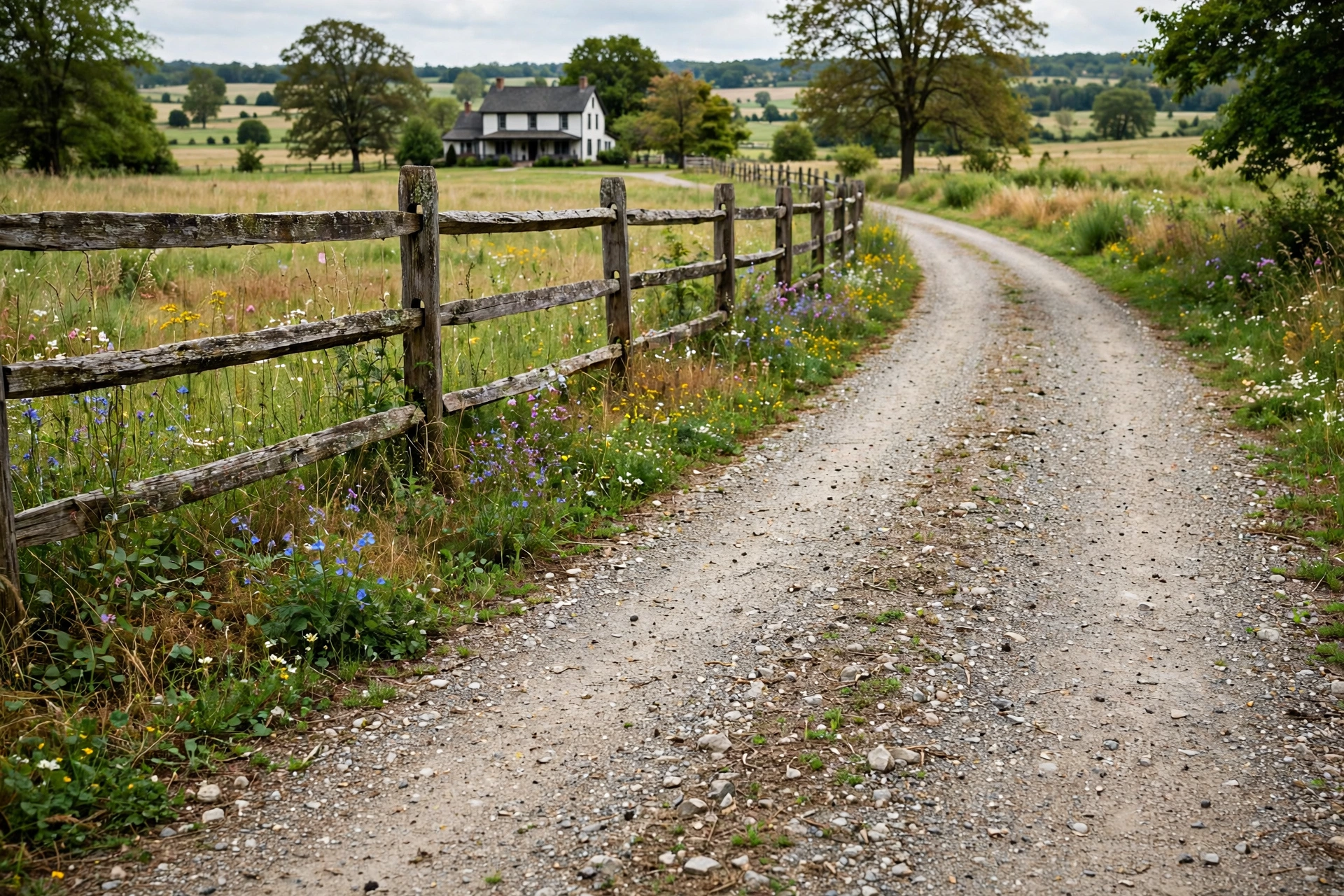
For a country or farmhouse property, a split rail fence is the honest, unpretentious choice. Rough-hewn rails stacked between simple posts define the driveway edge without blocking the view of the fields or the house beyond, and the weathered wood only improves with age. It is also one of the cheapest fences to build and one of the easiest to repair — a damaged rail lifts out and a new one drops in. Plant wildflowers or native grasses along the fence line and the whole entrance takes on a meadow feel. A split rail fence pairs naturally with a gravel drive, stone pillars, and a wooden gate, and it suits rural lots far better than a formal picket fence ever could.
21. Grow a Living Archway Over the Entrance
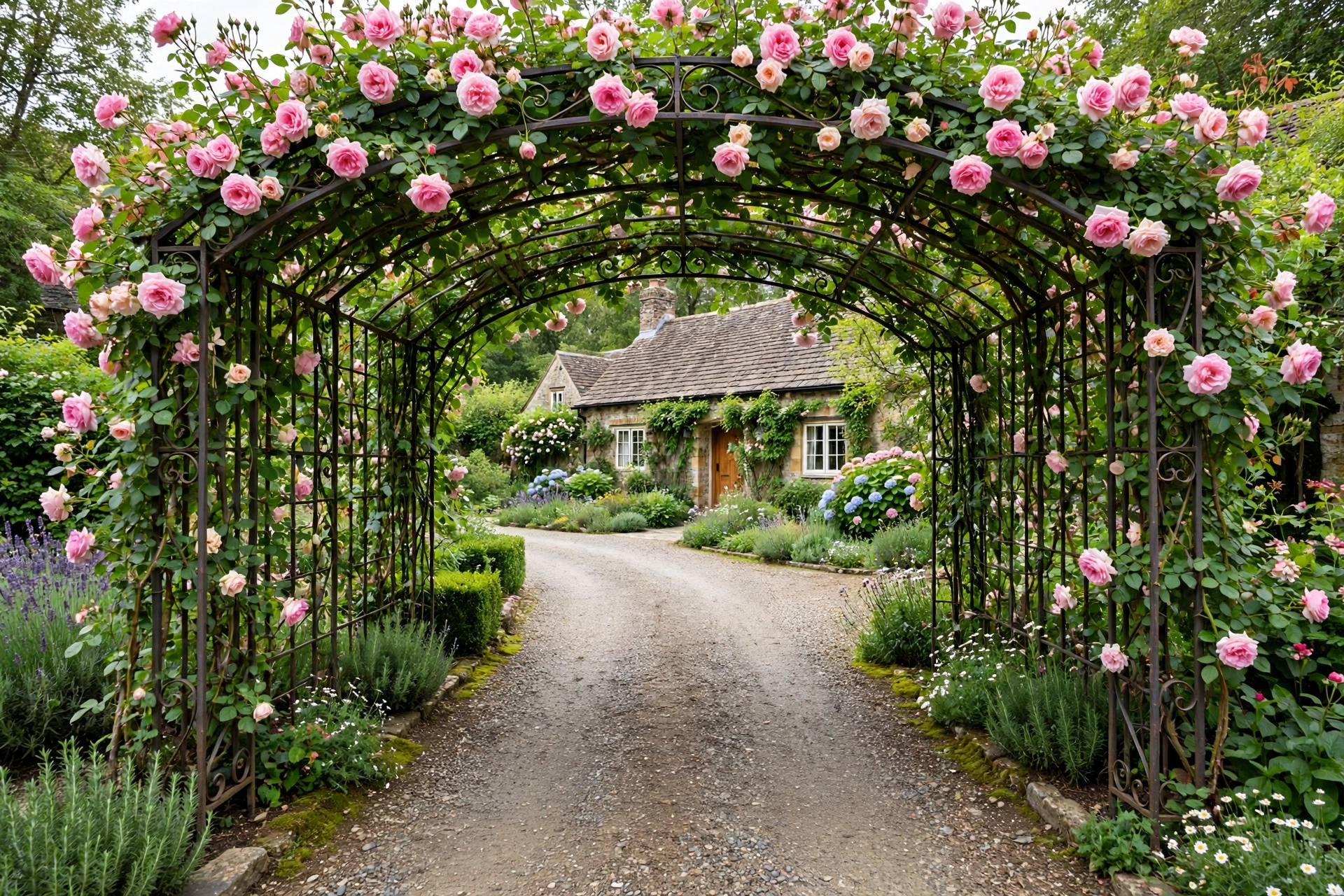
A living archway — a metal or wooden arbor trained with climbing roses, wisteria, jasmine, or grapevine — turns the mouth of the driveway into a garden doorway. In full bloom it is the most photographed spot on the property; in winter, the bare branches still frame the approach with structure. Build the arch wide enough for a car to pass comfortably, with at least a foot of clearance on each side, and anchor it in concrete footings so it never leans. Choose a climber suited to your climate and be patient: the first year it sleeps, the second it creeps, and by the third it leaps across the top. Prune once a year after flowering to keep the shape open and the driveway clear.
22. Build a Pergola Covered in Climbing Plants
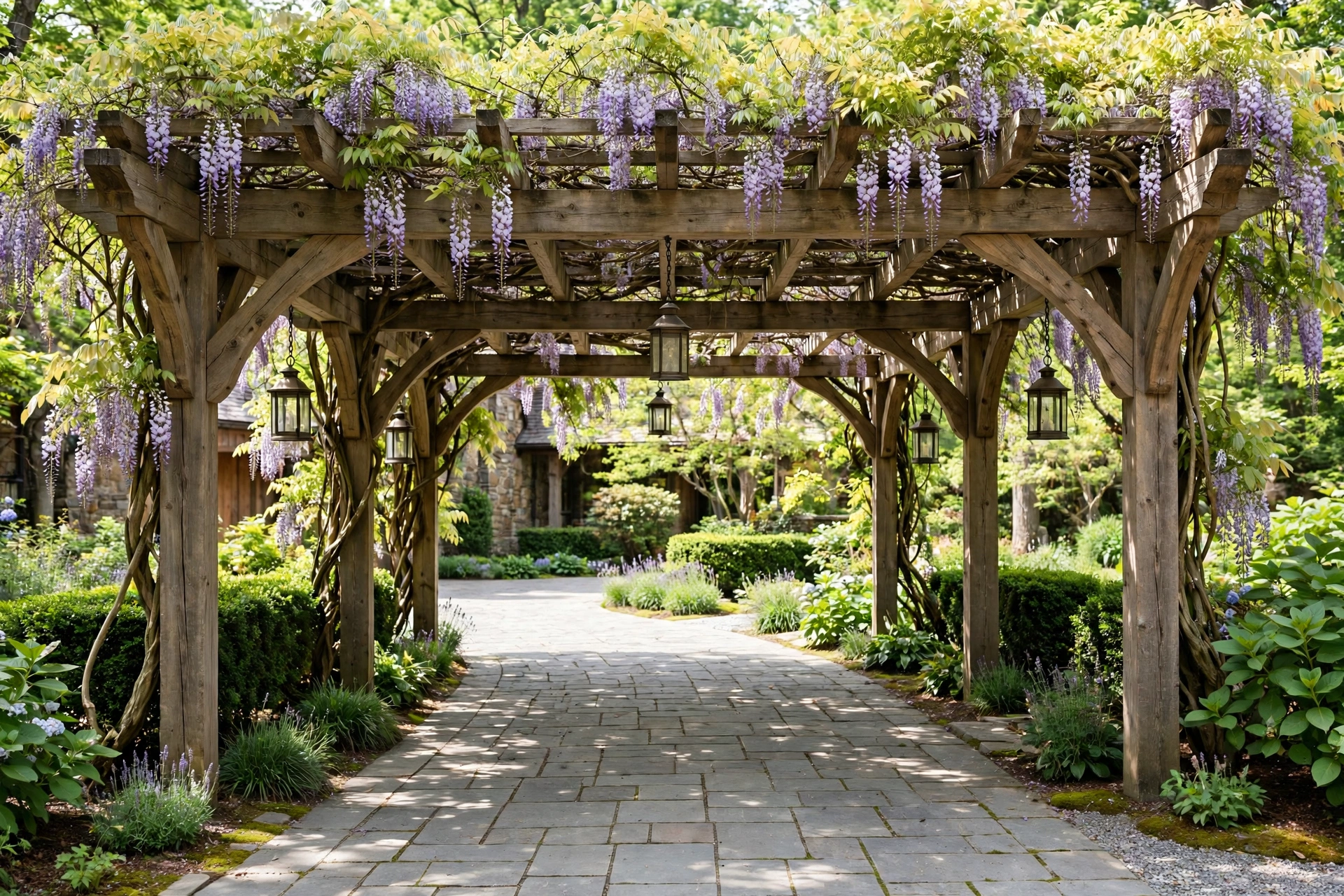
A pergola over the driveway entrance creates shade, structure, and a clear sense of arrival all at once. The open beams cast dappled light by day, and when the climbing plants — wisteria, trumpet vine, or climbing roses — fill in, the pergola becomes a green tunnel that guests drive beneath. Build it from cedar or redwood for natural weather resistance, and size it generously: the posts should sit well clear of car mirrors, and the beam height should clear the tallest vehicle that uses the drive. Hang a pair of lanterns from the beams and the pergola glows at night. A pergola is a bigger project than most on this list, but it is also the one that most completely transforms a driveway into an entrance.
23. Add a Fountain Near the Entrance
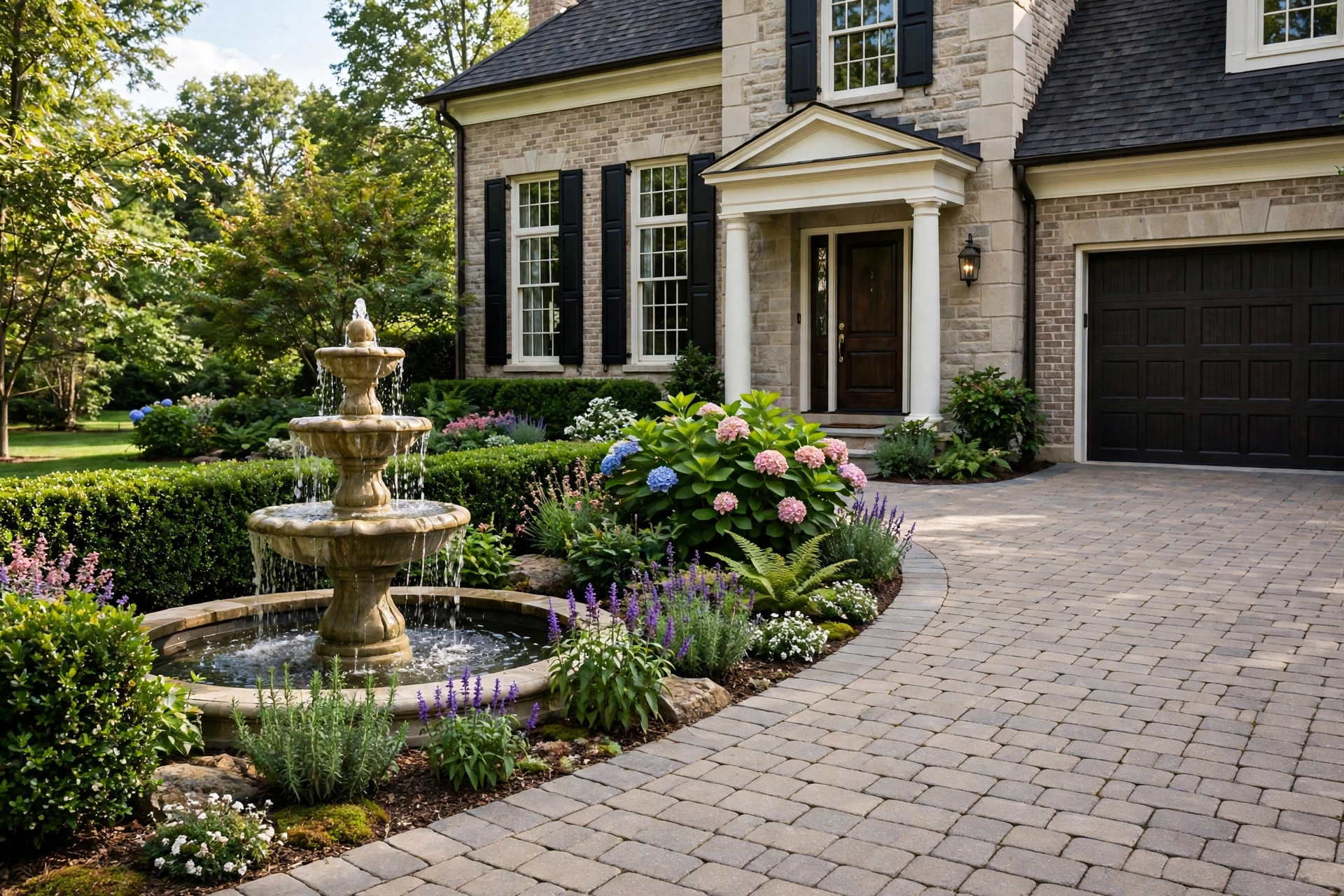
Moving water is the most luxurious sound a driveway can have. A small fountain or bubbling rock placed near the entrance — off to one side, never in the driving line — gives guests something beautiful to look at while they wait for the door, and the sound of water masks street noise. A tiered stone fountain suits a formal home; a simple basalt column with water sheeting down its sides suits a modern one. Solar-powered pumps now run small fountains without any wiring, and a recirculating system uses very little water. Keep the fountain low and the basin shallow, and site it where it can be seen from the street as well as from the front door.
24. Build a Circular Drive With a Garden Island
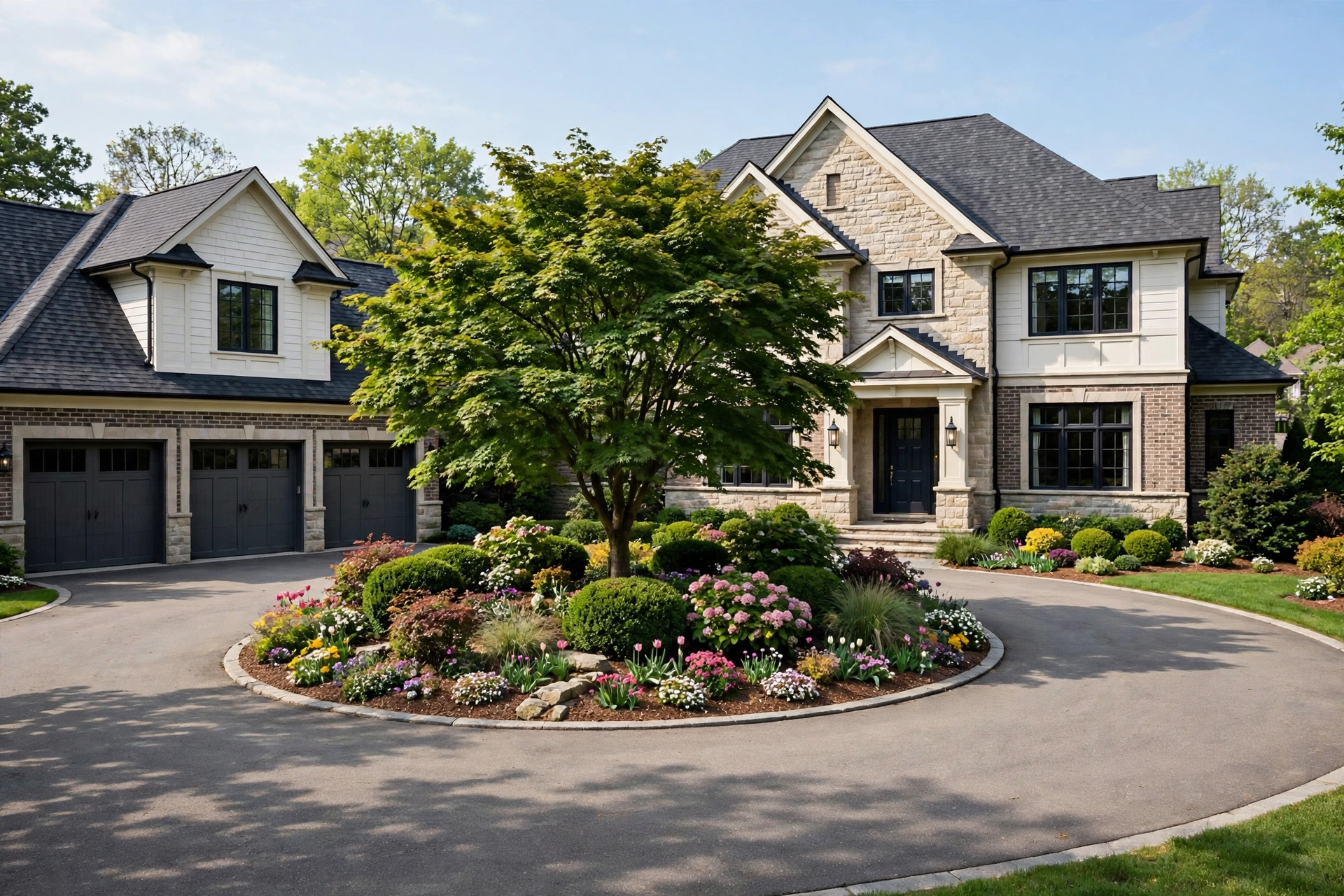
If the lot allows it, a circular driveway is the grandest entrance a home can have. Cars sweep in, drop guests at the front door, and sweep out without ever reversing — and the island in the middle becomes a garden in its own right. Plant the island with a single feature tree, a ring of low shrubs, and seasonal flowers, and it becomes the focal point of the whole front yard. A circular drive needs space — at least fifty feet of frontage — and a clear line of sight at both street connections, so check local setback and sight-triangle rules before you commit. On a smaller lot, a simple teardrop turnaround at the end of a straight drive gives you much of the same convenience in half the space.
25. Lay Grass Strips Between Paver Tracks
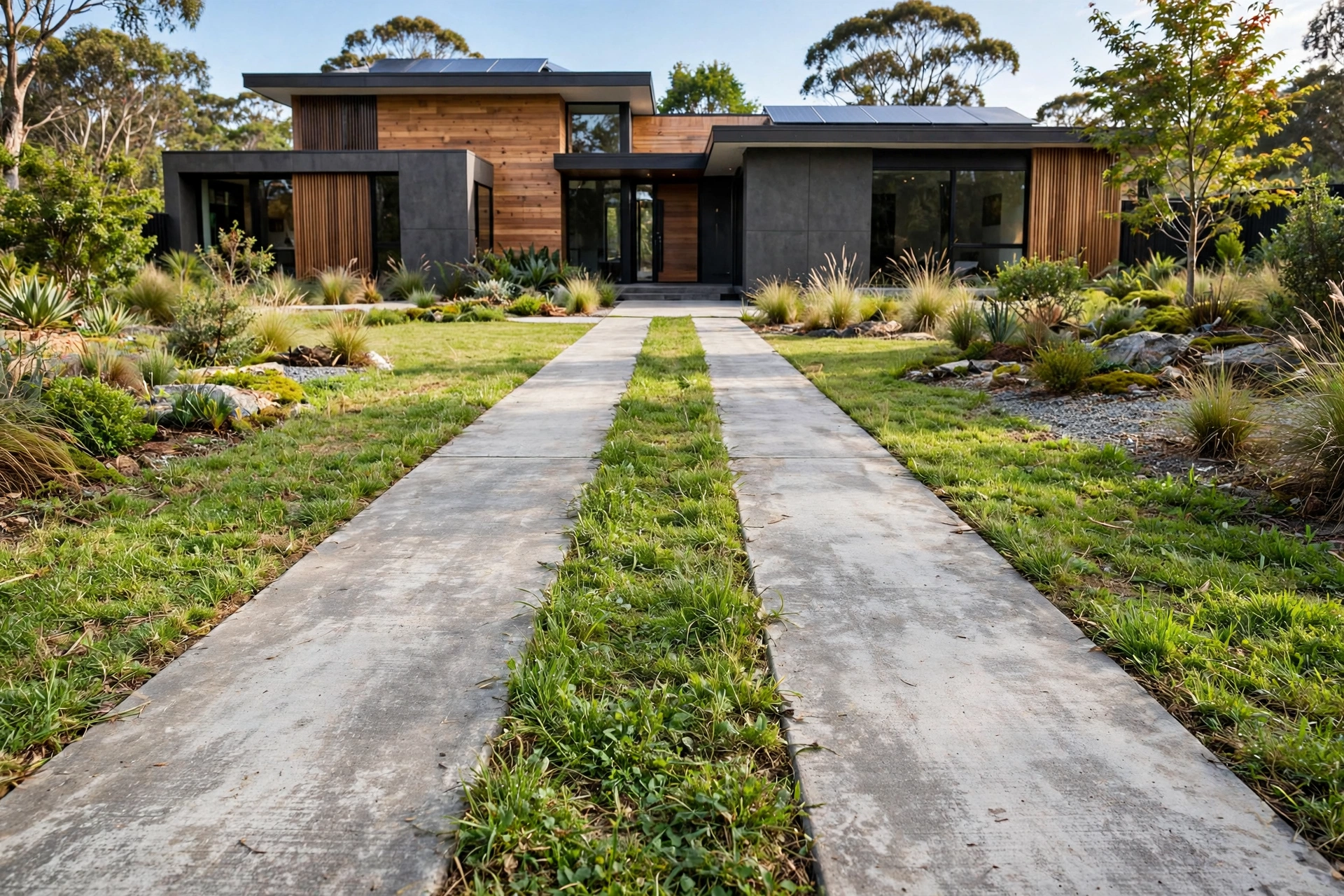
Grass strips between two concrete or stone wheel tracks are the cleverest way to make a driveway feel greener without giving up parking. The car drives on the solid tracks while grass — or a tough ground cover like creeping thyme — grows in the middle strip and along the edges, softening the whole surface. The look suits modern and eco-minded homes especially well, and it cuts the paved area nearly in half, which helps with drainage and summer heat. Use a hard-wearing grass variety or a no-mow ground cover, and keep the strip slightly below the track surface so tires never catch the edge. The result is a driveway that reads as a garden path with a practical job.
26. Go Drought-Tolerant With a Xeriscape Border
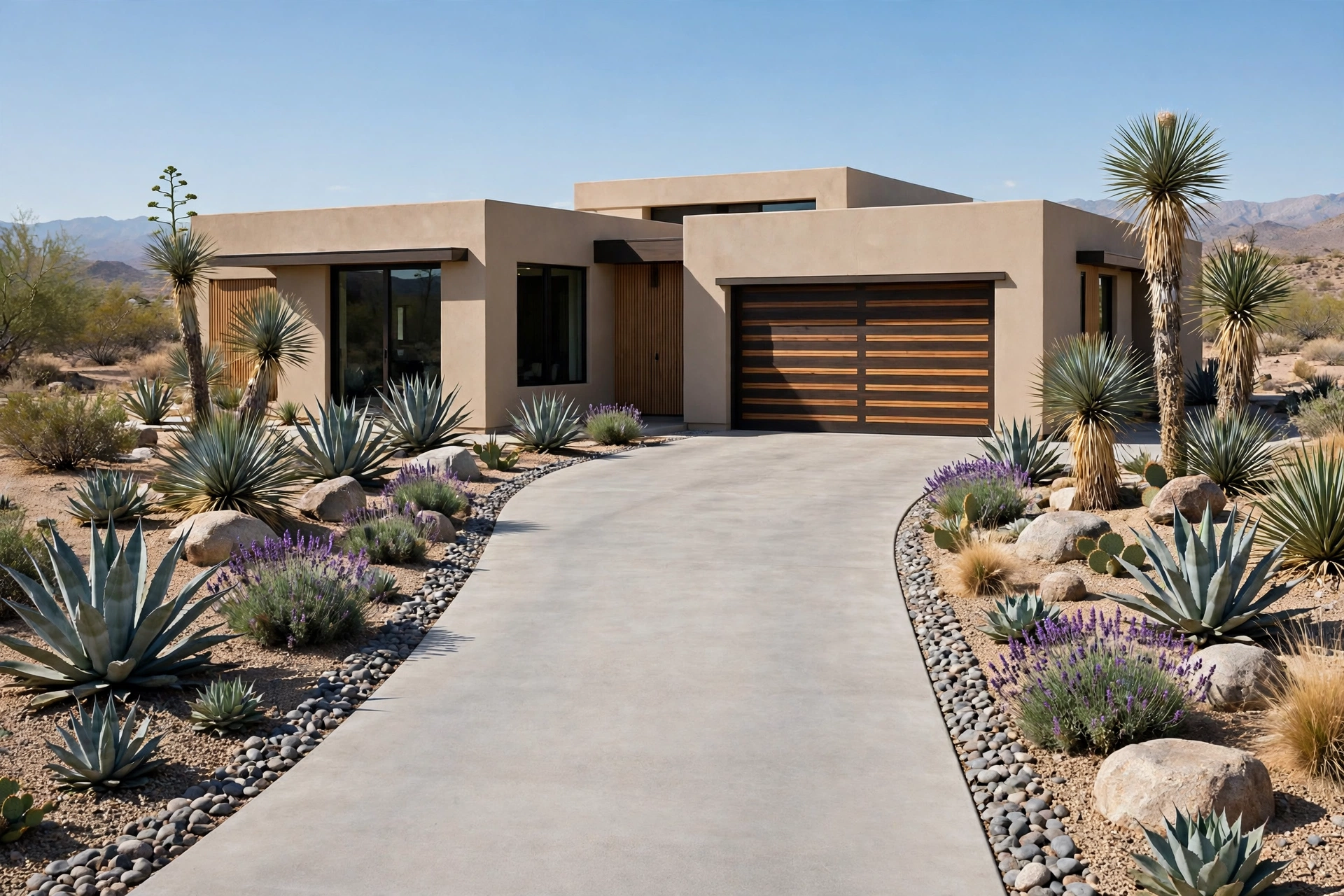
In dry climates, a xeriscape border — drought-tolerant planting on gravel mulch — is the smartest and the most stylish choice for a driveway edge. Sculptural agaves, yuccas, ornamental grasses, and lavender thrive on neglect, need almost no water once established, and look intentional year-round. A sandy-beige gravel mulch ties the planting together and keeps weeds down, while a few large boulders give the border structure. The design also solves a real problem: reflected heat from the pavement kills thirsty plants, but desert natives love it. Check which species are native to your region and your driveway border will look like it grew there on purpose — because it did.
27. Pressure Wash and Reseal for an Instant Refresh
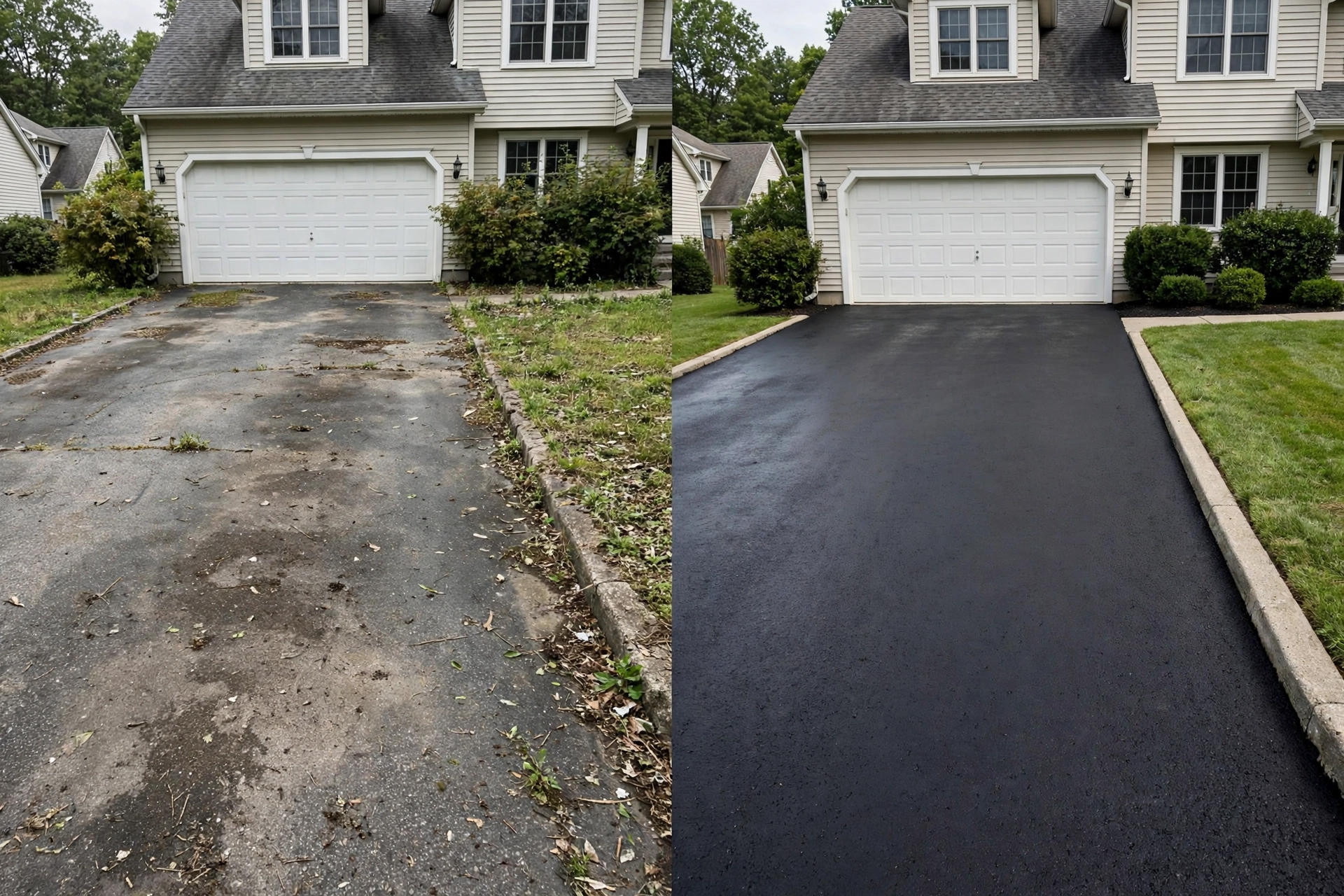
Sometimes the best curb appeal project is not an addition but a restoration. A pressure wash strips years of grime, tire marks, moss, and oil stains off concrete and asphalt, and the difference is often startling — a gray, tired drive comes back to its original color in a single afternoon. Follow with a fresh seal coat on asphalt or a penetrating sealer on concrete, and the surface looks nearly new for a fraction of replacement cost. Fix the small things while you are at it: fill hairline cracks, re-sand paver joints, and edge the lawn where it has crept over the driveway. This is the cheapest idea on the list and the one with the fastest payoff, so do it first, then decide what else the entrance still needs.
28. Rotate Seasonal Color at the Entrance
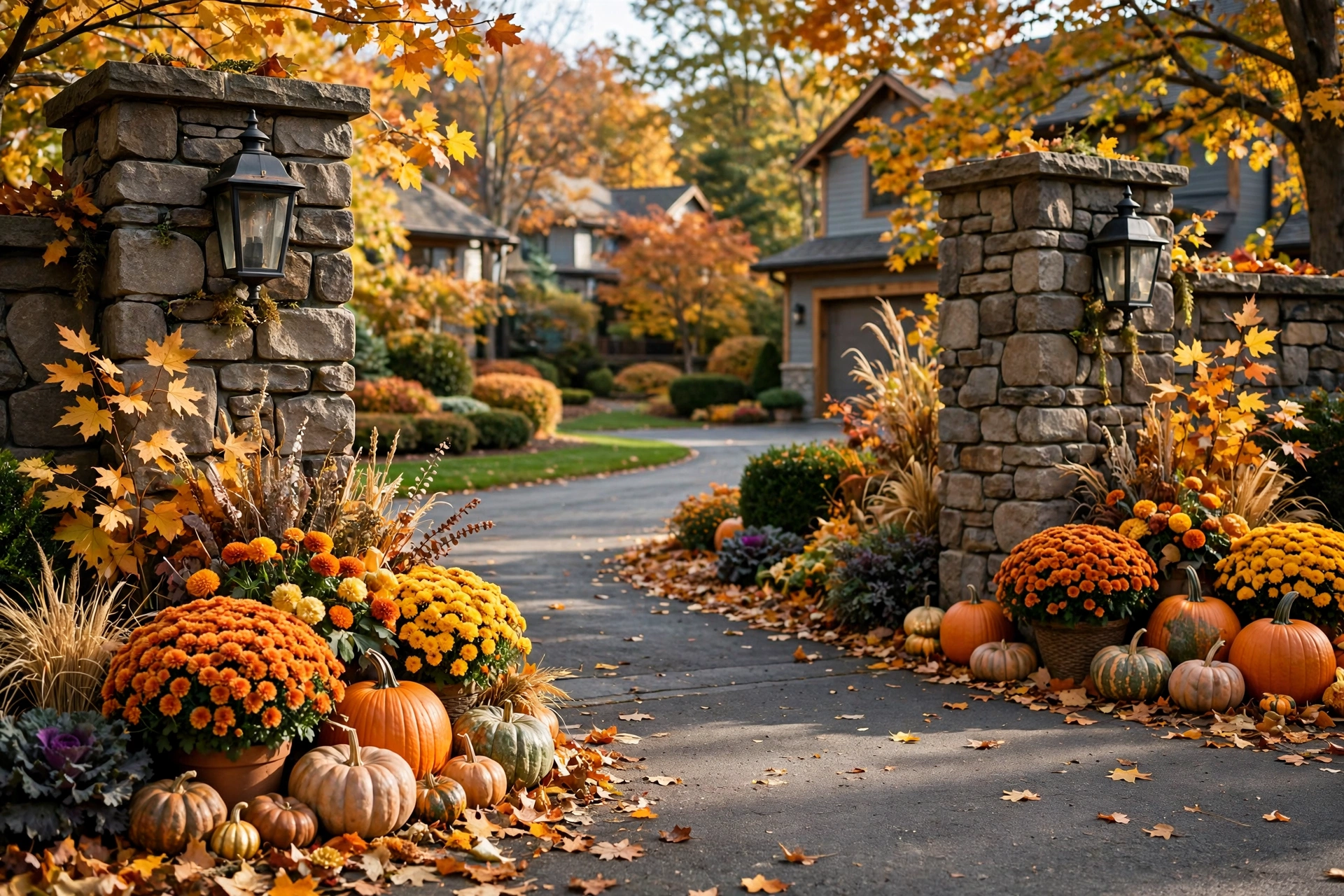
A driveway entrance that changes with the seasons always looks cared for, and the trick is to plan the rotation in advance. Spring brings tulips and daffodils in the beds and a fresh wreath on the gate; summer brings bold annuals like petunias and marigolds in the planters; autumn brings mums, ornamental kale, and pumpkins by the pillars; winter brings evergreen branches, red berries, and a simple lit garland on the arch. Keep the structure — the planters, the beds, the pillars — permanent, and swap only the seasonal layer. It takes an hour per season and a modest plant budget, but neighbors notice the change every time, and the entrance never looks tired or forgotten.
29. Add Smart Lighting and Security at the Gate
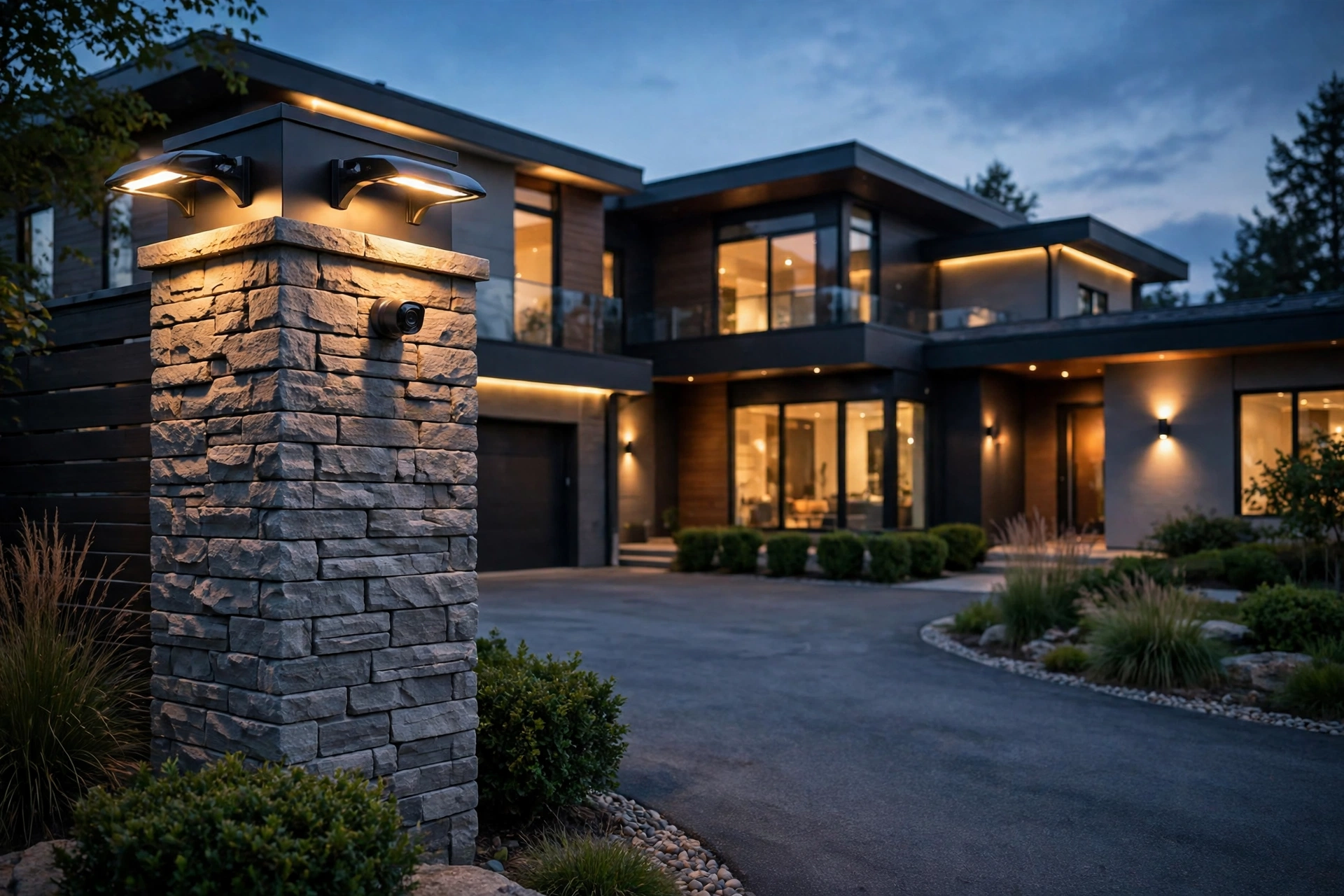
The final layer of a great driveway entrance is the one you barely see: smart lighting and discreet security. Motion-sensor lights at the gate and along the drive welcome you home and deter unwanted visitors, while a video doorbell or a small camera at the entrance pillar lets you see who is arriving before you answer the door. Smart bulbs and timers let the whole entrance shift from a soft evening glow to full brightness when a car pulls in, all controlled from your phone. Choose fixtures that match the style of your pillars and lanterns so the technology disappears into the design. A driveway that is beautiful by day, welcoming by night, and quietly secure around the clock is an entrance that works as hard as it looks.
Frequently Asked Questions
What is the cheapest way to improve driveway curb appeal?
Pressure washing and resealing is the cheapest high-impact move — usually a weekend project for a few hundred dollars or less, and it can make an old driveway look nearly new. After that, solar path lights, a decorated mailbox, and a fresh edge on the lawn deliver the most visible improvement for the least money.
How much does it cost to add stone pillars at a driveway entrance?
Costs vary widely by material and region, but a pair of masonry pillars typically runs from a few hundred dollars each for pre-cast kits to several thousand for custom natural stone. Veneer panels and pre-cast kits are the budget-friendly route and can be installed in a weekend by a confident DIYer.
What plants work best along a driveway?
Choose tough, compact plants that tolerate heat reflected from pavement, occasional salt, and car doors swinging open. Good bets include boxwood, lavender, ornamental grasses, daylilies, and low evergreen shrubs. Keep tall plants and anything with thorns well back from the driving surface.
Do driveway improvements increase home value?
A well-kept, attractive driveway entrance supports the home’s first impression, which matters to buyers and appraisers. Cosmetic and landscaping improvements generally return value through curb appeal, while structural work like a new surface or a circular drive adds functional value too. Exact returns depend on your local market.
How do I light a driveway without running new wiring?
Solar path lights need no wiring at all, and solar-powered gate openers, lanterns, and small fountains are widely available. For brighter, more reliable light, low-voltage landscape lighting runs on a single transformer plugged into an outdoor outlet, with thin cable buried just under the mulch.
Should the driveway match the front walk?
It does not need to match exactly, but the materials should speak to each other. If the front walk is brick, repeat that brick as a border or apron on the driveway; if the walk is stone, echo its color in the driveway edging. Shared materials make the whole front of the house feel designed rather than assembled piecemeal.
Conclusion
A driveway entrance earns its curb appeal one good decision at a time. You do not need to rebuild the whole drive to change how your home feels from the street — start with the move that bothers you most every time you pull in, whether that is a stained surface, a dark unlit edge, or a bare stretch of lawn where a border should be. Layer in planting, light, and a clear threshold at the street, and the driveway stops being a slab of pavement and starts being an entrance. Pick two or three ideas from this list, do them well, and enjoy the moment every guest slows down, looks twice, and says something nice before they even reach your front door.
Looking for more ways to lift the outside of your home? See our 33 backyard ideas for the space behind the house, our garage makeover ideas for the building the driveway serves, and our shoe storage cabinet entryway ideas for the space just inside the front door. If you love a grand arrival, our wedding entrance decor ideas show how the same entrance principles work for a celebration.