
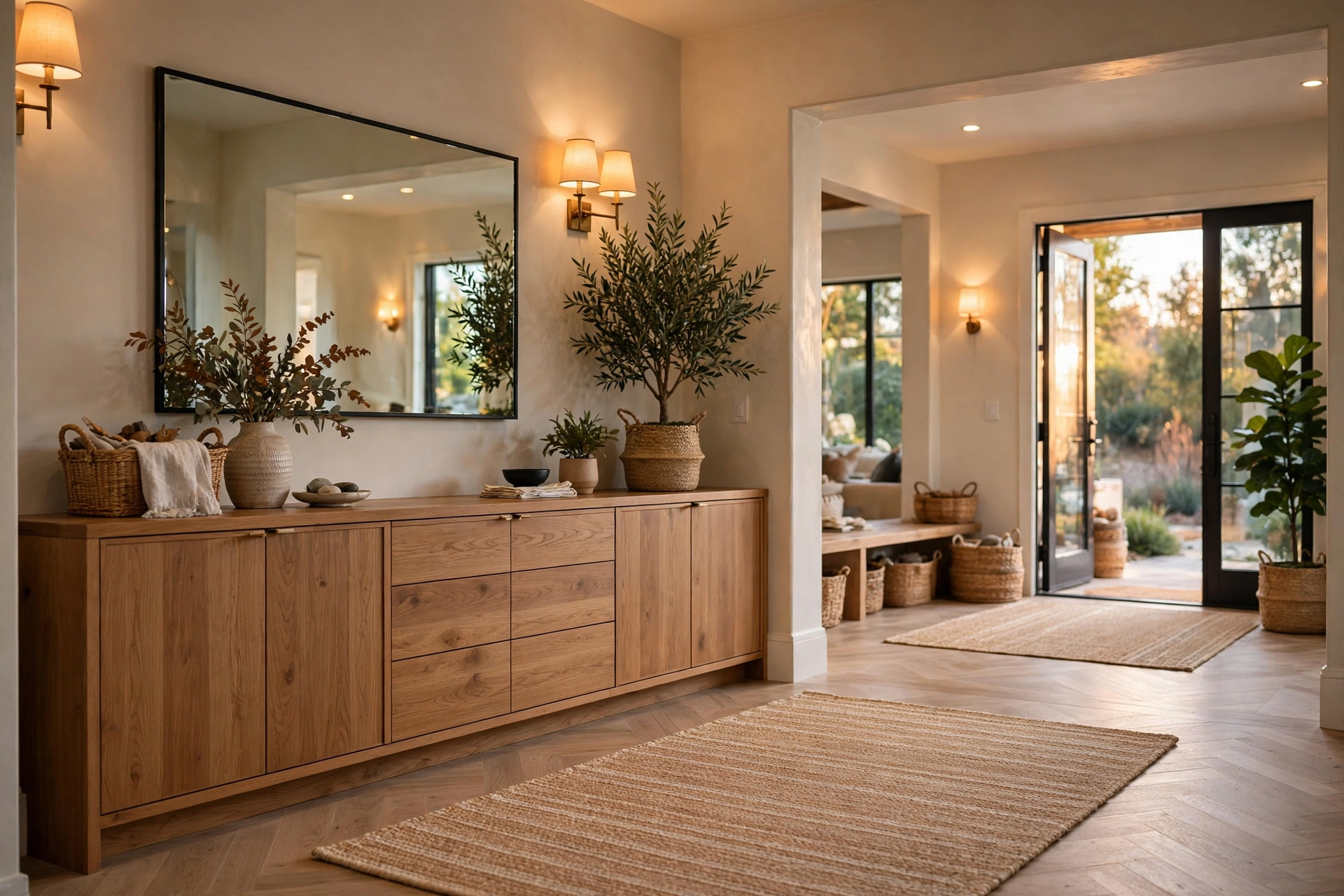
23 Shoe Storage Cabinet Entryway Ideas for a Tidy, Welcoming Front Door
23 Shoe Storage Cabinet Entryway Ideas for a Tidy, Welcoming Front Door
Nothing ruins a first impression faster than a pile of shoes by the front door. A good shoe storage cabinet fixes that in one move: it hides the clutter, protects your floors, and gives your entryway a finished, intentional look. But not every cabinet suits every home. A narrow hallway needs a slim tilt-out design, a busy family needs a tall cabinet with room for everyone, and a small apartment might do best with a floating unit that keeps the floor clear. The ideas below cover all of it — different sizes, styles, budgets, and layouts — so you can find the one that actually fits your space and your shoe collection. Each idea includes practical tips on sizing, placement, and upkeep, so your entryway stays tidy long after the first week.
1. The Slim Tilt-Out Cabinet for Narrow Hallways
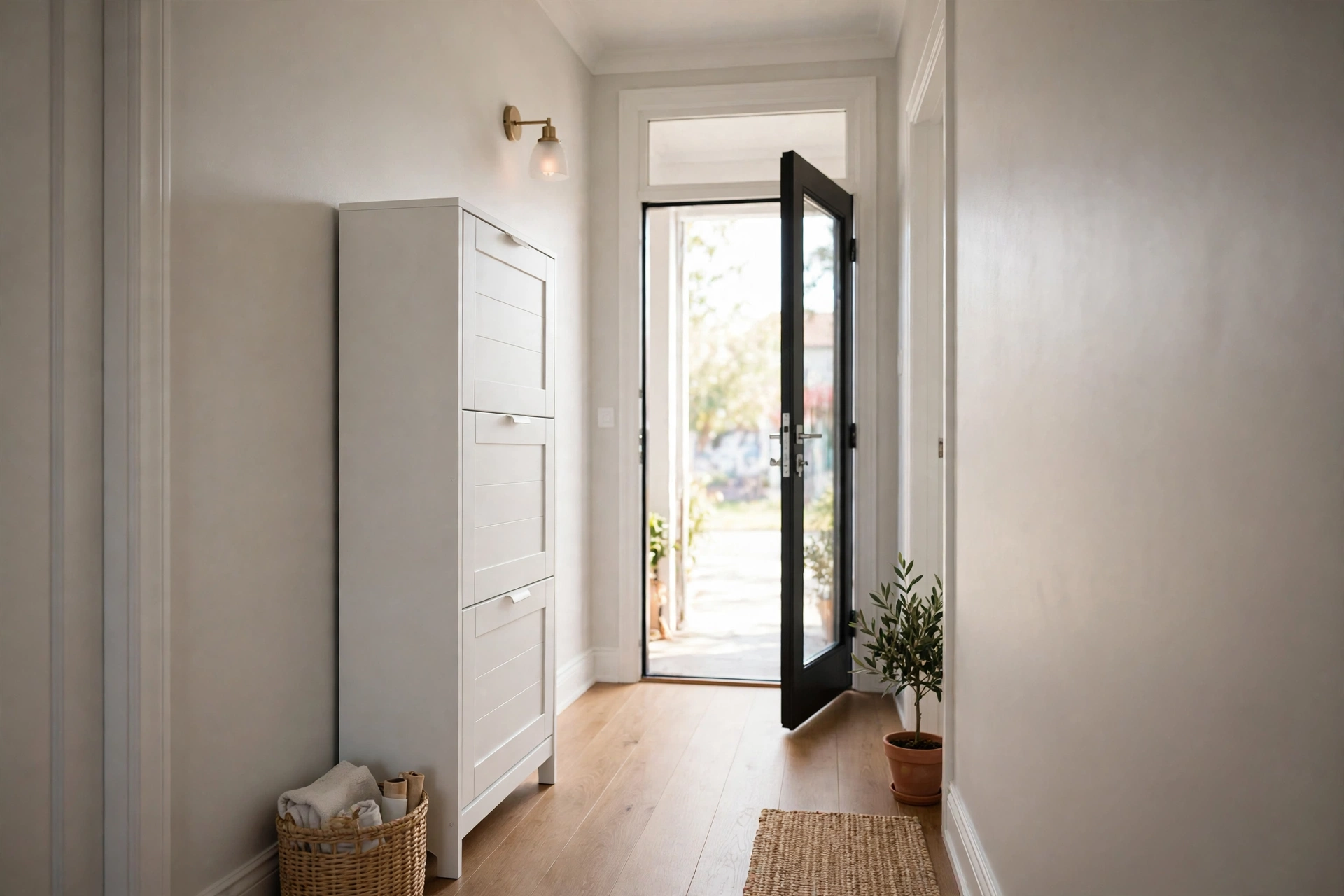
A tilt-out cabinet is the classic narrow-entryway solution, and for good reason. At just 6 to 8 inches deep, it hugs the wall without blocking the walkway, yet each tilting compartment holds two to three pairs. Look for a unit with two or three tiers, which covers most daily shoes for one or two people. Mount it securely to the wall, especially if you have kids who might pull a compartment open hard. The flat top is bonus real estate: a small tray for keys, a tiny plant, or a framed photo turns a purely practical piece into something that looks like it belongs. Choose a finish that matches your door trim so the cabinet reads as built-in rather than bulky furniture squeezed into a tight spot.
2. The Double-Door Cabinet With Adjustable Shelves
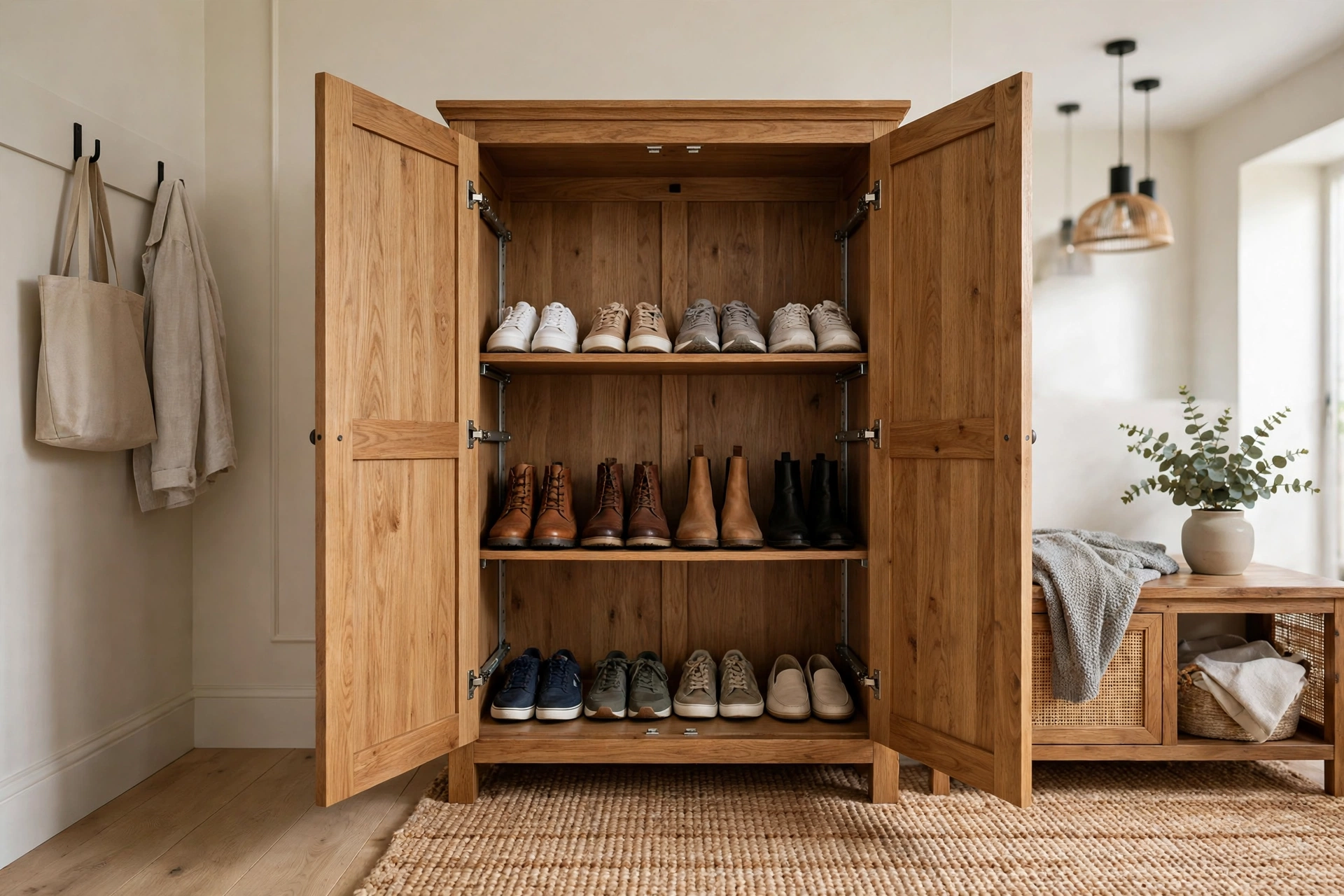
If your household wears everything from flat sandals to chunky boots, fixed shelves will fight you. A double-door cabinet with adjustable shelves lets you set each row to the height your shoes actually need — low rows for flats, tall rows for ankle boots. Measure your tallest pair before you buy, and leave one shelf out entirely for a boot section. Solid doors keep everything out of sight, which matters in an entryway that opens straight into the living room. Inside, a dark interior hides scuffs better than white. Add small shelf liners so mud and grit wipe off easily, and keep a shoe horn on the inside of one door so it is always within reach.
3. The Storage Bench With Cubbies Underneath
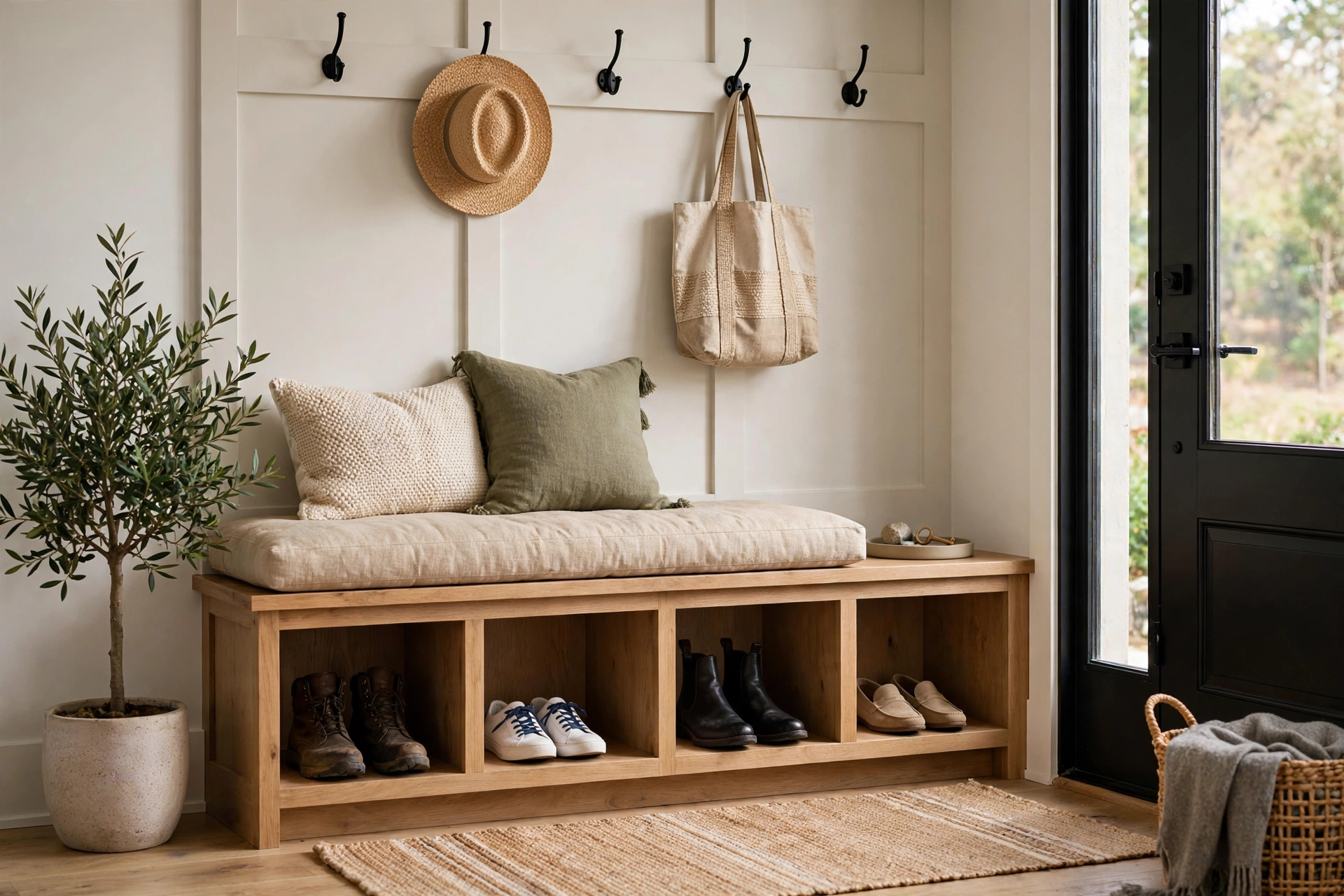
A storage bench solves two entryway problems at once: somewhere to sit while you put shoes on, and somewhere for those shoes to live. Open cubbies underneath keep daily pairs visible and easy to grab, which is ideal for kids and for shoes you wear every day. Pick a bench height of about 17 to 19 inches so sitting is comfortable, and add a cushion in a washable fabric if the bench gets daily use. Cubbies work best when each person gets one or two slots — assign them and the pile problem mostly disappears. Tuck a slim basket in one cubby for shoe care supplies, spare laces, and insoles so small items never end up loose on the floor.
4. The Tall Floor-to-Ceiling Cabinet for the Whole Family
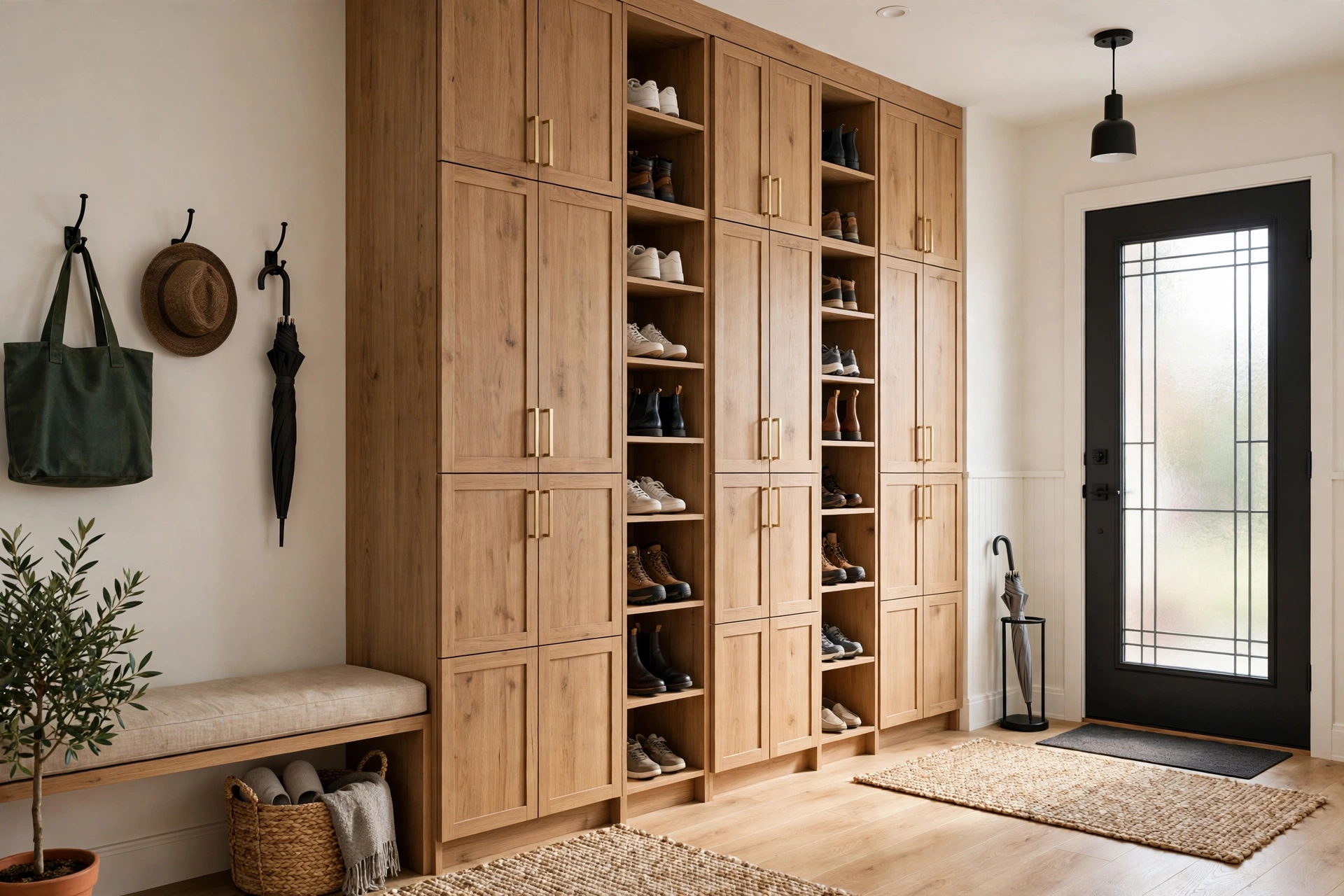
When four or more people share one entryway, a short cabinet simply is not enough. A tall cabinet, 60 to 72 inches high, uses vertical space that would otherwise go to waste and can hold 15 to 30 pairs depending on shelf spacing. Slim profiles of 12 to 14 inches deep keep it from swallowing the hallway. Give each family member a labeled zone — a shelf row or a door section — so nobody’s shoes migrate into everyone else’s space. Put the most-worn pairs at waist height and seasonal or rarely worn pairs up high. Anchor a tall unit to the wall; it is top-heavy once loaded, and anchoring keeps it safe and steady for years.
5. The Floating Wall-Mounted Cabinet
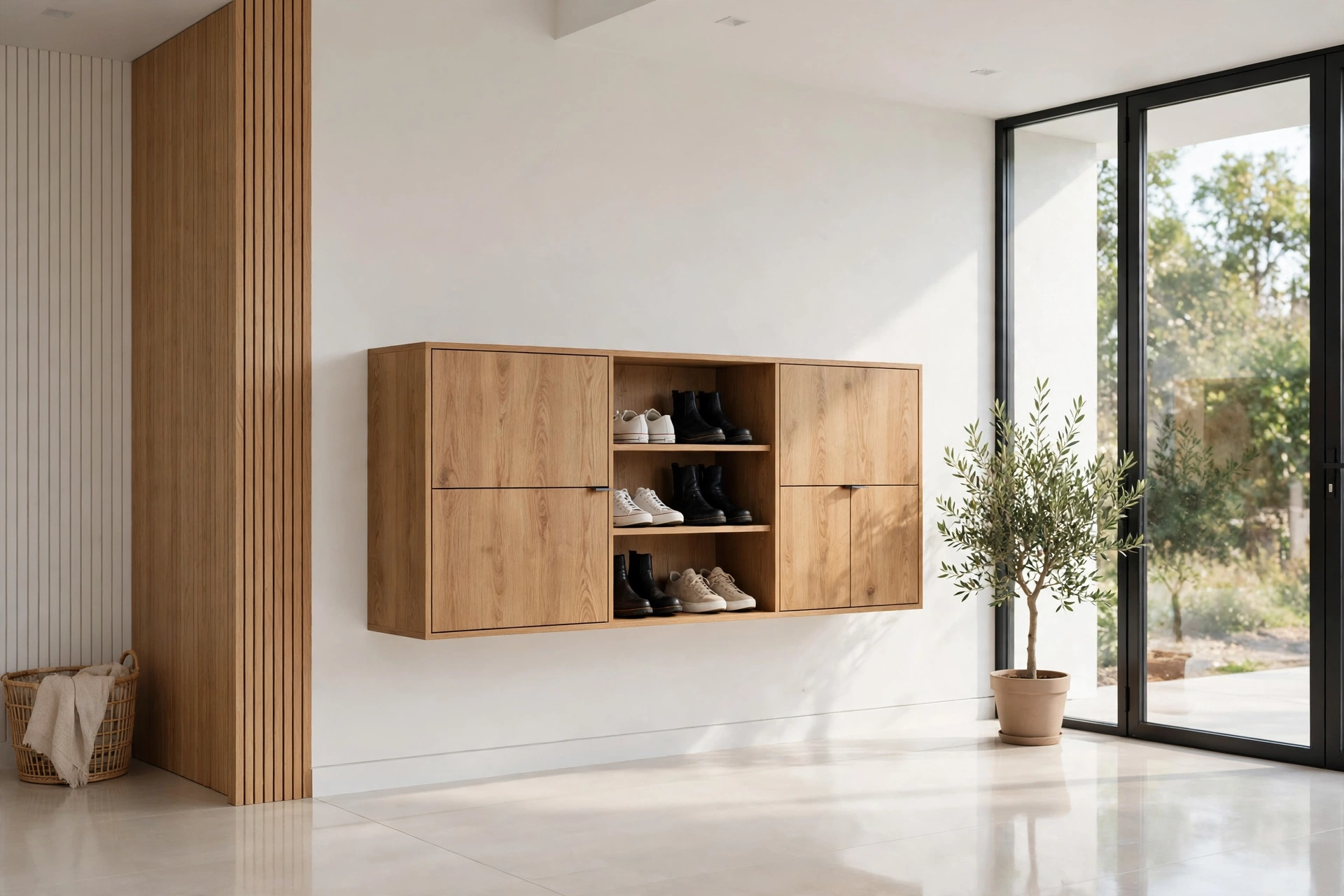
A floating cabinet mounted a few inches off the floor makes a small entryway feel bigger because you can see the floor continue underneath it. That visual trick matters in tight foyers and apartments. Wall mounting also makes sweeping and mopping much easier — no legs or plinth to work around. Make sure you fix it into wall studs, not just drywall, since a loaded shoe cabinet is heavy. Leave enough clearance underneath for a pair of slippers or a low tray, but not so much that the gap collects clutter. A floating cabinet in a light wood or white finish keeps the whole entry feeling airy rather than boxed in.
6. The Open-Shelf and Closed-Door Combination
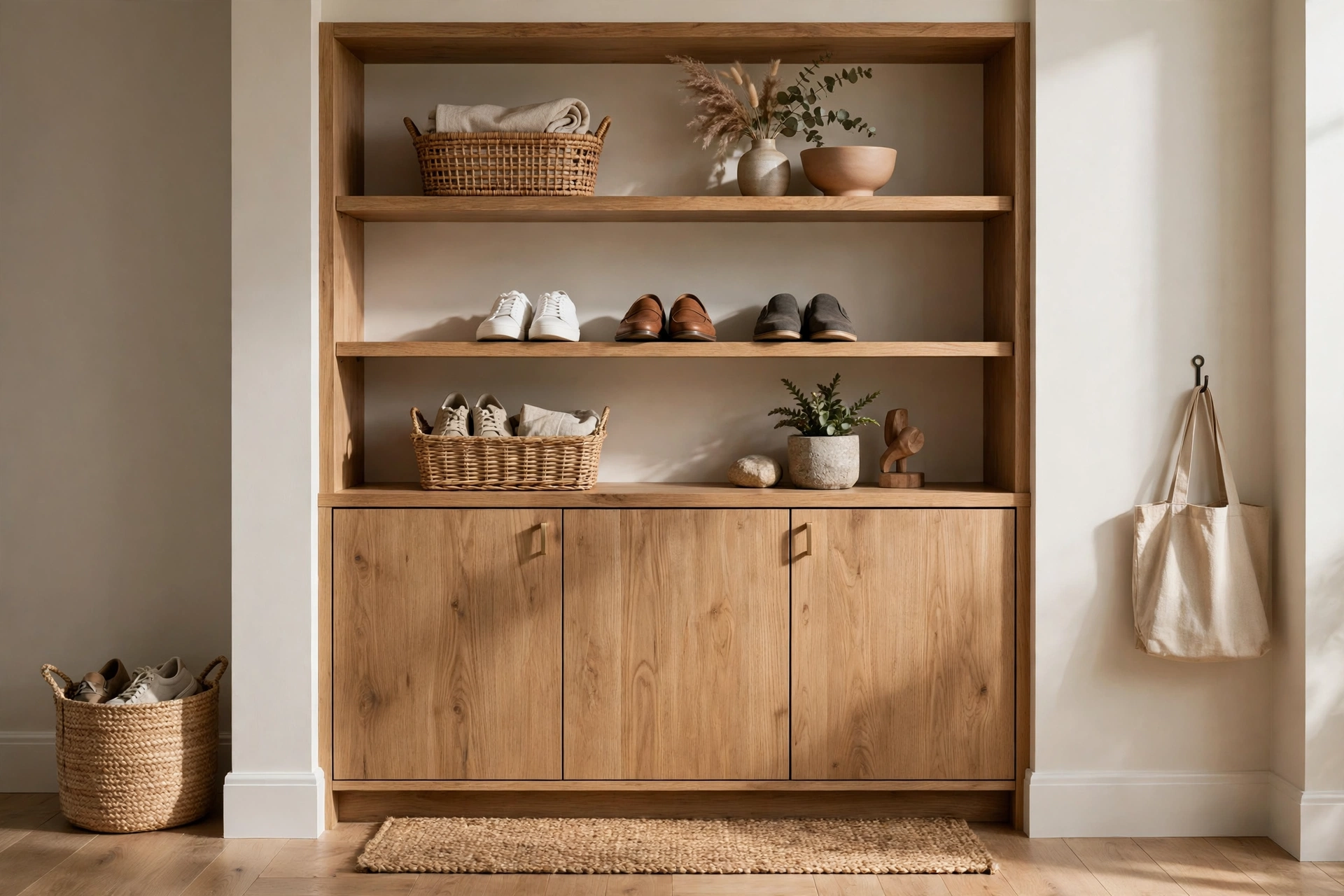
The smartest entryways rarely rely on one storage type. A combination unit — open shelves on top for the pairs you grab daily, closed doors below for off-season or less attractive shoes — gives you speed and tidiness in one piece. Use the open section for two or three current pairs per person and nothing more; when it fills up, that is your signal to rotate shoes into the closed section. Style the top of the open shelf with one or two decorative items so it reads as intentional display, not overflow. This hybrid layout works especially well in homes where the entryway is visible from the main living space and needs to look good at a glance.
7. The Louvered or Slatted-Door Cabinet
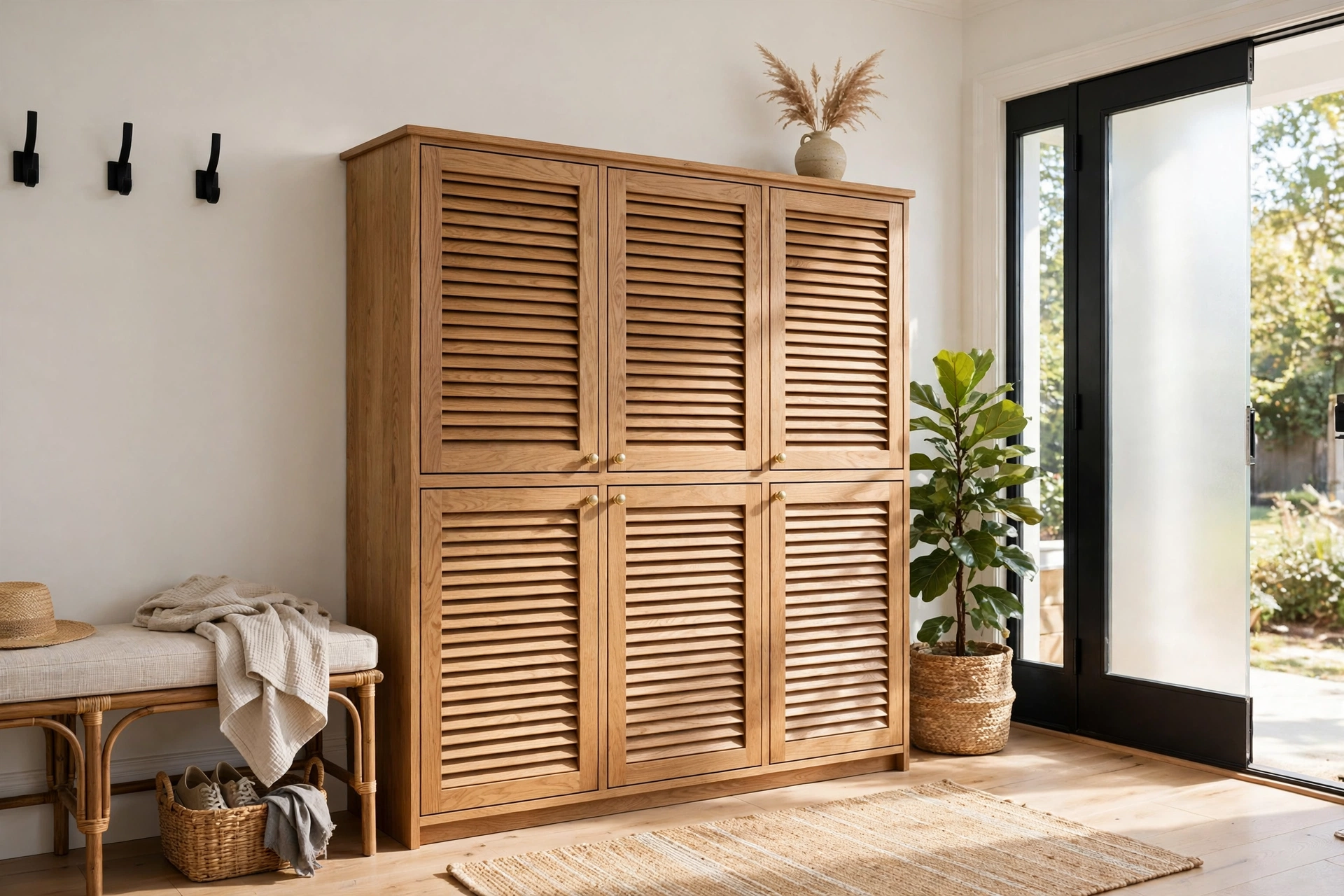
Closed cabinets can trap odor, especially with shoes worn daily. Louvered or slatted doors solve that with built-in airflow while still hiding the contents. The slats also add texture and a relaxed, coastal or farmhouse feel that flat doors cannot match. This style suits warm climates and active households where shoes go in damp from rain or workouts. Pair slatted doors with removable shelf liners and a small sachet or cedar block inside each compartment to keep things fresh. If you like the look but want more privacy, choose narrow slats or a slatted design with a fabric or mesh backing that still breathes.
8. The Built-In Alcove Cabinet
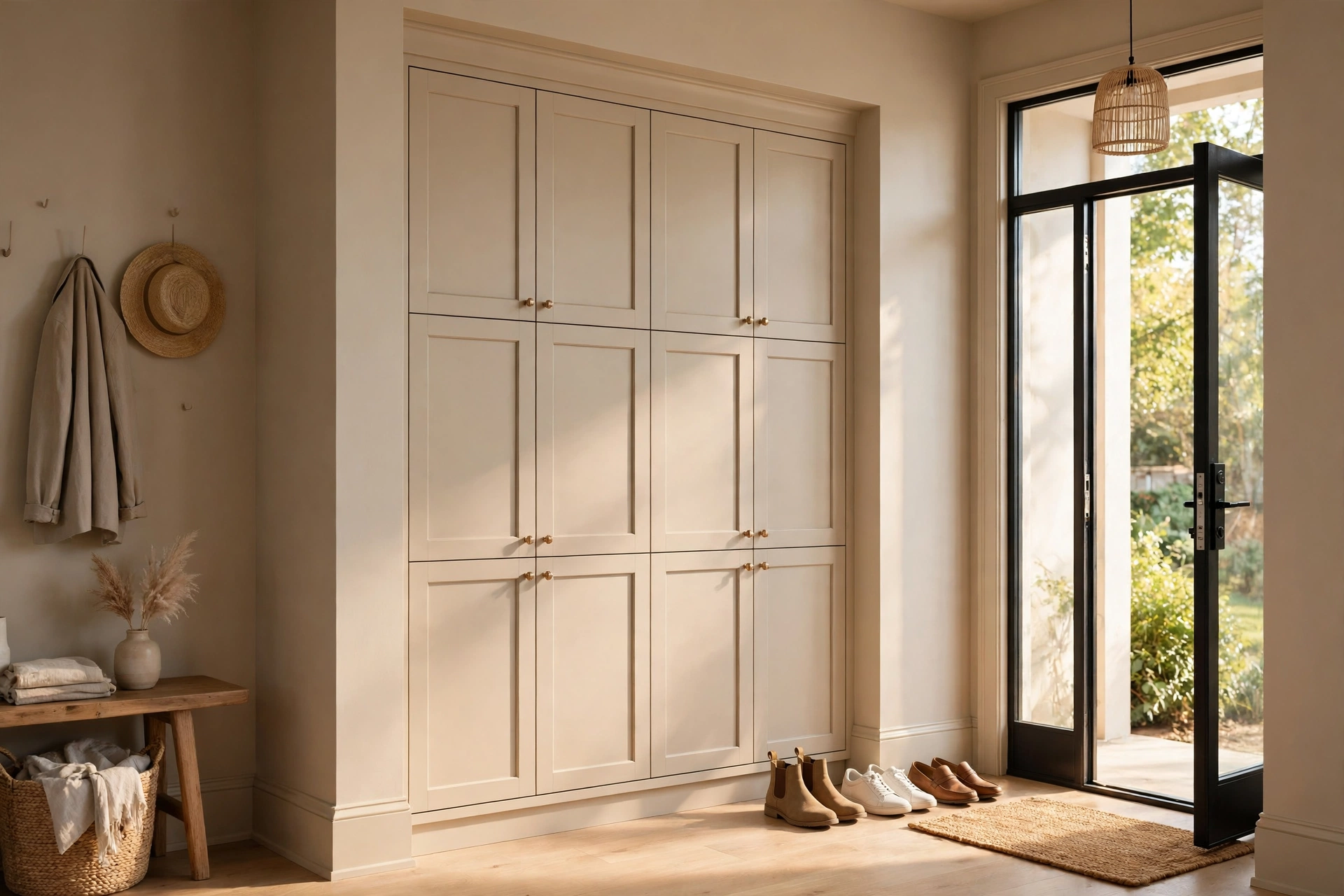
If your entryway has an awkward nook, recess, or dead corner, a built-in alcove cabinet turns wasted space into the best storage in the house. Built-ins sit flush with the wall, so they never jut into the walkway, and you can size them exactly to the alcove. Add a bench seat at sitting height with shoe storage below and a tall cabinet section beside it for boots and bags. Paint the built-in the same color as your trim so it looks original to the house. Built-ins cost more than freestanding pieces, but they add real value and solve odd layouts that no store-bought cabinet ever quite fits.
9. The Hall Tree With a Cabinet Base
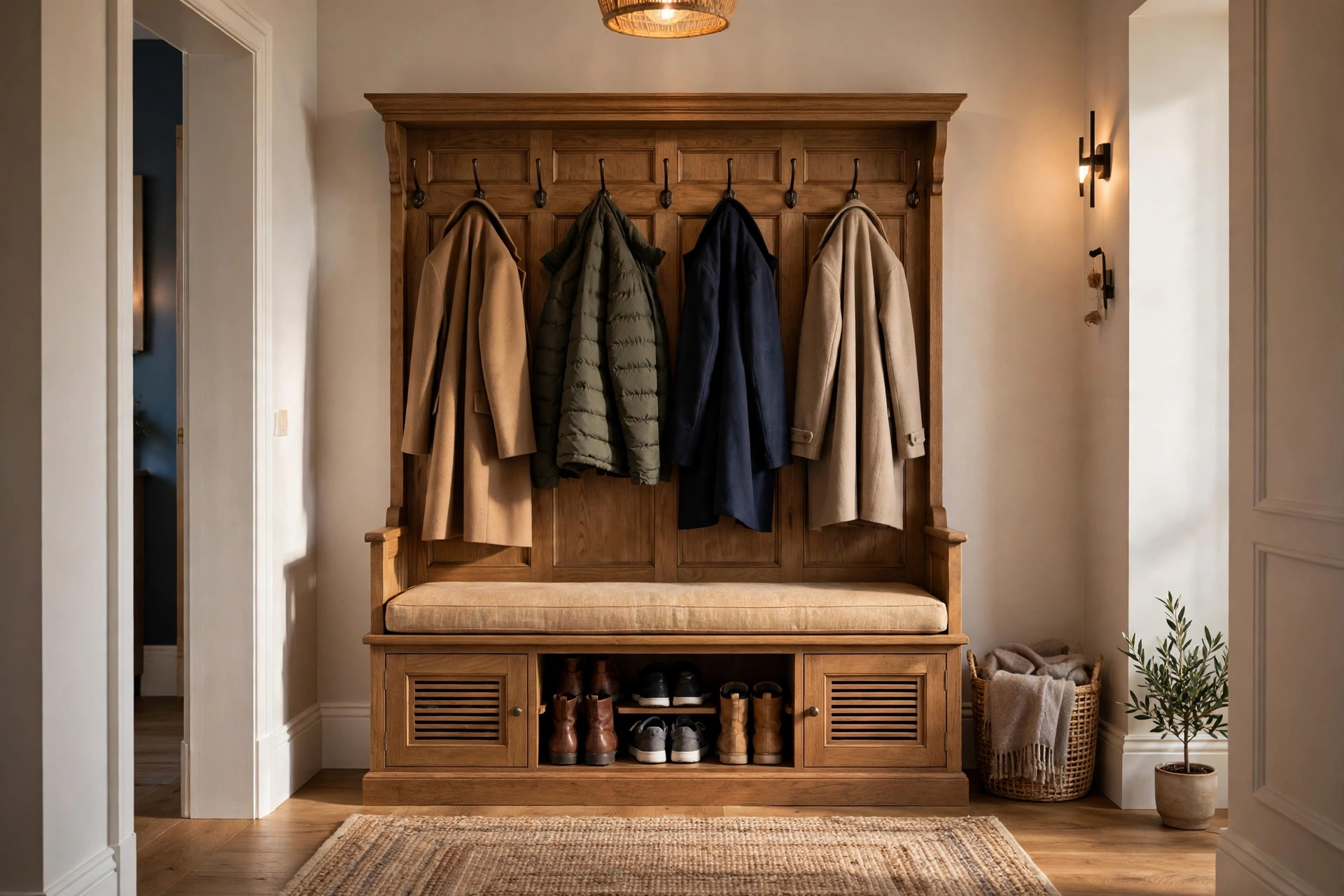
A hall tree combines a shoe cabinet base with coat hooks and often a bench and a top shelf, giving the whole entryway one command center. This is the best choice when coats, bags, hats, and shoes all pile up in the same spot. Look for a sturdy frame — solid wood or metal — because hooks loaded with winter coats take real weight. Keep the shoe section as enclosed doors rather than open cubbies if you want the unit to look tidy when guests arrive. Add a small tray on the top shelf for sunglasses and keys, and hang a mirror on the wall above it so the last check before leaving happens right at the door.
10. The Rattan-Front Cabinet
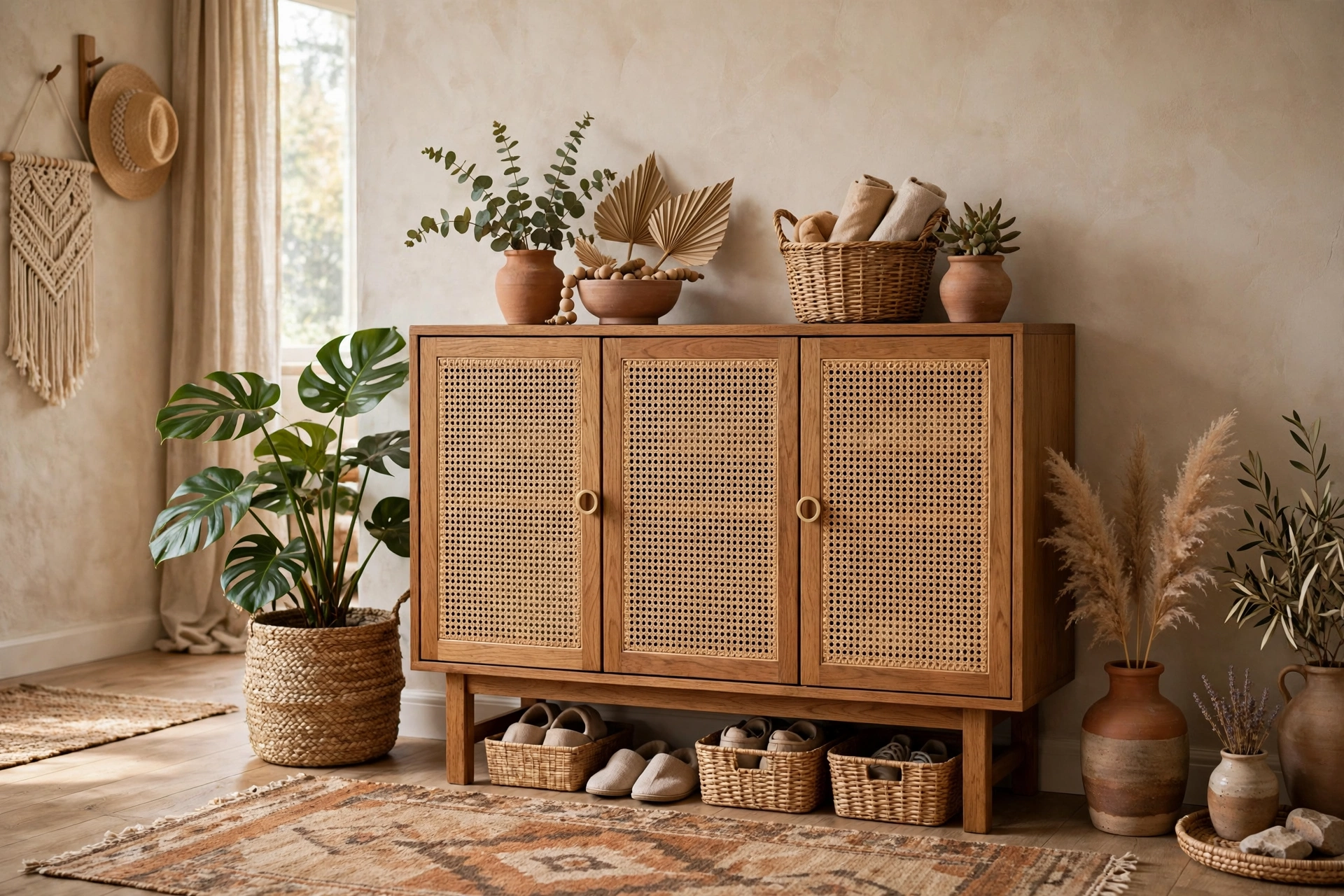
Rattan fronts bring warmth and texture to an entryway while letting air circulate, much like slatted doors but with a softer, more decorative look. They suit boho, coastal, and warm modern homes, and they pair beautifully with wood tones, plants, and woven baskets. Rattan is lighter visually than solid wood, so a larger cabinet feels less heavy in a small space. Dust the weave occasionally and keep the cabinet out of direct damp — rattan does not love constant moisture. Style it with a ceramic vase and a folded throw on top to lean into the relaxed, collected feel that makes this style so popular.
11. The Console-Style Cabinet With a Styled Top
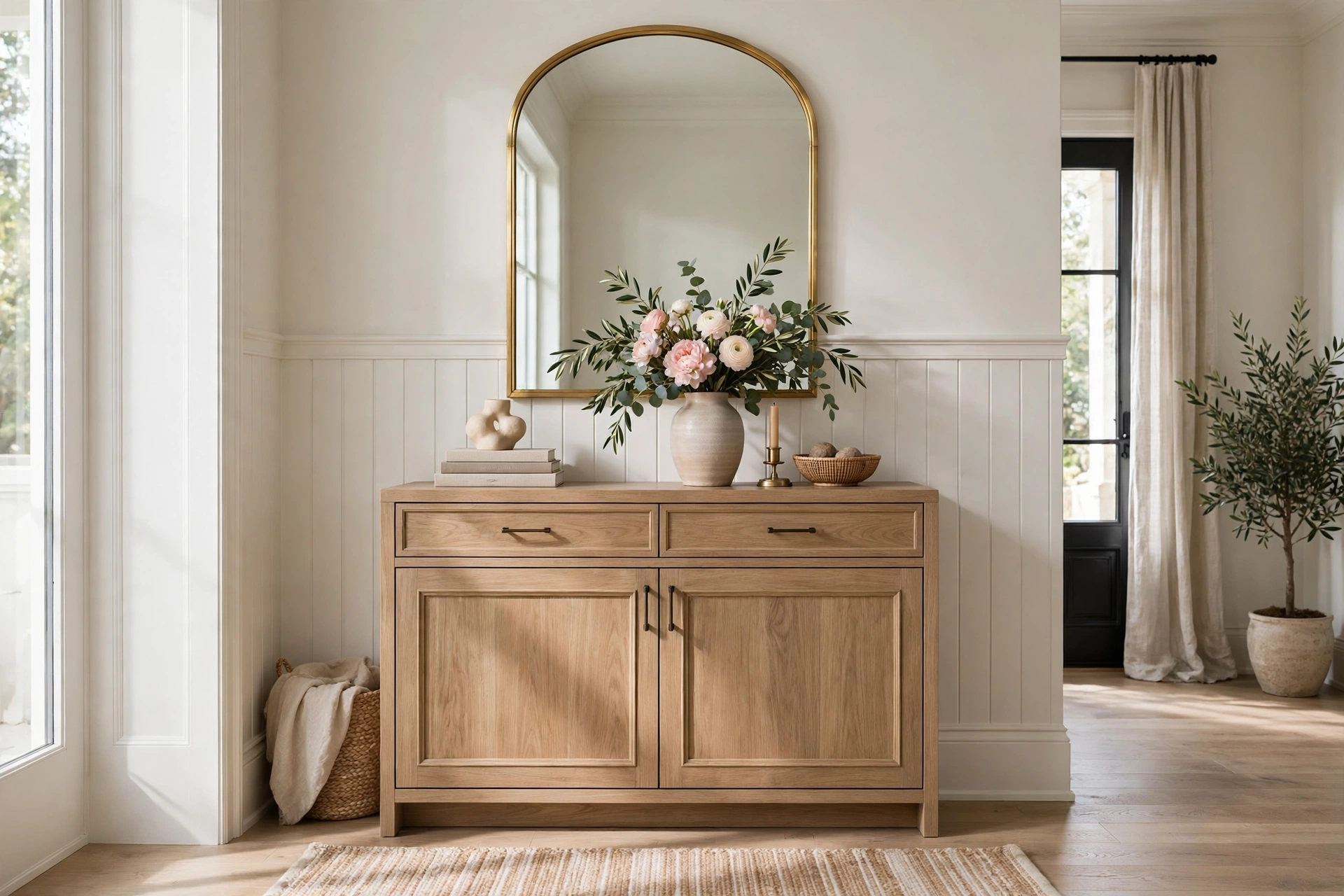
If your entryway doubles as a display space, choose a cabinet that works as a console table: a finished top at console height, doors below for shoes, and enough surface to style properly. A mirror or artwork above it, a lamp or vase on top, and a bowl for keys make the entryway feel designed rather than merely organized. Keep the top styling to three items or fewer so it never looks cluttered. Inside, adjustable shelves handle mixed shoe heights. This approach works best in wider entryways where the cabinet can breathe and the display can be appreciated, rather than in a narrow hall where a console top becomes a dumping ground.
12. The Pull-Out Drawer Cabinet
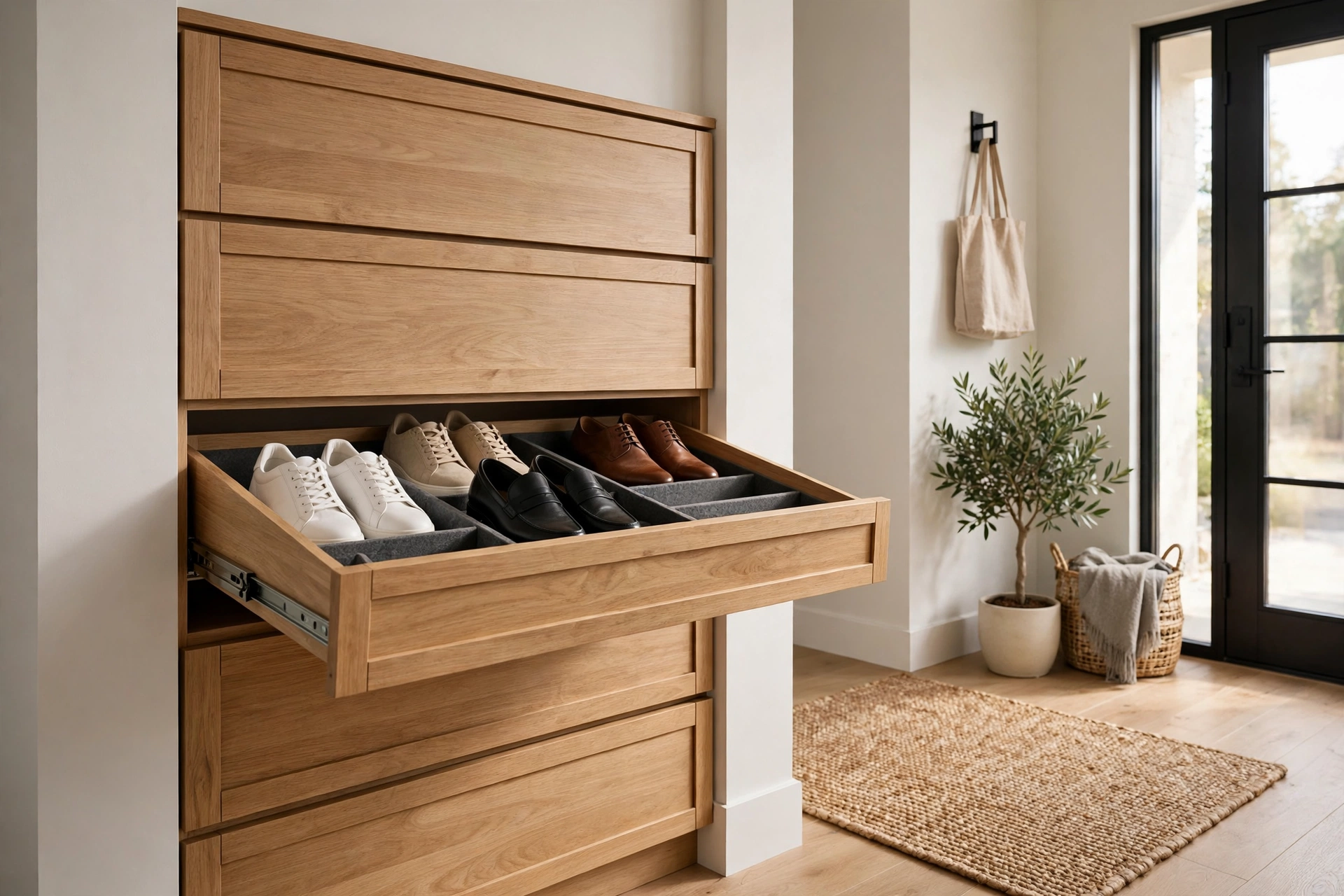
Pull-out drawers are the most accessible shoe storage of all: slide a drawer open and every pair is right there, no crouching to peer into a dark cabinet. Deep drawers hold boots upright, shallow drawers suit flats and sneakers, and dividers keep pairs from sliding together. Drawers work especially well for people with mobility issues, since there is no bending into a low cabinet. Choose full-extension drawer slides so the back of the drawer is reachable, and soft-close slides so drawers never slam. A drawer cabinet looks clean and modern from the outside — like a dresser — which helps it blend into entryways that open onto living areas.
13. The Corner Cabinet for Awkward Layouts
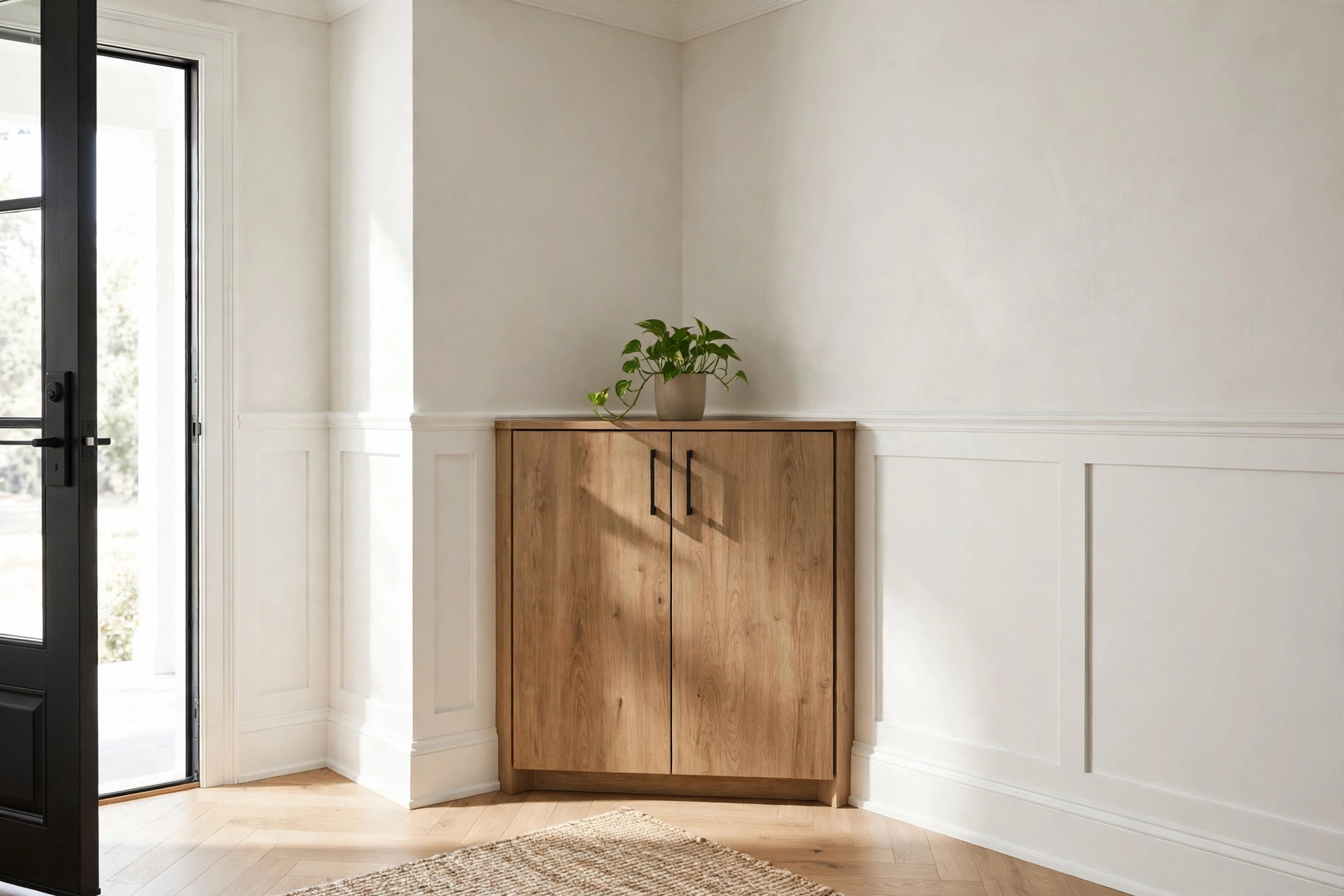
Corners are the most wasted space in entryways, and a corner cabinet claims them. A triangular or L-shaped unit tucks into the corner, holding a surprising number of pairs without blocking the main walkway. Corner cabinets suit square foyers where a flat-wall cabinet would crowd the door swing. Measure both walls and the door clearance carefully before ordering, since corner units vary a lot in depth and angle. Inside, rotating or angled shelves help you reach pairs at the back. Top the cabinet with a small plant or lantern, and suddenly the corner you used to ignore becomes one of the most useful spots in the entryway.
14. The Mini Mudroom Station: Bench, Hooks, and Cabinet
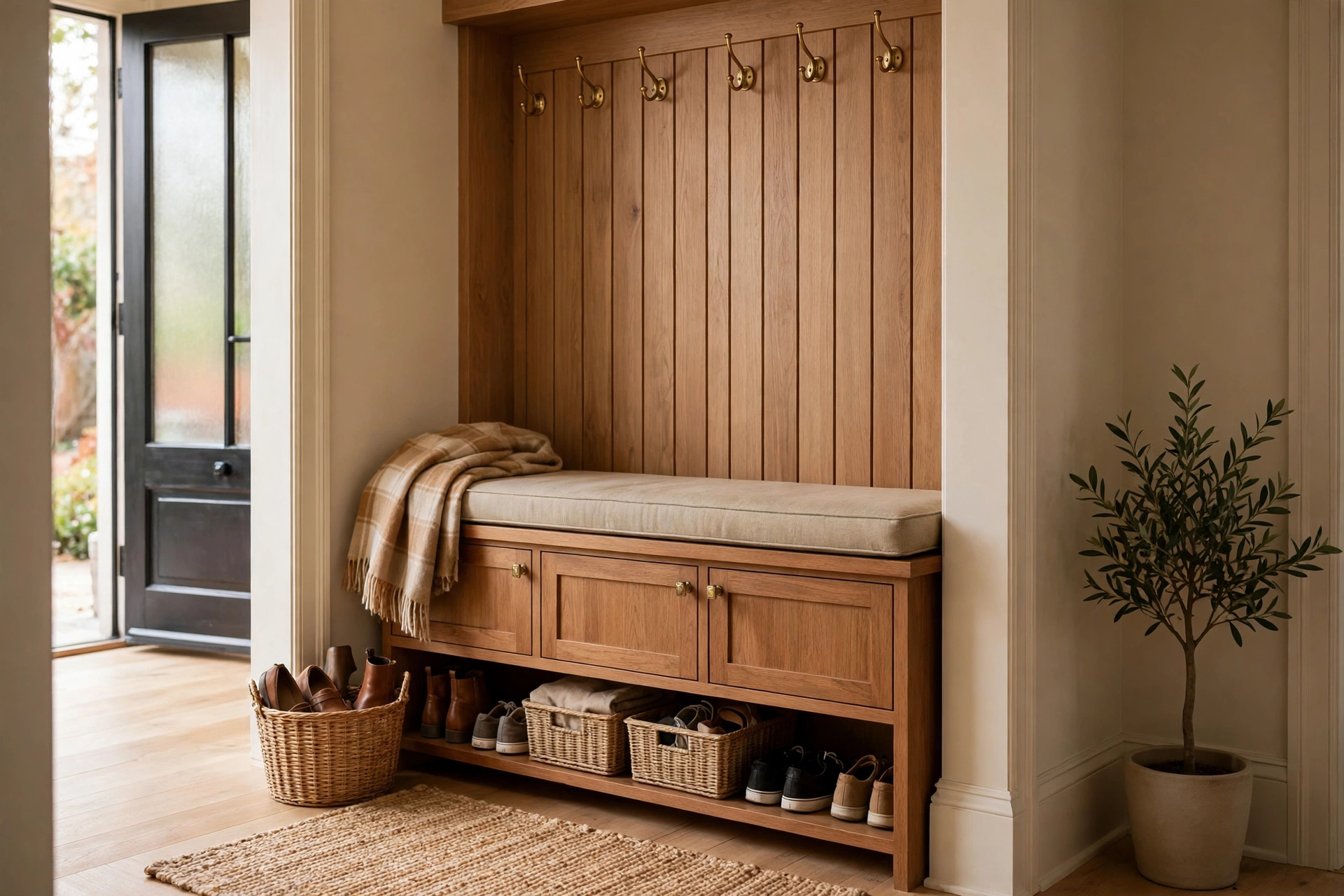
You do not need a full mudroom to get mudroom function. A mini station — bench seat, shoe cabinet below, hooks above, and a top shelf — packs the whole routine into one wall. This is the best setup for families with kids, because everything has a place: shoes below, backpacks and coats on hooks, hats and gloves on the shelf. Use labeled bins or baskets inside the cabinet for each child so morning routines run faster. A durable, wipeable bench cushion and a boot tray beside the station catch wet-weather mess before it reaches the rest of the house. Keep the station near the door you actually use most, not the formal front door nobody opens.
15. The Freestanding Cabinet You Can Move

Renters and anyone who rearranges often should favor a freestanding cabinet: no wall mounting, no holes, and it moves with you. Choose one with adjustable feet so it sits level on uneven floors, and keep it light enough to shift for cleaning. A freestanding cabinet with doors looks like ordinary furniture, which helps in rentals where built-ins are not an option. If it wobbles, anchor it lightly or add felt pads under the feet. Because you can move it, you can also test placements — by the door, along the side wall, or in a nearby closet — until you find the spot that keeps shoes closest to where they actually come off.
16. The Boot-Ready Cabinet With a Tall Section
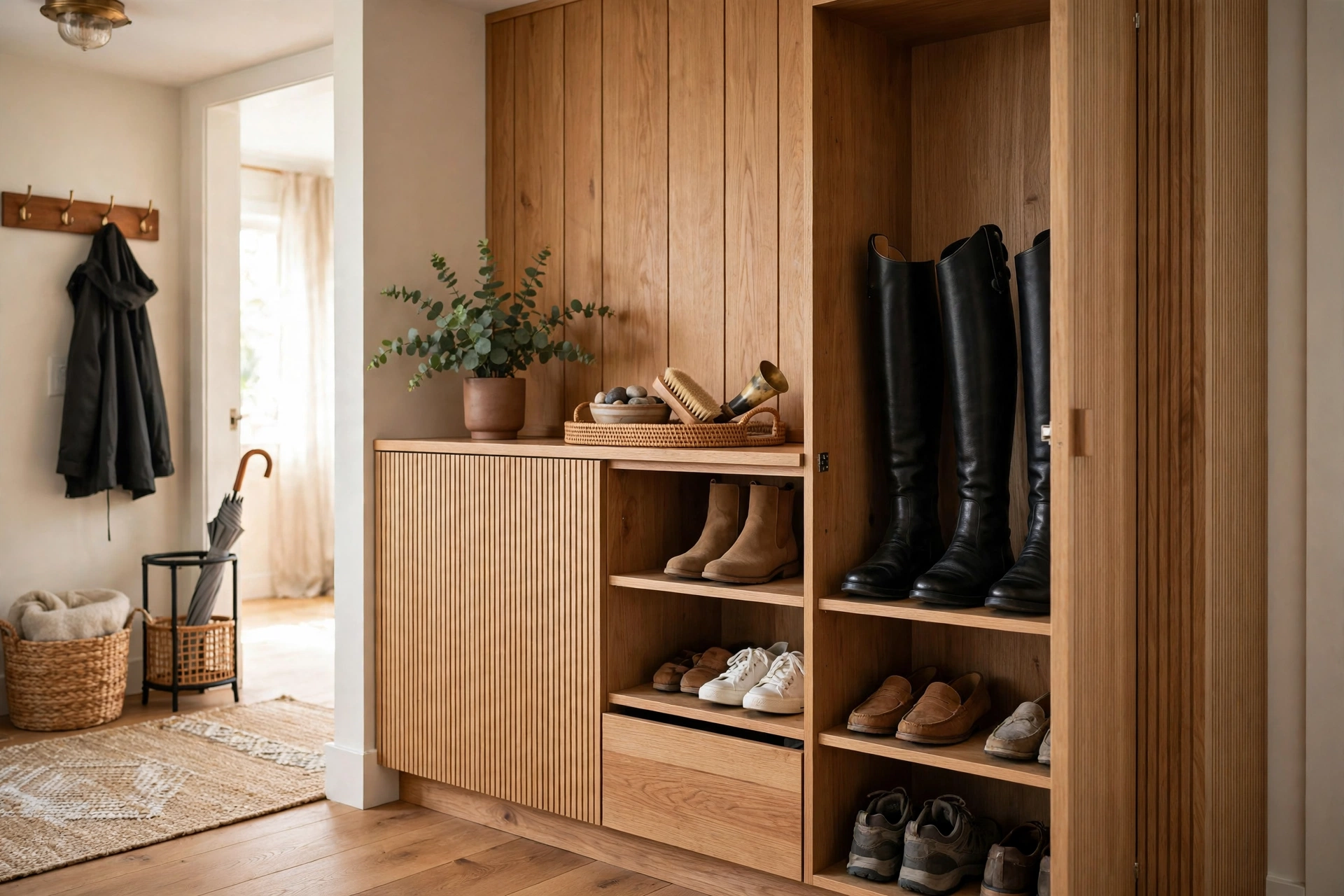
Standard shoe shelves crush tall boots or force them to flop over. A cabinet with at least one tall section — a full-height compartment or a shelf removed — keeps boots upright, which preserves their shape and makes them easier to grab. Pair the tall section with a drip tray or boot mat at the base for wet days. Boot clips or shapers inside the tall section stop leather from creasing. If your household wears lots of boots in winter, make the tall section the biggest part of the cabinet and let regular shoes take the remaining shelves. This one detail separates a cabinet that works all year from one that only works in sandal season.
17. The Two-Tone or Painted Cabinet
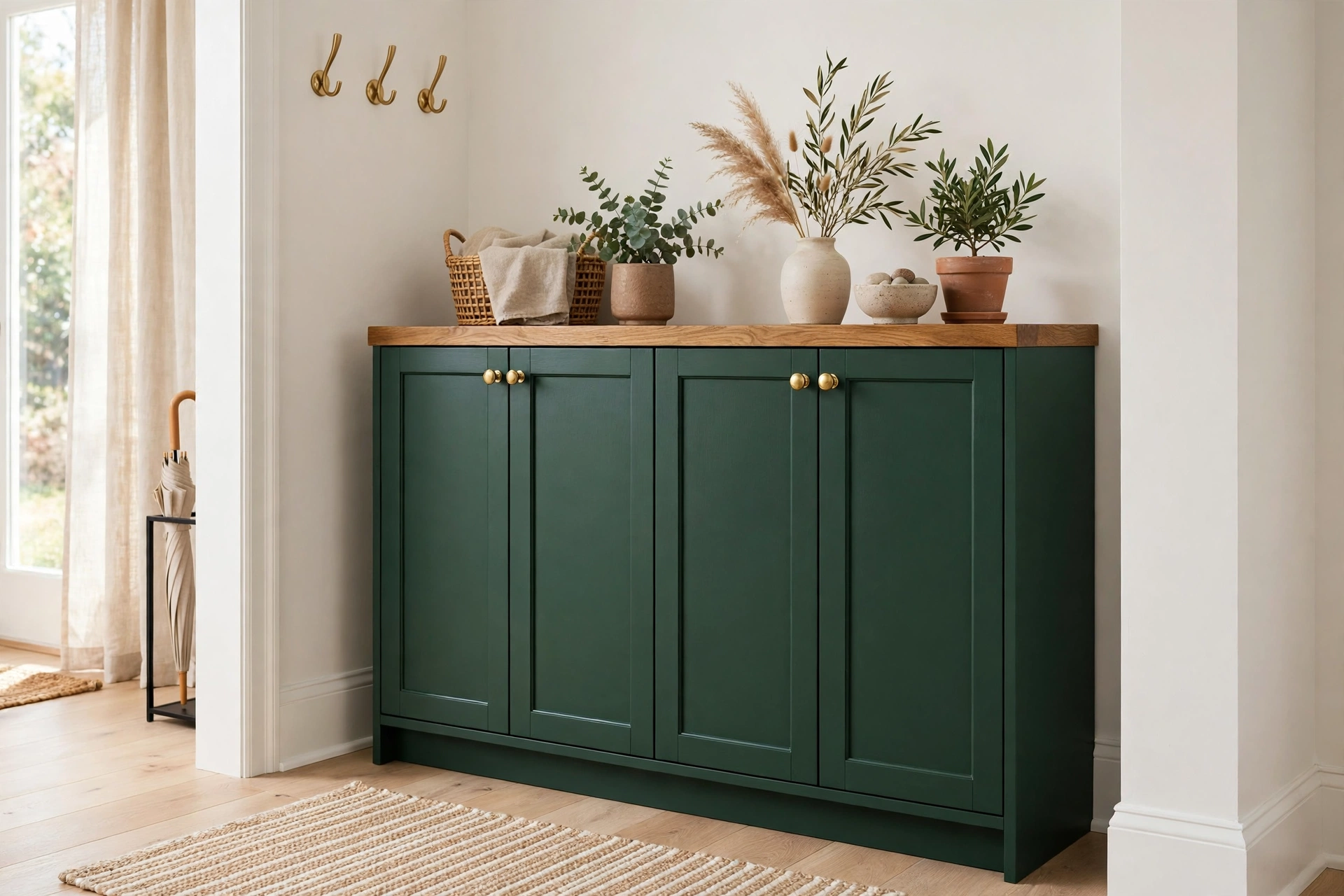
A painted cabinet is the fastest way to make shoe storage look deliberate instead of default. Deep green, navy, or charcoal doors with brass or wood knobs turn a plain cabinet into a feature, while a two-tone finish — painted body, wood top — adds warmth and keeps the piece from feeling flat. Painting also lets you match the cabinet to your front door or trim color, tying the entryway together. Use durable cabinet paint or a washable finish, since entryway furniture takes knocks from bags, keys, and shoes. If you are buying new, look for factory-painted finishes; if you are upcycling, sand, prime, and seal properly so the paint survives daily use.
18. The Glass-Front Display Cabinet
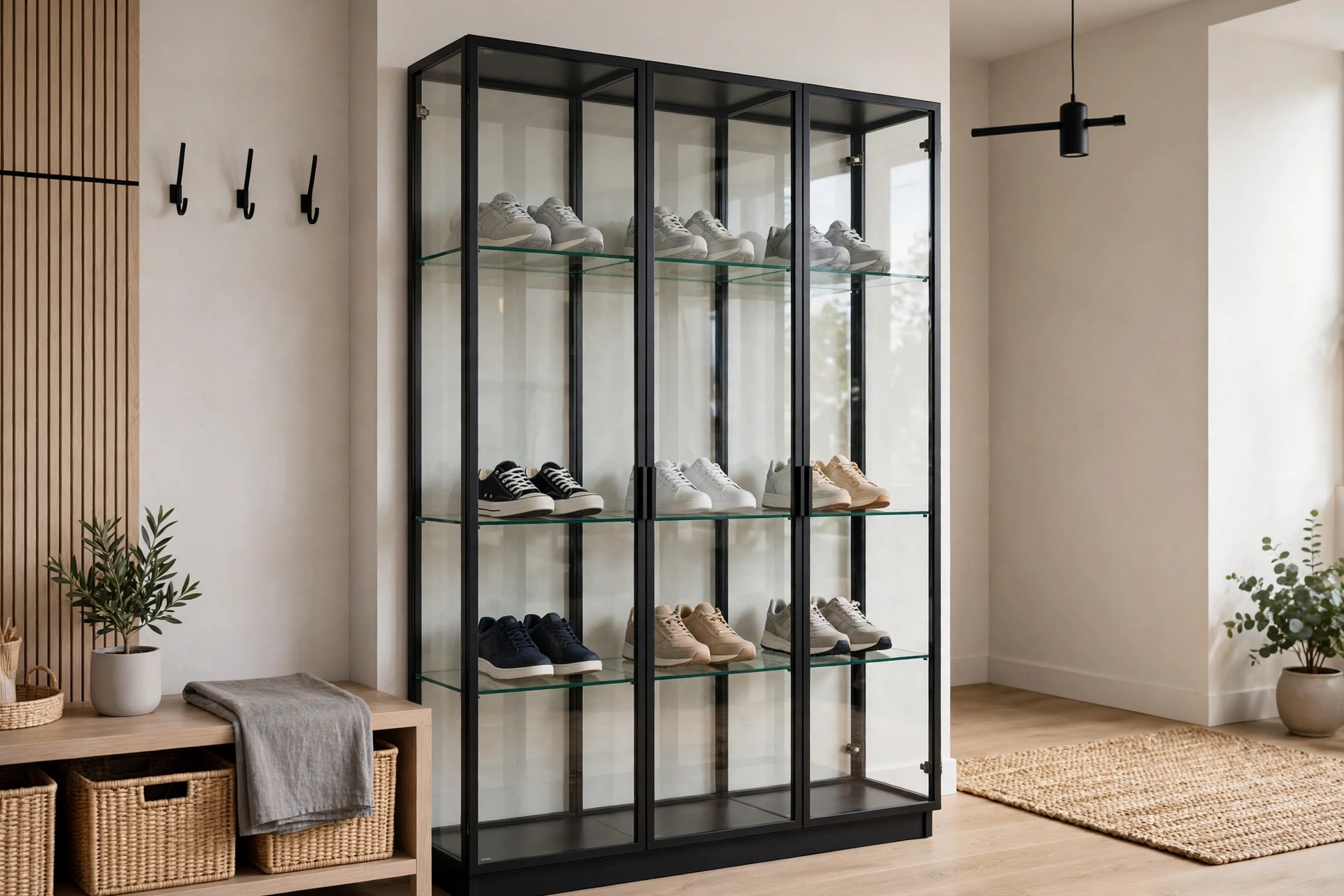
For collectors and sneaker lovers, hiding shoes away feels wrong — a glass-front cabinet displays them while keeping dust off. Clear or lightly smoked glass doors show the collection, and interior lighting makes it feel like a real display. This style works best when the shoes inside are genuinely cared for and organized by color or style; a messy glass cabinet looks worse than a messy closed one. Keep the collection edited to what fits neatly, store overflow elsewhere, and clean the glass regularly. In a modern entryway, a glass-front cabinet reads as both storage and decor, especially paired with minimal, matching shelving.
19. The Under-Stair Shoe Cabinet
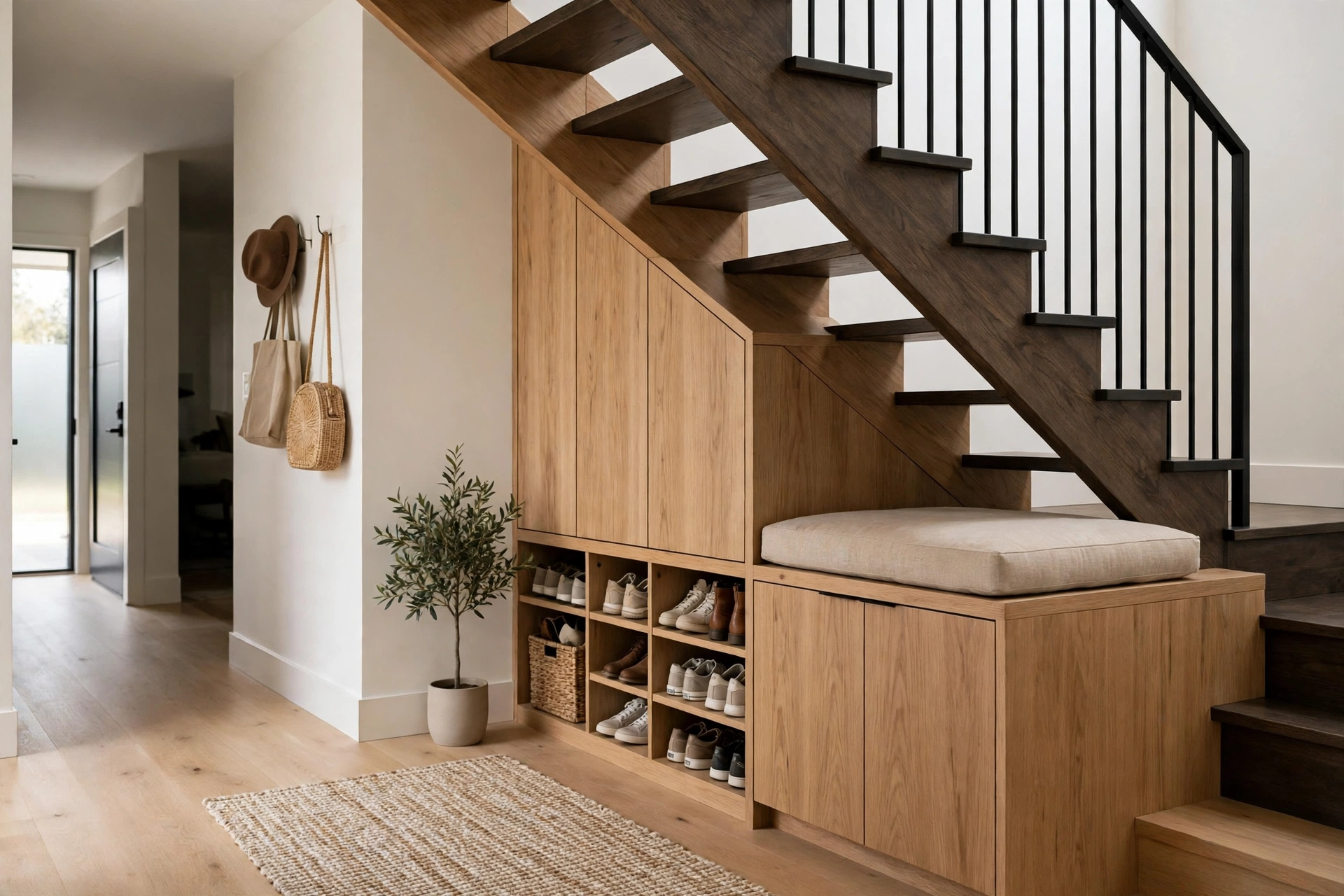
The space under the stairs is often the largest unused storage zone near the front door. A custom or modular cabinet fitted under the slope turns it into deep shoe storage, with tall sections where the ceiling is high and drawers or low doors where it drops. Pull-out drawers on casters work brilliantly under stairs because they bring deep storage out to you instead of forcing you to crawl in. Measure the slope carefully and plan the layout from tallest to shortest. Under-stair storage keeps shoes completely out of the entryway sightline, which is ideal for homes where the front door opens directly into the living room.
20. The Cabinet With a Key and Tech Drop Zone
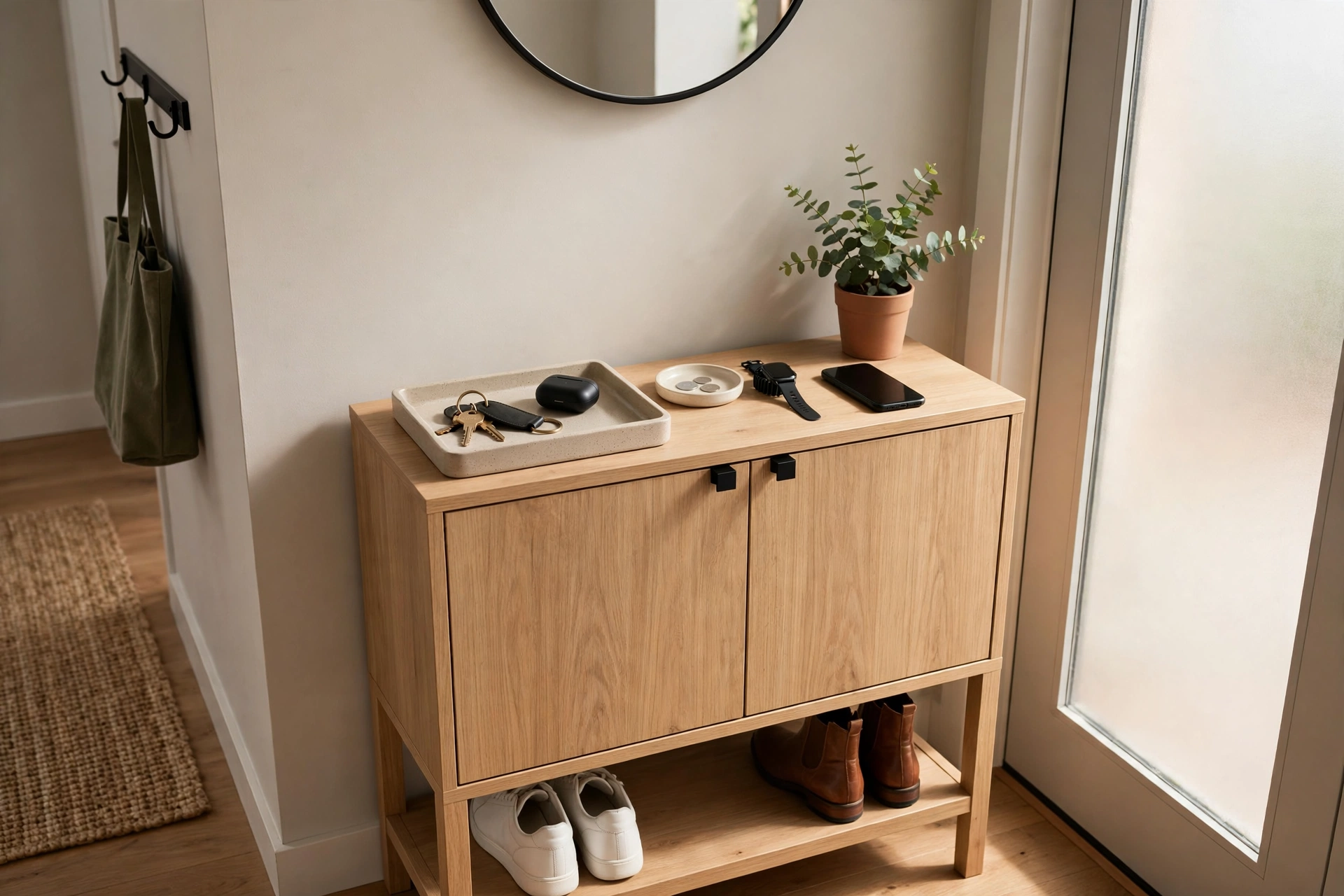
Modern entryways need more than shoe storage: keys, wallets, sunglasses, and phones all land by the door too. A cabinet with a dedicated drop zone on top — a tray for keys, a small dish for coins, and a discreet charging spot — keeps those items from migrating onto every surface. Some cabinets include a drawer specifically for small essentials, which is even better because it hides the clutter completely. Add a small wall-mounted key hook or a magnetic strip above the cabinet if the top fills up. When shoes and small essentials each have a home, the entryway stays clear without any extra effort at the end of the day.
21. The Rustic Wood Crate-Style Cabinet
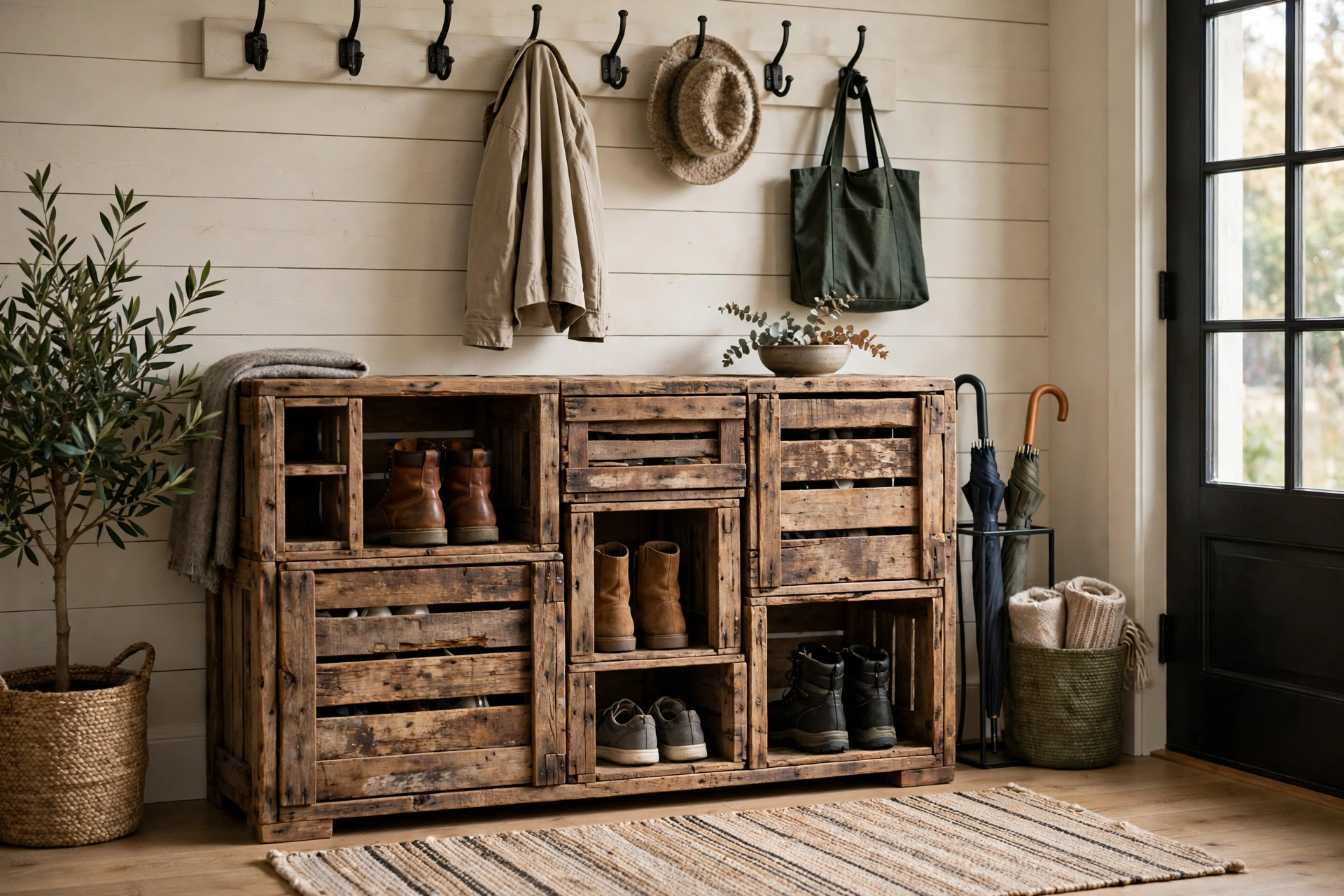
Reclaimed wood, visible grain, and simple joinery give a crate-style cabinet a warm, farmhouse character that suits country and rustic homes. Open crate cubbies show off the wood and make shoes easy to grab, while a cabinet version with doors keeps the rustic look with a tidier front. Solid wood handles heavy use well and ages gracefully — dents and marks add character rather than looking like damage. Pair it with a woven rug and a wooden bench for a cohesive rustic entryway. Seal the wood against moisture if shoes come in wet, and choose a finish that matches your floors so the piece feels grounded in the room.
22. The Minimal Handleless Cabinet
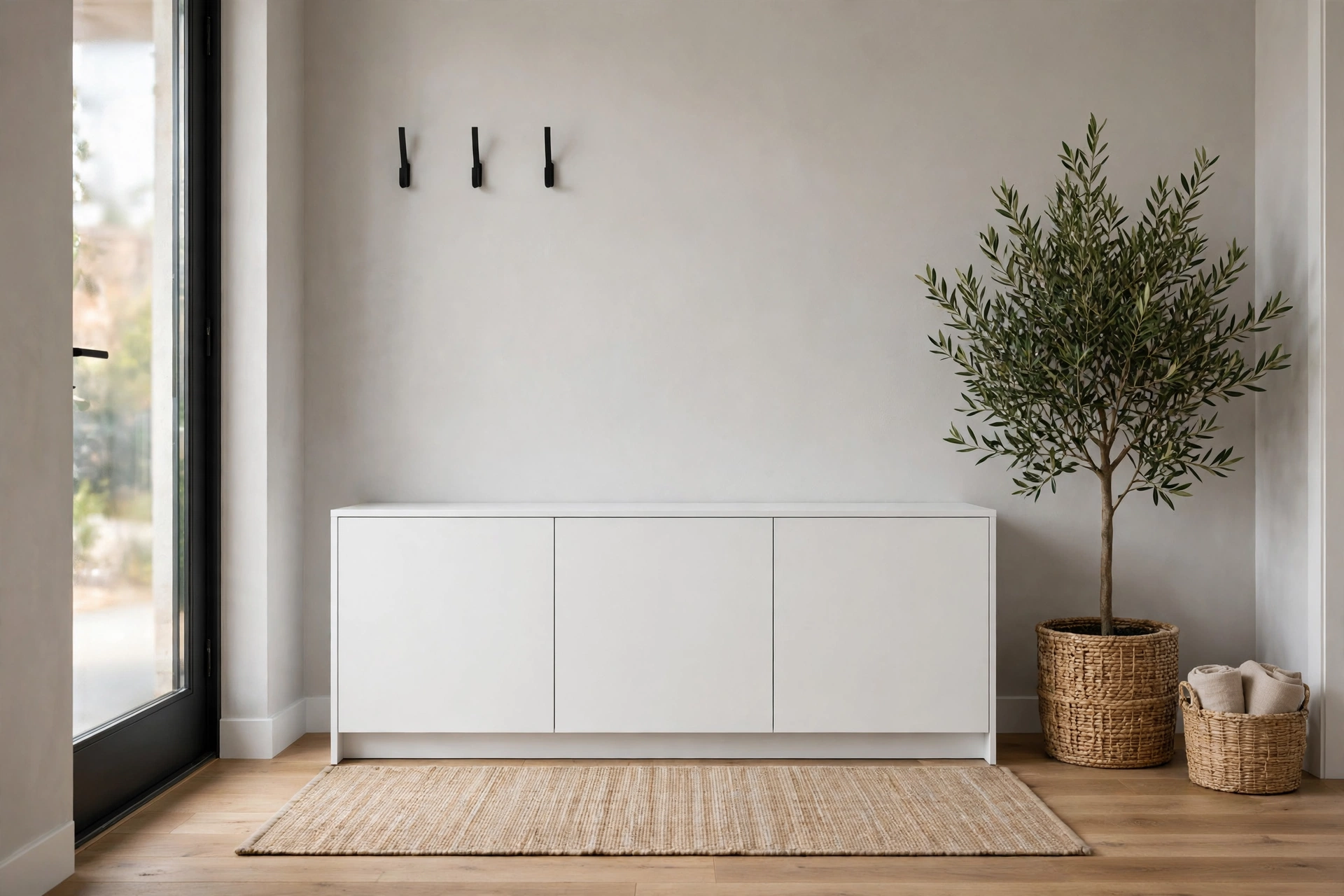
For a clean, contemporary entryway, nothing beats a handleless cabinet. Push-to-open doors and flat fronts create an uninterrupted surface that blends into the wall, especially in white, light grey, or pale wood. Without handles catching bags and coats, the hallway feels smoother and easier to move through. Handleless doors need good push mechanisms, so test them before buying — cheap ones stick or pop open. This style suits small, modern apartments and homes where the entryway flows into an open-plan living space and the storage should disappear rather than announce itself. Keep the top completely clear to preserve the minimal effect.
23. The Labeled-Bin Cabinet for Kids
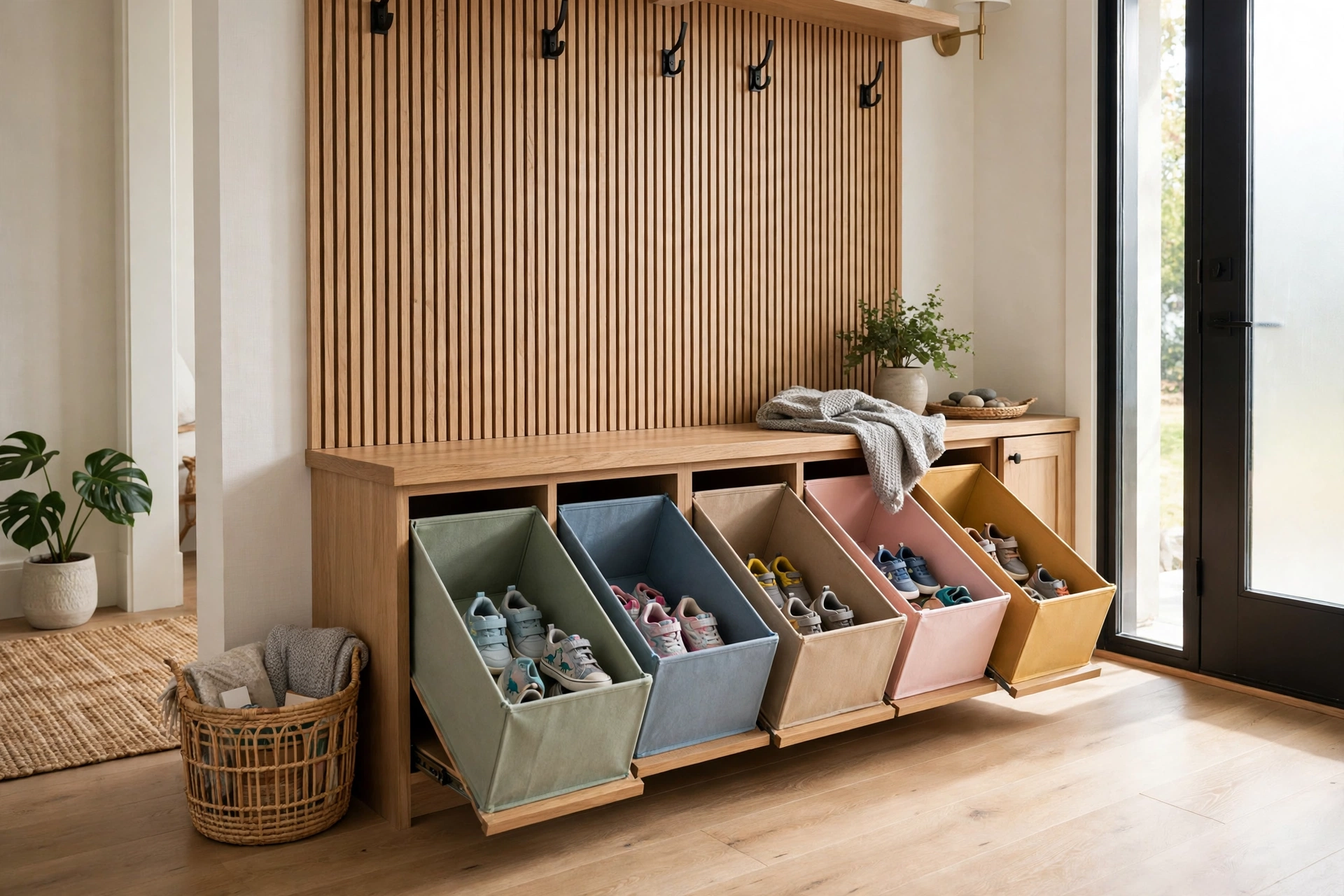
Kids’ shoes are small, numerous, and constantly outgrown, so a cabinet with labeled bins — one bin per child, or one per shoe type — is the system that actually sticks. Bins pull out like drawers, so kids can find and return shoes themselves, and labels with names or pictures help younger children who cannot read yet. Use washable bins, since kids’ shoes bring in the most dirt. Keep the bins at child height and adult shoes in a separate cabinet section above. Review the bins each season, pass on outgrown pairs, and the system resets itself. A labeled-bin cabinet turns the daily shoe hunt into a two-minute job instead of a morning argument.
Frequently Asked Questions
How deep should an entryway shoe cabinet be?
For most shoes, 12 to 14 inches of interior depth is comfortable. Slim tilt-out cabinets can be as shallow as 6 to 8 inches, which suits narrow hallways, but they fit fewer pairs per compartment. Always measure your longest pair before buying.
How many pairs can a shoe cabinet hold?
It depends on size and shelf spacing. A small two-tier cabinet holds about 6 to 10 pairs, a standard double-door cabinet holds 12 to 20 pairs, and a tall family cabinet can hold 15 to 30 pairs or more. Count your household’s daily pairs, then add room for seasonal shoes.
Do shoe cabinets cause odor?
They can if airflow is poor. Choose slatted, louvered, or rattan doors, or leave a small ventilation gap, and avoid putting soaking-wet shoes straight into a closed cabinet. Cedar blocks, baking soda sachets, and regular cleaning keep odors down.
Should shoe storage be open or closed?
Closed storage looks tidier and suits entryways visible from living areas, while open storage is faster for daily pairs. Many homes do best with both: open shelves for current shoes and closed doors for everything else.
Where is the best place for a shoe cabinet?
As close as possible to the door you actually use, on a wall that does not block the door swing or the walkway. If the front door is formal and rarely used, put the cabinet by the side or garage door instead.
Can I use a shoe cabinet in a rental?
Yes — choose a freestanding cabinet that needs no wall mounting, or a floating cabinet only if your landlord allows fixings. Freestanding units move with you and need no holes in the wall.
Conclusion
The right shoe storage cabinet does more than hide shoes — it sets the tone for the whole house the moment someone walks in. Start with your space: measure the wall, note the door swing, and count the pairs that actually live by the door. Then pick the style that fits your household, whether that is a slim tilt-out for a narrow hall, a tall cabinet for a busy family, or a bench-and-hooks station that handles the full morning routine. Whichever idea you choose, keep the system simple enough to maintain, and your entryway will stay welcoming every day, not just the day you organize it. For more entryway and storage inspiration, explore our garage makeover ideas, staggered floating shelves ideas, backyard ideas, tree bookshelf ideas, and glass coffee table decor ideas.