31 Sage Green and Pink Bedroom Ideas for a Soft, Grown-Up Retreat
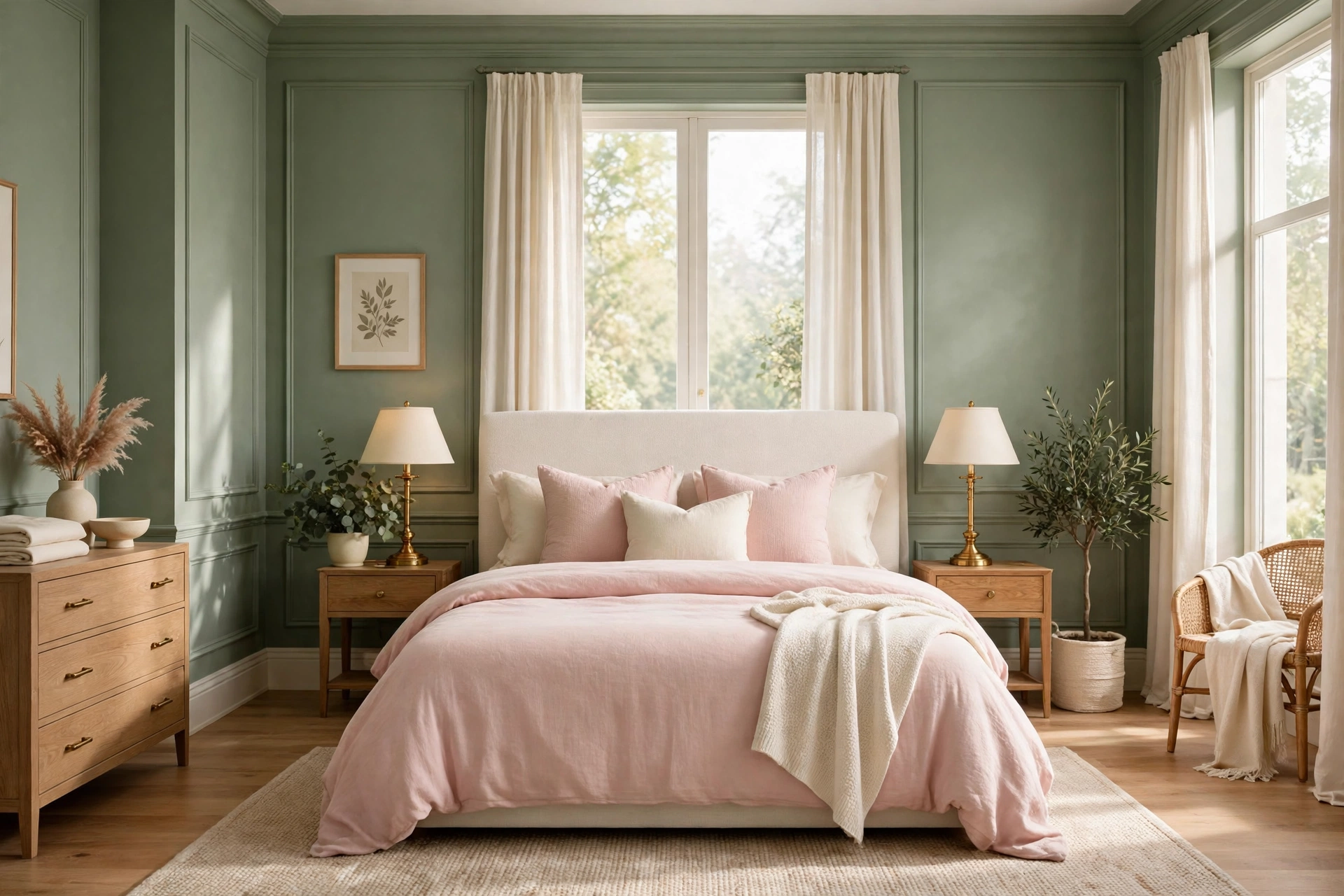
Sage green and pink is one of those color pairings that sounds sweet on paper and looks surprisingly grown-up in real life. Sage brings the calm of nature indoors — muted, earthy, and easy to live with — while pink adds warmth, softness, and just enough romance to keep the room from feeling flat. The trick is balance: let one color lead and the other accent, ground both with cream, white, and natural wood, and repeat each shade at least twice so the room feels intentional rather than accidental. The 31 ideas below cover walls, bedding, furniture, lighting, and small finishing touches, so whether you are repainting a whole primary bedroom or just refreshing the bed, you will find a version of this palette that fits your room, your budget, and your style.
1. Sage Walls with Blush Pink Bedding
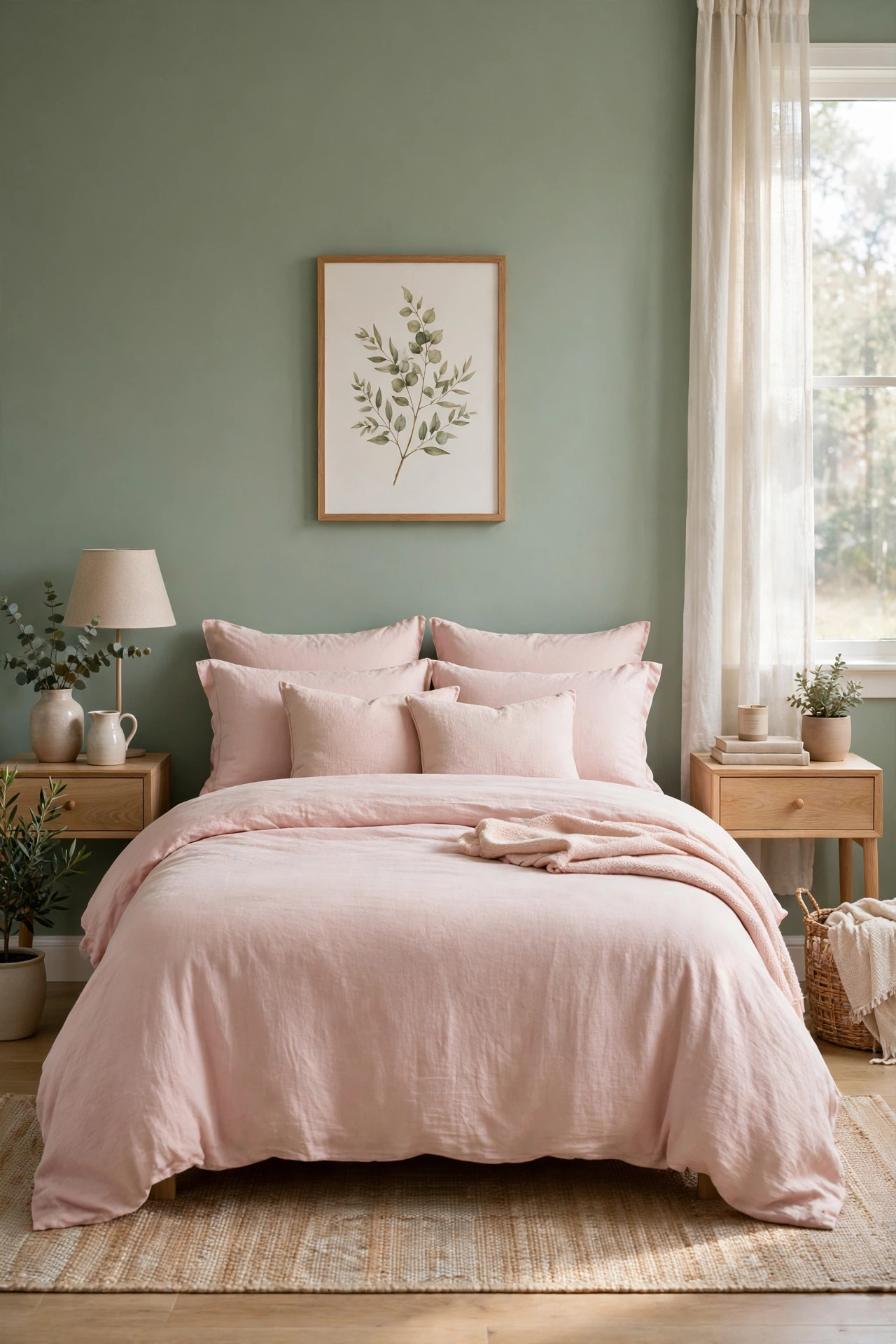
Start with the classic formula: paint the walls a soft, grayed sage and dress the bed in blush pink. Sage on all four walls feels restful rather than dark, especially in a room with decent daylight, and blush bedding keeps the bed as the warm focal point. Choose a sage with gray undertones rather than yellow ones so it reads sophisticated, not minty, and pick blush linen or cotton rather than shiny satin for a relaxed, adult finish. Add cream pillows between the sage and pink so the two colors meet gently, and finish with light oak nightstands and a woven rug. This is the easiest version of the palette to live with, and it is forgiving if you later swap the pink for another accent.
2. Blush Walls with Sage Green Bedding
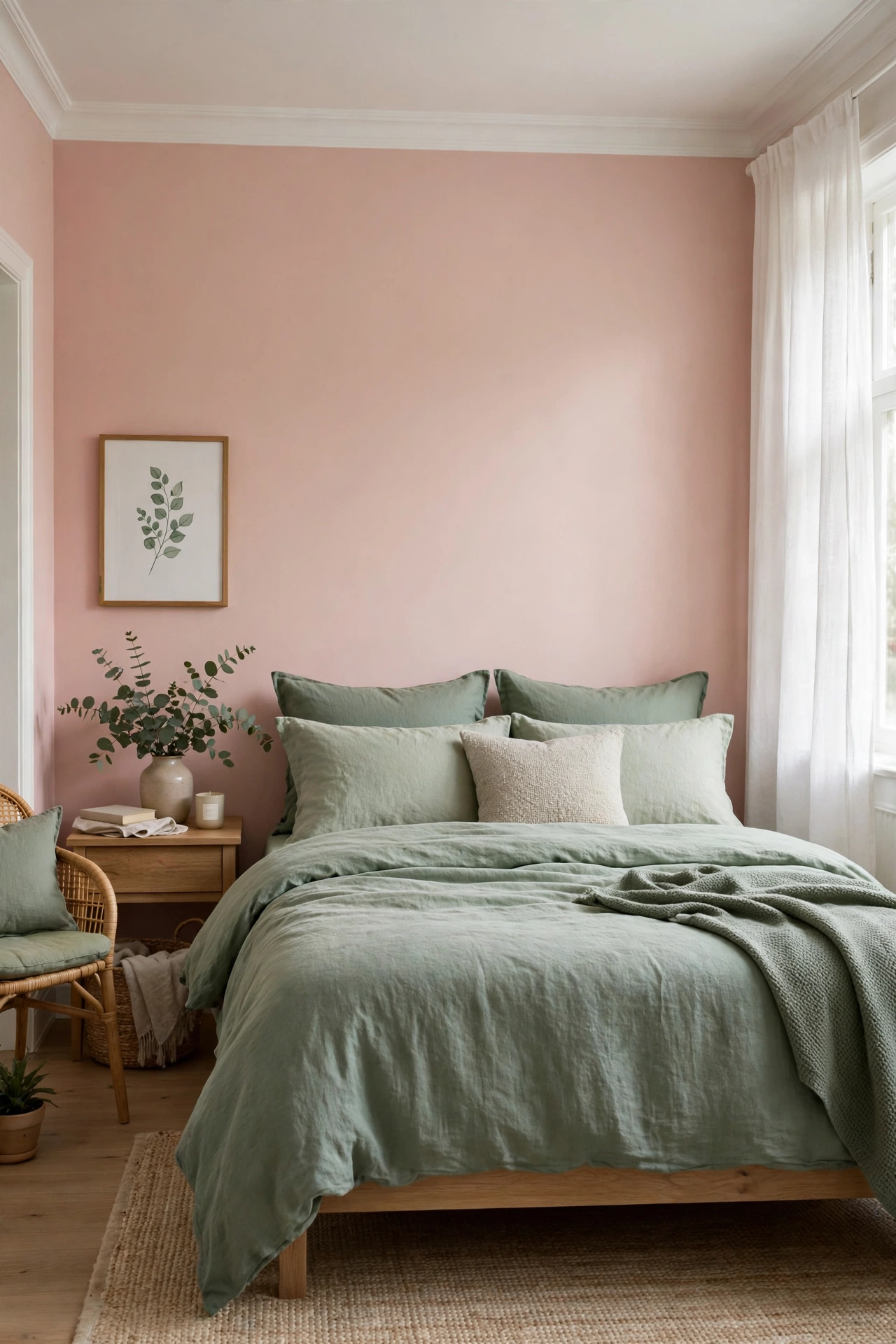
If sage walls feel too cool for you, reverse the pairing. Paint the walls a pale, warm blush and make the bed sage green instead. Blush walls glow beautifully in morning light and make a bedroom feel cozy from the moment you walk in, while sage bedding — a duvet, a quilt, or layered throws — keeps the room grounded and prevents it from feeling overly sweet. Keep the ceiling and trim crisp white so the blush does not close the room in, and repeat the sage in curtains or a bench cushion so the bed does not carry the green alone. This reversed version suits north-facing rooms especially well, because the warm walls compensate for cooler light.
3. A Sage Velvet Headboard with Pink Pillows
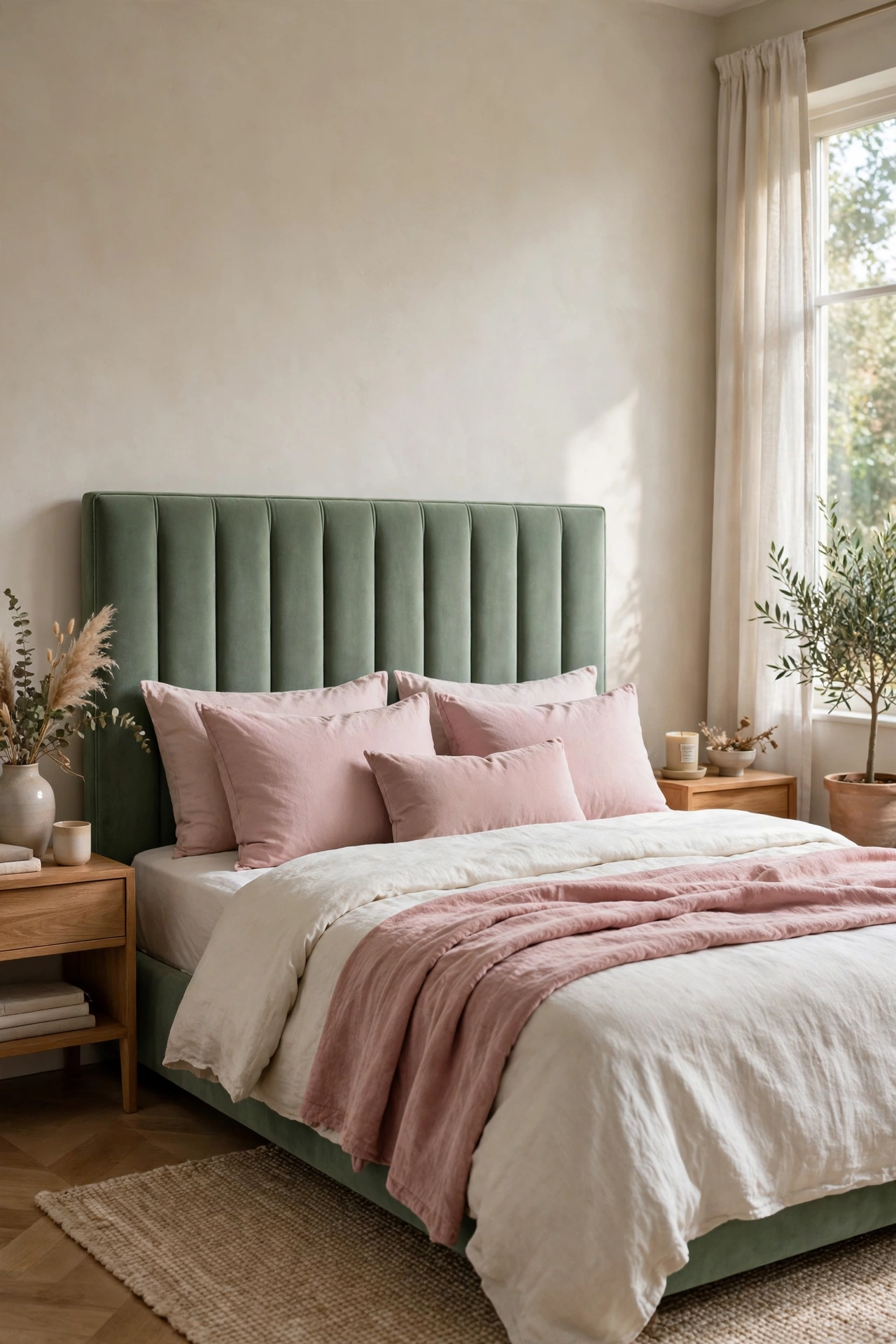
When you do not want to repaint, let the headboard carry the sage. A tall, sage velvet headboard — channel-tufted or plain — instantly gives the bed presence and a soft, upholstered backdrop for reading. Layer dusty pink pillows in two sizes in front of cream sleeping pillows: a pair of standard shams plus one smaller lumbar cushion is plenty, and mixing velvet with linen stops the arrangement from looking flat. Keep the walls warm white so the headboard stands out, and echo the sage once more with a throw folded at the foot of the bed. This single-furniture change delivers most of the palette’s effect without touching a paintbrush.
4. A Pink Upholstered Bed Against Sage Walls
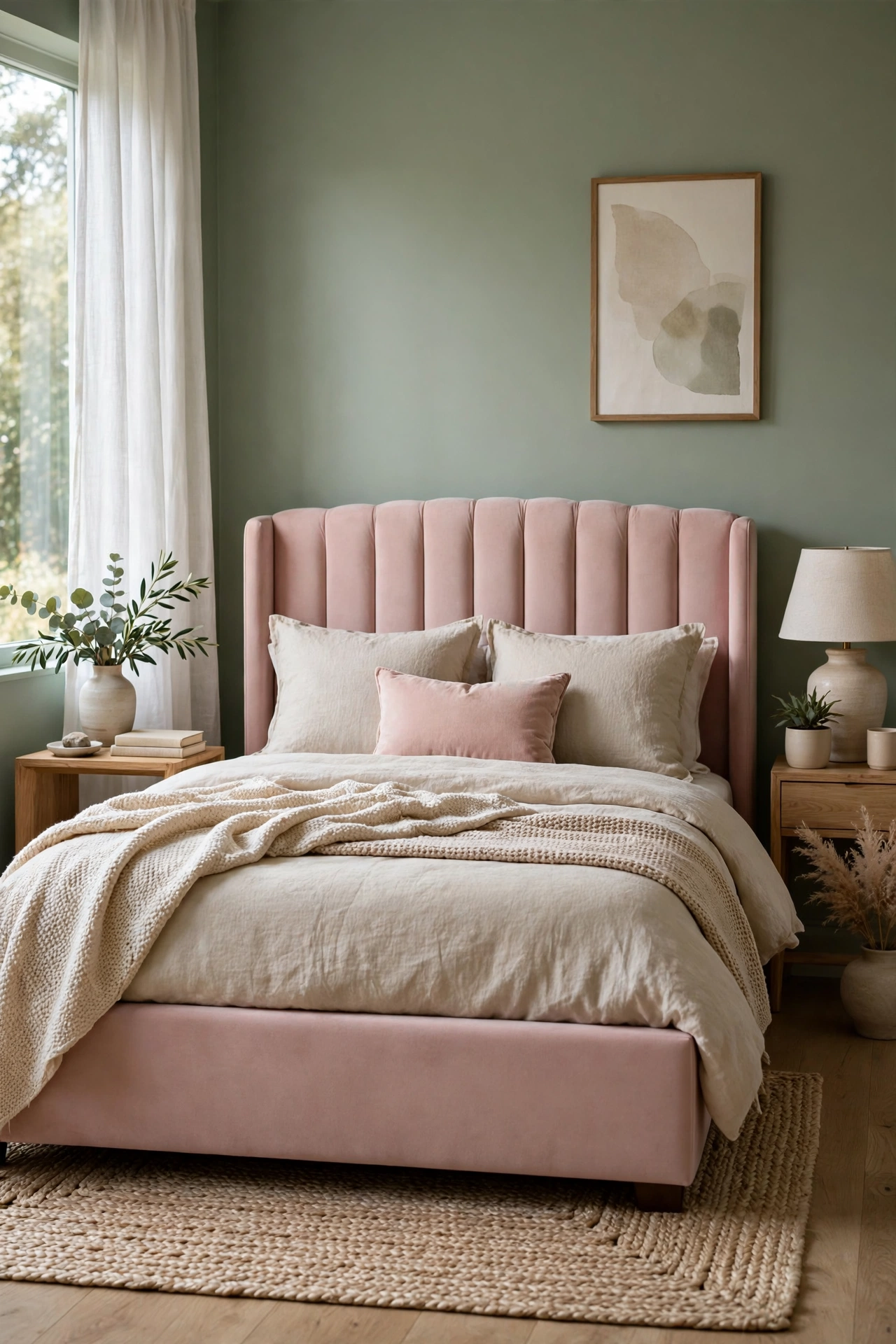
For a bolder take, make the bed itself pink. A blush or dusty-rose upholstered frame with a low, rounded headboard feels romantic without being childish, particularly when the walls behind it are a muted sage. Because both the bed and the walls are colored, keep everything else quiet: cream bedding, plain curtains, and simple wooden nightstands let the two main colors breathe. A pink bed works best in a medium or large room where it has space to be the star; in a small room, choose a paler pink and a lower headboard so the bed does not dominate. Add one piece of pink art or a pink vase elsewhere so the bed color feels connected to the room.
5. Sage and Pink Floral Wallpaper on One Wall
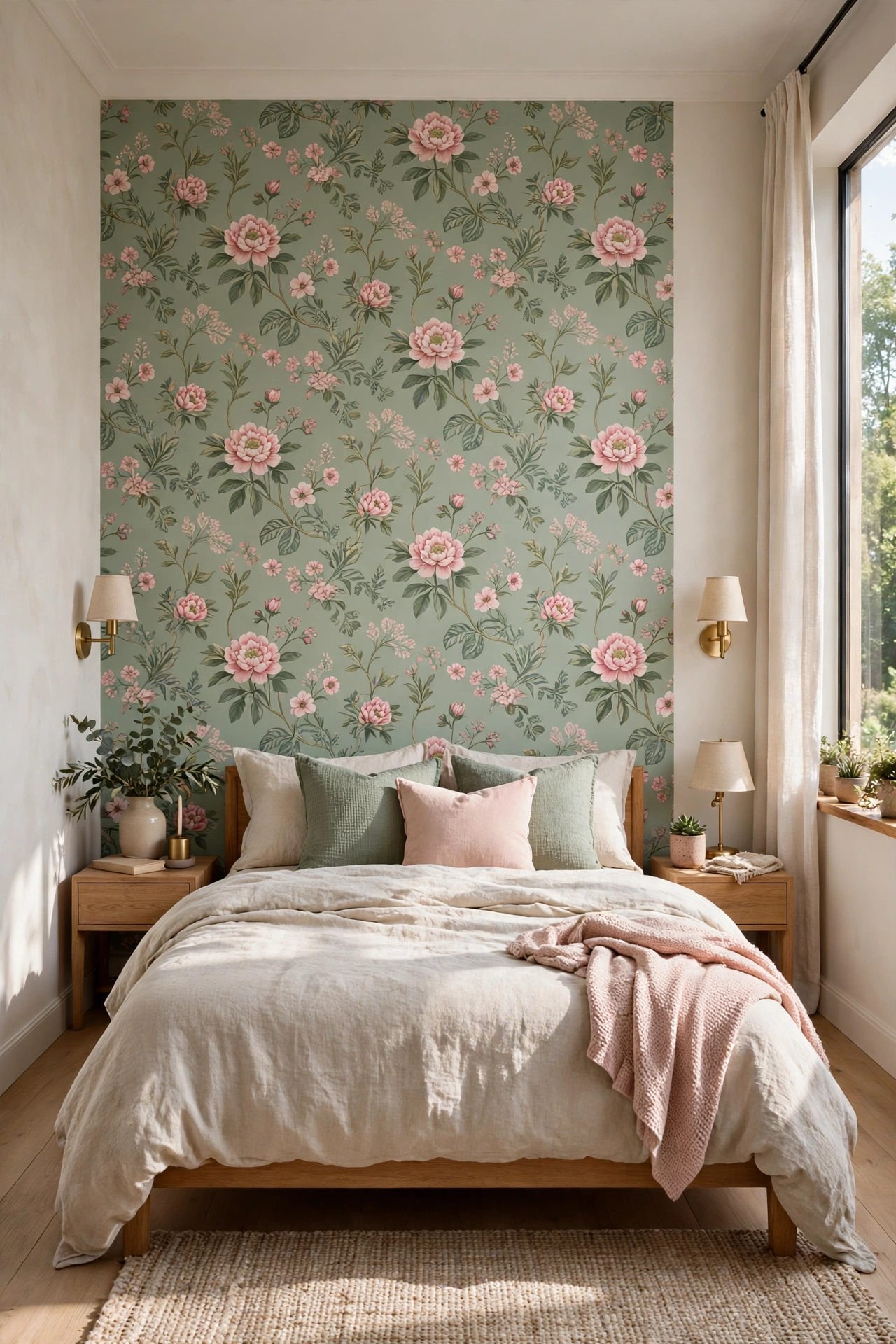
Wallpaper is the fastest way to prove sage and pink belong together, because a good floral print already balances them for you. Choose a design with sage leaves and soft pink blooms on a cream background, and hang it on the wall behind the bed only. The other three walls stay a plain sage or warm white pulled from the paper, which keeps the pattern from overwhelming the room. Then pick bedding in one of the paper’s solid colors — sage or blush — rather than adding a second pattern. A floral accent wall suits cottage, traditional, and romantic bedrooms, and it is easy to change later if your taste moves on, since only one wall is involved.
6. A Botanical Gallery Wall in Sage and Pink
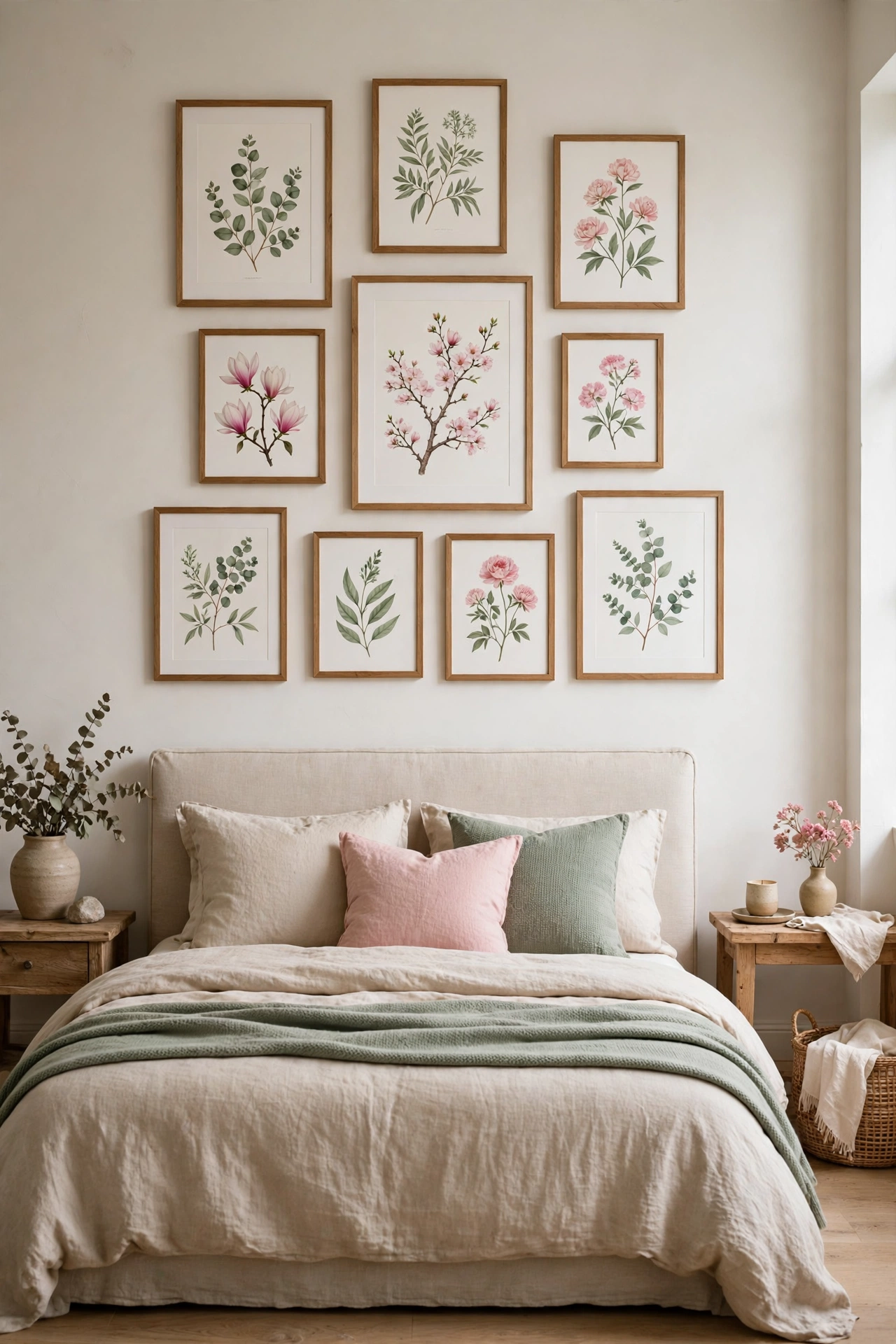
If full wallpaper feels like too much, a gallery wall gives you the same pairing in a lighter dose. Gather six to nine botanical prints — sage leaves, pink peonies, eucalyptus sprigs — in simple white or light-wood frames and arrange them in a loose grid above the bed or dresser. Mixing print sizes keeps the display from looking like a catalog page, while a consistent frame color keeps it calm. The art becomes the bridge between sage bedding and pink cushions, especially if the bedding and the prints share the same muted tones. This is also a renter-friendly idea: the frames hang with small hooks, and the whole palette can move with you to the next room.
7. Sage Curtains with Blush Sheer Panels
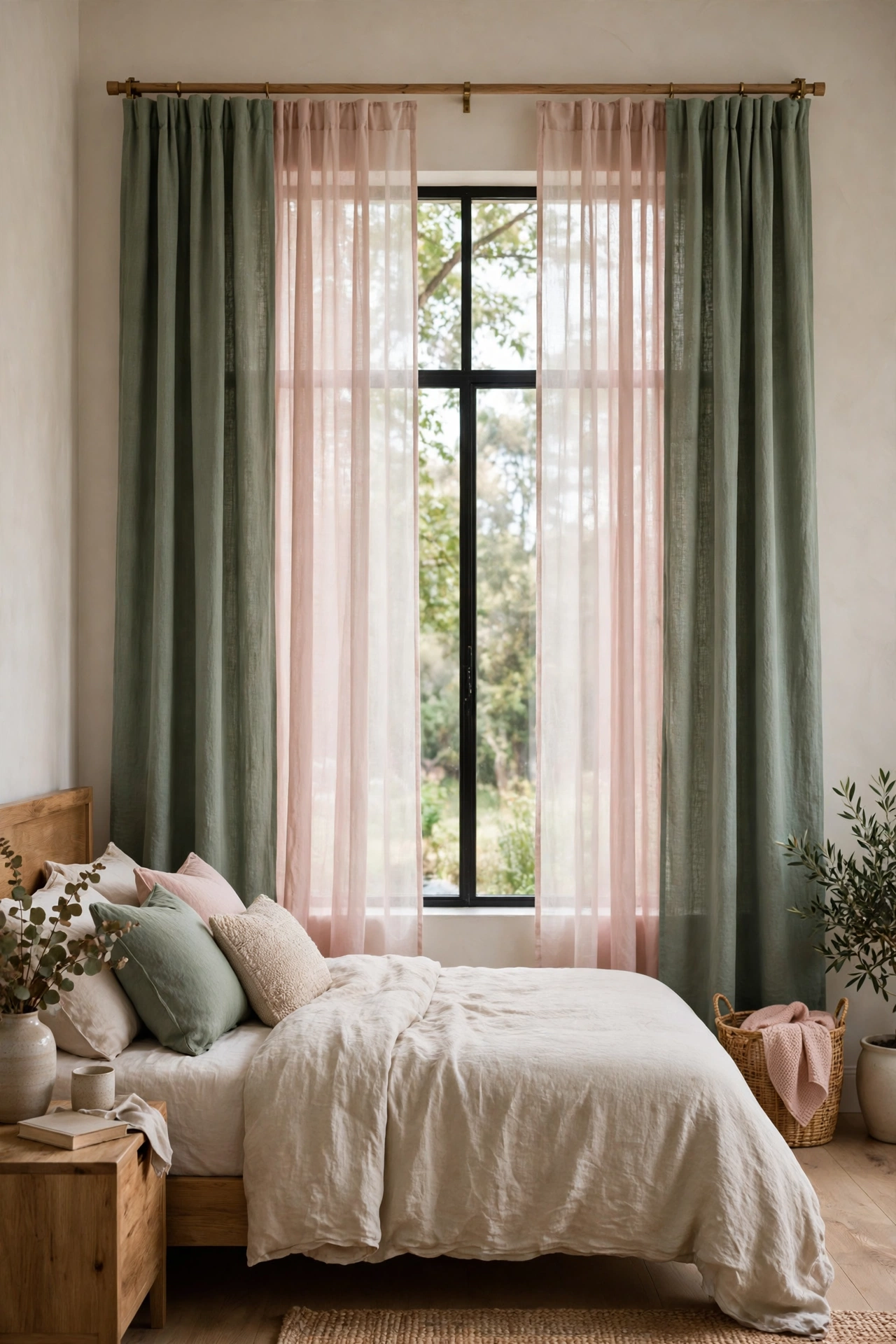
Windows are an underused place to carry a color palette, and curtains have real visual weight in a bedroom. Hang sage green curtains — linen looks best here — floor to ceiling, and layer blush sheer panels underneath them. During the day the sheers filter light into a soft pink glow while the sage panels frame the window; at night, closing the sage curtains gives privacy and a cocooning feel. Mount the rod high and wide so the window looks larger, and let the curtains just kiss the floor rather than puddle, which keeps the look tailored. Repeat the pairing once more with a sage cushion and a pink throw, and the window treatment will feel like part of a plan, not an afterthought.
8. Layered Bedding in Sage, Blush, and Cream
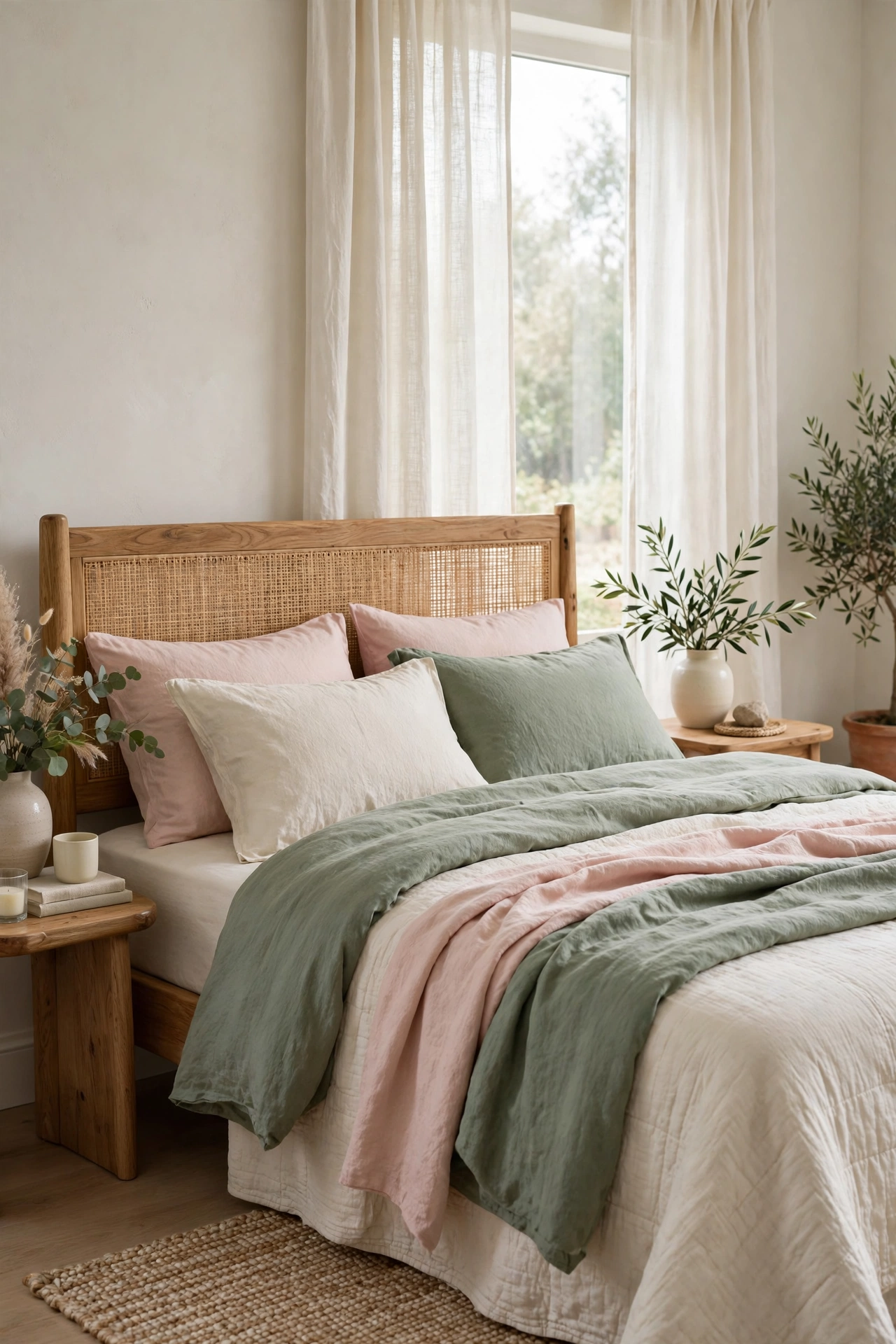
The bed is the largest surface in the room, so layering is where the palette succeeds or fails. Build it in this order: cream or white sheets, a sage duvet or coverlet, a blush throw folded across the lower third, and pillows that mix all three colors. Cream is the essential buffer — without it, sage and pink can sit too close together and look busy. Vary the textures as well as the colors: linen sheets, a cotton quilt, a knit or velvet throw. That mix of textures is what makes a two-color bed look expensive rather than matchy. Make the bed every morning with the throw straight and the pillows stacked, and the whole room will look finished even if nothing else changes.
9. A Pink Throw and Sage Knit on a Neutral Bed
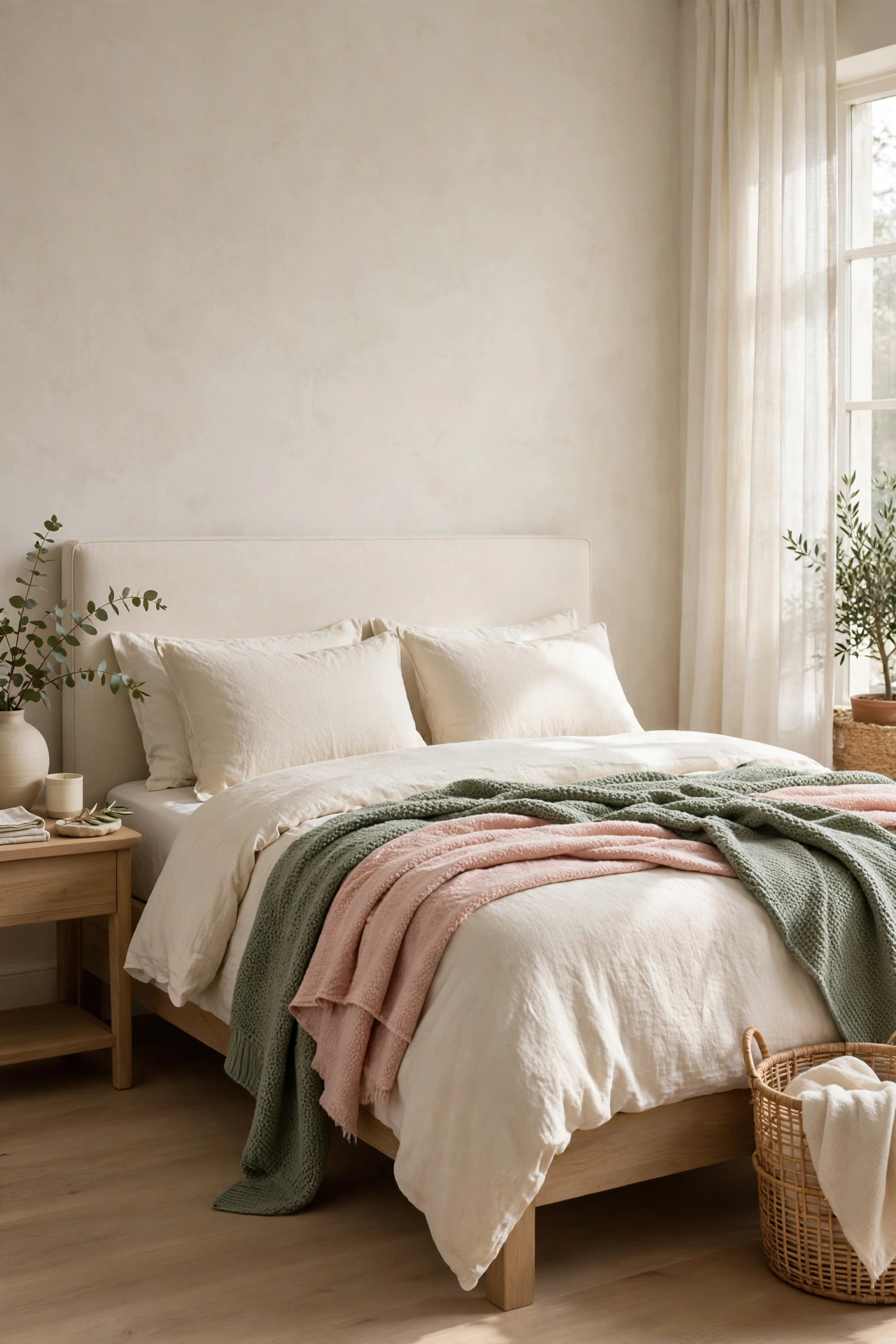
Not ready to commit to painted walls or a new bed? Two throws will tell you whether you love this palette. Start with a neutral cream or white bed, drape a blush pink throw diagonally across one corner, and fold a chunky sage knit at the foot. The combination costs little, takes five minutes, and can be swapped seasonally — heavier knits in winter, lighter linen in summer. Because the base stays neutral, you can also test stronger or softer shades of pink and sage before investing in paint or furniture. If guests compliment the bed, you have your answer; if not, the throws move to the living room sofa and nothing is wasted.
10. A Sage Dresser with Pink Details
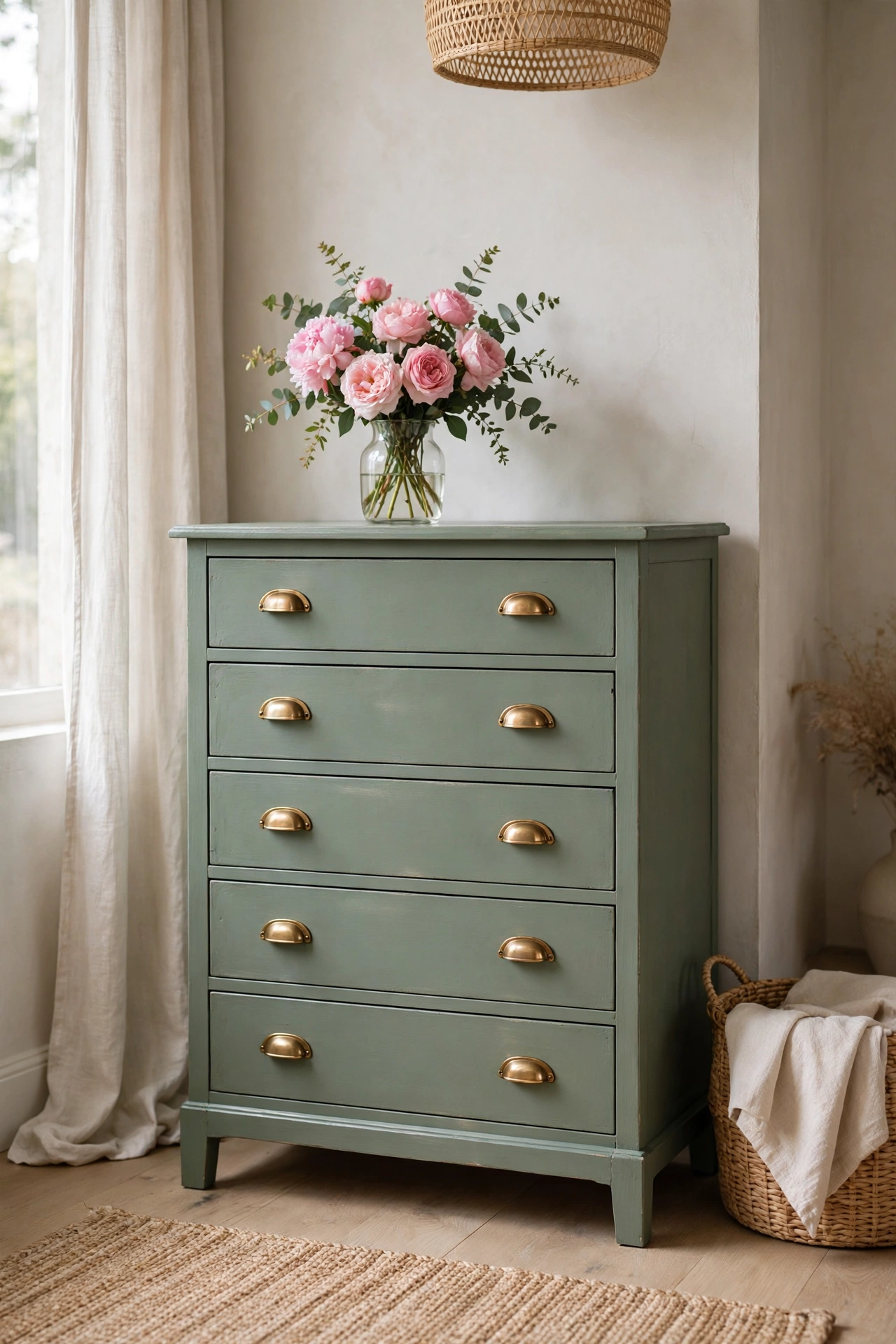
Painted furniture is a middle path between new bedding and a full repaint. A sage dresser or chest of drawers — painted in a durable satin finish with the original wood top left natural — adds a solid block of green that grounds the room. Style it with pink details that are easy to change: a small vase of pink roses, a blush jewelry box, a framed pink print leaning against the wall. Brass or gold drawer pulls warm up the sage beautifully and tie in with any gold lighting elsewhere in the room. If you are painting an old piece yourself, sand and prime properly and use two thin coats; a rushed paint job will chip on drawer edges within months.
11. A Pink Velvet Armchair with a Sage Throw
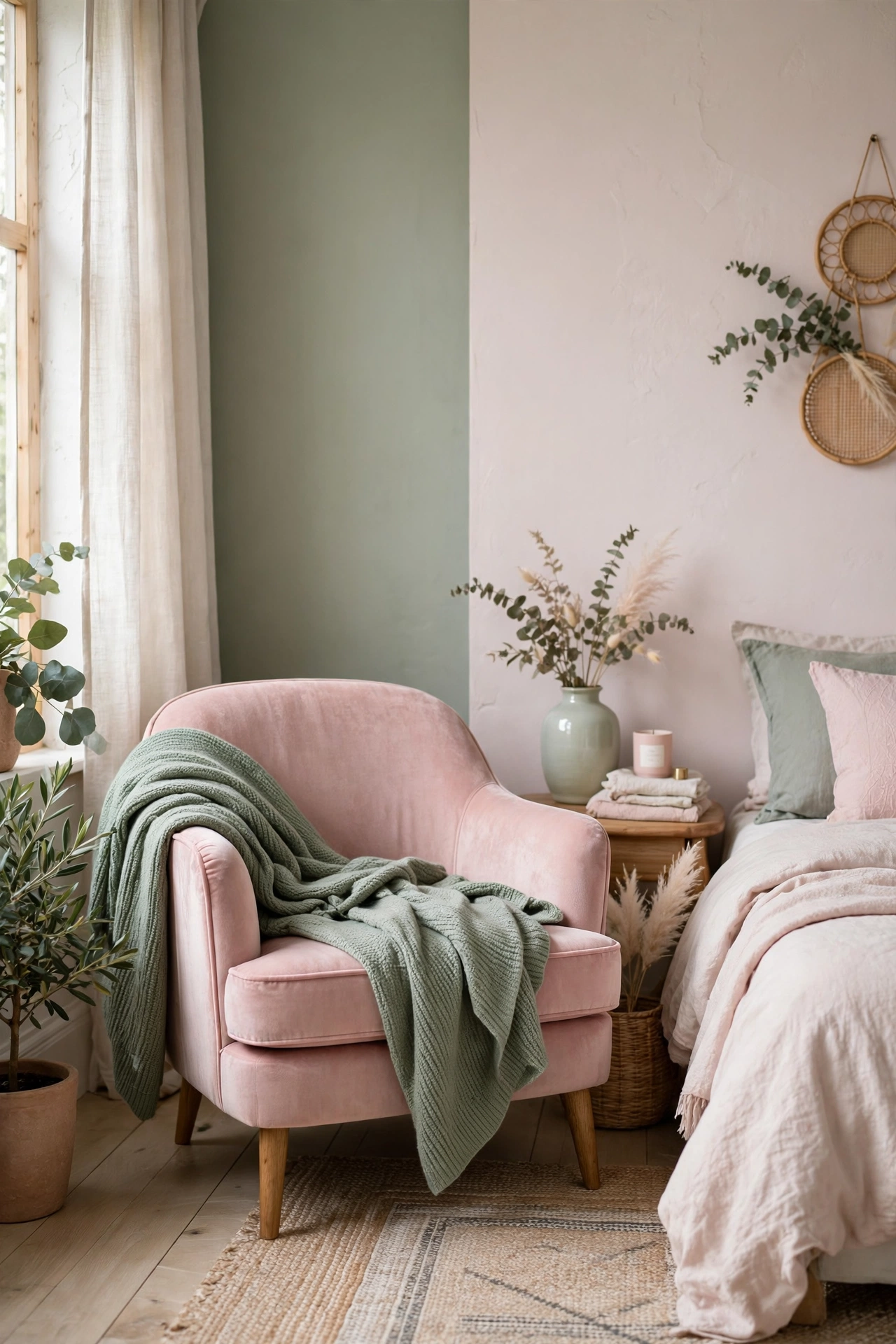
Every bedroom benefits from a chair, and a pink velvet armchair turns an empty corner into a reading spot. Choose a dusty pink rather than a bright one so the chair reads elegant, and drape a sage throw over one arm to link it to the rest of the room. Place a small side table and a warm-toned lamp beside it, and suddenly the corner has a purpose: morning coffee, evening reading, a place to sit while getting dressed. Velvet needs little care beyond regular vacuuming with an upholstery attachment, but keep the chair out of direct sun if you can — strong sunlight fades pink faster than most colors. In a small room, a slipper chair without arms gives the same effect with a smaller footprint.
12. A Sage and Pink Patterned Rug Under the Bed
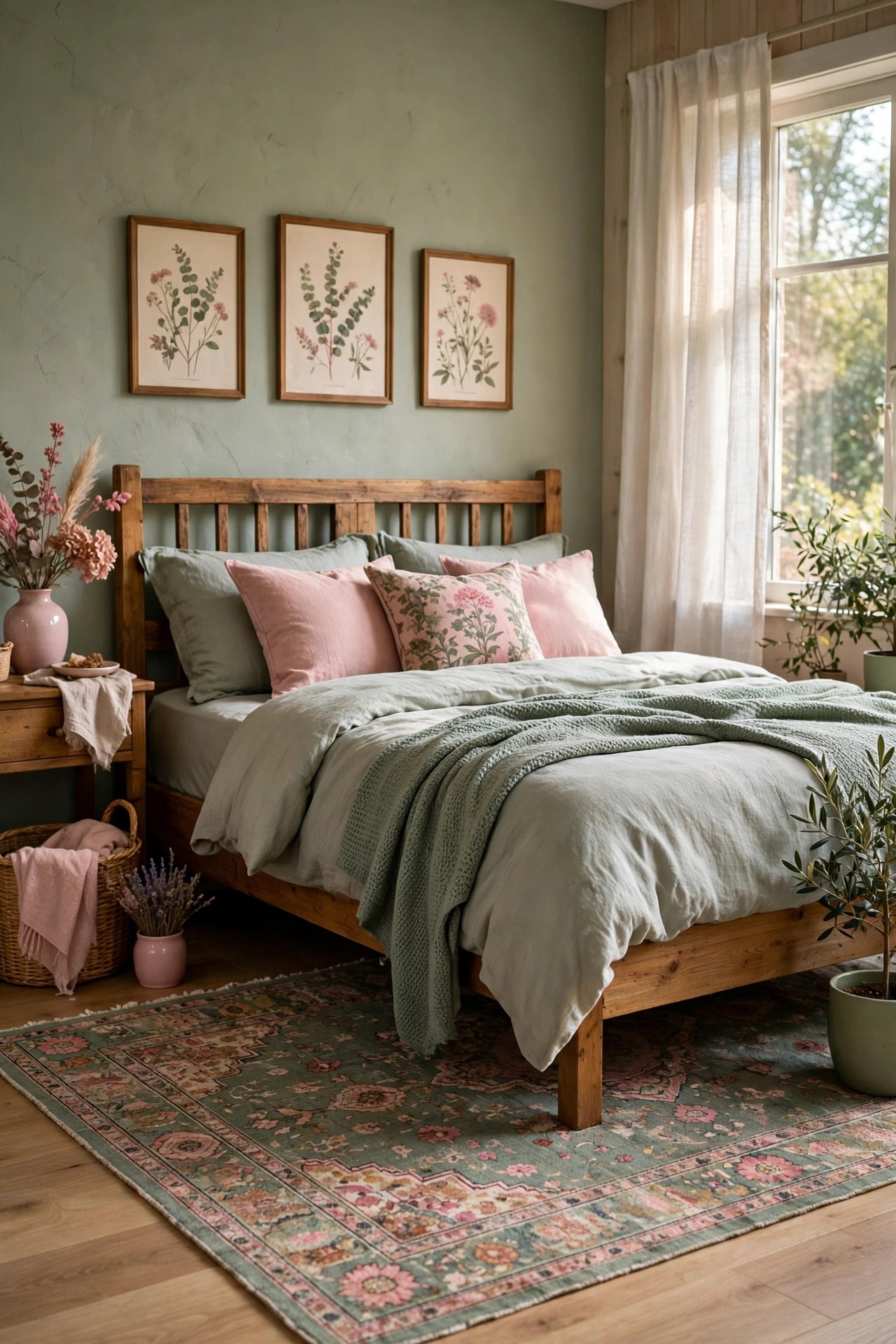
A rug is the easiest way to put sage and pink on the floor, where they ground the whole scheme. Look for a vintage-style or block-print rug that mixes sage motifs with pink accents on a cream base, and size it generously: it should extend at least 18 inches beyond the sides of the bed so your feet land on softness, not cold floor. In a large room, an 8-by-10-foot rug does this properly; a too-small rug floating under the bed looks like an afterthought. A low pile is more practical in a bedroom than a deep shag, since it is easier to vacuum and does not trap dust. Once the rug is down, pick up its exact sage and pink tones in the bedding, and the room will feel coordinated without any matching sets.
13. Brass and Gold Accents to Bridge the Two Colors
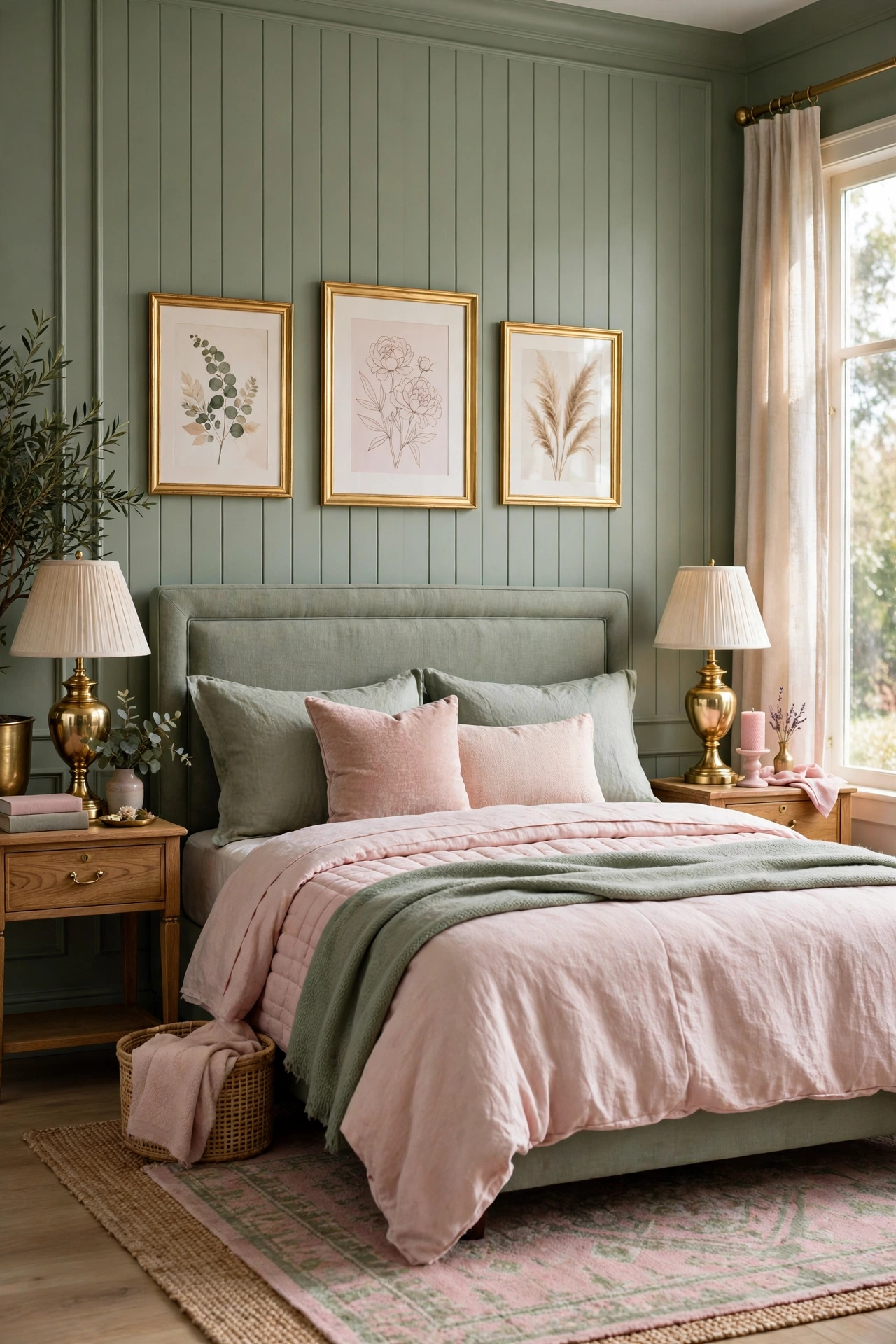
Sage and pink can occasionally feel like two separate ideas in one room, and warm metal is what joins them. Brass bedside lamps, a gold-framed mirror, slim brass drawer pulls, or a gold picture frame all add a warm glint that flatters both colors — sage looks richer next to brass, and pink looks less sweet. Use the metal sparingly and consistently: one finish, repeated three or four times, reads intentional, while mixed chrome, black, and gold hardware reads chaotic. Brushed or satin brass suits this palette better than high-shine gold, which can feel formal. If your budget is tight, start with lamp bases and drawer pulls; they are the two places where metal is most visible.
14. The 60-30-10 Rule for Sage and Pink
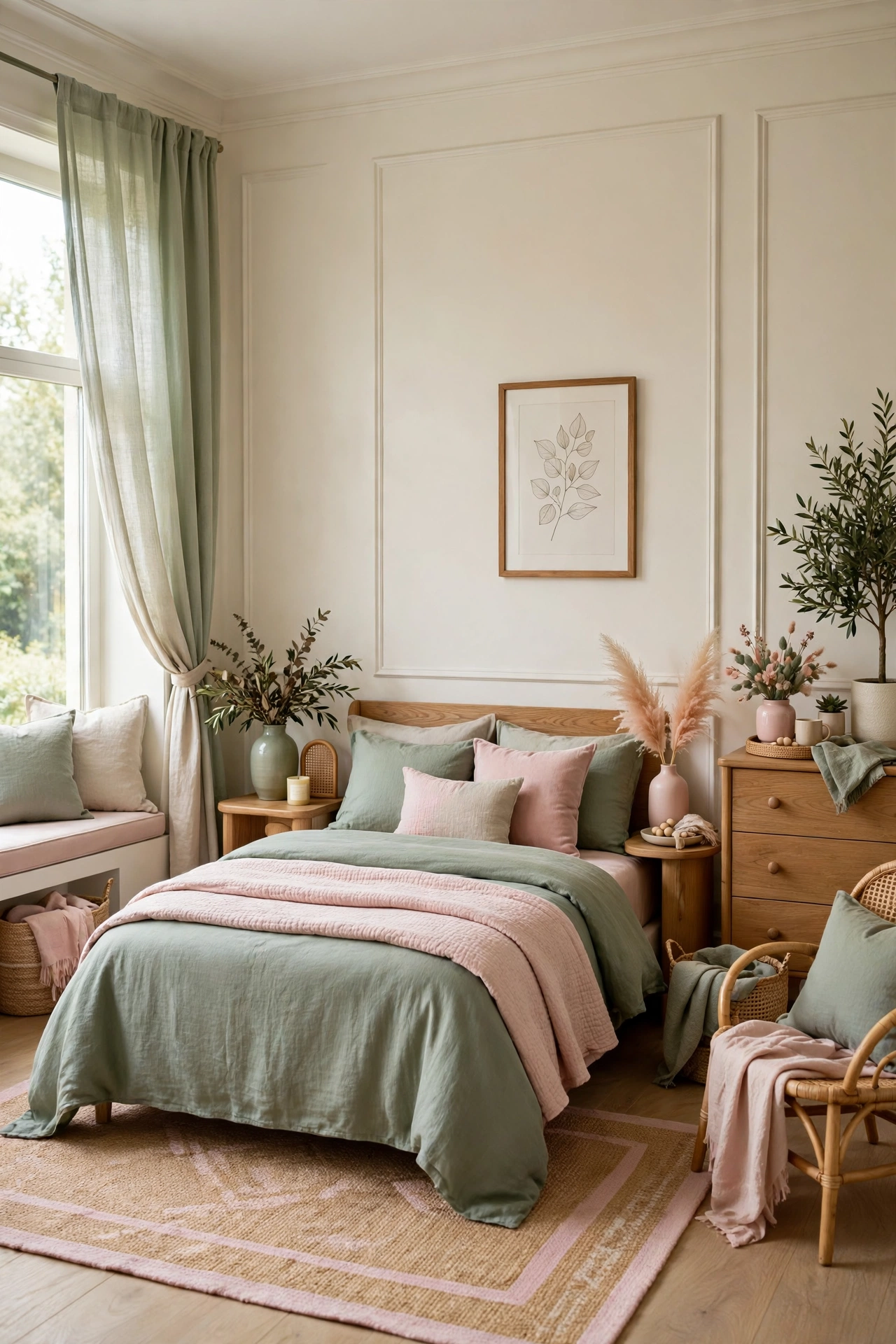
Interior designers rely on the 60-30-10 rule, and it is the reason some sage-and-pink rooms work while others feel chaotic. Give roughly 60 percent of the room to your dominant color — often sage walls or a neutral cream base — 30 percent to your secondary color, such as pink bedding and curtains, and 10 percent to an accent, like brass, wood, or a deeper green. A 50/50 split of sage and pink competes for attention and tires the eye quickly, while a clear hierarchy feels calm. If you love pink most, flip the ratio and let pink lead through the bed and curtains, with sage as the 30 percent. Stand in the doorway and squint: the color that fills most of your view should be your 60, and the rest should support it.
15. A Soft Pink Canopy or Bed Drape
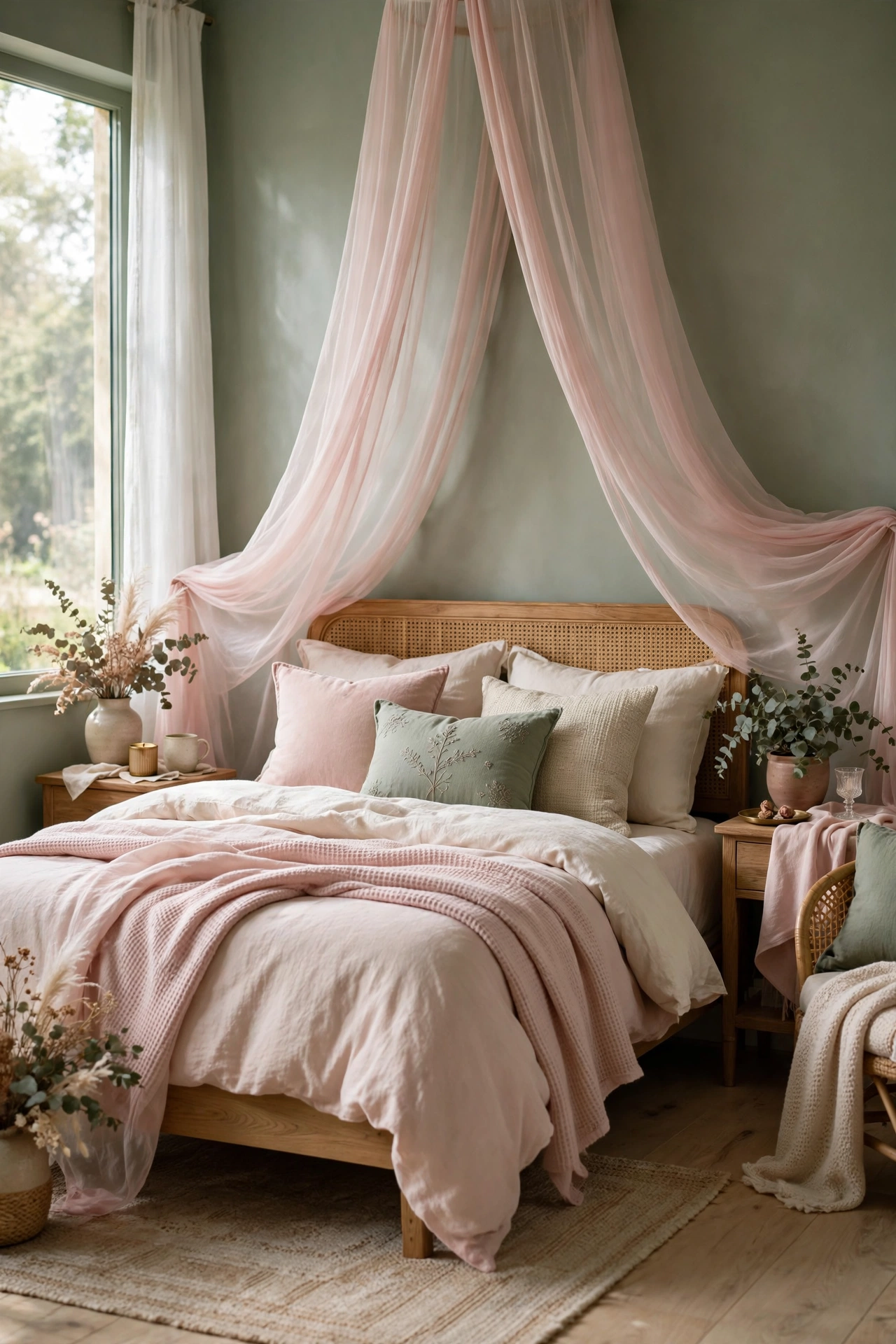
A canopy sounds dramatic, but a sheer blush drape is actually one of the softest ways to use pink. You do not need a four-poster bed: a ceiling-mounted hoop or two wall brackets above the headboard can hold a length of sheer voile that falls behind and beside the bed. The fabric filters light, frames the sleeping area, and adds movement to a room that might otherwise feel static. Keep the rest of the room simple — sage walls, cream bedding — so the canopy is the one romantic gesture, not one of many. Sheer fabric is easy to wash, but check that it does not hang where it could catch on a lamp or heater, and keep it away from candles entirely.
16. Sage Wainscoting with Pink Upper Walls
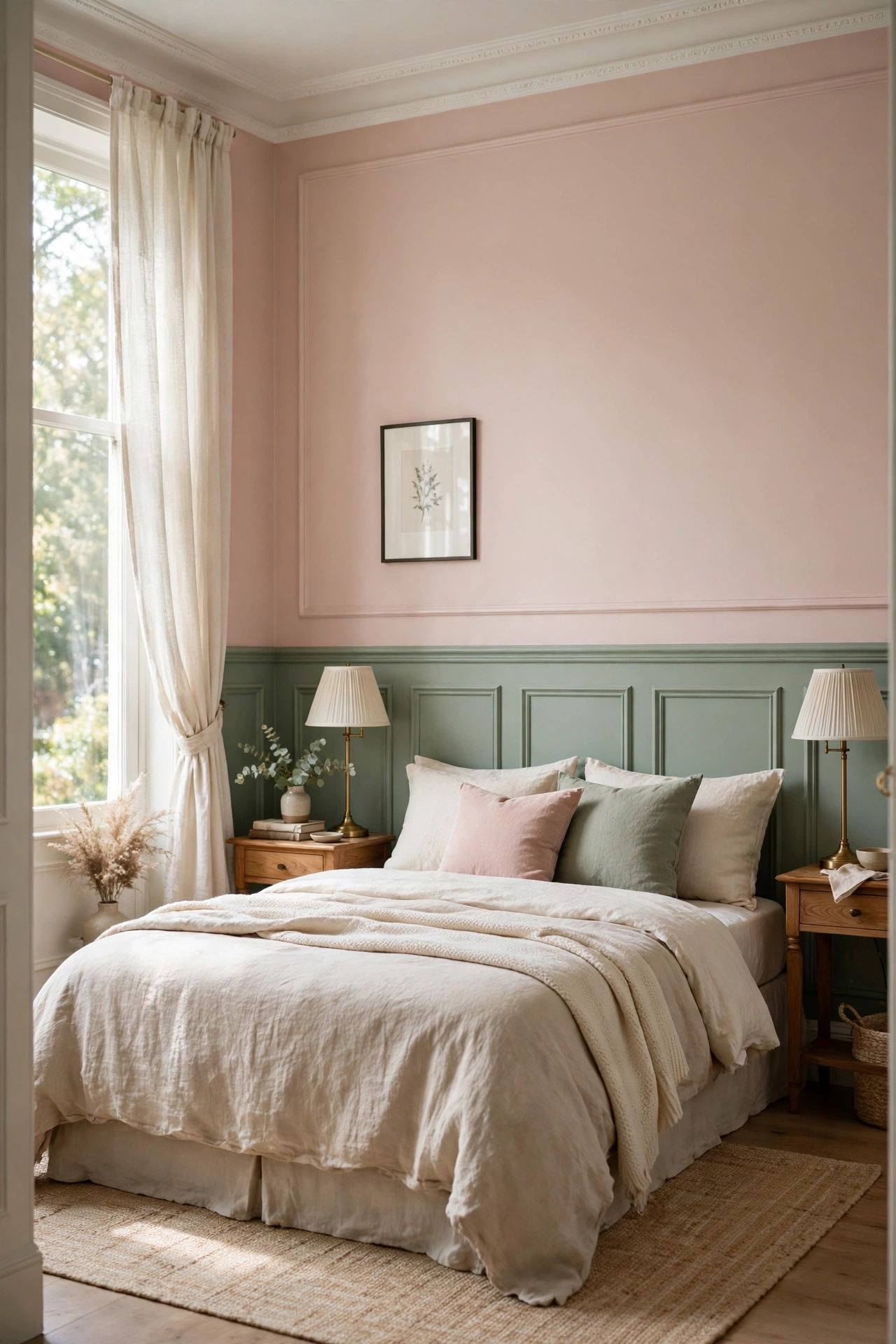
Wainscoting solves the problem of how to use both colors on the walls without them blending into a blur. Paint the lower third of the wall — the wainscot panels and chair rail — in sage, and the upper wall in pale blush, with crisp white trim dividing them. The horizontal line gives the room structure and makes ceilings feel taller, and each color gets its own clear zone. This treatment suits traditional and cottage bedrooms especially well, and it is practical too: the painted lower wall hides scuffs from furniture and foot traffic better than a plain wall. If your ceilings are low, keep the wainscot to about one-third of the wall height so the pink upper section still feels generous.
17. Pink Art Above a Sage Bed
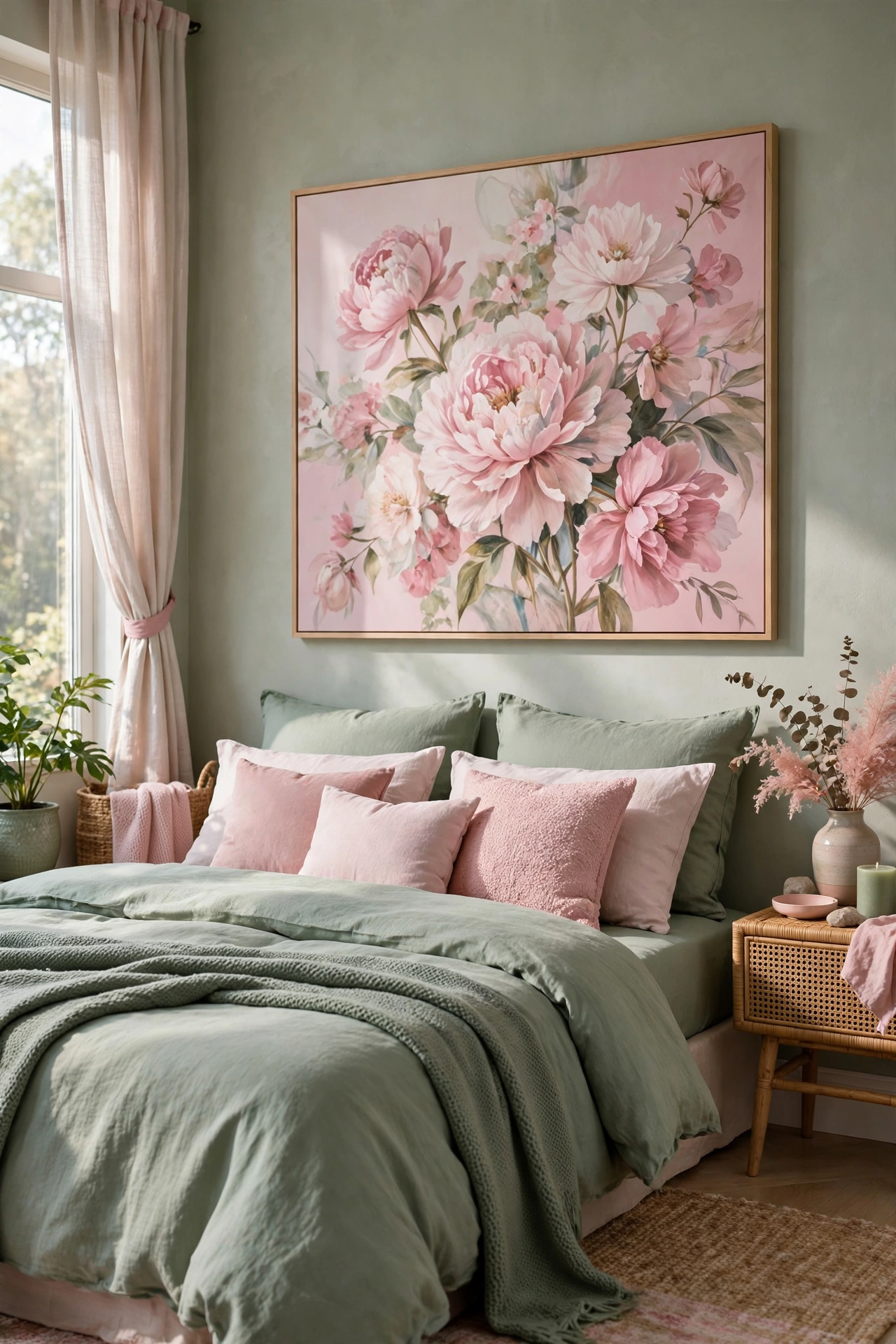
Sometimes one large piece of art is more effective than a whole gallery wall. A single oversized pink floral painting or abstract print above a bed dressed in sage bedding creates a clear focal point and an instant color conversation between the two. Size matters: the art should span roughly two-thirds of the bed’s width, hung so its center sits at eye level when standing, about 6 to 8 inches above the headboard. A thin gold or natural-wood frame keeps it from looking heavy. Because the art carries the pink, the rest of the room can stay mostly sage and cream, which is ideal if you prefer pink as an accent rather than a dominant color.
18. Sage Nightstands with Pink Lamps
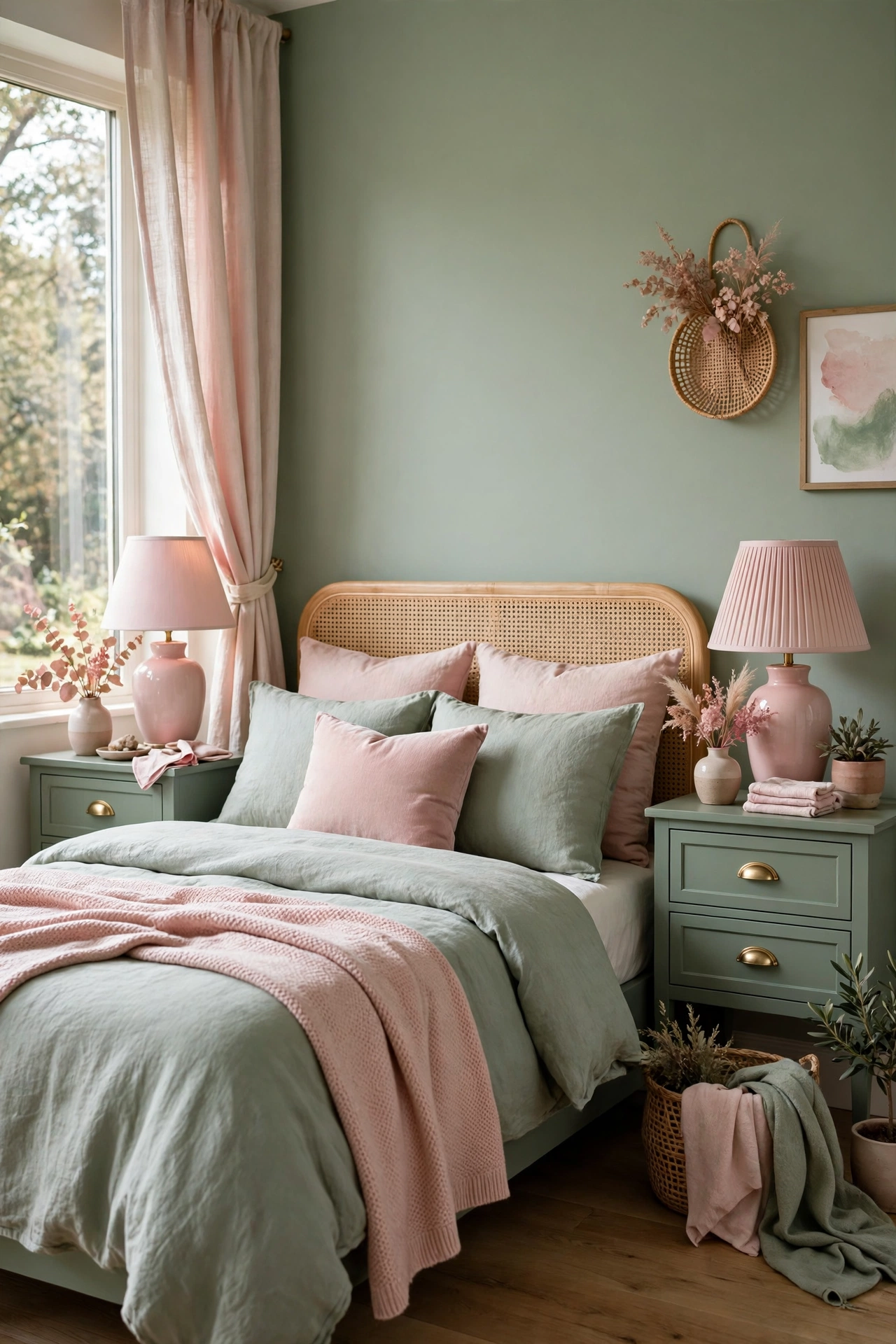
Bedside symmetry is one of the fastest ways to make a bedroom look designed rather than assembled. Paint or buy a pair of sage nightstands, then top each with a blush pink lamp — ceramic bases work beautifully here, or a pink linen shade on a brass base. The symmetry calms the eye, and the sage-pink pairing repeats on both sides of the bed so the palette feels balanced from every angle. Keep the lampshades at a height where the light falls on a book, not in your eyes, and choose warm bulbs (around 2700K) so both colors glow softly in the evening. Leave a little clear space on each nightstand for a glass of water and a book; a beautiful bedside that cannot be used is just a display.
19. A Sage and Pink Guest Bedroom
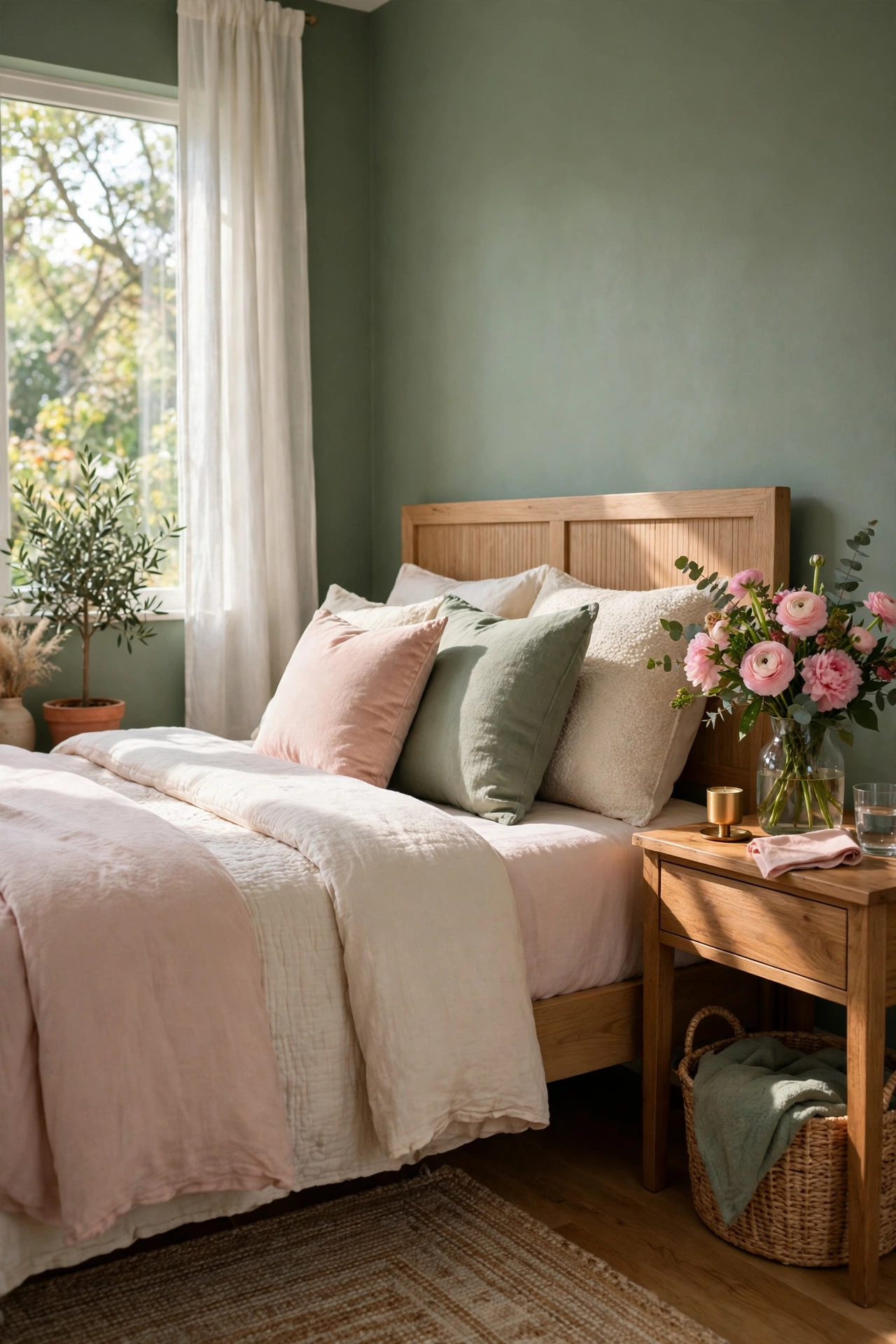
Sage and pink is an ideal guest-bedroom palette because it feels welcoming without imposing a strong personal taste on visitors. A sage bed dressed with blush pillows, cream towels folded on the bed, a small vase of fresh flowers, and a clear space to put a suitcase cover the essentials. Add the details guests actually notice: a bedside lamp with a warm bulb, a phone charger, an empty drawer or two, and a carafe of water. Because the colors are soft, the room photographs beautifully too, which matters if you list a spare room or simply enjoy sharing your home. Keep the decor minimal so guests have room for their own things — a welcoming guest room is one with breathing space.
20. Small Bedroom: Light Sage Walls, Blush Accents Only
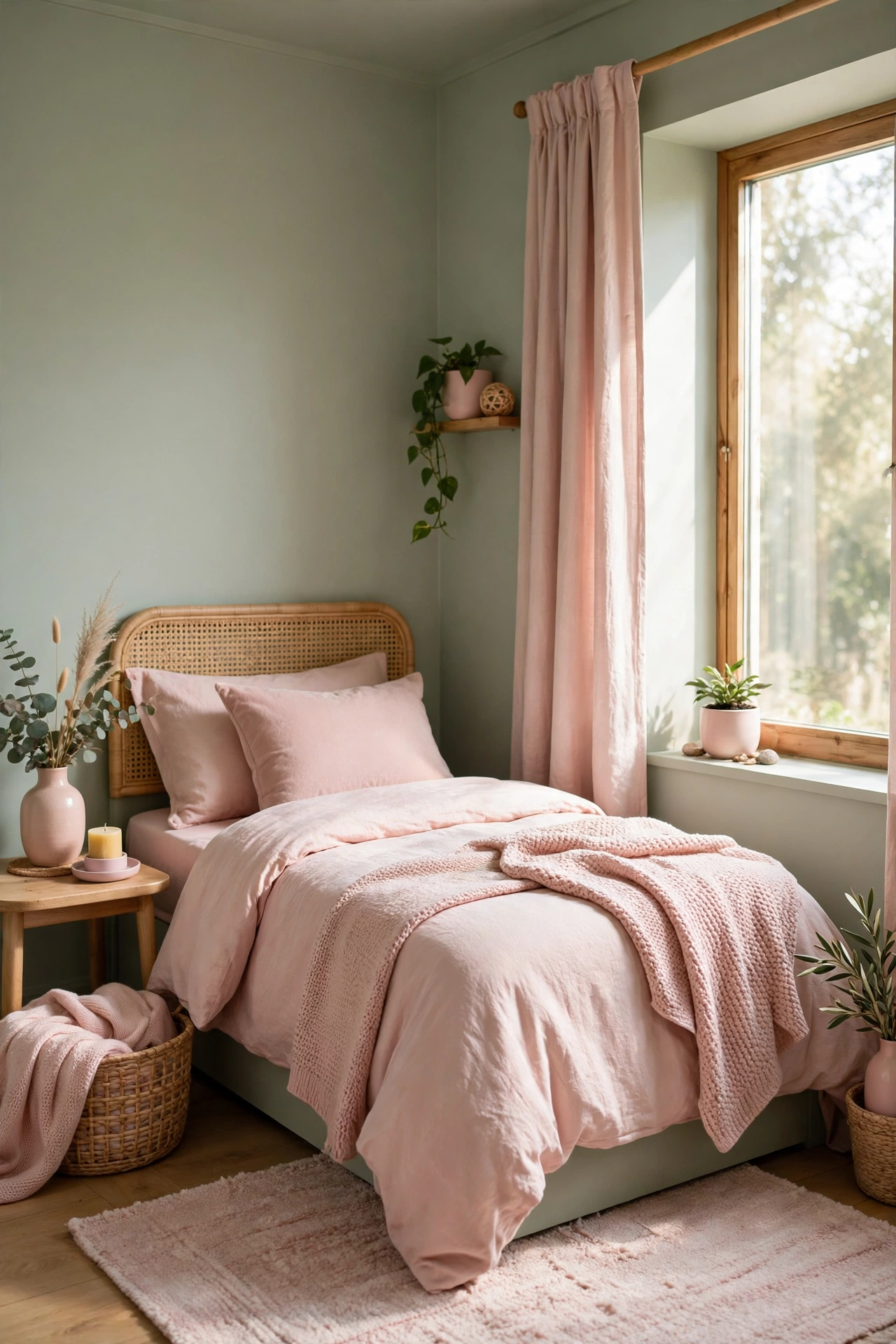
Small bedrooms need a lighter hand with this palette. Paint the walls a pale sage — almost a green-tinted white — so the room still feels open, and bring pink in only through accents: two pillowcases, a small throw, a single print. Pale sage reflects light better than a mid-tone green, and limiting pink to a few pieces prevents the room from feeling crowded. Choose furniture with legs rather than solid bases so more floor shows, use a mirror opposite the window to bounce light, and keep the bedding mostly cream with the pink as a top layer. The result still reads clearly as sage and pink, but the room feels larger than it is, which is the real priority in a small space.
21. A Deep Sage Accent Wall with Dusty Pink
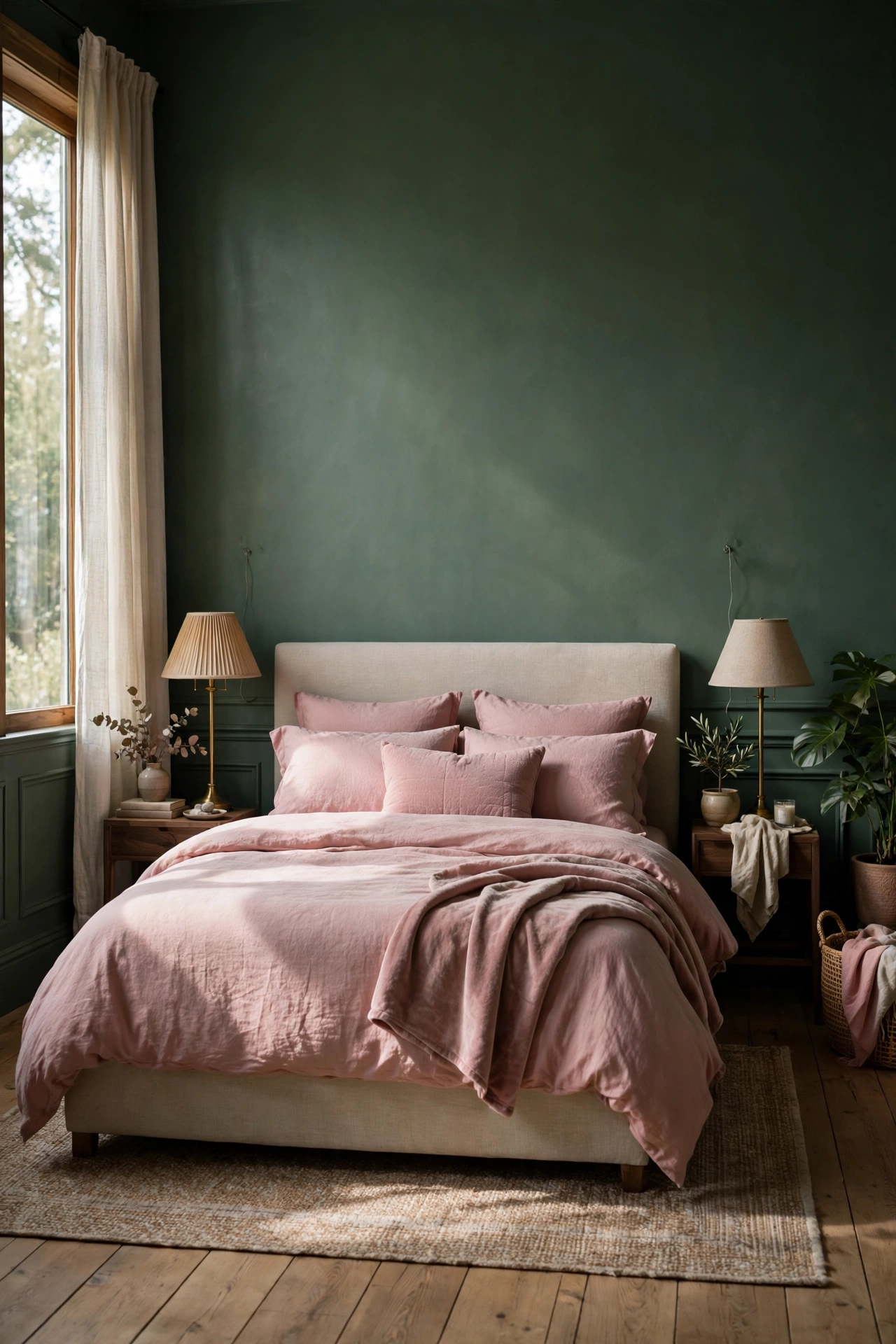
If pale sage feels too timid, go deep on a single wall. A deep, moody sage accent wall behind the bed adds drama and makes the bed stand out, especially when paired with dusty pink bedding rather than bright pink. Dusty pink has gray in it, so it sits comfortably against a darker green without clashing or looking neon. Keep the other walls warm white, and use the deep sage only once more — perhaps on a painted dresser or a velvet cushion — so the accent wall feels connected. Dark walls also make artwork and brass details pop, and at night, with warm lamps on, a deep sage wall feels cocooning rather than gloomy, provided the bedding stays light.
22. Cottage Style: Gingham, Florals, and Sage Wood
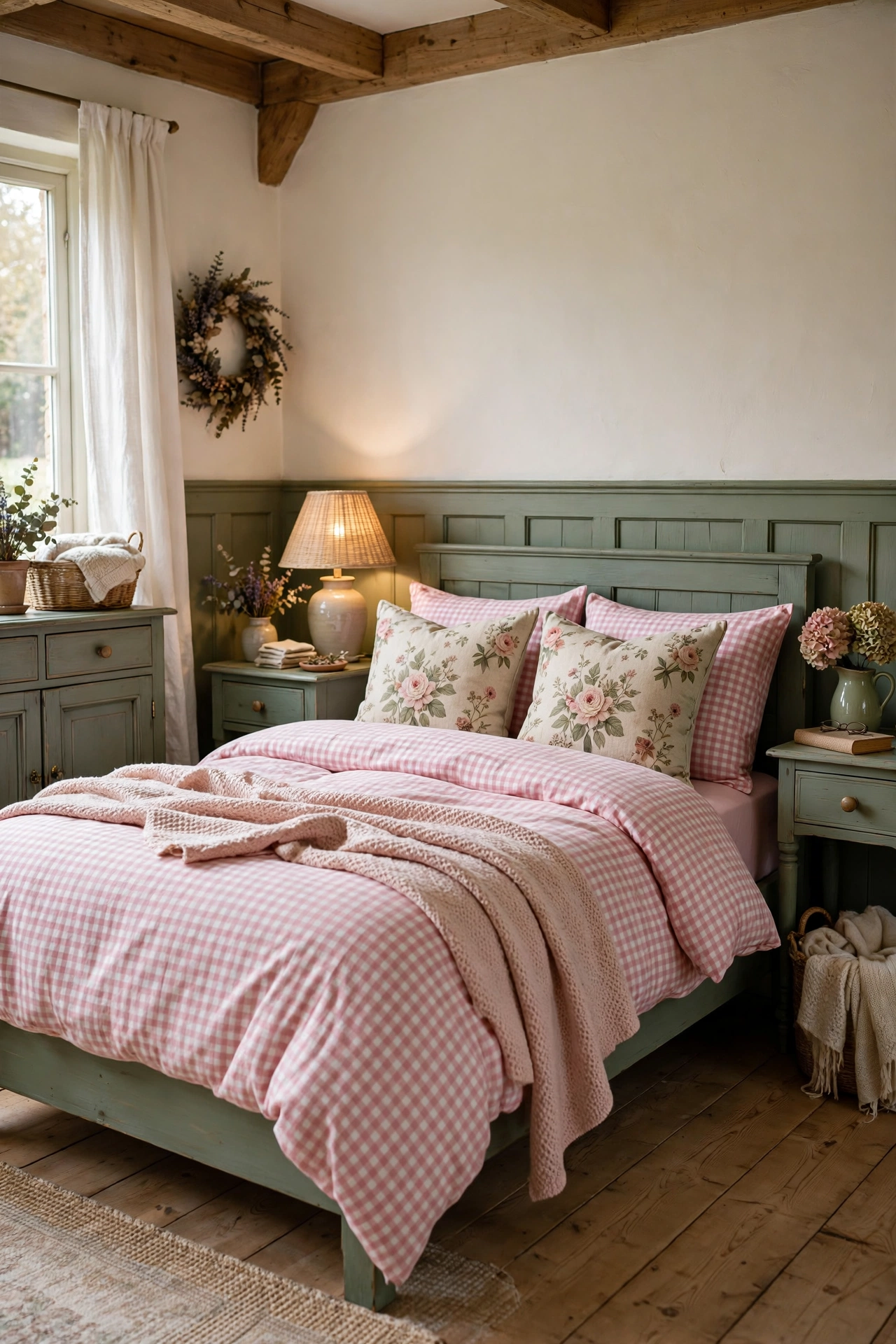
Cottage style is where sage and pink feel most at home, because both colors appear in traditional English and farmhouse fabrics. Mix a pink gingham duvet with floral pillowcases in sage and pink, add a sage-painted wooden bed frame or dresser, and finish with a ruffled cream bed skirt. The key to keeping cottage from looking cluttered is scale: pair one large floral with one small check, not two large patterns competing at the same size. A braided or woven rug, a wooden rocking chair, and a vase of garden roses complete the look without needing expensive pieces. Cottage bedrooms should feel collected over time, so thrifted and inherited pieces fit perfectly here — mismatched wooden furniture painted in the same sage ties them together.
23. Modern Style: Sage Panels with Minimal Blush
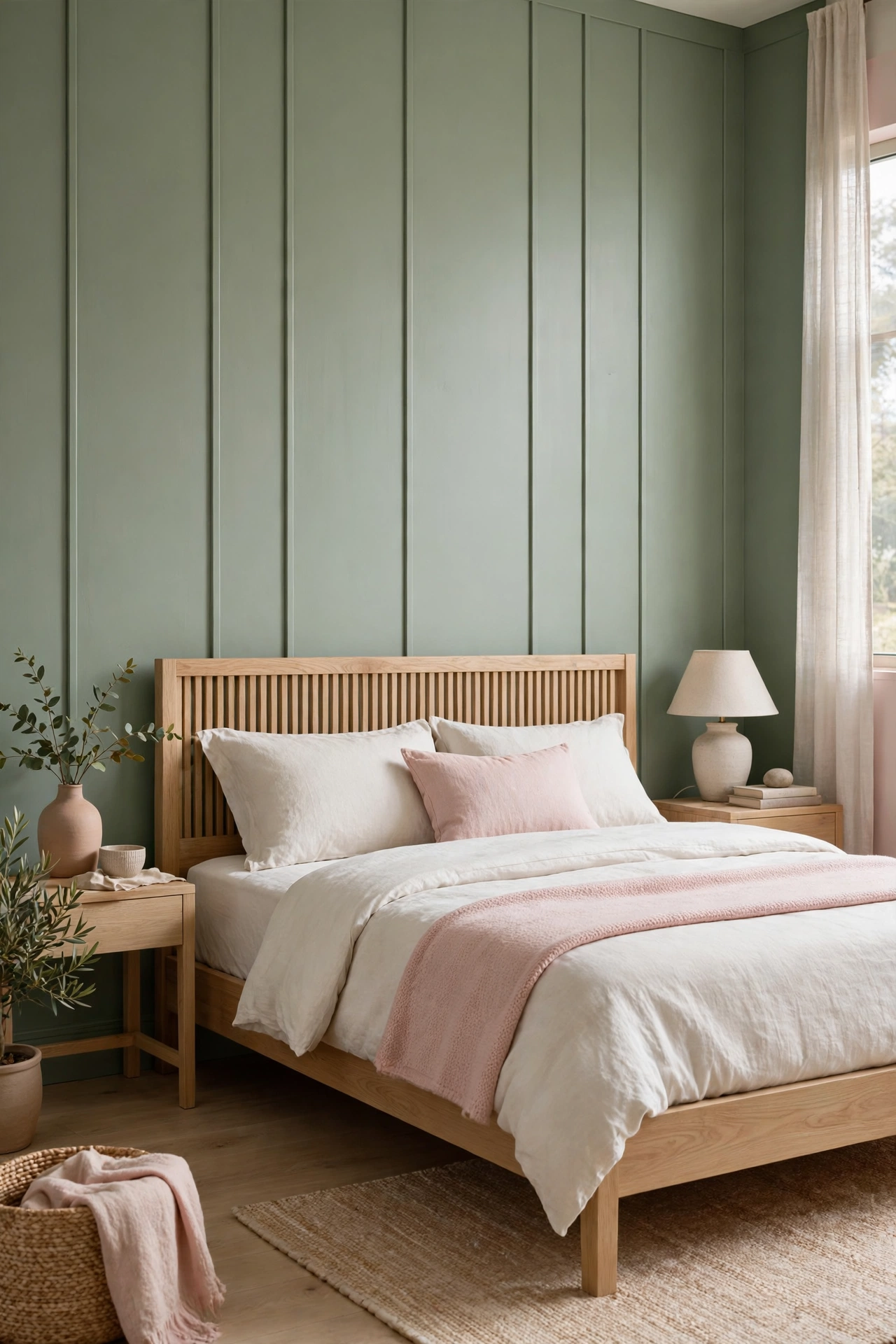
Sage and pink can be thoroughly modern if you strip away the florals and fuss. Try sage wall panels or fluted wood slats behind the bed, a low platform bed in light oak, and a single blush element — one sculptural vase, one abstract print, or a pair of pink cushions — as the only pink in the room. Keep lines straight, surfaces clear, and bedding mostly cream with a sage coverlet. Modern rooms rely on restraint: every object earns its place, and the pink accent becomes more striking precisely because there is only one of it. Matte finishes suit this version better than shine, and black or dark bronze hardware can replace brass if you prefer a cooler, more contemporary edge.
24. Boho Style: Rattan, Sage, and Terracotta Pink
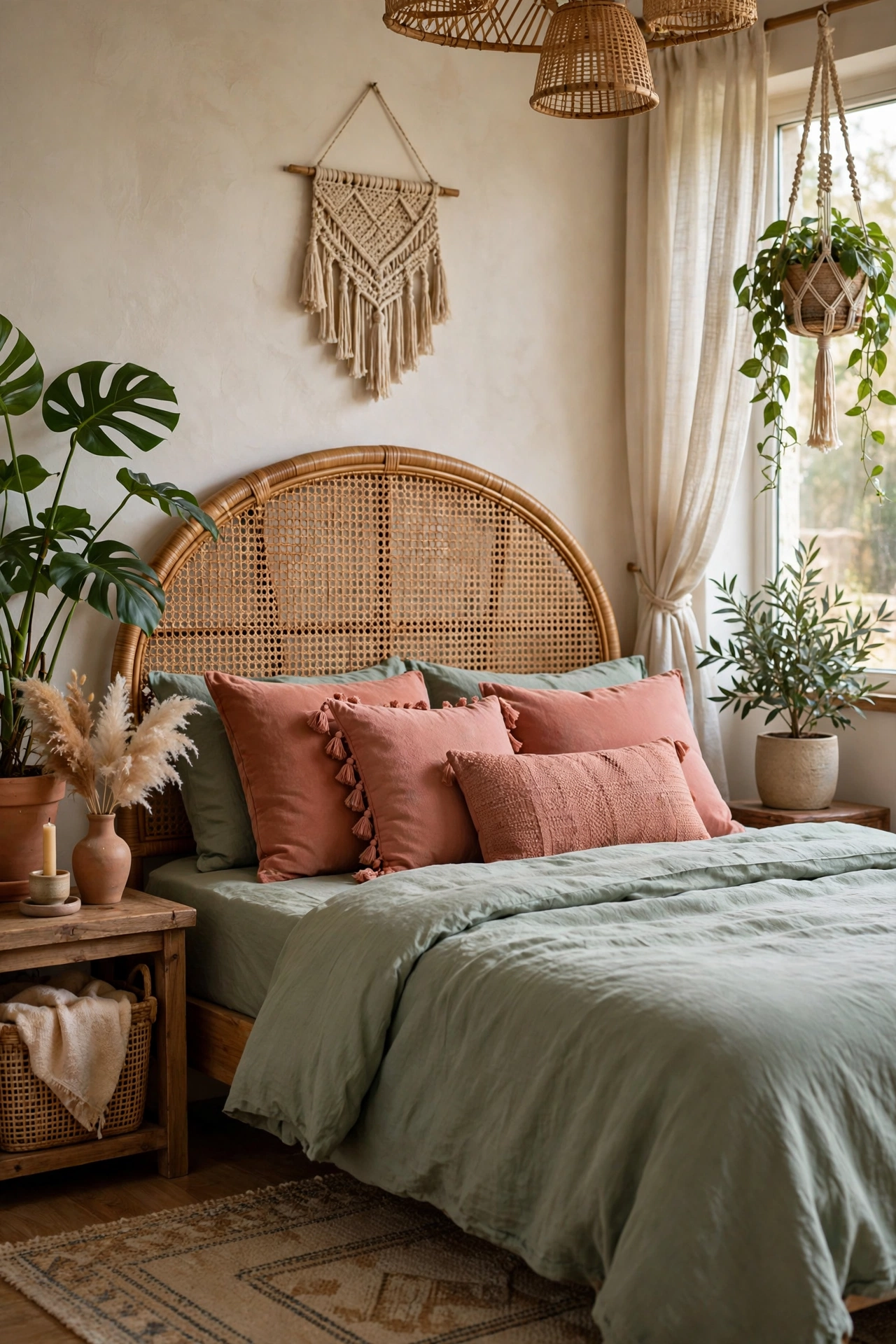
For a bohemian version, warm the pink toward terracotta and pair it with rattan, jute, and plenty of plants. A rattan headboard, a jute rug, sage linen bedding, and terracotta-pink cushions create a relaxed, earthy room that still fits the sage-and-pink brief. Layer textures generously — a macrame wall hanging, a woven basket for extra blankets, a linen throw with tassels — because boho style is built on touch as much as color. Real plants are essential here: trailing pothos, a tall fiddle-leaf, or simple potted herbs on the windowsill echo the sage and make the room feel alive. Keep the pink muted and earthy rather than bubblegum, and the whole room will feel sun-warmed and calm.
25. Fresh Flowers: Roses and Peonies in Sage and Pink
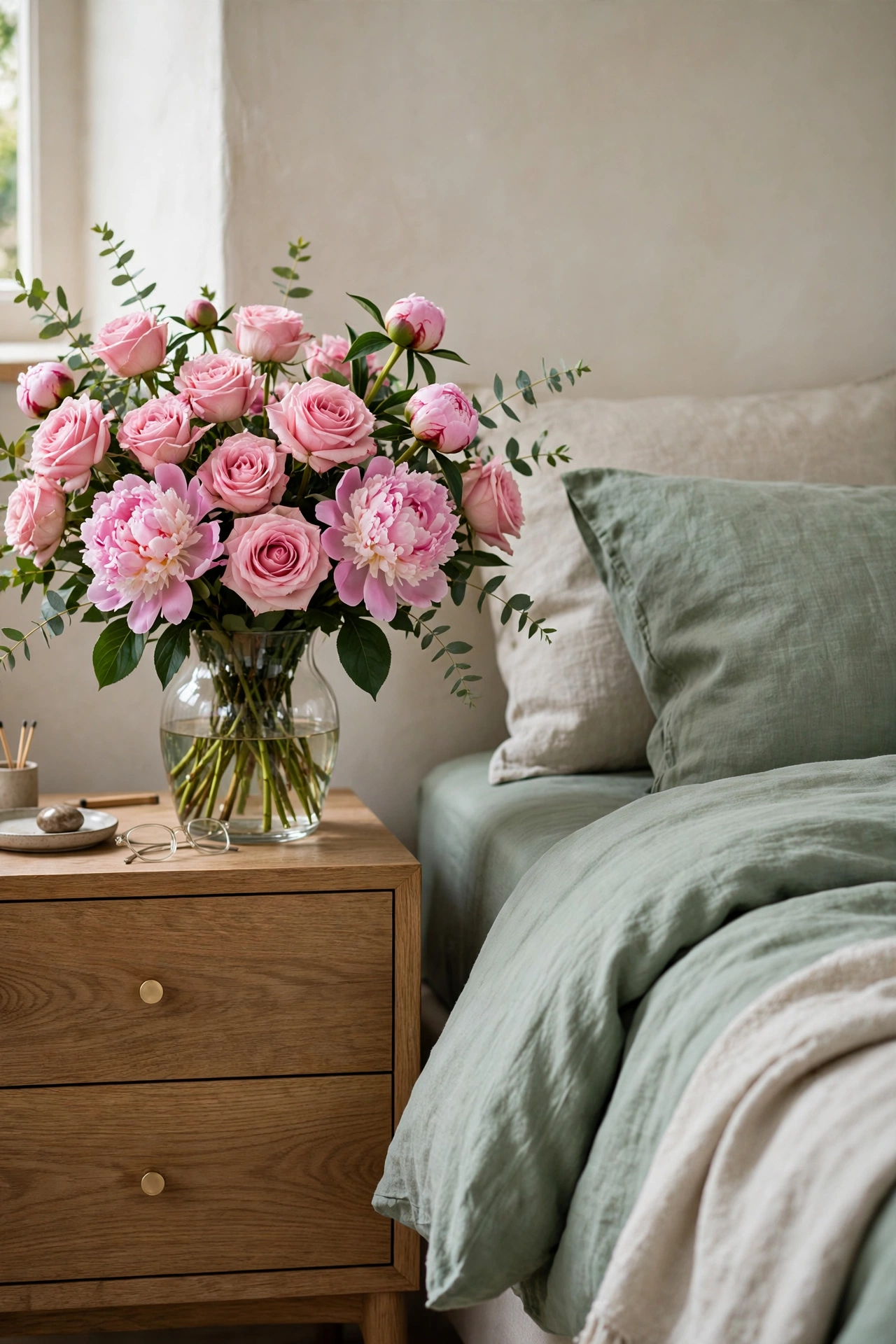
Sometimes the best pink accent is not bought for the room at all — it is a bunch of flowers. Pink roses, peonies in season, or ranunculus in a simple glass or ceramic vase on the nightstand or dresser bring living pink into a sage room, and they can be refreshed weekly for very little money. The flowers also soften hard furniture edges and add a scent that no candle quite replicates. Choose a vase in cream, sage, or clear glass so it does not compete with the blooms, and trim stems every few days to extend their life. When flowers are out of season or out of budget, a single high-quality faux peony stem in the same vase keeps the gesture without the upkeep.
26. A Blush Ceiling with Sage Walls
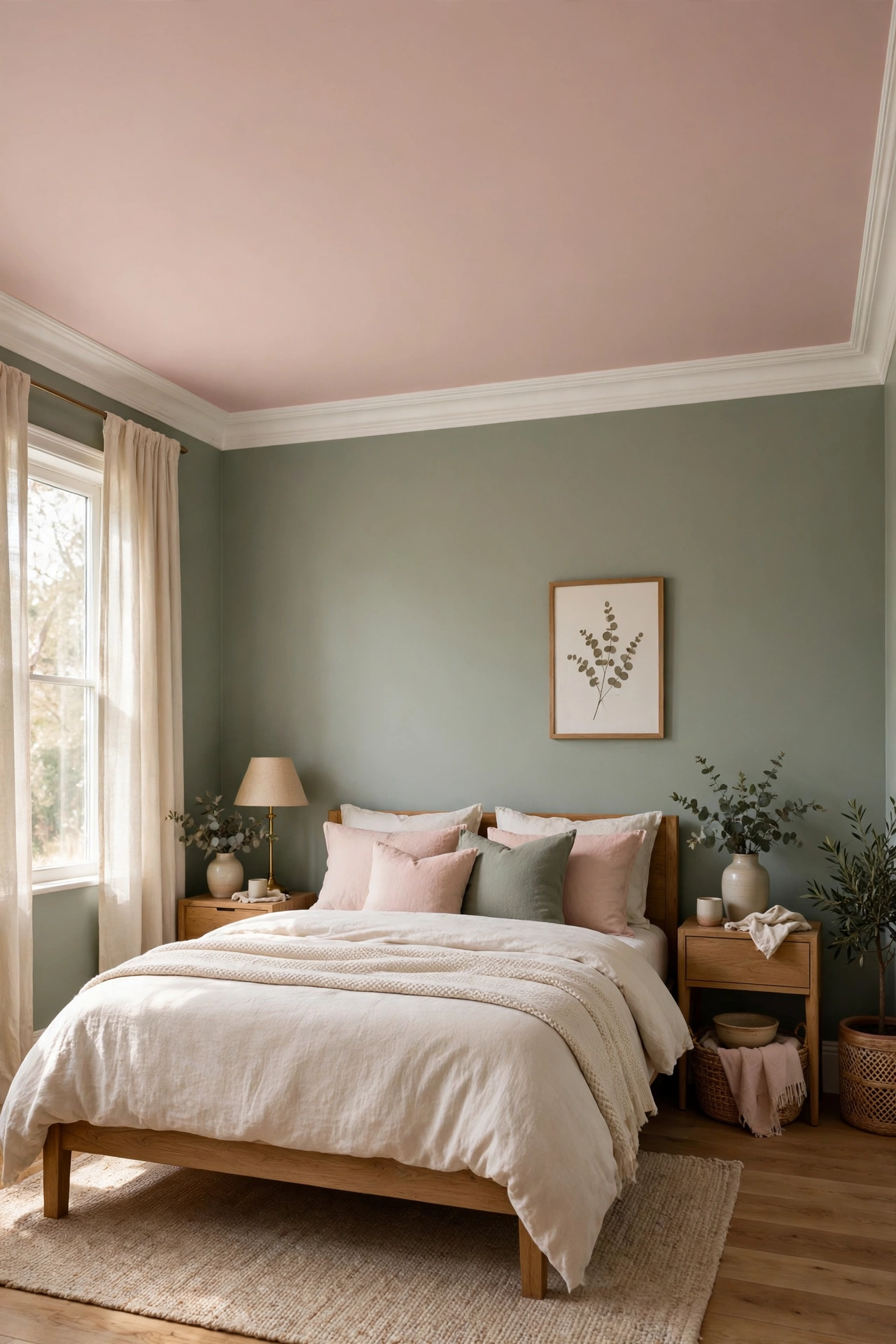
The ceiling is the most overlooked surface in a bedroom, and a blush ceiling is a delightful surprise. With sage walls and a white crown molding dividing them, a pale blush ceiling reflects warm light downward and makes the room feel wrapped and cozy, almost like the inside of a shell. This works best in rooms with ceilings of standard height or taller; in a very low room, keep the blush extremely pale so it does not feel pressing. Paint a test patch and live with it for a few days, checking it in morning and evening light, because ceiling color changes dramatically with the angle of light. Pair it with cream bedding and sage curtains so the ceiling is the one unexpected element.
27. A Pink Wardrobe or Painted Closet Doors
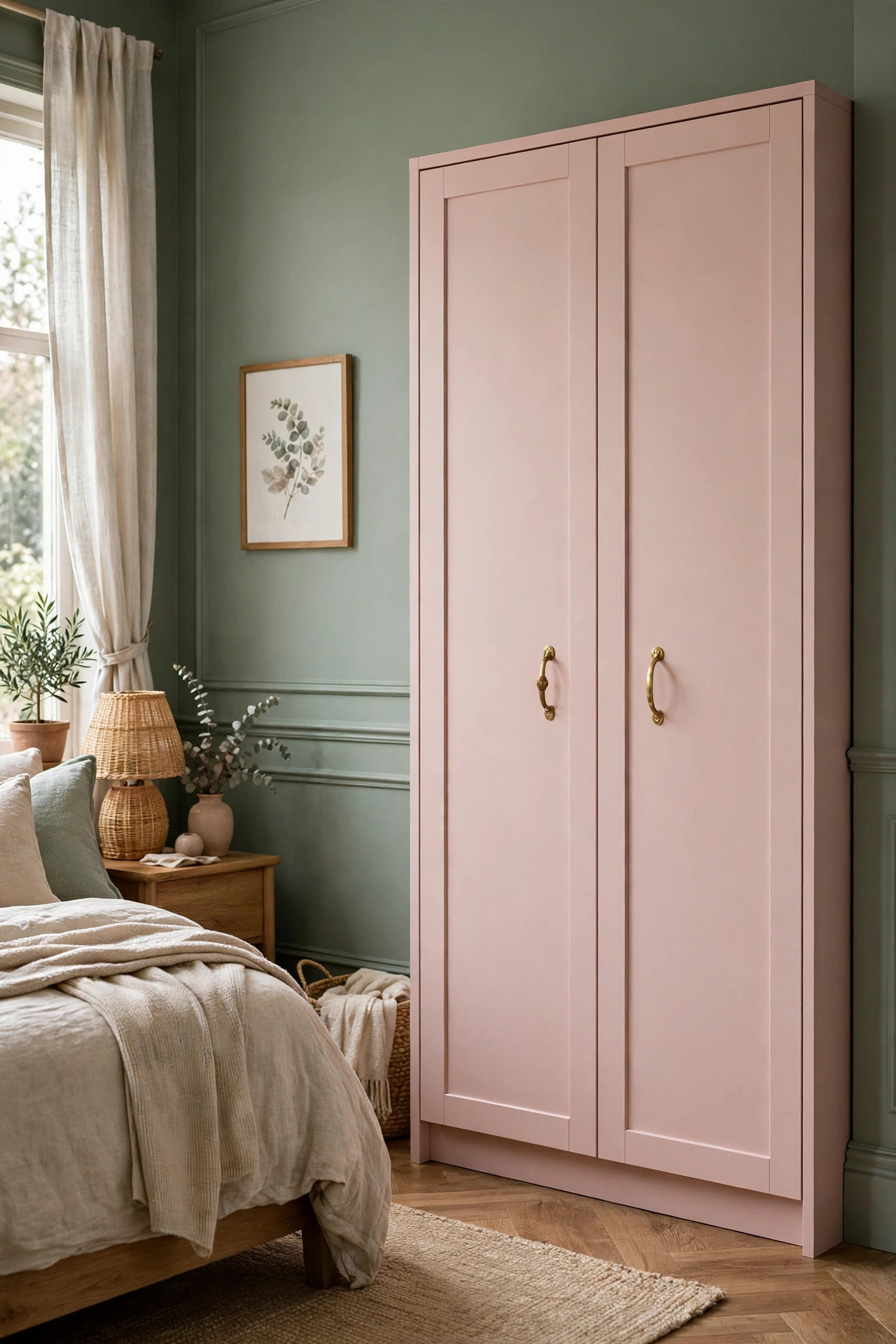
Wardrobes are large, so painting one pink is a bold move — but because its doors close, the color is contained and easy to live with. A freestanding blush wardrobe with brass handles against sage walls becomes a beautiful furniture statement, and inside, the storage stays practical. If a full wardrobe feels too much, paint just the closet doors blush and leave the frame white; you get the color without a large pink block. Use a hard-wearing satin or semi-gloss paint on doors, since they are touched daily and matte finishes mark easily. Style the top of the wardrobe simply — a plant or a single framed print — so the pink doors remain the focus.
28. Mixing Patterns: Stripes, Florals, and Solids
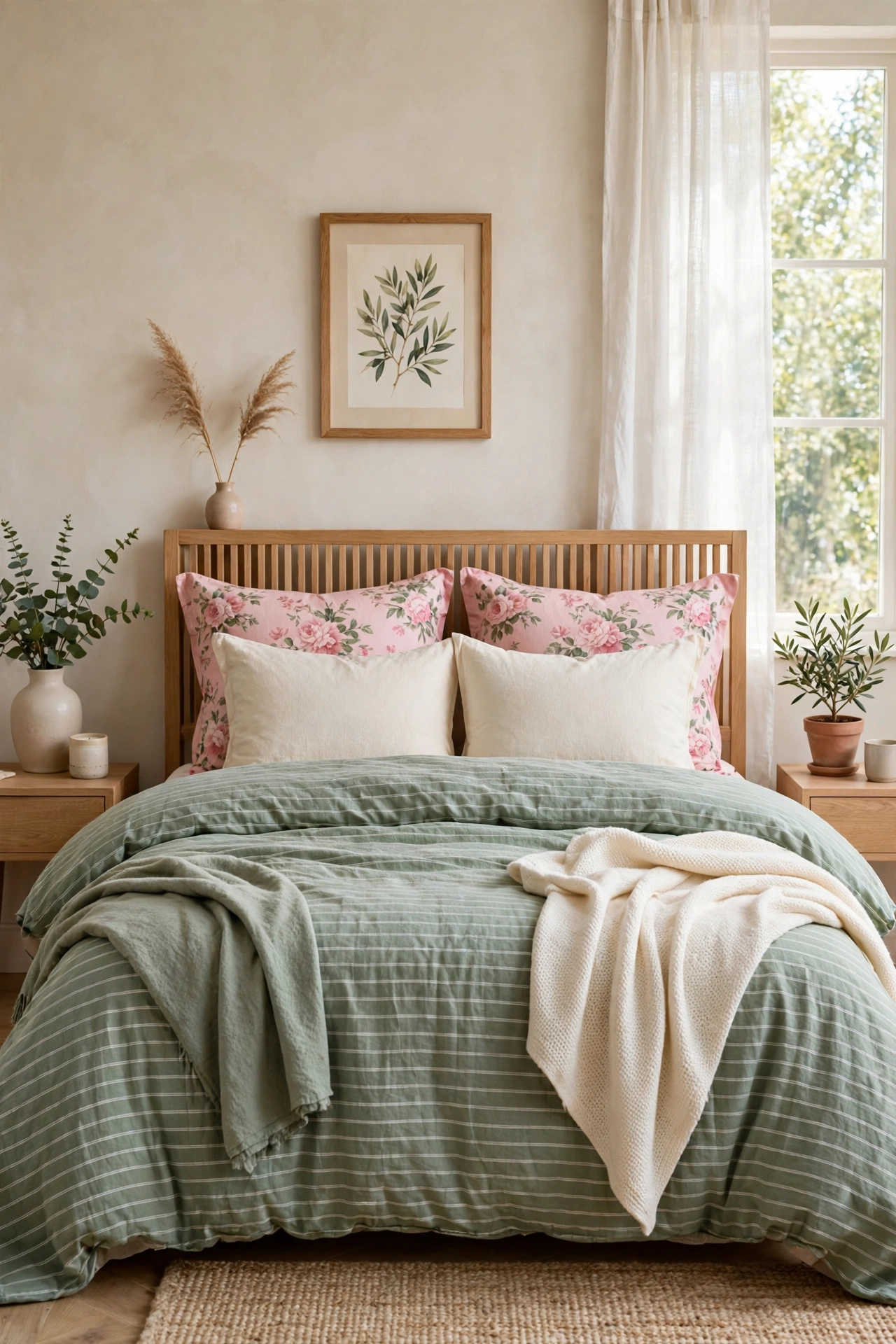
Pattern mixing is where many sage-and-pink rooms go wrong, but one simple recipe keeps it safe: one stripe, one floral, and the rest solids. For example, sage striped pillowcases, a pink floral cushion, and solid cream and sage bedding. The stripe and the floral share the same two colors, so they coordinate even though their patterns differ, and the solids give the eye places to rest. Keep the largest pattern — usually the duvet or curtains — the quietest, and let smaller pieces carry the busier prints. If you are unsure, lay all the fabrics on the bed together before buying: if any one piece shouts louder than the rest, swap it for a softer version of the same color.
29. Seasonal Swaps: Pink for Summer, Sage for Winter
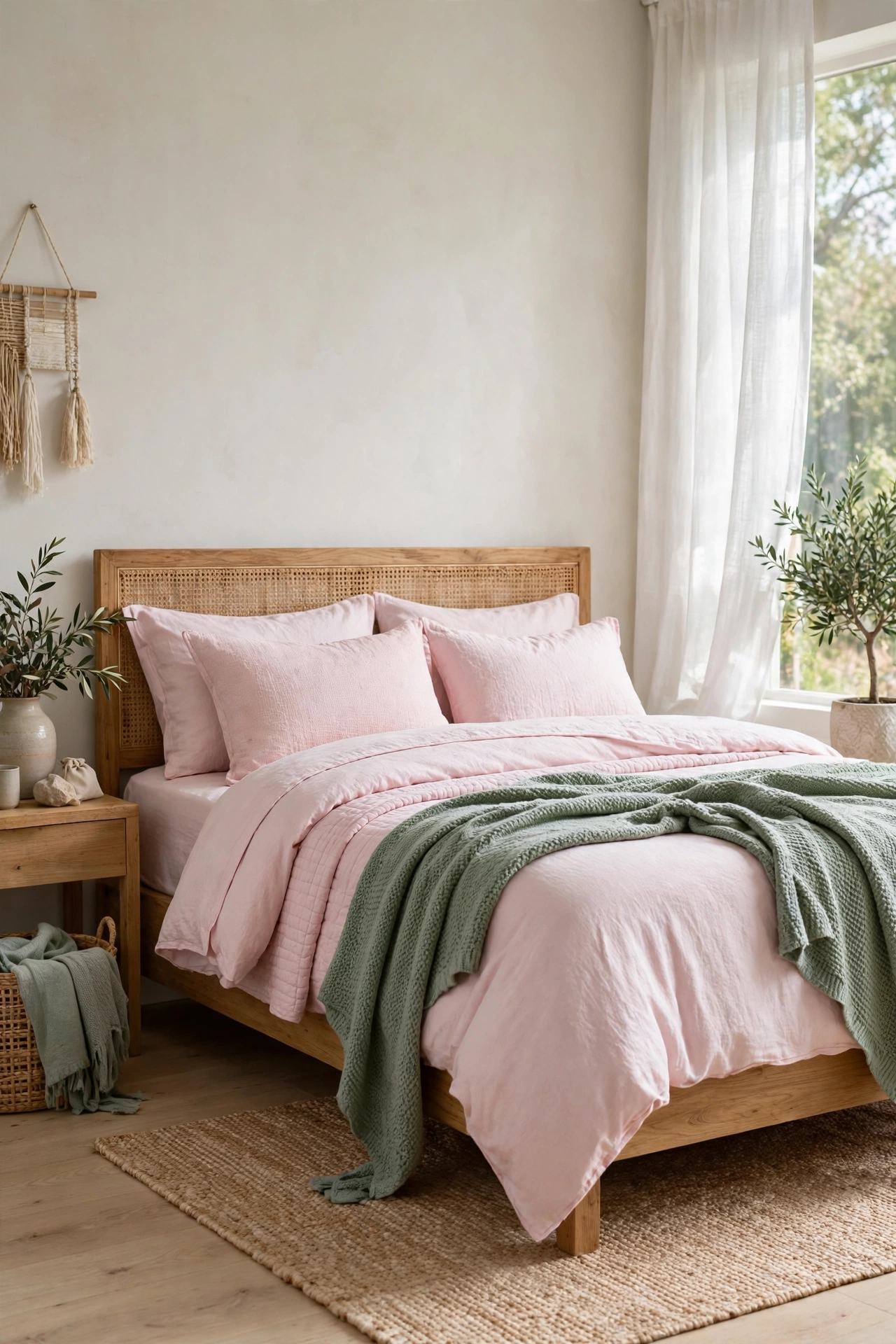
A two-color palette is perfect for seasonal rotation, because you can shift the balance without redecorating. In summer, let pink lead: lighter pink linen bedding, sheer curtains, and fresh flowers, with sage reduced to a throw and a cushion. In winter, reverse it: deep sage velvet cushions, a heavier sage throw, warm lighting, and pink kept to a single accent like a candle or a vase. Store the off-season pieces in a single labeled box so the swap takes twenty minutes, not a weekend. This approach also extends the life of your bedding, since each set rests for half the year, and it keeps the room feeling fresh twice a year with no new purchases.
30. A Budget Refresh: Paint and Bedding Only
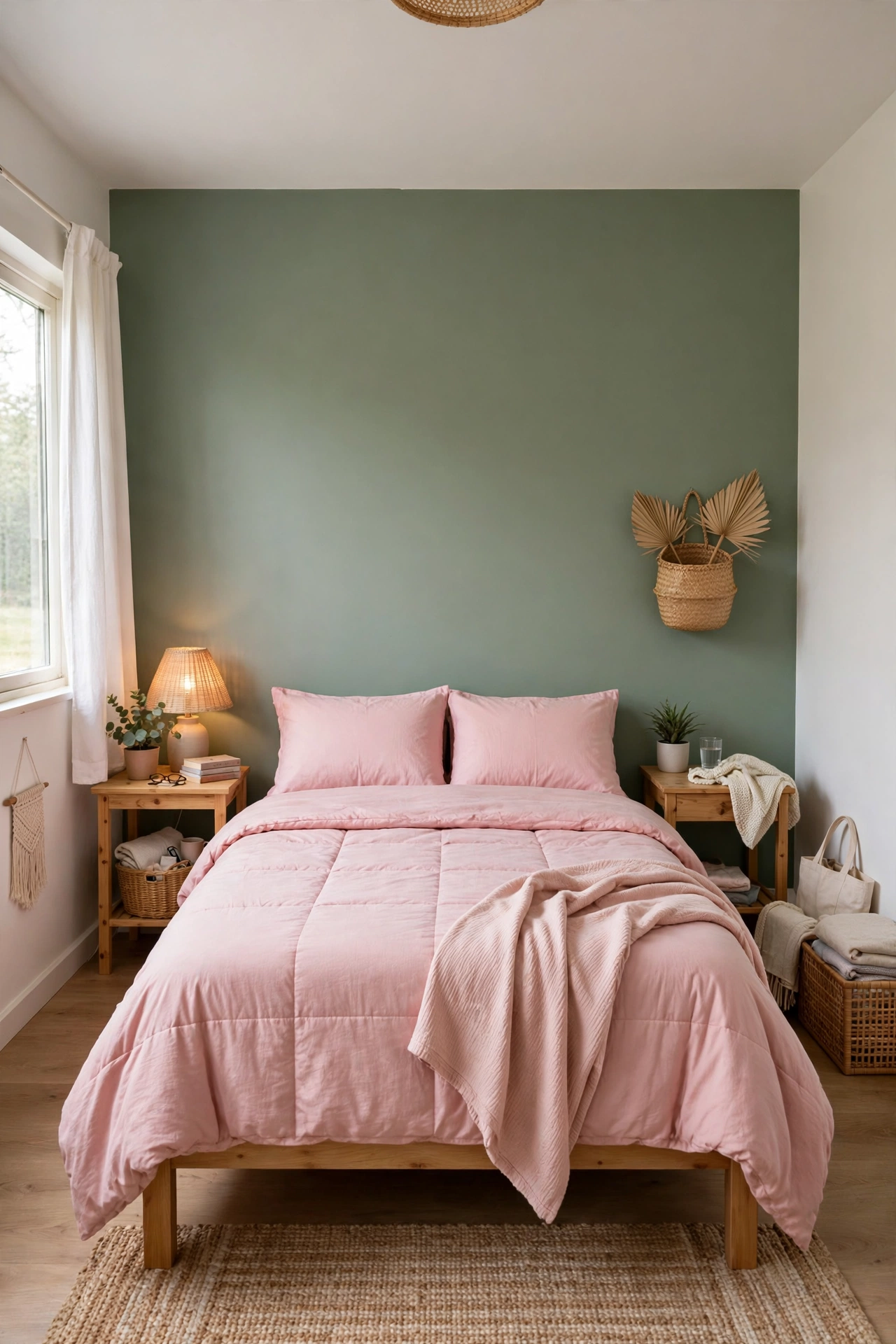
You do not need a renovation budget to get this palette. The highest-impact, lowest-cost version is one painted accent wall in sage — a single can of paint and a weekend afternoon — plus new bedding in blush and cream. Everything else can stay: existing furniture, existing curtains, existing lamps. If even paint is too much, skip it and reverse the formula: sage bedding, a pink throw, and a few pink cushion covers, all of which are washable and movable. Thrift stores and end-of-line sales are excellent for cushion covers and throws in exactly these muted shades, because sage and blush are perennial colors that appear in every season’s clearance. Spend where it shows — the bed — and save everywhere else.
31. A Sage Vanity Corner with a Pink Stool
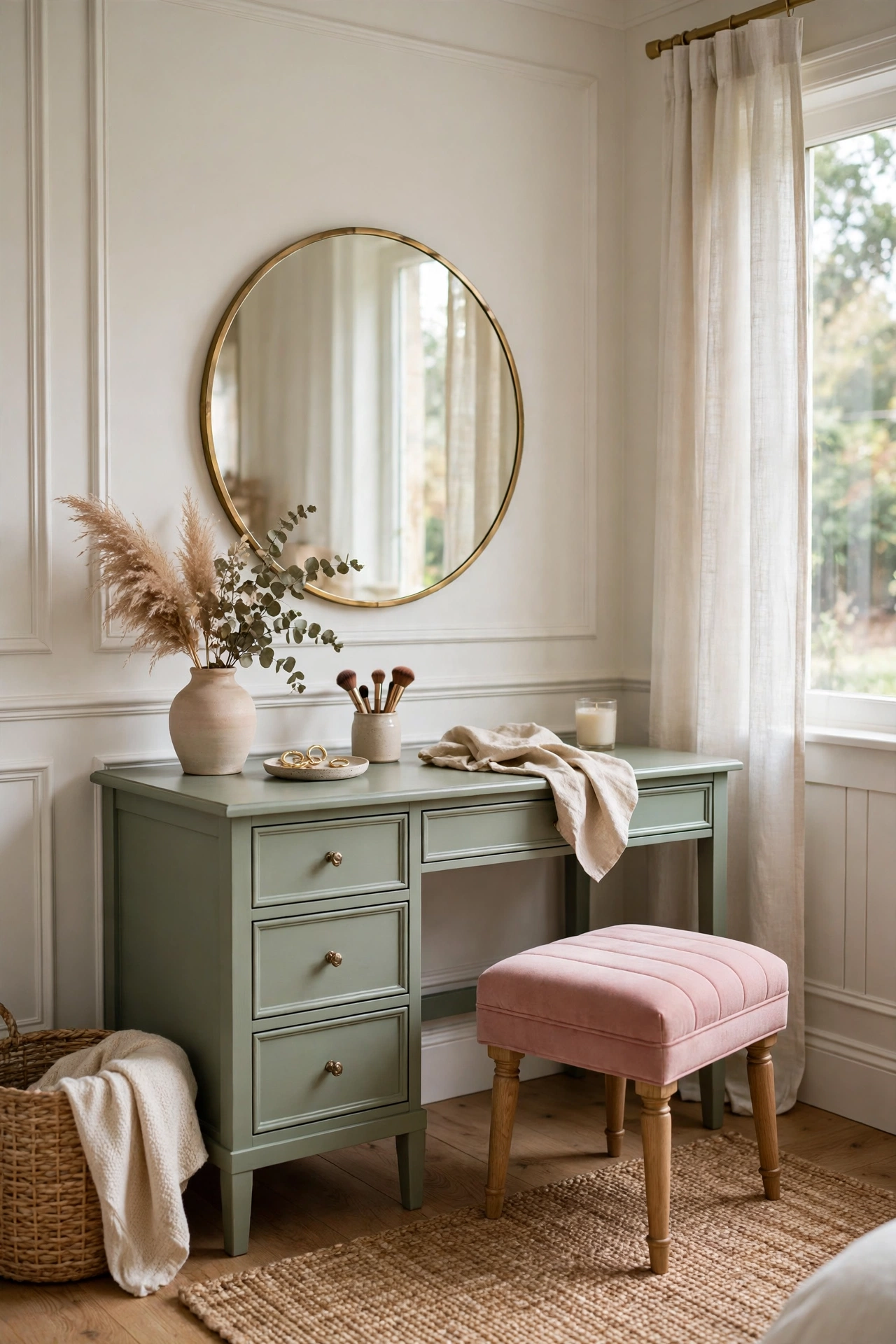
Finish with a functional corner that earns its place: a small vanity or writing desk painted sage, a pink upholstered stool tucked beneath it, and a round mirror above. This corner works for makeup, journaling, or a laptop, and it repeats the palette in a part of the room that often gets neglected. A wall-mounted mirror with a thin brass frame ties in with any brass lamps, and a small tray keeps bottles and pens from spreading across the desk. Keep the desk surface mostly clear — a vase, a candle, and the items you actually use — so the corner stays inviting rather than cluttered. In a small bedroom, a wall-mounted folding desk gives you the same vanity moment without sacrificing floor space.
Frequently Asked Questions
What colors go well with sage green and pink in a bedroom?
Cream, warm white, light oak, and brushed brass are the safest partners: cream softens the contrast, wood adds warmth, and brass adds a warm glint that flatters both colors. Soft gray can work as a neutral bridge, but avoid adding a third strong color — sage and pink already carry plenty of personality, and extra colors quickly make the room feel busy.
Should sage or pink be the dominant color?
Whichever you love more should lead, but one must clearly lead. A good starting point is sage as the dominant color (walls or bedding) with pink as the accent (pillows, throws, art), because sage is easier to live with in large amounts. If pink is your favorite, reverse it — just keep the 60-30-10 balance so the room has a clear hierarchy.
Does sage green and pink work in a small bedroom?
Yes, if you keep the sage pale and the pink to accents only. Pale sage reflects light and keeps the room open, while a few blush pillows and a throw give you the palette without crowding the space. Light furniture with legs, a mirror opposite the window, and mostly cream bedding all help a small sage-and-pink room feel larger.
How do I keep a pink bedroom from looking childish?
Choose dusty, muted pinks with gray or warm undertones rather than bright or bubblegum pink, and pair them with sage, cream, natural wood, and brass rather than white plastic or glitter. Mature textures — linen, velvet, wool, rattan — also make pink read grown-up, while a restrained amount of pink (accent, not everywhere) keeps it sophisticated.
What is the cheapest way to try sage and pink?
Start with bedding and throws: a sage duvet or throw, blush pillowcases, and a cream sheet set will show you the palette for the price of a bedding set. If you love it, add a painted accent wall or a piece of painted furniture later. Throws and cushion covers are also easy to move to another room if you change your mind.
Conclusion
Sage green and pink works because it balances two feelings at once: the calm of nature and the warmth of home. Start with one clear leader — usually sage — add pink in thoughtful accents, ground both with cream, wood, and brass, and repeat each color at least twice so the room feels planned. Whether you choose a full repaint, a floral accent wall, or simply two new throws, the ideas above give you a version of this palette for every room size, style, and budget. Pick the one that fits your bedroom today, live with it for a week, and then add the next layer — a great bedroom is built slowly, one soft layer at a time.
For more bedroom inspiration, see our 17 Dreamy Cream and White Bedroom Ideas for a calm neutral scheme, our 24 Tree Bookshelf Ideas for bedroom storage with character, and our 29 Glass Coffee Table Decor Ideas for styling the living spaces just beyond the bedroom door. If you are refreshing an adjoining bathroom too, our 23 White Oak Bathroom Vanity Ideas pair beautifully with sage and pink tones.