25 Dusty Blue Bedroom Ideas for a Calm, Elegant Retreat
25 Dusty Blue Bedroom Ideas for a Calm, Elegant Retreat
Dusty blue is the color of a quiet morning — soft, muted, and gray enough to feel grown-up, blue enough to feel fresh. Unlike bright blues that shout or navy that can feel heavy, dusty blue sits right in the middle: calming without being cold, and interesting without being loud. That balance is exactly why it works so well in a bedroom, the one room in the house that should help you slow down. Whether you paint all four walls, add a single upholstered headboard, or simply swap in new bedding, this shade pairs beautifully with warm woods, crisp whites, soft blush, and even brass. Below are 25 genuinely different dusty blue bedroom ideas — wall treatments, furniture choices, textiles, and color pairings — each with the practical detail you need to pull it off in a real room, not just a photo.
1. Paint All Four Walls Dusty Blue
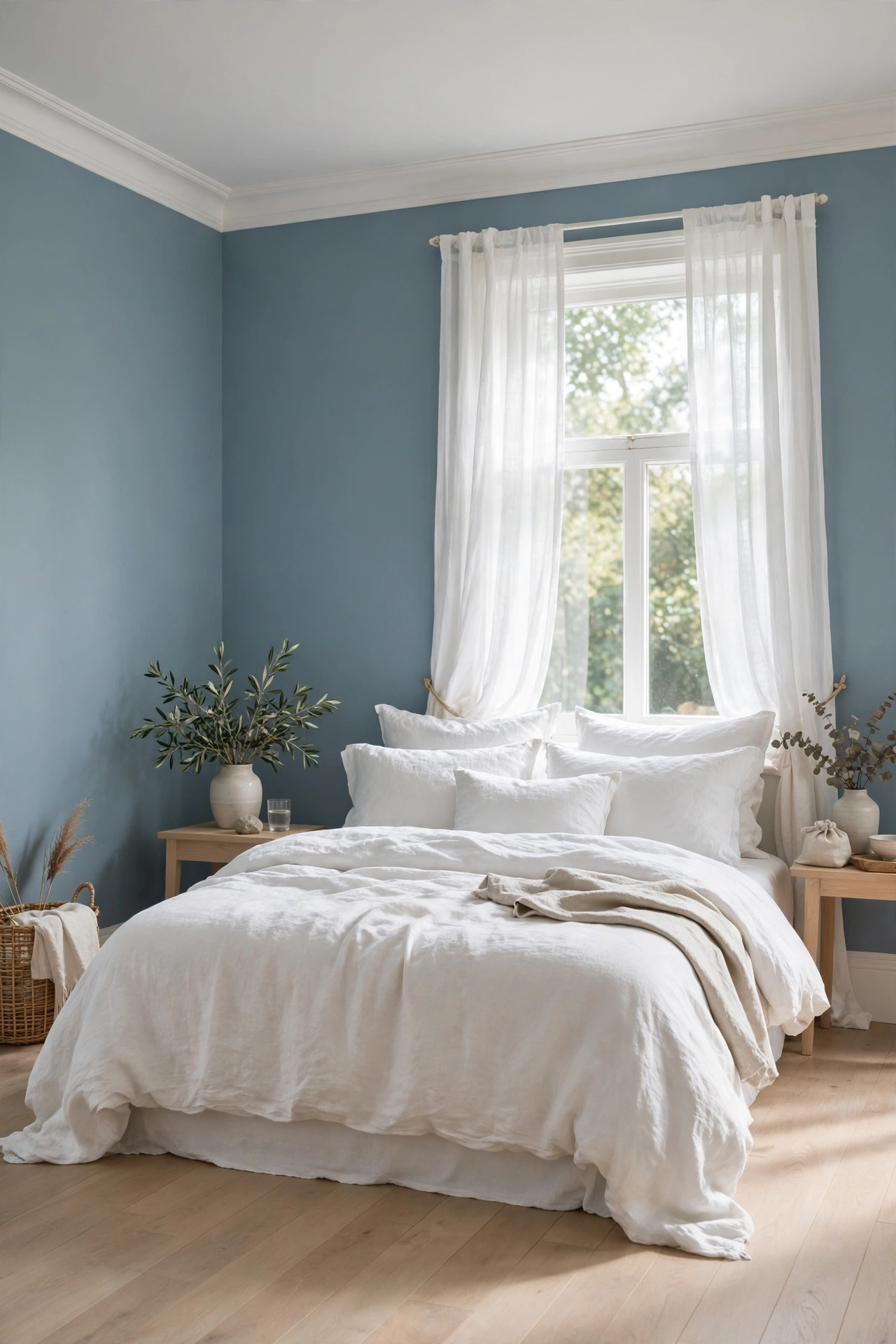
Going all-in with dusty blue walls is the fastest way to make a bedroom feel like a retreat. Because the color is muted and gray-leaning, it wraps the room in calm instead of overwhelming it, and it makes white trim, bedding, and ceilings pop by contrast. Choose a matte or eggshell finish so the walls read soft rather than shiny, and paint a large sample swatch on two different walls first — dusty blue shifts with the light, looking grayer in north-facing rooms and bluer in warm afternoon sun. Keep the ceiling bright white and the floor light wood or a pale rug so the room stays airy. This look works best in bedrooms with decent natural light; in a very dark room, pair the walls with sheer white curtains and a large mirror to bounce what light there is around the space.
2. One Dusty Blue Accent Wall Behind the Bed
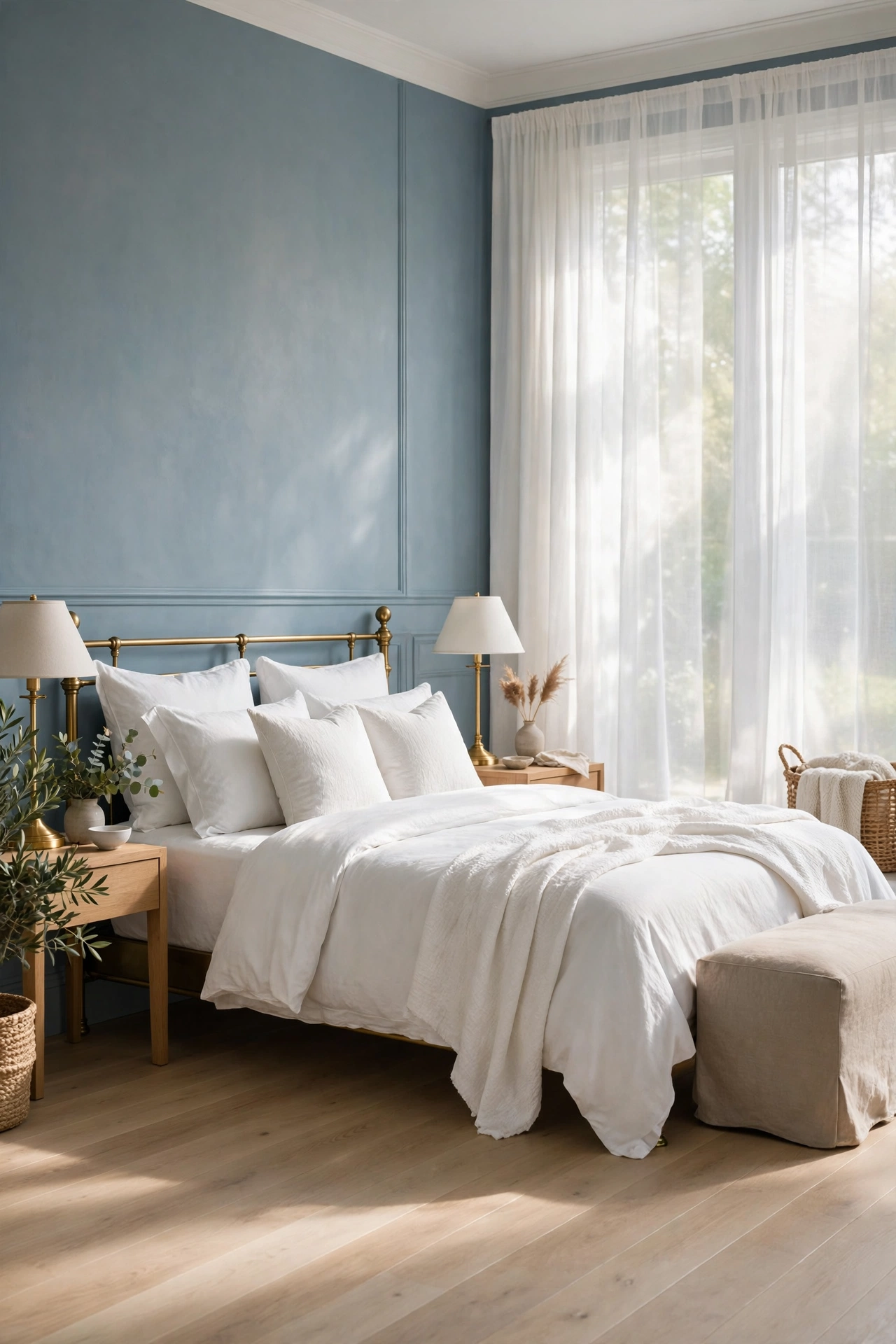
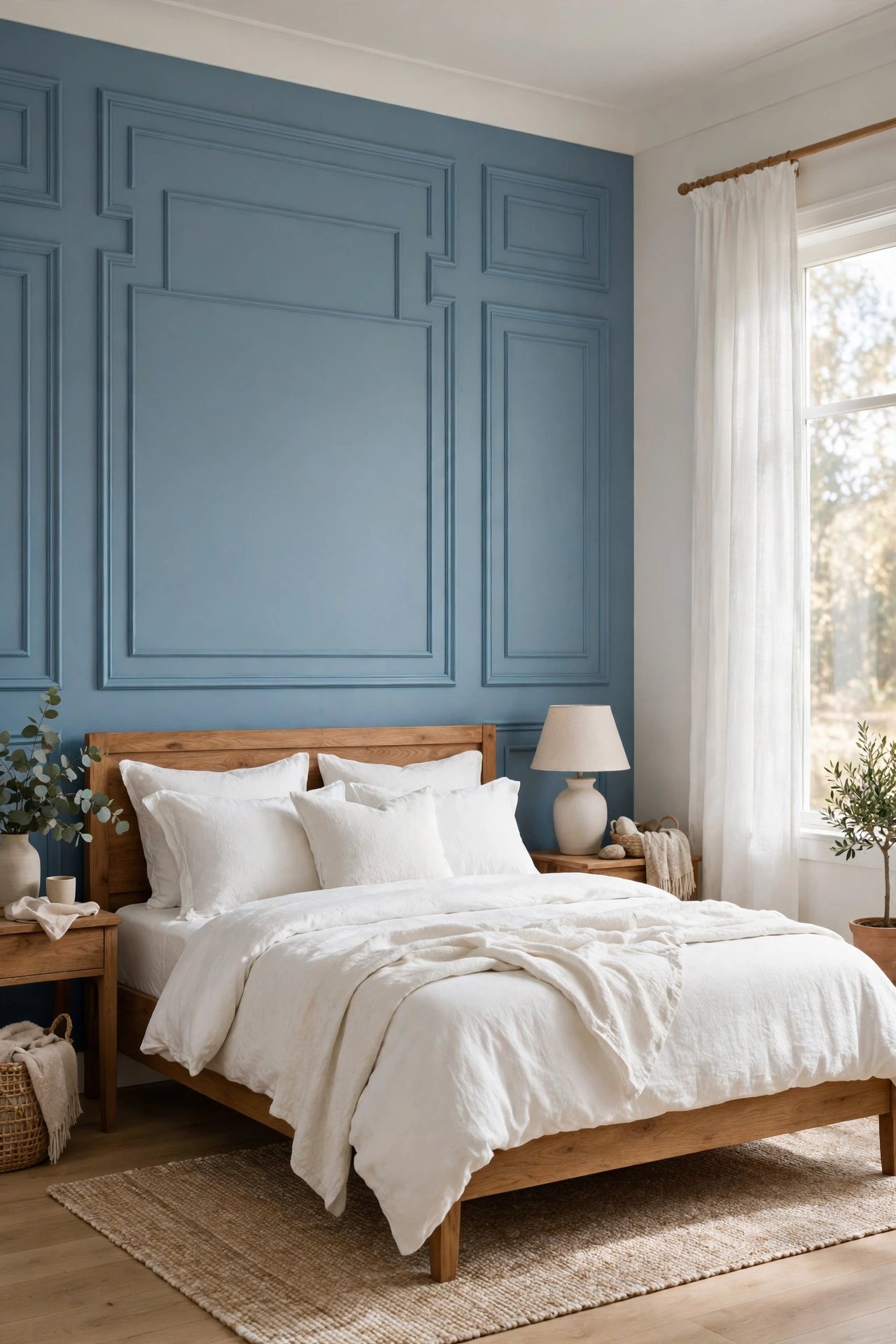
If painting the whole room feels like too much commitment, one dusty blue accent wall behind the bed gives you the same focal point for a fraction of the effort and paint. The wall behind the headboard is the natural anchor of any bedroom, and a single blue wall makes the bed look intentional and designed, even if everything else in the room is plain white. Keep the remaining three walls a warm white or very pale gray so the blue wall stands out without competing. This is also the easiest version to reverse — one wall repaints in an afternoon — which makes it a great first step if you are trying the color for the first time. For extra polish, add simple picture-frame molding painted the same dusty blue, which turns a flat wall into an architectural feature.
3. A Dusty Blue Upholstered Headboard
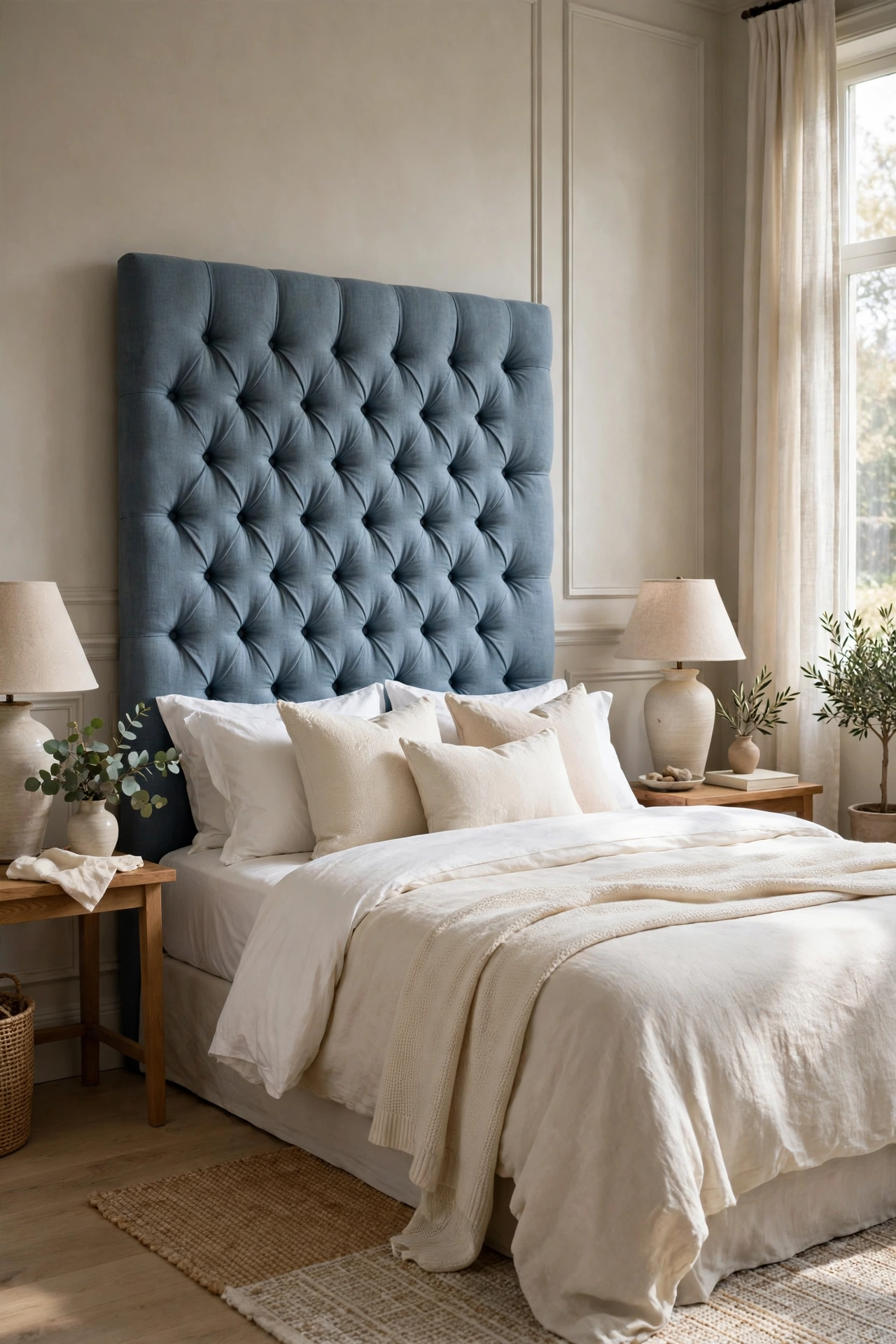
A dusty blue upholstered headboard brings the color into the room without a single can of paint, which makes it the best option for renters. Choose a tall, tufted or channel-stitched headboard in a linen or velvet fabric — the texture is what keeps the muted blue from looking flat. A headboard that extends a few inches wider than the mattress on each side makes the bed feel grander and gives the wall a finished look. Keep the walls and bedding neutral — white, cream, or pale gray — and let the headboard carry the color. If you already own a wooden headboard you like, a fitted slipcover in dusty blue linen achieves the same effect for much less money, and you can remove it to wash it.
4. Dusty Blue Linen Bedding
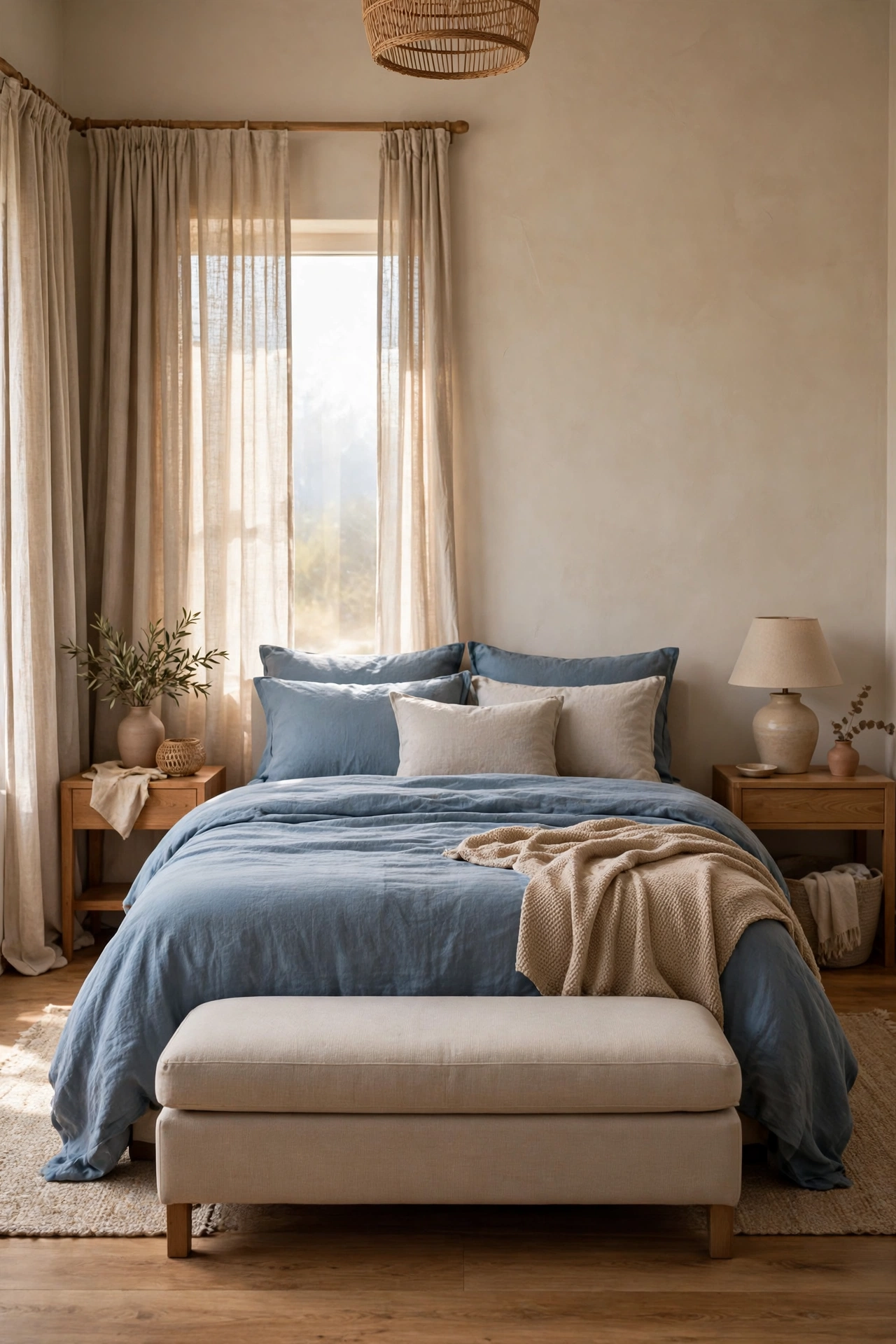
New bedding is the cheapest way to try dusty blue before committing to paint or furniture. A dusty blue linen duvet cover or quilt sets the color for the whole bed, and linen’s natural wrinkles and texture suit the relaxed, muted tone perfectly. Layer it over white or cream sheets so the blue reads soft rather than heavy, and add a folded throw in a slightly deeper blue at the foot of the bed for depth. Linen breathes well, so it works year-round — cool in summer, easy to layer with a heavier blanket in winter. Because bedding is easy to swap, this is also the lowest-risk way to test whether you actually love living with dusty blue every day before you spend money on paint.

5. Dusty Blue and Crisp White
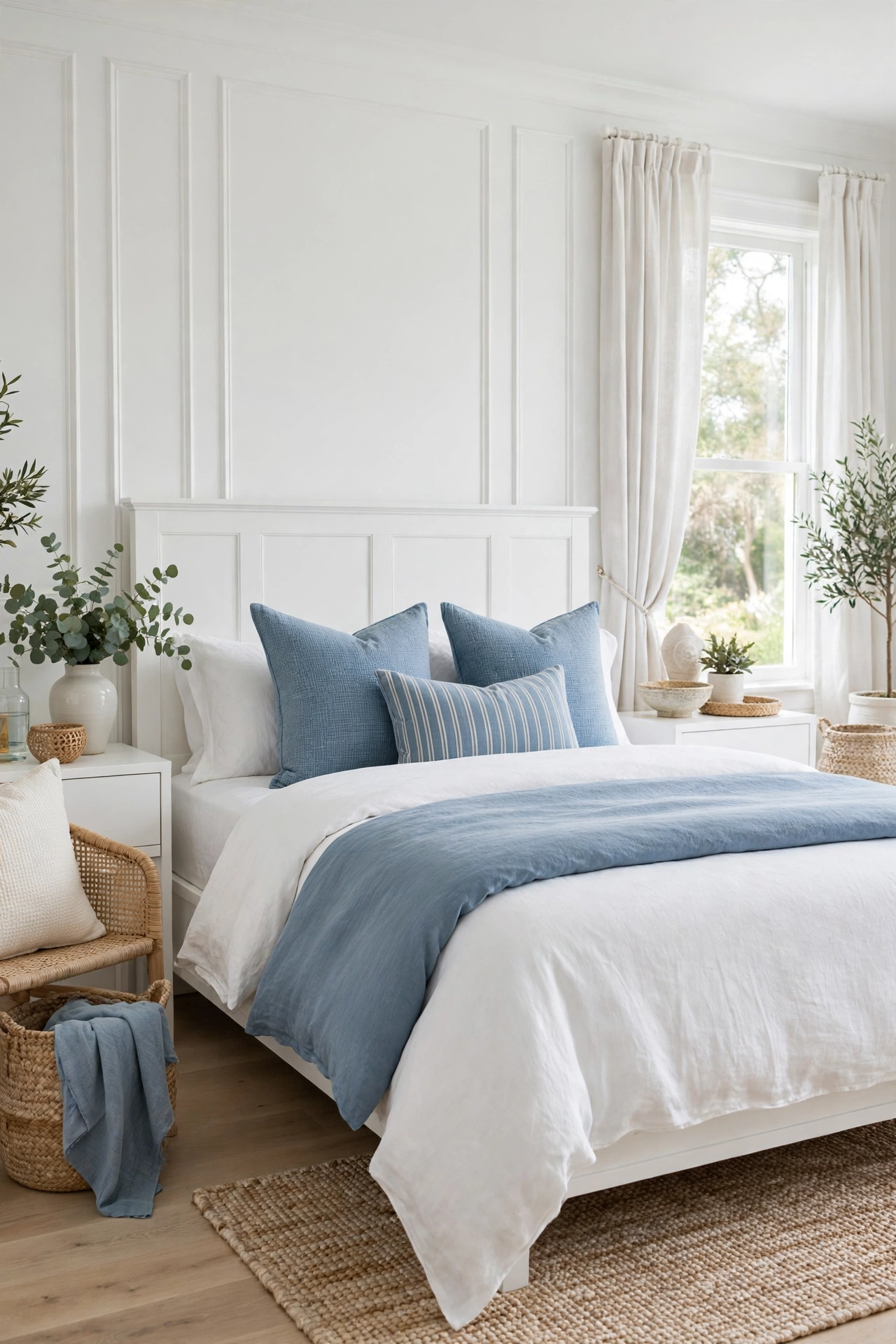
The simplest dusty blue pairing is also one of the sharpest: dusty blue against crisp white. White bedding, white curtains, and white furniture keep the blue feeling fresh and airy, while the blue stops the white from feeling stark or clinical. This combination suits coastal, classic, and Scandinavian bedrooms alike, and it photographs beautifully because the contrast is clean. The trick is balance — aim for roughly two-thirds white to one-third blue so the room feels light, with the blue concentrated in the bedding, one wall, or the headboard. Add a single natural texture, like a woven basket or a light wood nightstand, so the palette does not feel flat. It is a timeless pairing that will not date the way trendier color combinations can.
6. Dusty Blue and Warm Cream
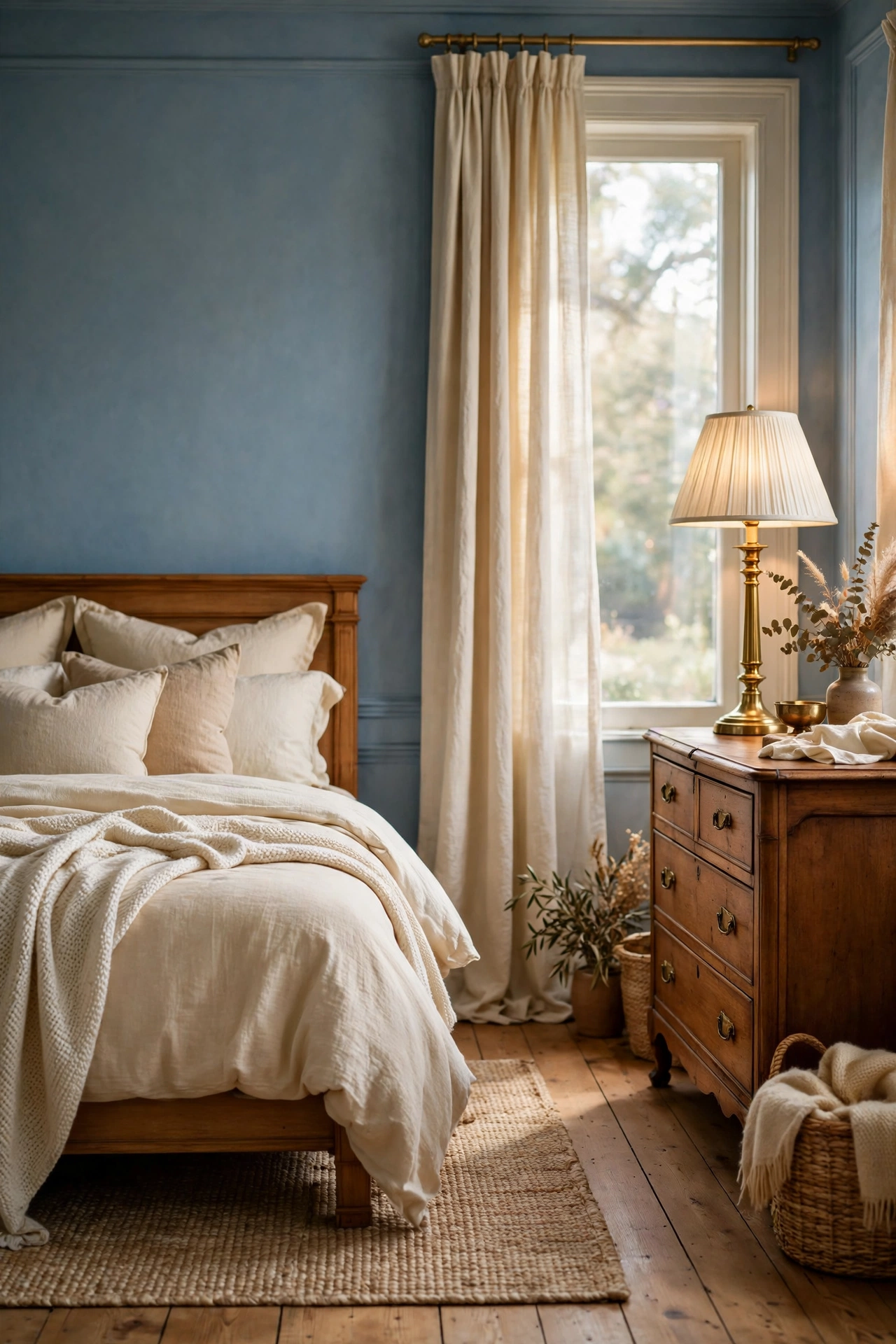
If crisp white feels too sharp, warm cream softens dusty blue into something cozier and more traditional. Cream bedding, cream curtains, and a cream upholstered bench at the foot of the bed warm up the blue’s gray undertone and keep the room from feeling chilly, especially in north-facing bedrooms. This pairing works beautifully with vintage or antique furniture — a cream-painted dresser, a brass lamp, a faded Persian-style rug — because both colors have a slightly aged, collected quality. Keep the cream on the warm side, with a yellow or peach undertone, rather than a cool gray-cream, or the two colors can turn muddy together. A cream throw draped over dusty blue bedding is the easiest way to test the combination before committing.
7. Dusty Blue and Blush Pink
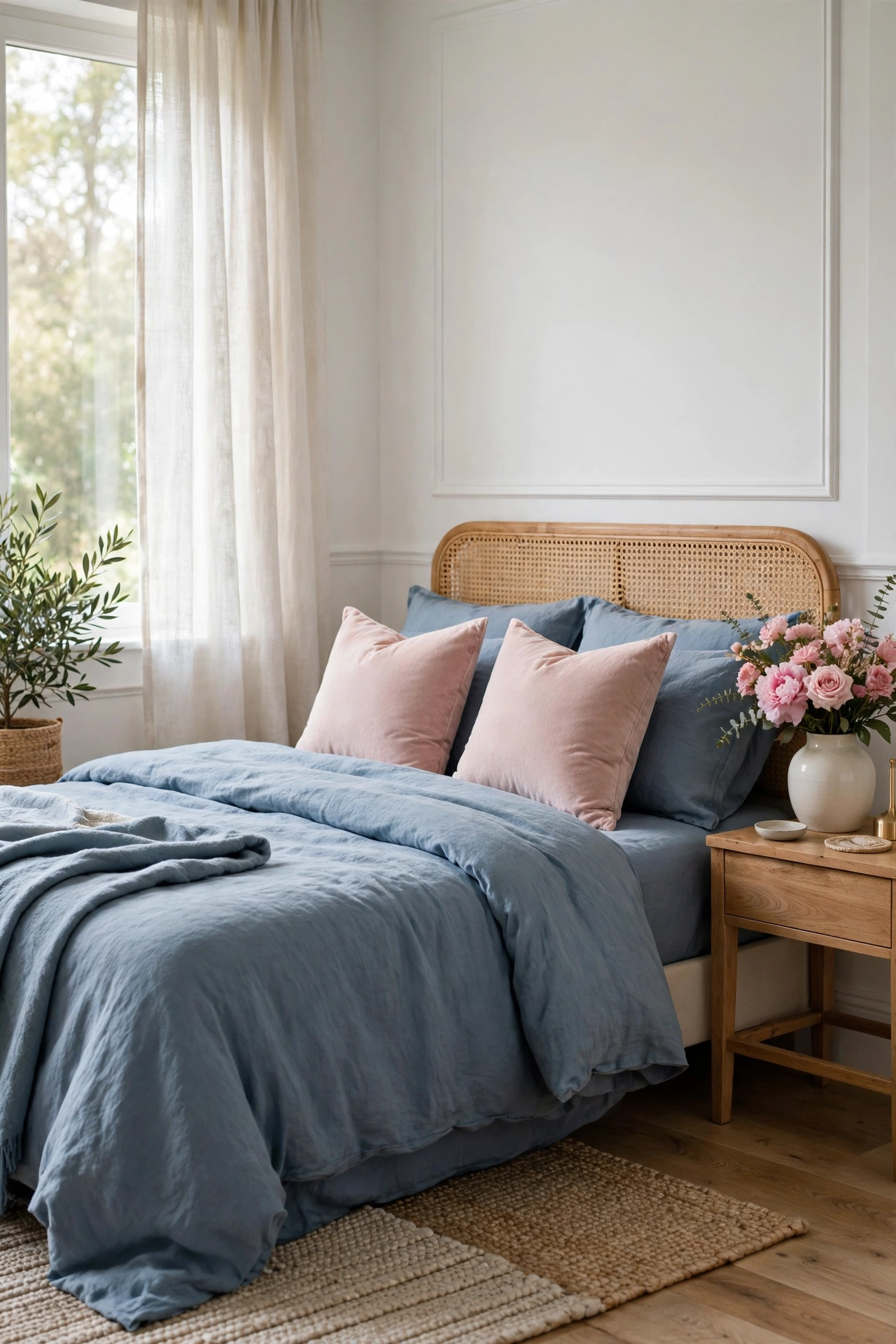
Dusty blue and blush pink is the pairing that makes a bedroom feel romantic without feeling like a nursery. The soft pink warms up the cool blue, and the blue keeps the pink from turning saccharine — together they feel balanced and grown-up. Use the blue as the dominant color — walls, bedding, or headboard — and let blush appear in smaller doses: throw pillows, a vase of fresh flowers, a lampshade, or a piece of art above the dresser. A blush velvet cushion against dusty blue linen is one of the prettiest texture combinations in this whole list. Keep the rest of the room neutral with white and light wood so the two colors stay the stars. This pairing suits a primary bedroom just as well as a guest room, and it works in both modern and traditional furniture styles.
8. Dusty Blue and Natural Wood
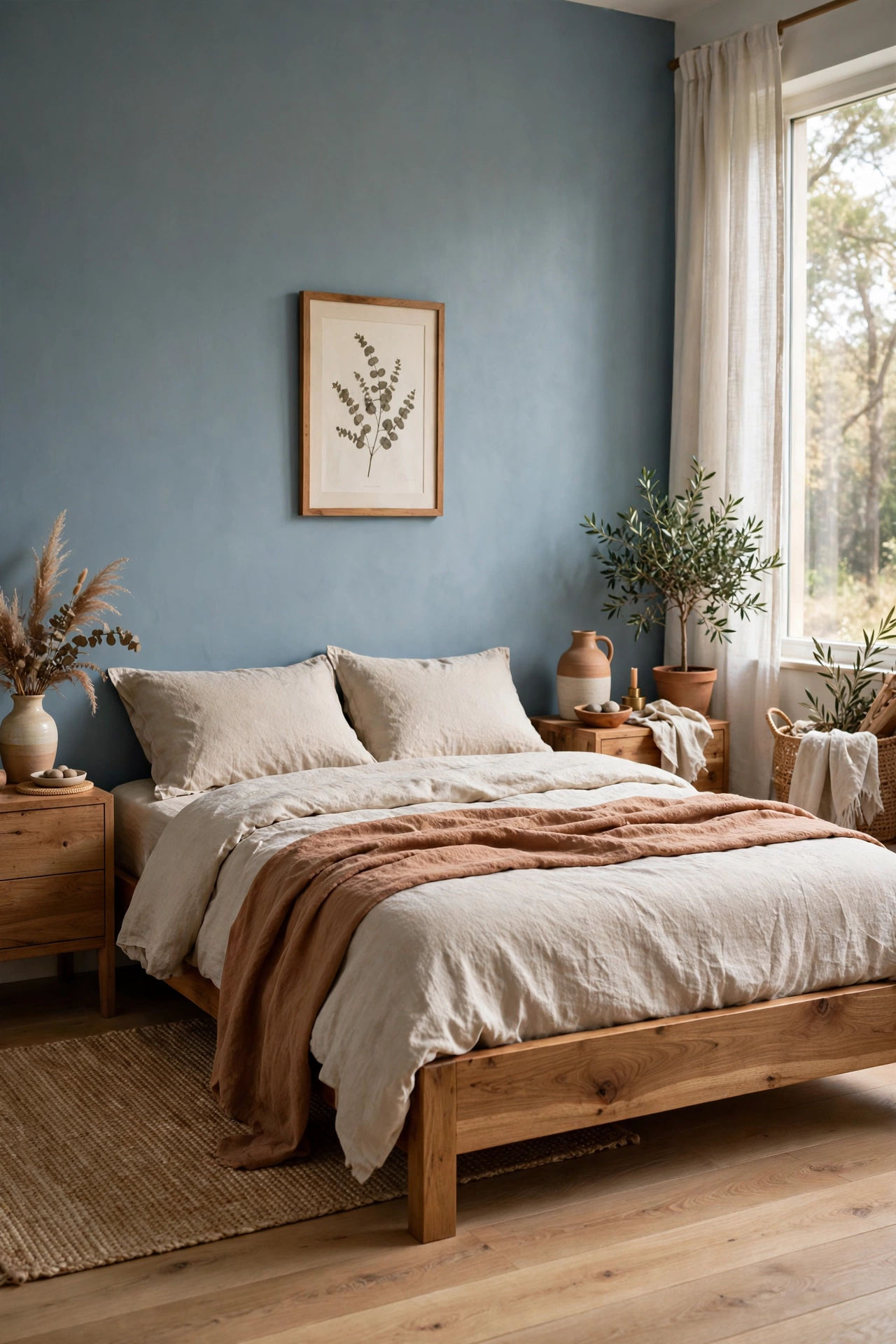
Natural wood is dusty blue’s best friend, because warm timber stops the cool gray-blue from feeling cold. Light oak, warm walnut, or honey-toned pine all work — choose wood with visible grain so the room gains texture as well as warmth. A wooden bed frame against dusty blue walls, wooden nightstands beside a blue upholstered bed, or a wood dresser under a blue-framed mirror all create the same effect: the blue feels calm, the wood feels grounded. Avoid very dark stained wood in large amounts, which can fight the softness of the blue; medium and light tones are the sweet spot. If your floors are already wood, you are halfway there — add blue bedding and a wood bench, and the palette is done.
9. Dusty Blue and Brass Accents
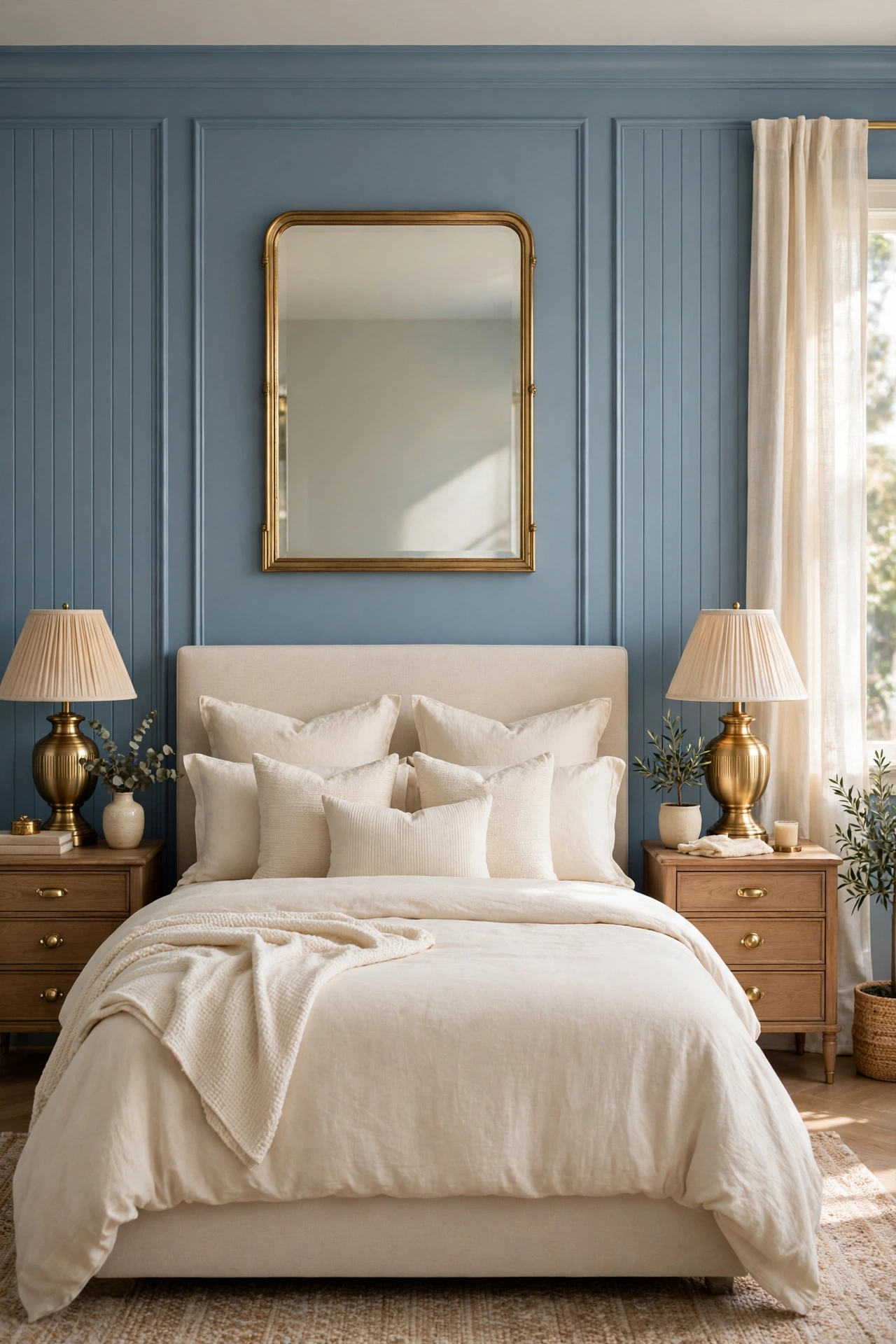
Brass is the metallic that dusty blue loves most. Where chrome can feel cold against an already cool color, brushed or aged brass adds warmth and a hint of glamour that lifts the whole room. Swap in brass drawer pulls, a brass-framed mirror, brass bedside lamps, or a brass picture frame or two — small touches are enough, because brass is a strong accent and a little goes a long way. The combination feels especially elegant in a bedroom with dusty blue walls and cream bedding, where the brass reads like jewelry against the soft palette. Keep the brass finish consistent across the room — all brushed, or all aged — so it looks deliberate rather than collected by accident.
10. Layered Blues: Dusty Blue with Navy
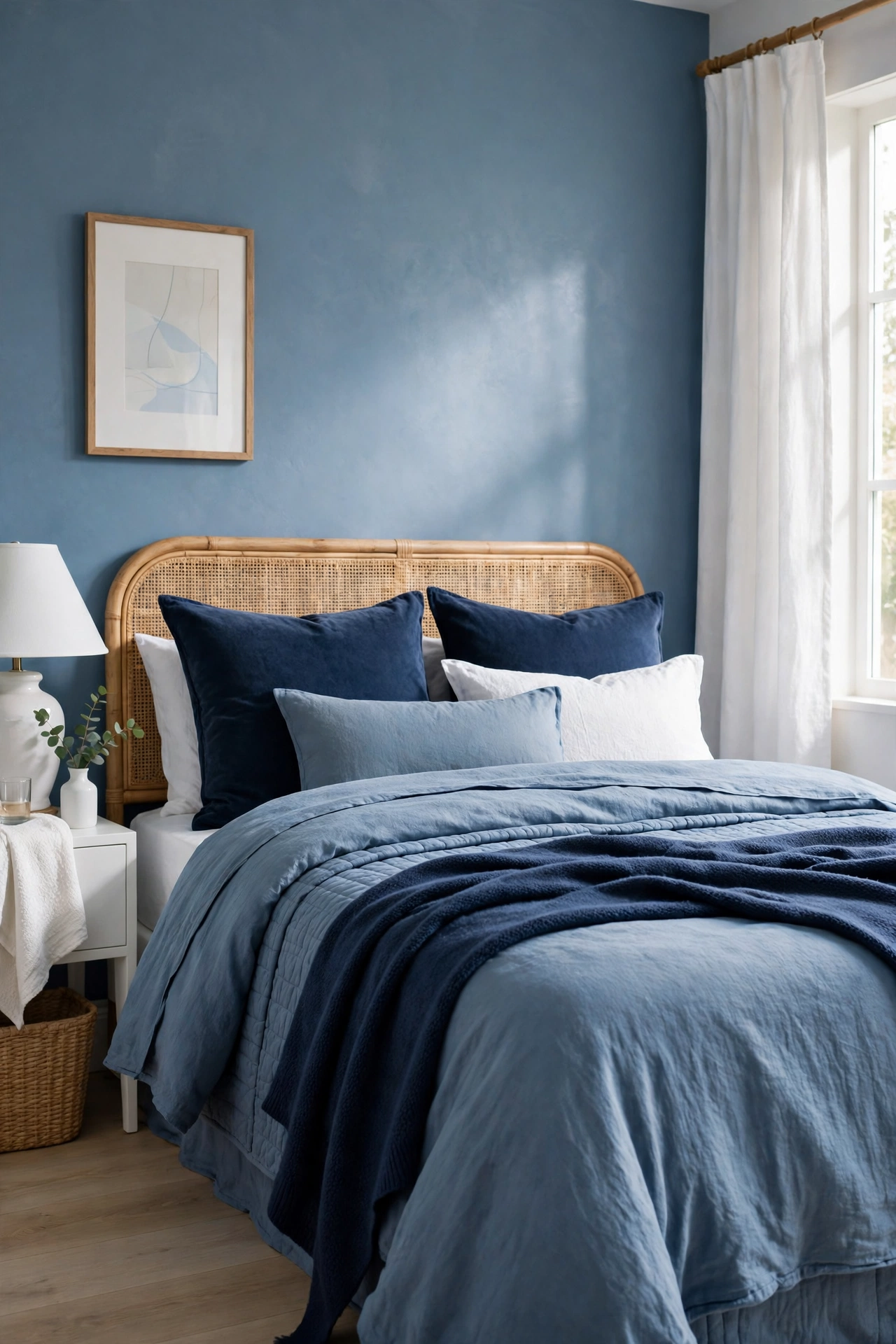
Layering dusty blue with a deeper navy gives the room depth that a single blue cannot achieve on its own. Use dusty blue as the main color — walls or bedding — and bring navy in as the darker accent: navy throw pillows, a navy throw blanket, navy curtains, or a navy-painted dresser. The two blues share the same family, so they never clash, but the contrast between light and dark stops the room from looking washed out. Add white or cream as a third color to keep the layering crisp, and avoid adding a fourth strong color — the beauty of this look is its restraint. This is a particularly good approach for a master bedroom, where the deeper navy adds a sense of richness and maturity to the calm dusty blue base.
11. Dusty Blue Velvet Pillows and Throws
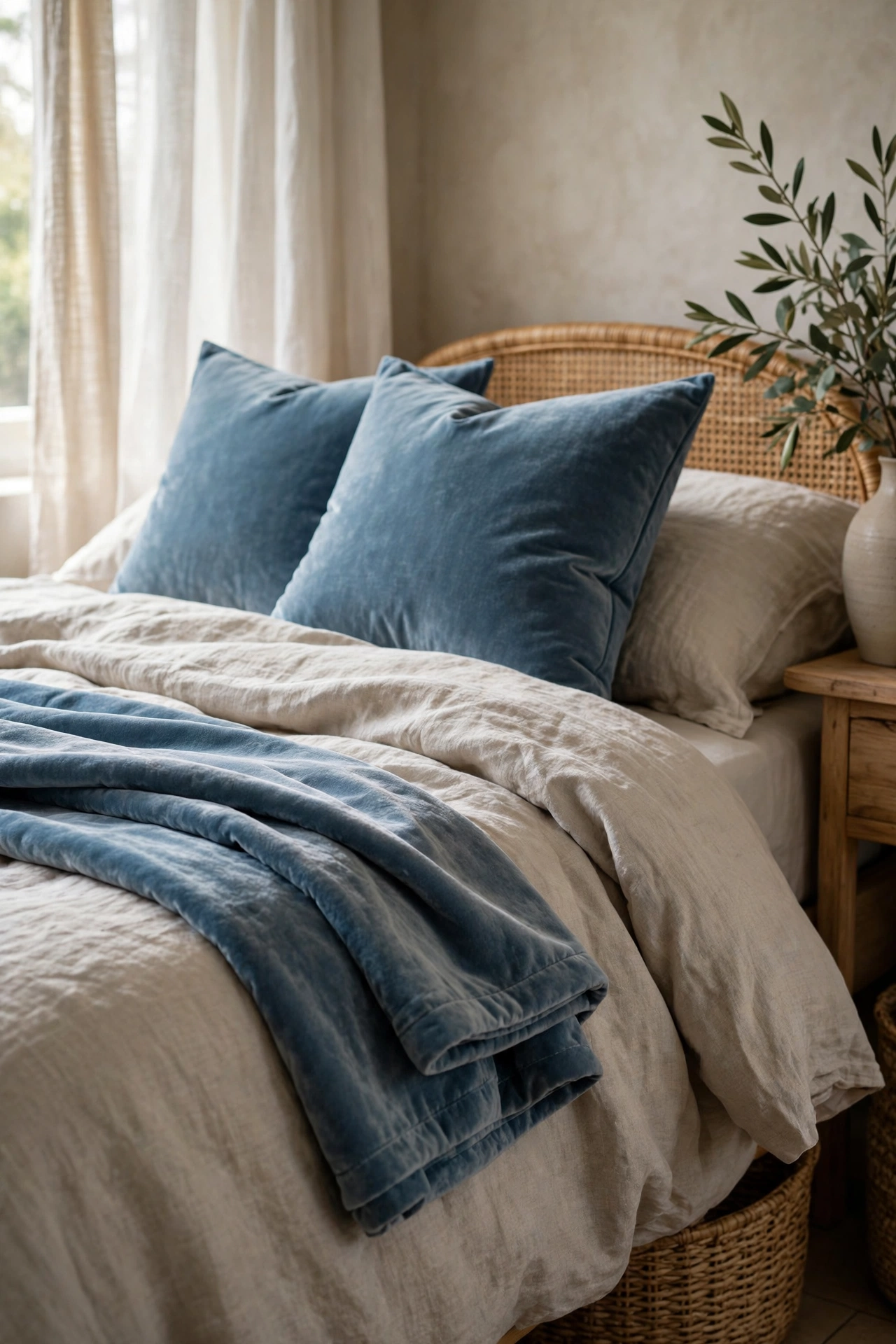
Velvet is the texture that makes dusty blue feel luxurious. A few dusty blue velvet throw pillows on a neutral bed, or a velvet throw folded across the foot, add richness and a soft sheen that flat cotton cannot match. Velvet also deepens the color — the same dusty blue looks slightly darker and more sumptuous in velvet than in linen — so it is a good way to add drama without adding a new color. Mix velvet with linen and cotton in the same palette so the bed feels layered rather than matchy; a linen duvet, a cotton throw, and two velvet cushions is a combination that works almost every time. Velvet pillows are also one of the cheapest ways to refresh the room seasonally — swap them out in spring for something lighter without touching anything else.
12. Dusty Blue Curtains
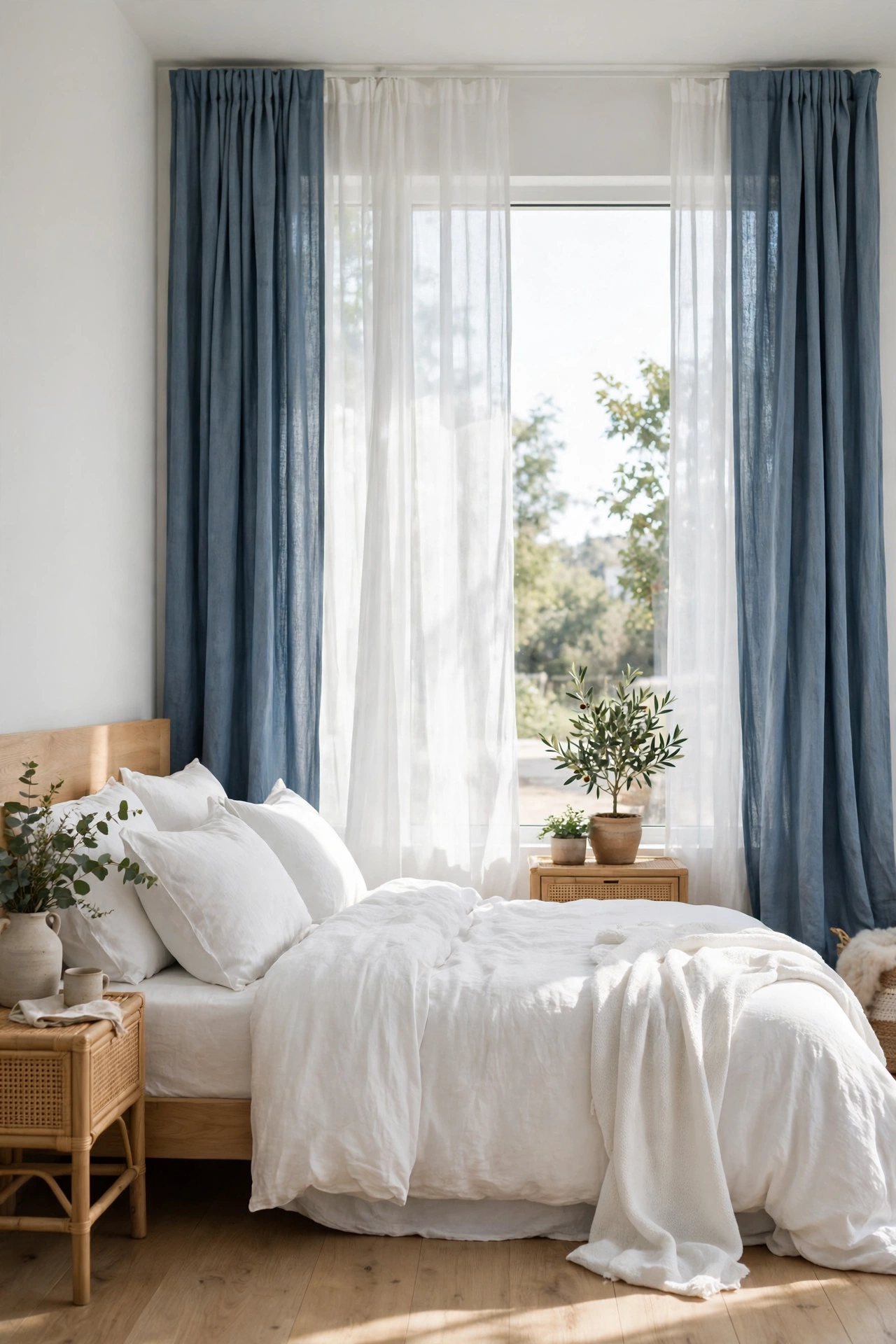
Dusty blue curtains frame the window and pull the color up to eye level, which balances a blue bed or blue wall beautifully. Floor-length curtains in a linen or cotton-linen blend hang best — the fabric’s slight texture suits the muted color — and hanging them high, close to the ceiling, makes the room feel taller. If your walls are already dusty blue, choose curtains a shade lighter or darker than the wall so they read as a layer rather than blending in; if the walls are white, the curtains can carry the blue on their own. Sheer white curtains layered behind the blue panels soften the light and keep the room bright during the day. Blackout lining is worth adding if the bedroom faces east and catches the morning sun.
13. Subtle Dusty Blue Wallpaper
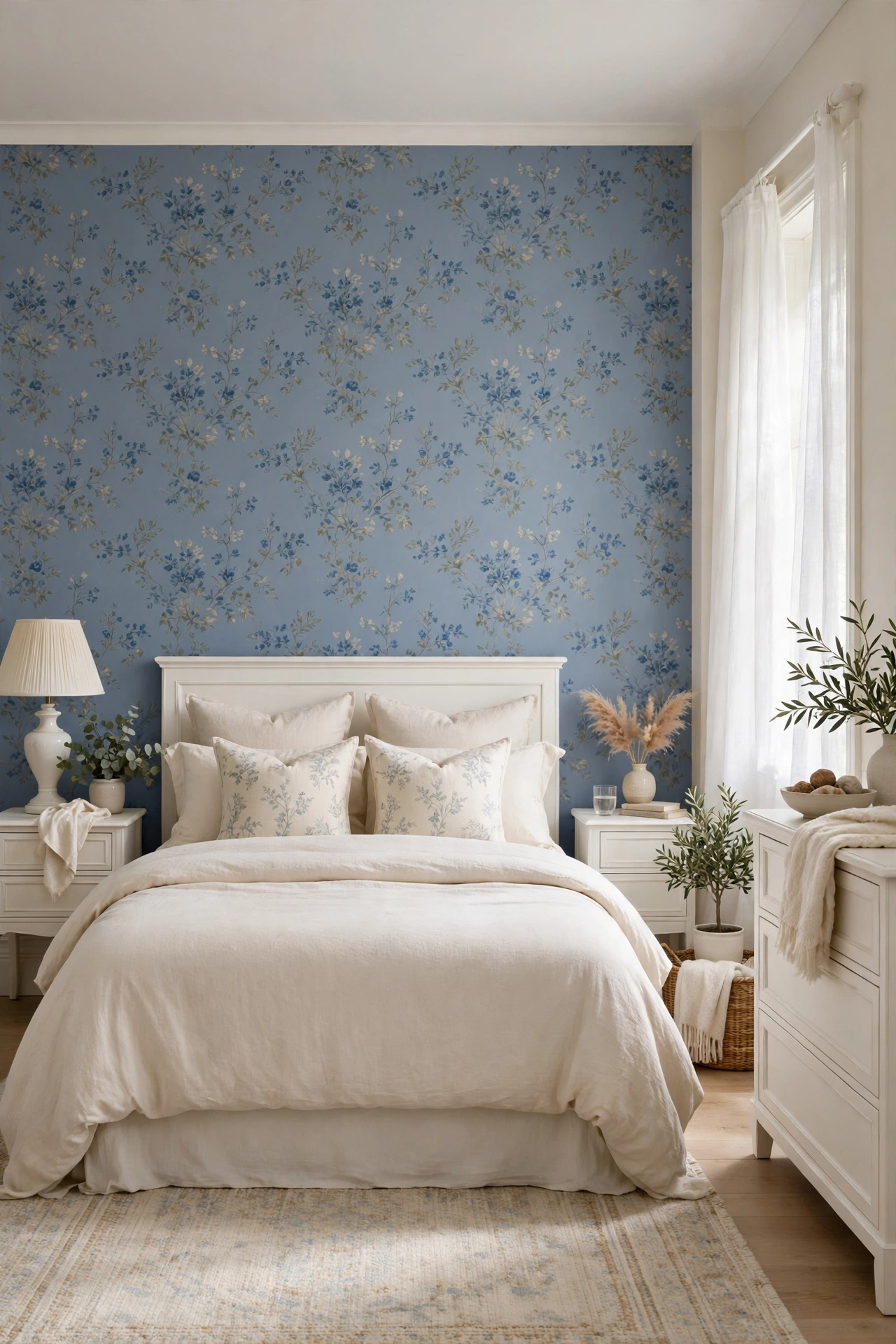
Wallpaper lets you add dusty blue with pattern and texture that paint alone cannot give. Choose a subtle design — a small floral, a tone-on-tone stripe, a delicate botanical, or a soft geometric — in dusty blue on a white or cream ground, so the wall reads patterned rather than solid. One wallpapered wall behind the bed is usually enough; papering all four walls in a pattern can overwhelm a small bedroom. Peel-and-stick wallpaper is a renter-friendly option here, and it lets you test a bold pattern without a long-term commitment. If you love handmade texture on the wall, a crocheted wall hanging in cream or natural cotton also softens a blue wall beautifully — see our 29 crochet wall decor ideas for styles that work above a bed or dresser.
14. Coastal Dusty Blue Bedroom
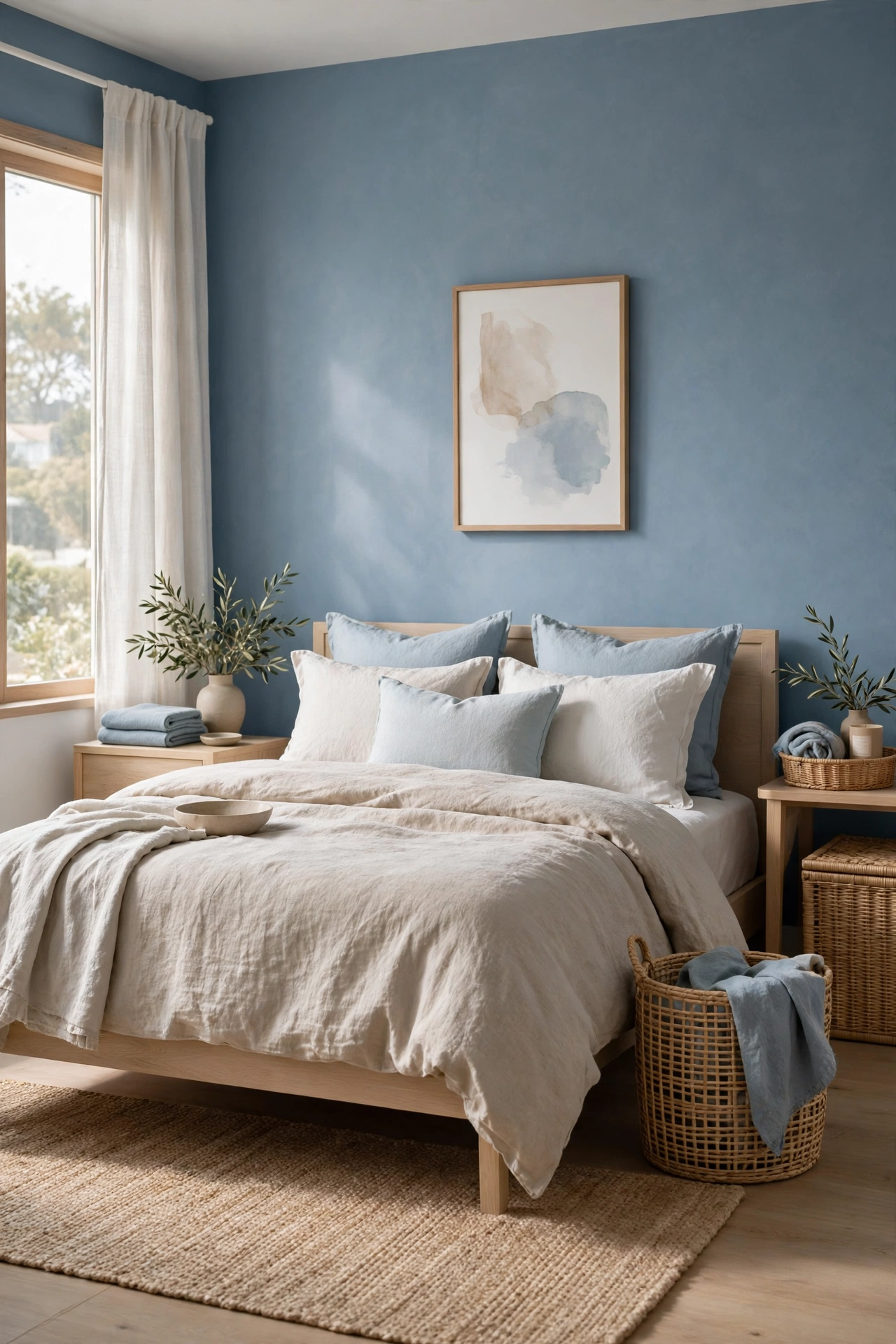
Dusty blue is a natural coastal color — it is the shade of a hazy sea on a cloudy morning — so a coastal bedroom built around it feels effortless rather than themed. Keep the palette to dusty blue, white, sand, and light wood, and add texture instead of beach clichés: a woven jute rug, rattan baskets, linen bedding, and a piece of driftwood-toned furniture. Avoid anchors and seashell motifs; the color and the materials do the coastal work on their own. Whitewashed wood paneling on one wall, or a shiplap accent in a pale blue-gray, strengthens the coastal feeling without turning the room into a beach house set. This look suits bedrooms with lots of natural light best, where the pale palette can breathe.
15. Dusty Blue and Sage Green
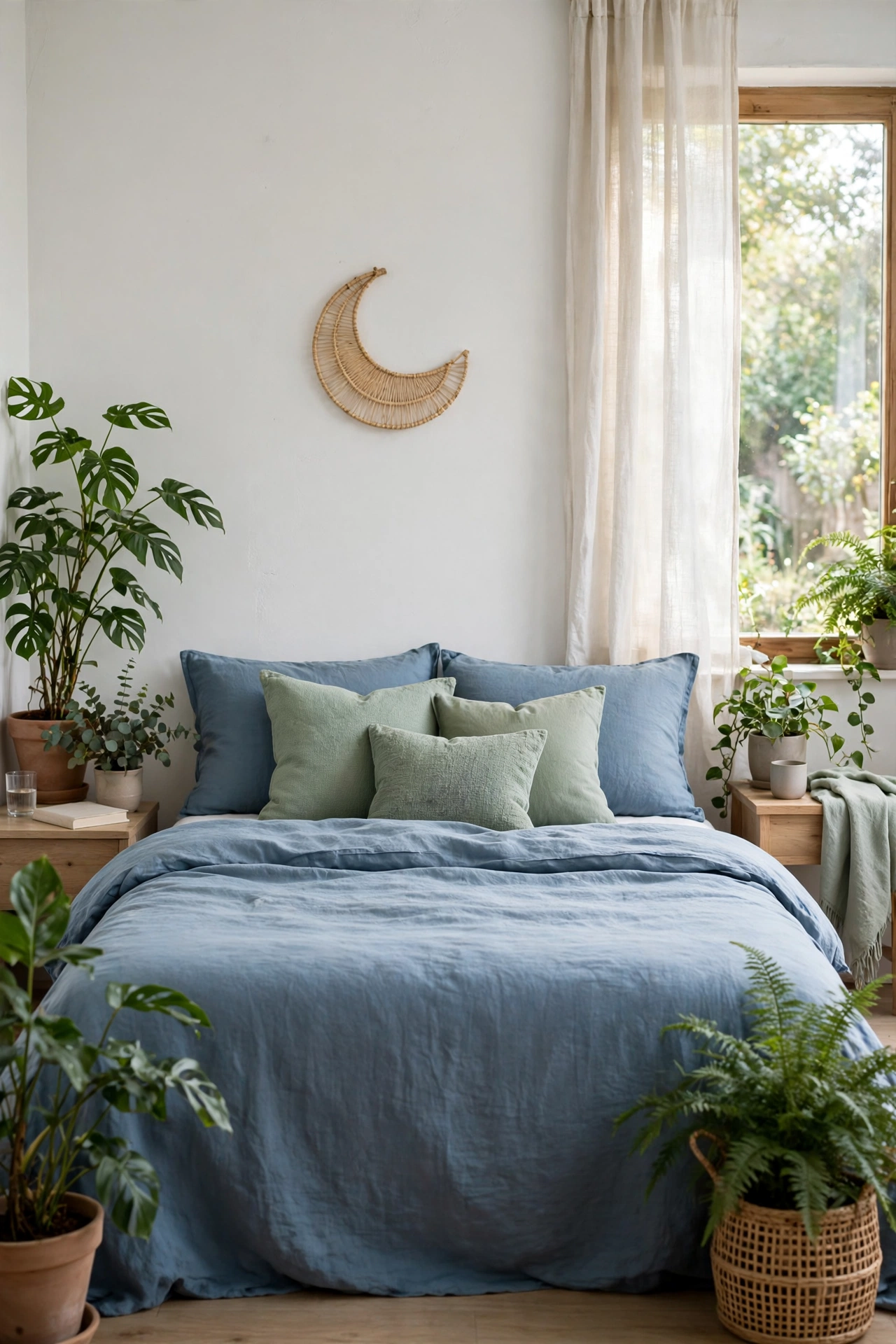
Dusty blue and sage green are both muted, gray-leaning colors, so they sit together peacefully instead of competing — the result is a bedroom that feels like a garden after rain. Use dusty blue as the main color and sage as the supporting one: sage throw pillows on a blue bed, a sage green plant or two, sage curtains against blue walls, or a sage-painted dresser. Plants are the easiest way to bring sage into the room — a trailing pothos or a fiddle-leaf fig adds a living green that changes with the light. This pairing is a favorite for bedrooms that aim for calm above all else, and it connects naturally to other soft-color bedrooms like our 31 sage green and pink bedroom ideas, which use the same muted palette in a warmer direction.
16. Dusty Blue and Soft Gray
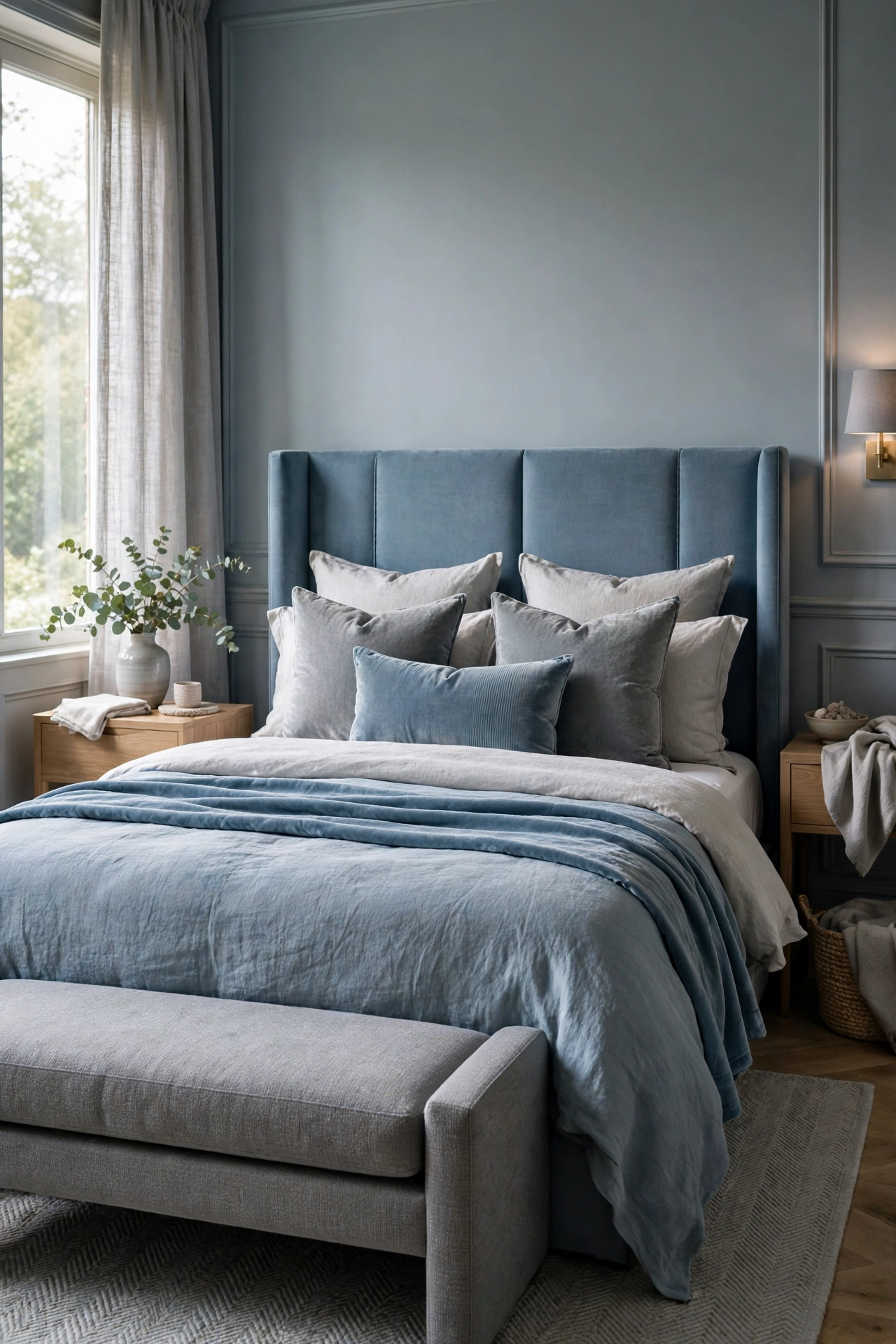
For the most serene version of this palette, pair dusty blue with soft gray instead of white. Gray bedding, a gray upholstered bench, gray curtains, and dusty blue walls create a tonal, almost monochromatic room that feels like a high-end hotel suite. The key is to vary the textures so the similar tones do not blur together: linen against velvet, matte walls against a glossy ceramic lamp, a nubby wool throw against smooth cotton sheets. Add one warm element — a wood frame, a brass lamp, a cream cushion — so the gray-blue combination does not feel cold. This is the best pairing for a bedroom that gets little direct sun, because neither color depends on bright light to look good, and both hide dust and everyday wear gracefully.
17. Dusty Blue in a Small Bedroom
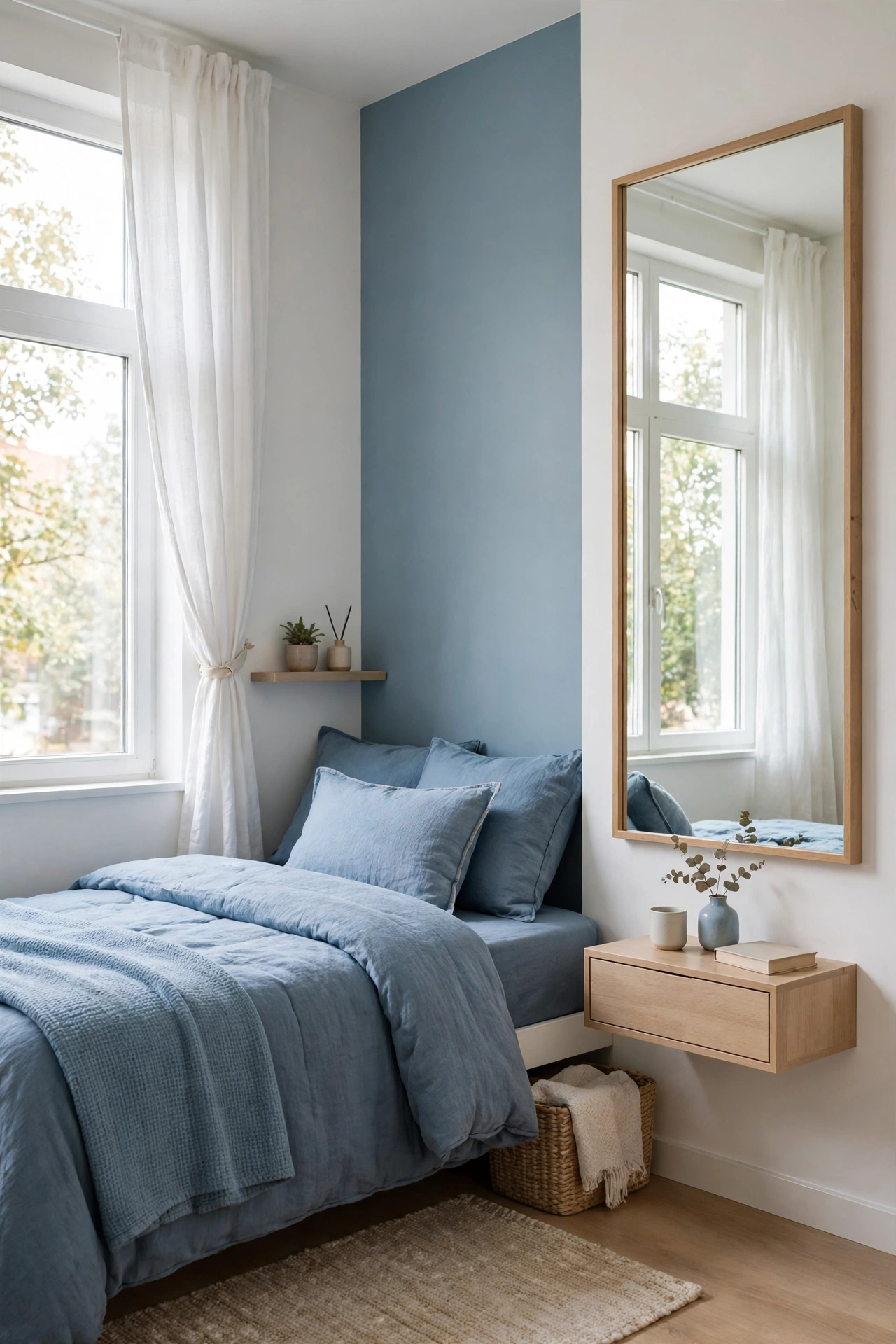
Small bedrooms are where dusty blue earns its keep: the color is light enough to avoid closing the room in, but interesting enough that a small room does not feel plain. Keep the blue on the bedding, one wall, or the curtains, and let the rest of the room stay white and bright so the space feels open. A mirror opposite the window doubles the light, and furniture with legs — a bed frame you can see under, a floating nightstand — keeps the floor visible, which makes the room feel bigger. Choose one dusty blue statement piece rather than several small blue items, so the color reads as a deliberate choice instead of clutter. For more small-space tricks that work with this palette, see our 31 small apartment ideas, which cover the same light-and-airy principles room by room.
18. Dusty Blue Master Bedroom with a Statement Chandelier
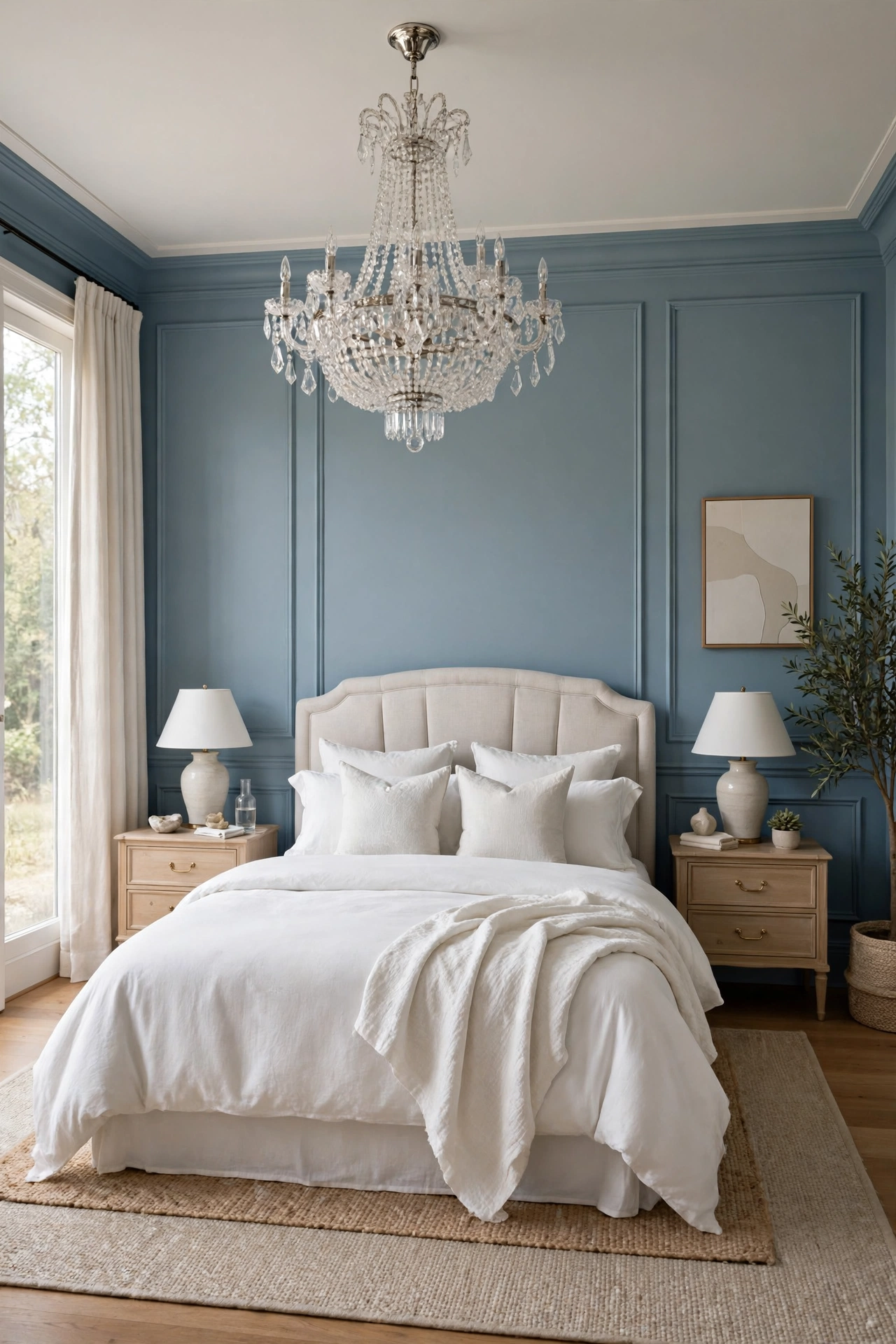
In a master bedroom, dusty blue gives you a calm base that can support one dramatic piece — and a statement chandelier is the best candidate. A crystal, beaded, or brass chandelier hanging over the bed adds sparkle and scale to a room that might otherwise feel too quiet, and the soft blue walls make the light from the fixture feel warm rather than harsh. Keep the rest of the room restrained: simple bedding, a pair of matching nightstands, one piece of art. The chandelier should hang low enough to feel connected to the bed — roughly 30 to 36 inches above the mattress is a good guide — but high enough that nobody bumps into it sitting up. A dimmer switch is essential, so the same fixture can shift from bright morning light to a soft evening glow.
19. Dusty Blue and Rattan or Wicker
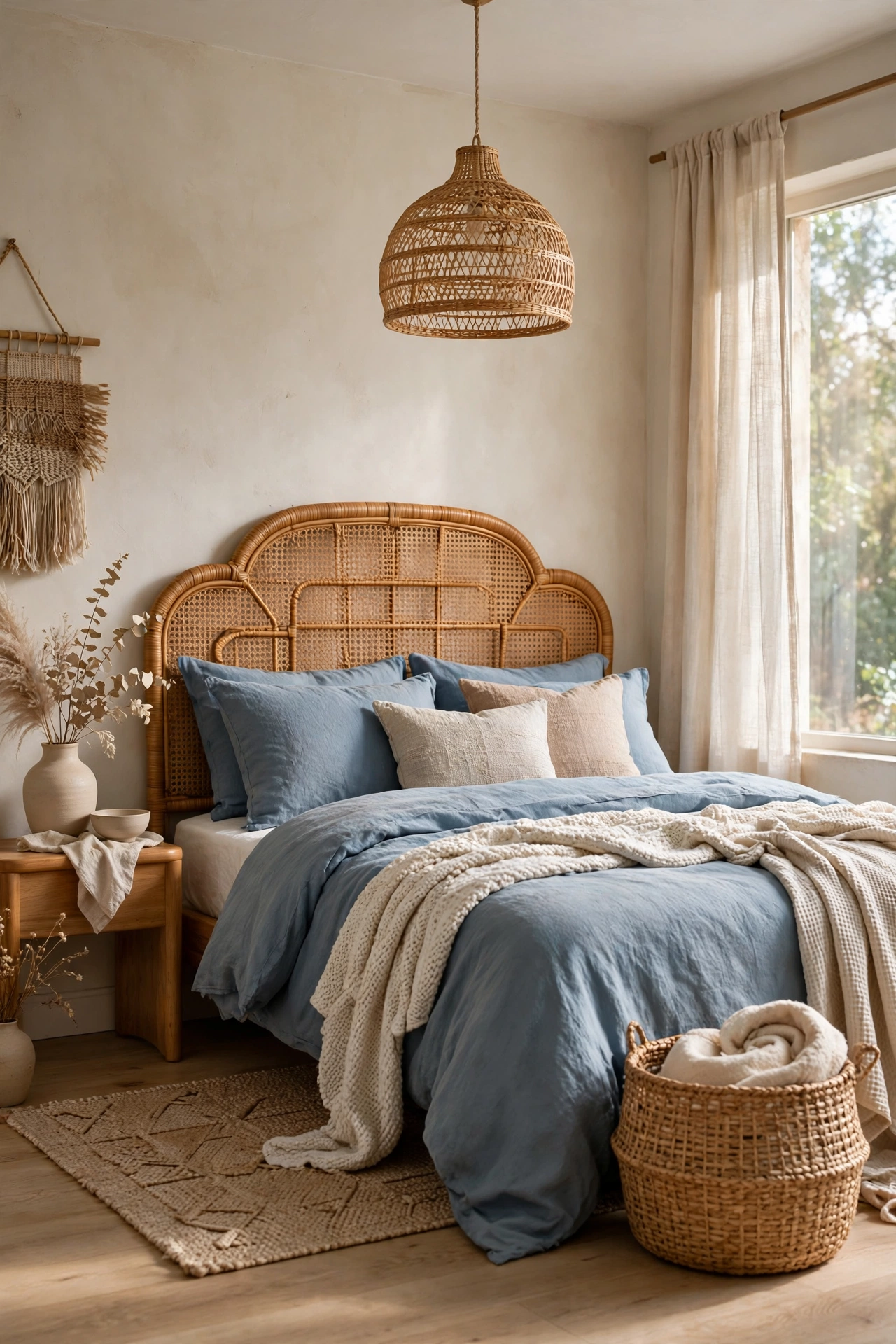
Rattan and wicker bring a warm, handmade texture that stops dusty blue from feeling formal. A rattan headboard, a wicker basket for extra blankets, a rattan pendant light, or a woven chair in the corner all add the same relaxed, slightly bohemian warmth. The natural honey tone of rattan is the perfect counterpoint to cool dusty blue, and the open weave keeps the room feeling light. This combination works in coastal, boho, and relaxed modern bedrooms alike, and it is easy to build gradually — start with one rattan piece, like a basket or a tray, and add more only if you love the look. Keep the rattan natural rather than painted, so its texture stays visible against the smooth blue surfaces.
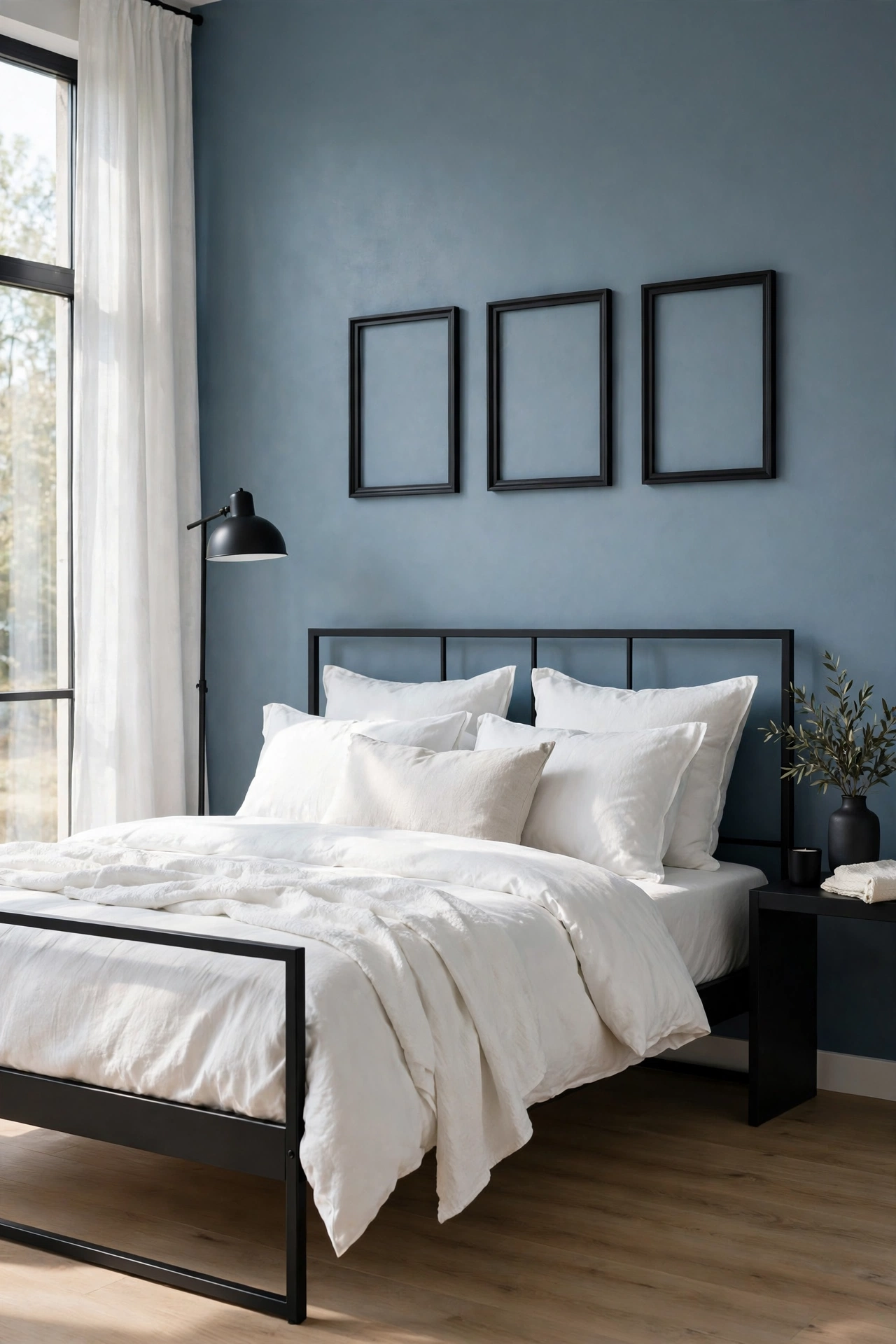
20. Dusty Blue with Black Modern Accents
A few black accents give dusty blue a modern edge and stop the room from feeling too sweet. Matte black picture frames, a black metal bed frame, black drawer pulls, or a black floor lamp add sharp contrast that makes the soft blue look intentional rather than washed out. The rule is restraint: black should appear in three or four small, deliberate places, not across every surface, or the room turns heavy. Black works best in bedrooms with good natural light and plenty of white, where it reads as a graphic accent rather than a dark weight. This is the version of dusty blue for people who like the color but want their bedroom to feel contemporary and crisp rather than romantic.
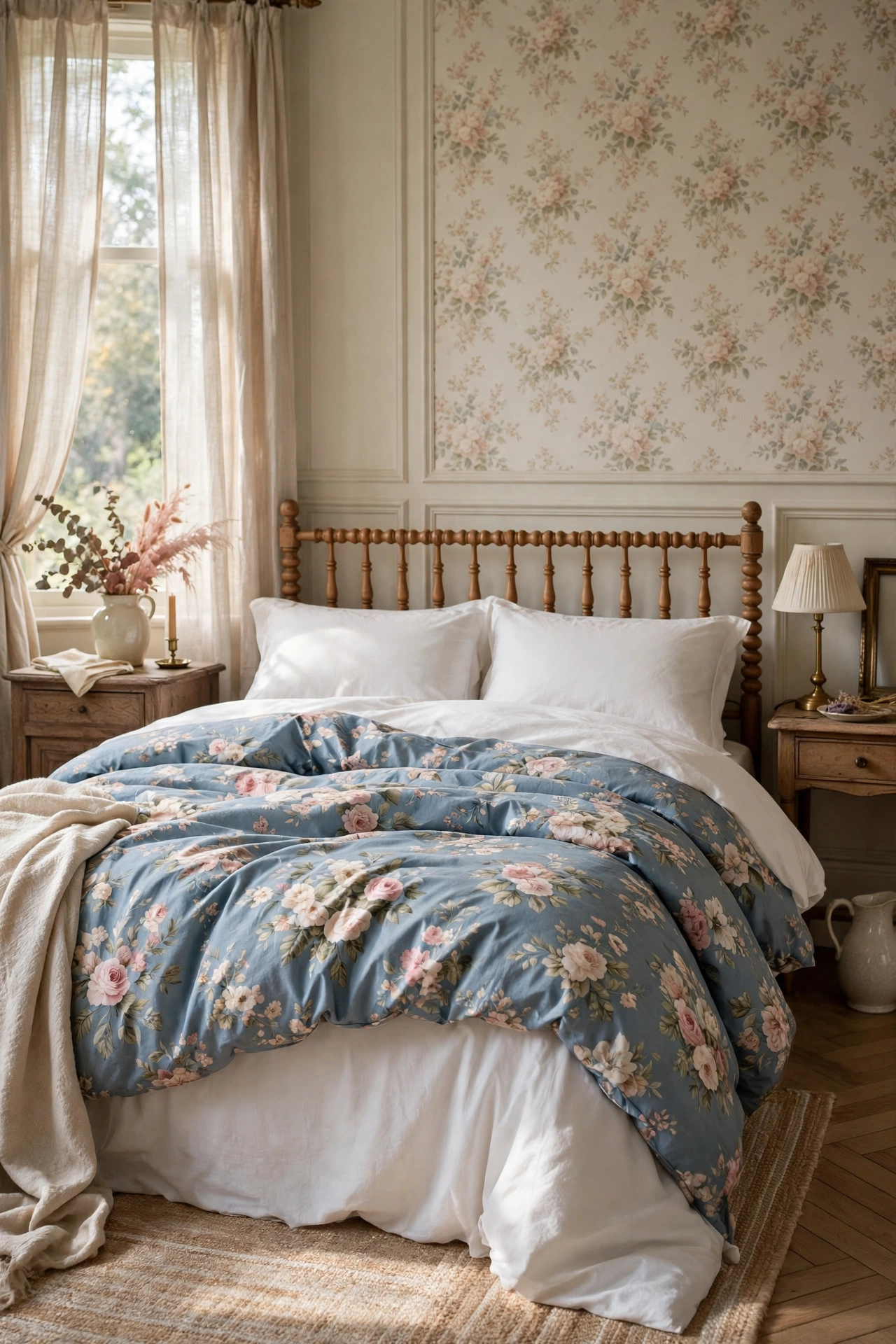
21. Dusty Blue Floral Bedding
Floral bedding in dusty blue is the easiest way to make the color feel romantic and lived-in. Look for a pattern where dusty blue is the ground color and the flowers are cream, blush, sage, or white — a busy multicolor floral will fight the calm palette, while a two- or three-color floral feels elegant. Keep the rest of the bedding simple: a solid dusty blue or white duvet underneath, plain pillowcases, and one solid throw, so the floral pattern has room to breathe. Vintage-style florals suit traditional furniture and wood tones, while a larger, more abstract floral works with modern furniture and clean lines. Wash the bedding before the first use — many printed cottons soften and the colors settle after one wash, which actually suits this muted palette.
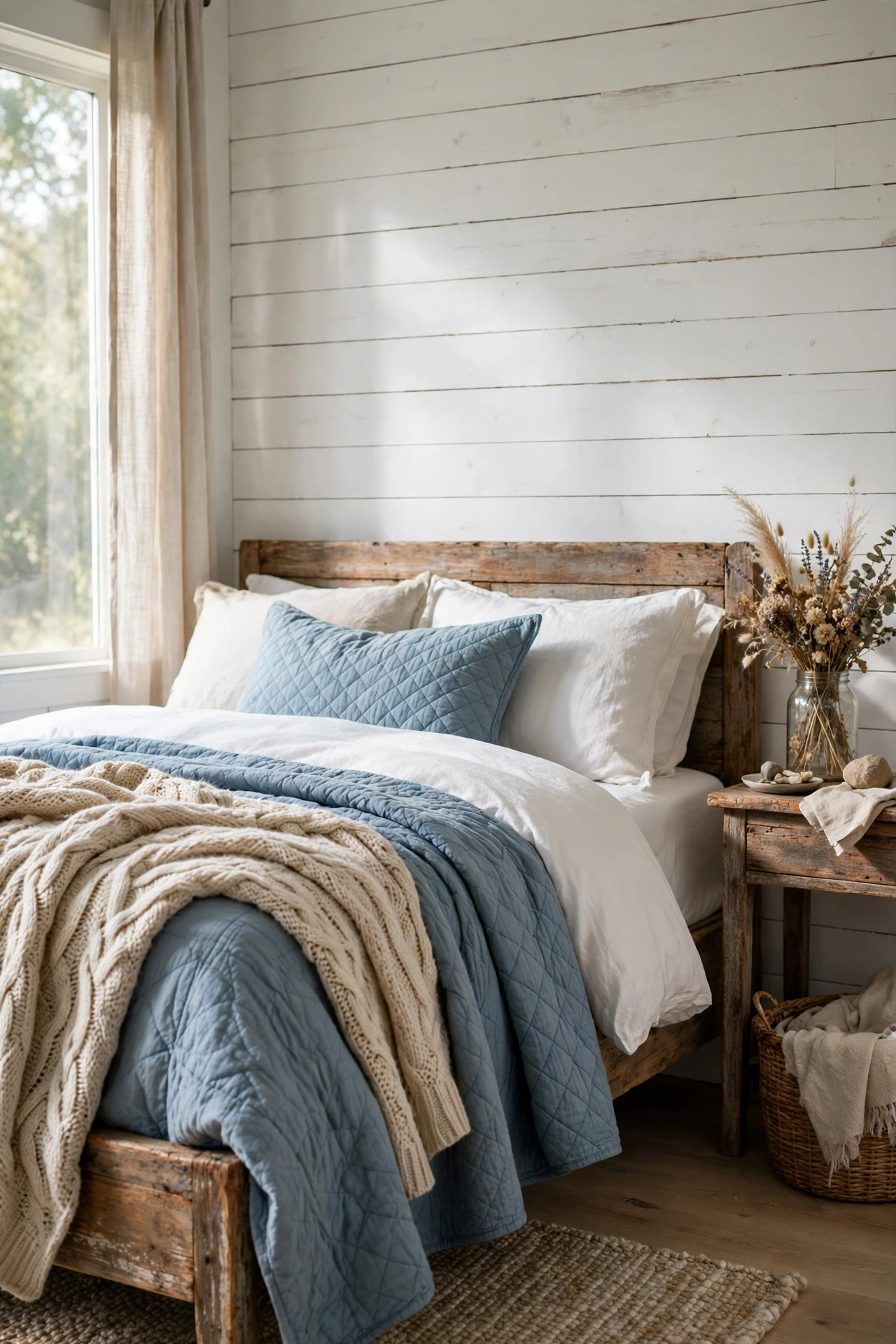
22. Dusty Blue Farmhouse Bedroom
Dusty blue fits farmhouse style naturally, because farmhouse palettes are built on muted, weathered colors. Pair blue walls or bedding with a wood-slat or shiplap accent wall, a distressed wood bed frame, and simple white cotton bedding with a blue quilt folded at the foot. Add farmhouse texture — a chunky knit throw, a galvanized metal tray, a mason jar of dried flowers — but keep it to a few honest pieces rather than a collection of themed signs. The blue should feel like faded denim or old paint, not a bright new color, so choose a dusty blue with a strong gray undertone. This look works especially well in bedrooms with wood floors and a view of a garden, where the palette connects the inside of the room to the outside.
23. Dusty Blue and Warm Beige
Warm beige is the neutral that makes dusty blue feel coziest, because beige brings the warmth that white and gray do not. Beige walls with dusty blue bedding, or blue walls with beige curtains and a beige upholstered bench, create a room that feels like a warm hug — soft, quiet, and easy to wake up in. This is a particularly good pairing for bedrooms with warm wood floors or honey-toned furniture, where beige ties the wood and the blue together. Choose a beige with a warm, sandy undertone rather than a cool gray-beige, and keep the two colors in clear blocks — a beige wall, a blue bed — rather than mixing them into a muddy middle. A beige wool throw over dusty blue bedding is the simplest version of this look and takes about ten seconds to arrange.
24. A Dusty Blue Area Rug as the Anchor
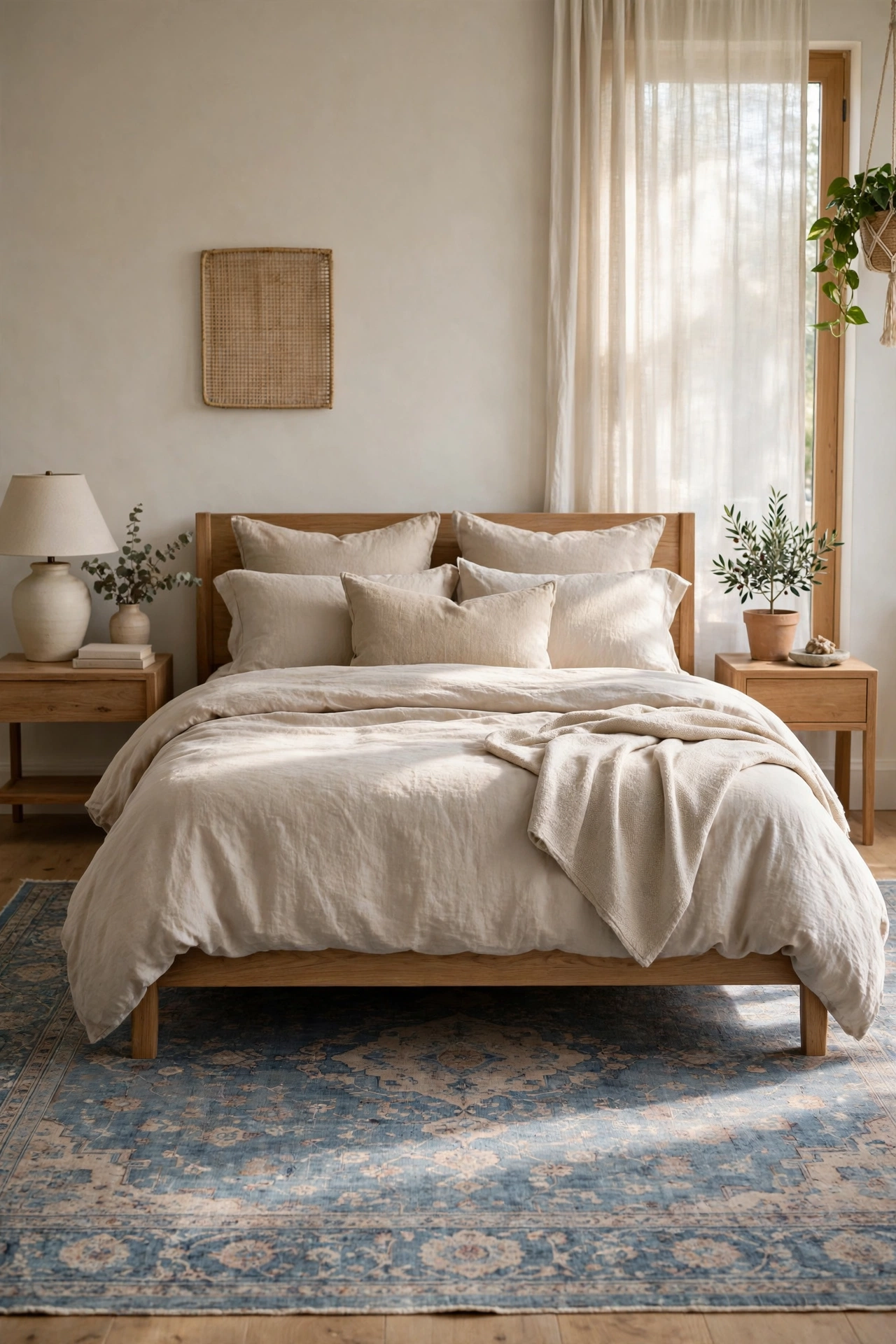
An area rug is the fastest way to anchor a dusty blue bedroom, especially if the walls and bedding are mostly neutral. A large dusty blue rug — a faded vintage-style pattern, a soft solid, or a subtle geometric — placed under the bed so it extends on both sides gives the whole room a color foundation and makes getting out of bed in the morning feel softer underfoot. The rug should be big enough to extend at least 18 inches beyond the bed on each side, or it will look like a mat rather than a foundation. A low-pile rug is easier to clean in a bedroom, and a rug pad underneath keeps it from sliding on hard floors. If the rug has a pattern, keep the bedding solid so the two do not compete.
25. A Dusty Blue Guest Bedroom
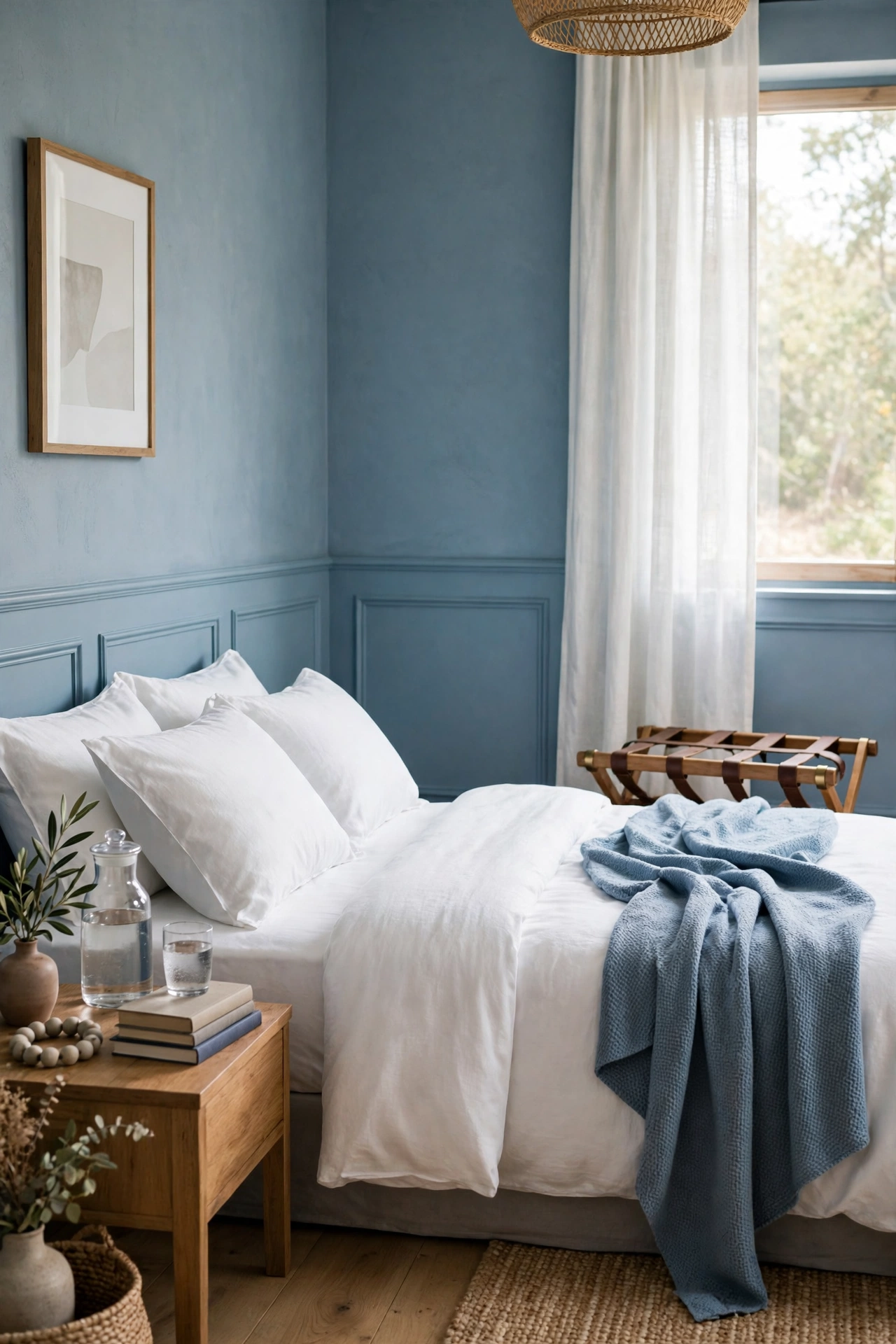
A guest bedroom is the perfect place to go all-in on dusty blue, because guests experience the color for a night or two and remember it as calm and welcoming — and you do not have to live with it every day. Paint the walls dusty blue, dress the bed in white linens with a blue throw, and add the small touches that make guests feel cared for: a carafe of water and a glass on the nightstand, a spare phone charger, a small stack of books, and a luggage rack so suitcases stay off the floor. Keep the closet partly empty and leave a few empty hangers. Because a guest room is used less, you can choose a slightly bolder version of the color — a deeper dusty blue on the walls — without worrying about living with it long-term, and it will still photograph beautifully.
Frequently Asked Questions
What colors go with dusty blue in a bedroom?
White, cream, warm beige, soft gray, blush pink, sage green, navy, and natural wood tones all pair well with dusty blue. For metals, choose brushed brass or gold for warmth, or matte black for a modern edge. Avoid pairing dusty blue with another strong cool color like bright teal or purple, which can make the room feel cold.
Is dusty blue too dark for a small bedroom?
No — dusty blue is a light-to-medium tone, so it works in small bedrooms as long as you balance it with white and good lighting. Use it on one wall, the bedding, or the curtains rather than all four walls, add a mirror opposite the window, and keep the ceiling white. The room will feel calm rather than cramped.
How do I pick the right dusty blue paint?
Look for a muted blue-gray with a gray undertone rather than a bright or saturated blue, and always test a large sample on the wall first. Dusty blue shifts with light — it can look gray in north-facing rooms and bluer in warm sun — so live with the sample for a day or two before committing. The same sample-first approach we recommend for painted cabinets applies here, since the testing method is identical even though the room is different; see our guide to painting kitchen cabinets for the prep and sampling steps.
Can I use dusty blue in a kids’ bedroom?
Yes. Dusty blue is one of the easiest colors for a kids’ room because it is calm, gender-neutral, and grows with the child — it works for a nursery, a young child’s room, and a teenager’s room with only the accessories changing. Choose washable paint and durable fabrics, and let the child pick the accent color for pillows or art so the room still feels like theirs.
How do I keep a dusty blue bedroom from feeling cold?
Add warmth through texture and materials: natural wood furniture, warm cream or beige textiles, brass accents, a wool throw, and warm-toned lighting (2700K bulbs rather than daylight bulbs). Plants also help — green against dusty blue reads warm and alive. If the room still feels cool, swap white bedding for cream.
Does dusty blue go with gray furniture?
Yes, dusty blue and gray are a natural match because both are muted, cool-leaning tones. Vary the textures so the similar colors do not blur together — linen against velvet, matte walls against a glossy lamp — and add one warm element, like wood or brass, to keep the combination from feeling flat.
Conclusion
Dusty blue earns its place in the bedroom because it does two things at once: it calms the room down and it makes everything around it look better. White looks crisper against it, wood looks warmer, brass looks richer, and even a plain white bed looks designed once a dusty blue throw lands on it. The 25 ideas above give you a way in at every budget — a set of pillowcases if you want to test the color, a painted accent wall if you are ready to commit, or a full room makeover if you have fallen in love. Pick the one that fits your room and your budget, start there, and let the rest of the palette follow. A calm bedroom is not about buying everything at once; it is about choosing one color you love and letting it do the work.