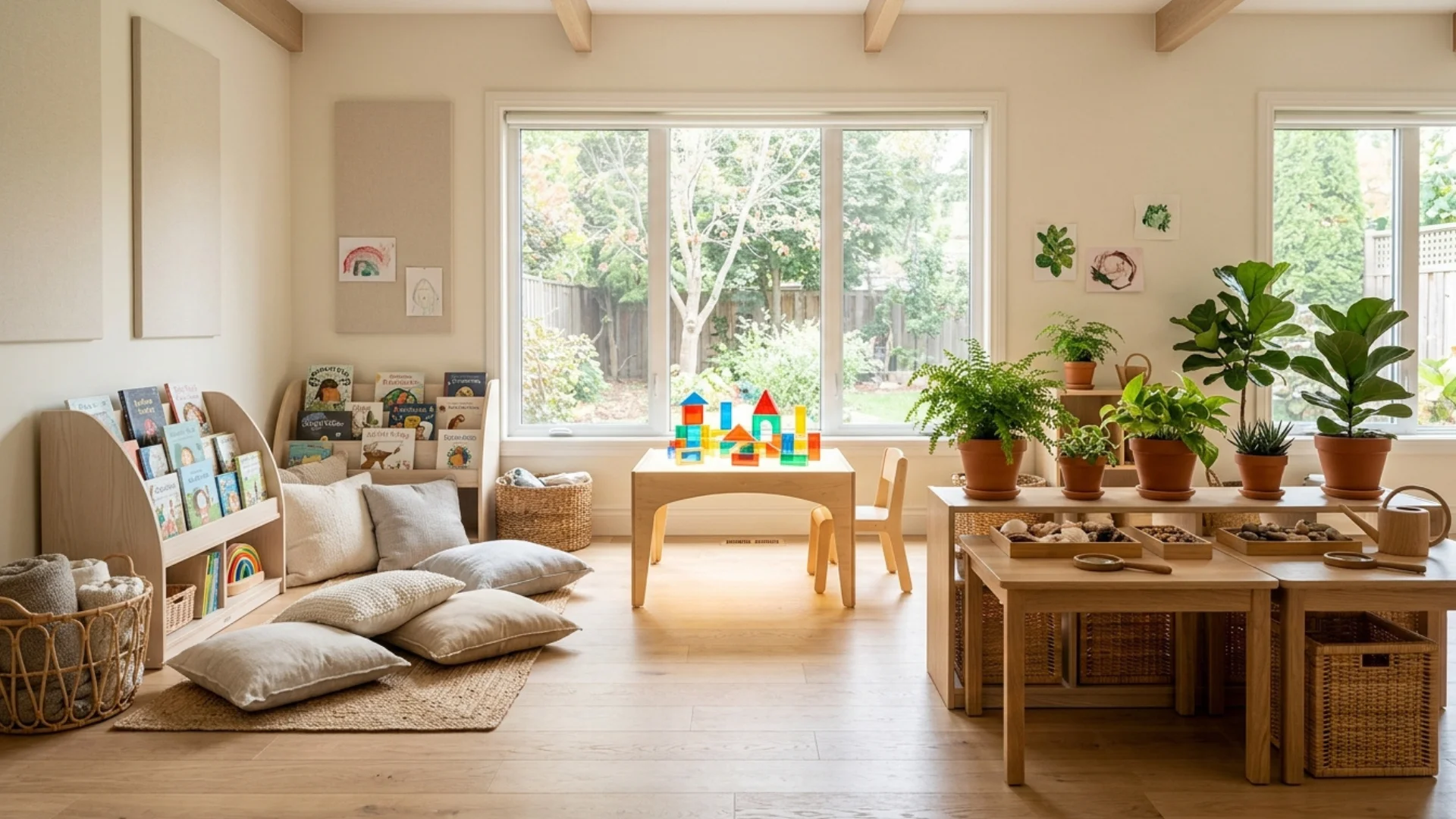
17 Aesthetic Preschool Classroom Ideas for a Calming, Inspiring Space
Designing an early childhood learning environment is one of the most rewarding and impactful tasks an educator or school administrator can undertake. Preschoolers learn through sensory exploration, play, and observation, making their physical environment an active “third teacher.” Moving away from overstimulating primary colors, noisy plastic containers, and visual clutter, modern early childhood design focuses on creating calming, home-like sanctuaries.
By incorporating natural woods, organic textiles, low-sensory neutral color palettes, and biophilic elements, an aesthetic preschool classroom encourages focus, emotional regulation, and creative independence. Whether you are setting up a new early learning center or refreshing an existing classroom layout, these 17 unique and functional preschool classroom ideas will help you design a space where young learners thrive.
1. Calming Neutral and Earth-Tone Color Palette
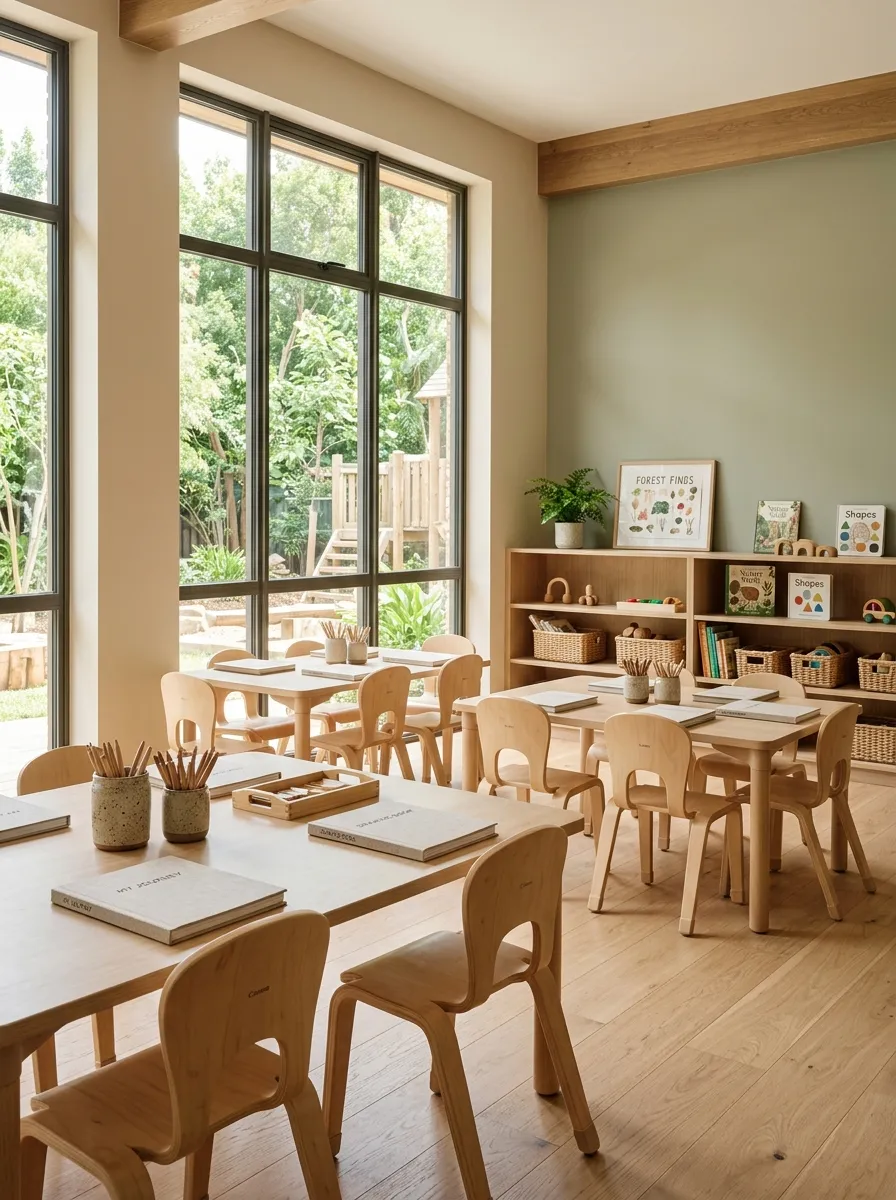
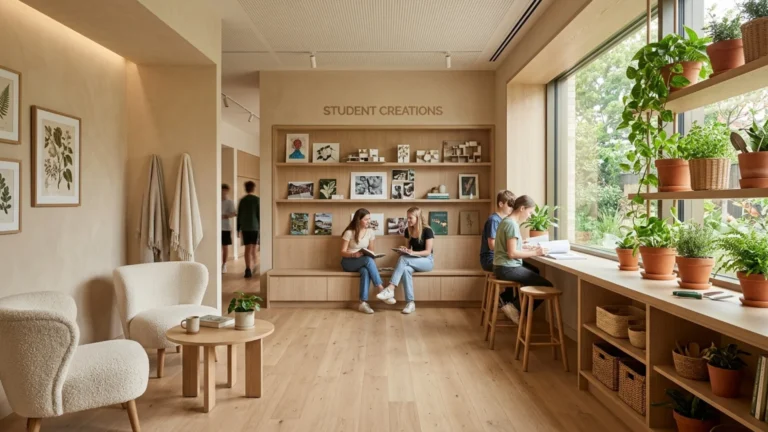
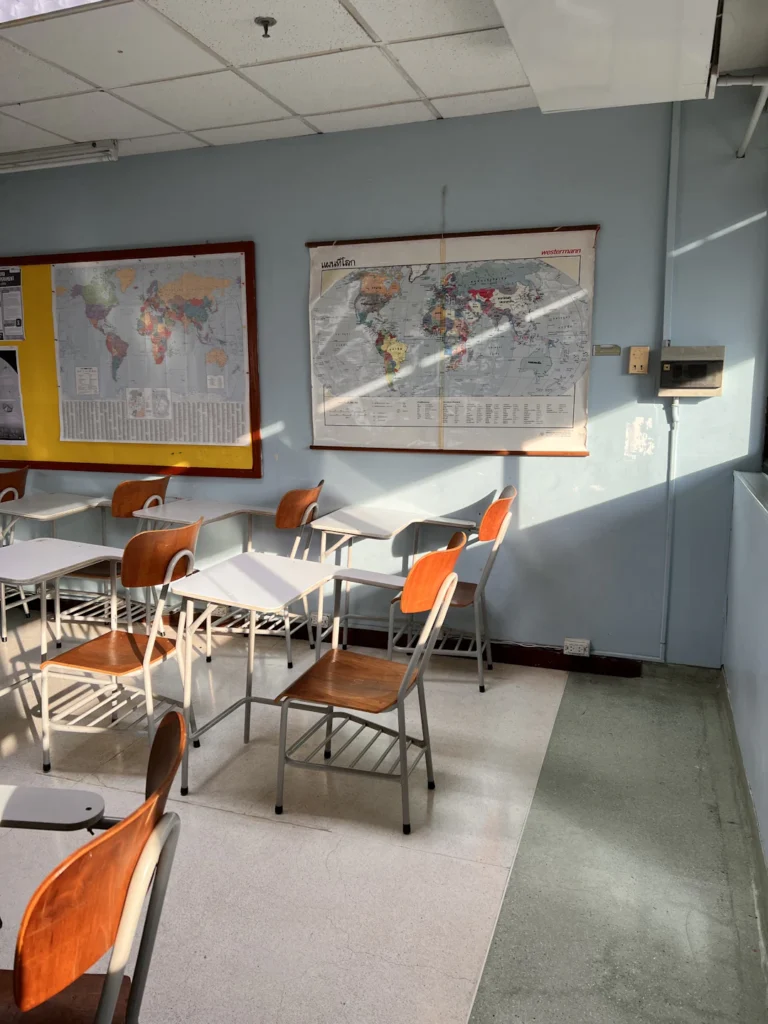
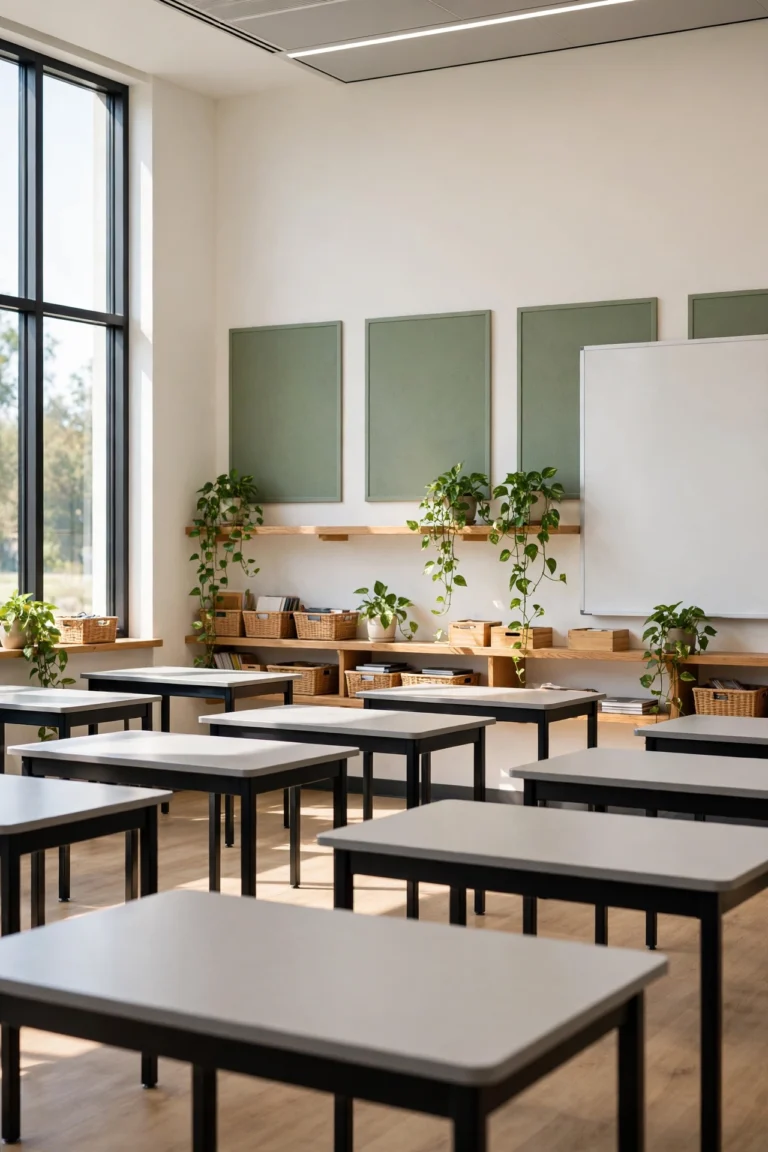
Replacing harsh fluorescent-colored posters and high-contrast walls with a warm neutral color palette is the single most effective way to create a calm preschool environment. Soft shades of warm beige, cream, muted sage green, and gentle terracotta reduce sensory overload, helping young children regulate their emotions and sustain longer periods of play.
Pair these muted wall tones with natural white oak furniture, unbleached linen curtains, and matte ceramic storage containers to maintain a cohesive, peaceful visual flow throughout the room.
Also check: 18 Gorgeous Aesthetic Classroom Decor Ideas
2. Low-Profile Front-Facing Wooden Book Display and Reading Nook
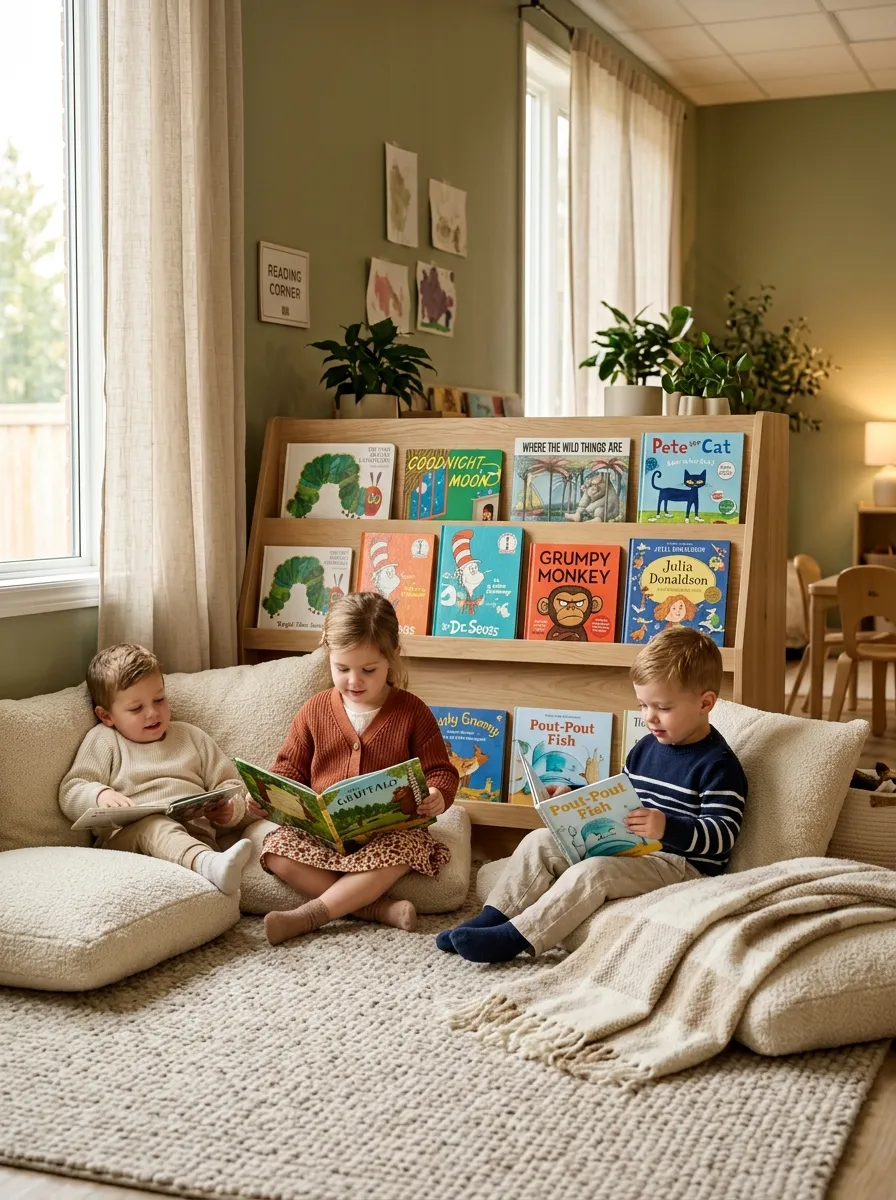
Preschoolers choose books based on visual cover art rather than spine titles. Installing low-profile, front-facing wooden book ledges at the child’s eye level encourages independent reading and decision-making.
Frame the book display with a plush, neutral-toned area rug and cream-colored floor poufs to create an inviting, cozy sanctuary where children can sit comfortably and explore stories.
Also check: 21 Gorgeous Farmhouse Kitchen Backsplash
3. Sensory Exploration Table with Natural Elements
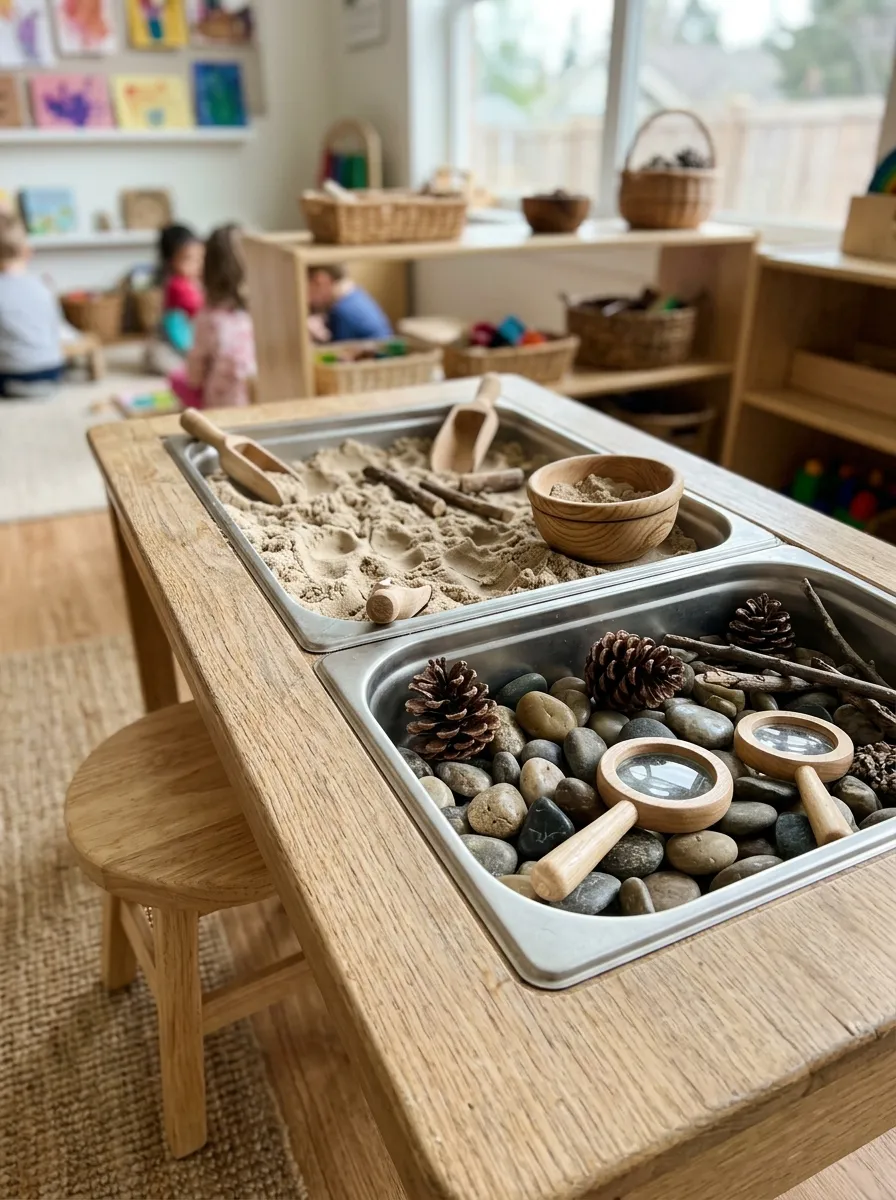
Sensory play is foundational for fine motor development and scientific inquiry in early childhood. Swapping brightly colored plastic water tables for a child-height white oak sensory table elevates the aesthetic while serving the same developmental purpose.
Fill the sensory bins with tactile, natural materials such as kinetic sand, river rocks, pinecones, wooden scoops, and ceramic bowls. This setup invites calm, open-ended exploration without visual chaos.
Also check: 19 Teaching Classroom Decor Ideas
4. Montessori-Inspired Open Wooden Storage Shelving
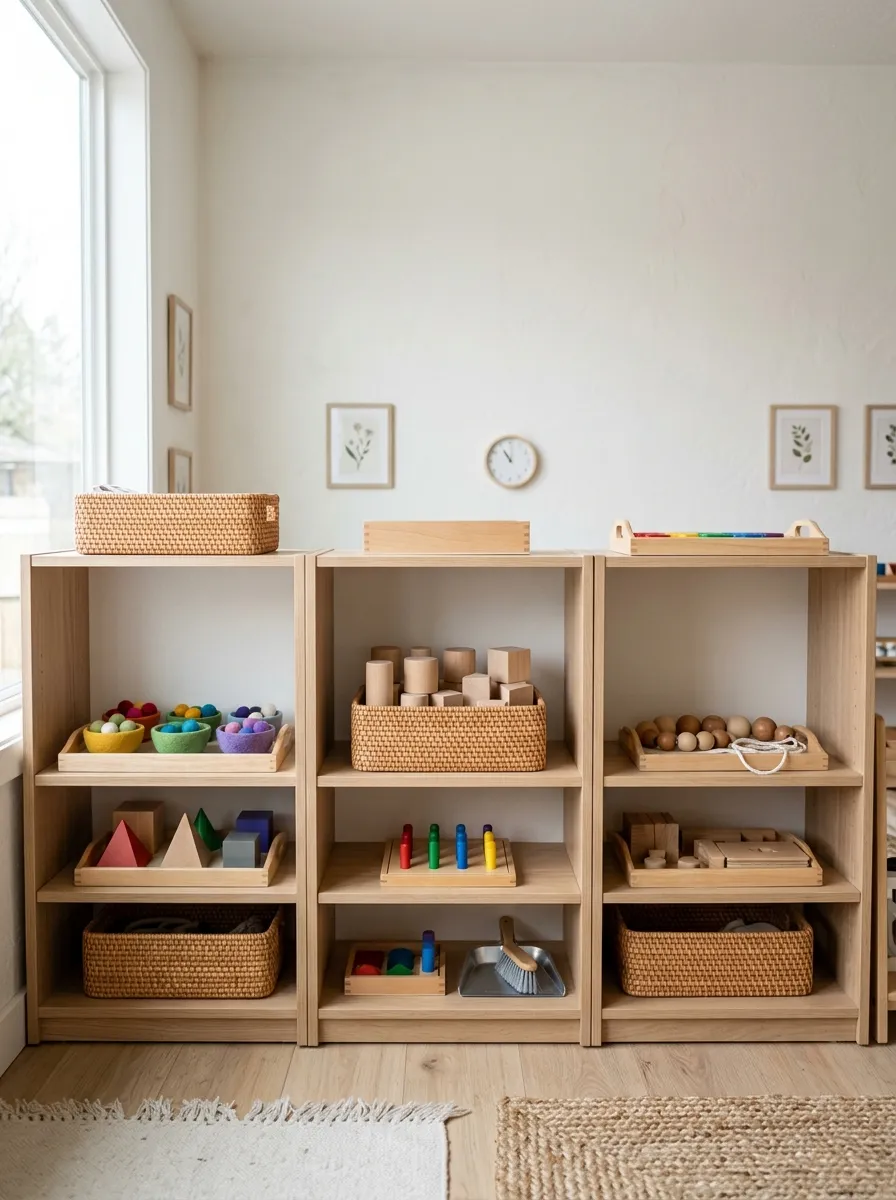
Clutter is the enemy of calm. Montessori-inspired open wooden shelving keeps toys and learning materials accessible, organized, and limited in quantity to avoid overwhelming young minds.
Store activity sets in matching woven rattan baskets or raw wooden trays. Arranging materials neatly with ample space between items teaches children how to select, complete, and return activities independently.
5. Cozy Dramatic Play Bakery and Home Corner
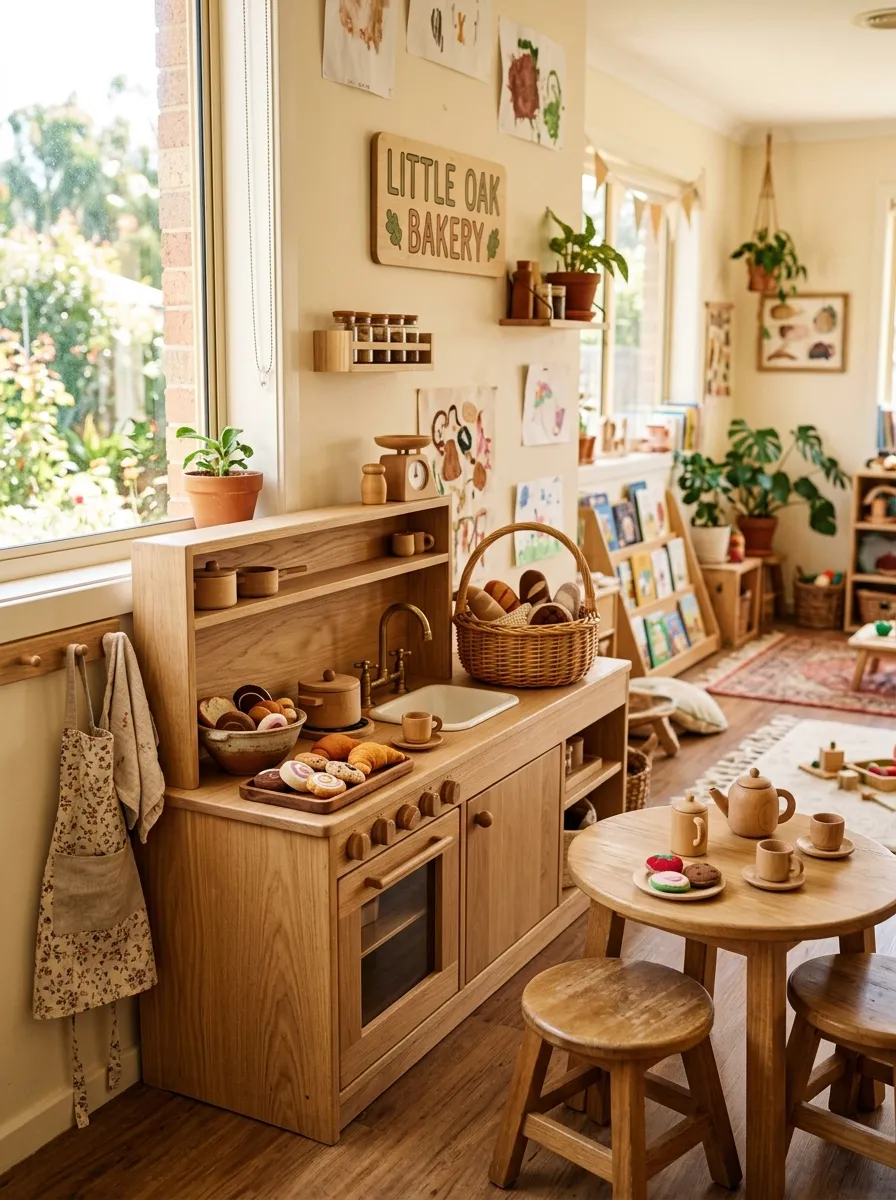
Dramatic play allows preschoolers to process real-world experiences, develop language skills, and practice empathy. Designing a home corner with a natural white oak play kitchen, felt play food, and woven accessories creates a timeless, warm atmosphere.
Include real-life household items like linen aprons, wooden spoons, and stainless steel mini pots to make pretend play feel meaningful and authentic.
6. Biophilic Indoor Plant and Botanical Station
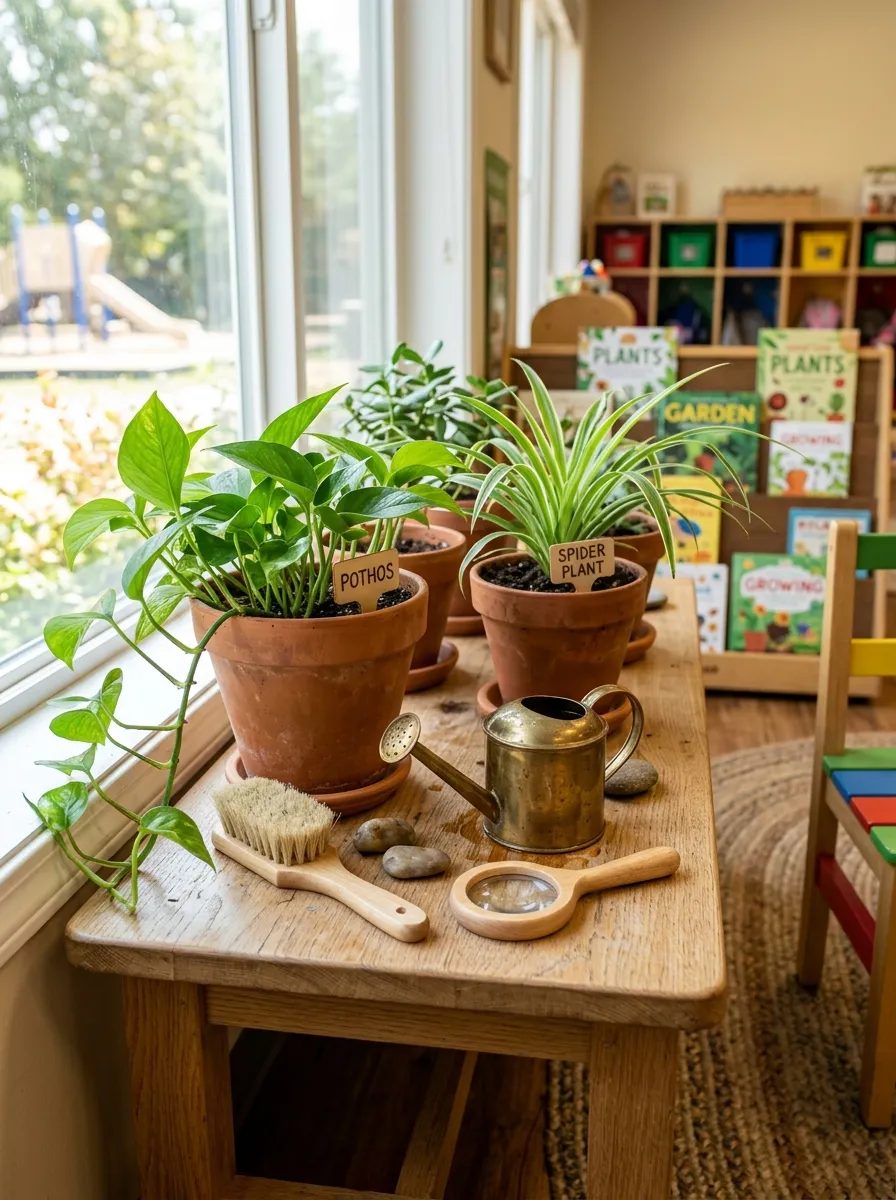
Integrating living plants into the classroom (biophilic design) connects children with nature, improves indoor air quality, and teaches responsibility.
Set up a plant care station on a low bench with child-safe, non-toxic plants in terracotta pots, small brass watering cans, and soft leaf-dusting brushes. Children can take pride in watering and caring for their classroom garden daily.
7. Reggio Emilia Inspired Light Table and Acrylic Block Zone
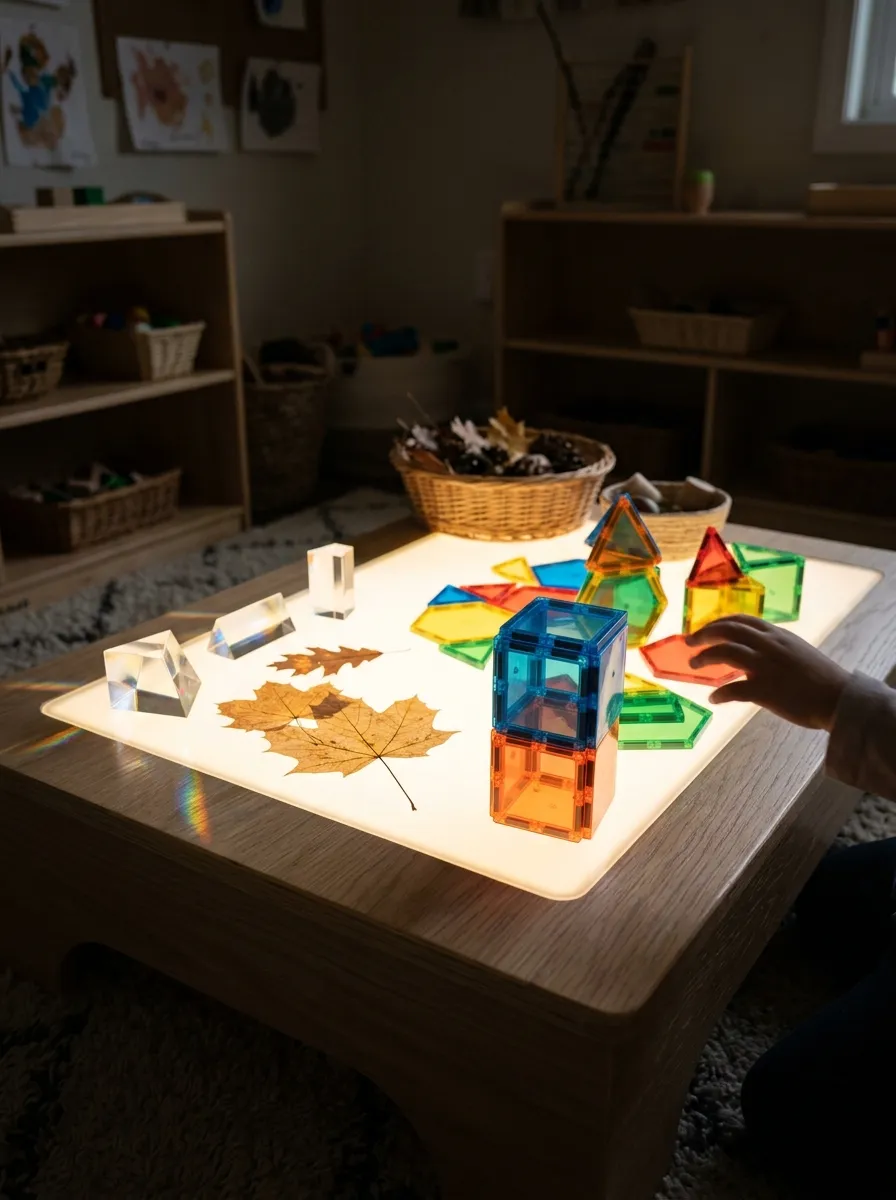
Light tables are a staple of Reggio Emilia classrooms, offering an enchanting medium for exploring color theory, geometry, and optics.
A low wooden LED light table styled with translucent colorful acrylic blocks, pressed leaves, and clear prisms captivates children’s attention and encourages extended periods of quiet, creative building.
8. Aesthetic Art Studio with Wooden Easels and Clay Pots
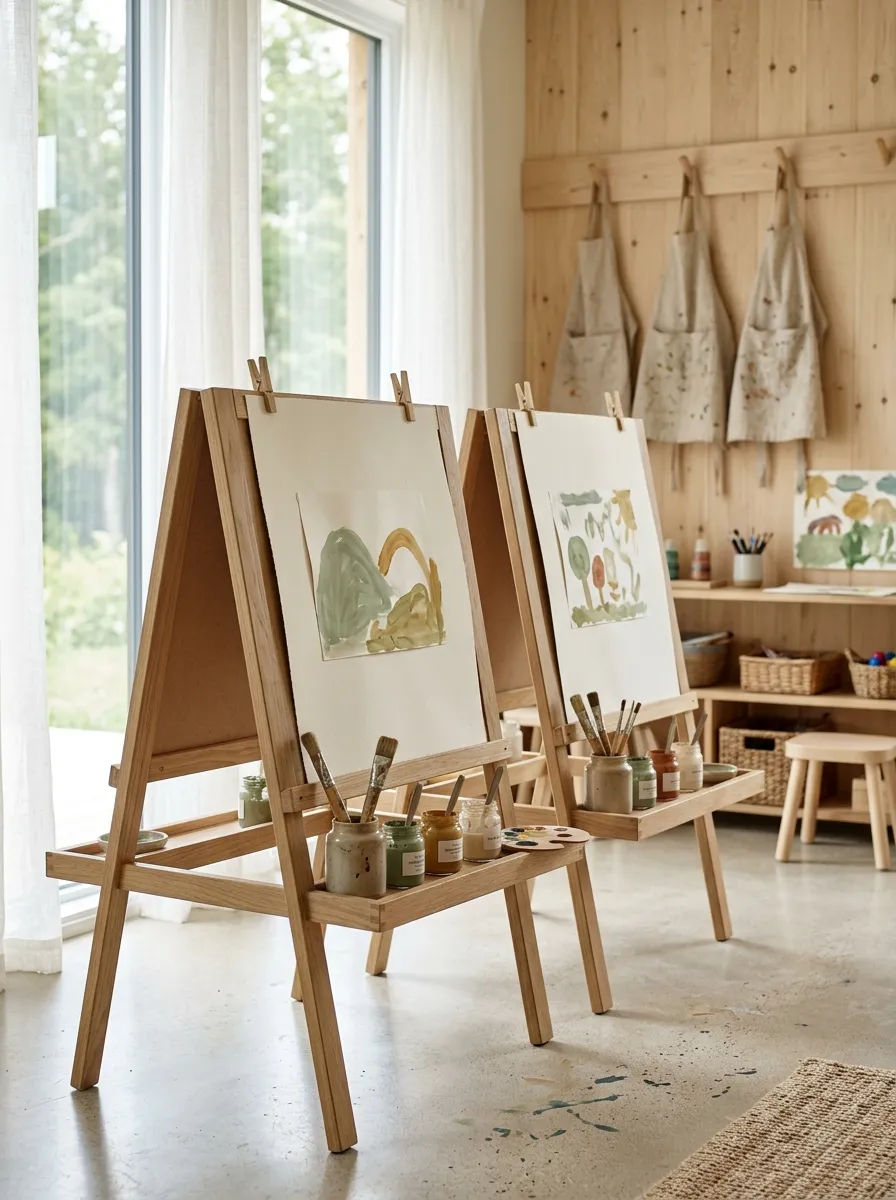
Nurture young artists by setting up a dedicated “atelier” or art studio corner. Sturdy white oak double-sided easels paired with ceramic pots holding natural paintbrushes replace messy plastic art centers.
Offer muted, earth-toned washable tempera paints (such as sage green, ochre, terracotta, and cream) on heavy watercolor paper to keep art exploration beautiful and cohesive.
9. Interactive Felt Weather and Season Wall Board
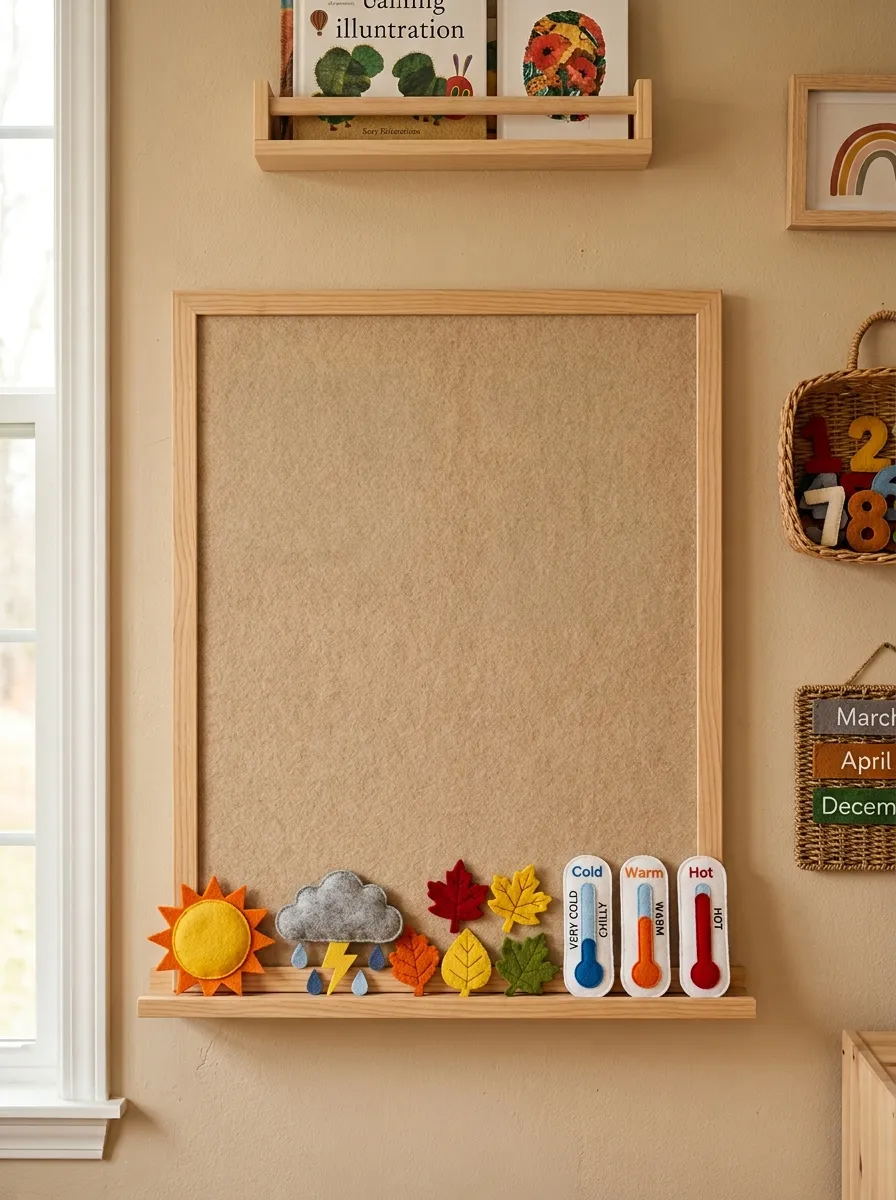
Morning circle time becomes an engaging, tactile experience with a custom felt weather board. A large, sand-colored felt panel framed in light wood serves as a backdrop for soft, handcrafted felt weather symbols.
Children can independently attach suns, clouds, raindrops, and seasonal leaves to the board each morning, building weather awareness through touch.
10. Calm-Down Corner with Soft Floor Poufs and Emotion Mirrors
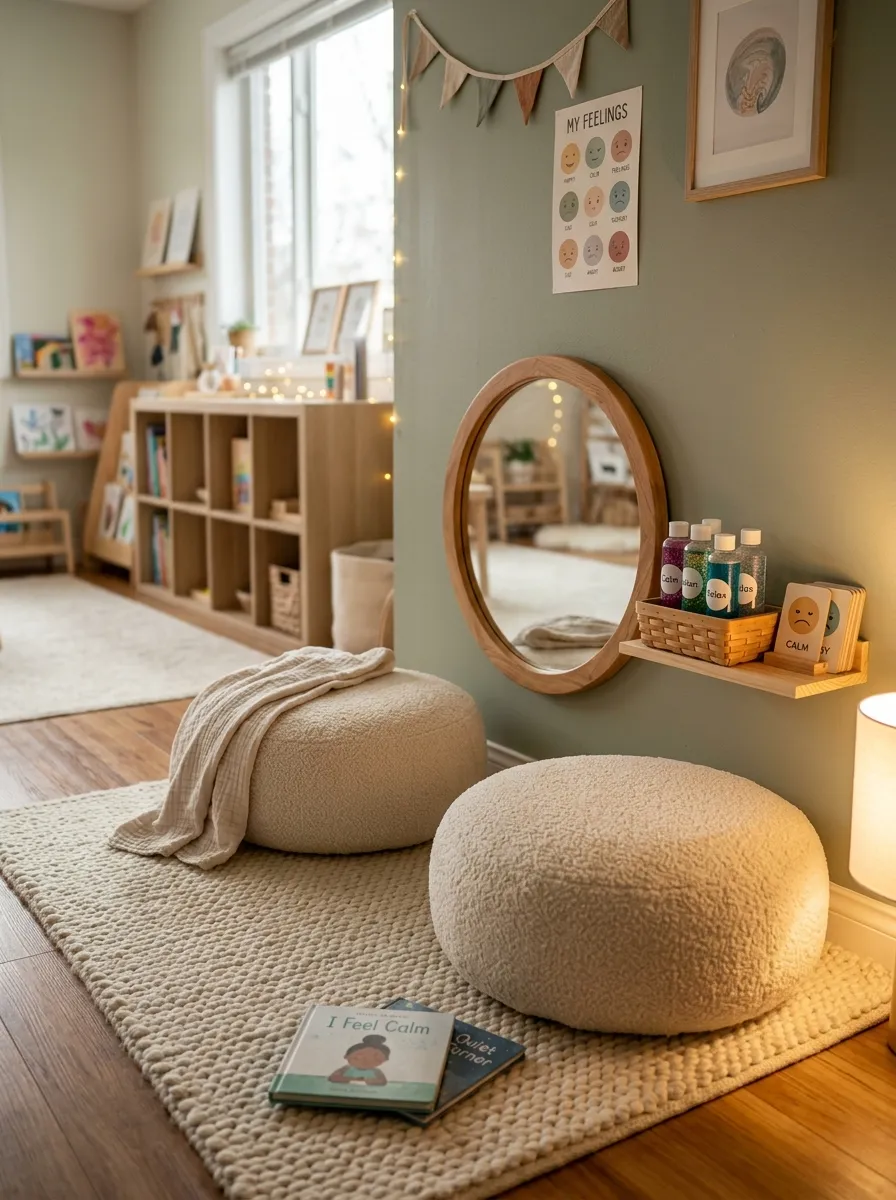
Emotional regulation is a critical skill taught in preschool. A dedicated “calm-down corner” provides a safe, quiet space for children to process big feelings when they feel overwhelmed.
Furnish the corner with soft boucle floor poufs, a low-mounted shatterproof mirror so children can observe their expressions, and clear liquid sensory bottles to help soothe anxiety.
11. Vertical Pegboard Construction and Loose Parts Wall
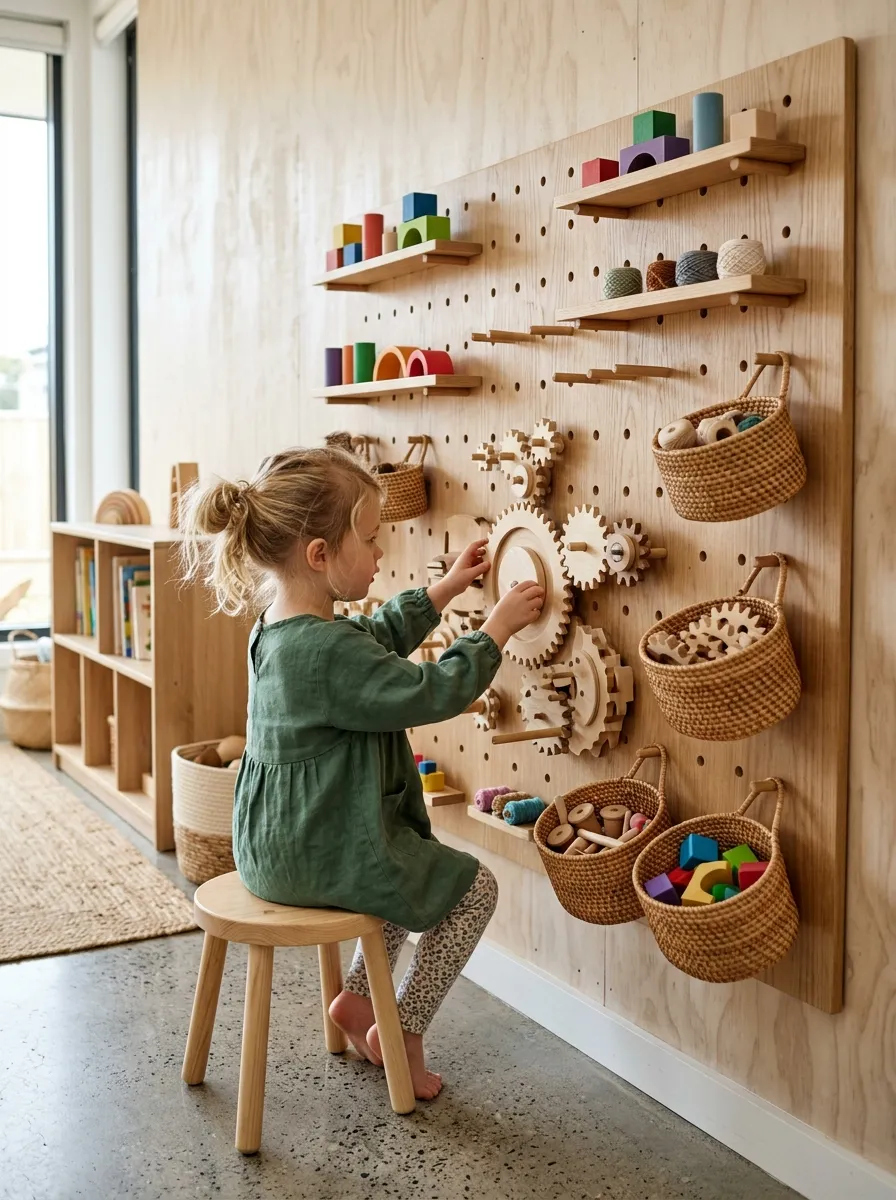
Loose parts play encourages problem-solving, engineering skills, and spatial reasoning. Installing a large white oak pegboard wall allows children to build vertically using wooden pegs, ramps, and gears.
Store additional building components in hanging rattan baskets at the base of the board, allowing children to design, test, and rebuild gravity tracks independently.
12. Nature-Inspired Circle Time Rug and Floor Cushions
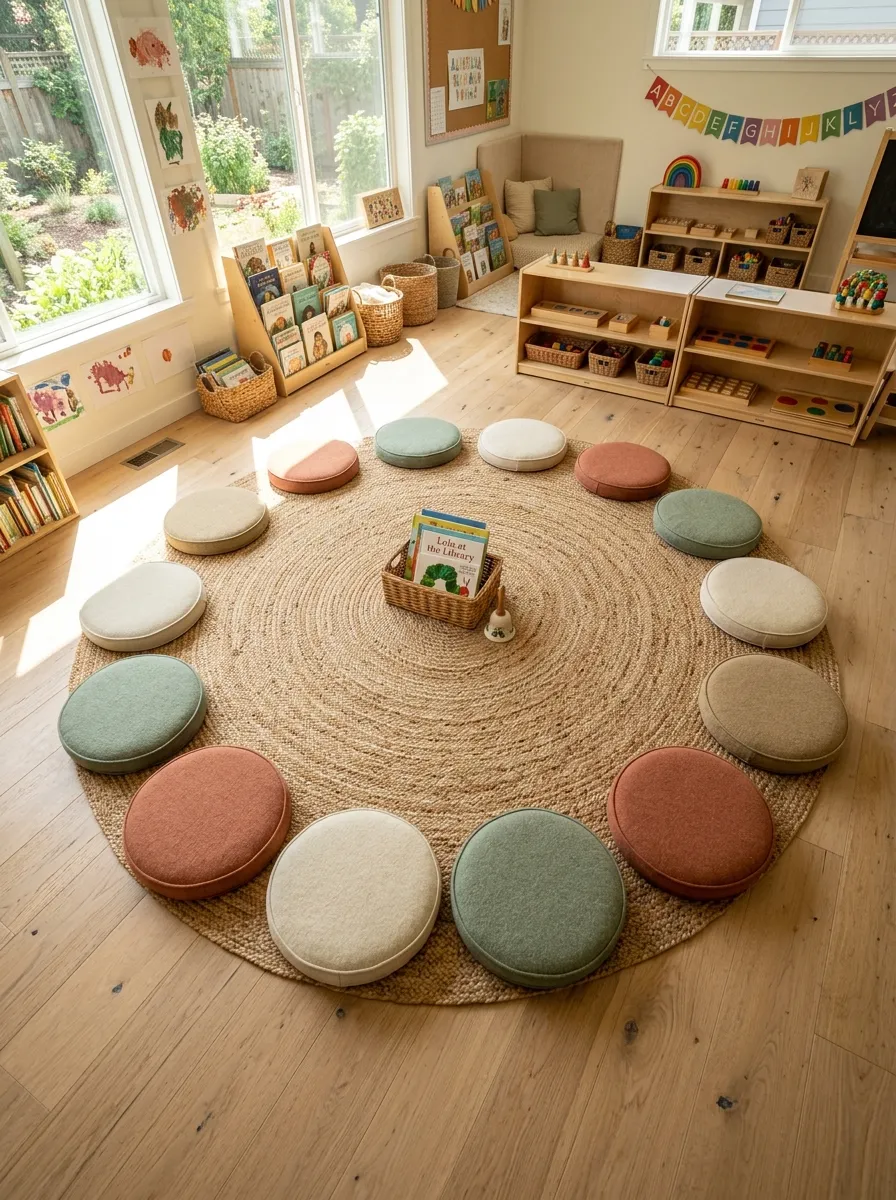
Circle time is where classroom community is built. Replacing busy, high-contrast alphabet rugs with a large, round braided jute and wool rug defines the gathering space with natural elegance.
Provide individual circular floor cushions in muted sage, cream, and terracotta so each child has a clearly defined, comfortable personal space during group stories and discussions.
13. Clear Acrylic Student Showcase Gallery
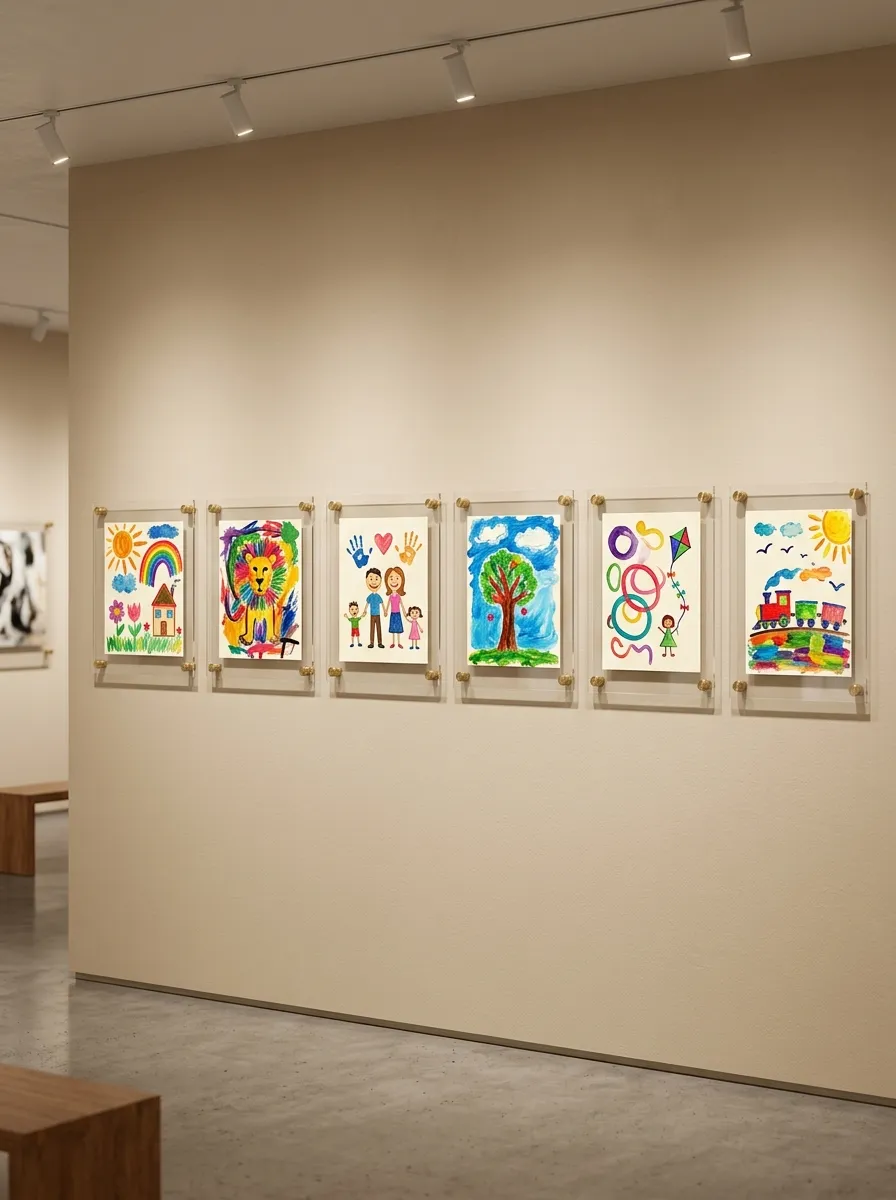
Displaying children’s artwork communicates that their creative efforts are valued and respected. Replacing cluttered tape-on-wall displays with clear acrylic floating frames elevates student work into gallery-worthy art.
Mounted with brushed brass stand-offs, these frames allow educators to easily swap out paintings and drawings throughout the school year.
14. Acoustic Ceiling Cloud Panels with Warm Fairy Lights
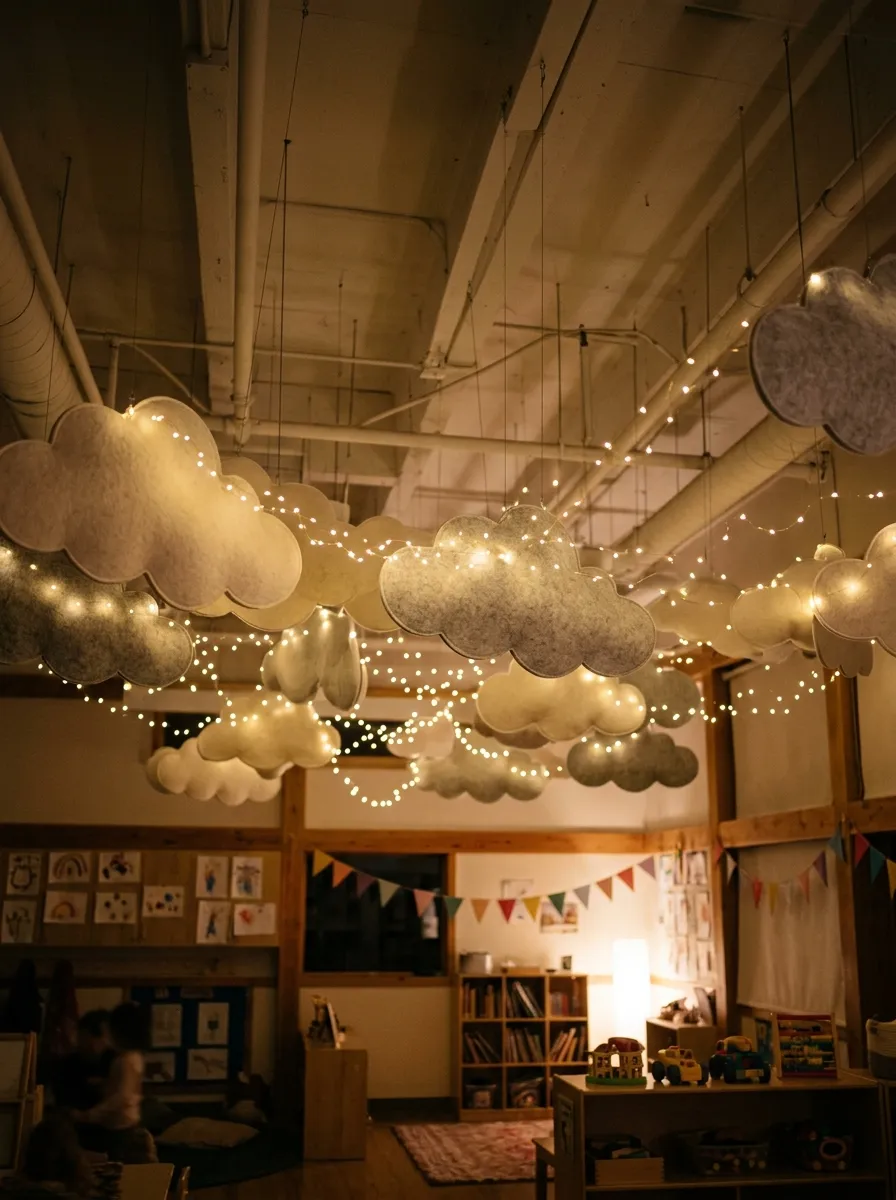
High ceilings and hard surfaces can cause echoes that elevate noise levels in preschools. Suspended acoustic felt “cloud” panels absorb sound waves, significantly quieting the room.
Intertwining delicate warm LED fairy lights around the hanging clouds creates a calming, starlit canopy that makes quiet time and afternoon naps feel magical.
15. Low Curved Wooden Activity and Exploration Tables
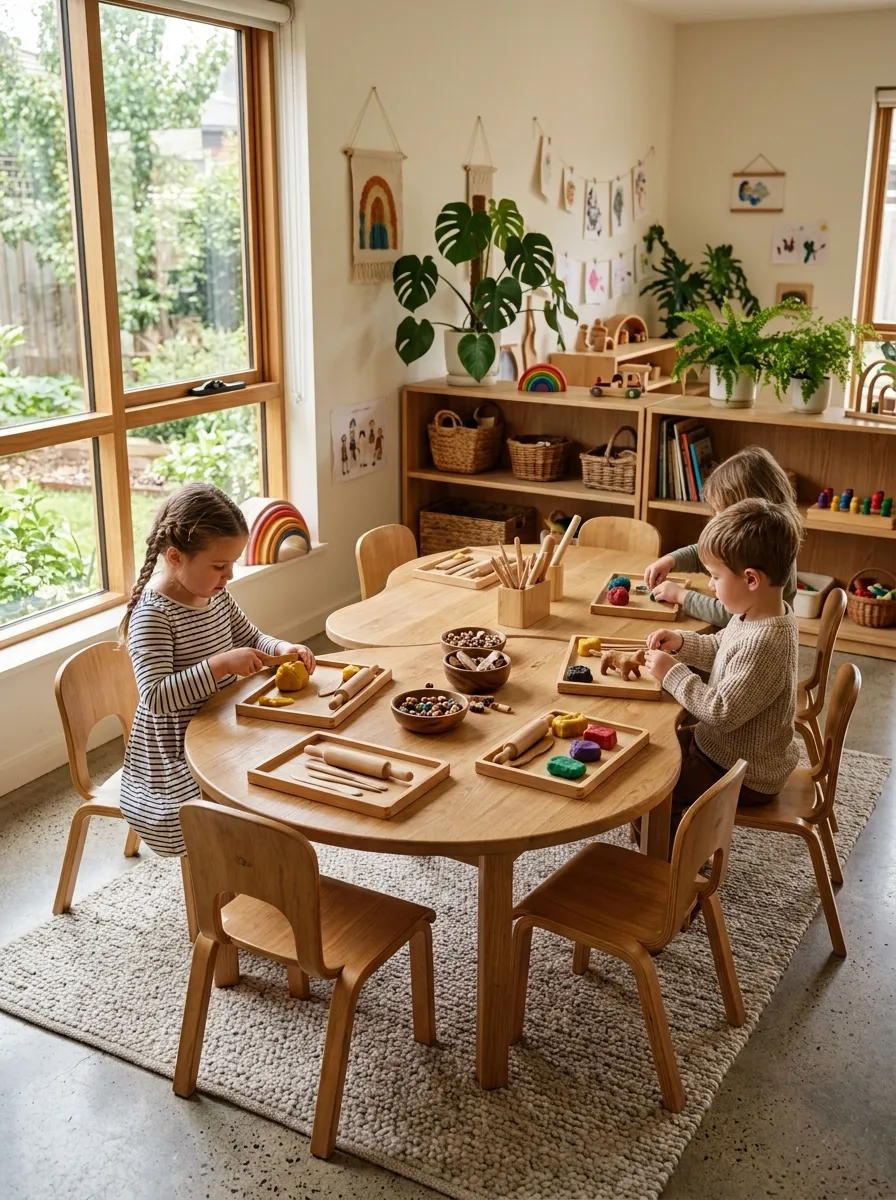
Sharp table corners can be hazardous for active toddlers and break up the fluid flow of a room. Opting for low, kidney-shaped or curved white oak activity tables brings organic smoothness to the environment.
The curved shapes allow children to sit face-to-face comfortably during small-group projects, fostering social interaction and collaborative play.
16. Tactile Wall Specimen and Curiosity Board
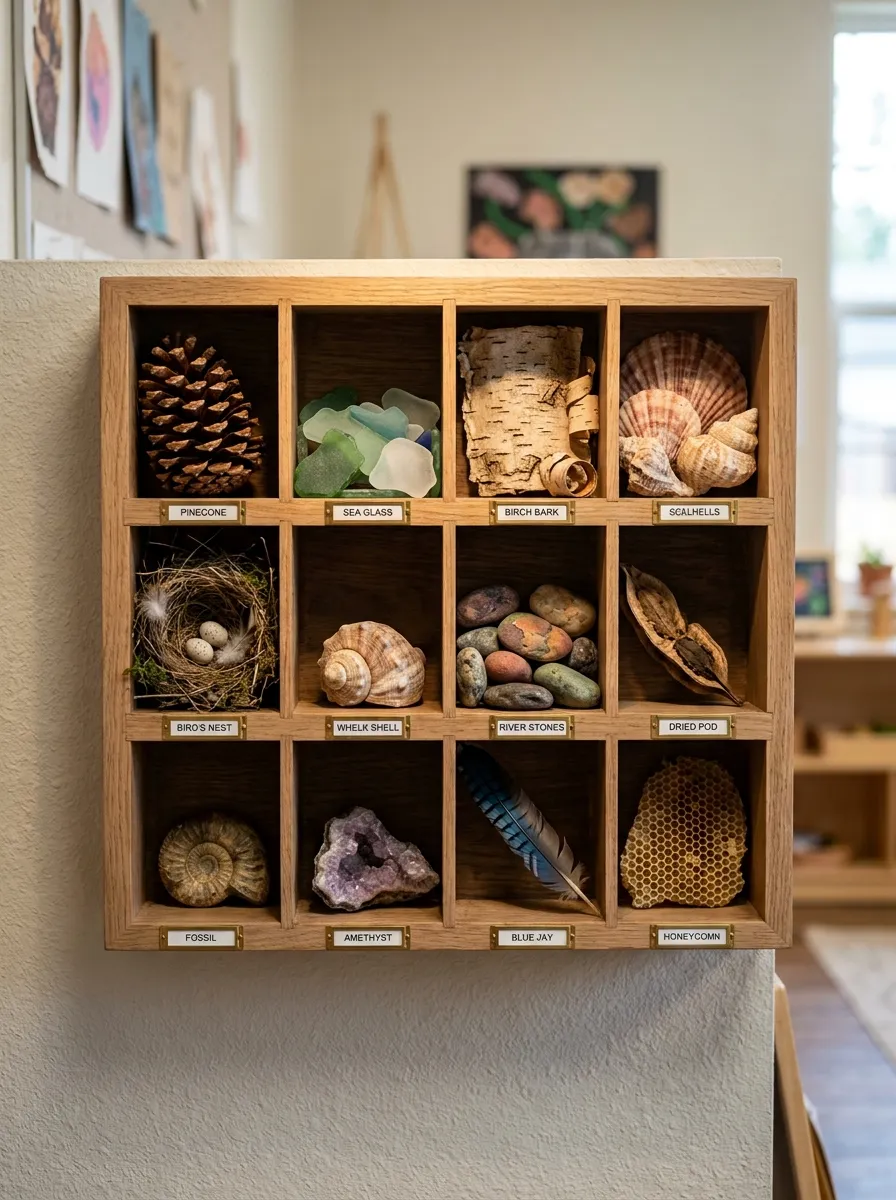
Awaken children’s natural wonder with a wall-mounted “curiosity board.” A shallow white oak shadow box divided into small cubbies provides a safe, organized display for natural treasures.
Fill the compartments with tactile specimens like pinecones, smooth sea glass, birch bark, giant seashells, and abandoned nests that children can examine up close with magnifying glasses.
17. Child-Height Mirror and Identity Station
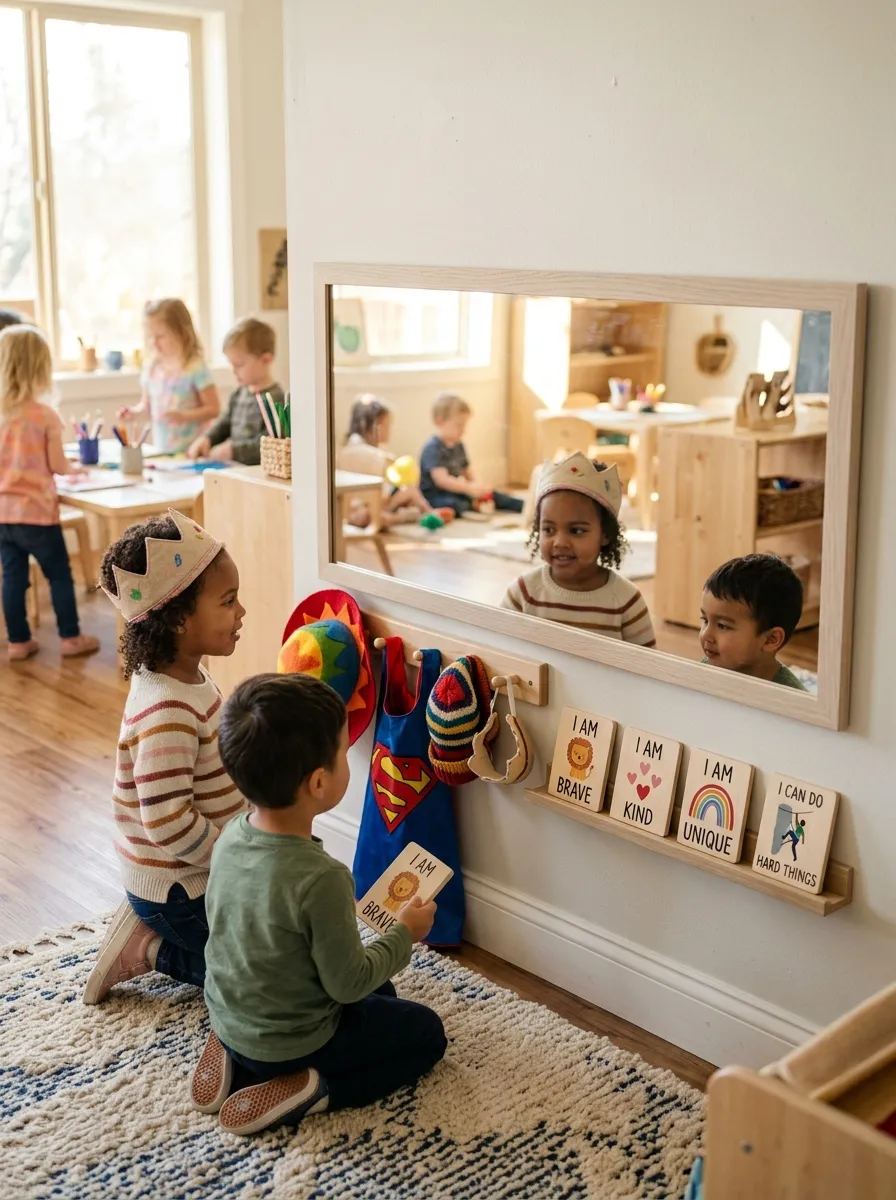
Self-awareness and body positivity develop rapidly during the preschool years. Installing a horizontal, shatterproof full-length mirror at child height allows toddlers to observe their movements, facial expressions, and self-dress efforts.
Flank the mirror with a low wooden peg rack for dress-up clothes and simple affirmation cards to build confidence and self-identity daily.
Frequently Asked Questions (FAQs)
How do I design an aesthetic preschool classroom on a tight budget?
You do not need an enormous budget to transform a classroom. Start by decluttering and simplifying your existing space:
- Remove Excessive Commercial Posters: Replace bright, busy posters with a few framed botanical prints or clear displays of student work.
- Paint Key Accent Walls: Use warm neutral paint (like soft beige or pale sage green) on one or two focal walls.
- Cover Plastic Bins: Wrap existing plastic storage containers in neutral fabric or replace them gradually with affordable woven straw or cloth baskets.
- Incorporate Free Natural Elements: Collect pinecones, smooth river rocks, and branches to use in sensory bins and science centers.
What is the best color scheme for a preschool classroom to prevent overstimulation?
Research in educational environmental design recommends soft, low-saturation neutral tones:
- Primary Colors (Warm Beige, Cream, Ivory): Provide a quiet, home-like background baseline.
- Secondary Colors (Muted Sage Green, Terracotta, Soft Dusting Blue): Add gentle, nature-inspired warmth without triggering sensory fatigue.
Avoid using bright primary colors (pure red, electric yellow, neon blue) on large wall surfaces, as high-saturation colors can increase heart rate, restlessness, and behavioral issues in young children.
Are real indoor plants safe for a preschool classroom?
Yes, as long as you select non-toxic, child-safe plant varieties. Excellent safe options include:
- Pothos (Devil’s Ivy): Extremely durable and great for trailing shelves (keep out of mouth range for younger toddlers).
- Spider Plants: Non-toxic, resilient, and easy for children to propagate.
- Boston Ferns: Plush, non-toxic, and great for adding soft texture.
- Jade Plants & Echeveria Succulents: Safe, sturdy, and require minimal watering.
Always double-check plant toxicity through ASPCA or regional botanical databases before introducing new greenery into early childhood spaces.
How can I incorporate Montessori and Reggio Emilia principles into classroom decor?
Both educational philosophies emphasize respect for the child, natural materials, and environment as the teacher:
- Montessori: Focus on child-height accessibility, open wooden shelving, low-volume organization, and self-correcting real-life activity stations.
- Reggio Emilia: Emphasize aesthetic beauty, natural lighting, light tables, raw loose parts (stones, wood, shells), and gallery-style documentation of student artwork.
How do I maintain an aesthetic classroom with active 3- and 4-year-olds?
Maintaining an aesthetic learning environment requires functional systems designed for child participation:
- Establish Clear Photo Labels: Label shelves and baskets with simple line drawings or photos so children know exactly where items belong.
- Limit Available Toys: Rotate toys every 2 to 3 weeks rather than keeping all supplies out simultaneously. Fewer options lead to deeper play and easier clean-up.
- Teach Toy Care Routines: Model how to handle wooden toys, ceramic pots, and books gently during the first weeks of school.
Conclusion
Designing an aesthetic preschool classroom is an investment in daily calmness, child-led discovery, and emotional well-being. By swapping high-contrast clutter for warm earth tones, white oak shelving, soft floor cushions, and biophilic greenery, you create a peaceful sanctuary where children feel valued, focused, and inspired to explore. Gather your favorite design ideas, select a warm neutral palette, and step confidently into creating an early learning space that nurtures both students and teachers every day!